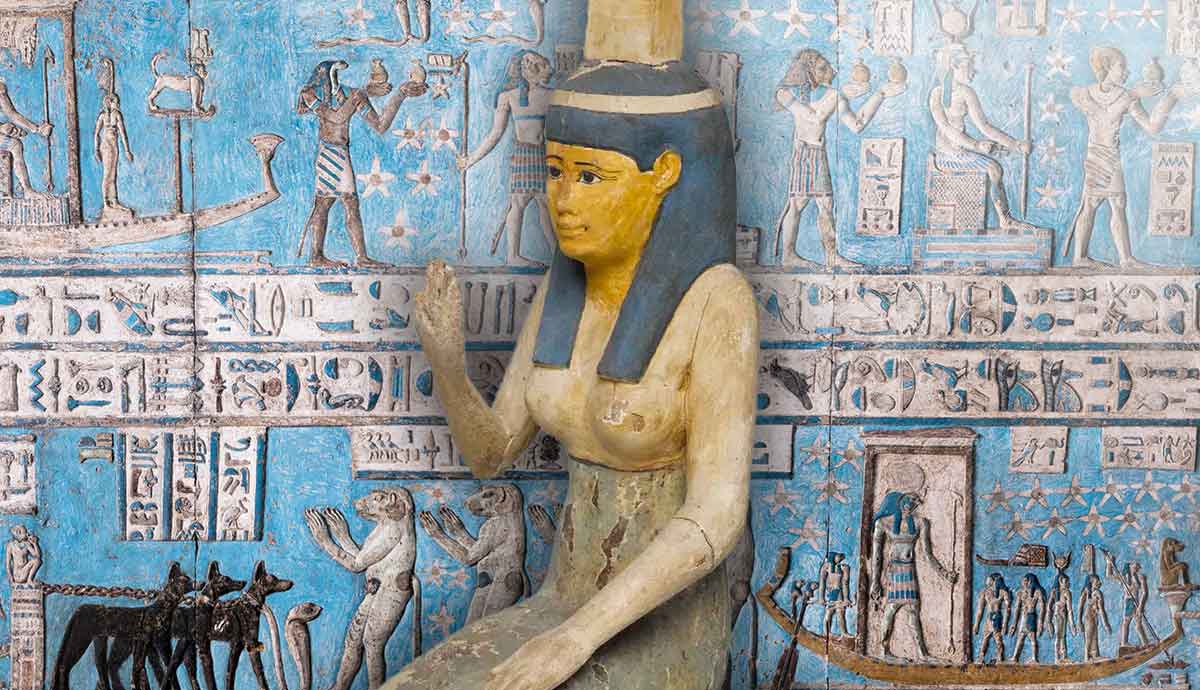
Khonsu is often described as an Egyptian god of the moon, but like so many other Egyptian deities, he was a complex god whose role changed over time. Associated with the Theban pantheon, Khonsu was initially an underworld god associated with the punishment of the dead before he usurped Thoth as a god of the moon. His connection with lunar cycles and lighting the night also made him a fertility deity and a god of protection and healing. Learn more about the fascinating god who inspired Marvel’s Moon Knight.
Khonsu in the Egyptian Pantheon & Creation Myths
Ancient Egypt did not have a single unified pantheon of gods. Individual cities and regions had their own deities that were worshiped from ancient times. As the country became increasingly unified under the leadership of the pharaohs, they were brought together into a more unified religion, but with significant crossover and inconsistency. For example, the Egyptians had multiple creation myths. Some powerful gods became syncretized, such as Amun and Ra, both considered creator gods, as Amun-Re. The most important gods changed as different power centers rose in prominence and promoted their own deities.
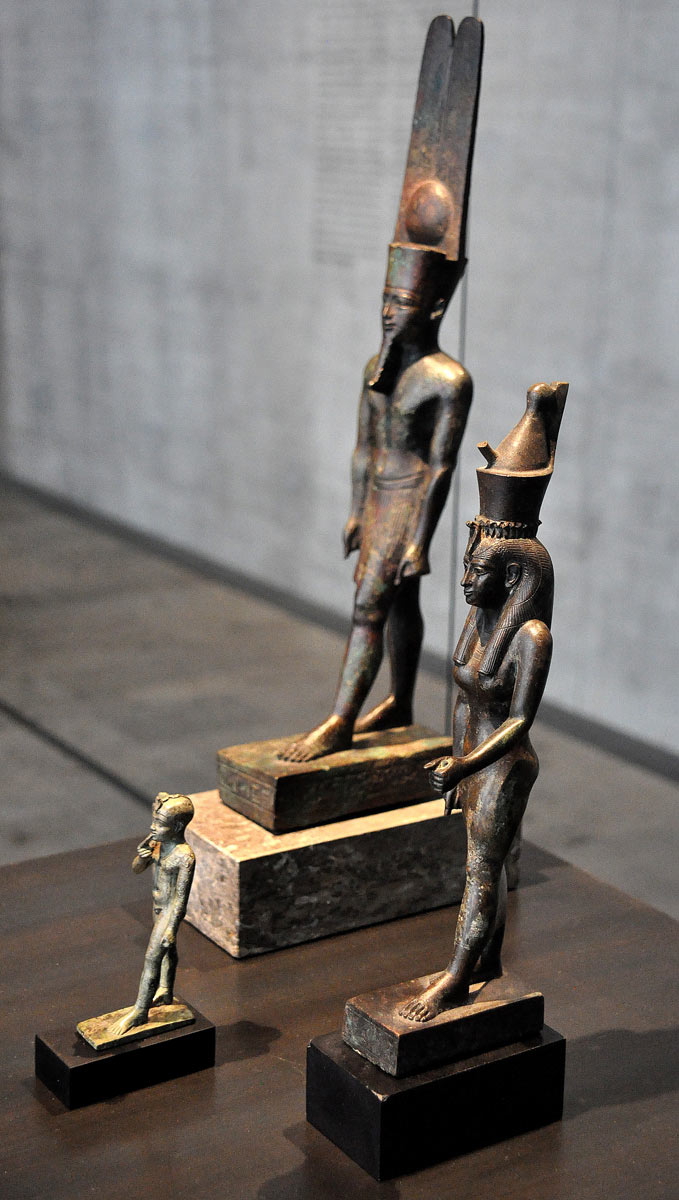
Khonsu was most closely associated with Thebes, which was particularly powerful during the New Kingdom (1570-1069 BCE). By that time, Khonsu was considered one of the three principal gods of the city, known as the Theban Triad. The chief god of the triad was the “hidden god” Amun, a god of the air who had power over invisible cosmic forces. He was often described as self-created and the creator of everything else. His mate was Mut, a mother goddess associated with the primordial waters of Nu. Khonsu was their son.
One version of the Theban creation myth elevates Khonsu further, making him a creator god and the “greatest god of the great gods.” It says that Amun, called “father of the father of the Ogdoad,” emerged from the primordial waters as a serpent and deposited his semen into the primordial waters in the form of a falcon egg. Khonsu, Amun’s son, emerged as a second primordial snake, consumed the semen, and became pregnant. Khonsu then transformed into a crocodile and traveled to the primordial mound to cleanse his mouth. But there, he mated with Hathor, and she gave birth to the city of Thebes while he gave birth to the eight gods of the Ogdoad of Thebes.
While this is the most prominent of Khonsu’s mythologies, other cosmologies existed for him. At the temple at Kom Ombo, he is described as the son of the crocodile god Sobek and Hathor. At Edfu, he is described as the son of Osiris, the god of the underworld. These multiple cosmologies reflect Khonsu’s importance, as he was incorporated into the cosmologies of other cities.
Temple of Khonsu at Karnak
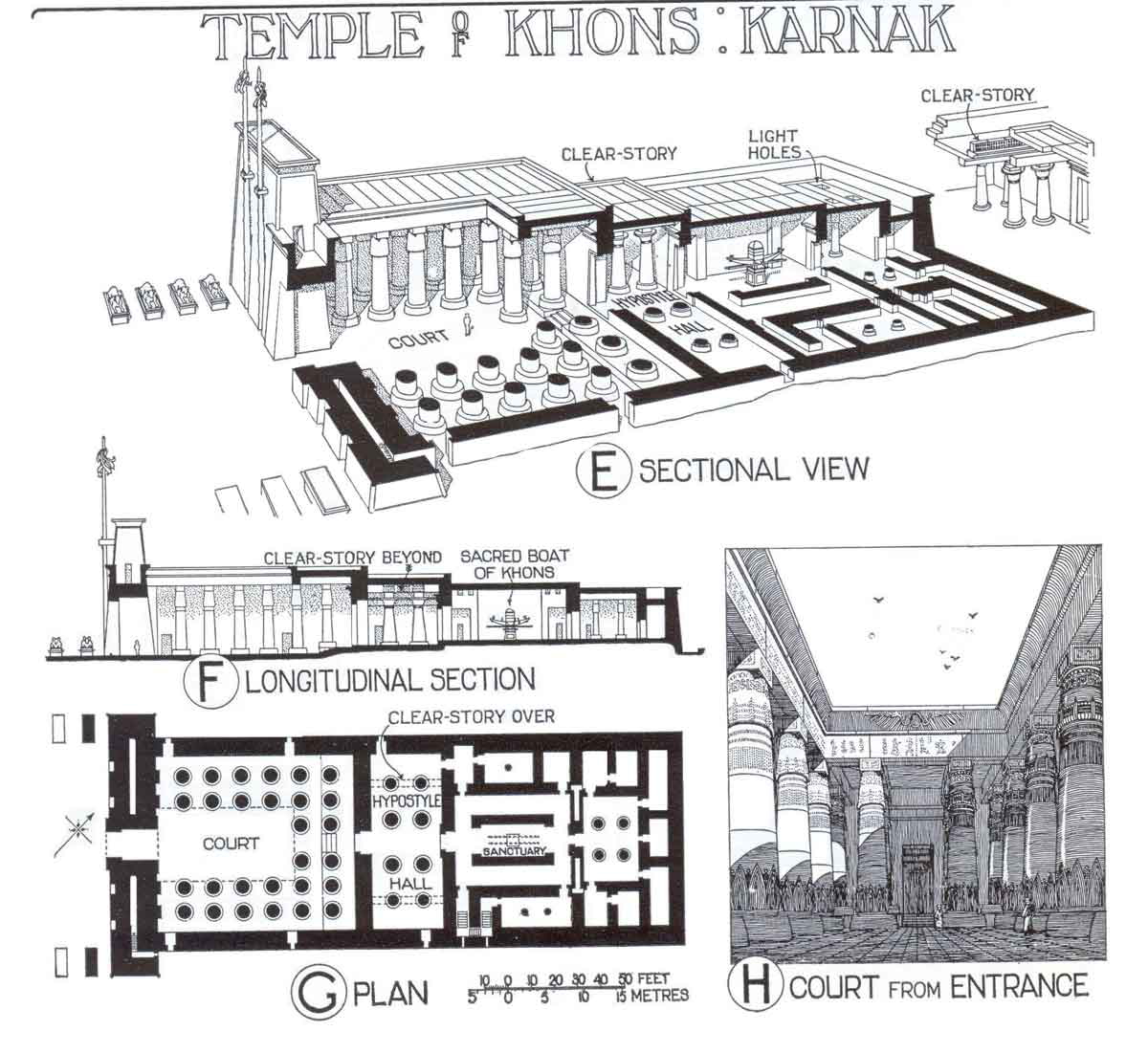
Much of what we know about Khonsu comes from his Theban temple in the Karnak temple complex on Luxor’s east bank. The small (70 meters by 30 meters) but well-preserved temple was built during the New Kingdom, begun under Ramesses III (1186-1155 BCE) and expanded by later pharaohs.
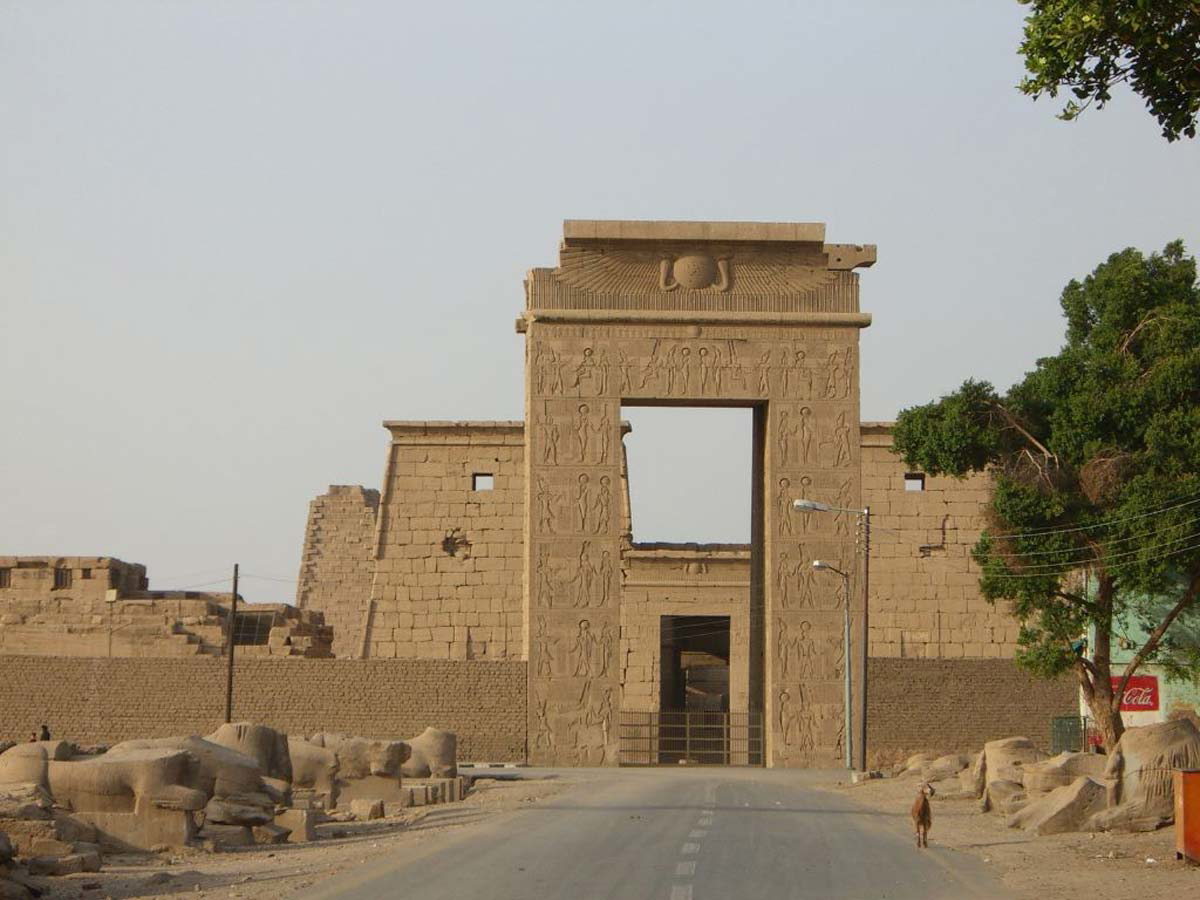
Entered via an avenue of sphinxes and a great gateway, the temple has a peristyle court bordered by a portico of 28 columns that leads to a hypostyle hall connected to a barque sanctuary. There are 12 chapels within the complex, decorated with stunning reliefs, some of which were recently uncovered by conservation work (2008-2018). There is also a staircase leading to the roof, suggesting that it was used in the worship of the moon god.
God of the Underworld
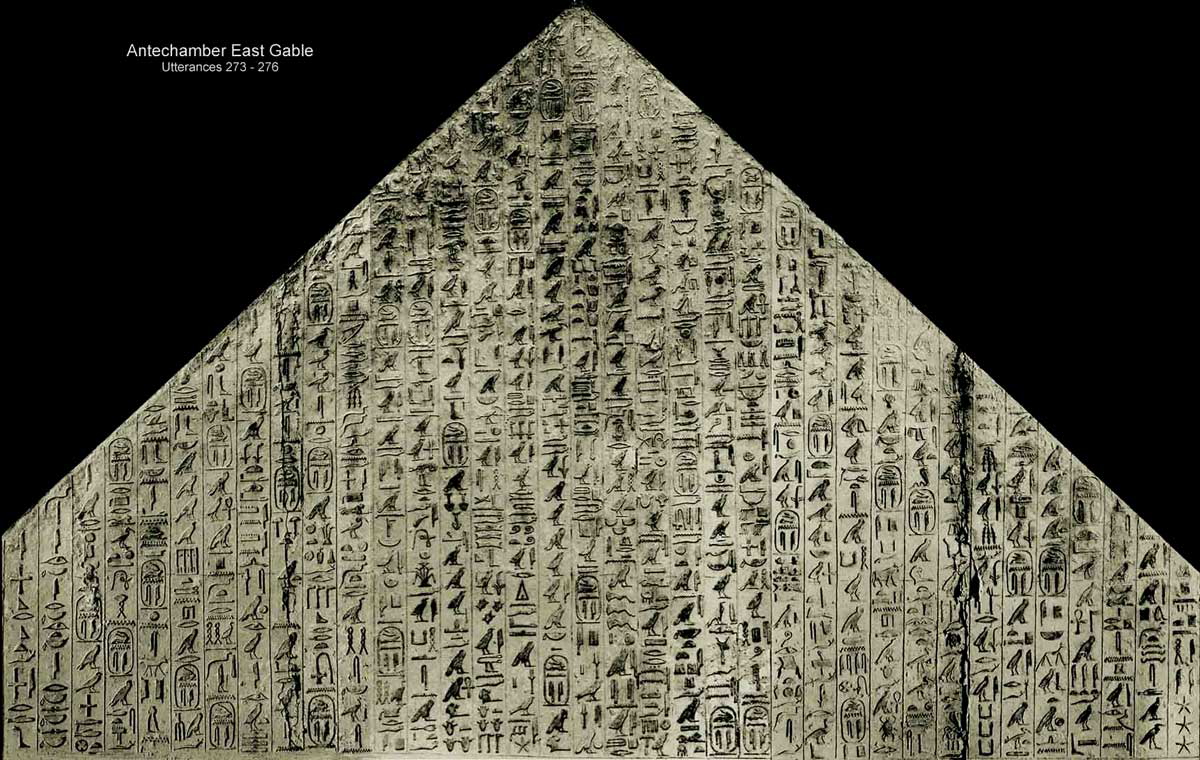
The earliest references to Khonsu describe him as a god linked with death and the darker side of the Egyptian afterlife. In the Pyramid Texts, which come from the Old Kingdom (2686-2181 BCE), he is described as a killer of gods. In the Cannibal Hymn, Khonsu butchers the other gods and feeds their entrails to the deceased king so that he can absorb their magical powers, regain his vitality, and proceed into the afterlife.
Other inscriptions from the Old and Middle Kingdoms describe Khonsu as a demon or messenger of death, who can bring messages from the underworld, and also punish the dead. This is explored further in the Coffin Texts of the Middle Kingdom. In Spell 310, Khonsu is tasked with burning the hearts of those who fail the weighing of the heart ceremony, consigning them to oblivion. The spell helps a person transform into Khonsu and steal the magical power of the gods to make their way into the next life, referring back to Khonsu’s role in the Old Kingdom. It was only in the New Kingdom that Khonsu was replaced by Ammit as the devourer of hearts.
This link to the afterlife is also preserved in links between Khonsu and Osiris. In the complex of Khonsu at the Temple of Edfu, there is a “Chamber of the Leg.” According to myth, when Seth killed Osiris, he cut his body up into pieces and scattered them around Egypt. His leg made its way to Edfu. Khonsu, in his role as an underworld god, is the son of the leg of Osiris.
Lunar Deity
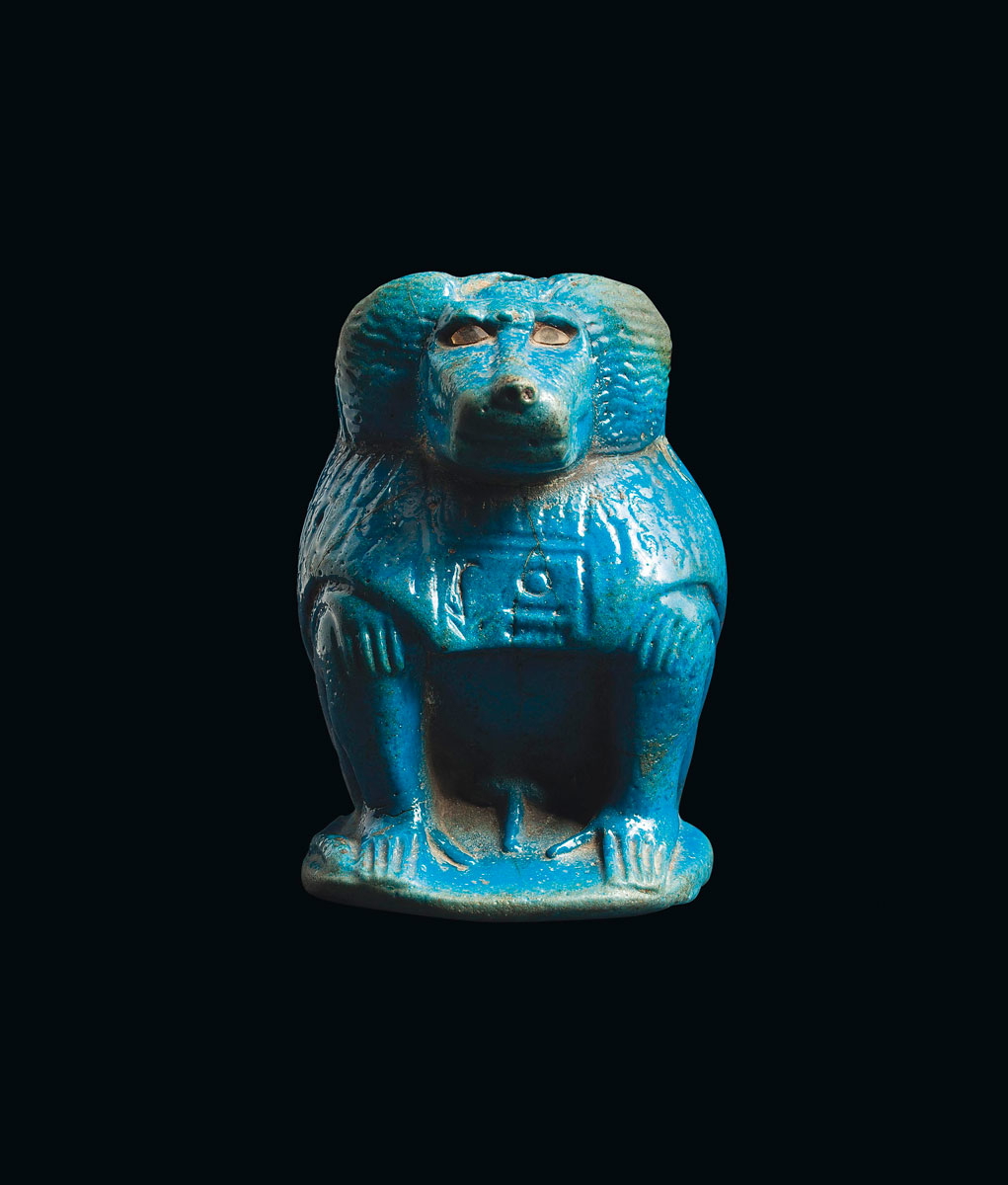
While Khonsu is most often described as a lunar deity, he only became the principal lunar god from the New Kingdom onwards when the other popular moon god, Thoth, became more closely associated with time and wisdom. At Karnak, Thoth and Khonsu were syncretized, and baboons, linked with Thoth, were worshiped there. There was a specialized priesthood that looked after the baboons, and they were used in oracle rituals.
Paralleling the sun gods, rather than being the moon itself, Khonsu carries the moon across the sky in a barque. The moon itself is called Iah. His journey takes him between the mythical mountains of Bakhu and Manu, which support the heavens and mark the entry and exit points of the underworld. In the Coffin Texts, the dead encounter Khonsu on their return from Punt, a land in the east considered to be where the sun and moon rise.
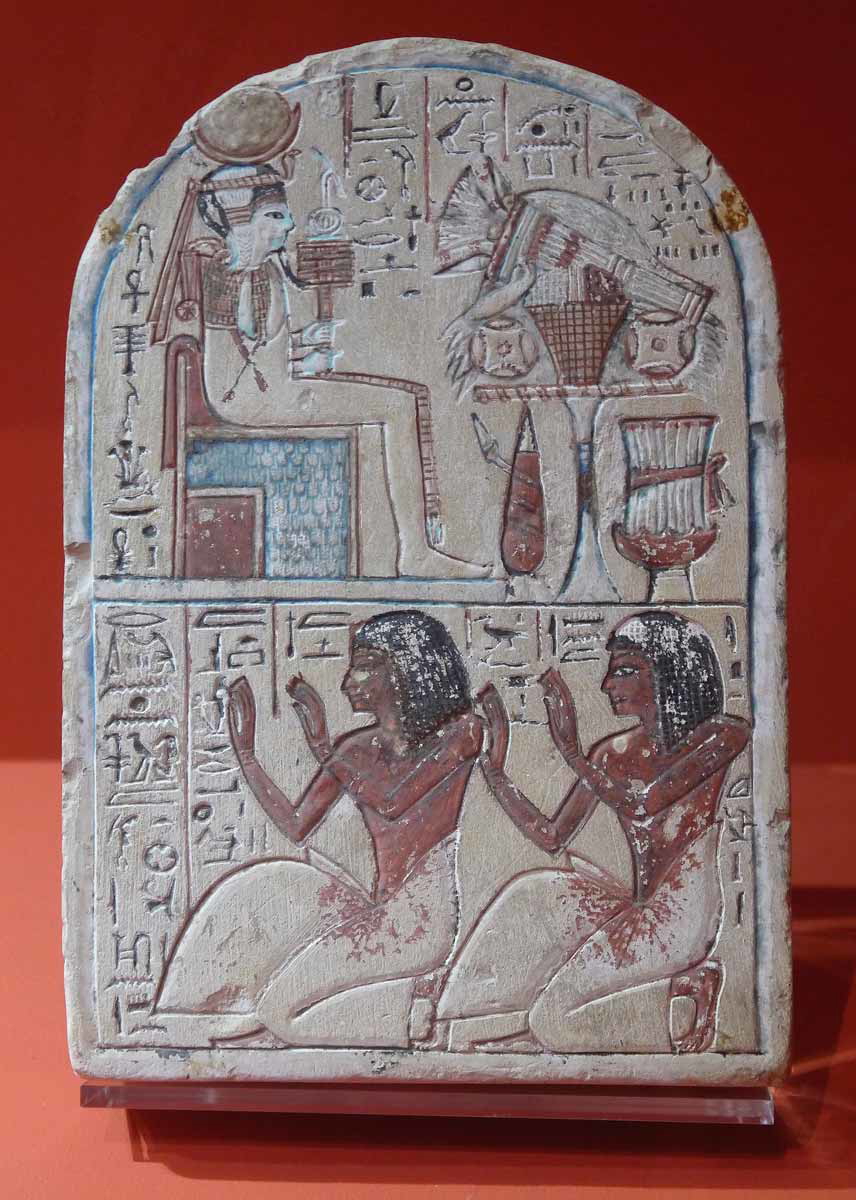
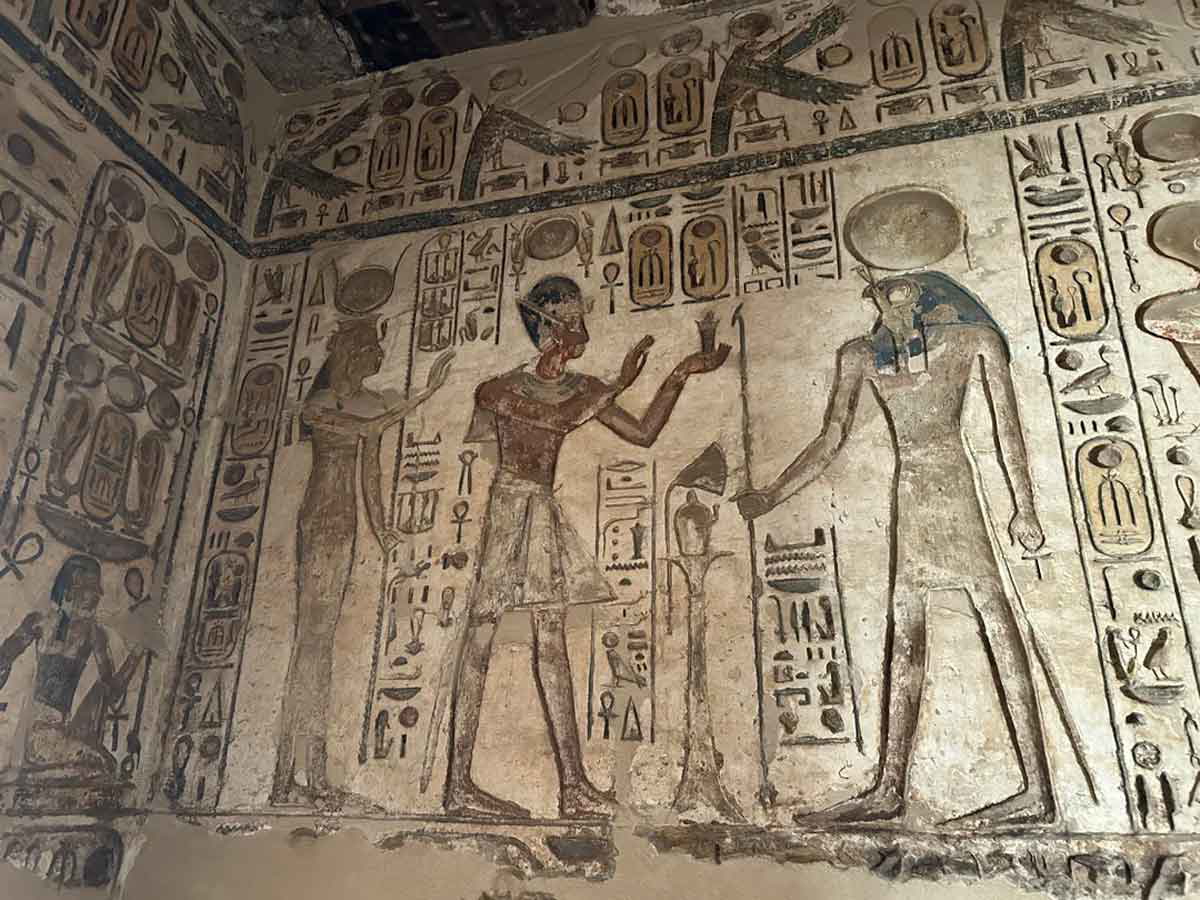
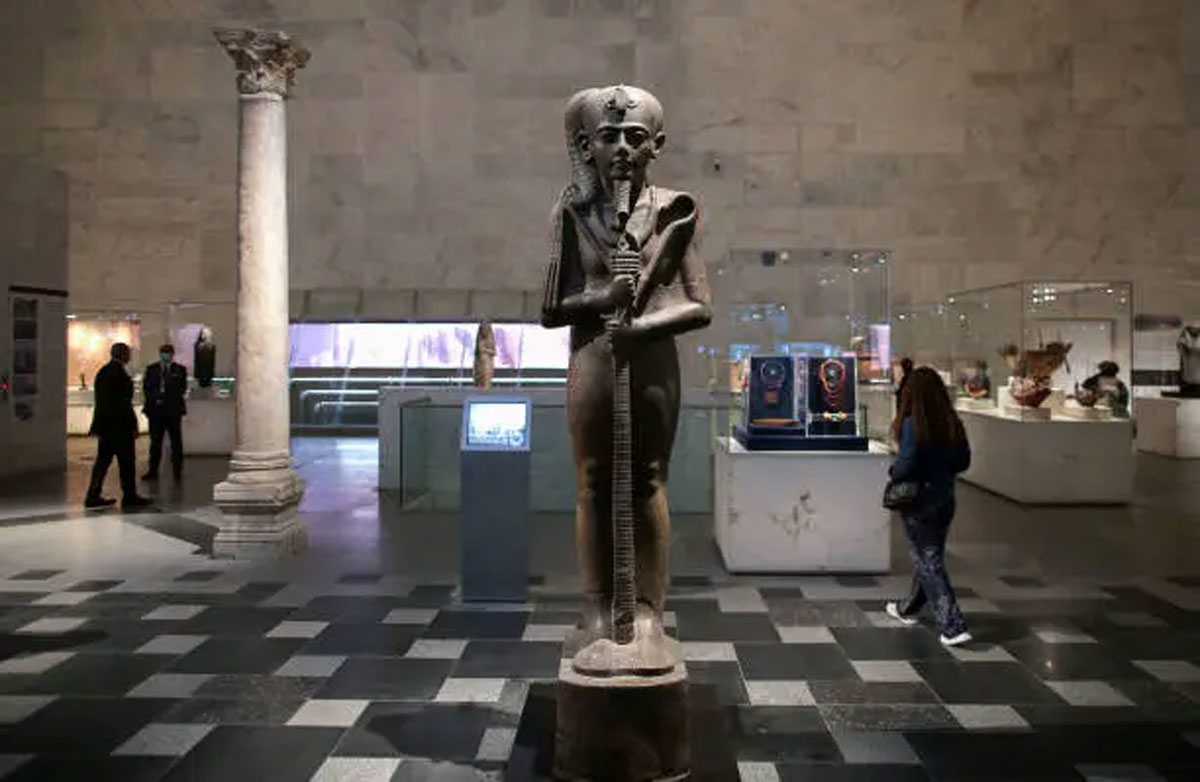
Khonsu was closely associated with the phases of the moon and the cycles of life. As the new moon, he was often depicted as a youth. More specifically, he was a mummy with symbols of childhood, including the typical Egyptian sidelock of hair and menat necklace, but also the crook and flail of Egyptian power. His mummification is probably a nod to Khonsu’s underworld associations, but also the process of death and rebirth. He is also sometimes depicted as a man with a falcon head, like the god Horus, but while Horus is associated with the sun, especially as Ra-Horakhty and wears a sun headdress, Khonsu wears a moon headdress with a full moon disk and crescent moon.
The crescent moon was associated with the sickle sword, which also gave Khonsu an element of justice. He was considered the judge and vizier of the gods of Thebes. Evidence from the temple at Karnak suggests that oaths were sworn by Khonsu to uphold legal obligations, such as paying debts. The crescent moon was also believed to represent the horns of a bull and embody male fertility. Khonsu was also sometimes depicted as a young bull. This made Khonsu a fertility deity, and it was believed that during the crescent moon, he enabled women and other animals to conceive.
Healer and Protector
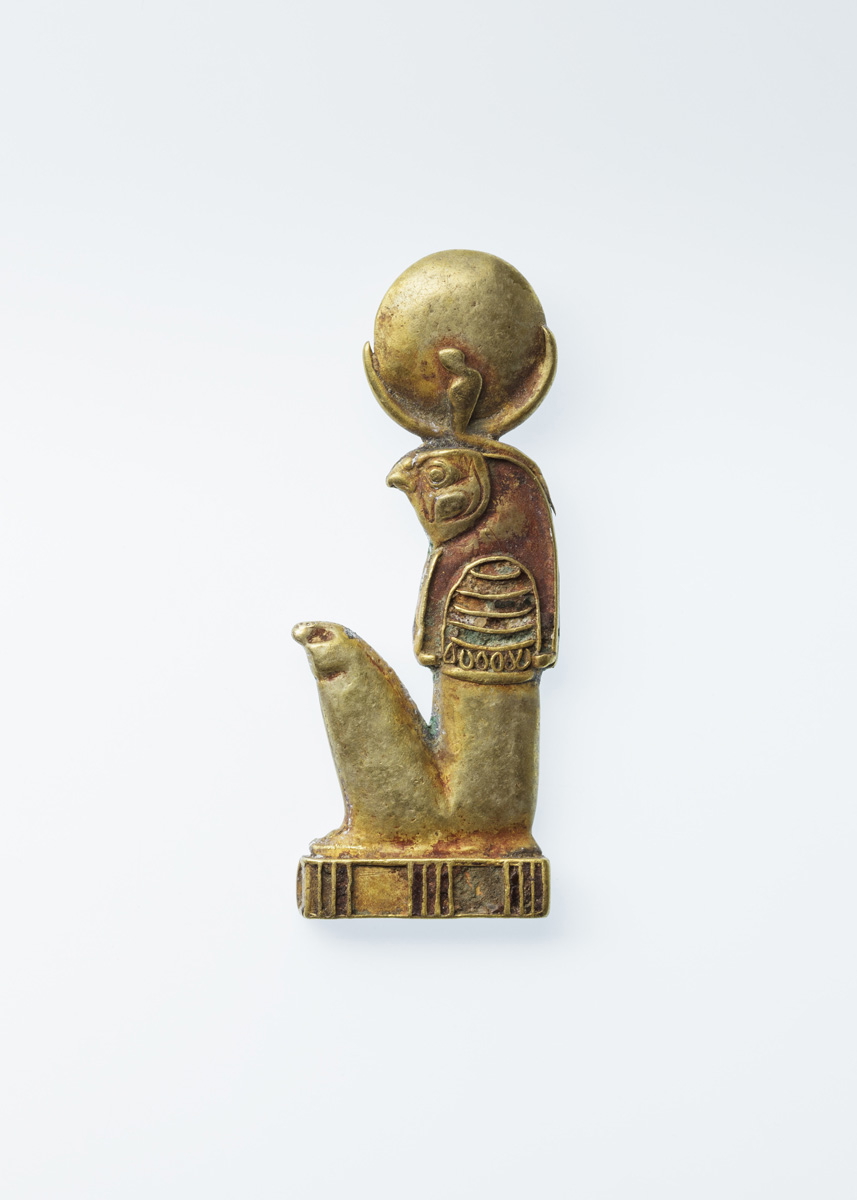
Khonsu was also known by the epithets the Embracer, Pathfinder, and Defender, all of which largely reflect his role as a protective deity. He was particularly associated with the protection of those who work or travel at night. Amulets in the shape of Khonsu were often worn for protection by the living, and also placed on the bodies of the dead.
Khonsu was often called on as a healer. This stems from the fact that he had complete control over all the evil spirits that inhabit the earth, sea, sky, and air. The Egyptians believed that these spirits could invade the bodies of humans and make them sick, but Khonsu could call them off. The Bentresh Stela records how a princess of Bekhten, a land in Bactria in modern-day Iran, was instantly cured of an illness by the arrival of an image of Khonsu sent by the pharaoh. When the Ptolemaic pharaoh Ptolemy IV was cured of an illness, he called himself “Beloved of Khonsu who protects his majesty and drives away evil spirits.”
Moon Knight
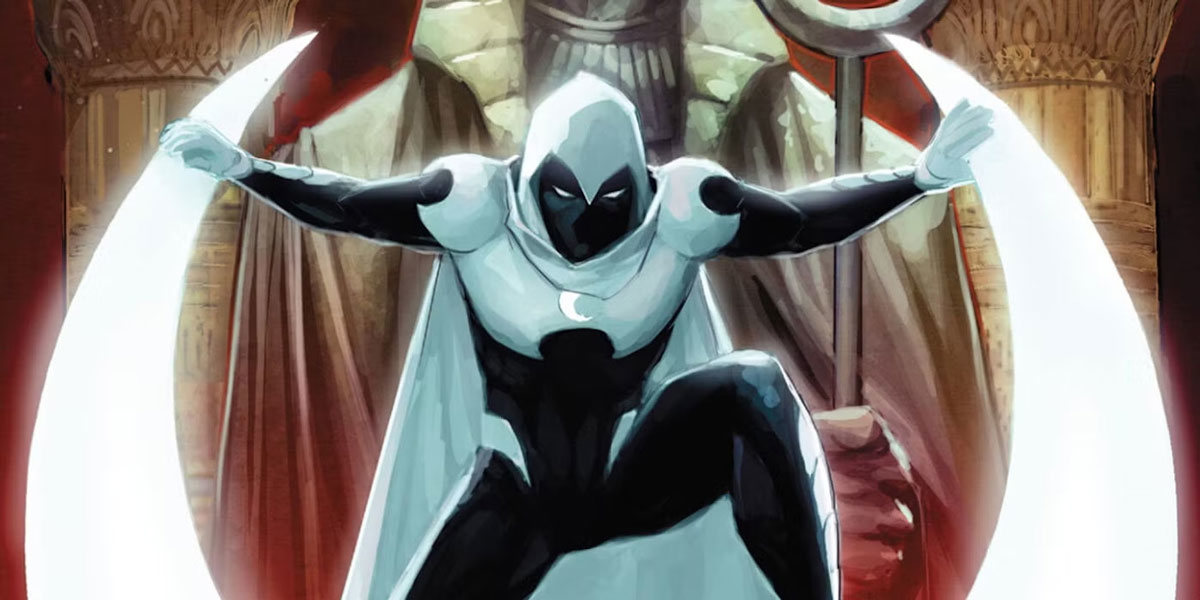
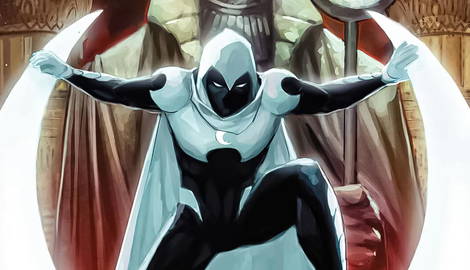
Khonsu has gained new popularity in recent years thanks to a Disney+ series launched in 2022 and starring the popular actor Oscar Isaac. The series is based on the Moon Knight comic book series, first published by Marvel in 1975.
The main character in both the comic and the series is a mercenary named Marc Spector Q, who was killed while on a job in Egypt. But the moon god Khonsu, wanting a champion and avatar on earth, gives him the power of the moon. This sends Marc mad, as he does not truly know and cannot prove what happened to him that night. As a result, he develops multiple personalities. One of those personalities is the superhero Moon Knight, who acts as Khonsu’s knight of vengeance.
Moon Knight has very little to do with Egyptian religion, but the complexity of Marc’s character with its multiple personalities reflects the complexity of the moon god Khonsu. He was a creator god, a god of the underworld who both helped and punished the dead, a god of the moon, justice, fertility, protection, and healing.