The use of currency in trade and commerce by humans has come a long way. For thousands of years, early civilizations relied on barter trade before the invention of standard currency. The barter trade system allowed ancient civilizations to exchange goods and services directly for other goods and services. A farmer, for example, would trade grain for livestock and a craftsman would trade tools for food. While the barter trade system worked for early societies, it suffered from a major flaw referred to as the double coincidence of wants. The issue made it difficult for a person to find a trading partner who wanted exactly what was on offer.
The Use of Precious Metals in Trade
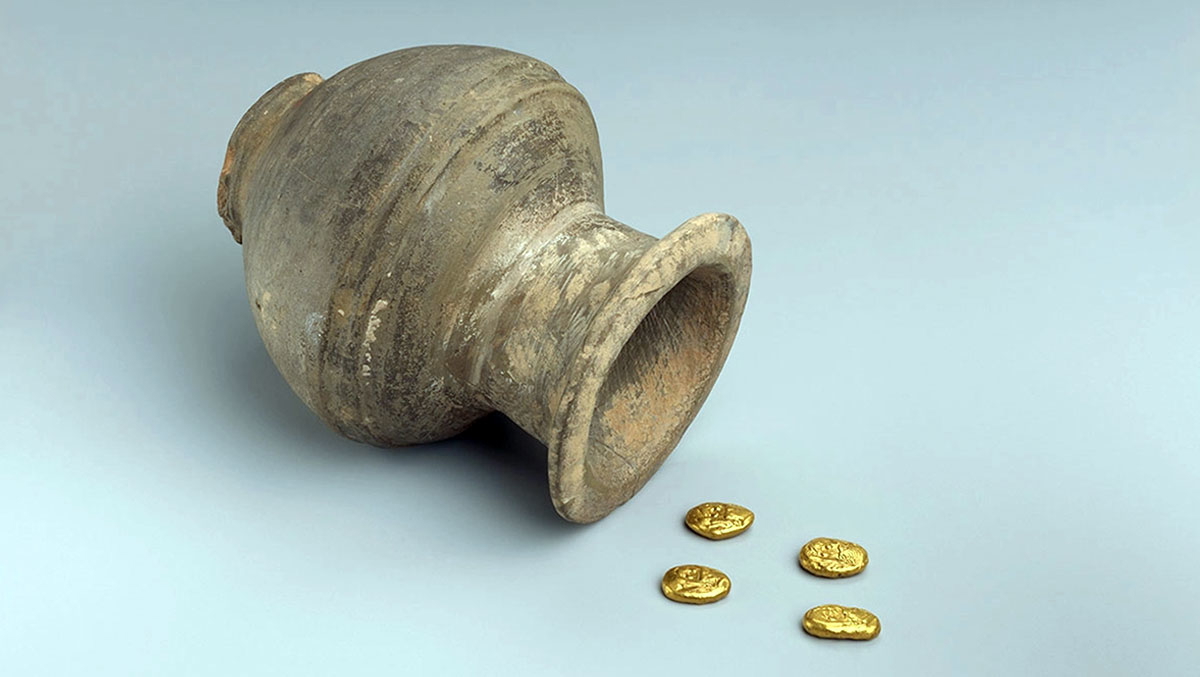
To solve the problem of matching needs and wants, early civilizations in Mesopotamia and Egypt began using precious metals such as gold and silver to facilitate trade. This was around 3000 BCE. Merchants at the time used odd chunks of metal called bullion to pay for transactions.
The use of bullion required traders to weigh the metal and test it for purity every single time a sale was taking place. The process slowed down commerce and required carrying heavy scales. The specific unit of measurement, known as the shekel, originated in Mesopotamia as a unit of weight (equal to about 180 grains of barley) before becoming a standard weight measurement unit for silver.
The Use of Currency in the Kingdom of Lydia

The Kingdom of Lydia emerged in the western part of Anatolia in what is now modern Turkey. While the Hittite Empire collapsed around 1200 BCE, Lydia which rose later, did not become a major power until around the 7th century BCE. The region possessed significant natural resources and served as a geographic midpoint between the Greek and Persian worlds. Greek historian, Herodotus, wrote that the Lydians were the first people to use gold and silver coins in trade. Herodotus also noted that the Lydians were the first to establish retail shops.
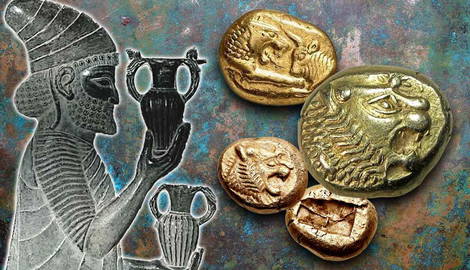
Notably, the Pactolus River flowed through the Lydian capital of Sardis and contained rich deposits of alluvial electrum. Electrum is a naturally occurring alloy of gold and silver that contains trace amounts of copper and other metals. The Lydians used the electrum found in the riverbeds to create the first standardized metal currency.
The Use of the Lydian Lion
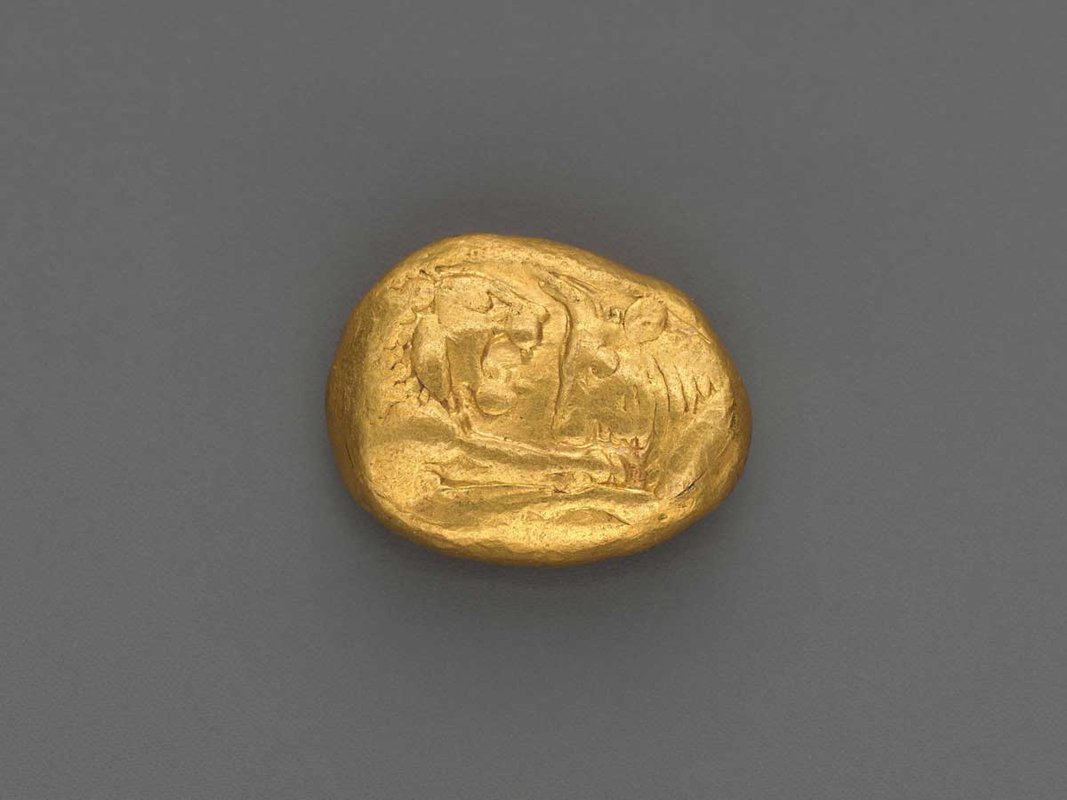
King Alyattes is credited with creating the Lydian Lion around 600 BCE. King Alyattes ruled Lydia from approximately 610 BCE to 560 BCE and was a member of the Mermnad dynasty. The Lydian Lion was a small lump of electrum that featured a stamped design on one side and a punch mark on the other.
The design featured the head of a roaring lion, the royal symbol of the Lydian kings. Its stamp acted as the official guarantee of the coin’s weight and value, while the punch marks on the reverse side were mainly a result of the tools used to hold the metal in place during the minting process. At the time, the government minted the coins by placing a pre-weighed lump of heated electrum on an anvil die and then striking the metal with a hammer.
That said, the Lydian Lion moved the human economy away from bartering by effectively eliminating the need for weighing metal during every transaction. As such, traders could count the coins instead of weighing the pieces. Ultimately, the Lydian Lion allowed merchants to conduct business faster and more efficiently than ever before.
King Croesus’ Contribution
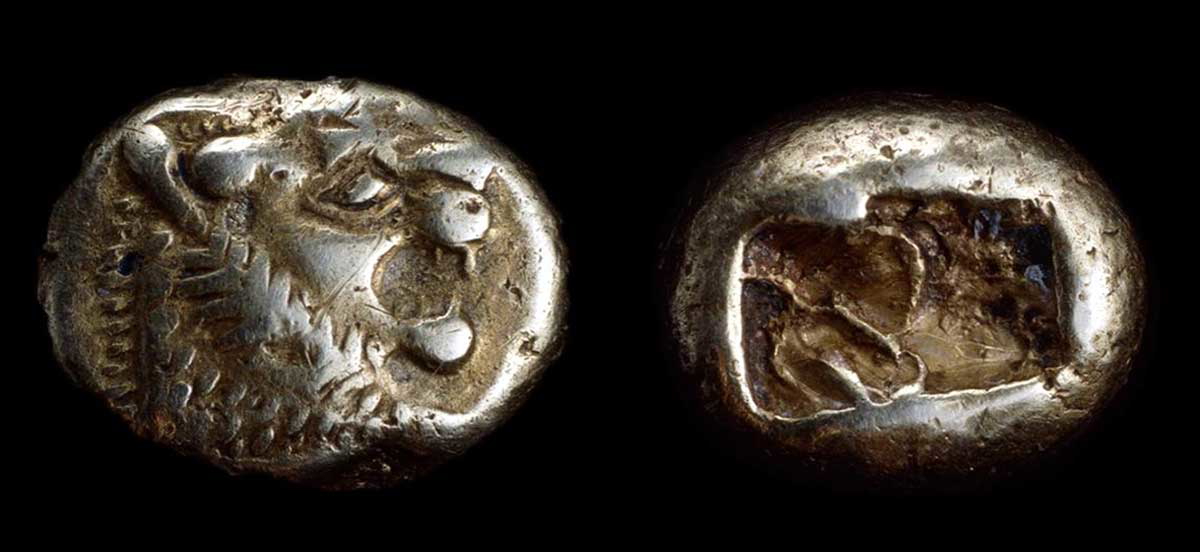
King Croesus succeeded King Alyattes around 560 BCE and continued to refine the Lydian coinage system. He became famous throughout the ancient world for his immense wealth. Interestingly, the Lydian metallurgists under King Croesus developed a process known as cementation to separate gold and silver from the raw electrum. King Croesus subsequently introduced a bimetallic system of pure gold and pure silver coins around 550 BCE. Both the gold and silver coins used in this system were known as Croeseids. The new system established a fixed exchange rate between the two metals. By issuing coins of pure gold and silver, it allowed for greater precision in trade and international commerce.
The trend of using coins of different denominations spread quickly to nearby regions and changed the dynamics of trade and administration in the Mediterranean region. Over time, the introduction of a uniform coinage system helped to expand and improve the efficiency of trade globally.