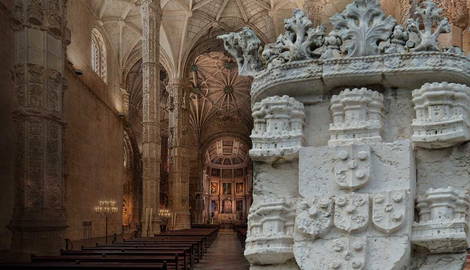
Inspired by the Portuguese maritime expansion and influenced by Mudejar art and the Italian Renaissance, Manueline architecture is filled with naturalistic symbols, mythological figures, and traditional themes.
How Did Manueline Architecture Appear?
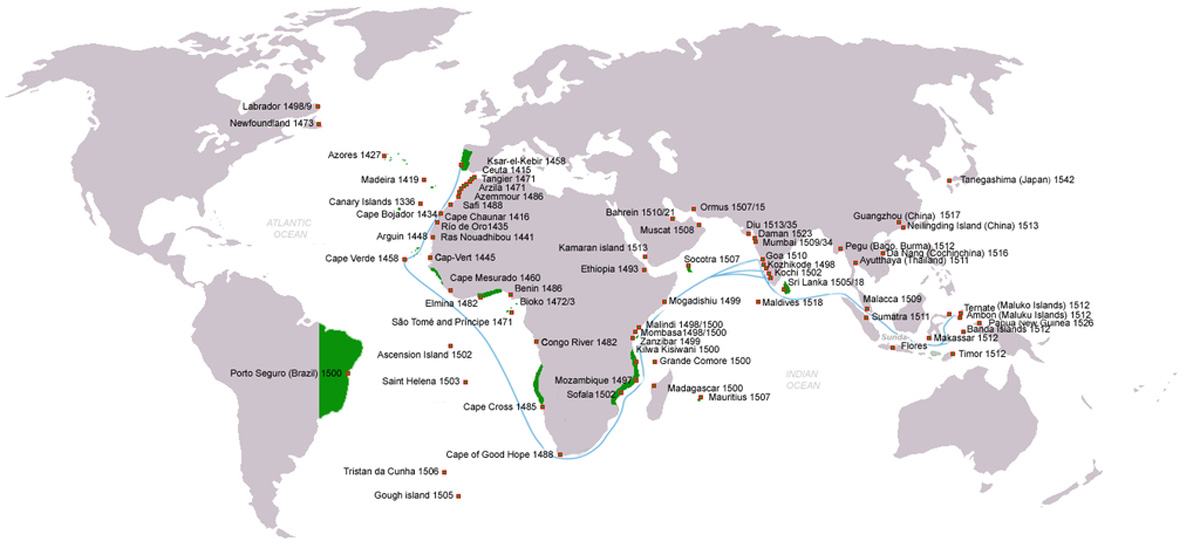
The Portuguese Golden Age, between the 15th and 16th centuries, is a historic landmark in Portugal’s history. During this period, Portugal was an economic, political, and cultural powerhouse only rivaled by Spain and the Ottoman Empire.
Portugal reached this status thanks to the maritime expansion that started with the discovery of the Madeira archipelago in 1419. After that, Portuguese sailors traveled the world, discovered and colonized new territories, and found the maritime route to India. During this period, the Portuguese and Spanish kingdoms also signed the Tordesillas Treaty, which divided the world between themselves.
Commercial trade with the colonies and overseas allies brought wealth to one of the smallest kingdoms in Europe. Such prosperous times attracted foreign business, sailors, poets, scientists, and historians.
Although the foundations of the Portuguese maritime expansion date back to the early 15th century, it was under the rule of King Manuel I, between 1495 and 1521, that Portugal became an overseas empire and a cultural mecca.
During this period, King Manuel I envisioned a new decorative style that reflected Portugal’s prowess, the king’s mightiness, and the country’s achievements. King Manuel I developed a new ornamental style with very few structural innovations, influenced by the French flamboyant Gothic style, Mudejar art, and the Italian Renaissance. The result is a very specific Gothic style with nautical, mystical, and heraldic motifs combined with naturalistic elements.
This new artistic trend kept more or less the same features as the Spanish Plateresque, and church designs kept an East-West orientation. However, the Manueline style also applied vaults with ribs based on corbels.
Manueline Features and Their Symbolism
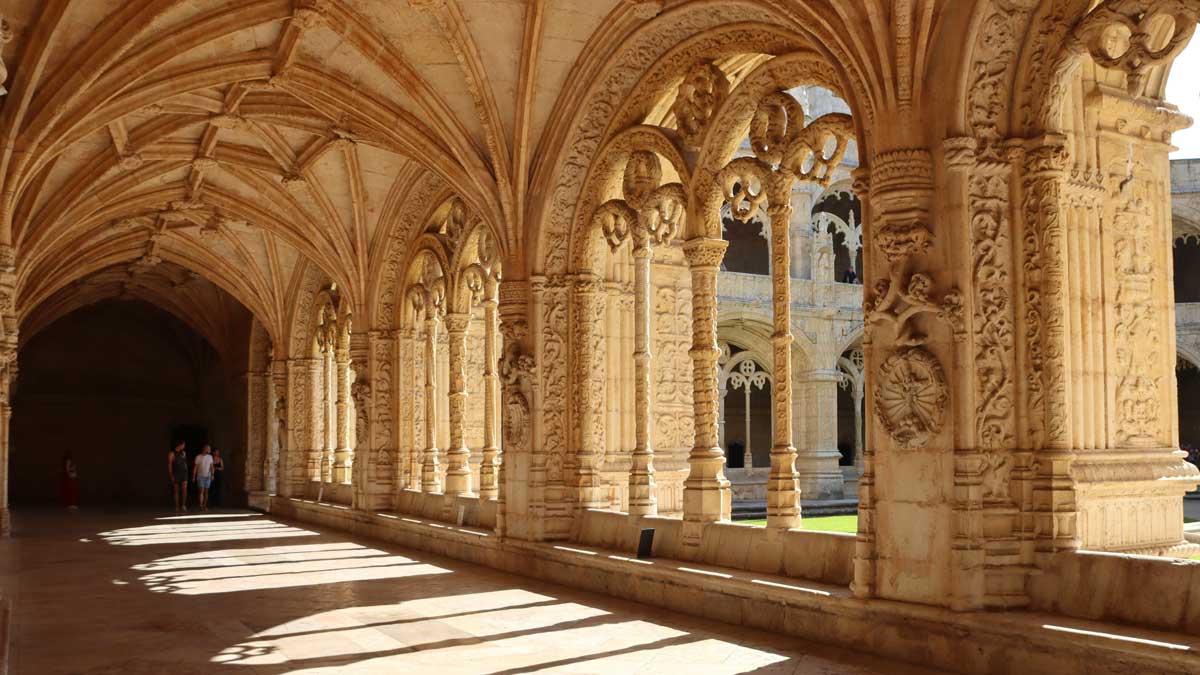
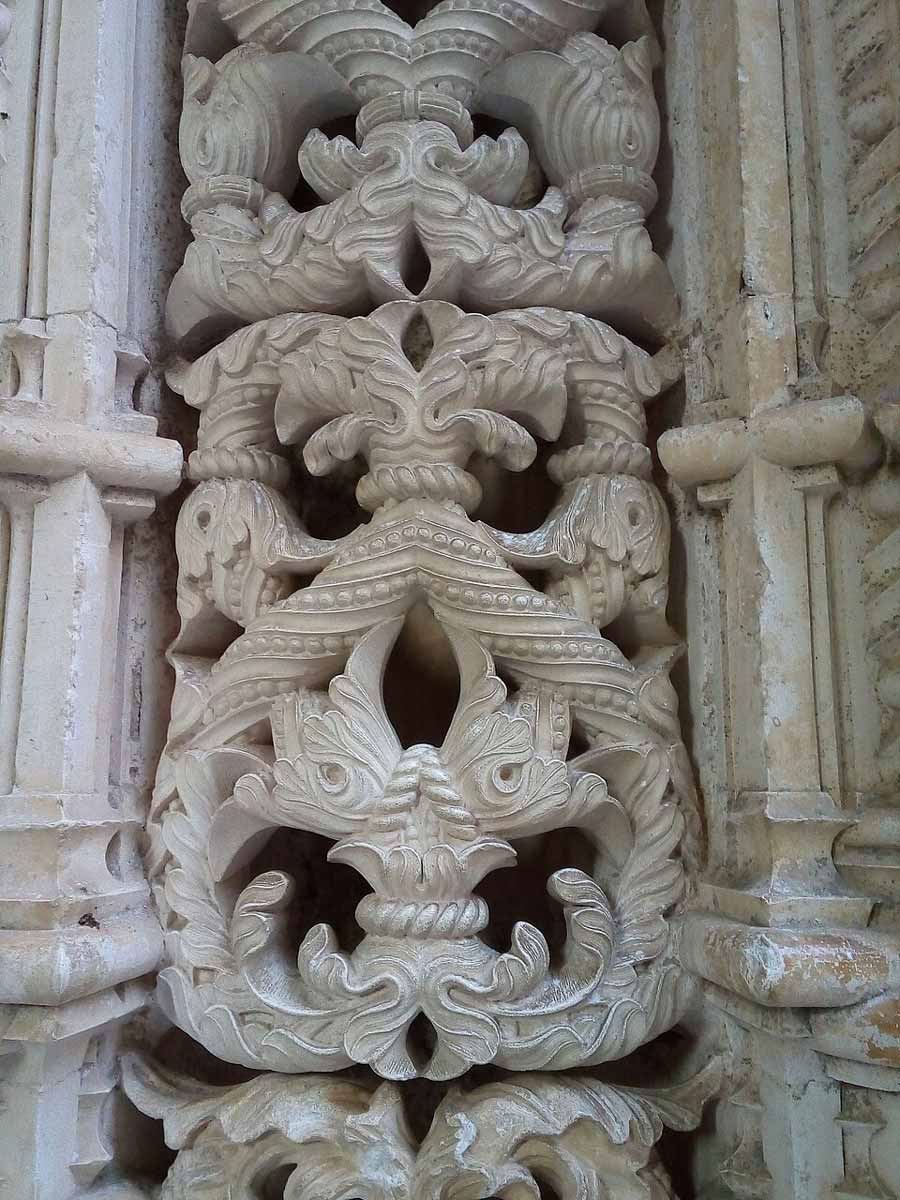
The most dominant features of the Manueline style are an exuberant form and the naturalistic interpretation of traditional themes. Although these features are easily found in religious and civil buildings, they also appear in other places, such as on pillories, tombs, and jewelry.
Manueline stone sculptures almost always present Christian symbols, popular beliefs, and traditions. As a result, their imagery might reveal moralizing, allegorical, or even erotic content.
In the Manueline style, the most frequent motifs are the armillary sphere, the Cross of the Order of Christ, and several natural elements, such as corals, pine cones, and artichokes. It is also very common to find mythological figures such as mermaids, gargoyles, and ouroboros.
Considering King Manuel I was the first Portuguese person to receive the crown without being directly in line to succeed (all other heirs to the throne were deceased, and King João II named him heir to the throne), Manueline architecture presents several elements of the king’s messianic aspirations.
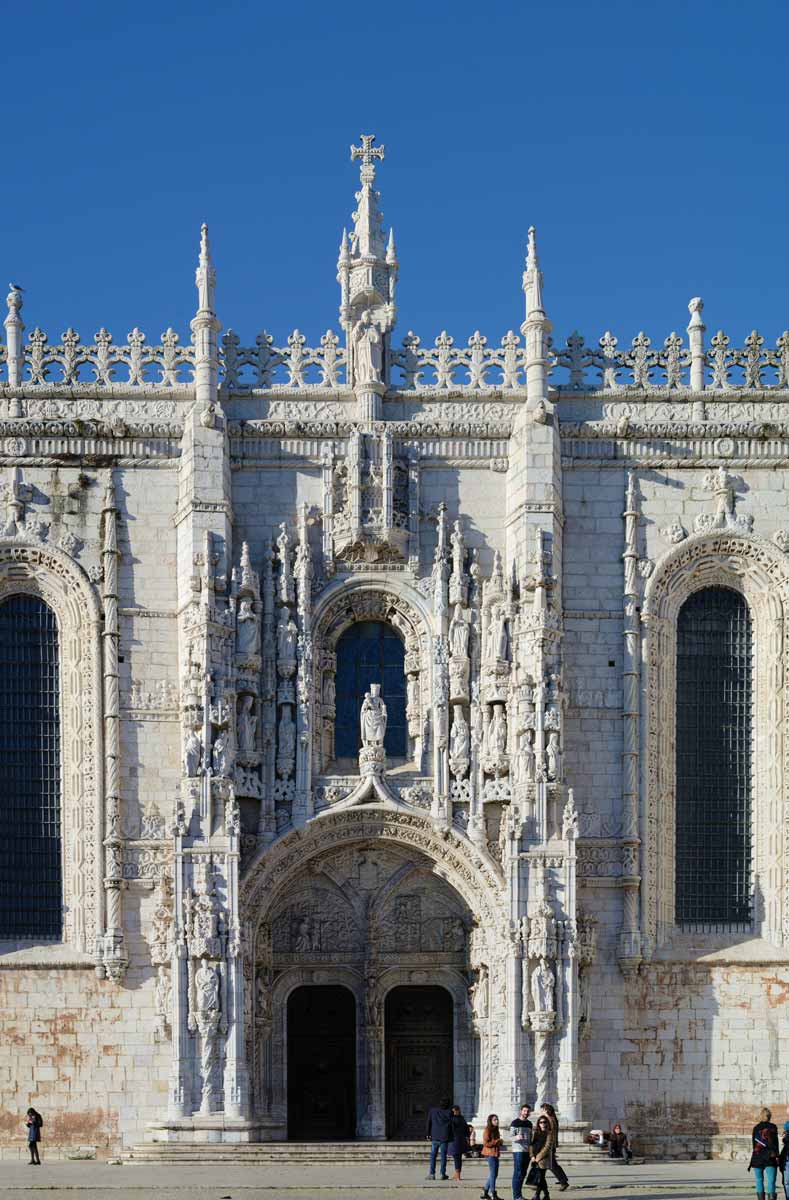
One symbol of this is the armillary sphere, which King Manuel I received from King João II, who preceded him. Besides representing the king’s power, this motif also represents God’s designs for King Manuel I’s reign as the “Hope of the World.”
Since the Order of Christ’s foundation in 1319, the Cross of the Order of Christ has been used by the Portuguese military. As the maritime expansion progressed and Christianity was spread, the cross was included on Portuguese ship sails. It was used for the first time on Pedro Álvares Cabral’s armada, the fleet that discovered Brazil in 1500. Today, several official entities still use this cross as their symbol, including the Portuguese Navy and Air Force.
Portugal’s coat of arms is another symbol used in the Manueline style. Also known as “quinas” (quincunx), the coat of arms represents the five Moorish kings that King Afonso Henriques, Portugal’s first king, defeated in the Ourique Battle in 1139. The five white dots inside the “quinas” represent the five wounds Christ inflicted during his crucifixion. The coat of arms design has remained unchanged since the 12th century and represents faith, divine protection, and the country’s national identity.
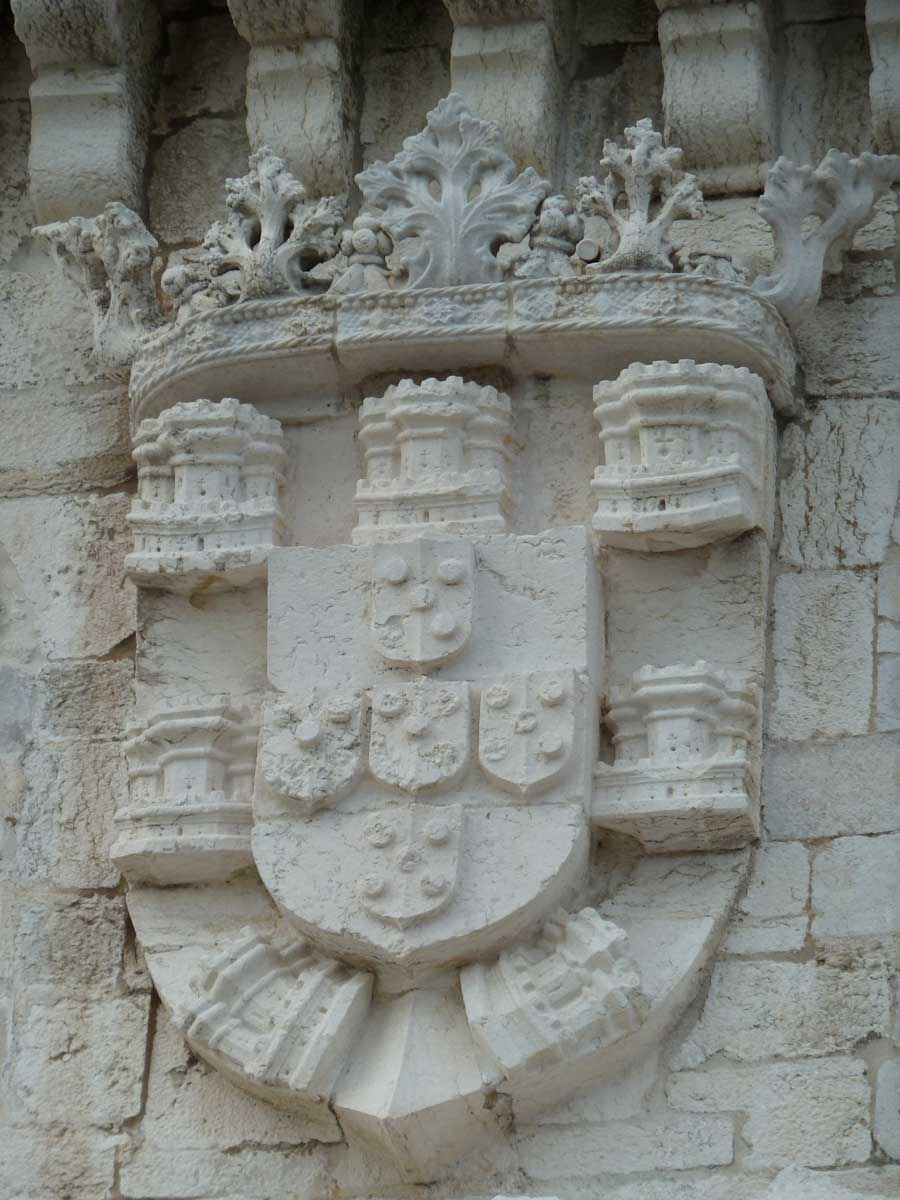
Among the common naturalist elements are corals, algae, ivy, and laurel leaves. Yet, the most symbolic elements are artichokes, which symbolize regeneration and resurrection. There are also pomegranates and pine cones, both symbols of fertility, and dried trees, a common element of the late Gothic style.
Several mythological creatures are present in the Manueline style. The ouroboros, the serpent that bites its tail, is the symbol of the union between the beginning and the end. Mermaids are a profane art motif, mostly related to the sins of the flesh. Other creatures include gargoyles, dragons, and monsters devouring their bodies. In some buildings, you might even find animals performing human actions, such as playing musical instruments.
Since Manueline architecture was born in a Christian kingdom, it is only natural that it includes Christian symbols, such as bunches of grapes, Agnus Dei, and cherubs.
Entangled ropes, nets, chains, and knots are some of the nautical elements present in the Manueline style. However, it is also common to find busts of historical figures, spiraled columns, and pinnacles.
Best Locations to Admire the Manueline Style
You can admire Manueline architecture in Portugal and around the world. Here’s a list of the best places to contemplate this unique style.
| Name | City, Country | Key Manueline Features |
| Jerónimos Monastery | Lisbon, Portugal | Highly ornate cloisters, maritime-themed columns, and the tombs of Vasco da Gama and Luís de Camões. |
| Belém Tower | Lisbon, Portugal | Exterior decorations featuring the armillary sphere, Portugal’s coat of arms, and the Cross of the Order of Christ. |
| Batalha Monastery | Batalha, Portugal | The portal at the Unfinished Chapels (Capelas Imperfeitas) and the armillary spheres in King João I’s cloister. |
| Convento de Cristo | Tomar, Portugal | The iconic Chapter House Window, a stone masterpiece showcasing maritime ropes, coral, and knots. |
| D. Manuel Palace | Évora, Portugal | The Paço das Damas, which blends Mudejar (Moorish) influence with naturalist Manueline elements. |
| São Sebastião Church | Ponta Delgada, Azores | An elaborate portal with interlaced archivolts, naturalist carvings, and angel reliefs. |
| Fortified City of Mazagão | El-Jadida, Morocco | Manueline elements integrated into the military fortress and the Church of the Assumption. |
| Cistern of Mazagão | El-Jadida, Morocco | A subterranean chamber with 36 vaults supported by 25 columns and a central light oculus. |
| Nossa Senhora do Baluarte | Mozambique Island, Mozambique | A ribbed vault and battlements; it is the only remaining Manueline building in Mozambique. |
| São Francisco Church | Goa, India | A preserved Manueline portal featuring armillary spheres, surviving from the original 16th-century church. |
1. Jerónimos Monastery (Lisbon, Portugal)
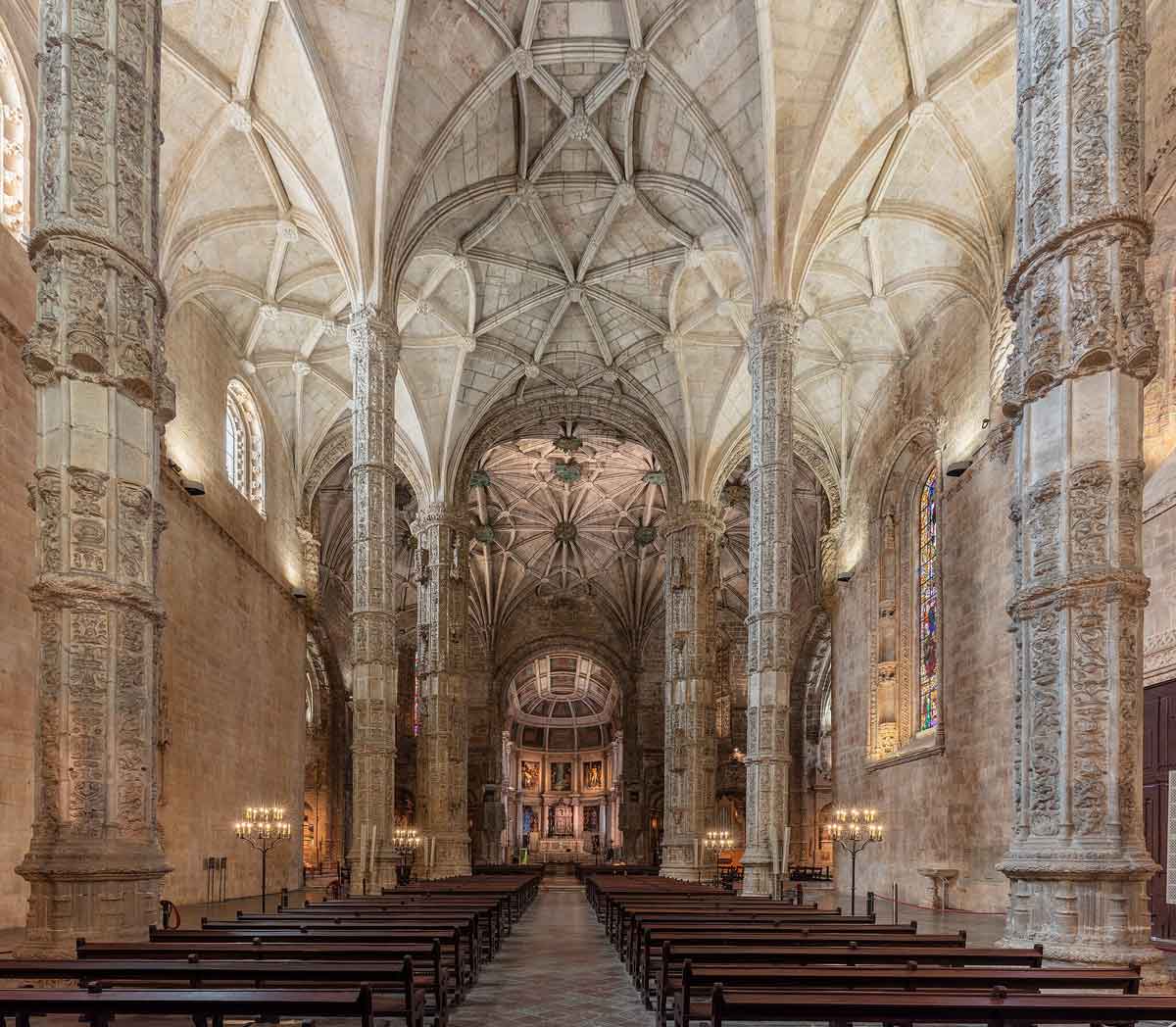
The Mosteiro dos Jerónimos in Lisbon is an iconic landmark in Portugal and one of the best representations of Manueline architecture. Construction began in 1501, under the rule of King Manuel I, and extended over the next century.
While exploring this striking monument, take some time to admire the façade, the church, and the cloisters. The impressive details show how symbolic Manueline-style features are. At Jerónimos Monastery, you can visit the tombs of Luís de Camões, Vasco da Gama, King Manuel I, and his descendants.
Due to the monument’s magnificence and relevance to Manueline architecture, Mosteiro dos Jerónimos was declared a National Monument in 1907 and classified as a UNESCO World Heritage Site in 1983.
2. Belém Tower (Lisbon, Portugal)
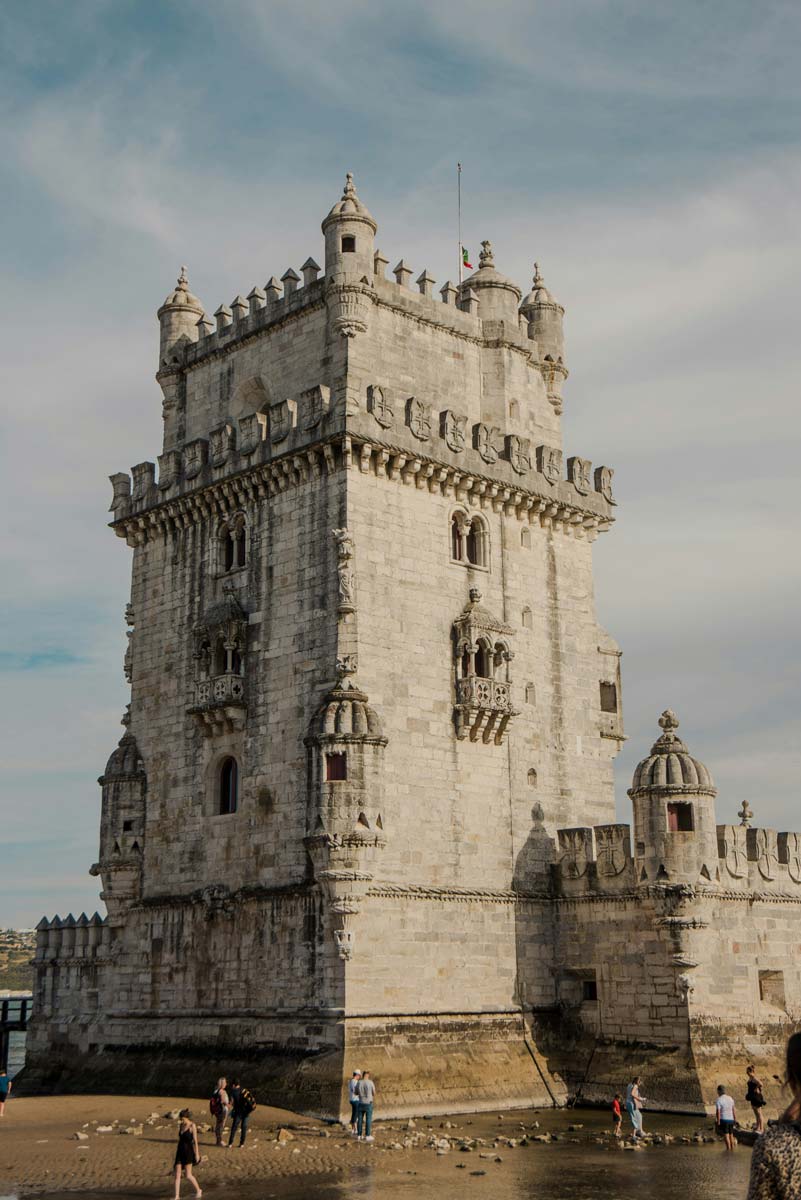
At a short distance from Mosteiro dos Jerónimos, you can visit the Torre de Belém. Built between 1514 and 1520, this landmark is another Manueline style piece of architecture. Although it was built to defend the Tagus River mouth, its design is thought to include the main Manueline elements, such as Portugal’s coat of arms, the armillary sphere, and the Cross of the Order of Christ.
In 1983, Torre de Belém was classified as a UNESCO World Heritage Site. Since then, this beautiful landmark has become one of the most visited historical locations in Portugal.
3. Batalha Monastery (Batalha, Portugal)
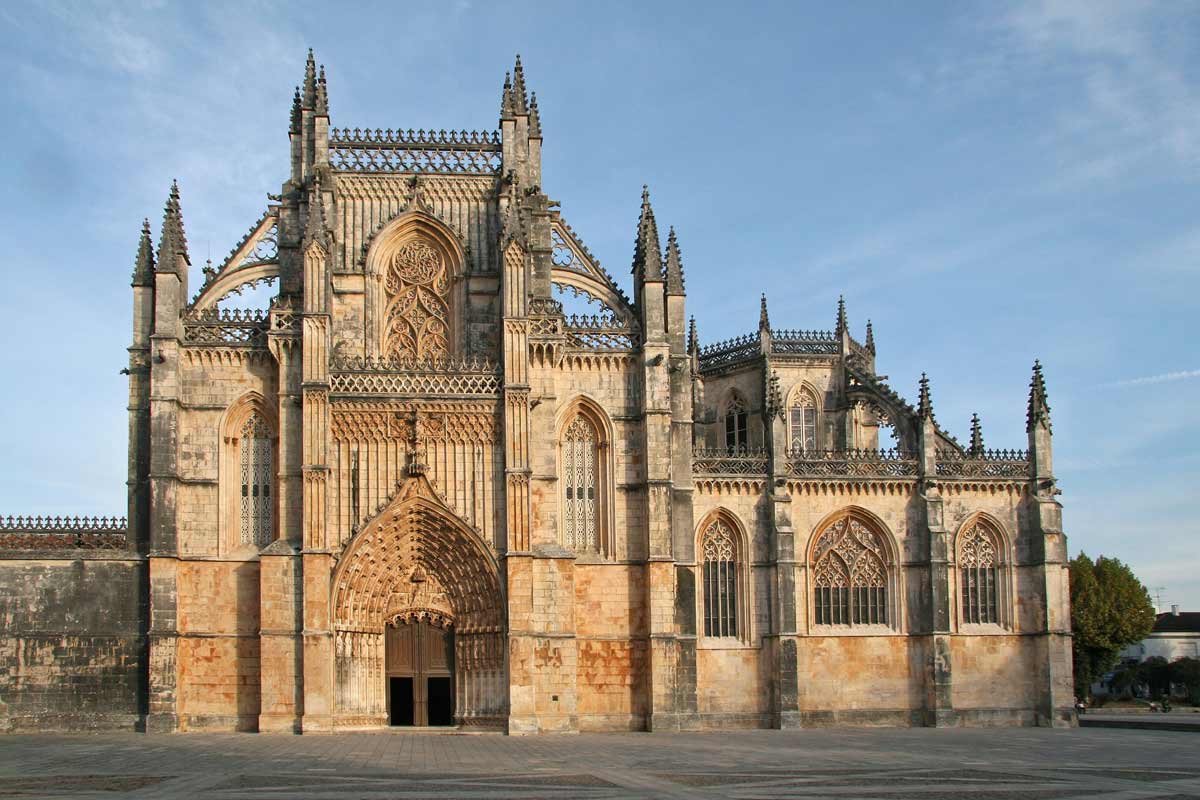
Mosteiro da Batalha is a mesmerizing Gothic and Manueline monastery. It was built on the location where the Portuguese army defeated the Castilians in 1385 and ended a succession war. Construction began in 1387 and lasted until 1563, covering the reigns of seven kings.
The best places to admire Manueline features at this striking historical site are the pantheon windows, the washroom in the royal cloister, the portal at the Capelas Imperfeitas, and in King João I’s cloister, where you can admire the cross of Christ and the armillary sphere.
In 1983, the monastery was declared a UNESCO World Heritage Site due to its architectural and historical significance.
4. Convento de Cristo (Tomar, Portugal)
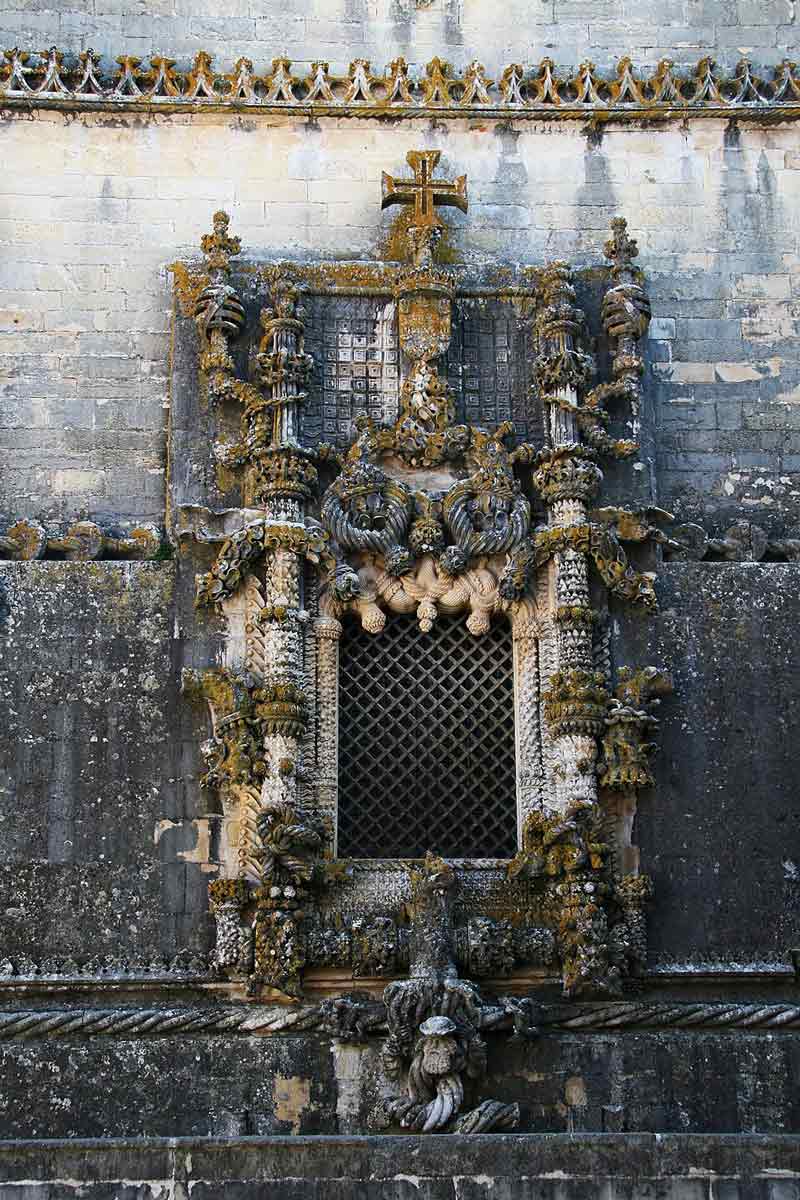
The Convento de Cristo is a stunning building complex with a fascinating history that started in the 12th century as a Templar castle. Construction work continued across the following centuries, and it was finished in the 18th century. As a result, you will find different architectural elements such as Romanic, Gothic, Manueline, Renaissance, and Mannerist.
At the height of the Portuguese maritime expansion, King Manuel I ordered the construction of a new Manueline church. Inside, you can admire polychrome wood carvings, gilded wood stuccoes, and wall paintings.
However, the most enigmatic feature of Convento de Cristo is the chapter room window, built between 1510 and 1513. This iconic work of art is considered a Manueline masterpiece representing the Order of Christ’s commitment to the Portuguese Maritime Expansion.
The Convento de Cristo was classified as a National Monument in 1910 and a UNESCO World Heritage Site in 1983.
5. D. Manuel Palace (Évora, Portugal)
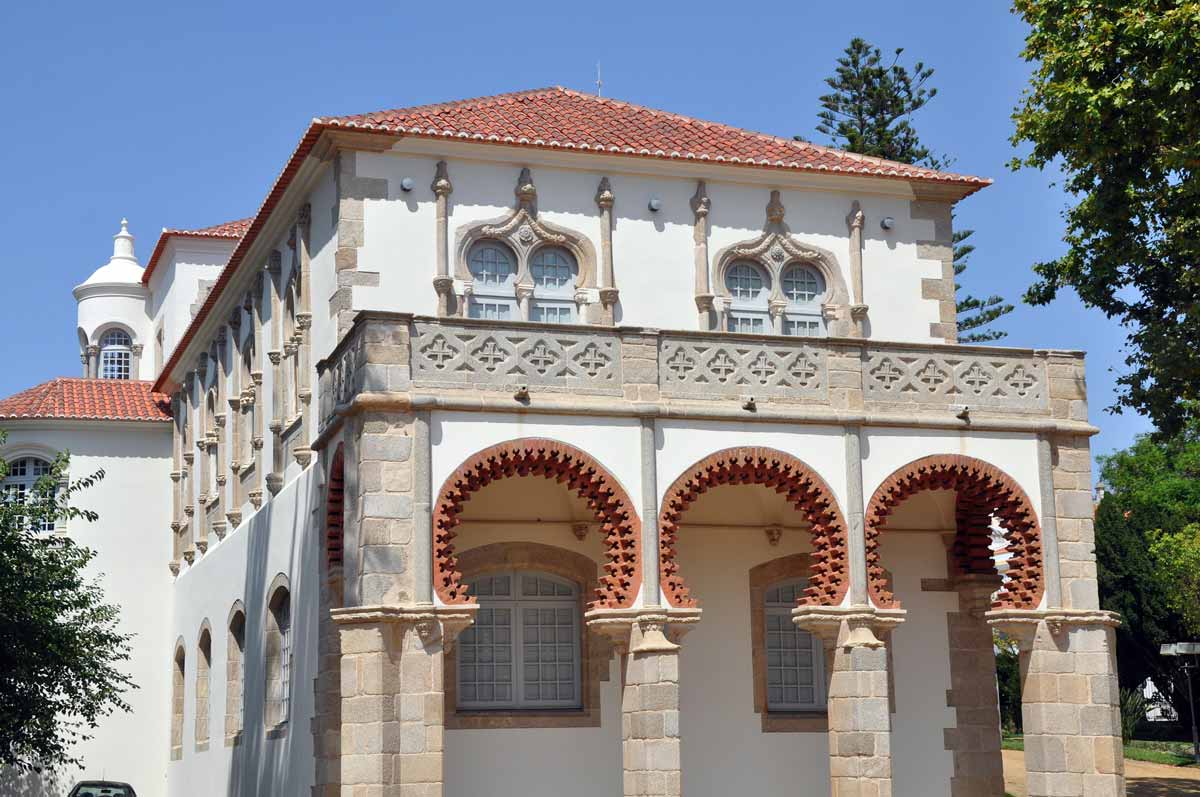
In the 14th century, King Afonso V ordered the construction of a new palace outside the city center. Over the centuries, Palácio D. Manuel was enlarged and refurbished. Besides being a royal residence, this was where Vasco da Gama was invested as commander of the fleet that discovered the maritime route to India.
King Manuel I ordered the palace refurbishment to include several Manueline features. From this renewal, only the Paço das Damas has survived to this day. Here, you will find several Mudejar features combined with naturalist Manueline elements.
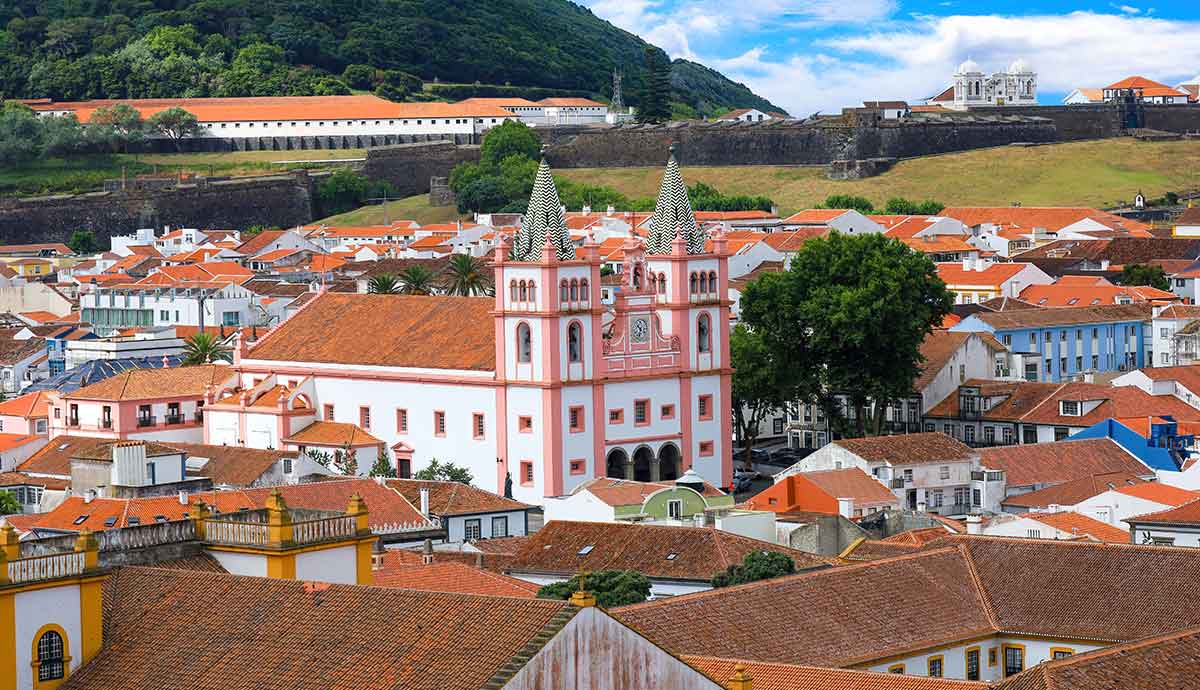
6. São Sebastião Church (Ponta Delgada, Portugal)
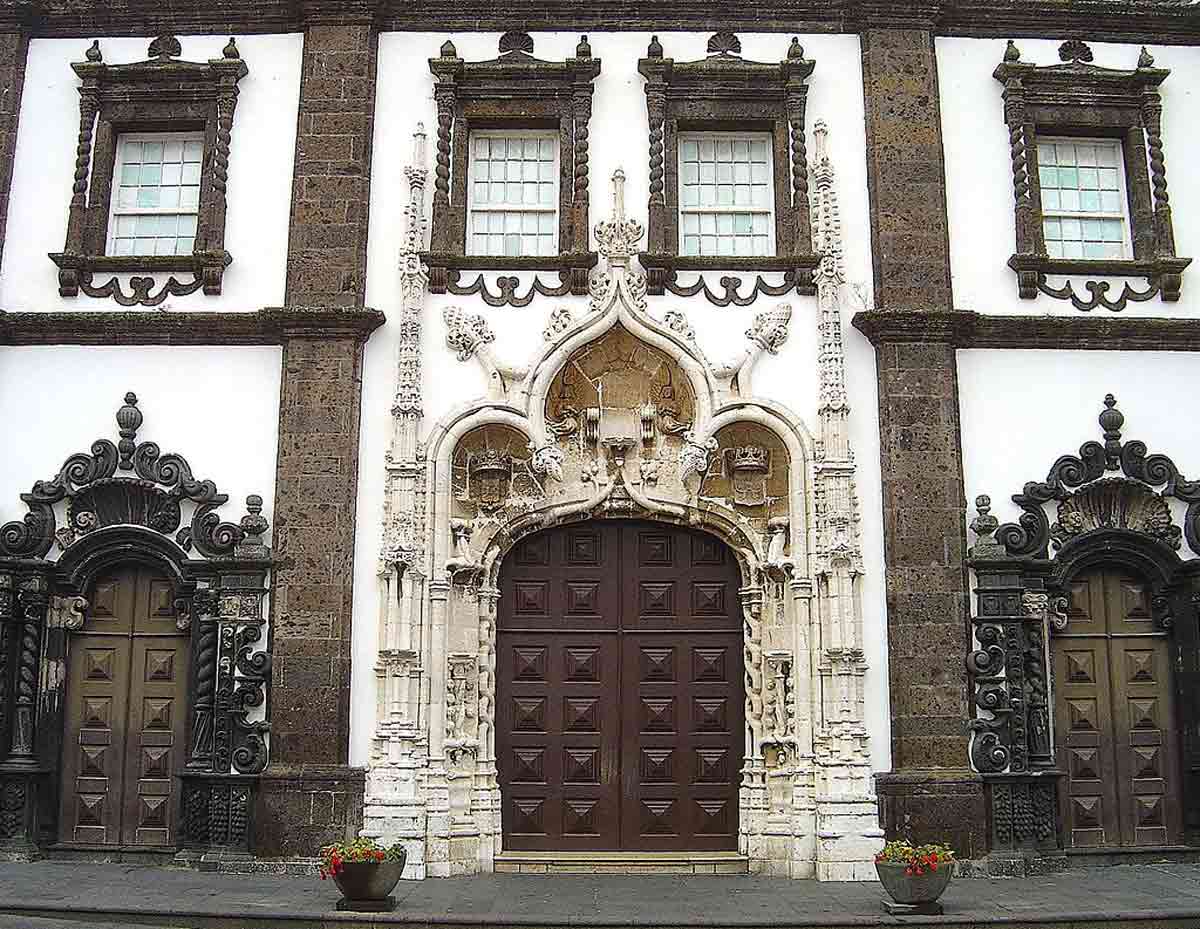
São Sebastião Church in Ponta Delgada, Azores is a beautiful church built between 1531 and 1547. Although it was built after King Manuel I’s death, the building was designed with Manueline architecture in mind.
One of the most impressive features is the Manueline portal designed by Nicolau Fernandes and André Fernandes. Here, you can admire the interlaced archivolts forming a canopy surrounded by an arch on colonnettes in addition to the naturalist decoration, heraldry, and angel reliefs.
7. The Fortified City of Mazagão (El-Jadida, Morocco)
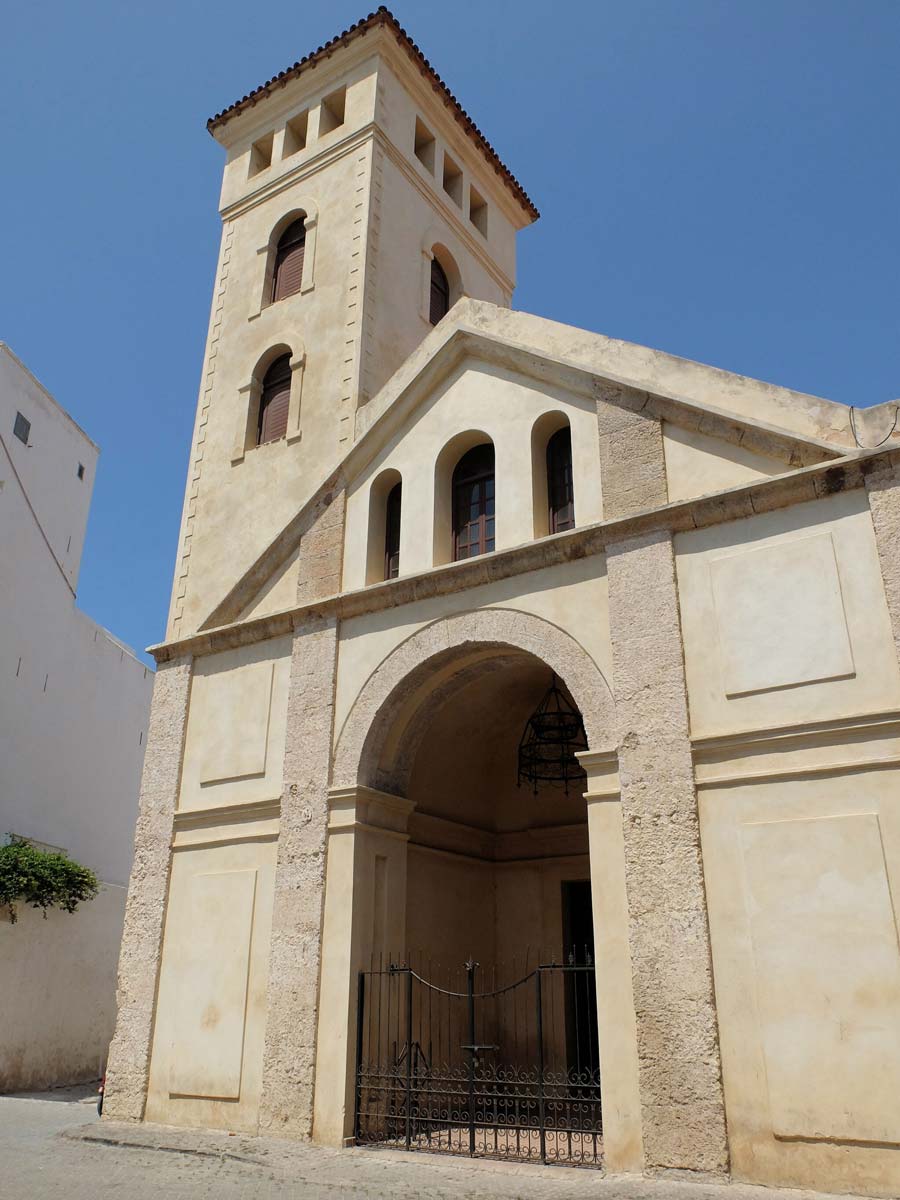
Mazagão (present-day El-Jadida, in Morocco) was a fortified city founded by the Portuguese in the 16th century as a trading and military stopover on the maritime route to India. This city was under Portuguese rule until 1769, when the Moroccans finally conquered it.
The city was abandoned and was only restored in the 19th century. Today, you can admire several Manueline-style buildings such as the primitive castle, fortress, cistern, and the churches of Nossa Senhora da Assunção, Piedade, and Nossa Senhora da Luz.
The fortified city is one of the best examples of the exchange between European and Moroccan cultures. That is why, in 2004, Mazagão was declared a World Heritage Site by UNESCO.
8. The Cistern of Mazagão (El-Jadida, Morocco)
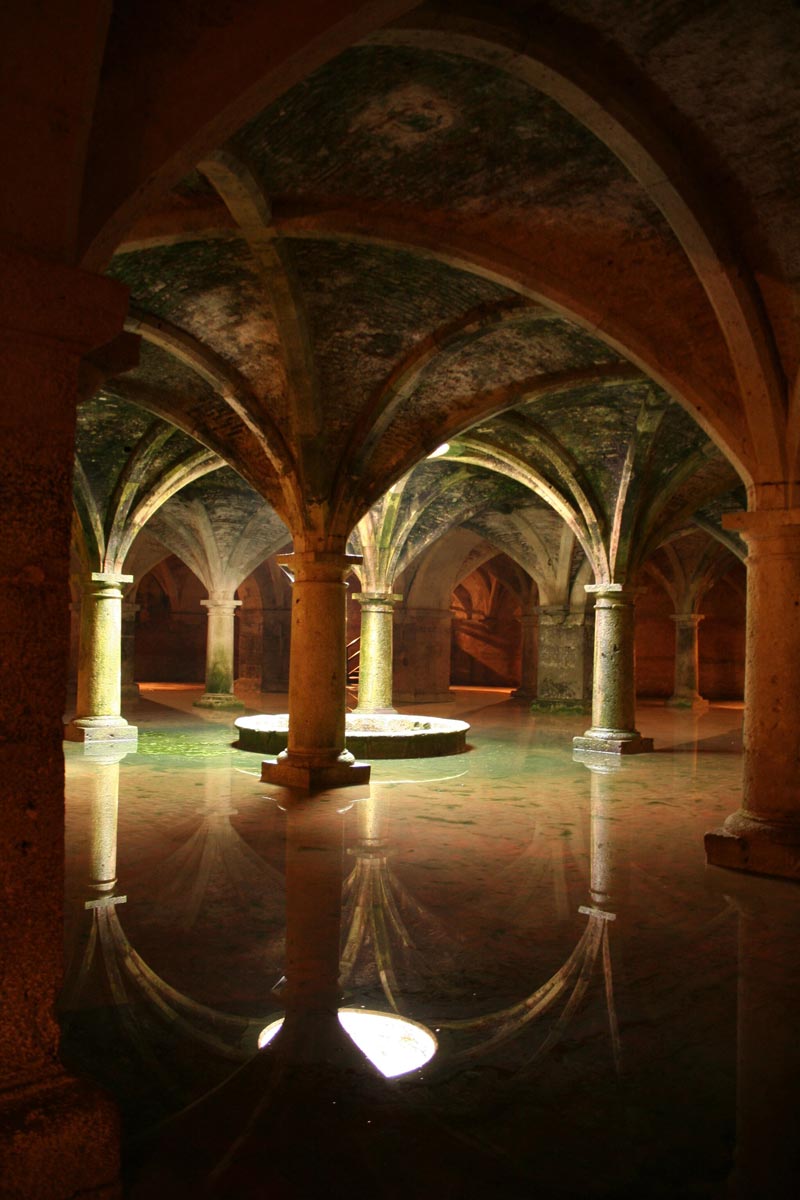
Cisterna de Mazagão, also known as the Portuguese Cistern, is located in El Jadida (the former Mazagan city), Morocco. The Portuguese built it in 1514 as part of the Mazagan fortress to store drinking water in case of a siege.
The cistern, built in Manueline style, is a square room with 36 vaults resting on 25 columns and a central oculus that allows for water collection and natural light.
In 2004, the cistern was declared a UNESCO World Heritage Site, as part of the Portuguese city of Mazagão. It is also considered one of the seven Portuguese wonders in the world.
9. Nossa Senhora do Baluarte Chapel (Mozambique Island)
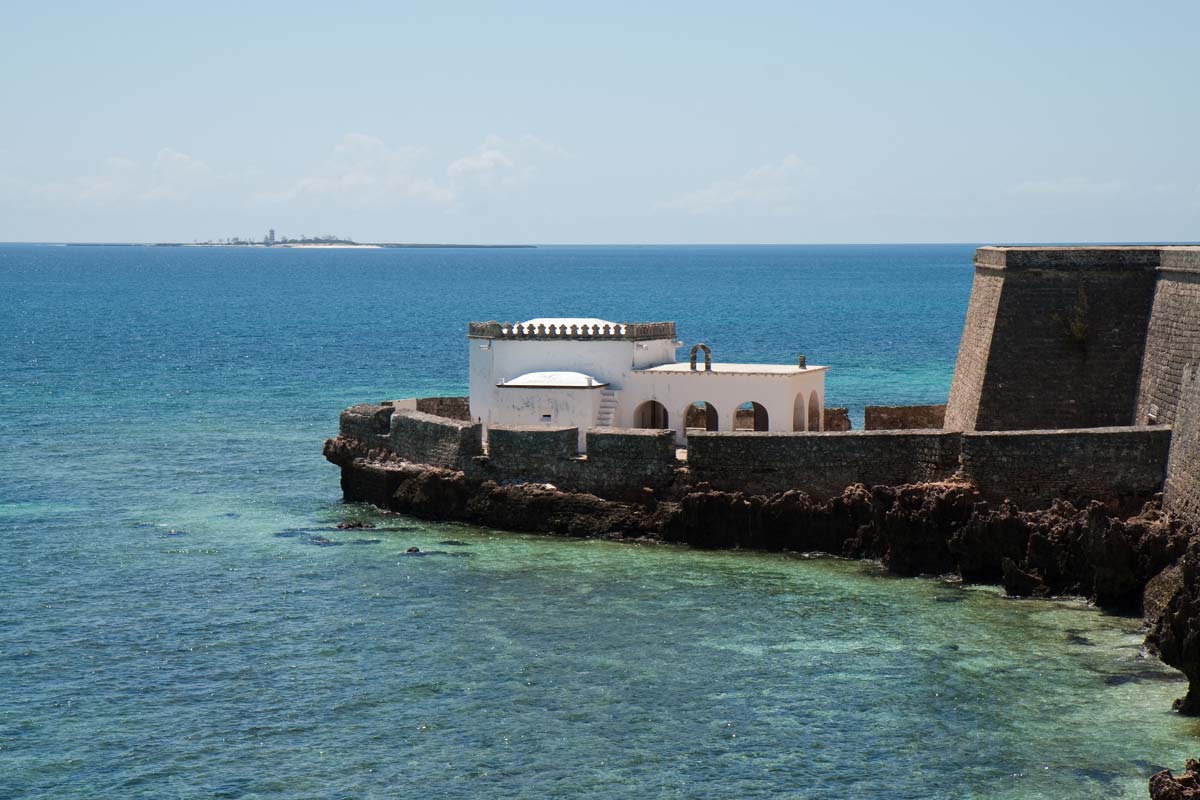
Capela de Nossa Senhora do Baluarte, located on Mozambique Island, was built in 1522 following a Manueline design. It is the only Manueline building in Mozambique and one of the oldest chapels on the Indian Ocean.
The chapel has a quadrangular floor plan with a polygonal transept, a ribbed vault, and façades topped by cornices and battlements. It is also decorated with heraldic elements. It was built over an artillery battery, which transformed the chapel into something unique.
After enduring 500 years of corsair attacks, cyclones, and natural erosion, in 2023, Portugal and Mozambique signed a pact to restore the chapel to its former glory.
10. São Francisco Church and Convent (Goa, India)
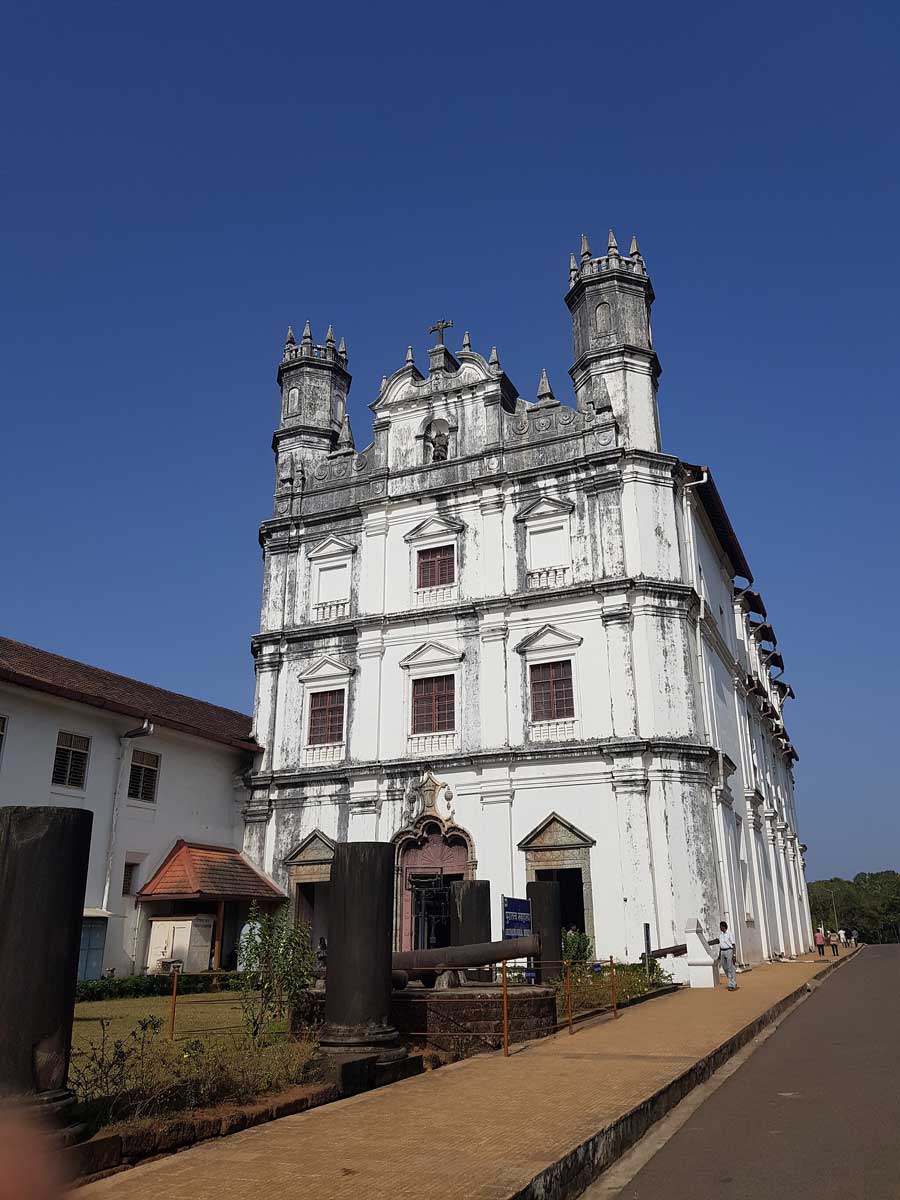
This Catholic church was built between 1518 and 1521 and is one of the oldest monuments in Goa. It was founded by Friar António Louro, who received explicit orders from King Manuel I himself to establish a mission in the city.
In the 17th century, the original church was demolished. Because only the Manueline portal has survived, the current façade mostly shows Baroque features. Nevertheless, you can still admire a typical Manueline profile with armillary spheres as symbols of King Manuel I.
Inside is a single vaulted nave with side chapels and a transept covered in stucco and paintings. The chancel holds a large gilded altarpiece from the 17th century and a carved tabernacle.