
Naval warfare during World War II was defined by steel giants carrying new technologies that dramatically changed the nature of clashes at sea. A single shell firing across miles of ocean or a calculated dive-bomber strike could dismantle supply lines, shift continent-wide campaigns, and change the course of individual conflicts and the great war. Several warships singlehandedly changed the course of the war for both the Allied and Axis powers. Discover the specs and impact of four incredible WWII naval ships.
1. HMS Warspite – “The Grand Old Lady”
| Spec / Metric | Detail |
| Class & Type |
Queen Elizabeth-class Super-Dreadnought
|
| Main Armament |
8 × 15-inch (381 mm) BL Mark I guns
|
| Top Speed |
~24 knots (post-1930s modernization)
|
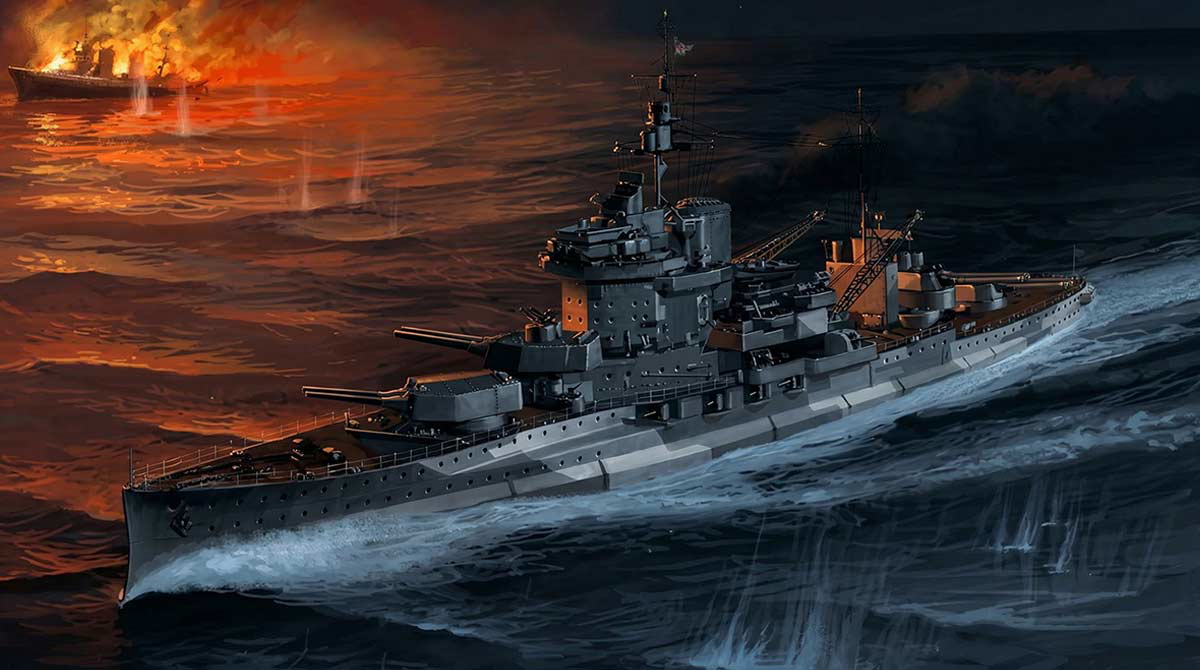
A veteran of the 1916 Battle of Jutland, this Elizabeth-class battleship served into the next war. HMS Warspite, affectionately known as the “Grand Old Lady,” served in major Allied crises. It delivered perhaps the most accurate battleship bombardments ever, and supported critical operations needing precise naval gunfire.
At the Second Battle of Narvik in April 1940, Warspite stormed directly into narrow Norwegian fjords to destroy eight German destroyers. Her catapult-launched Fairey Swordfish floatplane also sank U-64, marking the first submarine ever destroyed by a warship’s aircraft.
At Cape Matapan in 1941, operating at night off the coast of Greece, Warspite and her sister ships ambushed and obliterated three Italian heavy cruisers in minutes, crippling the Regia Marina’s offensive capabilities.
During the Normandy Landings of 1944, Warspite’s guns fired the first Allied shots. Supporting the British at Gold Beach, her superb gunnery decimated German shore batteries and hit landing craft. Warspite’s bombardments enabled the securing of the landing zone.
Warspite ended WWII as a heavily battered floating battery, having logged more miles and fired more shell tonnage than almost any capital ship in British history. The ship was decommissioned in 1945.
2. USS Enterprise – “The Gray Ghost”
| Spec | Detail |
| Class & Type |
Yorktown-class Aircraft Carrier
|
| Nicknames |
“The Big E”, “The Galloping Ghost”
|
| Primary Air Group |
SBD Dauntless, TBF Avenger, F4F Wildcat / F6F Hellcat
|
For the first desperate months of the Pacific War, America struggled badly. In 1942, the Japanese Imperial Navy repeatedly sank ships, including the USS Yorktown, Lexington, and Wasp. The Enterprise would survive these battles, earning the moniker “The Gray Ghost.” Japanese propaganda repeatedly reported her sunk. Twice during 1942, the “Big E” would be the Pacific’s only active carrier.
Enterprise was returning from delivering fighters to Wake Island on December 7, 1941, missing the Pearl Harbor attack by hours. Her scout planes engaged Japanese aircraft that morning. She went on to execute retaliatory strikes across the Pacific and escorted the USS Hornet during the Doolittle Raid on Tokyo.
The Enterprise fought in every Pacific campaign from 1942 to 1945. Of all these fights, its finest shaping moment was the Battle of Midway in 1942. In this great clash of carriers, Enterprise’s squadrons proved decisive. Its squadrons launched the most effective, coordinated strikes. By battle’s end, four Japanese carriers went to the bottom.
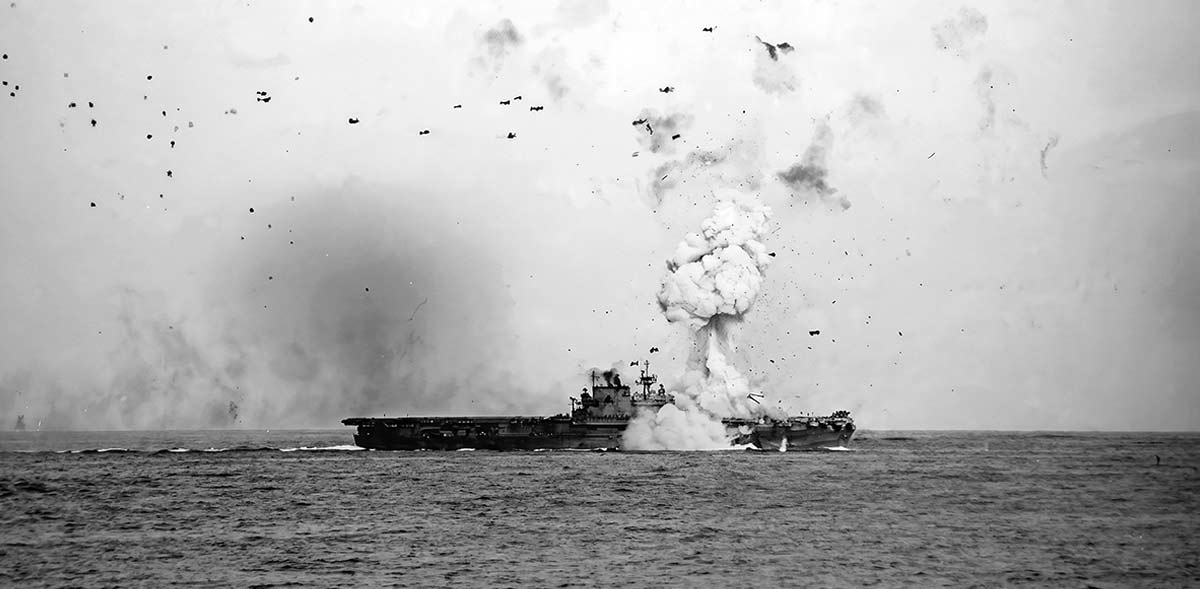
On May 14, 1945, off the coast of Kyushu, a Japanese kamikaze plane plunged directly into Enterprise‘s forward elevator, blowing the 15-ton structure hundreds of feet into the air. The resulting damage forced the ship back to the United States for extensive repairs, ending her war service just months before V-J Day.
Despite passionate efforts by her former crew and veterans to preserve the legendary warship as a permanent museum, the U.S. Navy ultimately sold the battered Enterprise for scrap in 1958. But of course, the name lives on, as Star Trek creator Gene Roddenberry specifically named the Enterprise for this incredible ship.
3. Schlachtschiff Tirpitz – “The Lonely Queen of the North”
| Spec | Detail |
| Class & Type |
Bismarck-class Battleship
|
| Main Armament |
8 × 38 cm (15 in) SK C/34 guns
|
| Top Speed | ~30.8 knots |
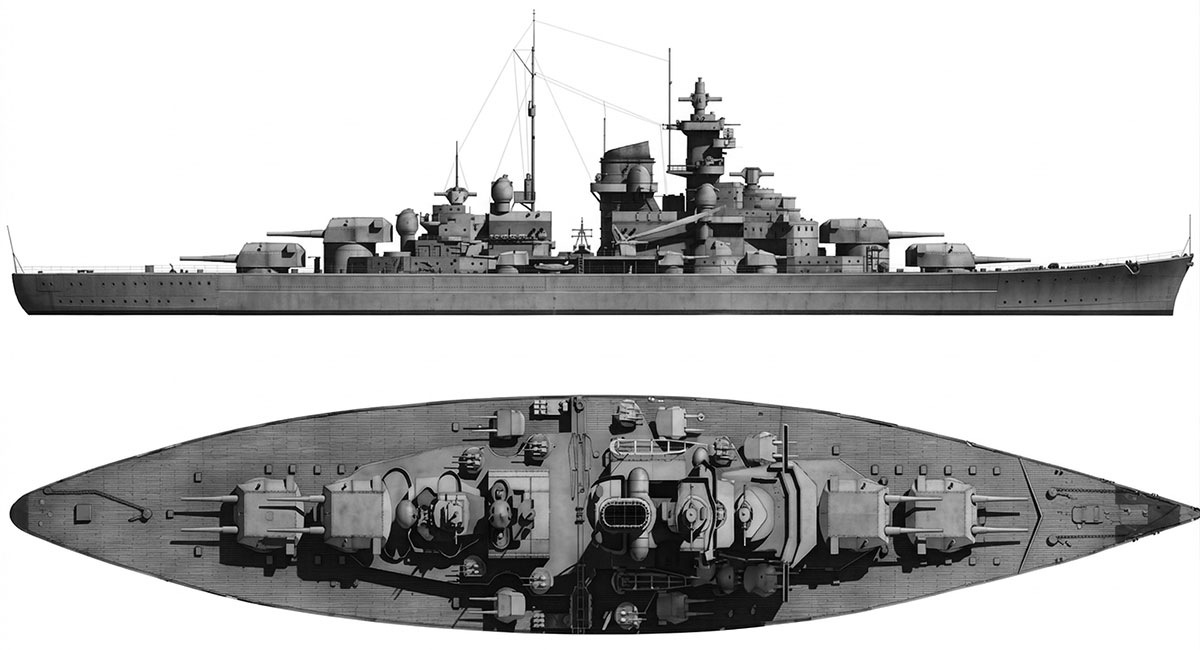
Unlike the ill-fated Bismarck, Tirpitz’s career turned out very differently. Germany’s remaining true battleship never engaged in a fleet action. Nor did Bismarck’s twin ever sink another ship in battle. At 823 feet long, over 50,000 tons, and armed with eight 15-inch guns, the Tirpitz was no easy prize.
Tirpitz lay moored in Norway for the war’s duration. Tirpitz truly sortied into the Arctic only twice, both times unsuccessfully by 1942. After this, Tirpitz’s presence represented only danger. The battlewagon became a fleet-in-being.
The Tirpitz shaped the war, albeit much differently than Enterprise or Warspite, by threatening convoys and applying strategic pressure. Nearly a quarter of the Russia-bound Lend-Lease aid came by convoy. Norway couldn’t be avoided. The Tirpitz became a potential threat. If it sortied successfully, the raider’s big guns would decimate any convoy. By never sailing, the Tirpitz exerted danger at the highest levels. This took up Allied naval resources, especially battleships and carriers. The German behemoth tied up naval assets that could be employed elsewhere.
The Allies launched over 20 operations to sink Tirpitz. For example, in September 1943, British midget submarines slipped past anti-submarine nets into Kaafjord to place explosives directly under the ship’s hull. The damage took the ship out of commission for six months. Its final destruction happened in Operation Catechism in November 1944. RAF Lancaster bombers carrying 12,000-pound “Tallboy” armor-piercing bombs scored direct hits, causing an internal magazine explosion that flipped the battleship upside down, killing over 900 crewmen.
4. IJN Yamato – “Symbol of Yamato-damashii (Japanese Spirit)”
| Spec | Detail |
| Class & Type |
Yamato-class Battleship
|
| Main Armament |
9 × 46 cm (18.1 in) Type 94 guns
|
| Displacement |
~72,000 tons (fully loaded)
|
| Top Speed | ~27 knots |
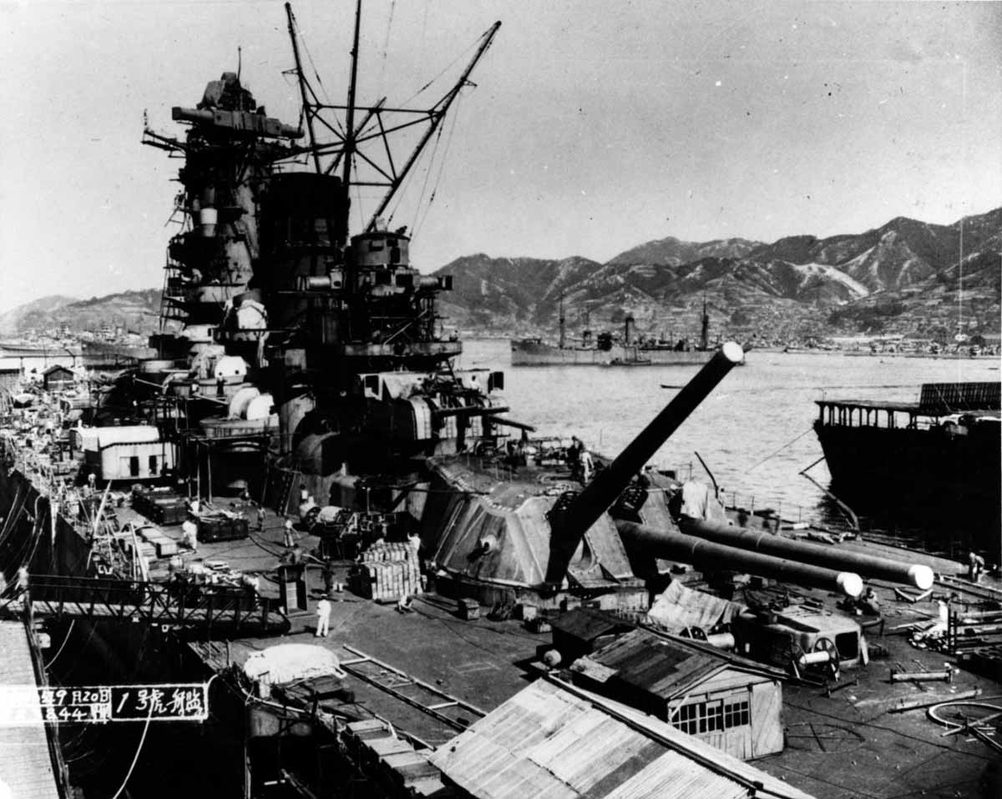
This Japanese battlewagon represented Japan’s massive fleet battle theory (Kantai Kessen). Equipped with an 18.1-inch (46 cm) cannon, Yamato was the largest battleship ever constructed.
Yamato served as Admiral Isoroku Yamamoto’s flagship during the Battle of Midway, but operating hundreds of miles behind the main carrier strike group, she saw no combat and was helpless as Japan lost four fleet carriers.
Like the Tirpitz, Yamato took part in battles but never sank a foe. Yamato spent more time moored than sailing. Because Yamato‘s massive engines consumed immense amounts of fuel, Japanese high command was reluctant to commit her to frontline battles in the Solomons, earning her the crew nickname “Hotel Yamato.”
Nevertheless, the world’s largest gunned ship, at 72,000 tons, shaped the war easily. The U.S. Navy, wary of a marauding super battleship, kept contingency plans ready. The Yamato’s size and big guns meant few Allied ships could match it. If it ever broke out, the battleship could shatter any opposing force. The USN regularly positioned submarines near ports from which the Yamato sailed. Because of Yamato’s size, the U.S. Navy planned island invasions carefully. Task forces stood ready to intercept.
In October 1944, Yamato finally engaged enemy surface ships, firing her massive 18.1-inch main guns for the first time against a tiny task force of U.S. escort carriers and destroyers. Despite contributing to the sinking of U.S. ships, fiercely aggressive U.S. destroyer counterattacks and air strikes forced Yamato to break off the attack.
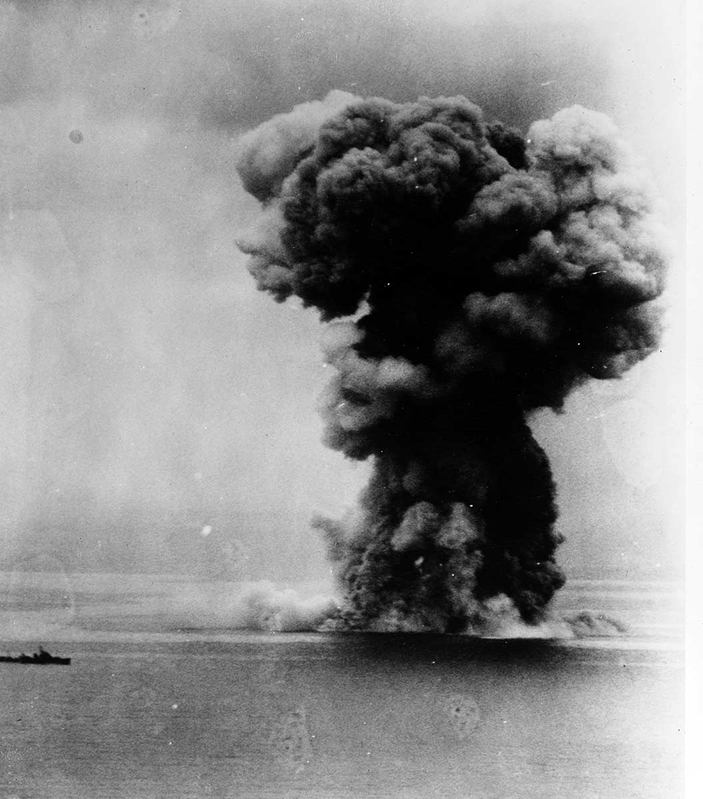
With the war all but lost, as part of Operation Ten-Go in April 1945, Japan dispatched Yamato on a one-way suicide mission to Okinawa. The ship was ordered to breach the Allied fleet, beach herself on the shore, and act as a giant artillery battery until destroyed. But before reaching Okinawa, Yamato was intercepted by over 300 U.S. aircraft. In the bombardment, the ship’s forward ammunition magazine detonated, producing a colossal explosion that sent a mushroom cloud thousands of feet into the air.
Yamato sank with over 3,000 of her crew, marking the definitive symbolic end of the dreadnought battleship era.