
Dominated by a secretive group of elite priests and high-ranking officials, the earliest Roman legal system relied on oral customs kept hidden from the public. Seeking to end this priest-controlled monopoly on legal knowledge, the common class (plebeians) demanded that the rules be written down for all to see. And so, in 451 BCE, a commission of ten men referred to as the decemviri gathered to draft the first formal code of law.
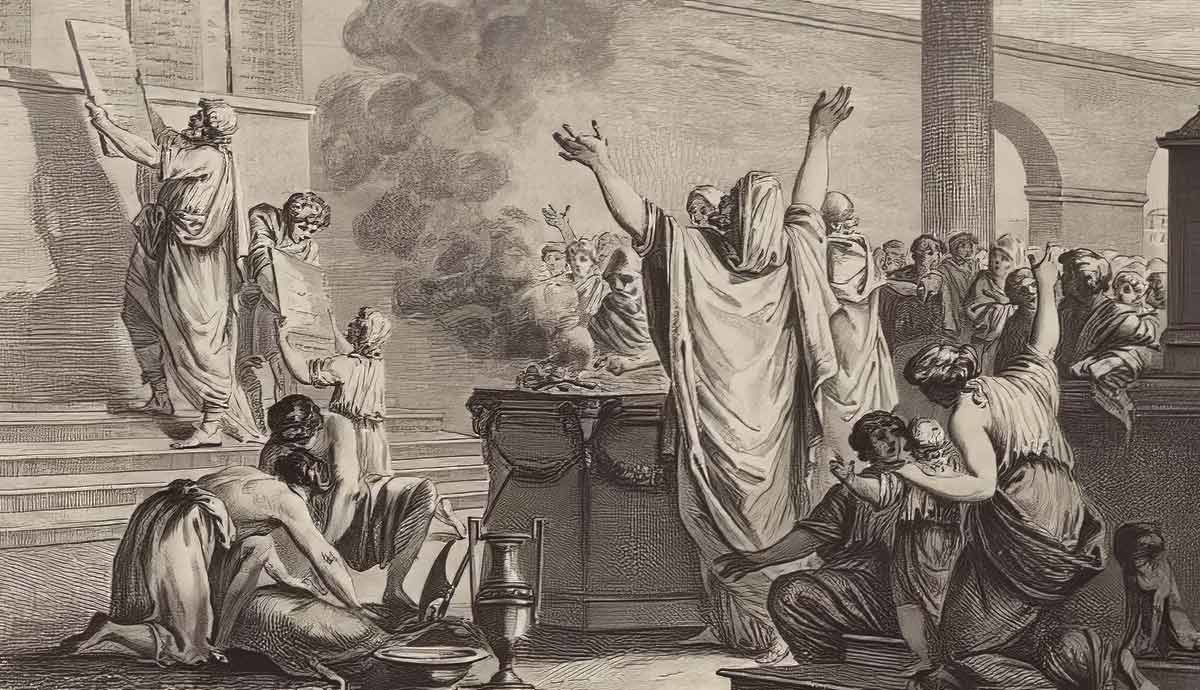
Referred to as the Twelve Tables, the rules which were written on bronze tablets were put up in the public square known as the Forum, where they could be read by all citizens. The concept established the idea that law was public rather than arbitrary. Before this time, the elite often changed the rules to suit their needs as no written rules existed. So, what are some of the modern laws derived from Ancient Rome?
The Concept of Being Innocent Until Proven Guilty

The concept of being innocent until proven guilty emerged from the Roman state. It was during the reign of emperor Antoninus Pius in the 2nd century CE that the government championed the idea of the accused deserving protection from baseless charges. And then in 533 CE, a massive collection of legal opinions called the Digest codified the rule that the burden of proof lay with the person making the claim. The rule which was attributed to the emperor Trajan, stated that it was better for a guilty man to go free than for an innocent person to suffer.
The idea moved through the centuries and became a part of the many modern legal systems. In order to protect the accused, the Romans required clear evidence rather than rumors or mere suspicion. Many modern attorneys use the same logic when they argue about the burden of proof.
Contract Laws

Roman business dealings required reliable laws to make deals effective and to settle debts across the vast Roman territory. To make this possible, the state created a system of obligations that divided contracts into four specific types based on how they were made. One type of contract involved the physical delivery of an object, while another used spoken words.
A third type of contract relied on written documents while a fourth needed only the consent of the two parties involved. Known to history as consensual contracts, the agreements did not need fancy rituals or witnesses to be valid. The laws gave merchants the ability to trade across the empire without a lot of red tape. The Romans also introduced the idea of good faith or bona fides in business dealings. Modern consumer laws follow a similar pattern of protecting the buyer from hidden defects in merchandise.
Property Rights Laws

Legal authority over land and items was a very big deal in the Roman world as it defined a citizen’s status. Consequently, lawmakers made a distinction between legal ownership of land (dominium) and just holding property (possessio). The concept meant that a person could own property even if someone else was concurrently using it. In order to manage land, the courts also created the idea of easements which allowed specific uses of another person’s property.
For example, a person had the right to walk across a neighbor’s field to reach a road if they had no other access. The right stayed with the land even if the owners changed through sale or inheritance. Similar systems exist in modern law. Also, if a person died without a will, the law decided how the property would be divided based on the relationship of each family member to the deceased. Most modern inheritance laws look a lot like those Roman rules.
The Law of Torts

In the 3rd century BCE, the Roman assembly passed the Lex Aquilia rule to regulate compensation for property damage. The law stated that when one person damaged the property of another through unlawful conduct, it moved the focus away from simple revenge and toward paying for the damage in the form of monetary compensation.
If a person killed a slave or an animal belonging to another, for example, they paid the highest value that the animal or slave reached in the past year. For other types of property damage, the law required that the value of the item in the nearest thirty days to be compensated. Modern damage claim rules are believed to have originated from those Roman laws.