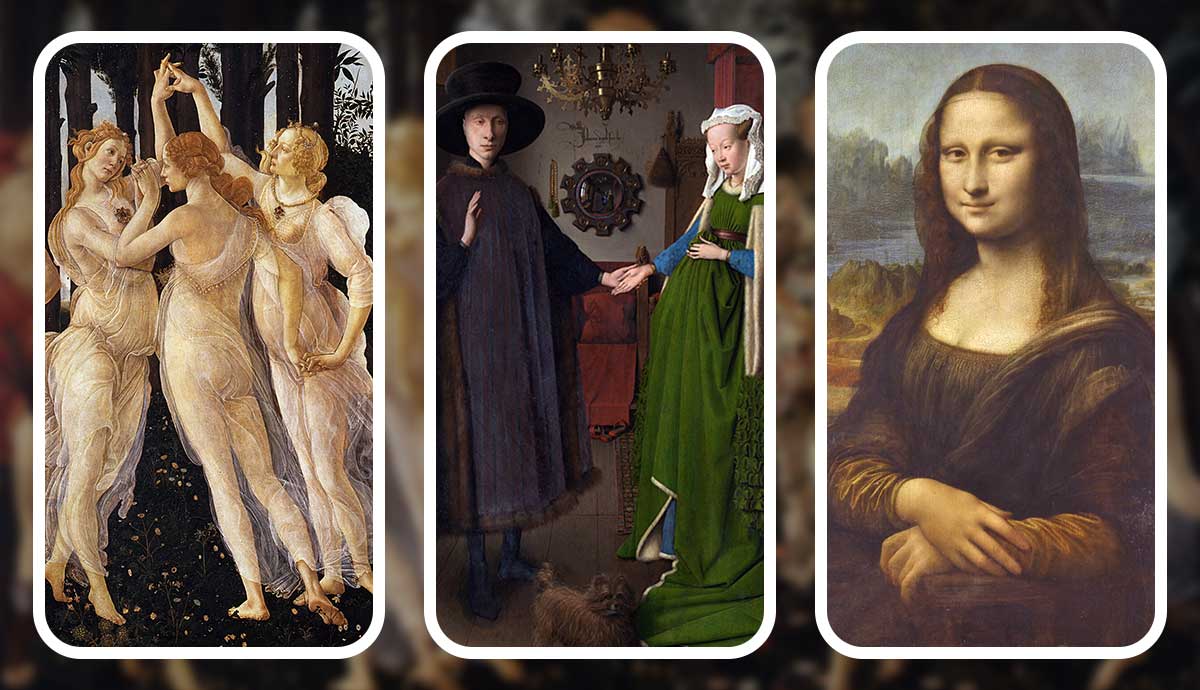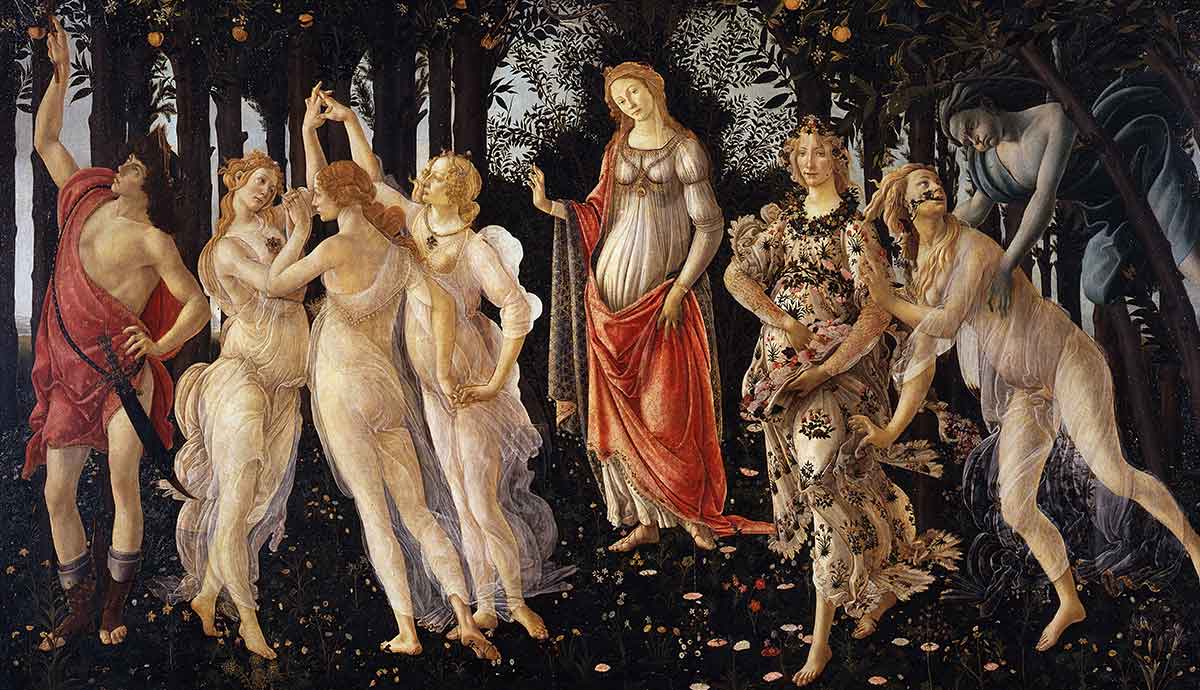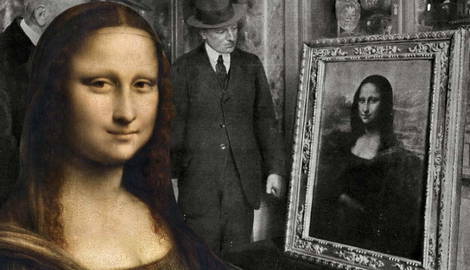
Leonardo da Vinci’s Mona Lisa, the world’s most famous and enigmatic portrait, has fascinated viewers, scholars, and artists for over five centuries. Although the painting looks simple, it raises questions about the subject’s identity, its creation, and Leonardo’s innovative techniques—especially the smile that seems to change when observed. Surrounded by myth, theft, and endless interpretation, this Renaissance female portrait is cloaked in mystery, making it one of the most celebrated and enigmatic artworks in the world.
1. The Provenance of Leonardo da Vinci’s Mona Lisa
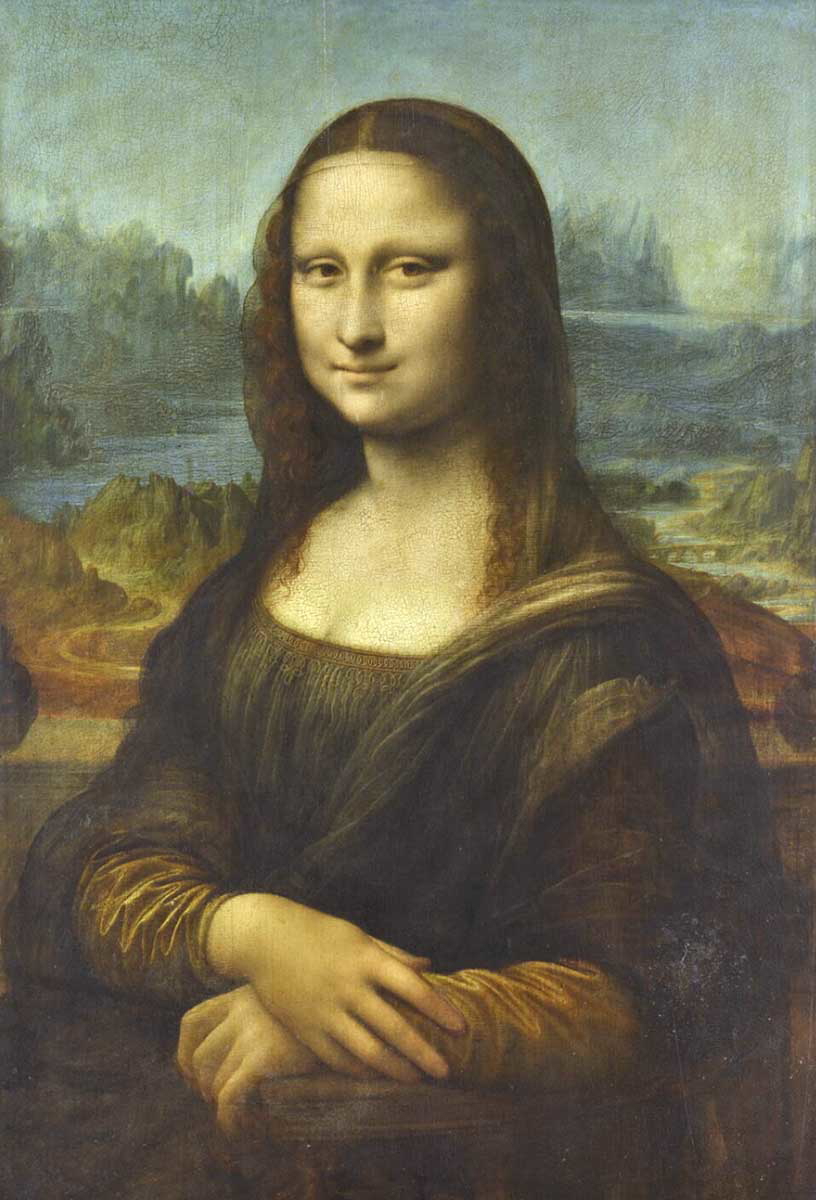
The work originates from Leonardo da Vinci’s second Florentine period (1503–1504); however, its completion likely extended to 1510–1515 during his time in Rome, “at the request of the magnificent Giuliano de’ Medici,” or possibly even until Leonardo’s death in 1519. According to contemporary sources, Leonardo brought the painting with him when he settled at the Château of Cloux, following an invitation from Francis I. There, it was seen in his workshop by Cardinal Luigi d’Aragona’s secretary, Antonio de Beatis, during his visit in October 1517. As Giorgio Vasari notes, the painting entered Francis I’s collection at Fontainebleau; it was either purchased during Leonardo’s lifetime or inherited thereafter. Its presence in Francis I’s collection was confirmed again in 1625 by Cassiano del Pozzo.
Since that time, the painting has remained in France, later transferred by Louis XIV to the Palace of Versailles, and after the French Revolution, relocated to the Louvre Museum, where it is now displayed in a specially arranged room called Salle des états, the largest room in the museum, under the highest level of protection.
2. The Mystery of Mona Lisa’s Identity: Who Is She Really?
Only after Leonardo da Vinci’s death was the name Mona Lisa given to the painting. Until then, it was referred to by various names, such as “A Certain Florentine Lady,” “A Veiled Courtesan,” or “La Gioconda,” which relates to the surname of Lisa Gherardini’s husband, Francesco del Giocondo. It is generally accepted that the portrait depicts Lisa Gherardini, wife of the Florentine silk and fabric merchant Giocondo, hence the alternative title La Gioconda.
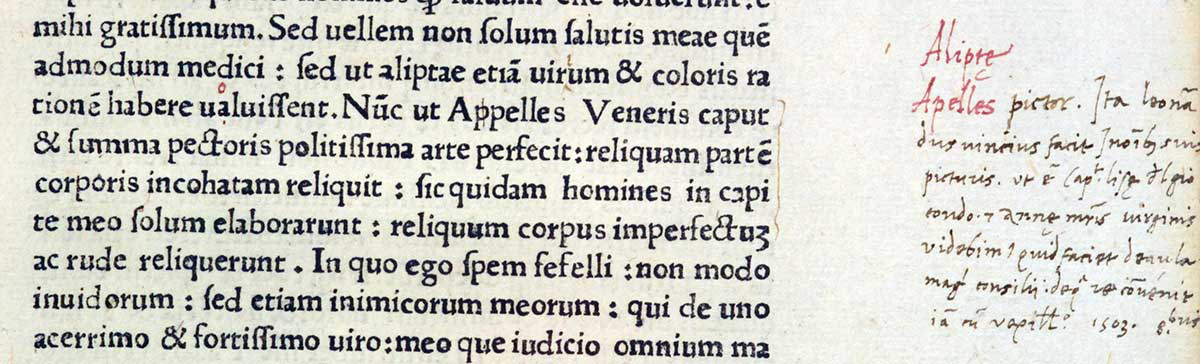
The portrait may have been painted to commemorate one of two events: either when Francesco del Giocondo and his wife purchased their home in 1503, or when their second son, Andrea, was born in December 1502, following the death of their daughter in 1499. The thin dark veil covering Mona Lisa’s hair is sometimes considered a mourning veil. In fact, such veils were commonly worn as a sign of virtue. Some scholars note that the presence of the guarnello refers to a traditional garment worn by pregnant women of the period, adding yet another layer of mystery. Neither the yellow sleeves of her dress, nor the pleated gown, nor the scarf softly wrapped around her shoulders indicates aristocratic status.
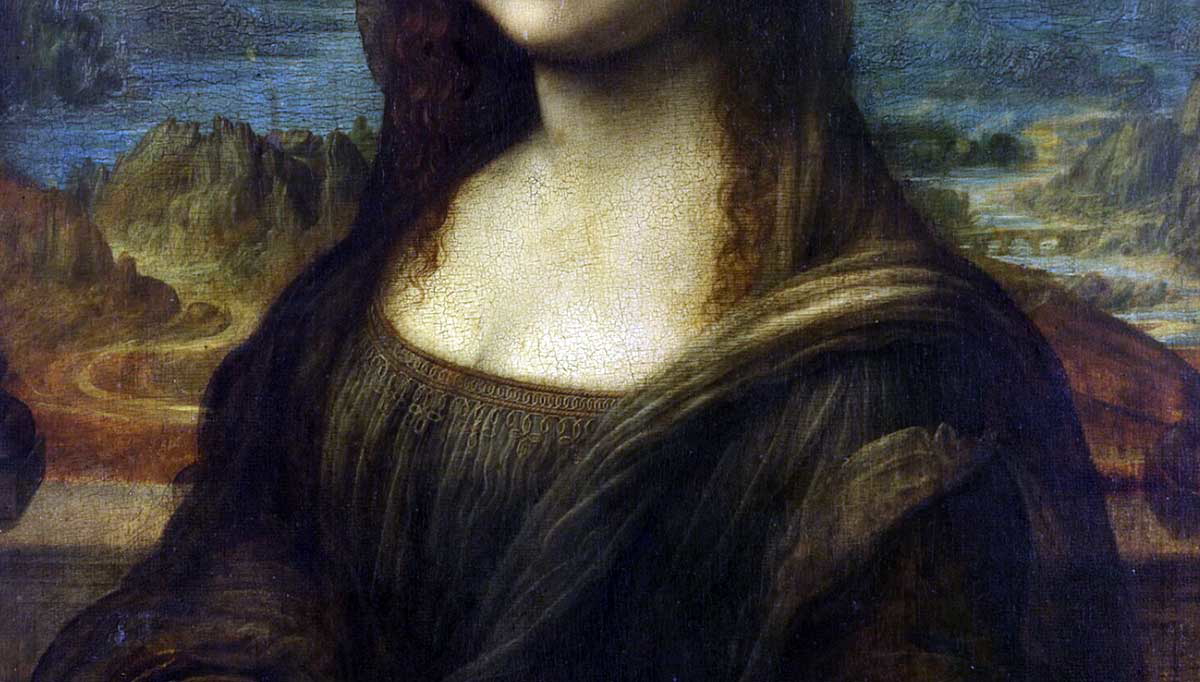
In 2005, researchers at the University of Heidelberg discovered a note by Agostino Vespucci (October 1503) stating that Leonardo was painting the portrait of Lisa del Giocondo, thereby confirming the identity of the female figure. Indeed, although numerous alternative theories have been proposed, the prevailing view is that the figure is Lisa del Giocondo (Lisa Gherardini). The note said:
Apelles the painter. That is the way Leonardo da Vinci does it with all of his pictures, like, for example, with the countenance of Lisa del Giocondo and that of Anne, the mother of the Virgin. We will see how he is going to do it regarding the great council chamber, the thing which he has just come to terms about with the gonfaloniere. October 1503.
3. Artistic Value and the Unique Technique of the Painting
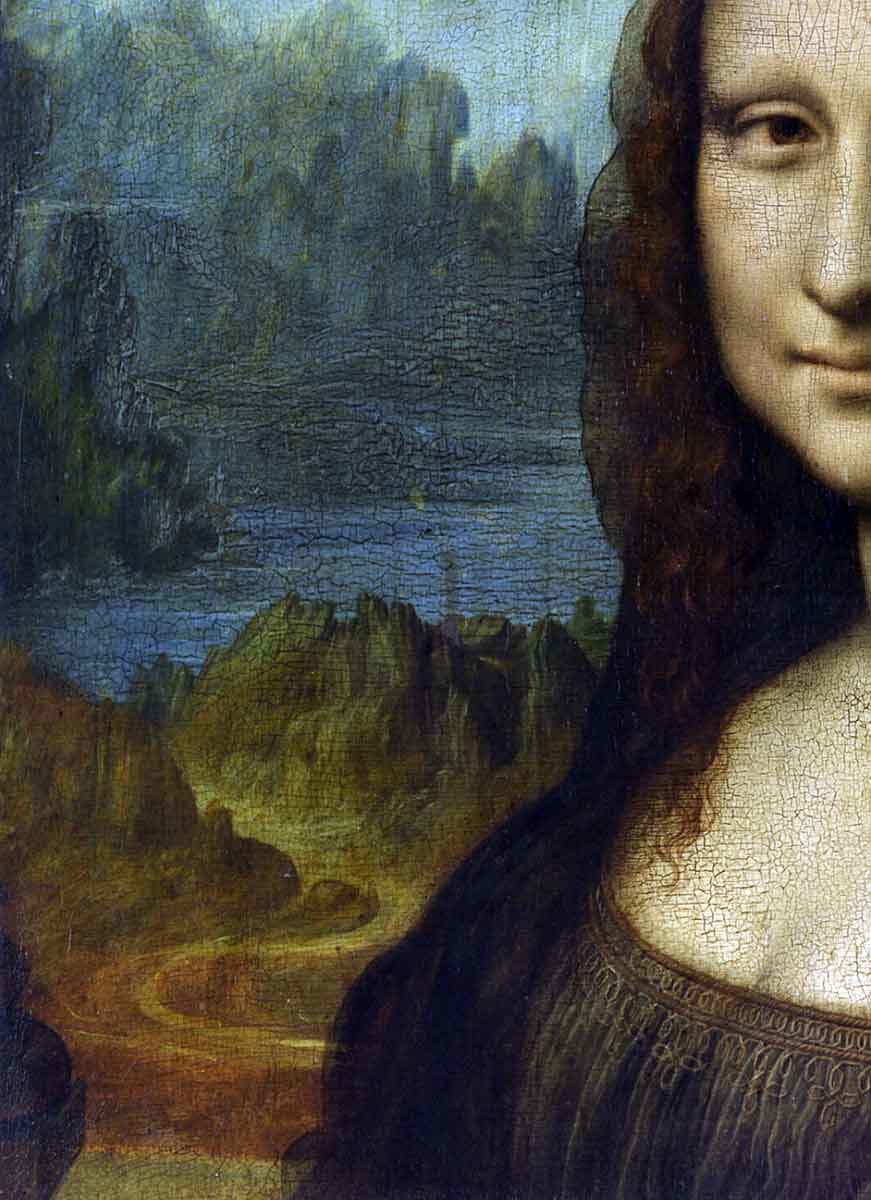
From Vasari’s description, we can fully understand the painting’s quality:
All those who wished to see to what degree art can imitate nature could perceive it in her face, for every detail that can be rendered with precision had been captured there. The eyes had that lustre and brilliance seen in real eyes, and around them were those shadowy pink tones and veins that cannot be reproduced except with great skill… the nose, with all those delicate rosy tones, appeared real. The mouth, whose slit blended into the flesh-coloured tones of the face, did not seem painted but alive. And in the hollow of the throat, if you looked closely, you could see the pulse beating. Truly, one may say it was painted in a way that astonishes and inspires awe in every worthy painter. (G.Vasari, Lives, 1568).
This is indeed the work in which the sfumato technique reached its peak, highlighting the intense inwardness expressed by the face. The image captures the viewer’s gaze, evoking feelings that are both mystical and sensual, producing contradictory impressions. The woman’s torso, depicted in a three-quarter pose, is slightly turned toward the background. The landscape appears cold and remote, creating a sense of otherworldliness. The painting is suffused with a strong light that envelops everything like a cloud: the woman’s skin, her clothes, the water, the rocks, and the atmosphere. The effect may be further enhanced by the use of yellow varnish.
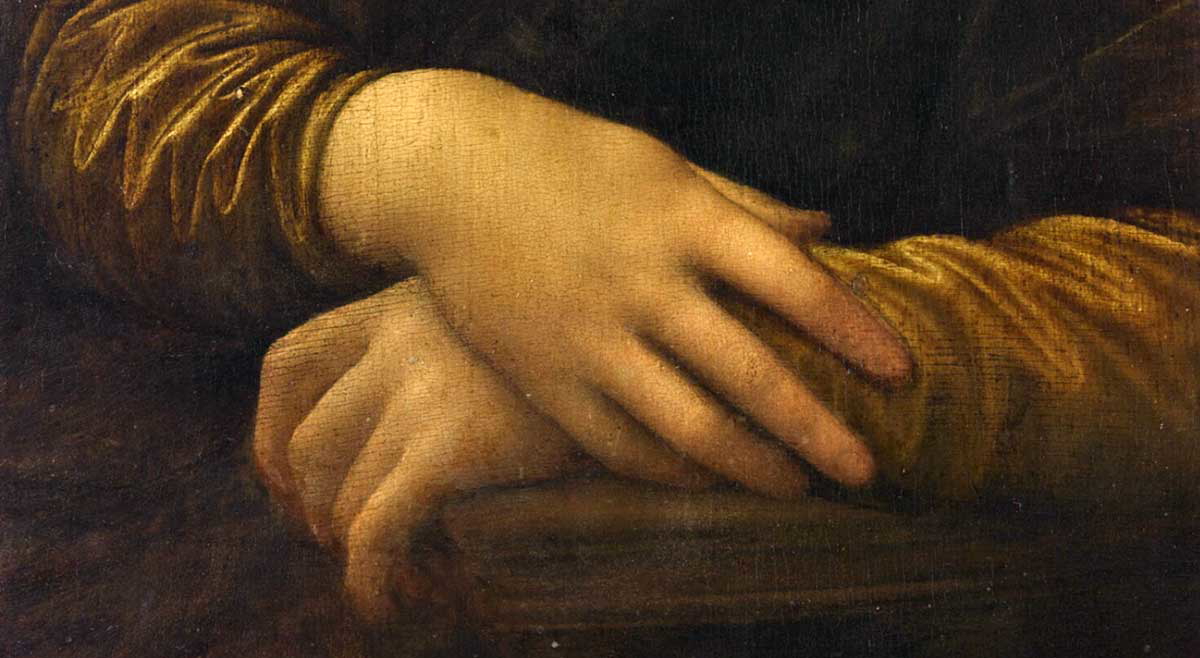
The question of how a portrait can be so famous and captivating is answered by the complexity of its techniques. The innovation in the portrait’s pose, avoiding the traditional profile position (popular during the Italian Renaissance) and instead having the subject face the viewer, redefined the conventions of portraiture. Moreover, Leonardo’s mastery of sfumato, with its soft, blurred contours and features, imbued the painting with a sense of harmony and new equilibrium, intensifying the work’s inwardness—an unprecedented element for a portrait.
4. The Curious-Strange Smile of the Mona Lisa
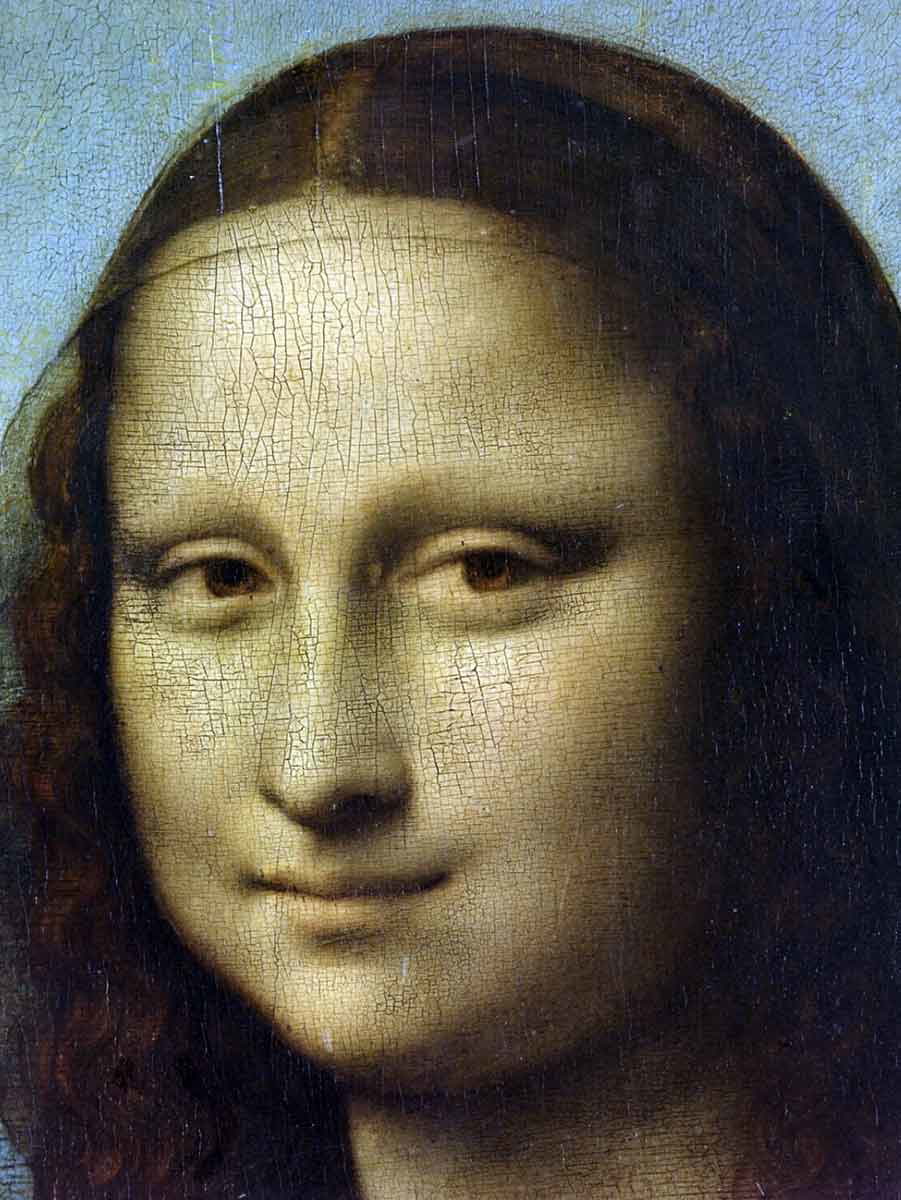
The famous enigmatic smile of the Mona Lisa is emphasized by a subtle shadow around the corners of her mouth and at the edges of her eyes. As we look at her, she first appears to smile, and after seems serious and distant. Once again, it is Leonardo’s mastery of the sfumato technique, executed perfectly, that gives the work unparalleled qualities of expression and vitality, imparting a sense of movement.
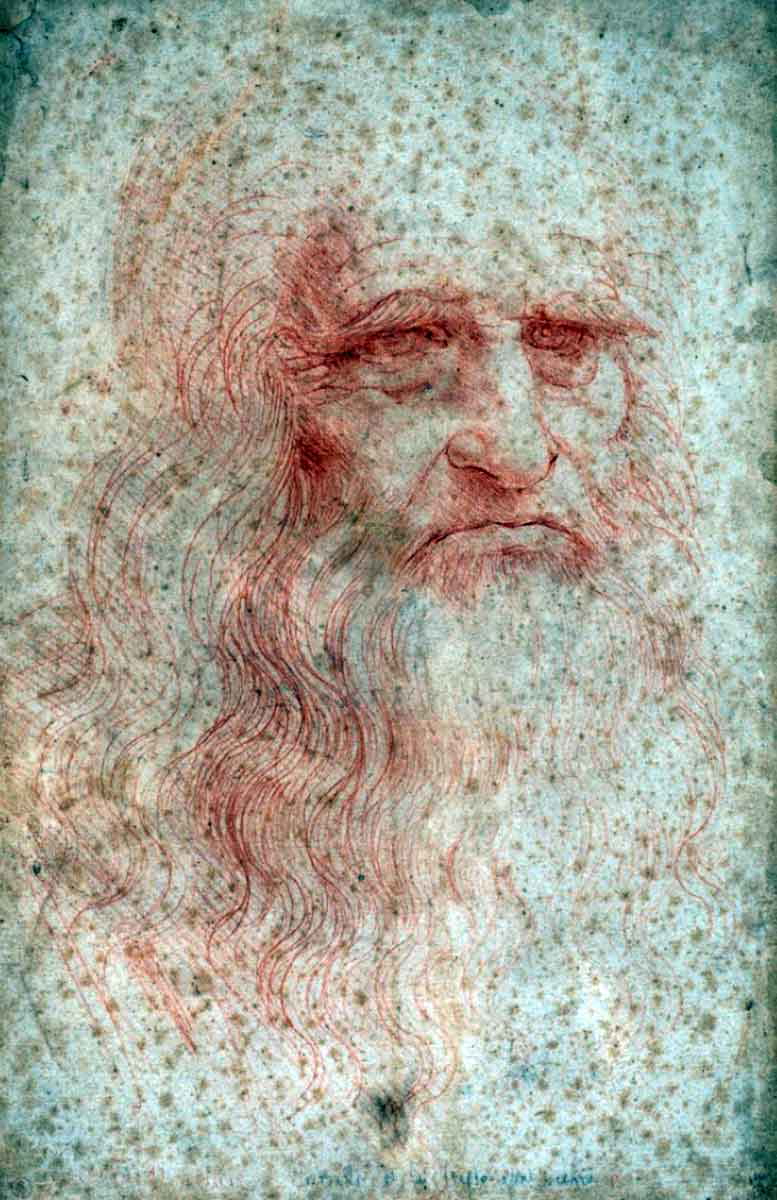
Over the many years that Leonardo worked on the painting, he seems to have added thousands of extremely thin layers of paint. This long process could suggest that her image evolved over time, starting with the depiction of Lisa Gherardini and ending as a blend of multiple influences or, according to some scholars, an entirely different image from the original portrait. The American artist Lillian Felman Schwartz proposed in 1987 that the work is aligned with Leonardo’s self-portrait. Whether this is coincidental or intentional has sparked multiple debates, contributing to the enigmatic interpretation of the painting.
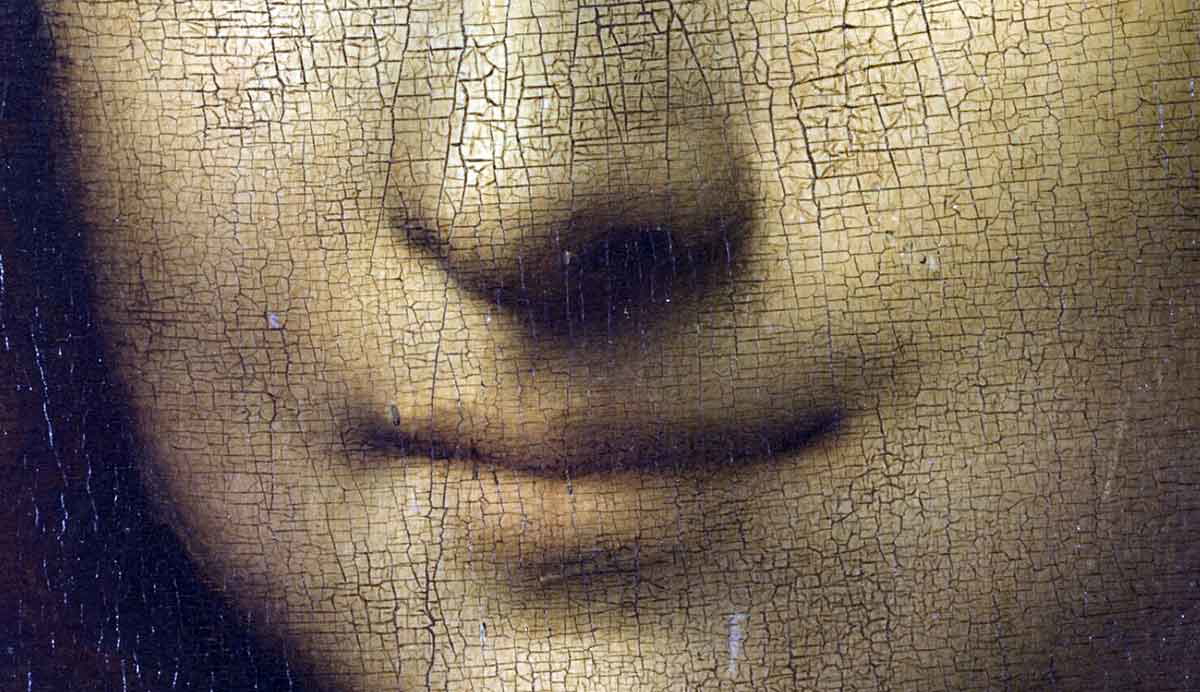
What is certain, however, is that her greatest enigma is her expression and famous smile. The sfumato blurs the boundaries between light and shadow, creating a perceptual illusion that makes her expression change depending on the viewer’s perception and angle of observation. Some also link her enigmatic smile to her name, La Gioconda, as “jocund” in Italian means cheerful or happy. Maybe it is a play on her husband’s surname, Giocondo. Finally, the French title, La Joconde, conveys a sense of lightness.
5. It’s Priceless and Invaluable
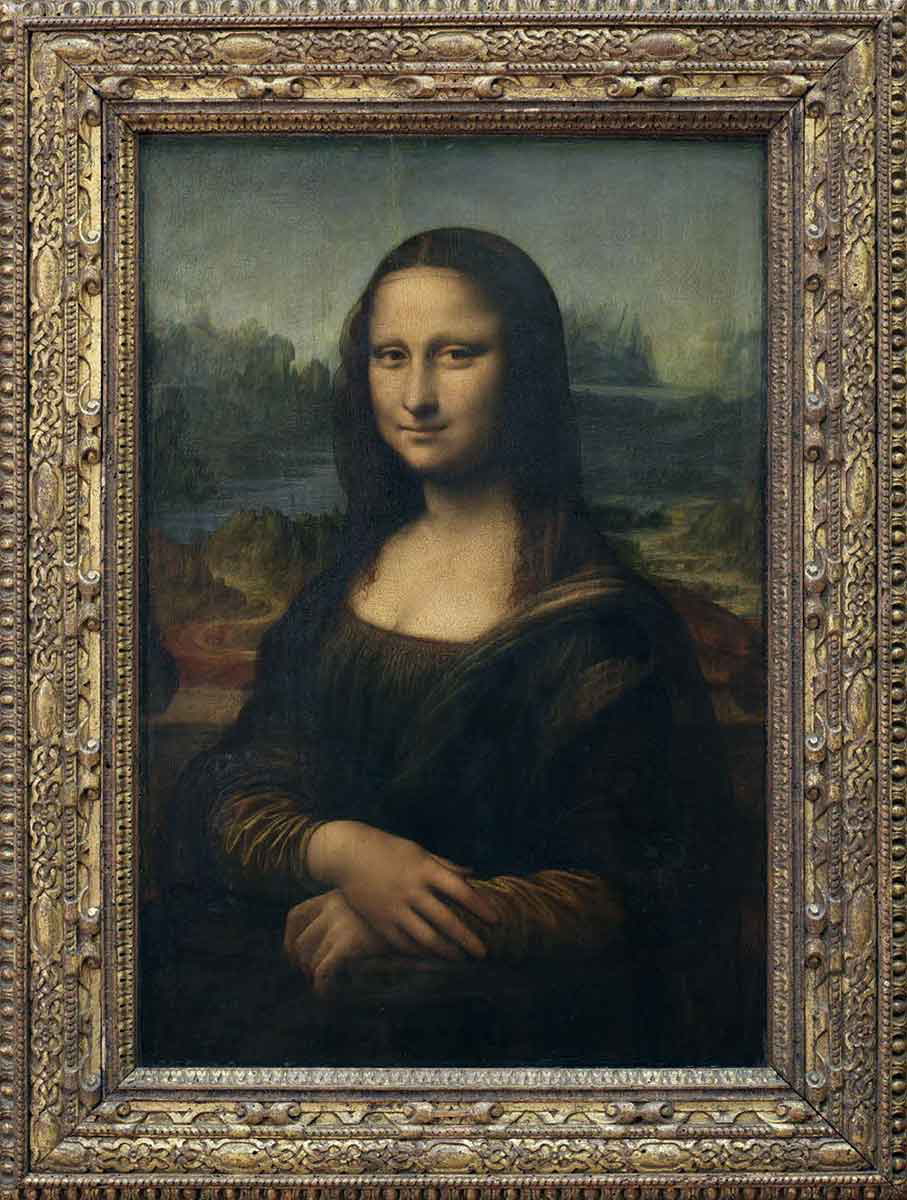
The Mona Lisa holds the Guinness World Record for the highest insured value of a painting. In 1962, it was valued at approximately $100 million—equivalent to nearly $1 billion today. According to French cultural heritage law, the painting cannot be bought or sold, as it now belongs to the people and can never become part of a private collection, unlike the royal collection to which it once belonged. Today, it is considered “priceless” and no longer insurable, as its cultural and historical significance exceeds any monetary value.
The painting became a symbol of France, just like the Eiffel Tower. Although it belongs to France and is a national landmark, it may seem ironic that both the artist and the subject are from Italy. Indeed, it would never have reached France if Francis I had not invited the artist to the country and if Leonardo had not brought the painting with him, as it appears to have been unfinished.
6. The Story of the Theft
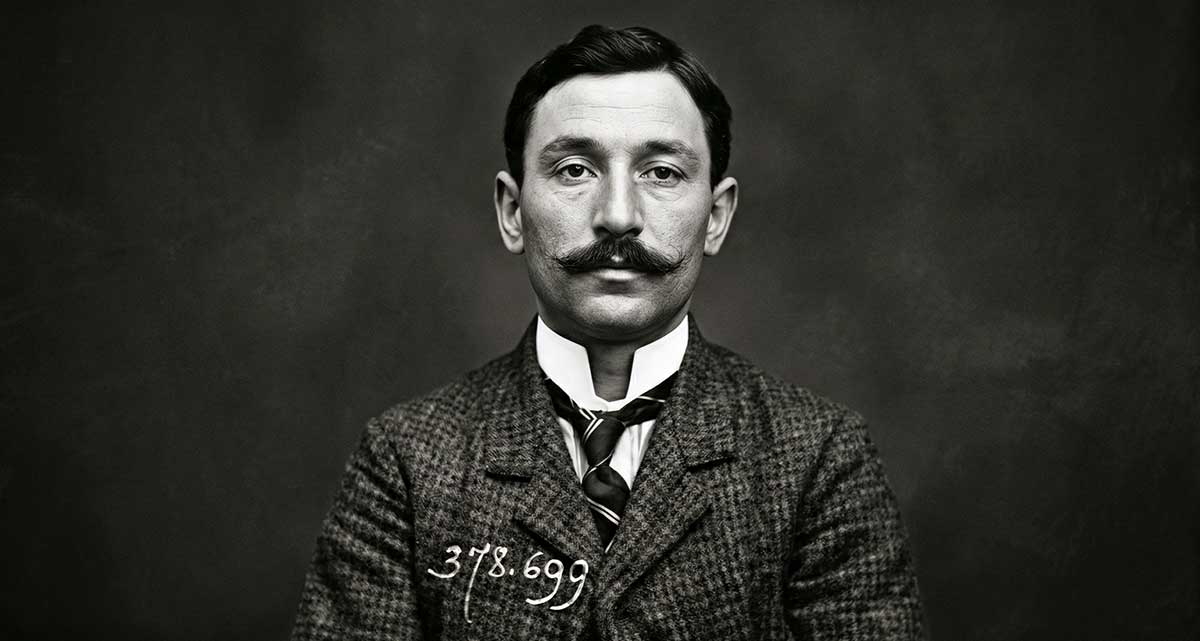
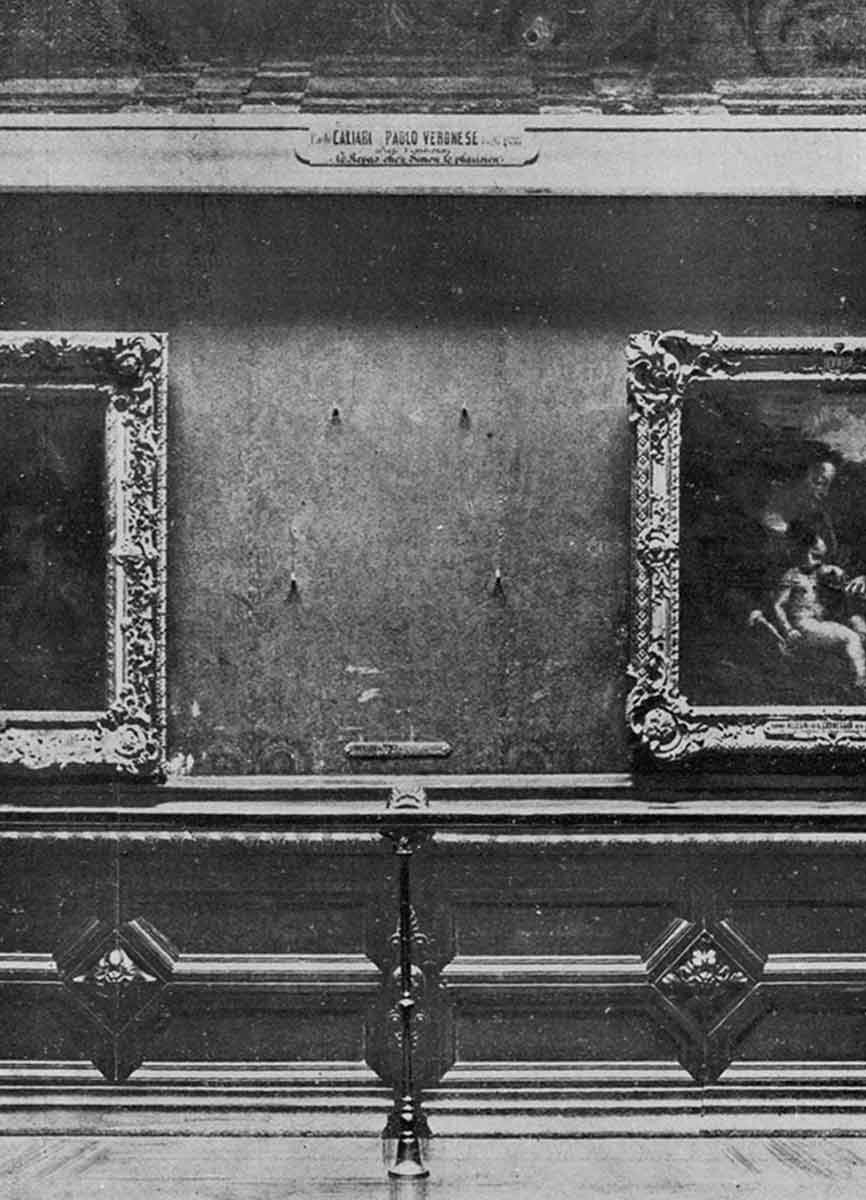
The fame of the Mona Lisa was initially limited to those who could see it up close, primarily art enthusiasts and scholars. The rest of the world learned of it only when it was stolen on August 21, 1911, after which it became front-page news globally. The theft was discovered when a painter visited the gallery to study the work and saw the wall empty. The painting had been removed from its frame, leaving behind only the imprint of the wooden outline and the four supporting nails. The thief was the Italian Vincenzo Peruggia, a former museum employee, who, wearing the white maintenance staff apron, removed the painting, wrapped it in cloth, and concealed it under his coat.
His act was motivated by nationalism, as he believed the painting belonged in Italy. At first, French police targeted artists of the Parisian avant-garde, even implicating Pablo Picasso and poet Guillaume Apollinaire, who were arrested and interrogated, though no evidence was found against them. Their arrests sparked public debate and turned the case into a symbol of the era.
Mona Lisa remained missing for two years. The publicity was immense, and the French felt the incident was a national humiliation. In 1913, Peruggia attempted to sell the painting to an art dealer in Florence, who alerted the police, and the work was recovered. The thief was arrested, but at his trial, he was treated as a patriot. He received a light sentence and was soon released.
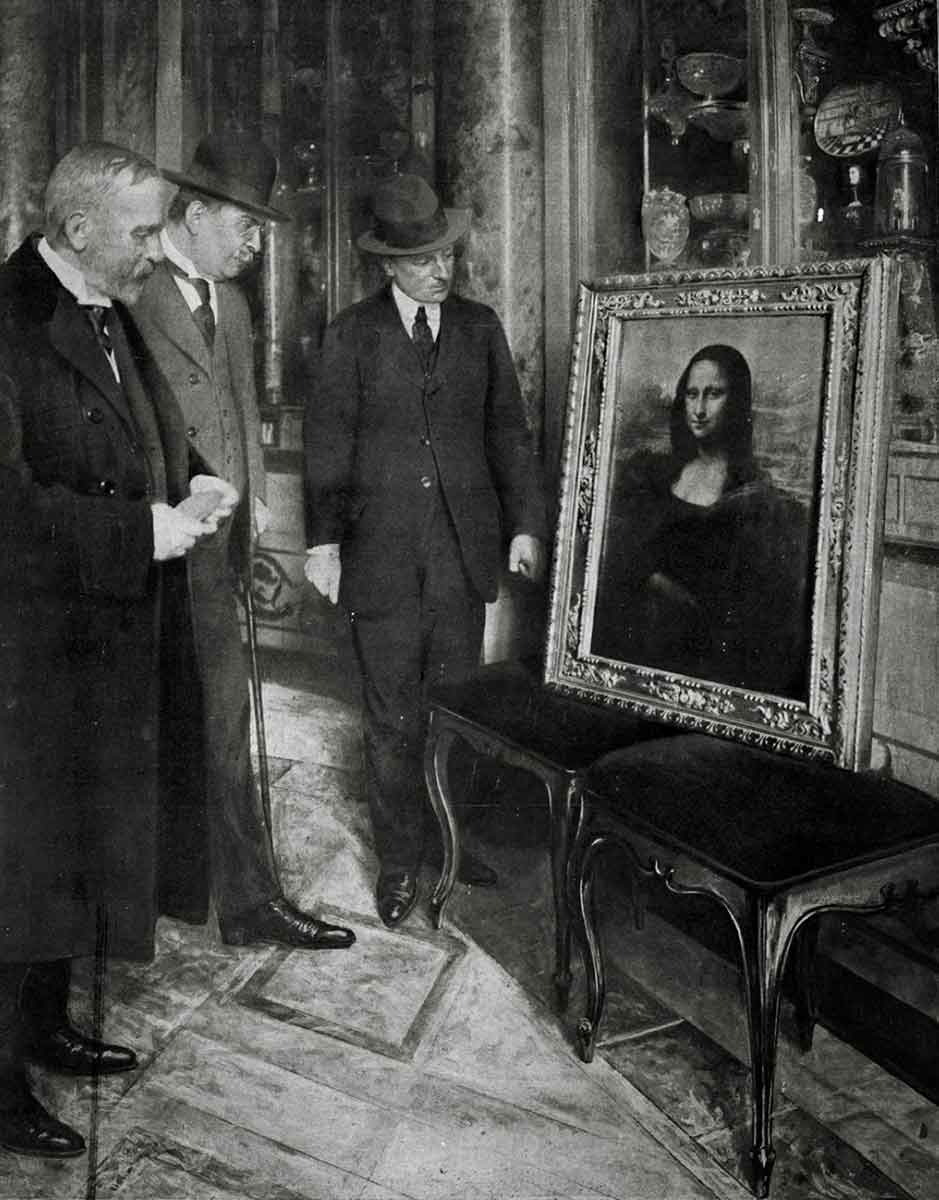
The return of the painting was celebrated on a grand scale, preceded by a tour of all the museums in Italy. Since then, the work has been regarded as the most famous painting in the world. As art historian Donald Sassoon noted, “the smile became a global symbol because for two years the world was searching for it.” From 1911 to the present (including the recent theft at the Apollo Gallery), the Louvre has experienced dozens of thefts and acts of vandalism, but none compares to the theft of the Mona Lisa. Indeed, it seems that this incident is the primary reason the painting achieved its legendary fame.
7. The Impact of Mona Lisa on Modern Artists
The statement of Hungarian art historian Charles de Tolnay (1951) summarizes the work’s universal importance and tremendous impact:
In the Gioconda, the individual, a kind of marvelous creation of nature, represents the whole human race, and the portrait, transcending social confines, acquires universal significance. Leonardo worked on this painting both as a researcher and thinker, and as a painter and poet. Yet the scientific/philosophical aspect of his work remained inconclusive. The formal aspect, however (the originality of the composition, the nobility of the pose, and the charm of the model that emanates from it), decisively influenced Florentine portraiture of the following two decades, namely the classical portrait […] Leonardo created with the Gioconda a new version of portraiture, more monumental and at the same time more alive, more compact yet more poetic than those of his predecessors […] In earlier portraits, the mystery is absent: artists depicted only external forms without soul, or, when attempting to portray the soul, it reached the viewer through gestures, symbolic objects, or inscriptions. From the Gioconda, however, emanates an enigma: the soul is present but inaccessible. This poetry of mystery is reinforced by the unbreakable unity of the human form with the landscape in the background.(C. de Tolnay, ”Remarques sur la Joconde”, Revue des Arts, 1951).
The painting’s enigmatic and timeless character is intensified by the primordial, human-less landscape in the background. The work enjoyed great success in its time, particularly during the 19th century, when it became the most famous painting in the world. There is even a French expression: connu comme la Gioconde (meaning as famous as the Gioconda).
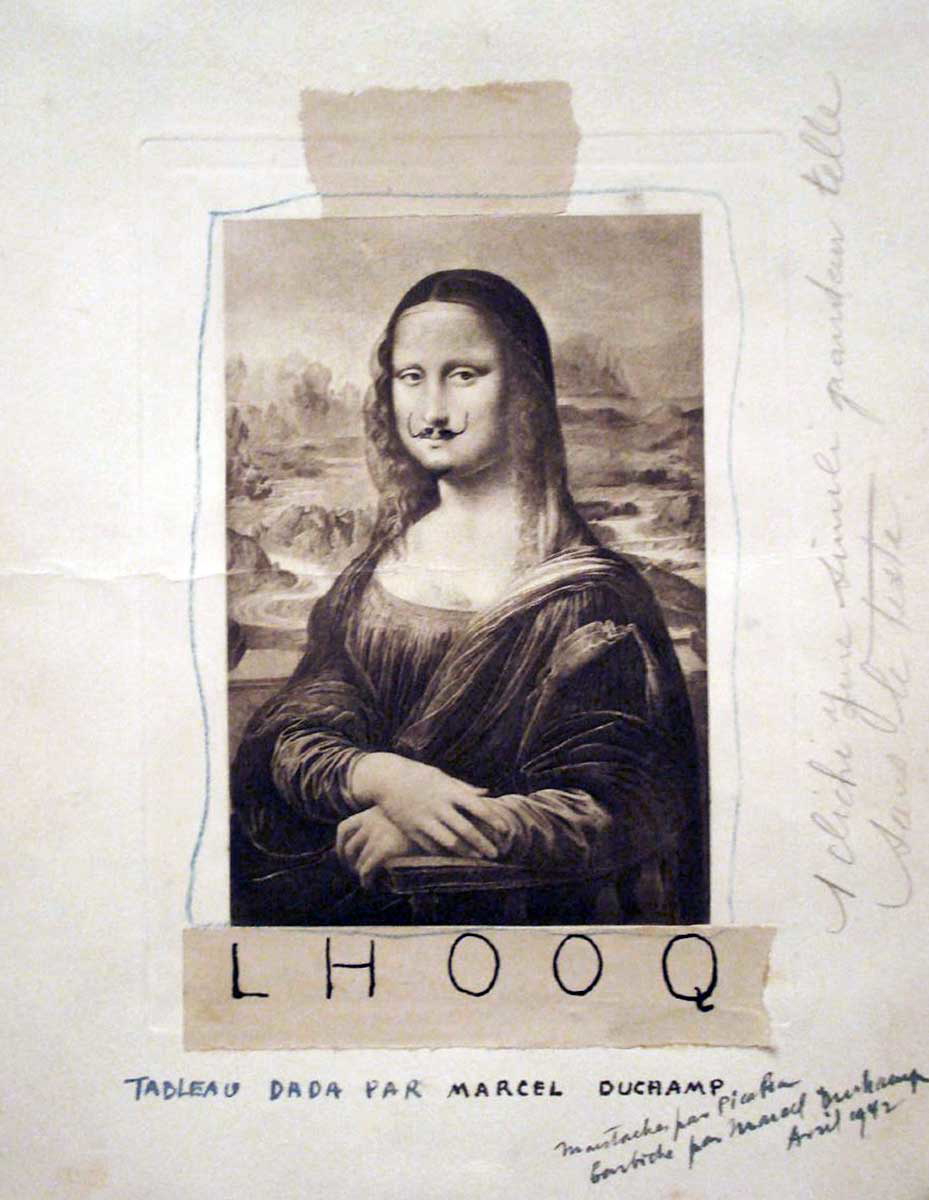
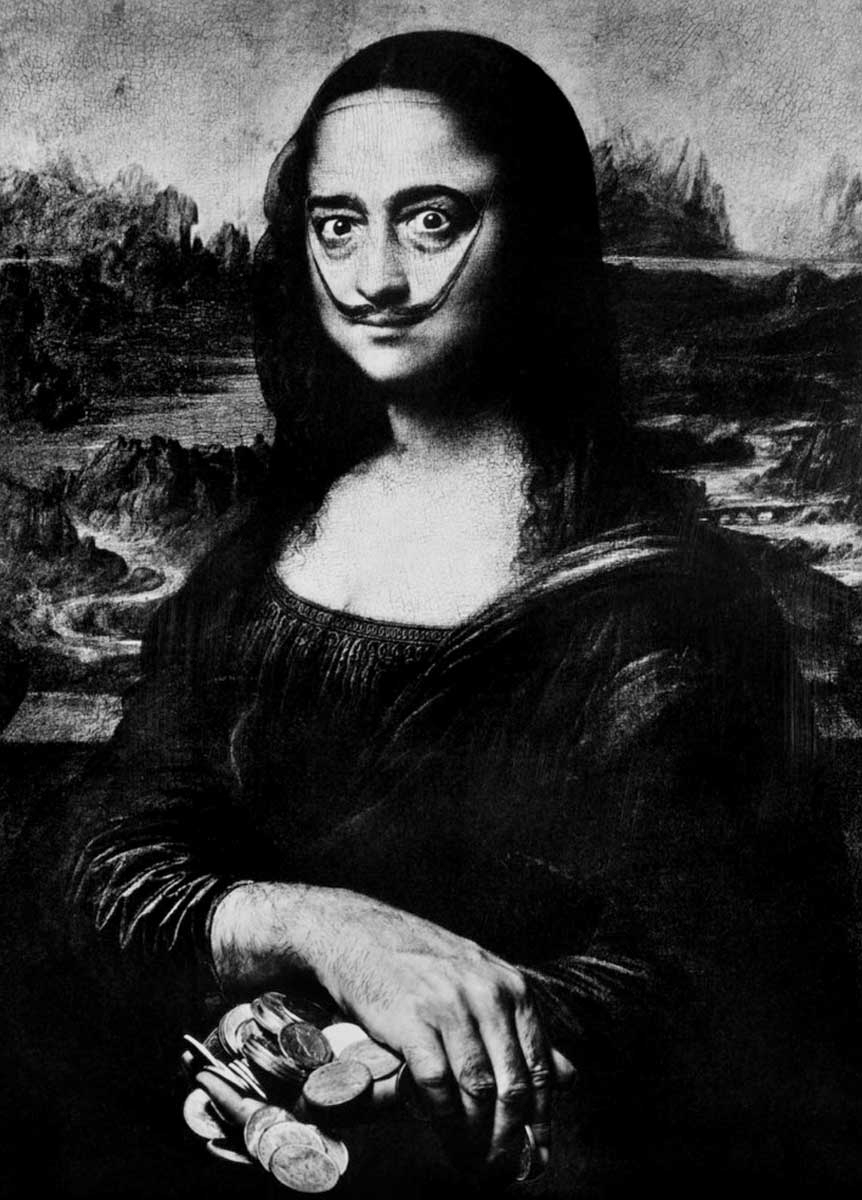
Even avant-garde and radical artists of the 20th century, such as Duchamp, Dalí, and Warhol, expressed their iconoclastic tendencies by creating well-known variations of the Gioconda. The appropriation of the work took many forms: Dadaist Marcel Duchamp “desecrated” it by adding a moustache and beard to a cheap postcard reproduction and writing the acronym L.H.O.O.Q. Salvador Dalí used the most recognizable moustache in art—his own—replacing the portrait’s features with his in 1954.
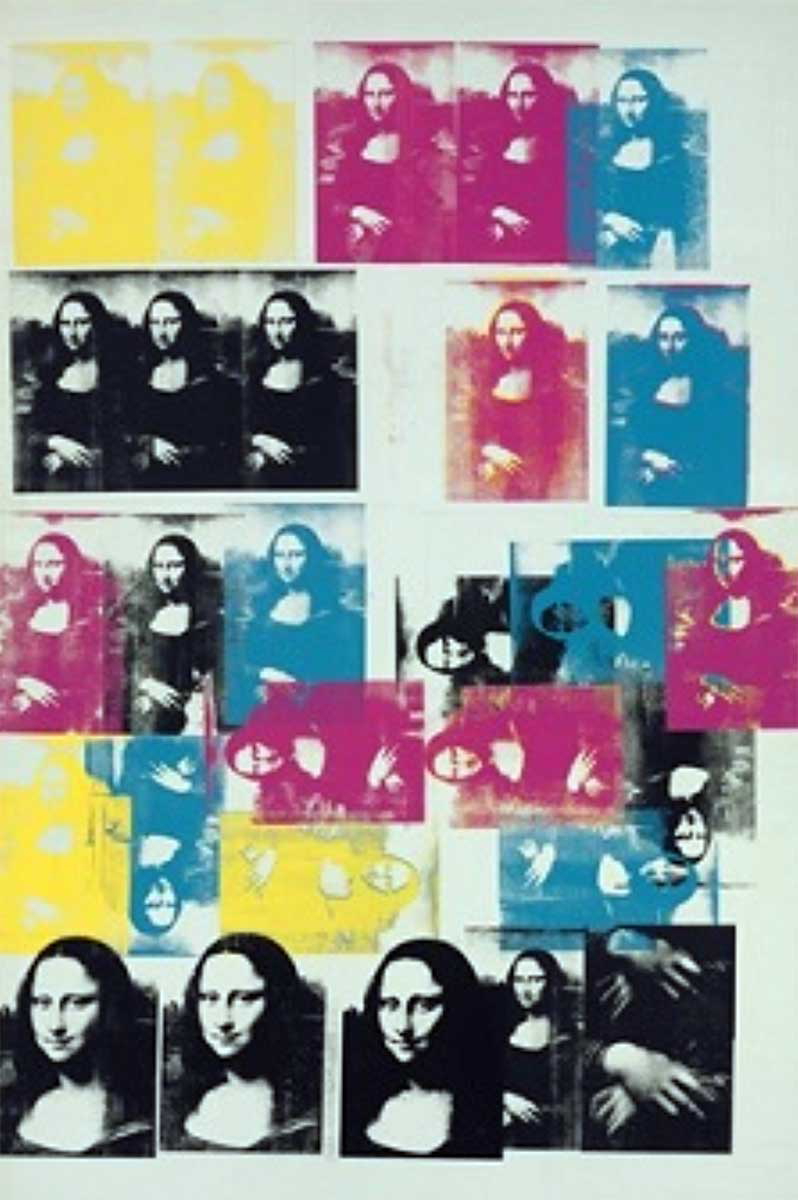
Andy Warhol, on the other hand, made Mona Lisa into a star, critiquing the widespread replication of the image, which had turned into a form of “subculture.” There are many artworks showing their versions of Leonardo’s famous work, such as Malevich’s Composition with Mona Lisa (1914), Banksy’s smiling version (1992), or Botero’s Small Mona Lisa (1959).
Mona Lisa has had a tumultuous life, always being a protagonist. She has been stolen, vandalized, examined through every research method, turned into song, film, poem, book, advertisement, and recently, NASA transmitted her image to the moon via laser! Leonardo’s Mona Lisa can surely boast that it was, is, and will remain the most famous work of art in the world.