
For 27 years, from 431 to 404 BC, the Spartans and Athenians fought for supremacy of the Greek world in what would become known as the Peloponnesian War. Scores of battles were fought over the course of the conflict. Discover the six most important battles that defined the war.
1. Battle of Pylos – 425 BC
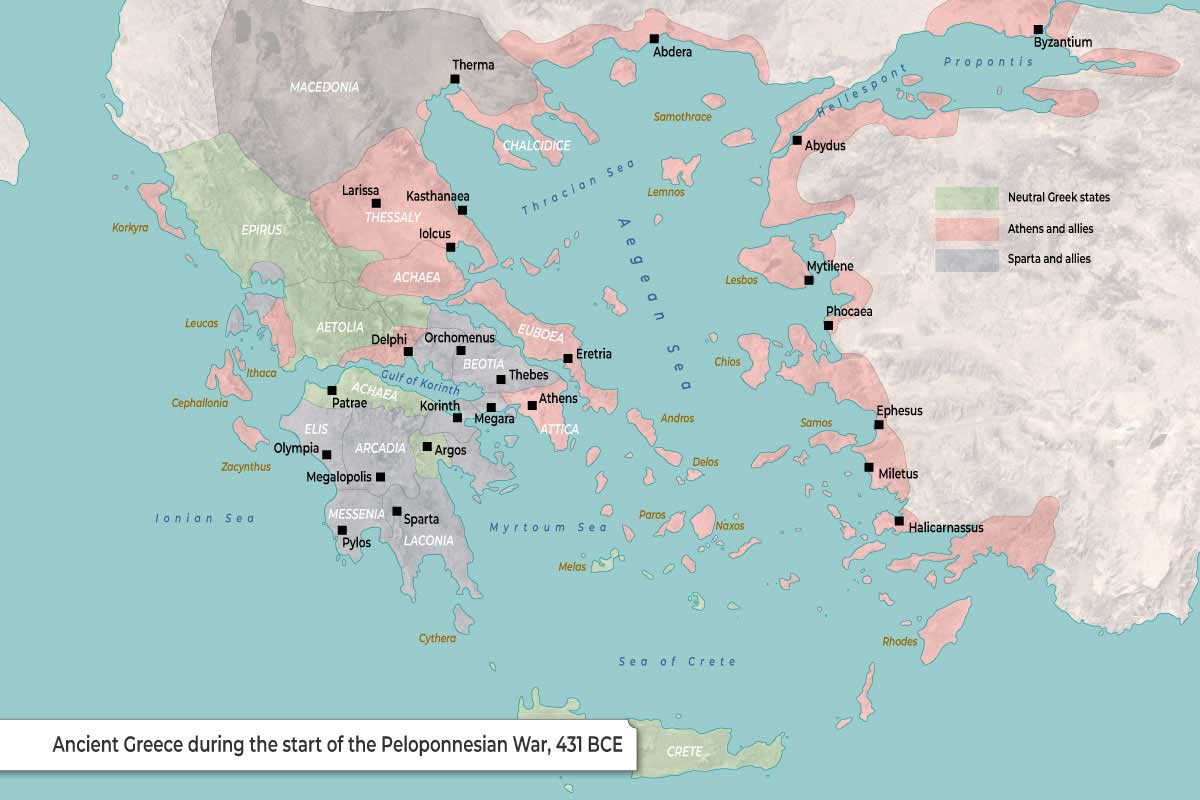
The Peloponnesian War was a clash of opposites. Athens was a democratic sea power with a powerful fleet and an Aegean Empire. Sparta was an oligarchic land power whose feared heavy infantry of hoplites led the alliance of neighbouring states called the Peloponnesian League. The Athenians could not challenge the Spartan hoplites even when they invaded their home territory of Attica. The Spartans could not defeat the Athenian navy. It was not until six years into the war that surprising events broke this deadlock.
The Athenian general Demosthenes had an idea. He wanted to use the navy to set up bases in Spartan territory to raid and induce the subjugated population of Messenia, the economic base of the Spartan system, to revolt. In 425 BC, he set up a base in the bay of Pylos in the south-west Peloponnese. Pylos was deep in Spartan-controlled Messenia, but was easily fortified with a large natural harbor, almost entirely closed off by the long, narrow island of Sphacteria.
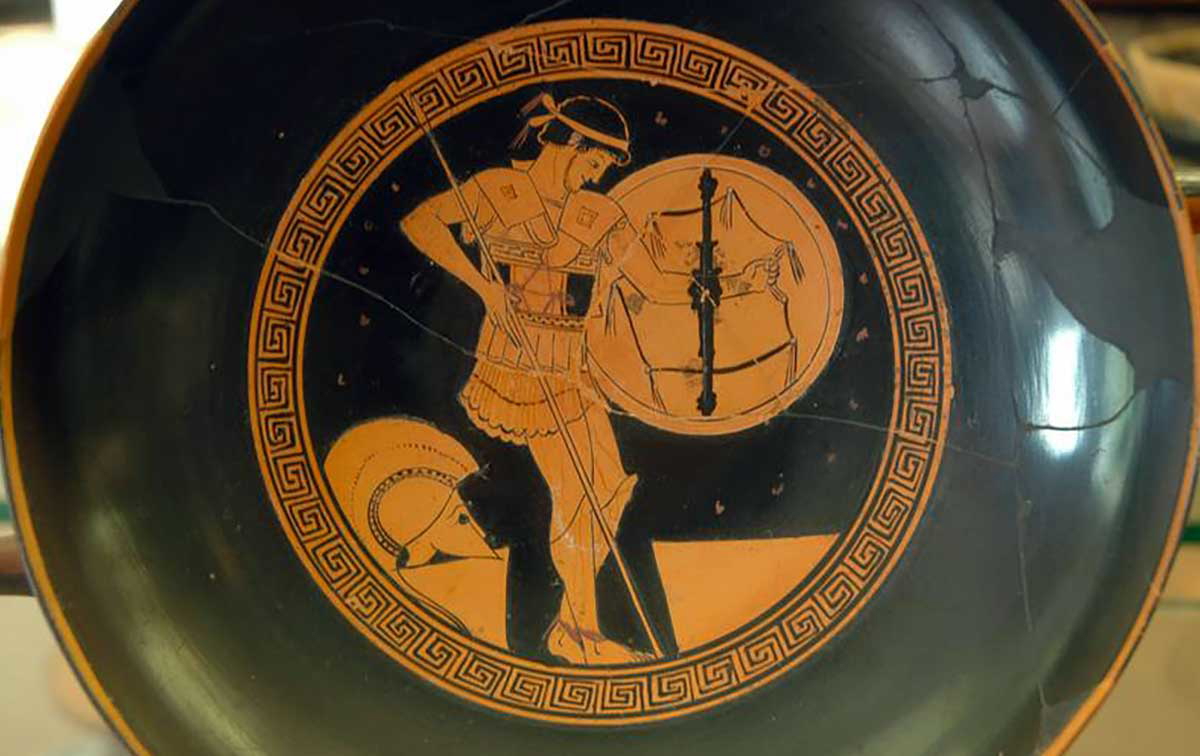
The Spartans rushed forces back from an invasion of Attica. They attacked by land and sea. To block Athenian reinforcements, they landed several hundred hoplites on Sphacteria. This turned out to be a critical mistake. An Athenian fleet sailed in, and suddenly, the men on Sphacteria, including over a hundred elite Spartans, were stranded. The number of Spartan citizens had been shrinking throughout the previous century due to its rigid and unsustainable social system. The loss of just over 100 was a high price. The Athenians accepted the gift that had fallen into their hands. They rejected peace offers, and the politician Cleon set out with reinforcements to join Demosthenes and capture the men on Sphacteria.
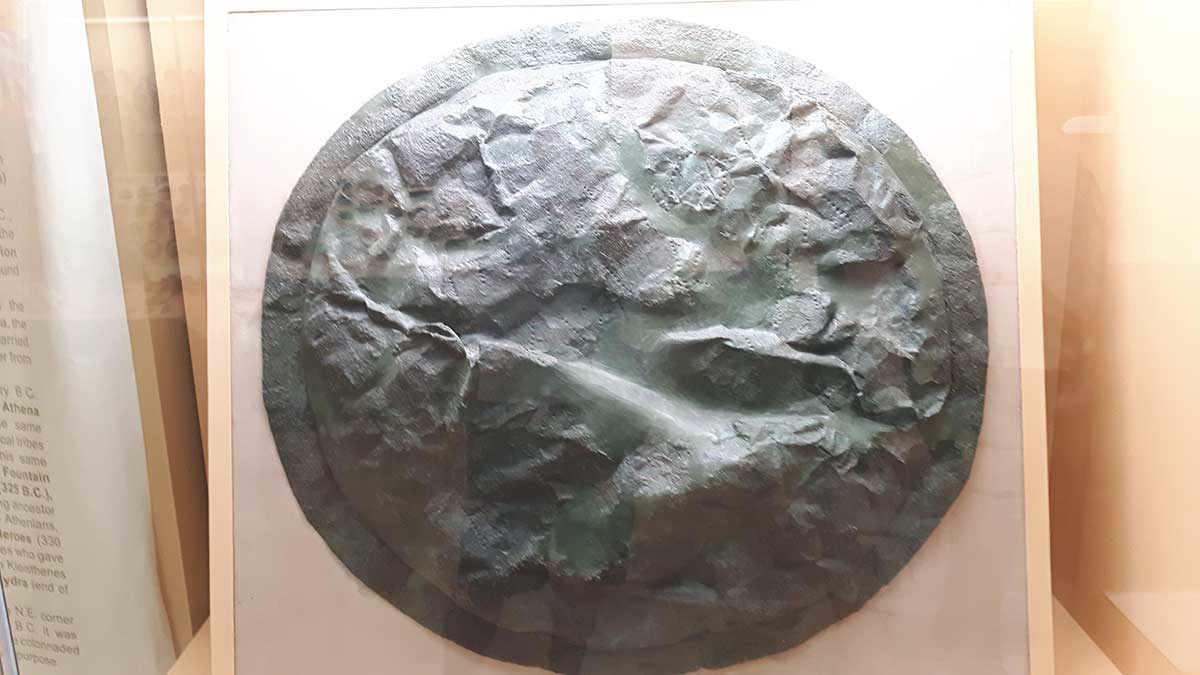
Still wisely unwilling to confront Spartan hoplites directly, the Athenians drove them back to the edge of the island using archers and light-armed troops. When a group of Messenian exiles got around the back of the Spartan position and surrounded them, the stage was set for a last stand. What happened next was, according to the historian Thucydides (4.40), the most surprising event of the war. Rather than living up to their reputation of fighting to the last man, 120 Spartans and over a hundred allies surrendered.
At Pylos, the Athenians capitalized on a Spartan mistake to severely damage Spartan prestige and morale and gain a significant advantage.
2. Battle of Amphipolis – 422 BC
One of the few Spartans to emerge from Pylos with their reputation intact was Brasidas. He was entrusted to strike back at the Athenians.
With 120 hostages in Athens, the Peloponnesians could not invade Attica again. But the Athenians were still vulnerable. Just as the Athenians had hit at Sparta’s weak underbelly, Brasidas sought to do the same. In 424 BC, he marched a small force of fewer than 2,000 freed slaves and mercenaries all the way to the Chalkidiki and Thrace regions of northern Greece. Many cities in the region were Athenian subjects or allies and sat on the key trade routes that brought grain to Athens.
During 424 to 423 BC, Brasidas induced some Athenian subjects to revolt through a combination of threats and promises of liberation. Most painfully for the Athenians, this included their prized possession in the region, Amiphipolis. Brasidas had regained some leverage for the Spartans, rescuing them from the dire situation post-Pylos at minimum cost. This, coupled with a failed Athenian invasion of the Spartan ally Boeotia in 424 BC, produced an armistice. But neither side was ready for peace. During the negotiations, Brasidas continued to win over cities. The Athenians claimed this broke the armistice and sent Cleon, one of the more hawkish Athenians, north.
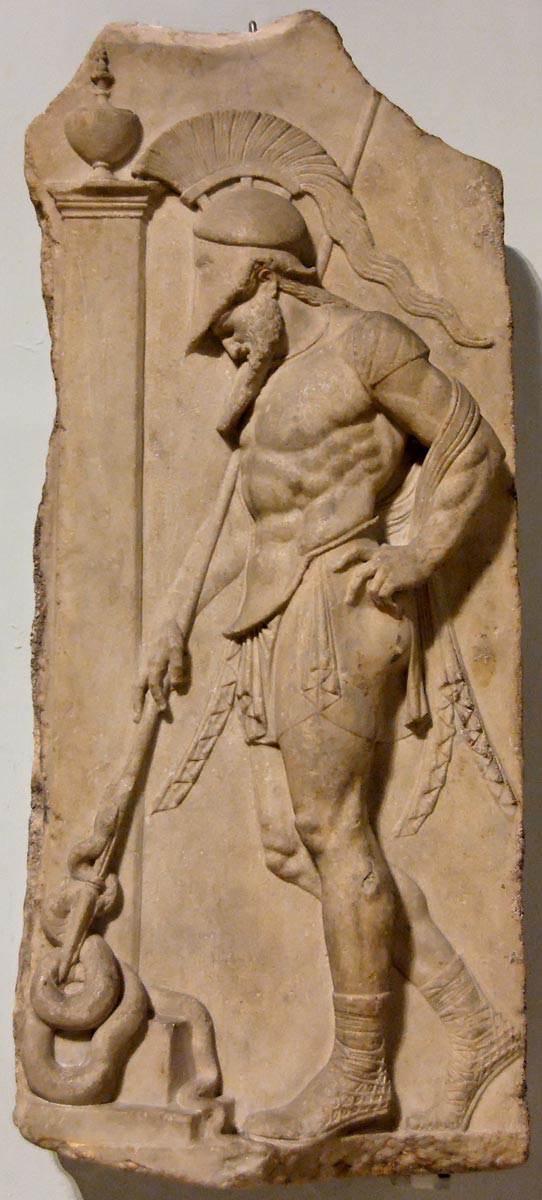
In 422 BC, Cleon approached Amiphipolis, but the politician was no general. Brasidas watched Cleon closely and pounced on a mistake. Cleon came forward to observe Amiphipolis with a small force and was now isolated. By the time he saw Brasidas preparing to emerge from the city, it was too late to launch an attack. Cleon ordered a withdrawal, but that only meant turning and exposing their side and backs to Brasidas’ forces. The disorganized Athenians were routed, and Cleon himself was killed with around 600 of his men (Thucydides, 5.11). The remaining Athenians withdrew to their ships. The Spartan allies lost only seven men, but one of those was Brasidas himself.
Both sides now counted their losses and bargaining chips. With Cleon and Brasidas both gone, peace was agreed in 421 BC, but it did not last long.
3. Battle of Mantinea – 418 BC

Though officially at peace, the distrust and manoeuvring continued. Spartan prestige was tarnished, and it faced a number of disaffected cities in the Peloponnese. Even while at peace, this was an irresistible opportunity to some Athenians. The result was the largest land battle of the war.
The Argives, Eleans, and Mantineans all had reasons to be looking for anti-Spartan allies in the early 410s. The Argives, Sparta’s great rival in the Peloponnese, were worried as a peace treaty was about to expire. By allying with the Eleans, the guardians of Olympia, in the north-west and the Mantineans in the central Peloponnese, the Argives created a band of anti-Spartan states cutting across Sparta’s supposed sphere of influence. An ambitious Athenian, the aristocratic and charismatic Alcibiades, jumped at this opportunity. By 419 BC, a defensive alliance connected these states with Athens. The demoralized Spartans lacked confidence in their king, Agis, but they had to act or see the basis of their power dissolve.
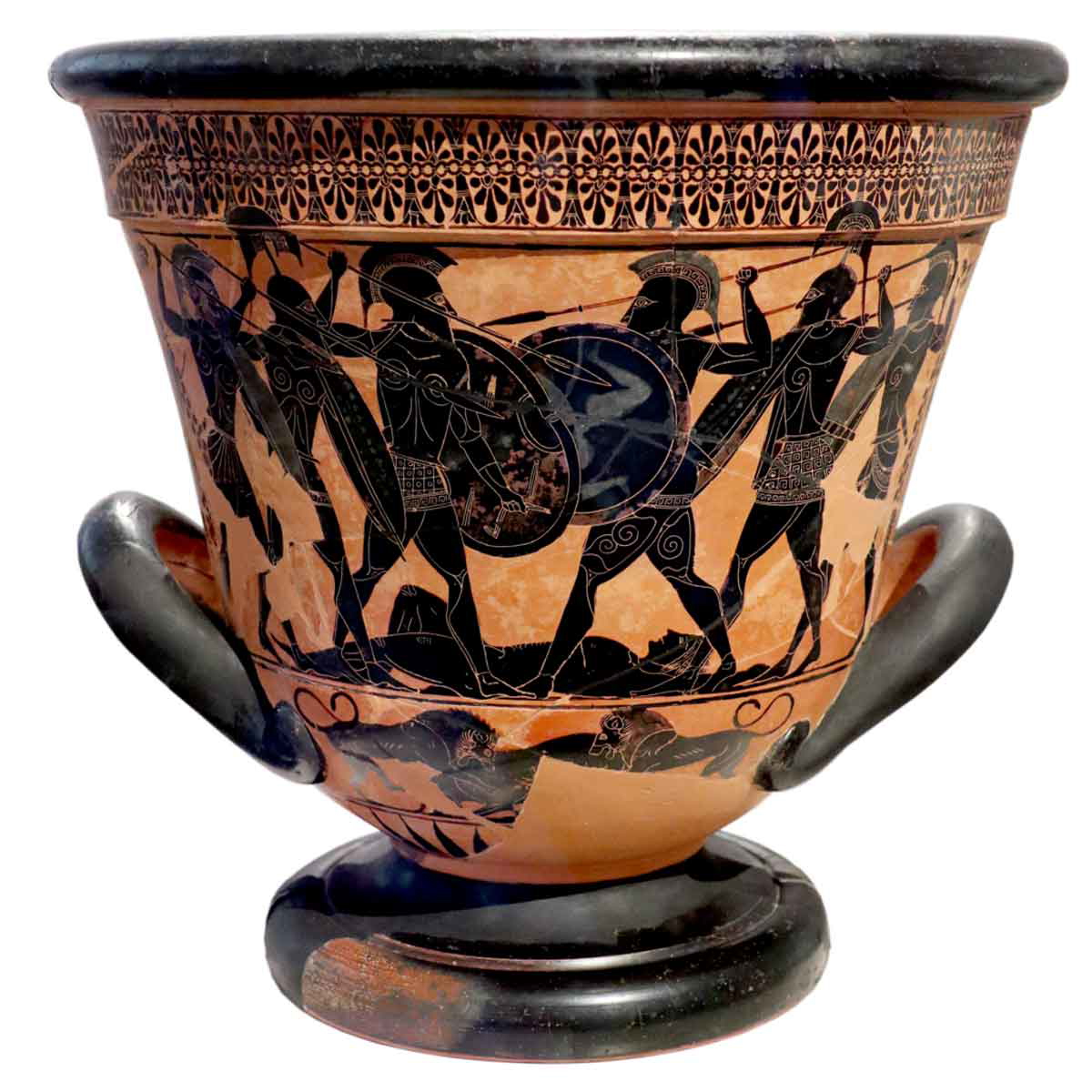
In 418 BC, Agis mobilized as many Spartans as possible, perhaps 5,000 (Thucydides, 5.68), and linked up with Peloponnesian allies outside Mantinea. The exact numbers are unknown, but Agis likely had more than 10,000 hoplites and slightly outnumbered the combined forces of Argos, Mantinea, and Athens. The Athenians have been criticized (Hanson, 2006) for committing to the alliance but only supplying 1,000 hoplites, but they were still not openly at war, and many in Athens wished it to stay that way. The Peloponnesian War saw few large hoplite battles, though the clash at Mantinea with over 20,000 was one of the largest recorded Greek battles.
Sparta’s position was precarious, but a large-scale hoplite battle on an open field was exactly where it excelled. It has been called a soldier’s battle (Tritle, 2010, 125), as Agis and his officers blundered as they advanced, but once the Spartan hoplites were in contact with the enemy, their reputation and skill won the day. The Spartan left flank was overwhelmed, but on the right, they easily pushed through their opponents before coming to the assistance of their beleaguered colleagues. The result restored Spartan morale and broke the threatening alliance. Within a year, the Argives had removed their democracy and made peace with Sparta. The Athenians would not threaten Sparta in its own backyard again for the duration of the war.
4. The Sicilian Expedition – 415-413 BC
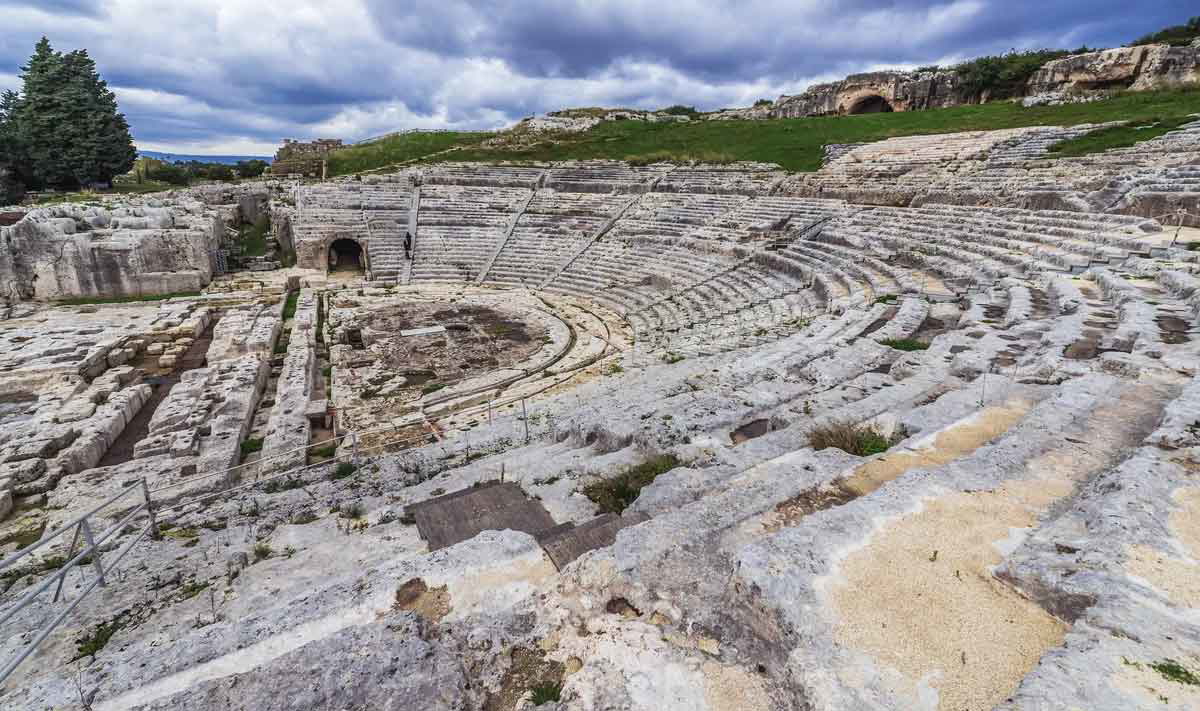
In 415 BC, the Athenians committed their greatest mistake of the war. For Thucydides (7.87), it was the greatest disaster the Greeks had ever seen.
The Athenians dispatched a large but poorly conceived expedition to Sicily. The Athenians had allies amongst the Greek cities on the rich island of Sicily. These allies, Egesta and Leontini, were under pressure from Syracuse, a democratic city on a similar scale as Athens but favorable to Sparta. Thucydides was clear that the Athenians were led to disaster by their ambition to conquer Sicily despite the ongoing threat of Sparta and their ignorance of the size of the task. Alcibiades is once again central to the story as his dreams of glory encouraged the Athenian people.
In 415 BC, 134 ships sailed for Sicily carrying 7,000 soldiers and tens of thousands of sailors under three generals: Nicias, Alcibiades, and Lamachus. The expedition was in trouble from the beginning. The three generals disagreed. The initial plan of winning over allies and collecting money that existing allies had already offered failed. Alcibiades, the most enthusiastic of the generals, was then recalled to face trial at Athens on charges of sacrilege. Instead, he defected to Sparta and started advising the enemy. By the time Nicias and Lamachus turned on Syracuse, the first year had been wasted, and the Syracusans were better prepared.
The Athenians spent the second year of the campaign in 414 BC on an unsuccessful siege of Syracuse. For over a year, the Athenians attempted to take one of the Greek world’s largest cities, while hundreds of miles from home, with few allies, and with a force too small for the task. Remarkably, they almost succeeded, as the Athenians nearly completed a wall isolating the Syracusans, who started to despair. Crucially, the wall was never finished, allowing support to come from the Peloponnese in the form of the Spartan officer Gylippus.
By late 414 BC, Nicias wrote to Athens, warning that the initiative was lost and requesting reinforcement or withdrawal. Having invested so much in the effort, the Athenians could not give up now. Demosthenes was dispatched with an additional 70 ships. The total Athenian commitment to Sicily was now over 40,000 men and 200 ships (Hanson, 2006).
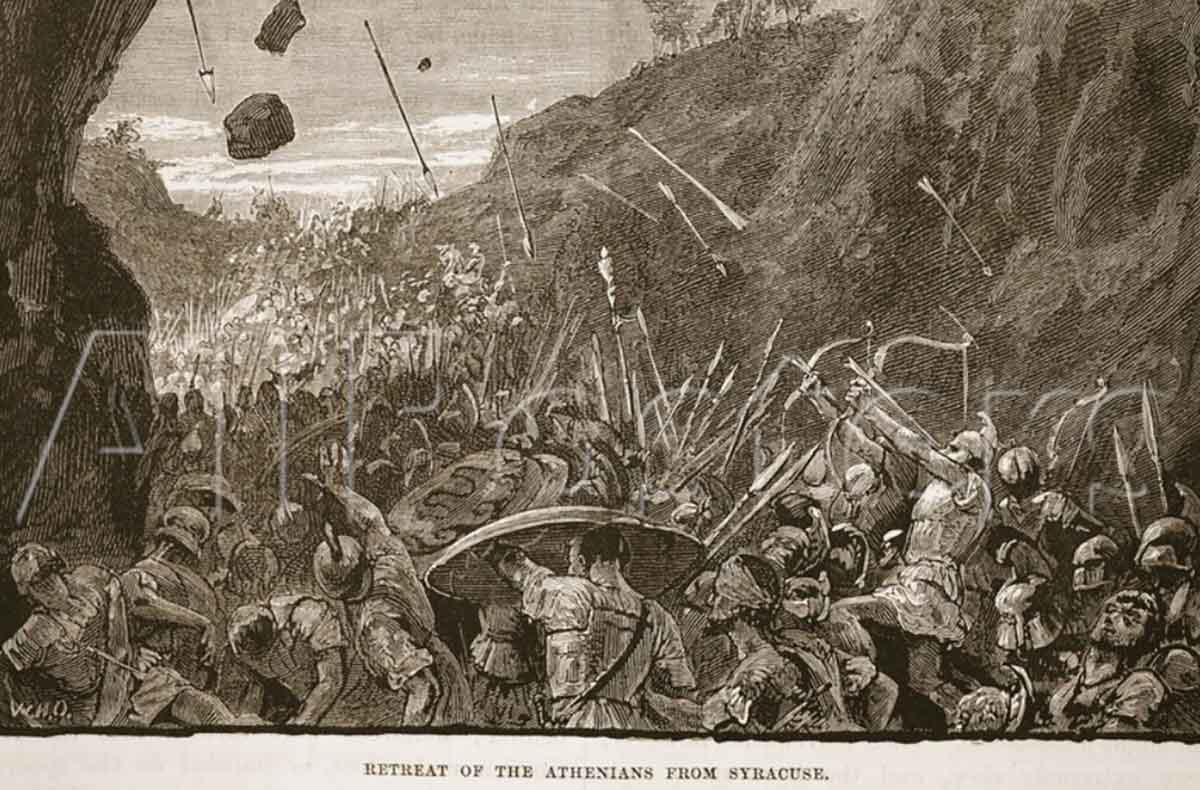
Demosthenes quickly tried to regain the initiative with a night attack. After a promising start, the effort failed in the darkness. Withdrawal was now the best option, but Nicias, fearful of returning to Athens empty-handed, hesitated. Nicias’ delay helped the Syracusans block the harbor where the Athenians based their fleet. When a desperate attempt to break out failed, the last option was to retreat by land to the few remaining pro-Athenian cities.
The Athenian force was still above 40,000 men, but they were dispirited and desperate to escape. When the Syracusan cavalry harassed them and blocked their route, the retreat became a rout. Demosthenes and Nicias became separated and eventually surrendered. They were both executed. Thousands were killed on the roads, with thousands more sold into slavery. At least 7,000 Athenian prisoners were herded into quarries outside Syracuse and left exposed for months. Few ever returned home.
5. Battle of Arginusae – 406 BC
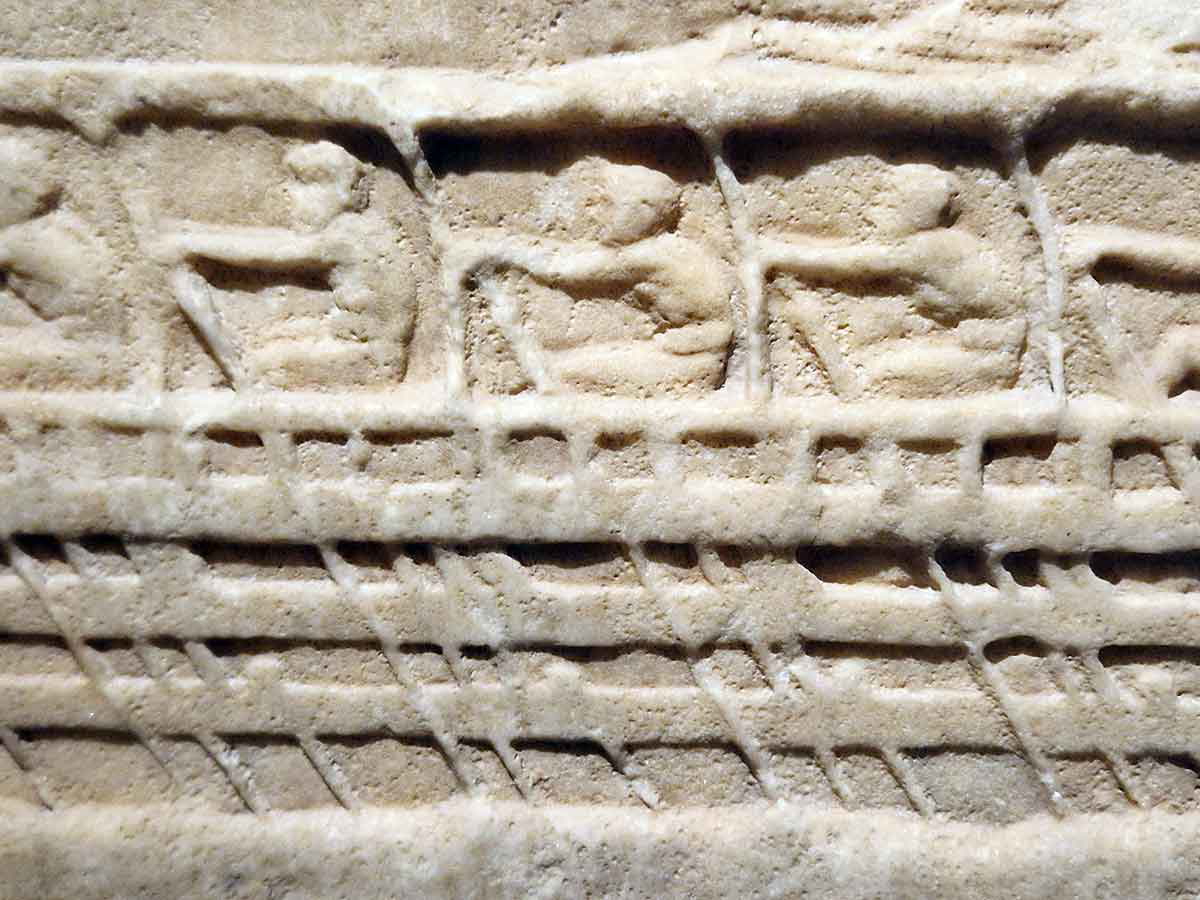
After the loss of men, money, and ships on Sicily, Athens’ allies revolted. The Spartans permanently occupied part of Attica. An oligarchic counter-revolution briefly overthrew the democracy. Yet, the Athenians fought on, even winning a string of victories that kept the war going. But their survival was precarious. Cut off from their own land, the Athenians relied more than ever on the sea. A single naval defeat would be the end.
In 406 BC, an Athenian fleet was trapped on the island of Lesbos. To save it, the Athenians ordered an extraordinary mobilisation that manned 150 ships. Such was Athens’ need for sailors that slaves and members of the elite, who normally preferred to serve in the cavalry rather than the distinctly lower-class fleet, boarded the ships together.
The crews were inexperienced, and there were doubts about the quality of the ships pressed into service (Xenophon, 1.6.32). The Spartans, on the other hand, had learnt how to fight at sea and were now supplied and paid by the Persians.
The two fleets faced each other at the Arginusae islands close to Lesbos. The Spartan commander Callikratidas was outnumbered with around 120 ships but engaged in battle nonetheless. The Athenians again won a hard-fought battle, losing around 25 ships compared to the Spartan losses of 69. However, the aftermath turned the victory into a tragedy.
A storm prevented the Athenians from rescuing survivors, and when news reached Athens, the generals were blamed. As the fleet represented a wider cross-section of Athenian society than normal and Athens could ill-afford any losses, the anger is perhaps understandable. However, sections of the Athenian people now broke their own laws and put the eight generals on trial for their lives. In the highly charged atmosphere, the six who had returned to Athens to face the charges were convicted and executed.
6. Battle of Aegospotami – 405 BC
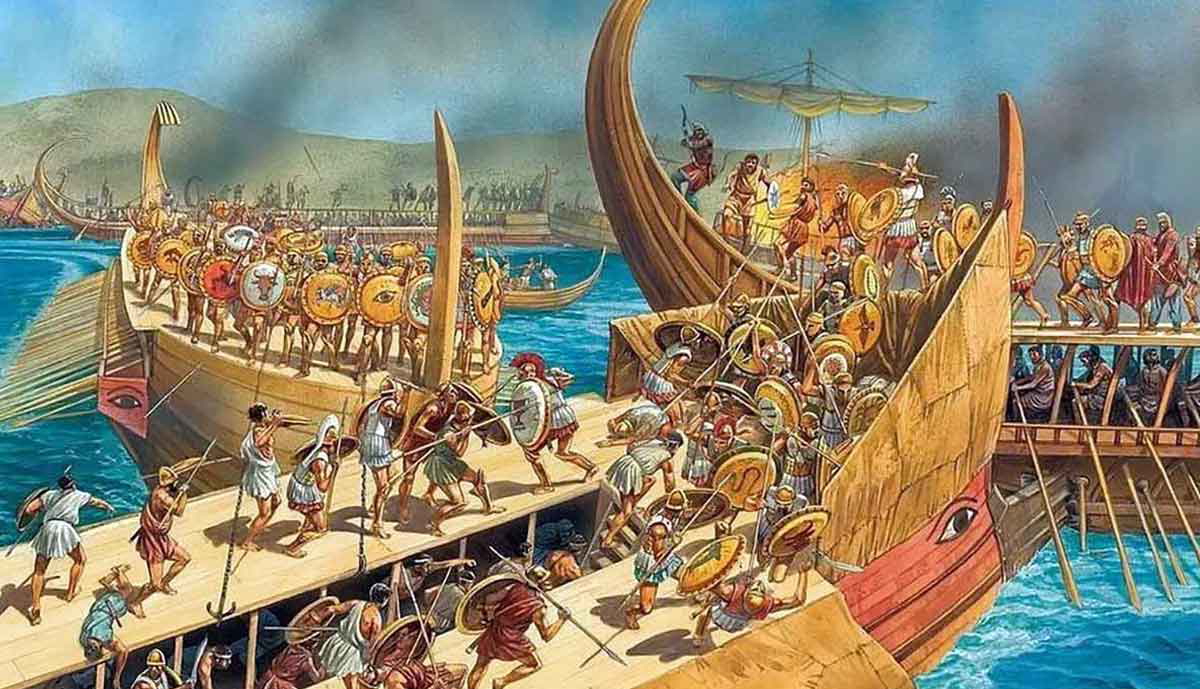
The year after Arginusae, the Athenians were again having to set sail to save themselves. The most competent Spartan naval commander of the war, Lysander, had taken up position in the Hellespont (the Bosphorus) to cut off the grain that flowed from the Black Sea and starve the Athenians.
In 405 BC, the Athenians once again amassed a fleet of 180 ships, aiming to dislodge Lysander. They based themselves at a site called Aegospotami on the modern Gallipoli peninsula. Their position was directly across from Lysander’s fleet, but inconveniently far from supply lines. For four days, the Athenians sailed out and offered battle to Lysander. When the Spartans refused, the Athenians sailed back, disembarked, and proceeded to gather supplies.
Lysander observed this routine, and on the fifth day, had ships watch the Athenians and signal when they left their ships. At this point, Lysander, whose fleet had supplies close at hand, ordered his ships into the attack. Taken by surprise, the Athenians barely managed to fully man a handful of ships. Less than ten escaped as the Spartans swept in and captured the entire fleet and thousands of sailors. After a debate, the Athenian prisoners were summarily executed.
The Athenians had lost their last fleet, and in 404 BC, surrounded and starving, Athens finally surrendered. The 27-year-long Peloponnesian War was finally over.
Select Bibliography
Hanson, V. D. (2005). A War Like No Other: How the Athenians and Spartans Fought the Peloponnesian War. Random House.
Tritle, L. A. (2010). A New History of the Peloponnesian War. Wiley-Blackwell.