Summary
- Contrary to myth, the name Arthur did not disappear among Britons after the legendary king’s supposed reign.
- The name Arthur actually surged in popularity in the generations immediately following the king’s time, suggesting a real figure.
- Many post-Arthurian figures named Arthur were Brythonic or had strong Briton connections, not just Irish as some claim.
- Evidence shows a prince of Dyfed and a son of “Bicoir the Briton” were both named Arthur.
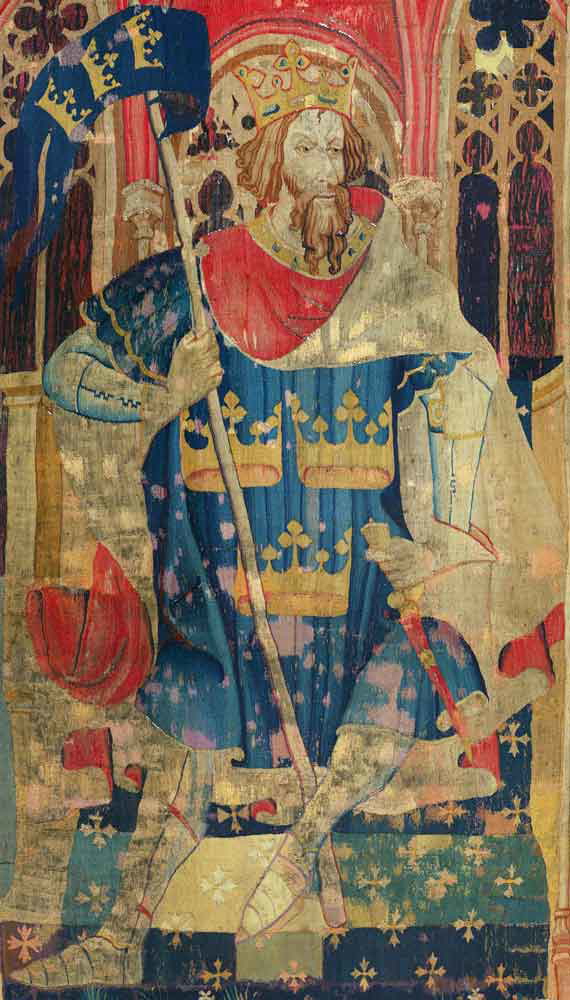
King Arthur, according to medieval legend, was a powerful ruler who lived in the 6th century AD. He ruled over the Britons and fought against the “invading” Anglo-Saxons. There is plenty of ongoing debate about whether or not he really existed, but the medieval Britons certainly believed that he did. Interestingly, some scholars have noted that the Britons appear to have stopped using the name “Arthur” after the time of King Arthur. They suggest that this may have been due to a superstition or intense reverence for the famous king. But the evidence actually suggests that the name Arthur may have been more commonly used among the Britons than previously suggested.
Use of the Name “Arthur” After the Time of King Arthur
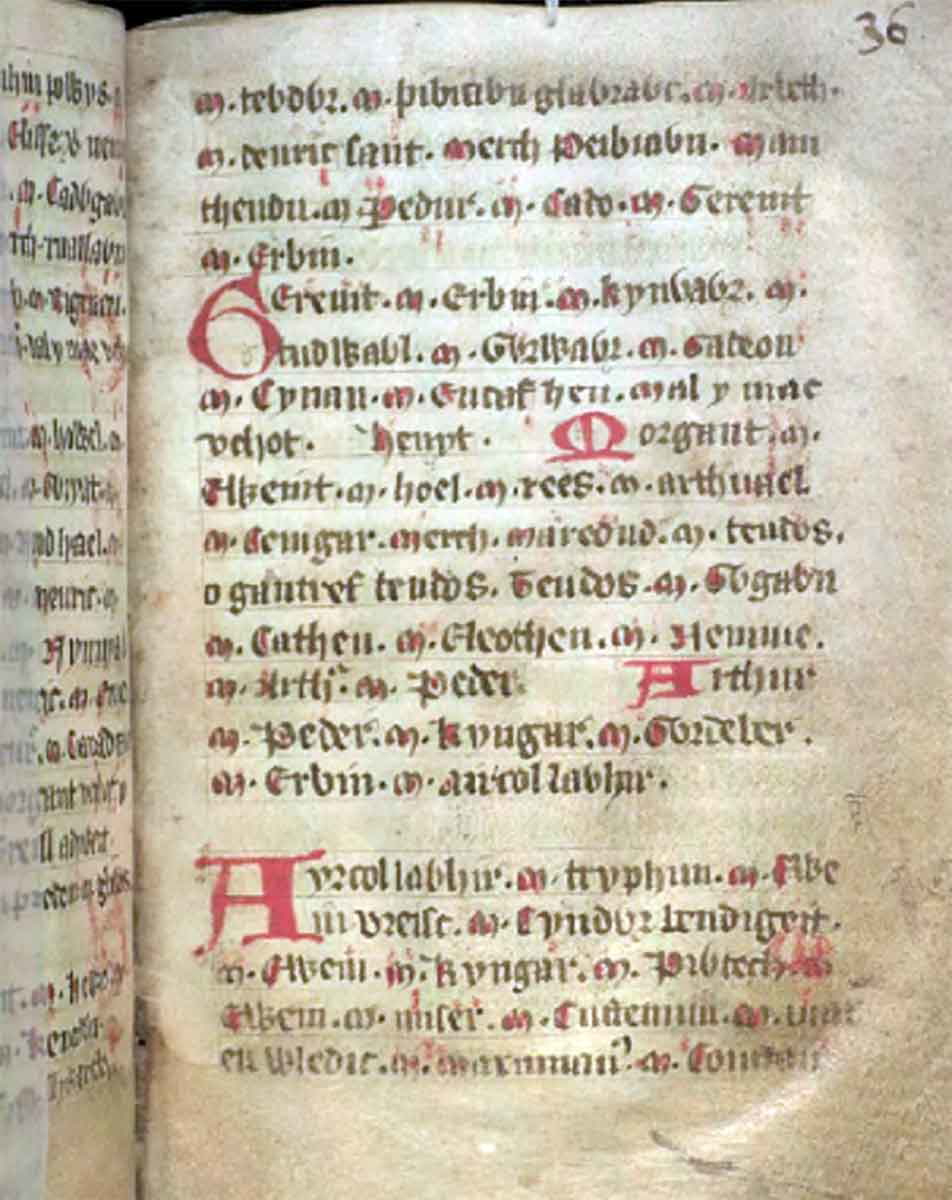
Historians of Dark Age Britain agree that in the era immediately following the time in which King Arthur supposedly existed, the name “Arthur” suddenly surged in popularity. Although we do not have many contemporary records from the 6th and 7th centuries, there are manuscripts from later centuries that contain genealogies of numerous different dynasties. While their relatively late date obviously makes their accuracy open to question, it is equally obvious that they were not created for the sake of deceiving later historians about King Arthur.
What these medieval genealogical lists reveal is that several dynasties around Britain started using the name “Arthur” in the late 6th and early 7th centuries. This corresponds to the generations immediately following King Arthur’s supposed rule. Many scholars have used this phenomenon as evidence that Arthur really existed. After all, names often surge in popularity due to being used by prominent, famous, or popular individuals. We see this same phenomenon today, and there is no reason to think that it would have been different in the past. Indeed, there are plenty of examples of this from ancient and medieval history.
Where the Name “Arthur” Appears
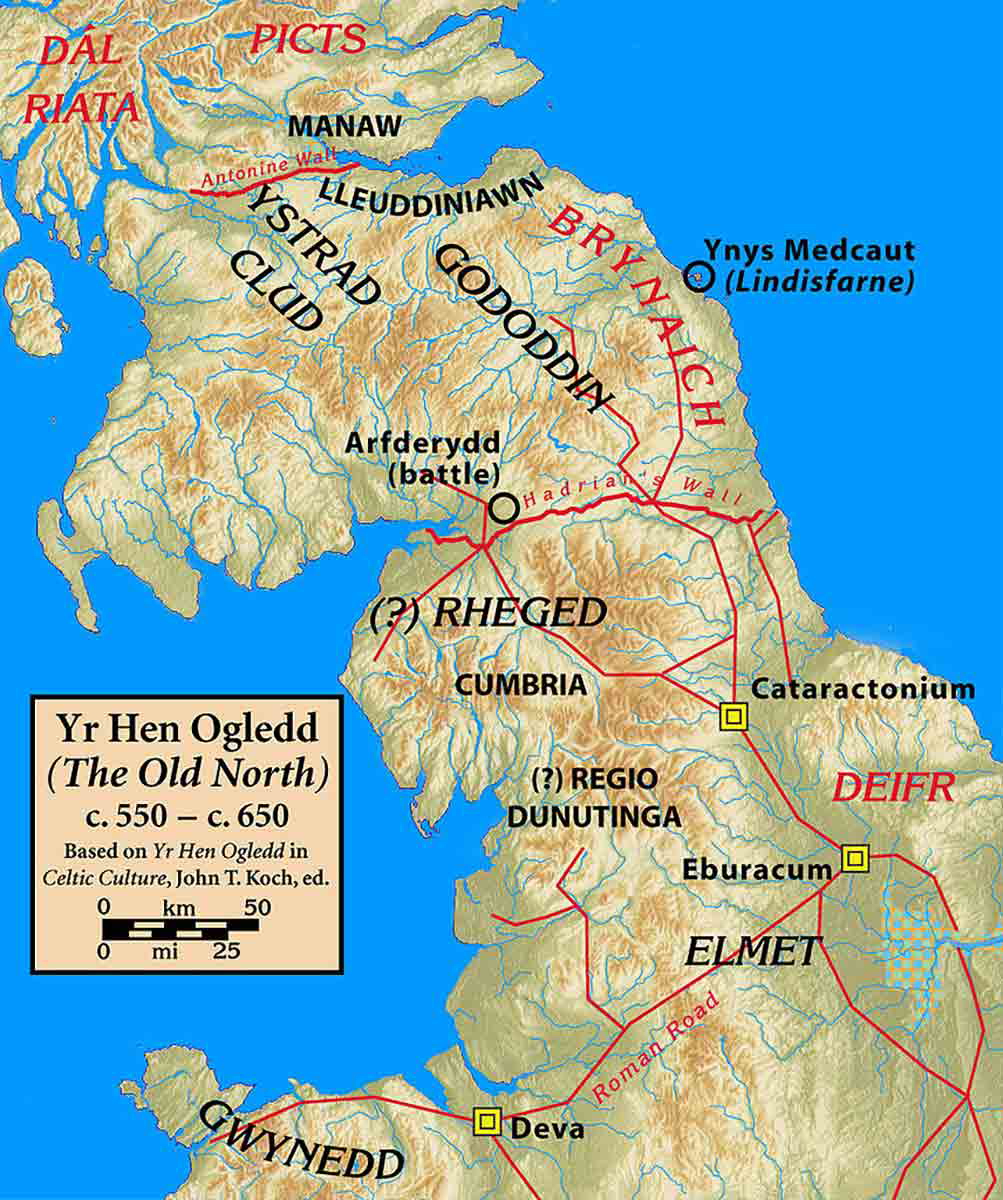
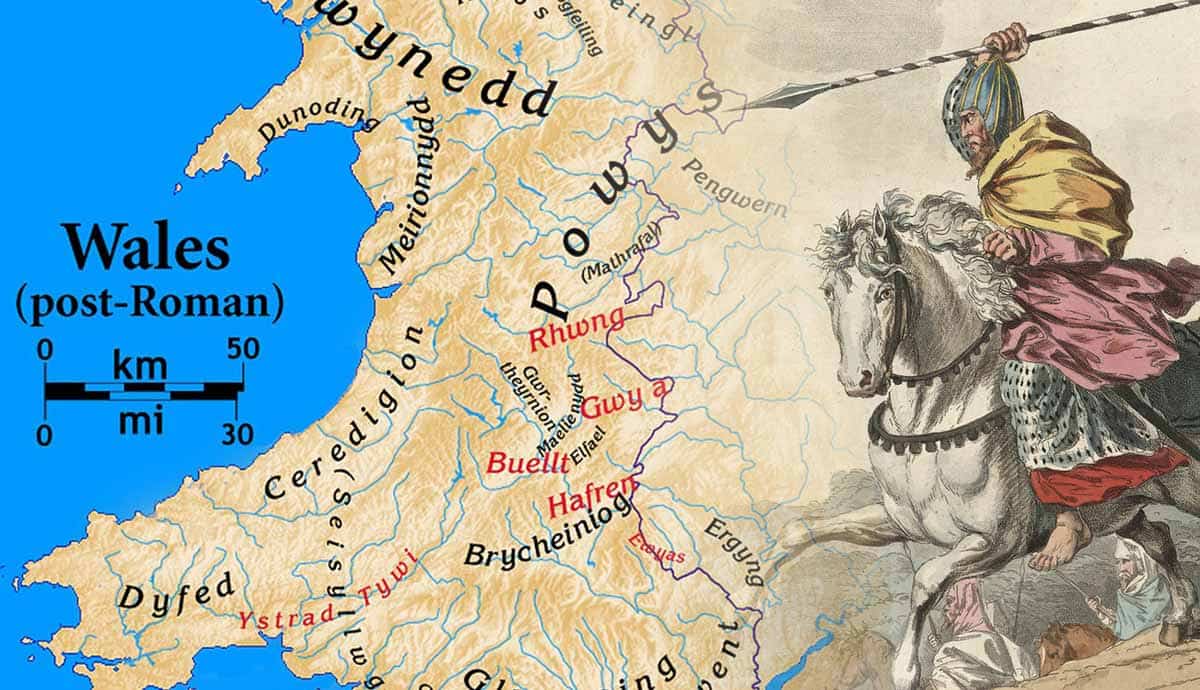
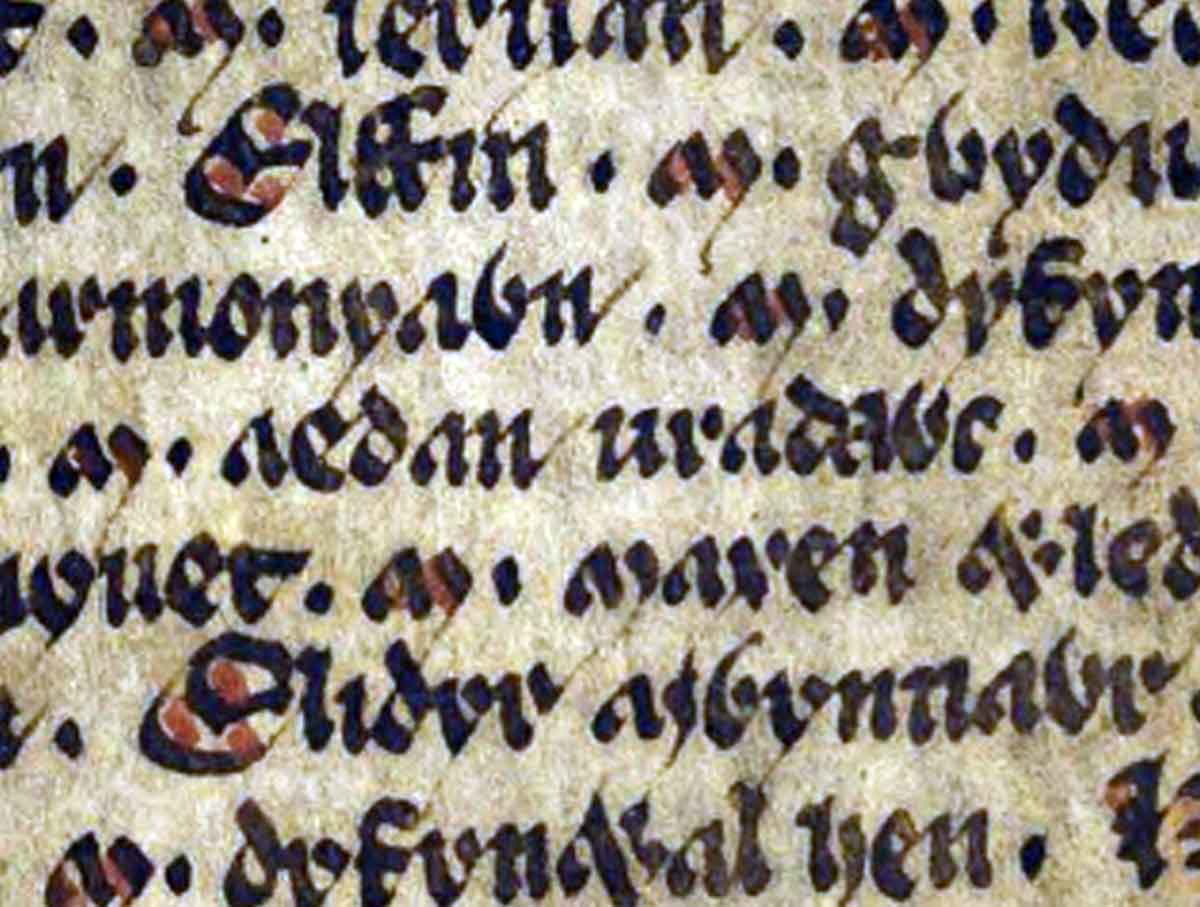
Two of the most notable examples of the name “Arthur” being used after the time of King Arthur come from Dyfed in southwest Wales and Dal Riada in western Scotland. In the case of the former, it was used by the individual known as Arthur ap Pedr. He seems to have been born near the beginning of the 7th century. In the case of Dal Riada, there was a member of this dynasty known as Artuir mac Aedan. He was born around the middle of the 6th century. These two dynasties were geographically very far apart, which supports the idea that whoever popularized the name “Arthur” was known throughout most of Britain.
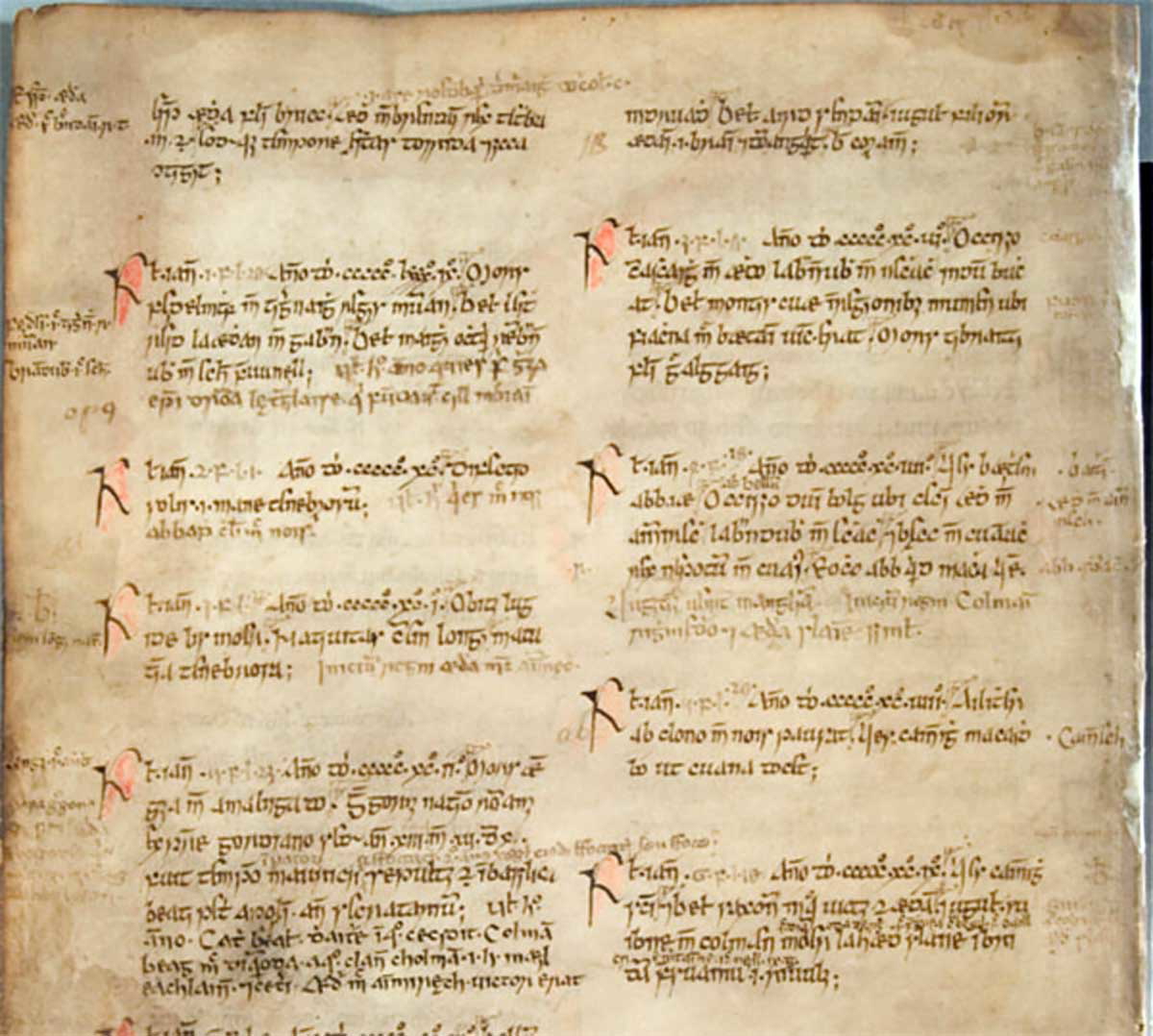
A minor example is Arthur, son of Bicoir. He is mentioned in Irish annals, which refer to him killing Mongan mac Fiachna of Ulster in the 620s. On this basis, he was probably born towards the end of the 6th century or right at the beginning of the 7th century. Another example is Artuir, the grandfather of Feradach, a cleric known for signing the Cain Adomnan in 697. This Arthur was probably born near the beginning of the 7th century. The Cain Adomnan itself also refers to another Artuir, the grandson of the aforementioned Aedan of Dal Riada. Hence, he was presumably a nephew of the Artuir mac Aedan mentioned previously.
One final example, noted by historian Ken Dark, is an Arthur mentioned on an inscribed stone found in County Tipperary in Ireland. This seems to date to the 7th century.
The Issue of King Arthur and the Irish
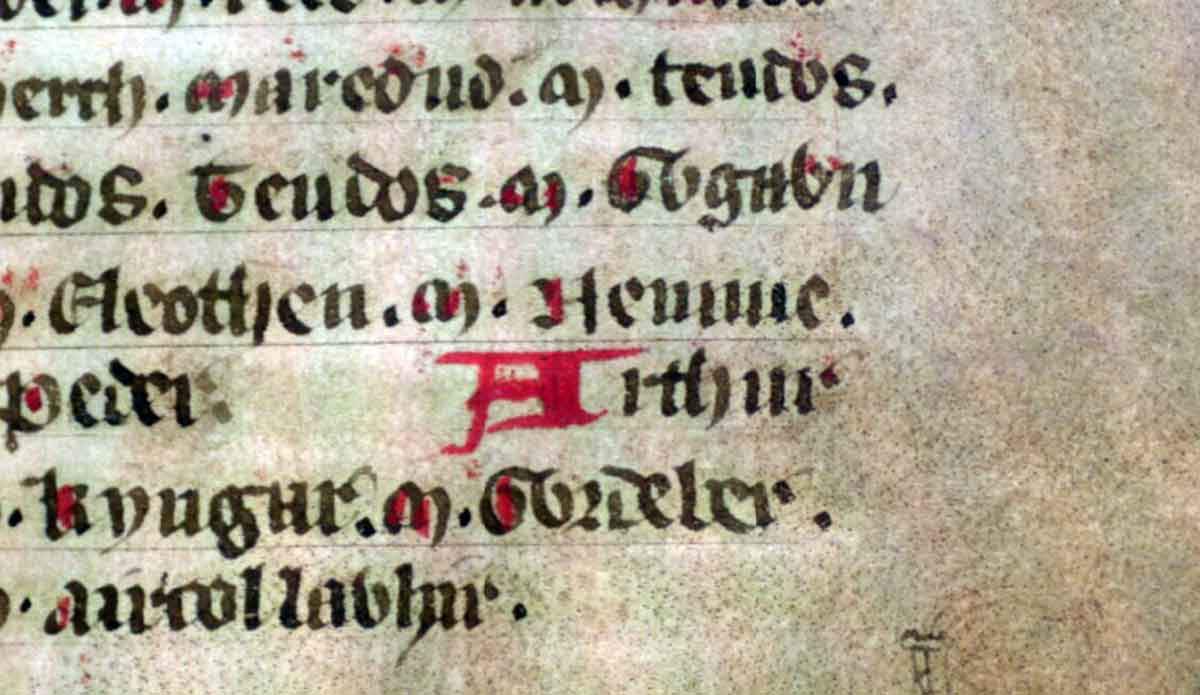
The evidence from this, as explained and emphasized by Ken Dark, strongly indicates that there really was a famous figure in the preceding generation who popularized the name “Arthur.” However, there is an important observation to make. According to some scholars, all of these appearances of the name “Arthur” are seen among Irish dynasties or individuals. In contrast, there is no evidence for Arthur’s name being used among the Britons in the generations after King Arthur. The name certainly doesn’t appear in the Welsh genealogies, even though Arthur was a Welsh figure, not an Irish one.
Since Arthur was a king of the Britons, not the Irish, this has led to some interesting speculation. Why would the Britons have avoided using the name “Arthur,” while the Irish appear to have been perfectly happy to use it for their princes? Scholars such as Peter Bartrum and Oliver Padel have argued that the Britons avoided using the name because he was actually a folkloric figure, not a historical person. They had some kind of superstition or reverential awe surrounding the figure of Arthur. In contrast, the Irish settlers in Britain did not have this same superstition or reverential awe. Therefore, when they arrived in Britain and became aware of the stories about the folkloric Arthur, they began using the name for their princes.
According to this idea, the timing of the use of the name among the Irish does not coincide with the era after King Arthur really existed. Rather, it coincides with when the Irish arrived in Britain, when they first became aware of this folkloric figure.
Were These Arthurs Really Irish?
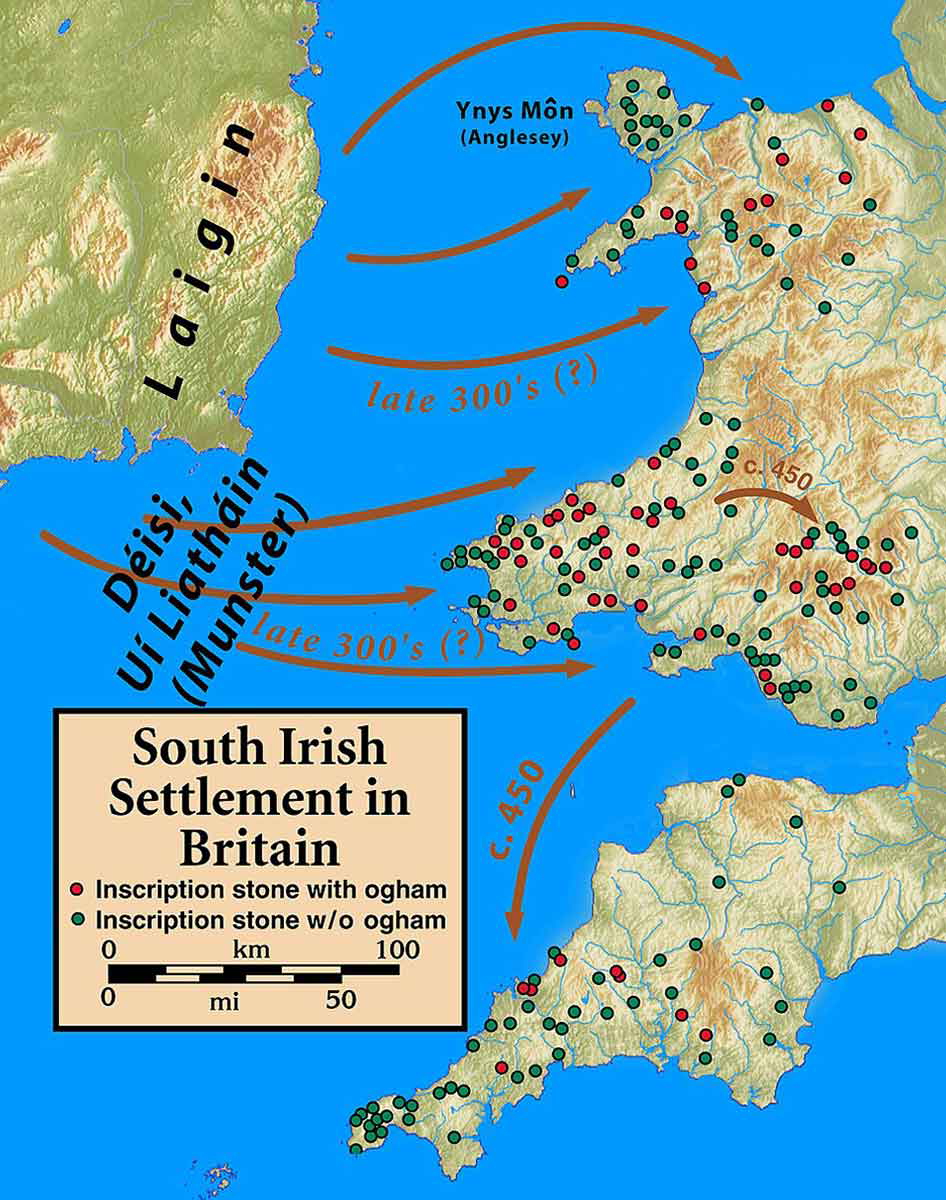
Despite this intriguing argument, there are some significant objections to it. For one thing, there is good evidence that the Kingdom of Dyfed in southwest Wales was not an Irish kingdom. There are only two bases for the idea that it was ruled by the Irish. One is the testimony of a single record, the Expulsion of the Déisi. The second is the fact that there are numerous stones inscribed in Irish Ogham (along with Latin) in Dyfed in the 5th and 6th centuries.
However, all other records about the descent of the kings of Dyfed give them a Romano-British lineage, not an Irish one. Furthermore, even in the Expulsion of the Déisi, the Irish names in the supposed genealogical list end abruptly and are replaced by Romano-British ones in about the year 500. This strongly indicates that the Irish dynasty was expelled and replaced with a Romano-British one in about that year. While the inscribed stones show that there were many Irish settlers in the region, this does not tell us the ethnicity of the kings.
Furthermore, there is good evidence that the dynasty of Dal Riada intermarried with a Brythonic dynasty from southeast Wales. Medieval records claim that a daughter of Brychan, a king of Brycheiniog, was the mother of Aedan of Dal Riada. This would make Aedan half Brythonic. Furthermore, an Irish hagiography refers to a daughter of Aedan as the granddaughter of a king of Britannia. This would mean that Aedan married a Brythonic princess, making Artuir the son of a Brythonic queen and a half-Brythonic king.
In addition, the mention of Arthur, son of Bicoir, in the Irish annals explicitly refers to him as “the Briton.” Whether this designation refers to Arthur himself or his father Bicoir is debatable, but it makes little difference to the matter at hand.
Britons Named Arthur
Based on the aforementioned evidence, we can actually see that the use of the name “Arthur” after the alleged time of King Arthur was not something that was avoided by the Britons. The case of Arthur, son of Bicoir the Briton, is the clearest example of this, but we can see it in the case of others as well. Contrary to popular belief, Dyfed was probably not an Irish kingdom after the end of the 5th century. Therefore, Arthur ap Pedr was probably a Brythonic prince, not an Irish one. While Artuir mac Aedan was from Dal Riada, an Irish kingdom, his mother and grandmother were both Brythonic princesses. The significance of this would also apply to Aedan’s grandson Artuir, mentioned in the Cain Adomnan. Therefore, it is clear that there was no superstition among the Britons preventing the use of the name “Arthur” after the time of King Arthur.
Furthermore, the idea that the timing of the surge in popularity of the name could be tied to when the Irish settlers arrived in Britain is severely flawed. The Irish started arriving in Dyfed in the late 4th century. The Irish settlers in Dal Riada arrived towards the end of the 5th century. Yet, it is not until after the supposed lifetime of King Arthur that they started using the name “Arthur” for their princes. This argues against the notion that they picked up the name after being exposed to a pre-existing folkloric tradition about a hero called Arthur.
Did the Britons Really Stop Using the Name Arthur?
In conclusion, what does the evidence really show regarding the use of the name “Arthur” among the Britons after the time of King Arthur? Did they really stop using it due to reverential respect, awe, or even a superstition surrounding this king? Does this indicate that Arthur was a folkloric figure among the Britons, and that the Irish adopted the name of this figure because they did not have the same superstitious or reverential view of him? As we have seen, the evidence clearly shows that the name “Arthur” was used among the Britons in the period following King Arthur’s supposed lifetime. Most of the Arthurs who appear in that period were either fully or mostly Brythonic.
Interestingly, at least three of these four Arthurs can be specifically connected with southeast Wales. This was the region most closely associated with King Arthur in medieval tradition. Brychan, the grandfather of Aedan of Dal Riada, was from the kingdom of Brycheiniog, just above the kingdoms of Glywysing and Gwent. Interestingly, he was the cousin of Athrwys ap Meurig, a candidate for the historical King Arthur. As for Arthur ap Pedr, his kingdom bordered Glywysing, making contact and even intermarriage plausible.