
American painter and illustrator Norman Rockwell is best known for portraying an idealized image of American life during the 20th century, one that has attracted equal amounts of criticism and praise. Nowhere is this more evident than in his depiction of the Thanksgiving dinner, in the now iconic Freedom from Want, which presented a white, middle-class family gathered around a glistening turkey, basking in the warm glow of shared wealth and emotional connection.
As much as the painting’s indulgent tone angered Europeans struggling with wartime austerity and sparked racial controversy, it also became the quintessential ideal that so many Thanksgiving dinners aspired to be. Its spirit still shapes the holiday in the American towns with special Thanksgiving traditions, from Plymouth to Charles City, Virginia. Exploring the painting’s underlying meaning, as well as its reception in the years since its creation, reveals the truth behind Rockwell’s iconic holiday depiction.
Roosevelt’s Four Freedoms Speech and the Spark for Rockwell’s Canvas
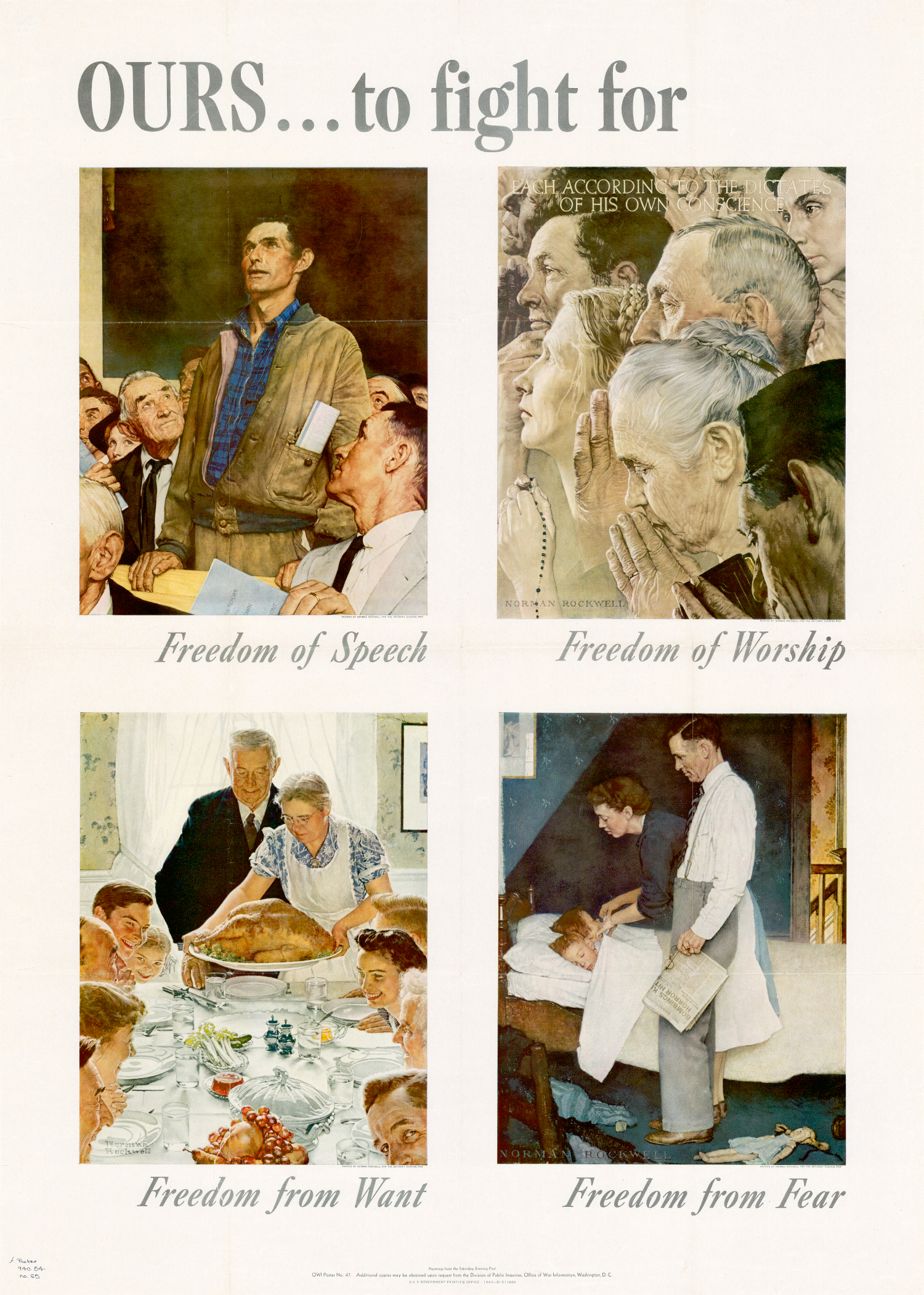
In his State of the Union address on January 6, 1941, President Franklin D. Roosevelt set out four freedoms that he said people “everywhere in the world” deserved: freedom of speech, freedom of worship, freedom from want, and freedom from fear. Norman Rockwell painted his response to the third freedom, Freedom from Want, in November 1942, and The Saturday Evening Post, where he was a regular cover artist, published it inside its March 6, 1943, issue alongside an essay by the Filipino American writer Carlos Bulosan.
With its lavish picture of love, food, and plenty, the painting came to symbolize Roosevelt’s ideals, and after the Office of War Information turned the series into posters for a war bond drive, it helped persuade Americans to buy into the war effort. It became a key part of the artist’s larger ‘Four Freedoms’ series, all made throughout World War II to promote a potent message of patriotism.
The Striking Visuals of an Ideal American Family
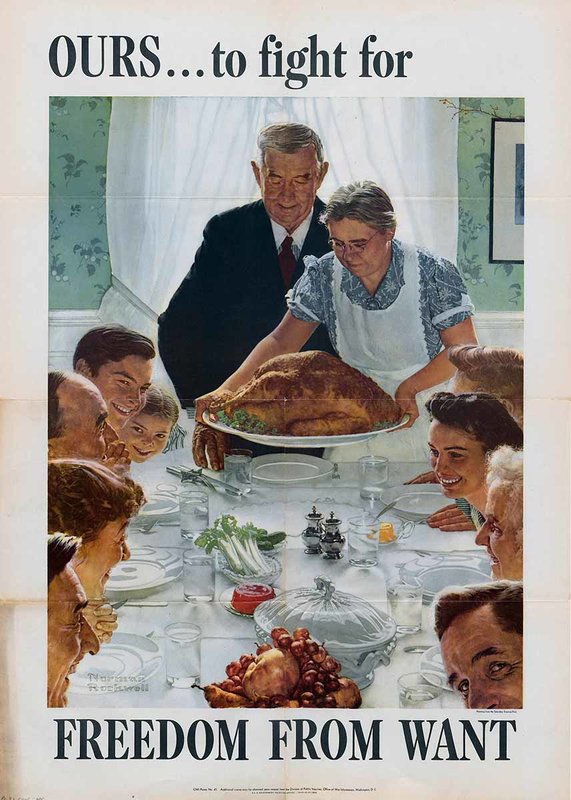
Rockwell’s painting depicts a family around the table, framing the plentiful food and meticulously arranged tableware. Family members are brimming with energy and anticipation, and viewers are drawn into the scene by the cropped man at the bottom right corner, Rockwell’s neighbor Jim Martin, whose sly glance meets ours. Rockwell draws viewers up the center of the image along a path of bright white on the tablecloth, arriving at a plump, golden turkey. It is held out by the family matriarch, who is shadowed by her husband, dressed in black, to create a striking visual contrast. Rockwell thereby presents us with what was at the time considered the family ideal, a white, middle-class family in which women cook and men provide.
Rockwell spent hours working out the staging of his pieces, photographing models posing in place in order to give his work the most believably real quality. This is evident in the layout of Freedom from Want, which is carefully arranged to create an inviting atmosphere of warmth and familiarity. He designed his image to be a great comfort to the American public during turbulent and uncertain political times by affirming traditional American values.
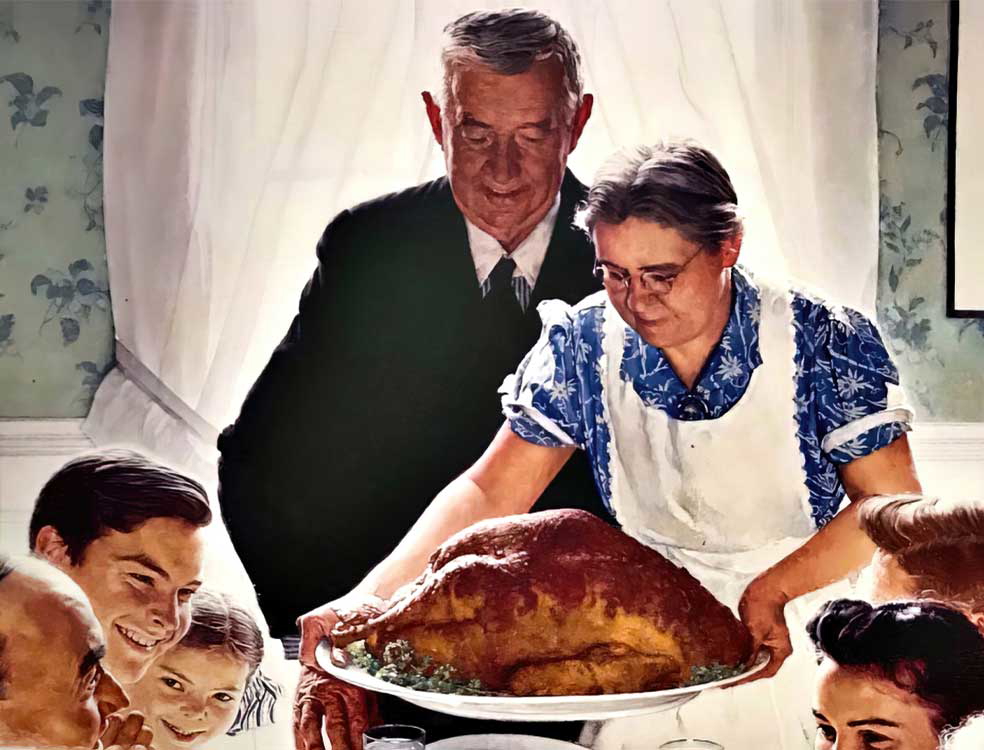
In Freedom from Want, Rockwell’s use of color is bound into the artwork’s overall meaning. Bright white seems to stream in from the background window and flood across the table, catching glistening tableware and the glossy skin of family members. This lends the entire work an angelic glow, emphasizing the image’s idealized, utopian qualities, and the Biblical significance of Thanksgiving.
Elsewhere, Rockwell introduces passages of green across the wallpaper and vegetables to symbolize lush fertility and growth, while warm, mellow browns used for the family members’ skin, the foreground fruit, and the crisp, cooked turkey lend the image a comforting, golden glow.
From Arrogance to Racism, the Controversy That Plagued Freedom from Want
Taken at face value, particularly today, Rockwell’s painting suggests the artist held deeply conservative values around family and tradition. In reality, the models were an eclectic mix of the artist’s Arlington, Vermont, neighbors, his cook, his wife Mary, and his mother Nancy, which suggests Rockwell saw value in chosen family, the people we choose to bring meaning into our lives.
The essay printed beside it told a very different story. Its author, Carlos Bulosan, was a struggling Filipino migrant worker who argued that the New Deal had not yet freed many Americans from want at all.
When the image made its way to war-torn Europe, it drew resentment from people living with food shortages, strict rationing, and in places outright starvation. Rockwell had his own doubts. While painting it, he worried that it didn’t match Bulosan’s essay, and Post editor Ben Hibbs had to plead with him not to scrap it. Later, he admitted misgivings about painting such a lavish feast while much of Europe was starving.
Freedom From Want was not very popular overseas … The Europeans sort of resented it because it wasn’t freedom from want, it was overabundance.
Norman Rockwell
Unsurprisingly, the painting has also sparked ongoing controversy for depicting what has been interpreted to be Rockwell’s ideal vision of the American family as white. In fact, Rockwell later said that Post editors had told him to show Black people only in service roles, and after he moved to Look in 1963, Rockwell revealed his pro-civil rights stance in some of his most powerful work.
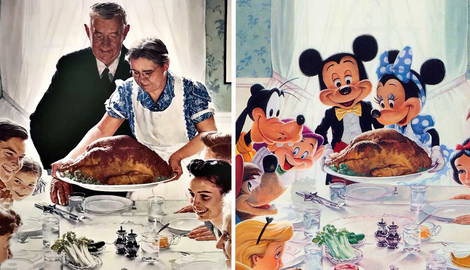
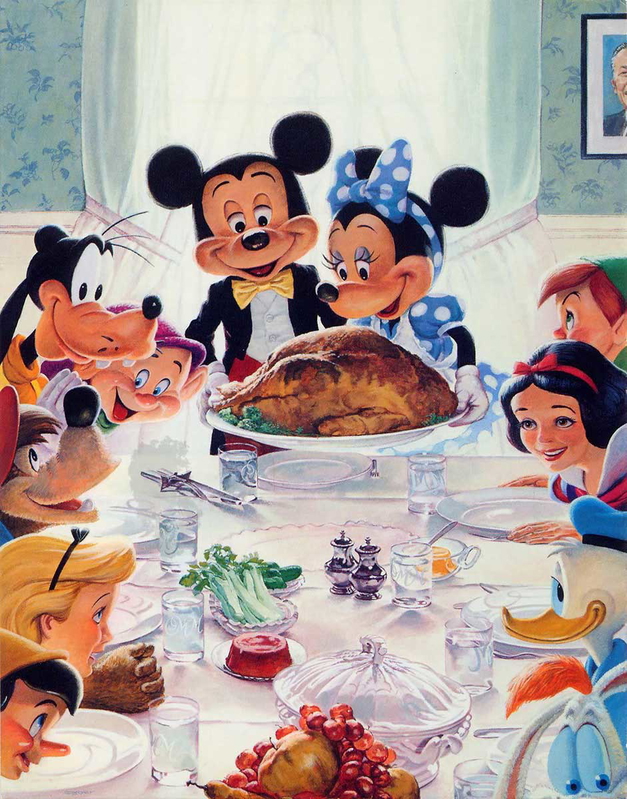
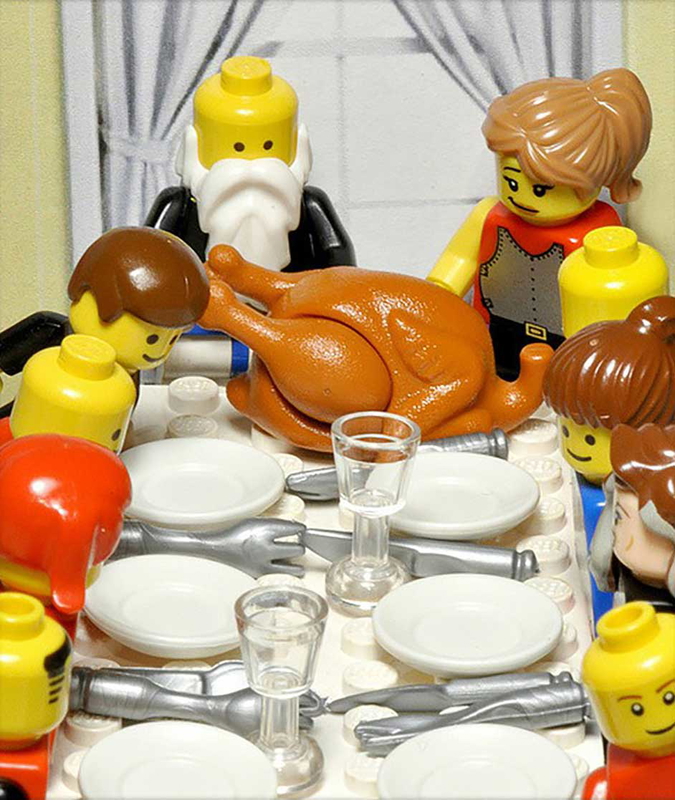
Despite its issues, and like Grant Wood’s American Gothic, the painting remains an image deeply embedded in the public consciousness, as revealed in the countless parodies that alternately pay homage to or poke fun at the image’s sickly-sweet sentimentality, including a 1958 MAD magazine cover, a Peanuts version starring Charlie Brown and Snoopy, the cover of Tony Bennett’s 2008 album A Swingin’ Christmas, and the Thanksgiving scene in the 2009 film The Blind Side. Rockwell left the painting to the trust that became the Norman Rockwell Museum in Stockbridge, Massachusetts, where it hangs today and is sometimes known by another name, I’ll Be Home for Christmas.