Surreal, strange, industrial Prague has plenty to offer visitors with a keenness for history, whether your preferred niche is art, literature, politics, or even alchemy. Read on for a full breakdown of all the unique ways you can fill your brain with fascinating, factual lore in Czechia’s capital.
Historic Buildings
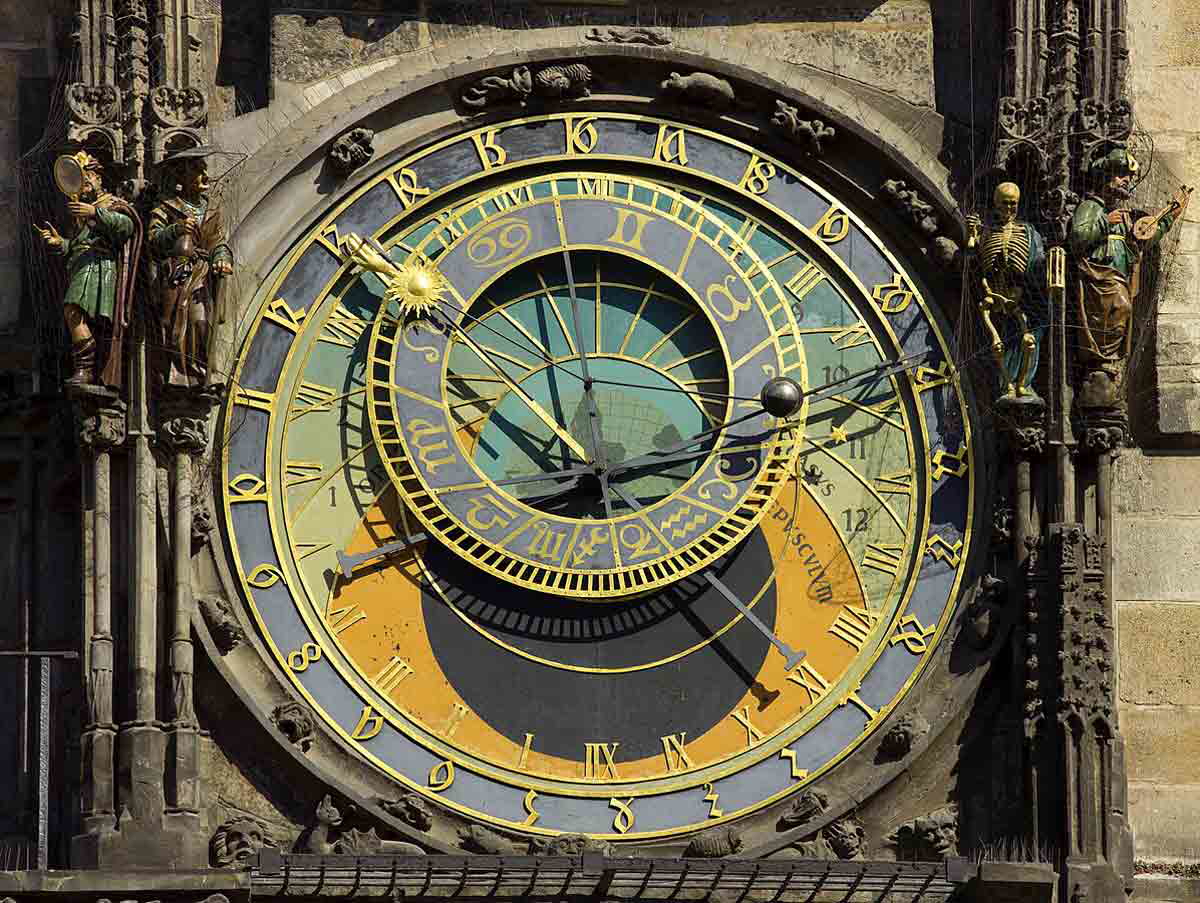
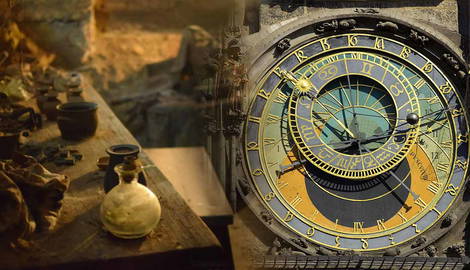
Found on the outside walls of the Old Town Hall, the world-famous astronomical clock—also called the Prague Orloj—has been called the most difficult clock in the world to read. However, the throngs of tourists who gather in front of it each day don’t seem to mind. Perhaps Prague’s most recognizable landmark, the clock was installed in 1410, making it the oldest clock of this nature still in operation. The clock is said to act as a sort of early prototype of a planetarium, displaying the current position of the universe relative to the Earth.
Prague is known as “the city of 100 spires,” and its Gothic architecture reflects this. Perhaps the best example can be found at Prague Castle, said to have been built in 880 CE by Prince Bořivoj of the Premyslid Dynasty. It was designated a UNESCO World Heritage Site in 1992. The castle has been modified several times, and now combines Romanesque, Gothic, and contemporary components. Though you’re welcome to view it from the outside for free, visitors are encouraged to explore the 75-minute guided tour, which uncovers the building’s hidden gems.
Prague has scores of other architectural marvels, ranging from classic, such as the National Museum, impressively built in the Neo-Renaissance style, to contemporary. An example of the latter is the Dancing House, known for its unique, curvaceous shape and popular rooftop restaurant.
Medieval History
Like many European countries, Czechia has a bleak history of medieval torture. Gruesome methods of torture became popular to extract wartime confessions and control the population. It is somewhat of a misconception that the Middle Ages were a time of limited progress—significant advancements such as gunpowder, the printing press, and mechanical clocks were created during this time. However, these years were certainly bleak and difficult, marked by war, famine, and disease. Public torture and executions mainly served as a deterrent to would-be criminals, and acted as a form of social gathering and entertainment.
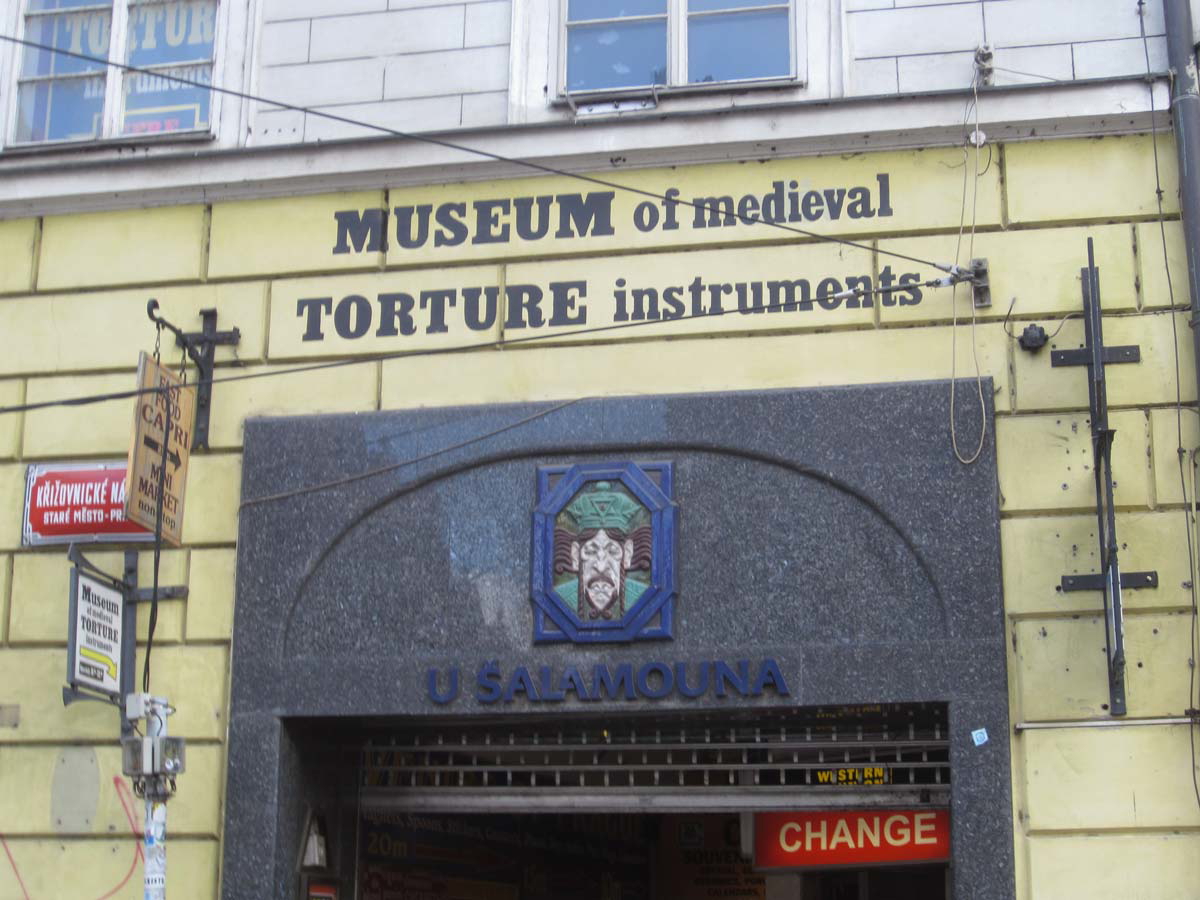
In a darkened cellar at the foot of a spiral staircase, one can have a sobering look into these harsh methods of punishment at the Museum of Medieval Torture Instruments. Recorded sounds of human anguish can be heard, and dioramas depict peasants being executed in a variety of ways (don’t fear—these are comically unrealistic).
This museum is perfect if you’re looking for a brief dose of history while exploring Old Town—a self-guided walkthrough takes between 10-30 minutes, depending on how many of the gruesomely detailed explanations you stop to read. The experience costs 6 EUR (or 12 EUR with combined admission to Madame Tussaud’s, located next door).
Politics
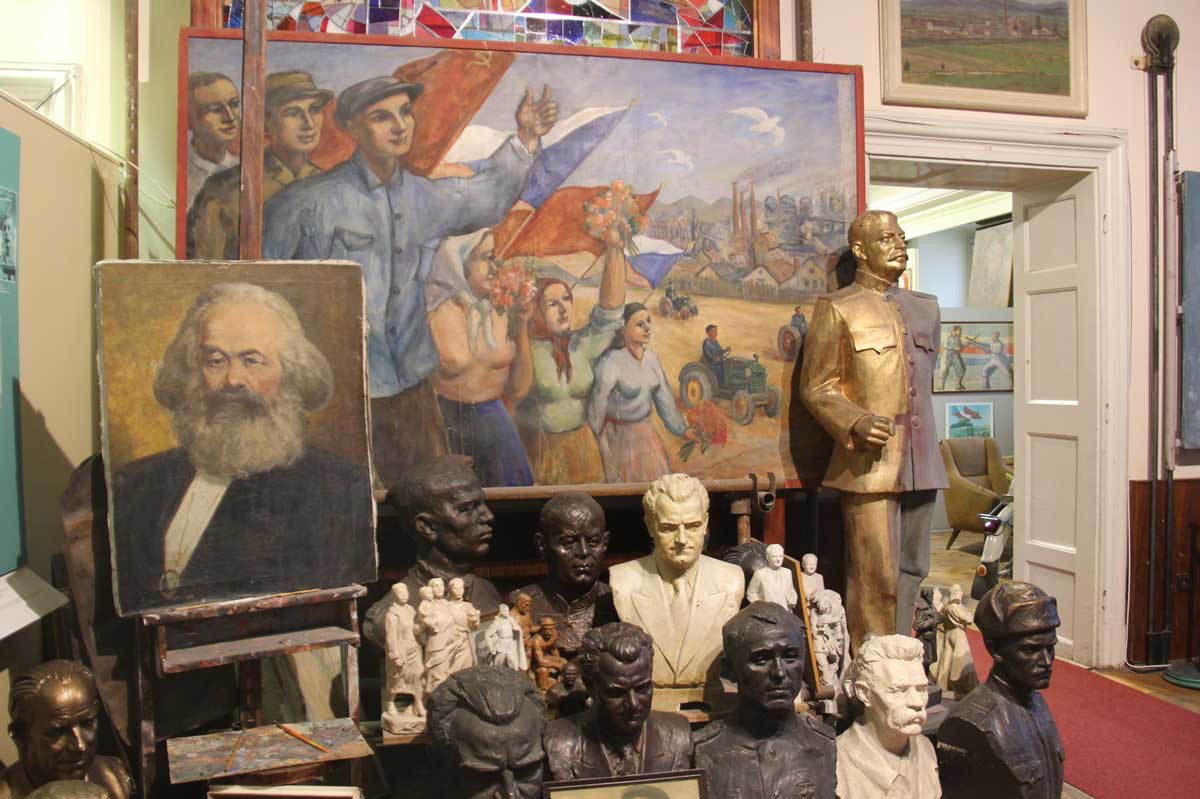
Prague has a significant communist history—it was under communist rule from 1948 until the 1989 Velvet Revolution. Some elements of communist rule can still be found in Czech culture today. Communist political ideology discourages religion, and this can be seen in Czechia’s current social landscape—it is one of the most atheist countries in the world—66% of Czechs reportedly do not believe in God. Head to the Museum of Communism for a visual and auditory immersion of daily life in communist Prague. Interested guests can explore this museum for 380 CZK.
A smaller, quirkier cousin to the Museum of Communism is the KGB Muzeum, which is actually a private collection of KGB memorabilia belonging to the son of a KGB agent. The owner himself hosts several tours per day, theatrically retelling bits of KGB and Soviet history, assisted with the use of real antique weaponry as props. You’ll even get to hold a knife belonging to his great-grandfather (a Russian soldier), which DNA testing supposedly revealed had been used to kill 120 men, 9 women, and a few dogs. Tours take roughly 45 minutes and cost 16 EUR, and you can even purchase genuine vintage items—such as Soviet military badges—on your way out.
Alchemy and Magic
Alchemists were welcomed and respected in Medieval Prague, as alchemy was viewed as an esteemed science. This was likely thanks to Holy Roman Emperor Rudolph II, who was obsessed with alchemy and dedicated much of his life to the search for the fabled Philosopher’s Stone, a mystical elixir said to be capable of turning simple metals into gold and—of more importance to Rudolph—granting eternal youth.
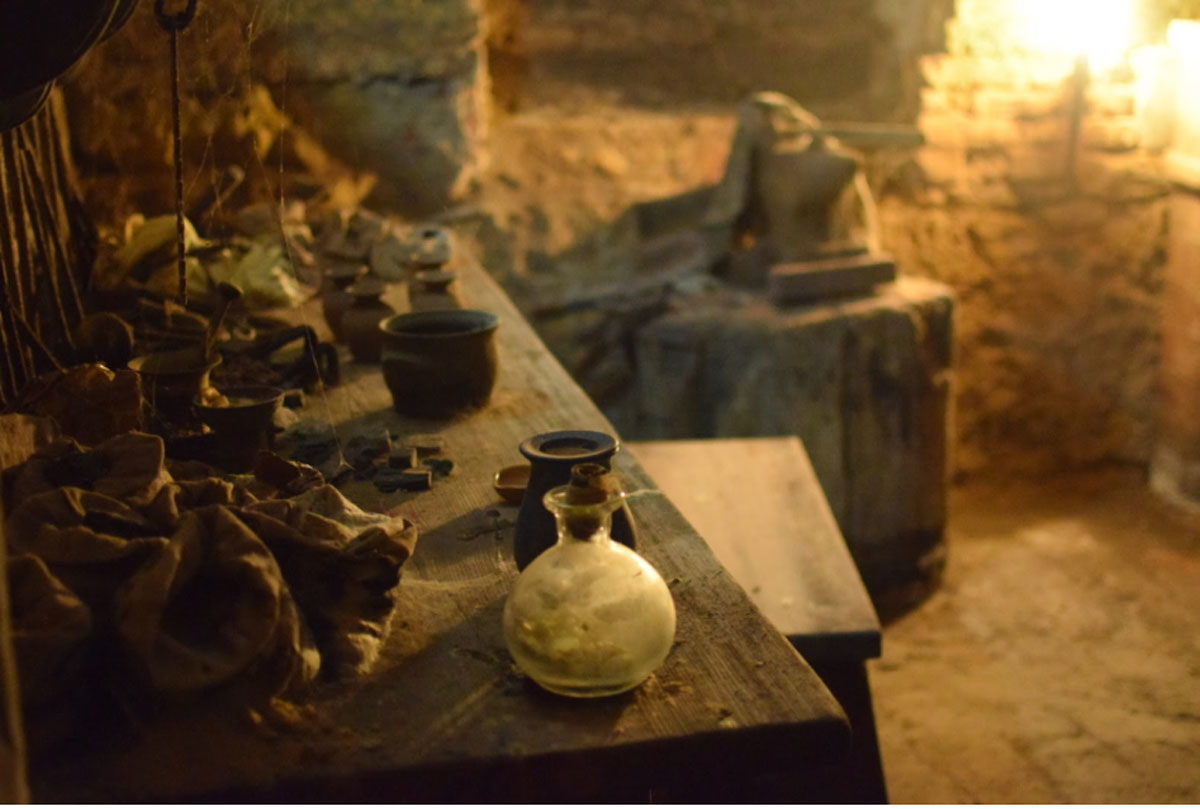
As one may expect, Rudolph wound up just as bound to mortality as the rest of us and became increasingly ill towards the end of his life. This caused him to double down on his search for the Philosopher’s Stone, prompting the establishment of an underground laboratory where he invited scores of renowned alchemists to work towards this cause. This laboratory was lost until 2002, when it was accidentally rediscovered during a massive flood which caused part of the building above it—one of the oldest in Prague, built around 900 CE—to collapse. A guided tour of the small underground space, now called Speculum Alchemae, takes just 30 minutes and costs 8 EUR.
Near Prague Castle, you can find another source of alchemist history—the Museum of Alchemists and Magicians of Old Prague—which was once home to famed alchemist Edward Kelley. A guided tour of the space, containing replica artifacts and dioramas, costs 10 EUR, and you’ll leave with a deeper understanding of Prague’s magical history. Just down the street, you’ll find the Alchemist Bar, where you can discuss all of your newfound knowledge of medieval alchemy over a handcrafted cocktail. If you’ve got some time in Prague, this is also the starting point of the “Choose your Fate” scavenger hunt-style game, which offers players the chance to win 4,000 EUR!
Franz Kafka
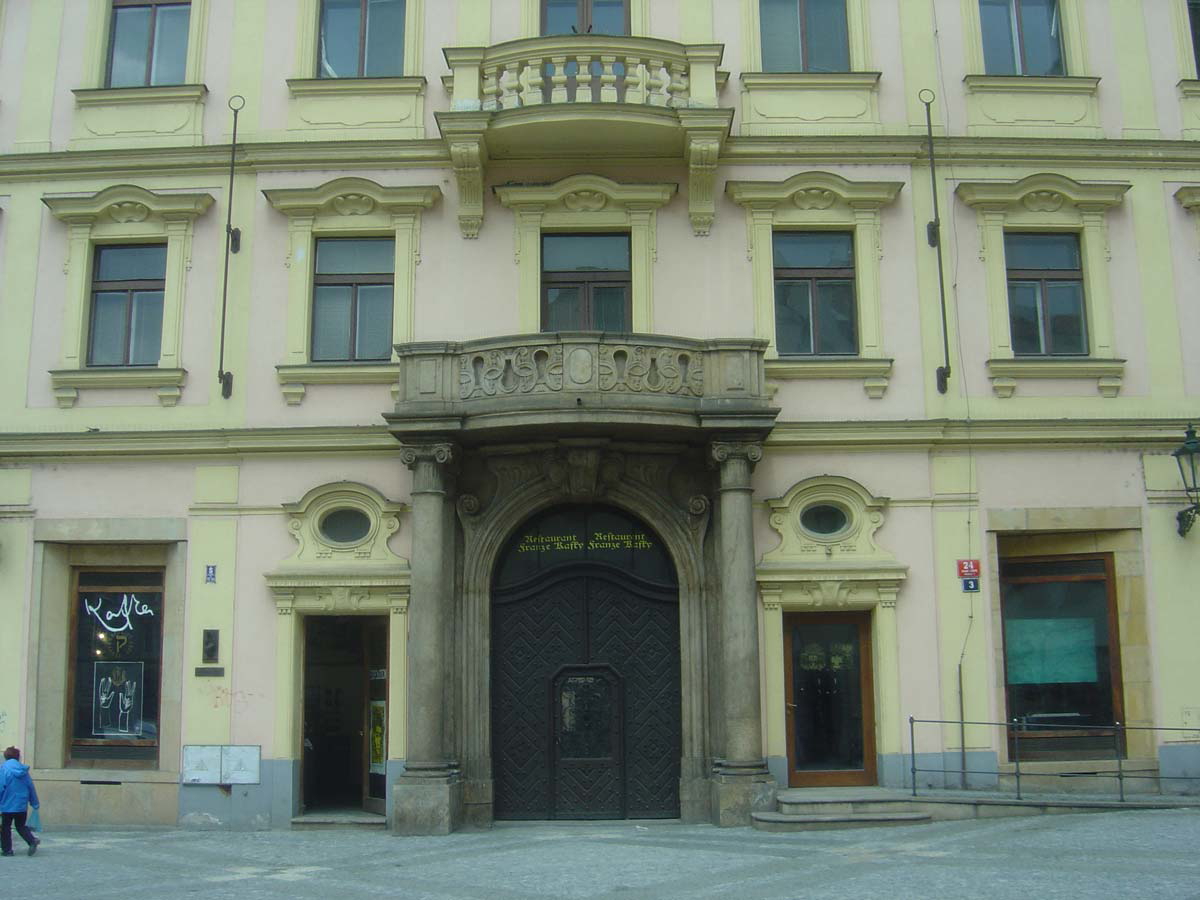
Prague has been designated a UNESCO city of literature, and it is even home to the world’s densest collection of libraries!
Nearly unanimously revered as Prague’s most famous author, Franz Kafka has left an indelible mark on the city in which he was born. Kafka’s work is marked by existentialism and surrealism; his most celebrated work is The Metamorphosis, in which the protagonist transforms into a giant insect. The term “Kafkaesque” has been coined in his honor, used to describe absurd, unreal situations.
Fans of his work—or those who are curious—can check out the Franz Kafka Museum, which features a number of the first editions of Kafka’s works as well as never-before-seen photographs, manuscripts, and letters—including his infamous correspondence with fellow Czech writer Milena Jesenská. The museum itself is aesthetically dark and surreal—no doubt a visual ode to Kafka’s work. Admission costs 12 EUR.
For a deeper experience of Kafka’s early years, take a stroll past the house where he was born in Prague’s historic Jewish Quarter. Head to the Baroque Tower House—easily located due to its commemorative plaque and the sculpture of Kafka himself which sits outside! End your Kafkaesque tour of Prague by heading to the Old Town to check out Cafe Slavia, a coffee hotspot with live piano that was beloved by Kafka.
Prague is also home to many other restaurants and bars with a literary theme—head to Globe Bookstore (which has frequent meetups for travellers and expats), Tynska Bar & Books, Masenova Bar & Books, or Electric Sheep Book Bar, and perhaps you’ll feel inspired to pen your own piece of literature! All are within a 30-minute tram ride of Old Town.
David Černý
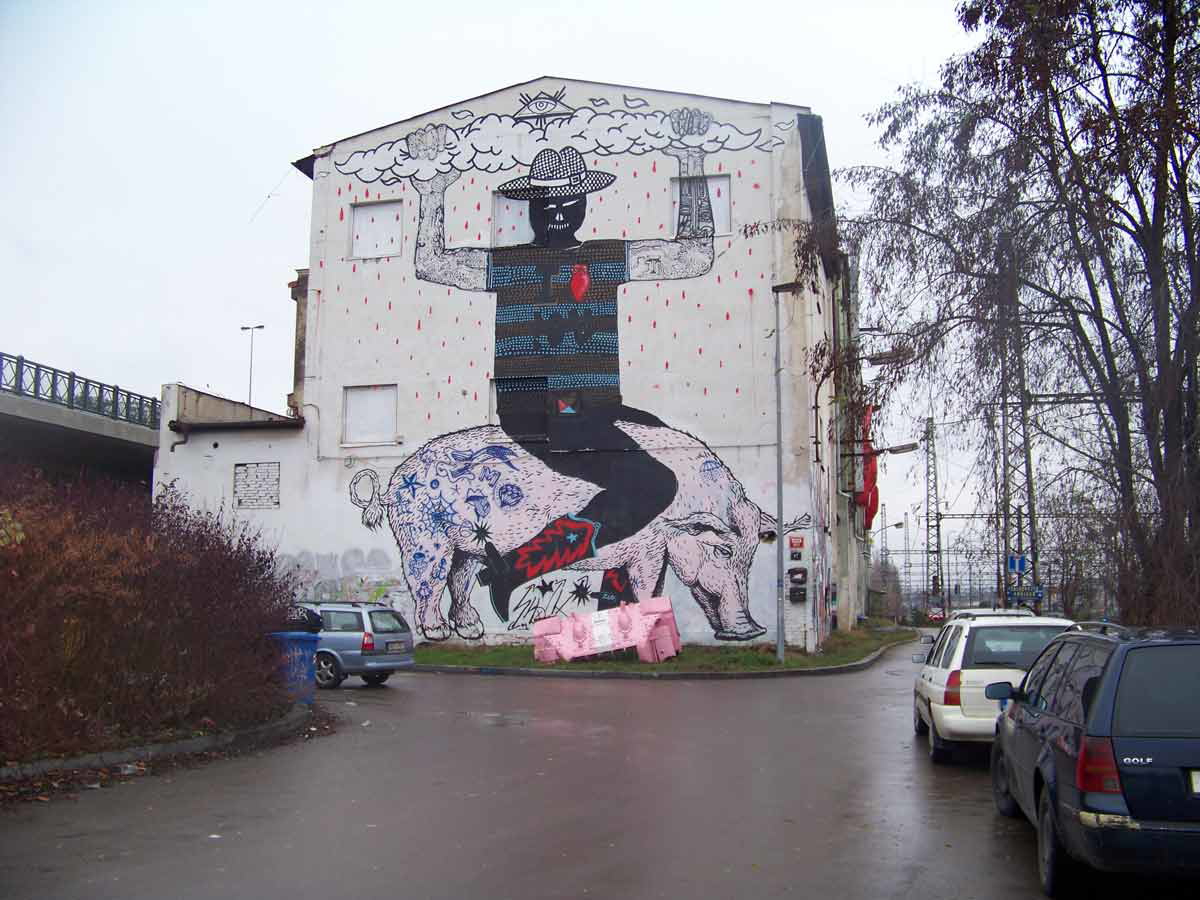
If you find yourself in the underrated, industrial neighbourhood of Smichov, which was once home to the largest train and tram manufacturer in Austria-Hungary, check out MeetFactory. Famed Prague artist David Černý, best known for his controversial sculptures that satirize socio-political issues, such as consumerism, founded this interdisciplinary venue in 2001.
The building was constructed in the early 1900s and originally functioned as one of the last glass factories operated by Inwald Glassworks, before being bought by the Czech transportation company Škoda in 1935, after which it served as office space and maintenance center for the national railway. Today, visitors to this historical art complex can enjoy a variety of rotating multimedia galleries as well as live music and theater.
More of Černý’s work can be found at his gallery, Musoleum, which contains several of his original sculptures. Also located in Smichov, a visit to the five-story gallery will cost you 12 EUR.
Absinthe
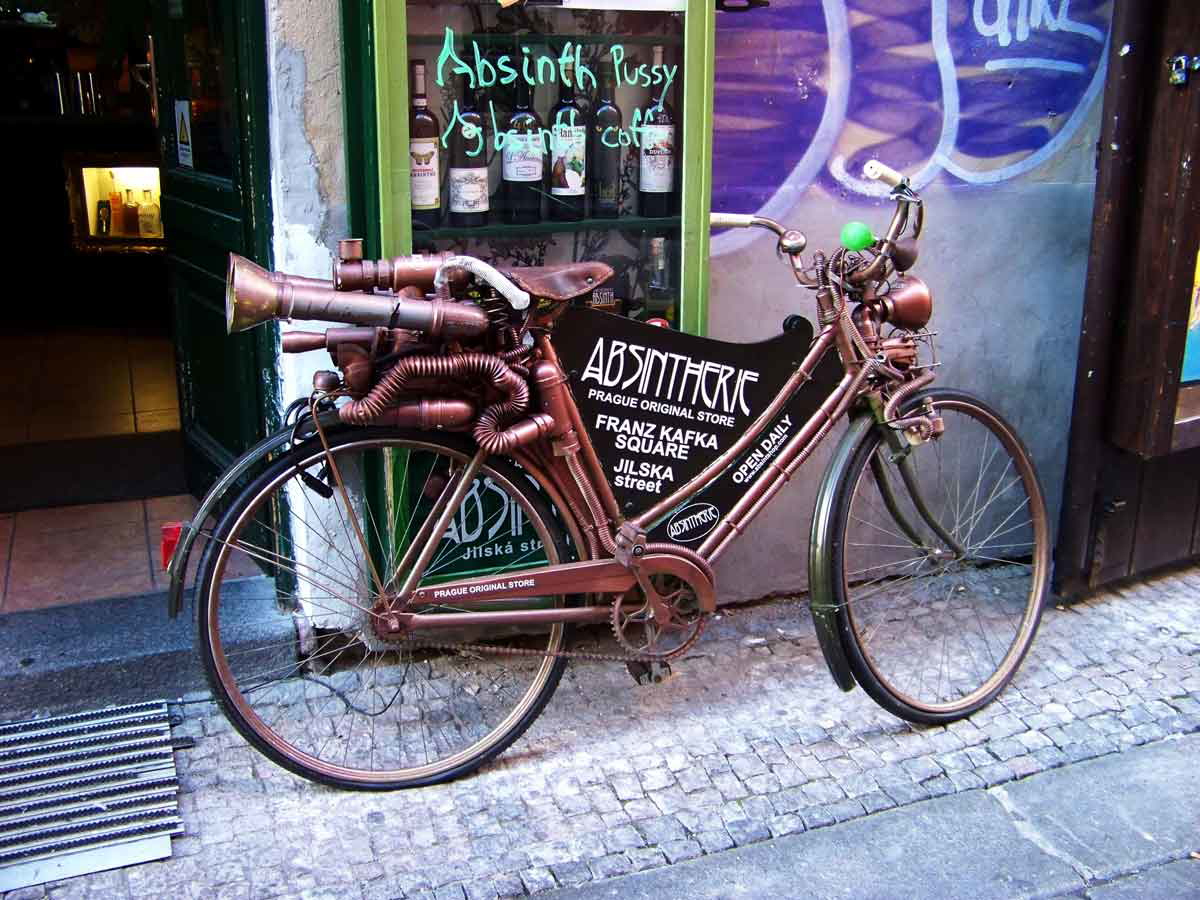
If, by the end of working your way through this list, you find yourself more in the mood for a cocktail than a museum, but you still want to check off a dose of local history, head to the Absintherie.
Absinthe has been incredibly popular in Prague since the late 19th century. Due to its near-outright European ban in the early 20th century—said to be due to its purported hallucinogenic properties, but more likely because it threatened the wine industry—modern Bohemian absinthe is actually based on a substitute recipe for the spirit.
The Absintherie is a museum/bar that boasts over 250 vintage absinthe bottles from all over the world, as well as an array of glasses, fountains, and other tools used in the serving of the spirit. Peruse the artifacts, then grab a table and listen to some live piano as you sample one of the roughly 100 different types of absinthe on offer. Admission is free, though you’re expected to buy at least one cocktail, which will cost roughly 10 EUR.