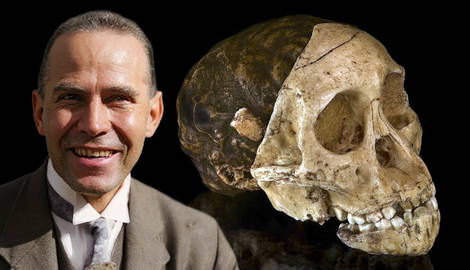
On a hot day in 1924, a young Australian anatomist named Raymond Dart was sitting at his desk, steadily chipping away at a piece of rock. Gradually, as Dart worked, a tiny fossilized skull emerged from the surrounding stone. It was surprisingly well preserved with wide eye sockets and its little teeth still in place. Dart quickly realized he was looking at a new species, one he would eventually decide to call Australopithecus africanus, the “Southern Ape of Africa.” On that day, no one could have known that this ancient child’s skull would ignite one of the fiercest scientific controversies of the century. It would place Africa at the heart of the human origin story, forcing a rethinking of how our ancestors evolved.
The Discovery in Taung
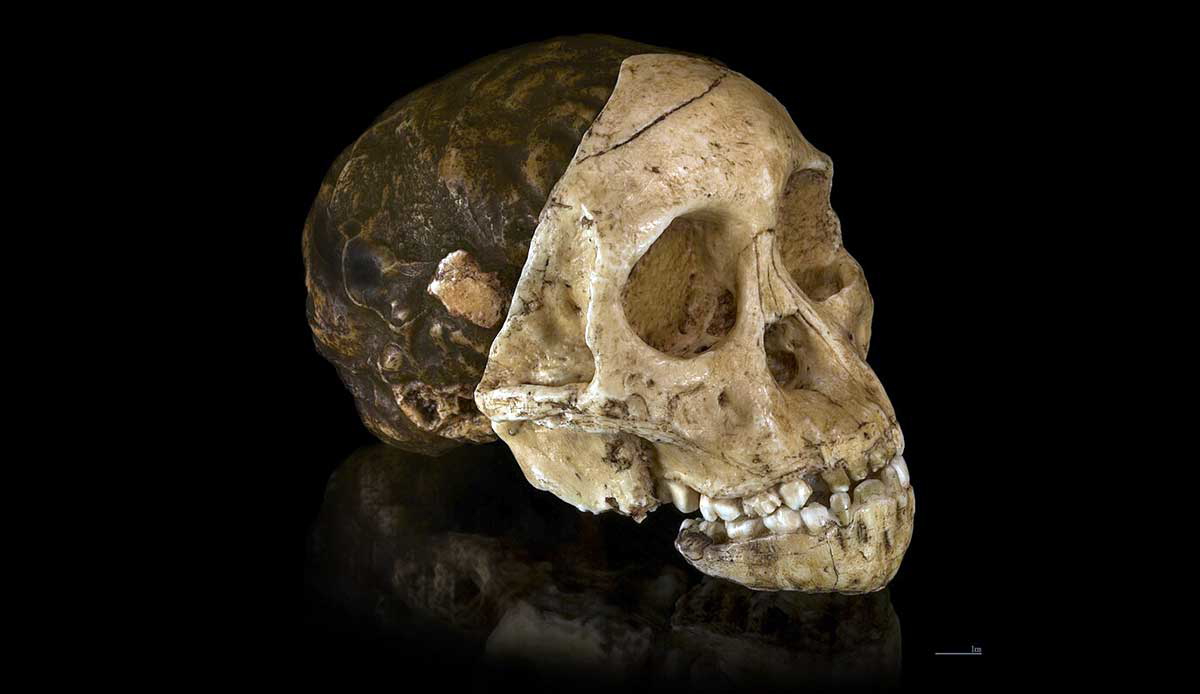
The story of the Taung child’s discovery began in the quarries of the Beers Consolidated Mines. In the 1920s, limestone was blasted out by dynamite, and laborers sometimes found fossilized animal remains encased in the rubble. Quarry managers often sent these finds to local universities, where scientists could study them.
It was in this way that crates of fossil-bearing breccia reached Raymond Dart, a promising young academic at the University of the Witwatersrand in Johannesburg. He had fought in World War I, and now, at only 31, he was already a Professor and serving as the chair of anatomy at the university.
When Dart received the crate from the quarry, he thought little of it. He had an interest in comparative anatomy and hoped the fossil contained in the rock might be useful as a prop for his lectures. But when he took a closer look at the fossil, his curiosity was piqued.
After working for hundreds of hours to free the ancient bones from the breccia, Dart found himself looking at the skull of a juvenile primate; only about three or four years old when it had died. He could tell that it was an ape, but it was unlike any ape species he knew of. The skull had small teeth, a flatter face than other apes, and large eyes. What was even more exciting, though, was that the position of the foramen magnum, a hole at the base of the skull for the spinal cord to attach to the brain, was exactly like ours.
Position of the Foramen
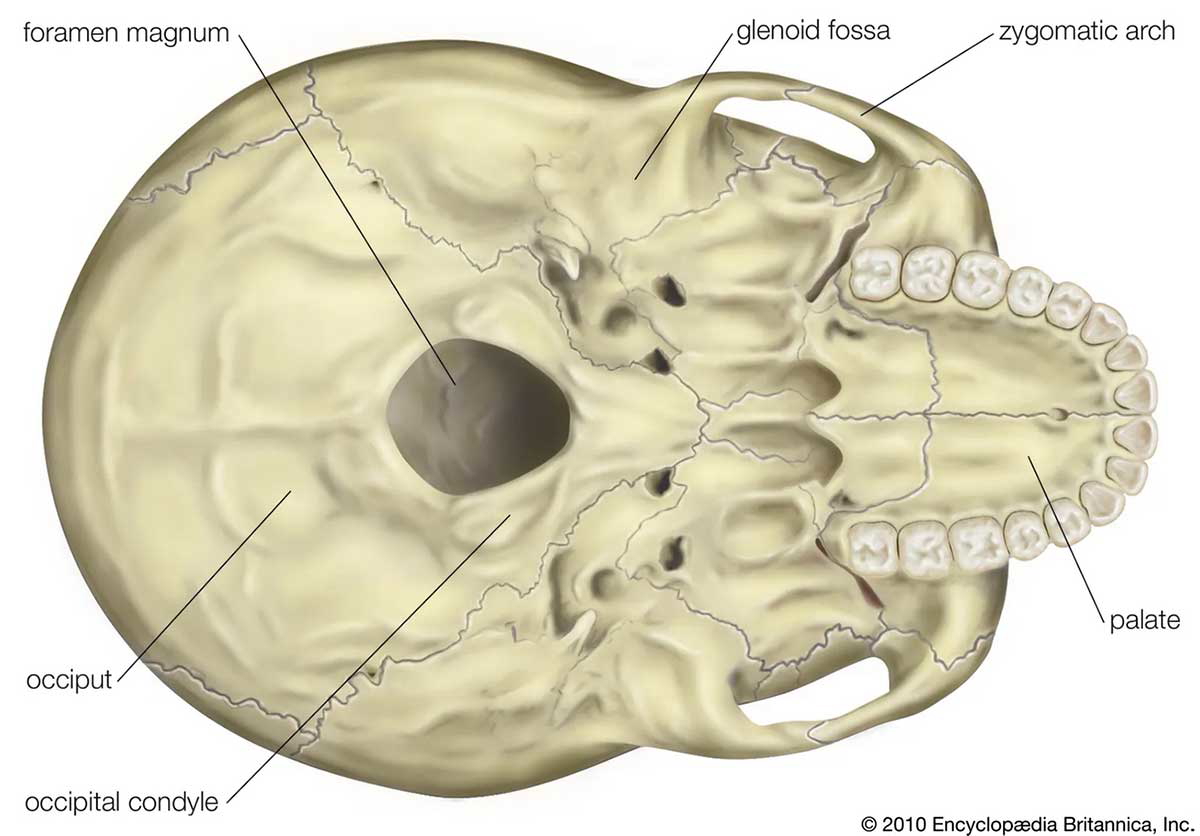
In modern apes and primates, the foramen magnum is located at the back of the skull because they walk on four legs. In humans, however, it is found directly underneath the brain because we walk upright. This fossil ape, which Dart realised was a previously unknown species, clearly walked upright as well.
In February 1925, Dart published his findings in the journal Nature and gave the new species the name Australopithecus africanus. He claimed it was a human ancestor that lived in South Africa over two million years ago.
Science Against the Current
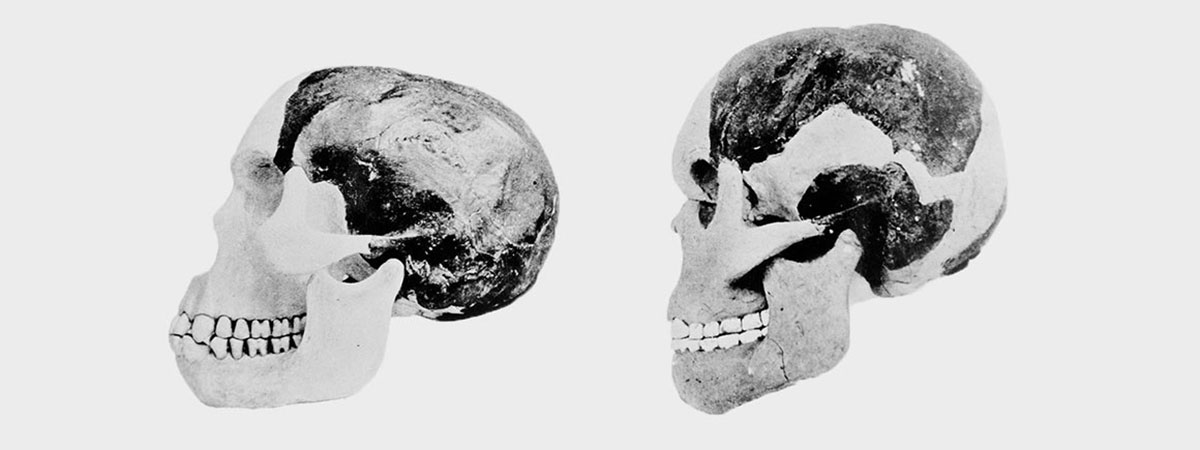
Dart’s announcement of A. africanus, however, did not go quite as well as he might have liked. In the early 20th century, scientific understanding of human origins was dominated by theories that our lineage emerged in Europe. Many leading scientists clung to this idea, which was supported by fossils like the Piltdown Man skull.
Discovered in England in 1912, the Piltdown skull appeared to show exactly what many scientists believed human evolution should look like. For one, it was found on British soil, but it also had a large, human-shaped braincase attached to an ape-like jaw with big teeth. It corresponded neatly with the conventional wisdom of the time that big brains were the first evolutionary leap in the human lineage. It was not until the 1950s that the skull was exposed as a fake, so for more than 30 years, Piltdown Man was hailed as the “missing link.”
When Dart claimed that the Taung Child demonstrated the opposite pattern to Piltdown Man, a smaller brain, small teeth, and upright walking, he was treated with scorn.
Respected scientists like Sir Arthur Keith and Grafton Elliot Smith called Dart naïve. The London Times downplayed the discovery, referring to it only as “a badly damaged child’s skull.” Others simply laughed at the idea that Africa, a continent they thought of as primitive and in need of colonization by white people, could be the cradle of humanity.
Dart was disappointed by the response of his fellow scientists, but he was not discouraged. He did his best to spread the news, giving newspaper and radio interviews, and continuing to publish new reports on the Taung Child as he learned more about it.
The only problem was that Dart lacked further fossils to strengthen his case, so people gradually lost interest. That is, until years later, when paleontologist Robert Broom uncovered more australopith fossils in South African caves like Sterkfontein and Kromdraai. These fossils, which belonged to adult individuals, helped to reinforce Dart’s interpretation that our early ancestors came from Africa, not Europe or Asia.
Why the Taung Child Mattered
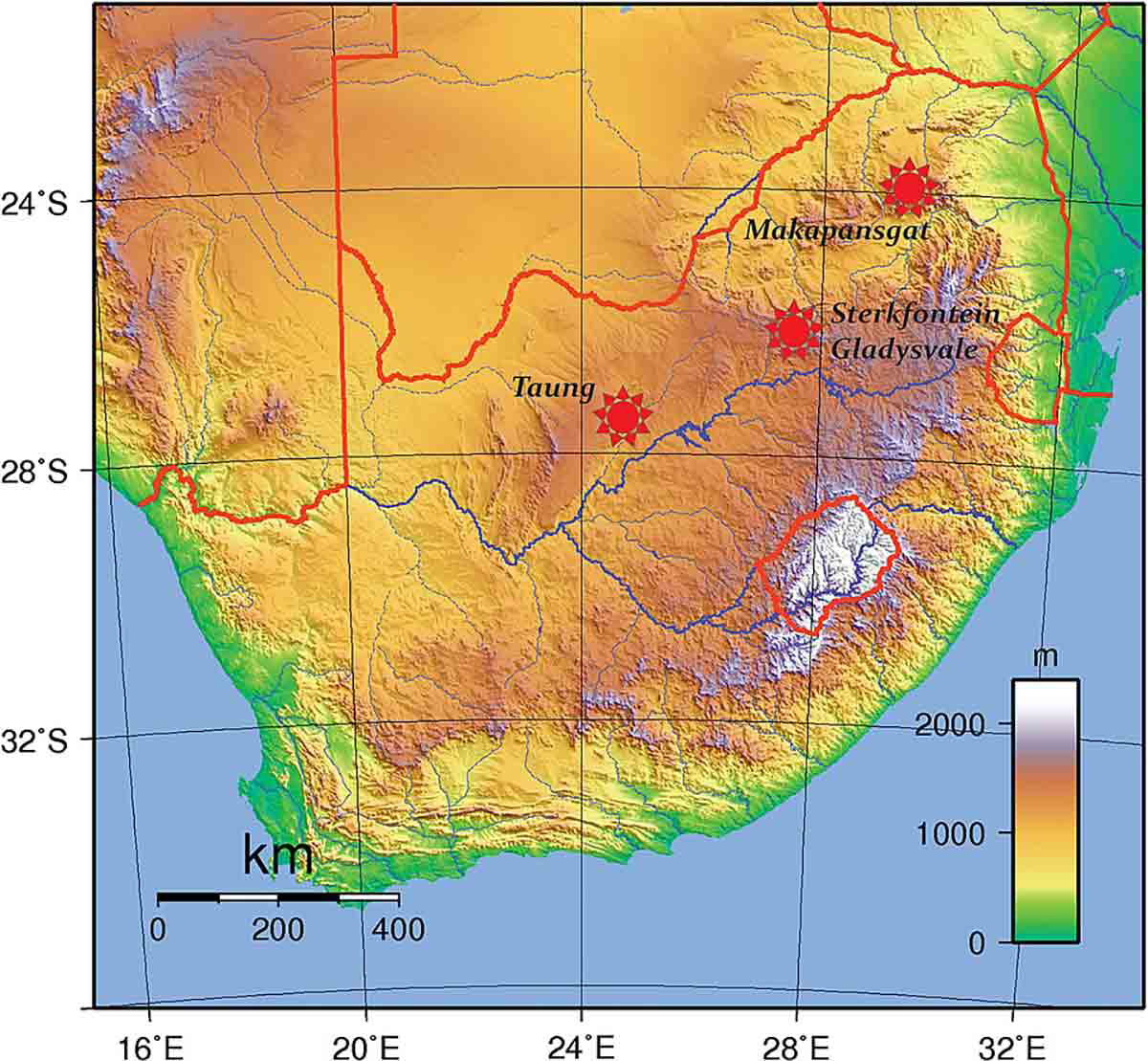
These days, scientists who study human origins practically all agree that the Taung Child was one of the most, if not the most, important fossil human discoveries of the 20th century. Why?
Part of the answer lies in what it revealed about the order of evolutionary change. Until the Taung Child, most scientists believed that humans had evolved their intelligence first, with upright posture and everything else coming later. The Taung Child, however, showed that the reverse was actually the case. Human ancestors had been walking around upright on two legs for millions of years before they evolved the big brains that are so characteristic of our species today.
Of equal significance was its location. Dart’s discovery placed the focus of human origins firmly in Africa. Charles Darwin himself, in 1871, had speculated in The Descent of Man that humans likely evolved in Africa because that is where we find our closest living evolutionary relatives, the chimpanzees and gorillas. But the scientific community mostly ignored that suggestion in favor of Eurocentric theories about human evolution. Then the Taung Child, followed by other Australopithecus discoveries in South Africa, came along and forced everyone to reevaluate what they thought they knew.
In evolutionary terms, the Taung Child helped dismantle one of the most persistent myths in human evolution: the idea of a single “missing link” between us and the apes. For decades, both scientists and the public imagined that somewhere deep in the earth’s layers of sediment, there must lie a fossil that bridged the gap between ape and human; a transitional species that was intermediate between our two lineages. Piltdown Man was considered by many to be exactly what they had been looking for, with its apelike jaw and humanlike cranium seeming to represent a stepping stone from apes on the way to humanity.
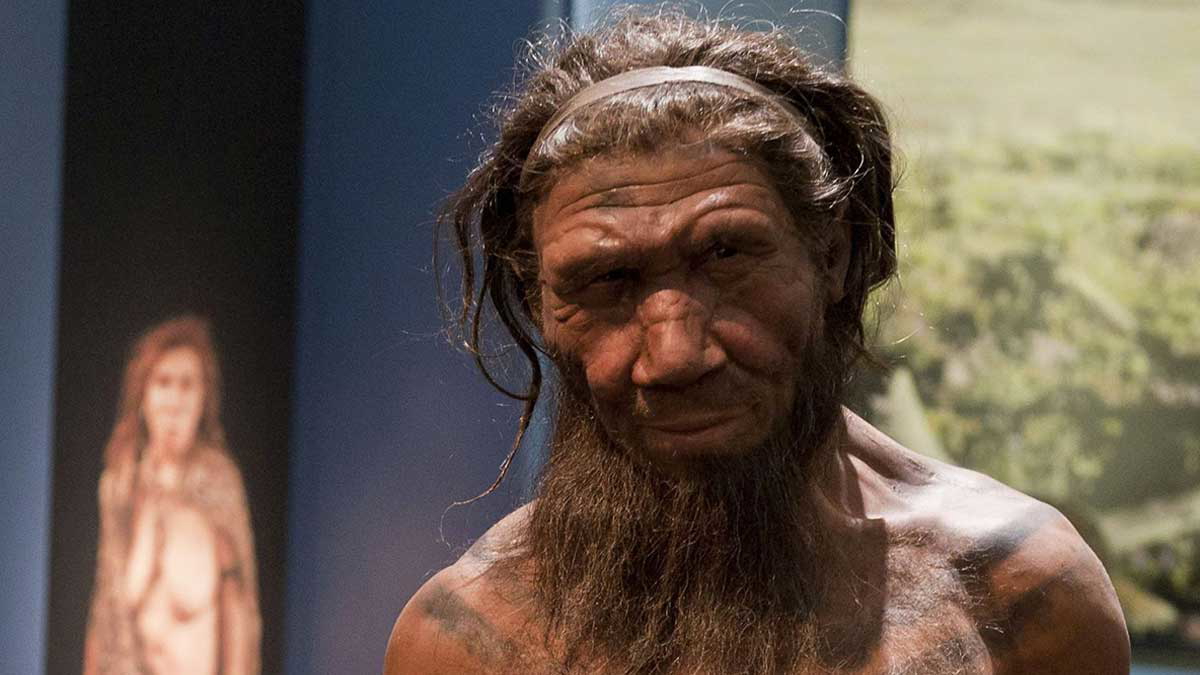
However, fossil hominin discoveries from the 19th and early 20th centuries forced scientists to reconsider. First, there was the Neanderthal skull found in Germany in the 1850s, then Java Man (Homo erectus) in the 1890s, and the Mauer jaw (Homo heidelbergensis) in 1907. Considered together with these other ancient hominins, the Taung Child reinforced the truth of human evolution; that there was no “missing link.” Instead, multiple hominin species existed throughout time, with some, like us and the Neanderthals, even coexisting.
Rather than a linear progression from ape to human, the Taung Child and other fossil hominin discoveries indicated that human evolution was like a branching tree, with many different offshoots, some of which ended in extinction, while others gave rise to our species, Homo sapiens.
Within a few decades of its discovery, the Taung Child would be joined in the evolutionary tree by even more hominins. In the late 1930s, through to the 1960s, Louis and Mary Leakey discovered several new species, including Paranthropus boisei and Homo habilis. In 1974, Donald Johanson went on to discover the famous “Lucy,” the near-complete skeleton of a female Australopithecus afarensis, and a close evolutionary relative of the Taung Child from East Africa.
Yet each of these breakthroughs reverberated against the backdrop of Dart’s initial claim: that small-brained bipeds in Africa were central to our origins. Without the Taung Child, the stage for their acceptance might never have been set.
What We Know Today
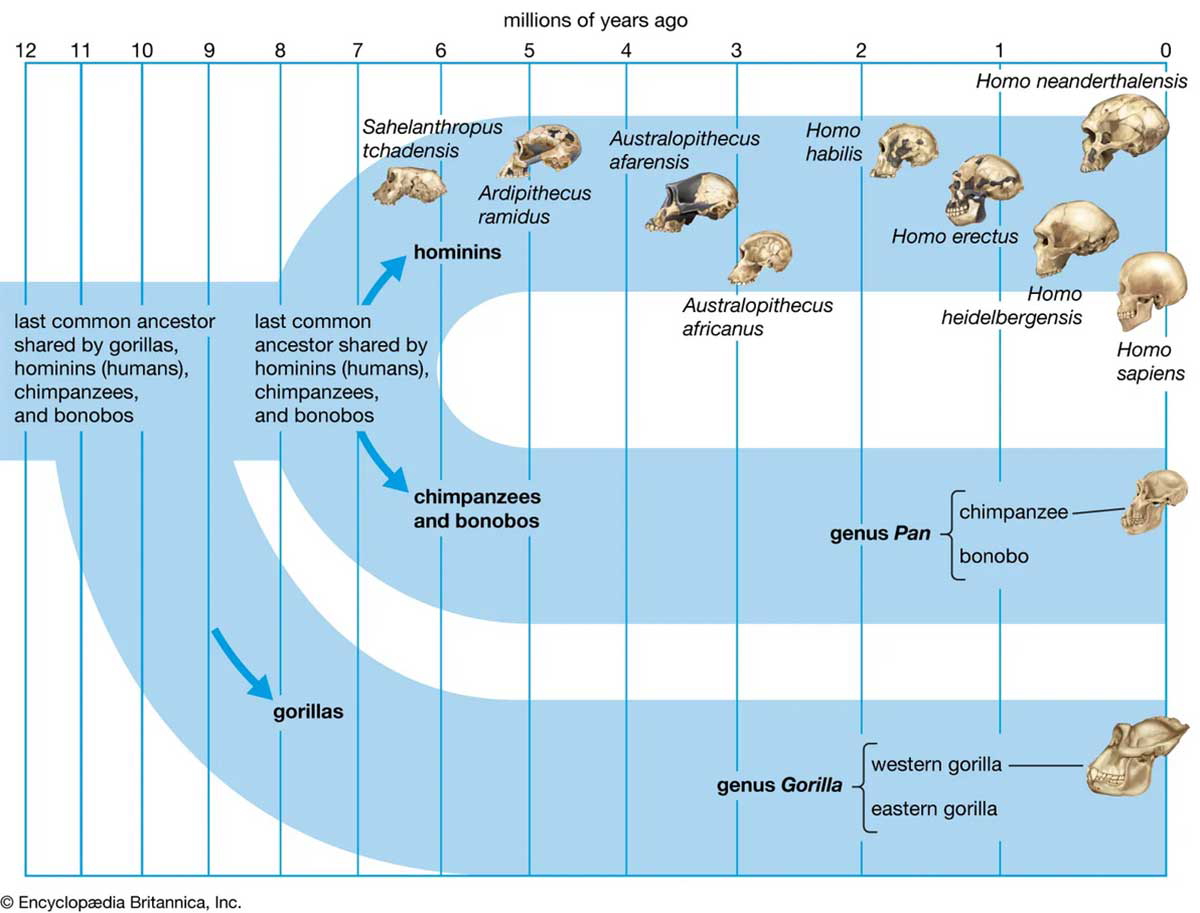
Nearly a century after Dart discovered the Taung skull, paleoanthropologists have since fleshed out a much fuller picture of Australopithecus africanus. This species lived in southern Africa between about 3.3 and 2.1 million years ago. It is now recognized as one of several australopithecine species during the Pliocene and early Pleistocene.
Morphologically, A. africanus combined primitive, apelike traits and derived, humanlike traits. Adults had brain sizes between 400 and 500 cubic centimeters, larger than chimpanzees but far smaller than modern humans. The skull was rounded with a less prognathous, or protruding, jaw than modern great apes, although it still protruded a bit more than ours. This might have been linked to A. africanus’ smaller teeth.
Modern apes, especially males, have large canine teeth for fighting and display. A. africanus, however, had canines that looked much more like ours. The postcranial skeleton, from the neck down, indicates habitual bipedalism, with the pelvis and lower hips adapted for upright walking, but the arms were long and the fingers were curved, suggesting that climbing trees remained an important part of A. africanus’ lifestyle.
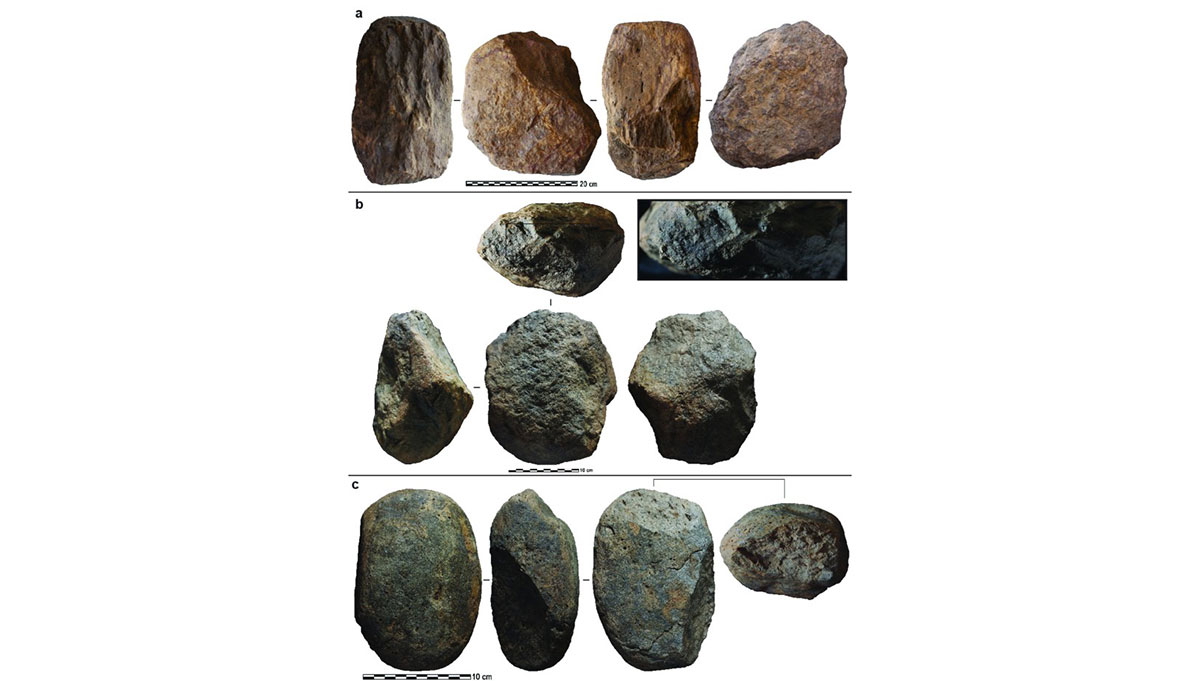
Behaviorally, A. africanus likely would have lived in small social groups in mosaic environments of woodland and savanna. They were around during a time of significant climatic fluctuation in Africa, which may have encouraged them to be adaptable. It is not known for certain which hominin made them, but the earliest stone tools ever found date to 3.3 million years ago. They were discovered at Lomekwi, a site in Kenya. Since A. africanus has only been found in South Africa, it is unlikely that they made the tools at Lomekwi, but it shows that hominins at this time were starting to think outside the box in order to survive.
Soon enough, a new species would emerge in Africa: Homo habilis, the first member of the Homo genus, to which we also belong. It is possible that an australopith like A. africanus or A. afarensis could have been the ancestor of H. habilis, and therefore of us as well.
Even if A. africanus was not our ancestor, and was on another branch of the human evolutionary tree, it remains a cornerstone species for understanding how upright posture and ecological flexibility set the precedent for our origins in Africa.
Legacy and Conclusion
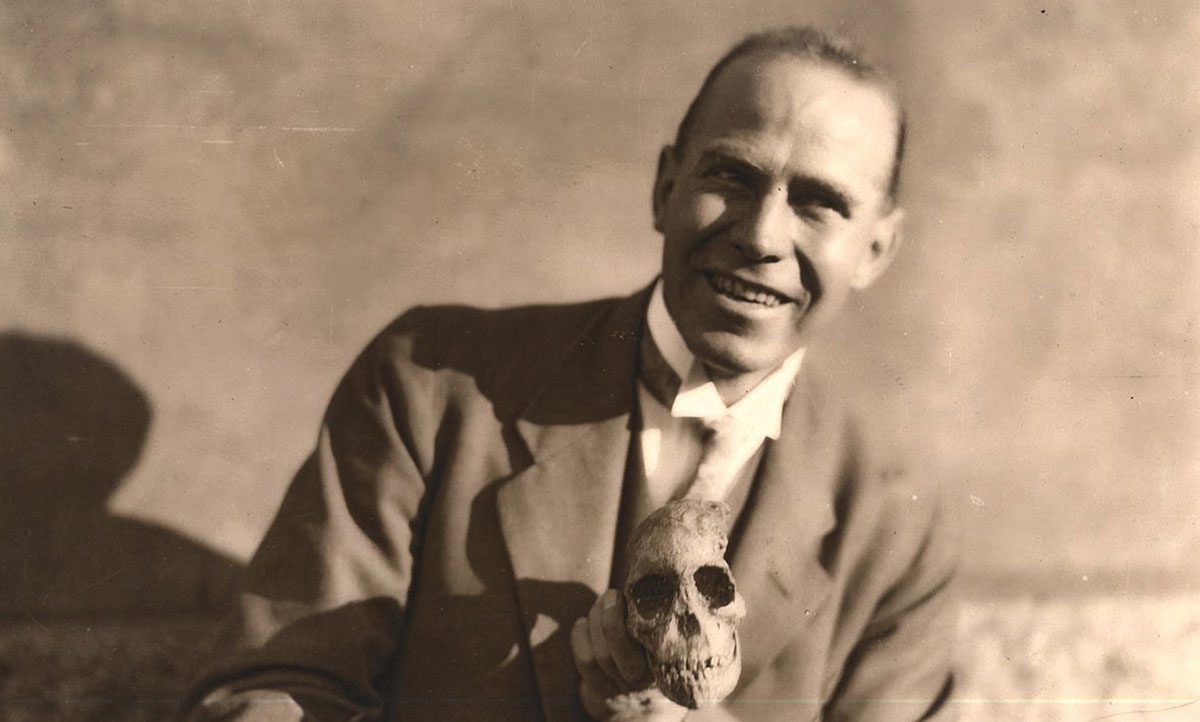
The Taung Child’s long path to recognition represents a wider drama of 20th-century paleoanthropology. For years, Raymond Dart’s fossil discovery languished in obscurity, overshadowed by the more readily accepted Piltdown Man.
Only in 1953, when the Piltdown skull was exposed as a hoax, a modern human skull stuck to an orangutan’s jaw, did the balance truly shift. With Piltdown’s fall came Taung’s rise. Africa was not just where our closest evolutionary relatives, the chimpanzees and gorillas, lived; it was where our very own lineage had its origins.