
Anyone who opens a modern Bible would assume that the authors of the four Gospels were the men whose names they bear. But it is plausible that, originally, these works may have circulated anonymously. While scholars agree that the authors’ names were absent from the original manuscripts, they disagree about whether or not the earliest readers actually thought of them as anonymous works.
The Problem of Anonymity

Many ancient writings did not contain their authors’ names, and this was true of the Gospels that are preserved in the New Testament. This does not necessarily mean that they were not associated from the beginning with particular authors—they may have been. But without written evidence in the texts themselves, it is expected that critical scholars will be persuaded differently regarding whether or not the original readers of these works associated them with Matthew, Mark, Luke, and John.
Some scholars argue that the Gospels’ first readers simply used them in local churches without reference to their writers’ identities. Others find this implausible, arguing instead that they must have been identified with someone and, in the absence of a viable alternative, present the traditional authors as the most likely possibility. At the same time, this latter group does not necessarily insist that Matthew, Mark, Luke, and John personally wrote the works that bear their names in the same way that authors compose their own works today. Rather, they would have used scribes, and it is possible that the voices of a variety of people are present in the Gospels—despite their being ultimately attributed to single authors.
While works were often published anonymously in this period of history, it is also important to note that works were also often published pseudonymously—that is, they were attributed to some famous person who never wrote them. By the 2nd century, there were many pseudonymous gospels and epistles circulating in the Mediterranean World. But scholars generally agree that none of these were published within the lifetime of those who knew Jesus personally. Rather, there is general agreement among scholars that the four Gospels in the New Testament were completed within one generation after Jesus’s lifetime.
The Literacy Problem
Among the factors that come to bear on the question of the Gospels’ authorship has to do with the low literacy rate in the land of Israel in the 1st century, which some scholars estimate could have been only 3%. The Gospels were all composed in a colloquial form of Greek called koine. Given the humble origins of Jesus’s disciples—who all would have spoken Aramaic rather than Greek—some historians doubt that Jesus’s original followers could have personally composed the simple-yet-masterful works preserved as the Gospels in the New Testament. Luke may be the exception to this rule since he was a highly-educated Greek-speaking person, according to the Book of Acts.
However, other scholars agree that there is ample evidence of a thriving scribal industry in and around Jerusalem in the 1st century. Furthermore, the Gospels say that Jesus was not only literate but was well-studied in Jewish scripture, and they present him as being able to read texts in Hebrew in front of others. Moreover, Jesus often seems to expect his interlocutors to have read the Hebrew Bible. According to the picture the Gospels present, knowledge of literature was not entirely out of reach even for those who lived outside Jerusalem’s environs, although it was difficult to obtain.
Papias: Evidence or Questions?
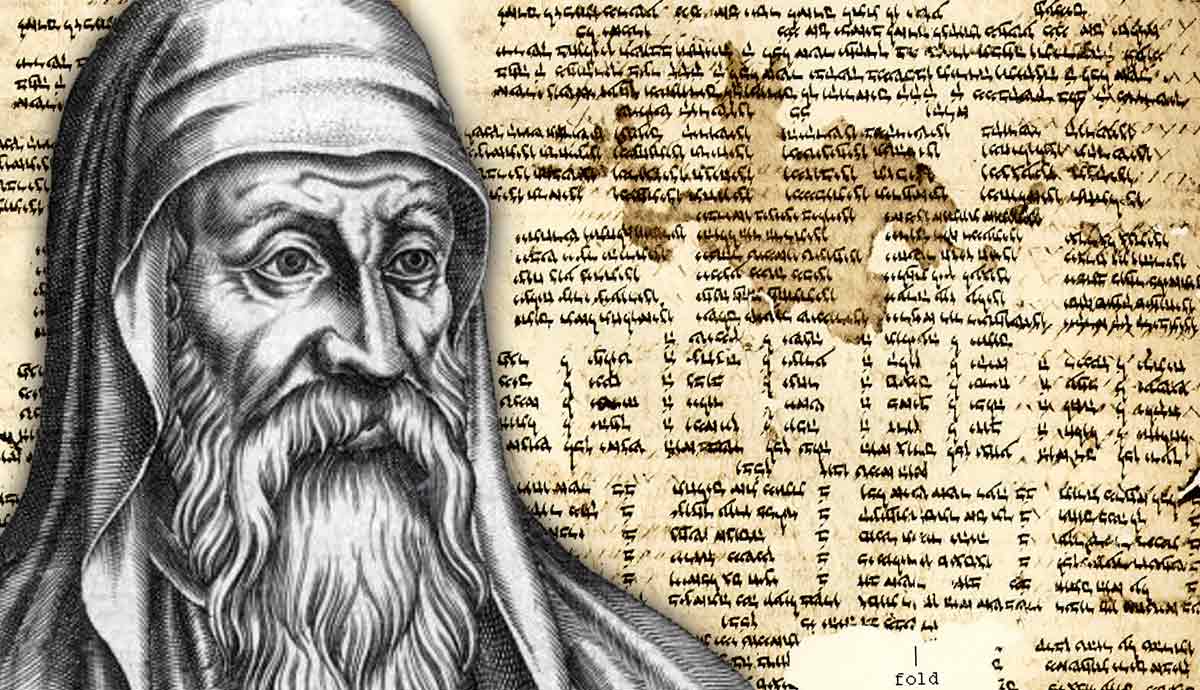
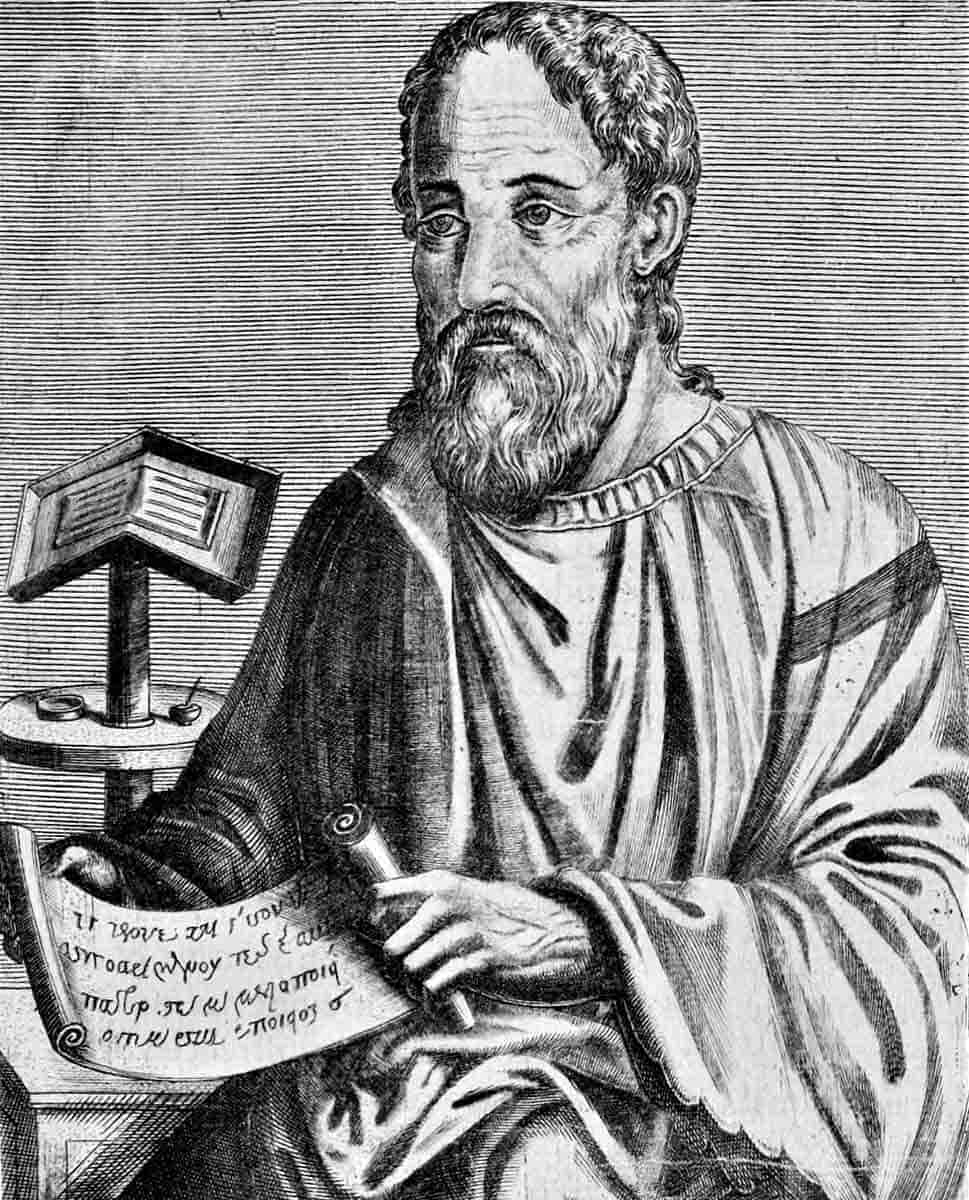
The earliest reference to the four Gospels’ authorship under the names they have now is in Eusebius’s Ecclesiastical History. Himself a resident of Palestine, Eusebius was a bishop and historian whose life spanned between the 3rd and 4th centuries—some 200 years after the Gospels were composed. This is more than enough time for a mistaken tradition of authorship to have developed. However, Eusebius references the work of another Christian bishop named Papias, who ministered in the church at Hieropolis (in modern-day Turkey) within the lifetime of some of Jesus’s disciples. Unfortunately, Papias’s work has been lost, so all that is left is the portions to which Eusebius refers. Nevertheless, what little is preserved is significant. According to Eusebius, Papias attributed one of the four Gospels to Mark and another to Matthew. This means that within only a few decades of their writing, a “Gospel According to Mark” and a “Gospel According to Matthew” were in circulation.
However, some scholars hesitate to associate these individuals immediately with the Mark and Matthew in today’s New Testament for at least two reasons. For one, Papias implies that Matthew wrote in Hebrew—yet New Testament scholars generally believe Matthew was composed originally in Greek. For another, Eusebius includes a quotation from Papias regarding the death of Judas that is radically different from the account given in the Gospel of Matthew. This sheds doubt on the notion that Papias had received his version of events from “our” Matthew as opposed to another person. Was Papias talking about a different set of books about the Christ than the ones that were preserved in the New Testament? There are enough questions introduced by Eusebius’s report of what he said to leave some scholars wondering.
Evidence in Irenaeus
Irenaeus was a bishop in the French city of Lyons whose work contains the second-earliest reference to the Gospel writers. In Against Heresies, he identifies all four writers. He echoes Papias in saying that Matthew wrote in Hebrew and that Mark wrote his Gospel based on Peter’s testimony. But Irenaeus’s quotations of Matthew reflect well the Gospel of Matthew that is present in the New Testament. It appears, thus, that by the end of the 2nd century, the four Gospels were being attributed to Matthew, Mark, Luke, and John. Does this mean that they were originally associated with the same authors?
Irenaeus lived toward the end of the 2nd century, which puts considerable space between him and the lives of those who allegedly wrote the Gospels. Thus, skepticism about his claim may be warranted. Yet, history has not recorded any alternatives. According to what can be discerned from the extra-biblical record, either the identities of the Gospels’ authors have been lost, or they are indeed Matthew, Mark, Luke, and John.
Luke: The Strongest Case for Authorship?
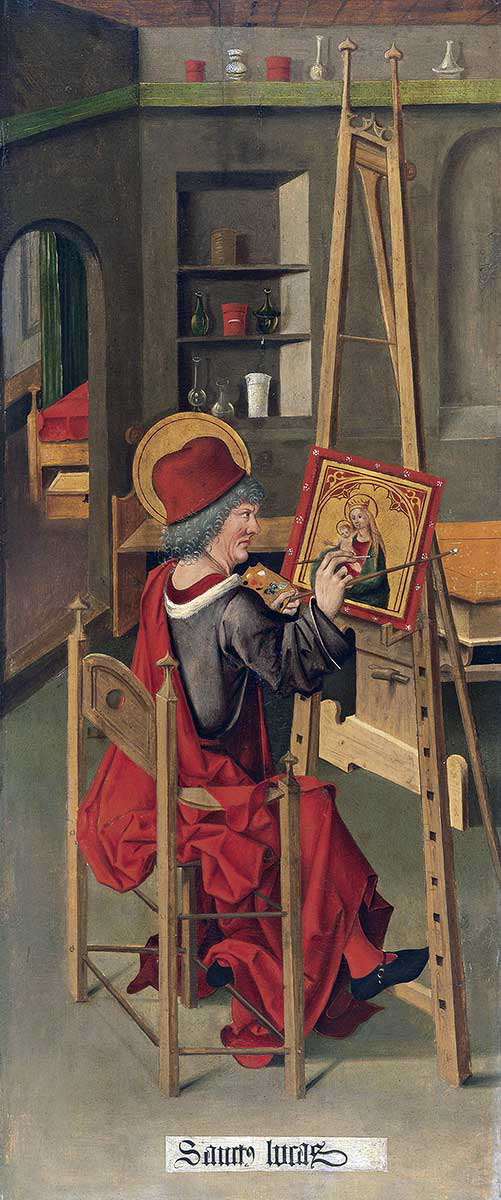
The New Testament’s Book of Acts was written by the same person who wrote the Gospel of Luke. Actually, Luke-Acts should be considered two volumes of a single work. Both are addressed to a patron named Theophilus. This is relevant for two reasons. First, it seems unlikely that a work that was written for a patron could be anonymous since the patron himself would know who wrote it and would have no reason not to reveal who it was. Second, even though Luke’s Gospel technically does not name him as the author, in the Book of Acts, he appears in the story and speaks of his activities in the first person.
Another reason why it is unlikely that Luke would have been given undue credit for writing a Gospel is because he was not personally a disciple of Jesus during Jesus’s lifetime. In fact, he was not even a Jew. It would be strange for the fledgling Christian movement in search of an authority figure to whom to attach an anonymous Gospel to choose Luke over one of Jesus’s original disciples. Most pseudonymous gospels are, for this very reason, named after Jesus’s disciples or immediate acquaintances.
Most Scholars Say Mark Was Written First

Mark is the shortest of the four Gospels, and most scholars agree that Matthew and Luke had access to Mark when they wrote their own works since nearly all of the material in Mark is included in Matthew and Luke. This is an important point to make when discussing the question of authorship. Being a Gospel’s author did not necessarily mean being the sole compiler of the traditions reflected therein. The authors of Matthew and Luke appear to have borrowed significantly from Mark, so any use of the word “author” when discussing the Gospel writers needs to be able to accommodate this phenomenon.
This brings another question to the fore that is often debated in Christian circles. What, exactly, makes the Gospels uniquely authoritative vis-a-vis other early Christian literature about Jesus? Many have pointed to Mark’s close association with Peter, which is highlighted by Papias as well as other early Christian figures. Because Peter was one of Jesus’s twelve specially-chosen disciples, and because Mark is based on Peter’s account of Jesus’s life and ministry, it is reasoned that Mark carries “apostolic authority.” Matthew, meanwhile, was one of Jesus’s disciples, and so the authority of his Gospel follows directly from his status as such.
However, this raises a question: if Matthew was an eyewitness of Jesus’s life, while Mark got his information second-hand from Peter, why does it appear that Matthew copied large amounts of material from Mark’s Gospel? Could it be that it was actually Matthew who wrote first—and that Mark is the one who is copying? Or did they each copy from the same source that is now lost to history?
Tradition Holds That Matthew Was Written First
The idea that Mark was written first does not come from tradition but from the findings of “form criticism,” which, as the name suggests, is an approach to studying ancient texts that prioritizes the history of their formation. This is a modern approach, and sometimes its conclusions conflict with traditional claims regarding when, where, and by whom texts were created. This is also the case with the so-called “theory of Markan priority.”
Tradition holds that Matthew was written first and was followed by Mark. This is difficult for many modern scholars to accept; few findings of source criticism are more widely agreed upon among biblical scholars than the theory of Markan priority. Still, some scholars continue to hold that Matthew was the first Gospel writer.
Is “The Disciple Whom Jesus Loved” John Himself?
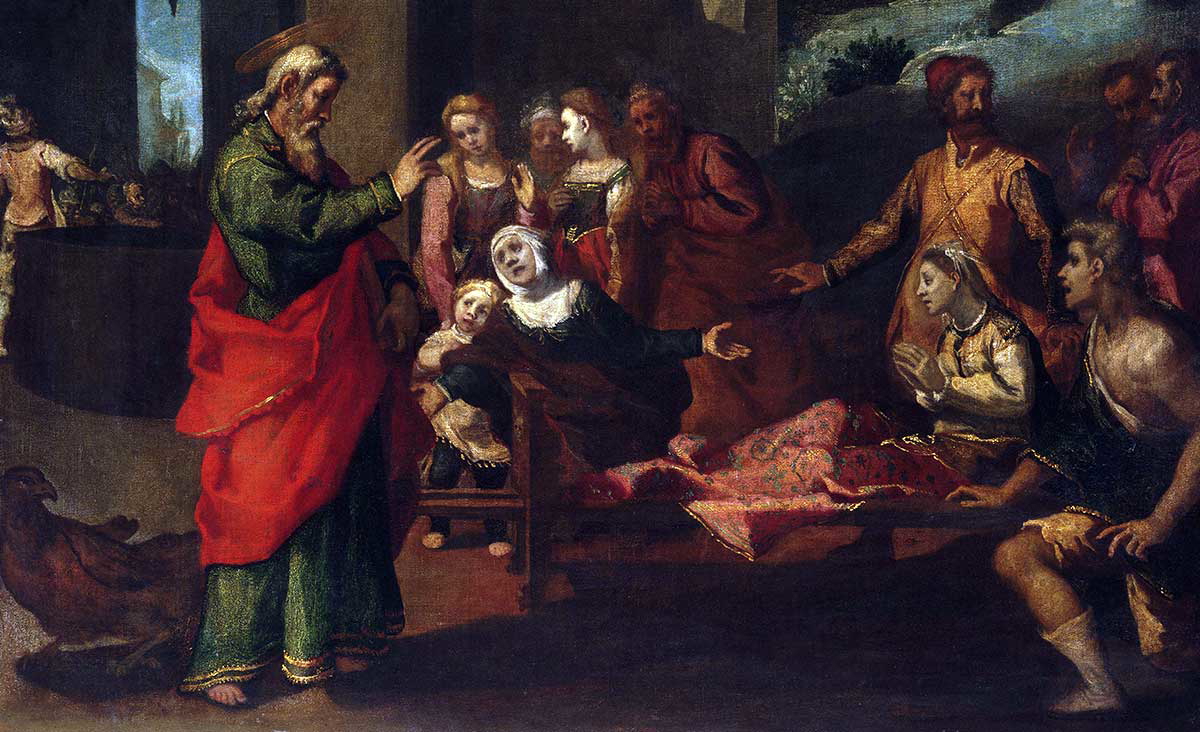
The term “Synoptic Gospels” refers to Matthew, Mark, and Luke. John is in its own category because it shows so little evidence of direct copying from whatever source the Synoptic Gospels shared.
Like the other Gospels and their traditional authors, there is no rival tradition to John’s authorship in the early church. However, John contains a feature pertaining to its authorship that distinguishes it from its counterparts. While Mark, Luke, and Matthew mention those names within their works, John the Apostle—the traditional author of the Gospel of John—is never mentioned by name in the Gospel of John itself.
Meanwhile, an unnamed disciple called repeatedly “the disciple whom Jesus loved” appears mysteriously at key moments in the narrative. Then, at the very end of the Gospel, this unnamed disciple reveals himself as the author of the foregoing work! In other words, the author expects the reader to have been wondering all along who this unnamed “disciple whom Jesus loved” was—and he chooses finally to reveal himself dramatically at the end.
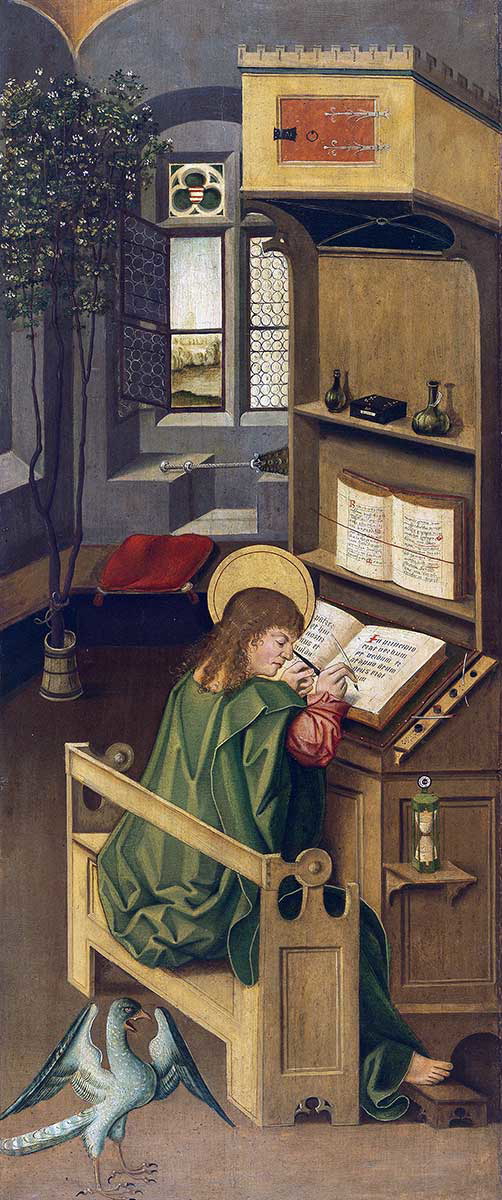
Whether or not this revelation removed all doubt about the identity of the author to the original readers or not is difficult to say. But, perhaps in the absence of a willingness to allow this mysterious character to remain unnamed, the tradition developed that this person was John the Apostle. We say “perhaps” because there is no way to be certain.
Some scholars have suggested that the Gospel of John was the product of a communal authorial effort on the part of a group called, in retrospect, “the Johannine Community.” Others have argued that “the disciple whom Jesus loved” may be one of the other, named disciples in the story instead of John.
Who Wrote the Gospels?
In short, we are not sure. But the only proposals available are that it was either the four men whose names appear on them or four people whose identities will never be recovered. Either way, the Gospels will almost certainly remain the most complete sources in existence for understanding Jesus and his mission.