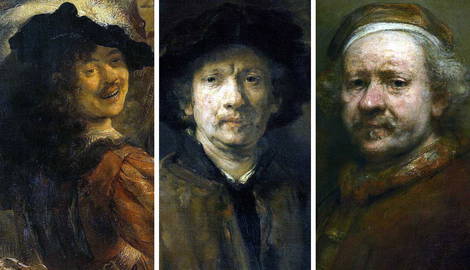
Rembrandt created over 40 painted self-portraits, each capturing his evolution both as a man and an artist. Through these works, he documented his journey—his youthful vigor, his love, and early success, as well as the heartbreaking loneliness that marked his later years. These self-portraits not only reflect his personal struggles but also his artistic development. Read on to explore more about Rembrandt’s self-portraits and discover some of the most famous ones.
Why Did Rembrandt Paint So Many Self-Portraits?
Over the 63 years of his life, Rembrandt painted dozens of self-portraits, with more than 40 of them being paintings. He was the first artist in history to use the genre so extensively, turning it from a simple exercise into an autobiographical tool. Rembrandt’s self-portraits reflected his path from the start of his career to his last years.
From a young man learning to paint, he grew into a respectful and wealthy professional painter and, after falling into financial hardship, transformed into an aged man living in poverty. To paint his own face, Rembrandt relied on a mirror. Thus, the features we see in his paintings are reversed. Rembrandt’s self-portraits are crucial documents of his life, concerns, ideas, and inspirations, and remain an invaluable source for art historians.
Present-day art experts consider self-portraiture as a format that means much more than superficial artistic vanity. A self-portrait is an act of self-recognition as both the artist and the subject worth being painted. In that sense, Rembrandt’s numerous self-portraits illustrate the exploration of his identity as an artist and the transformation of his self-perception.
1. A Young Rembrandt (Self-Portrait with Disheveled Hair)
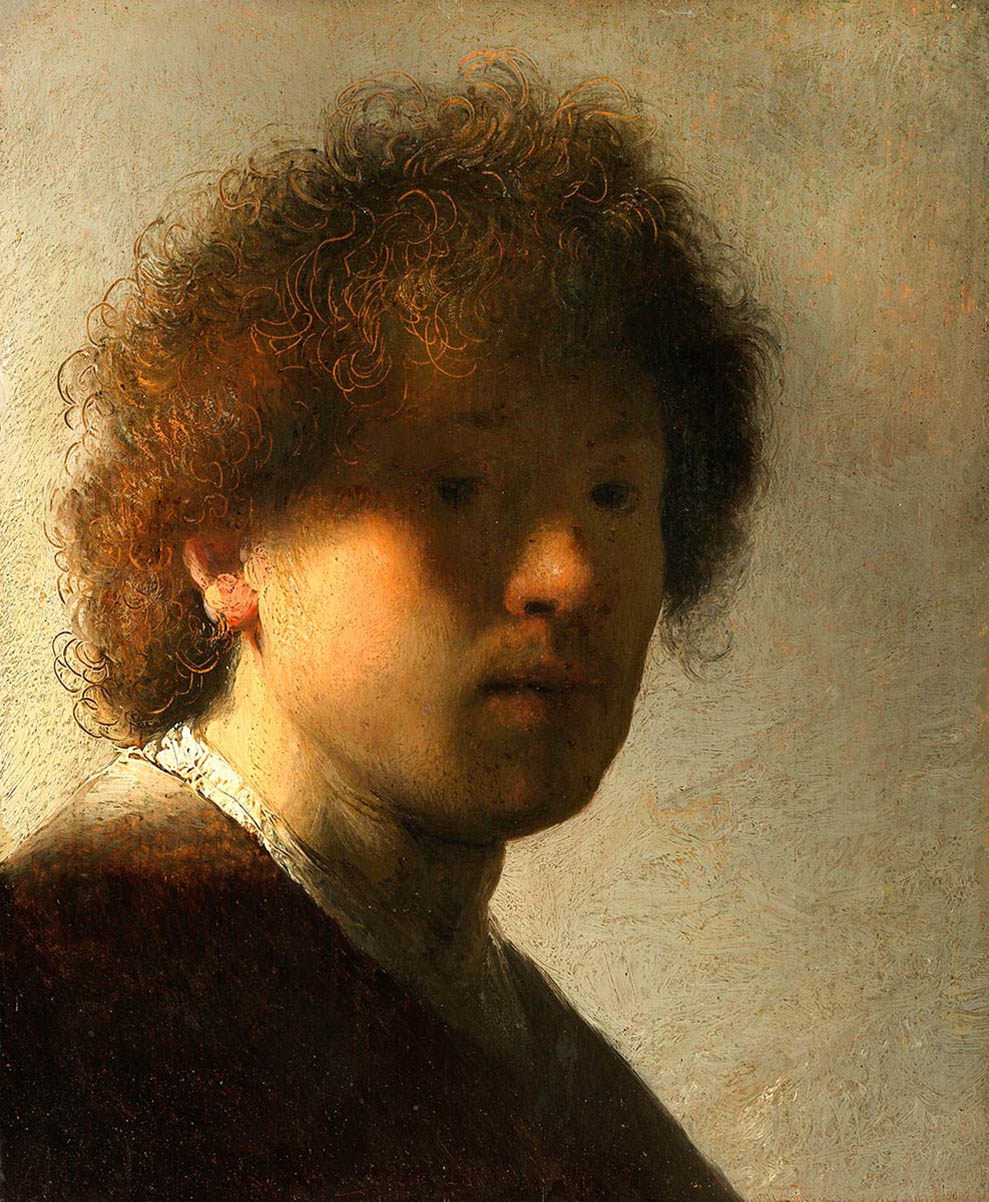
One of the earliest self-portraits by Rembrandt was painted in the artist’s early twenties. Most art historians believe it was an exercise in chiaroscuro, the sharp contrast between light and shadow that gave extra depth and expression to images. In 1628, Rembrandt still lived in his native Leiden, where he recently opened a studio. Just 22 years old at the time, he soon was noticed by important commissioners, including the secretary of the Prince of Orange Constantijn Huygens. Huygens connected Rembrandt with affluent art patrons from the Hague, bringing him new commissions and an initial boost of recognition.
2. Self-Portrait in a Cap, With Eyes Wide Open
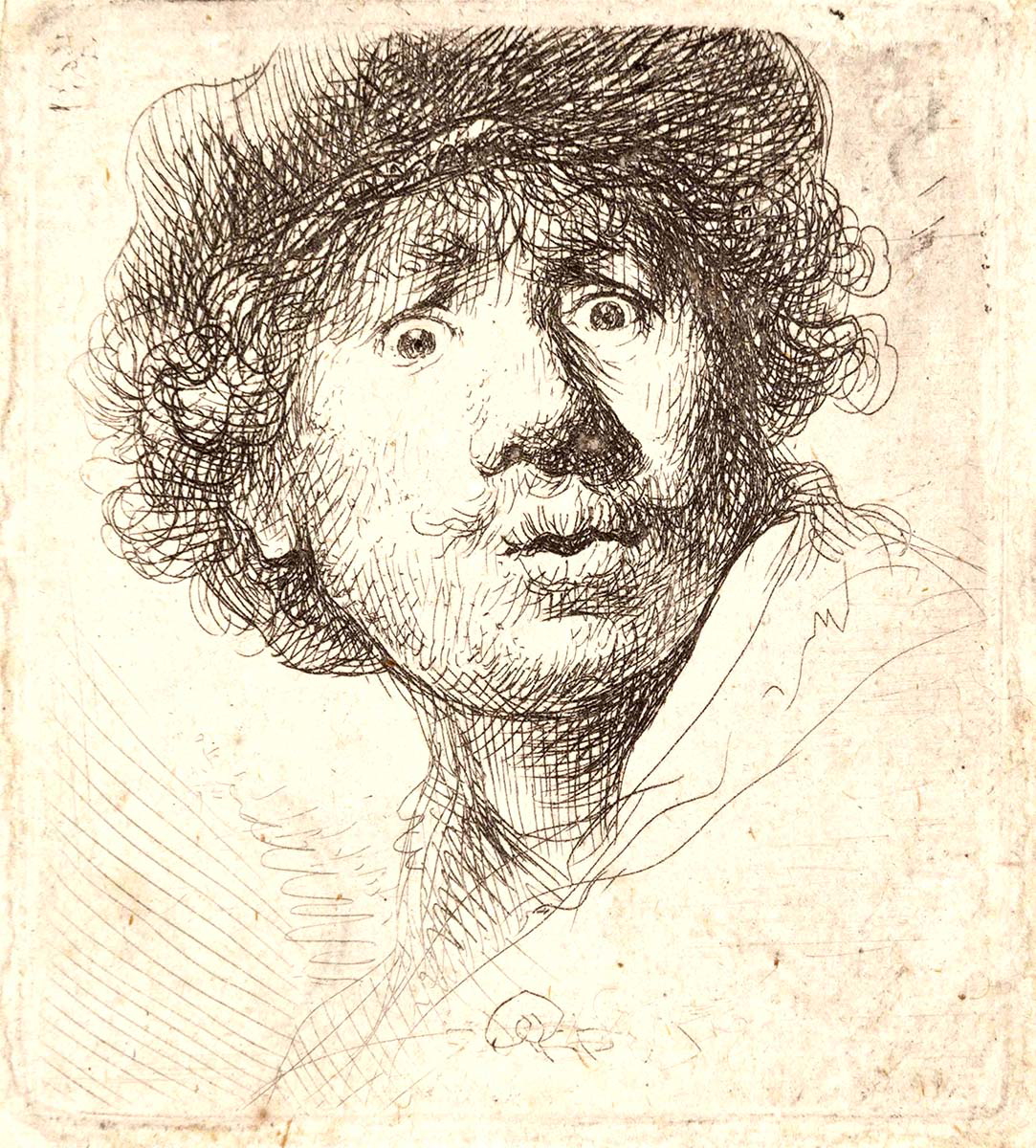
This unusually expressive self-portrait was part of Rembrandt’s studies on emotion and facial features. In the 17th century, Dutch artists developed a specific type of painting known as Tronies—character heads with distinctive and often exaggerated emotions, no backstory, and no extra setting. These paintings had a focus on specific types of characters or costumes and were not tied to specific individuals or personalities.
Rembrandt’s self-portrait etchings were mostly small (one of them, stolen during the infamous Isabella Stewart Gardner Museum heist, was the size of a postage stamp), and represented informal exercises or studies, not intended for presentation. In his painted works, however, Rembrandt often created a curated vision of himself that would reflect and support his social status.
3. The Prodigal Son in Tavern (Rembrandt and Saskia)
Wikipedia
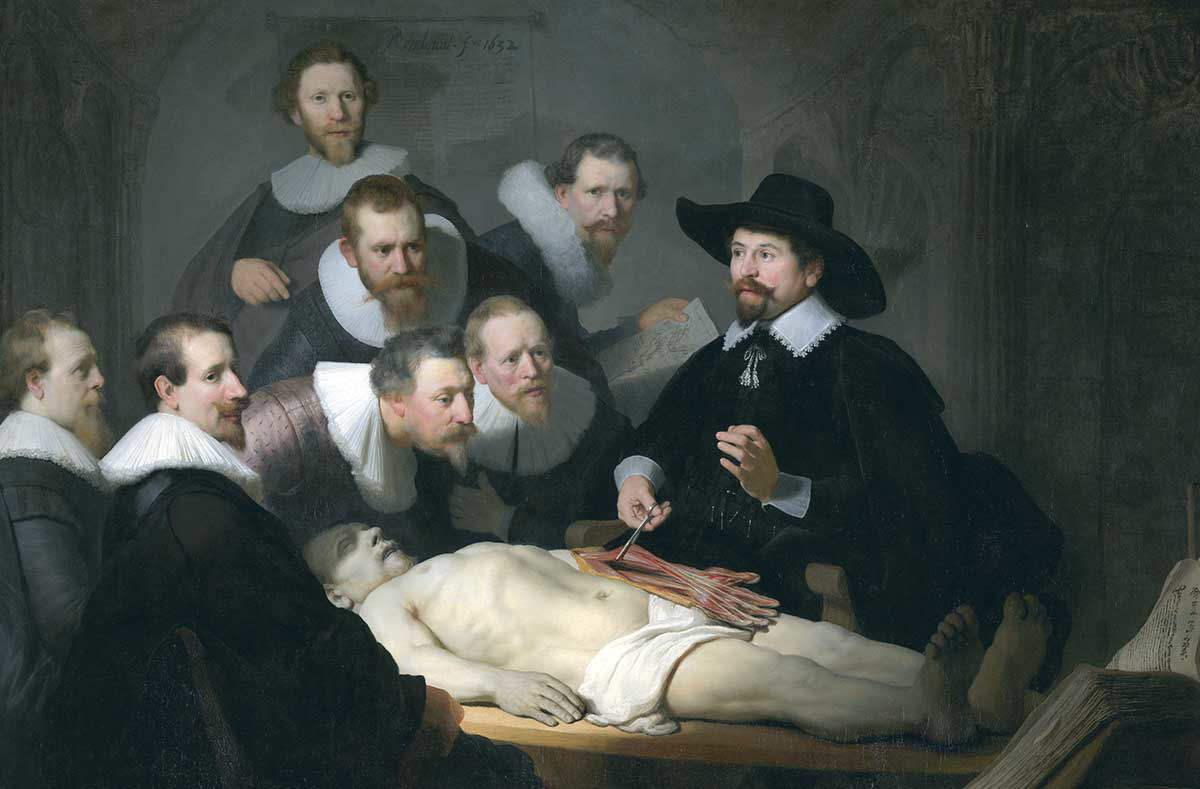
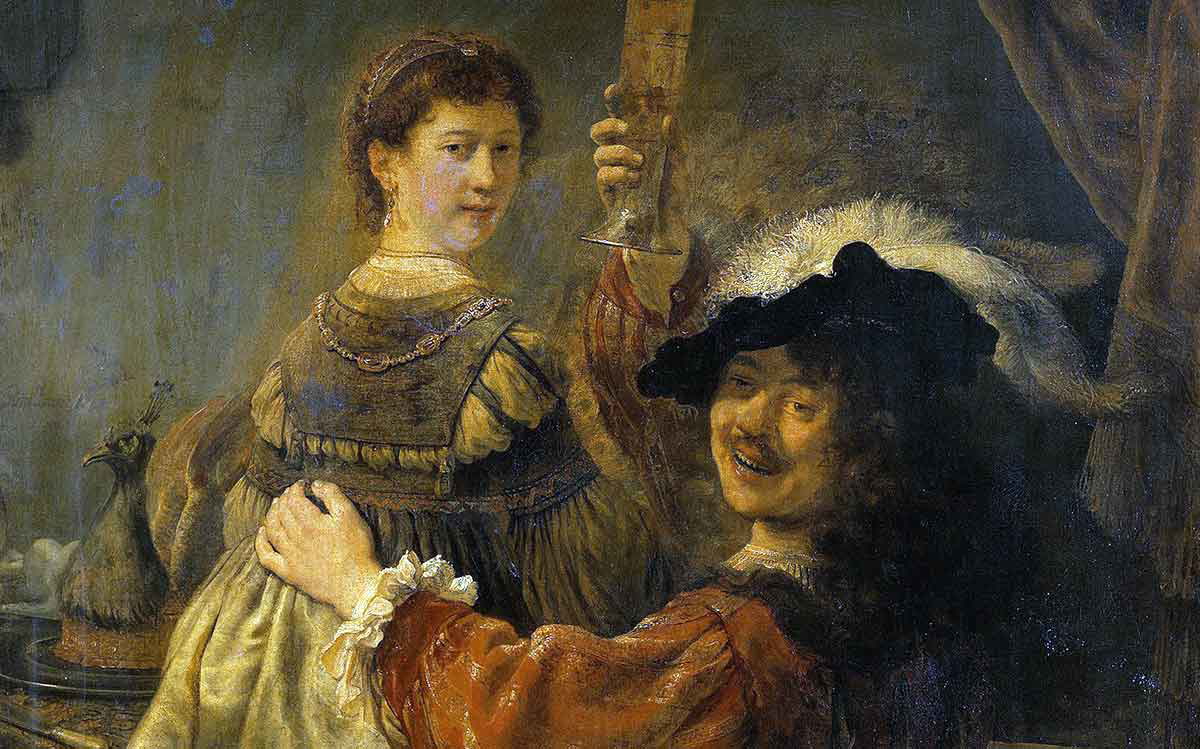
The 1630s were the most successful and happy decade of Rembrandt’s life. Still a young painter, he managed to achieve tremendous success over just a few years and he moved from Leiden to Amsterdam. There, he opened a studio as a portrait painter. In 1634, he married Saskia van Uylenburgh, a cousin of an influential art dealer Hendrick van Uylenburgh, who helped launch Rembrandt’s career. Most likely, van Uylenburgh was responsible for passing the Amsterdam Surgeons’ Guild commission of a group portrait to Rembrandt, thus leading to the creation of the famous painting The Anatomy Lesson of Dr. Nicolaes Tulp.
The marriage was a happy one, with Rembrandt seeming deeply and sincerely in love with his wife. Saskia’s social status was higher than that of the artist, and thus, the marriage was materially beneficial for him as well. The 1935 self-portrait is a rare painting showing both Rembrandt and Saskia. The subject illustrated the Old Testament story of the Prodigal Son, a young man who wasted his share of inheritance on superficial joys and came to his father asking for forgiveness. Rembrandt painted himself as the son still unfamiliar with poverty and hardship, drinking in a tavern and entertained by a charming young woman, represented by Saskia. By fate or by accident, the further events of Rembrandt’s life would turn out strikingly similar to the Biblical story.
4. Self-Portrait at the Age of 34
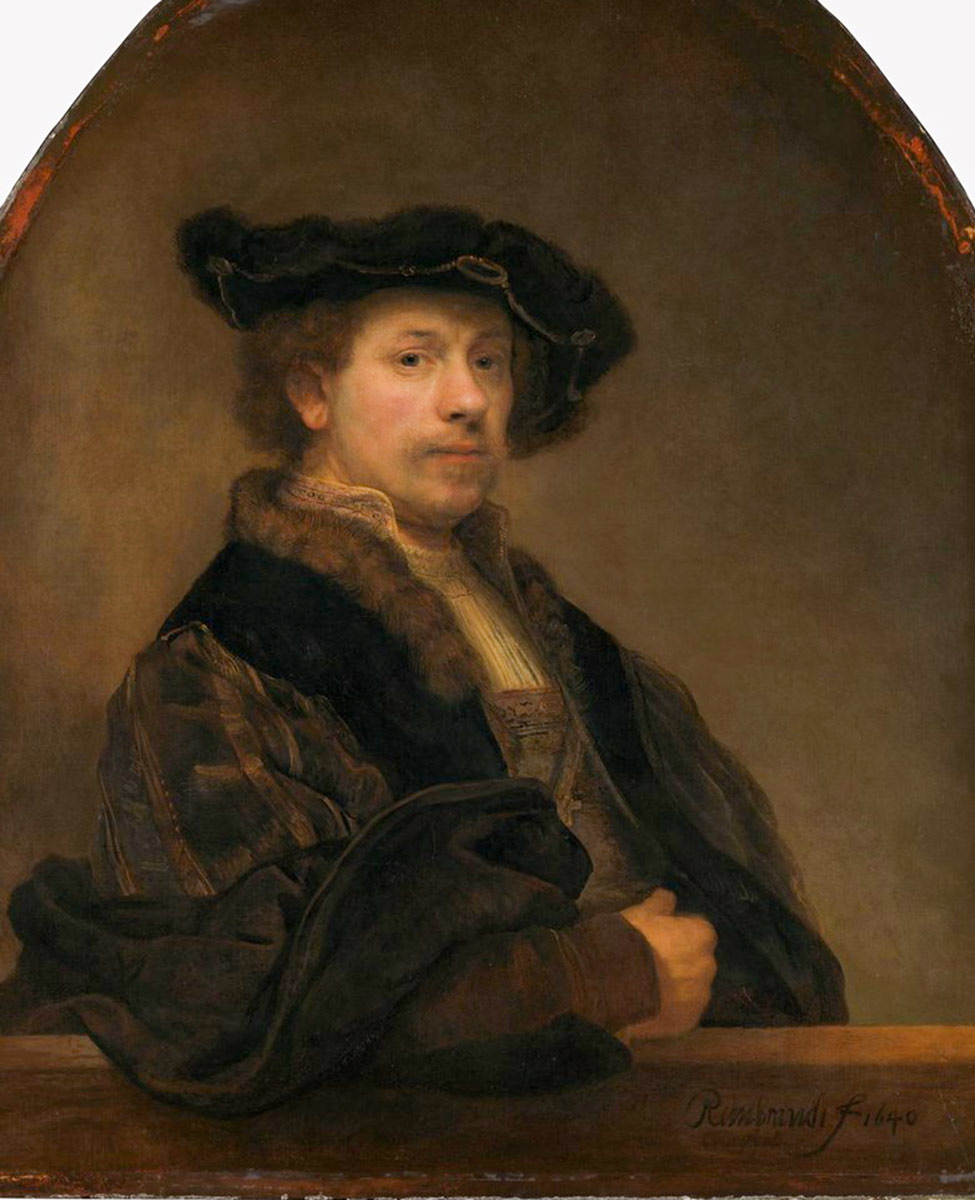
The most monumental and grandiose of Rembrandt’s self-portraits was painted in 1640, less than a year after he and Saskia moved into a new house in a prestigious part of Amsterdam mostly occupied by wealthy merchants. In fact, Saskia was not entirely happy with the move, as she was worried about the loans Rembrandt took out to pay for it. In the end, she was right to worry, as after her death Rembrandt would fall into financial hardship and go bankrupt.
Still, in 1640 everything was well. Rembrandt was a wealthy man who lived in luxury and amassed a large collection of artworks. His skill was recognized well beyond the Netherlands. In the famous self-portrait, Rembrandt painted himself wearing furs, velvet, and gold jewelry. His dress does not reflect Rembrandt’s contemporary fashions. Rather, it is typical for the early 1500s, when painters like Titian and Raphael painted portraits of the Italian elites in similar poses and tones. Thus, Rembrandt represented himself as both equal to the great masters of past centuries, and as a member of the new elite, who earned his status with his artistic skill.
5. The Large Self-Portrait
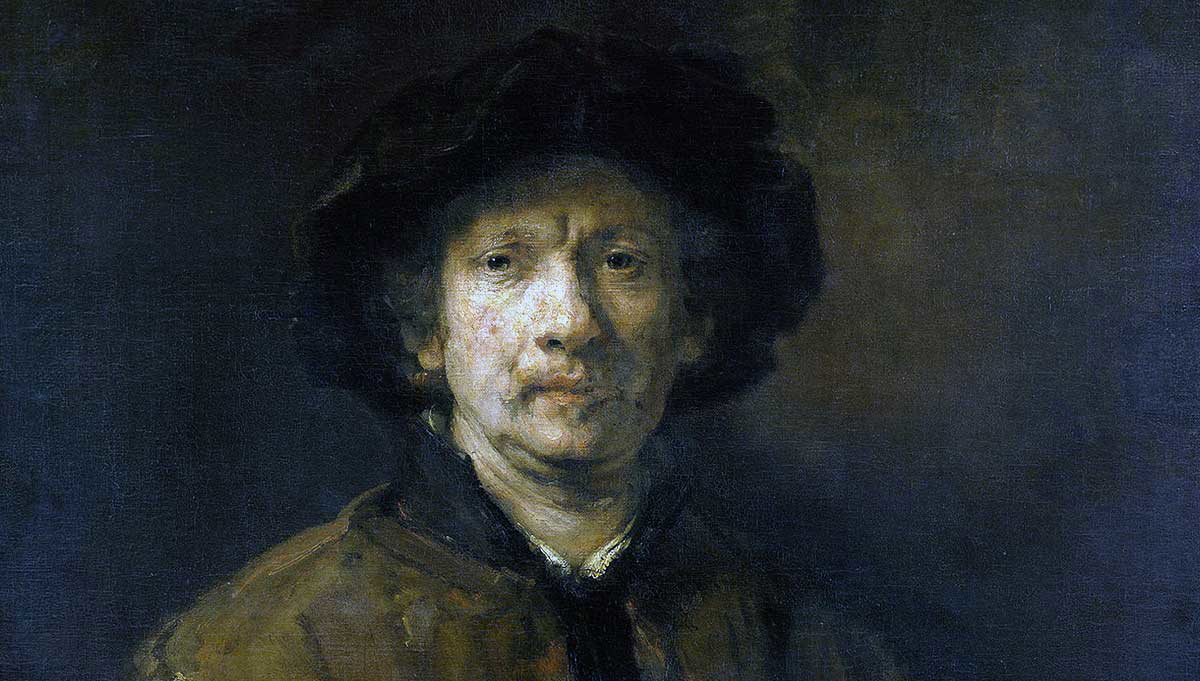
In 1652, Rembrandt experienced the heaviest crisis of his life. After the death of Saskia in 1642, he gradually lost grasp of his financial stability, with his spending not aligning with his earnings. At the same time, the unique and expressive style of painting that made him famous a decade before began falling out of favor with the public, leading to students leaving his workshop and a radical drop in commission numbers. His personal life was also crumbling. In her will, Saskia stated she granted Rembrandt access to the funds she left to their son as long as the artist did not remarry. Thus, a decade later, Rembrandt was unable to marry his new partner Hendrickje Stoffels without losing access to the money. The daughter of Stoffels and Rembrandt was born out of wedlock, adding to the social pressure and judgment faced by both of them.
The Large Self-Portrait represented a stark contrast with the depictions from the decade before. Instead of furs and gold, Rembrandt is wearing worker’s clothes and looks at the viewer with a somber acceptance of his position.
6. Self-Portrait as the Apostle Paul
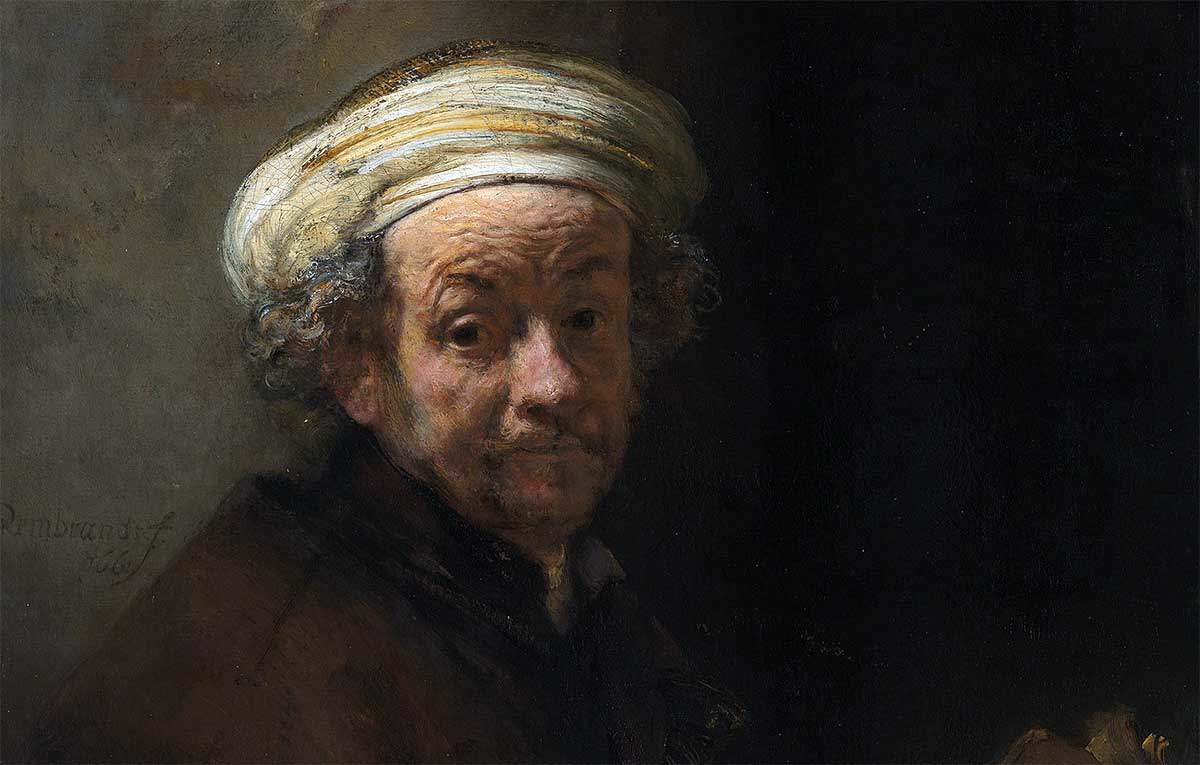
In his late years, Rembrandt often painted Christian scenes, sometimes using himself as a model. There, the personality of a saint attached to the artist’s face was not an expression of vanity or self-identification, but an attempt to make the sacred figure more relatable. In the 1660s, religious scenes and Biblical characters were not in favor of Protestant art commissioners, as they valued secular scenes more. Still, Rembrandt continued to paint Christian images, perhaps reflecting on his own hopes and hardships.
7. Self-Portrait With Two Circles
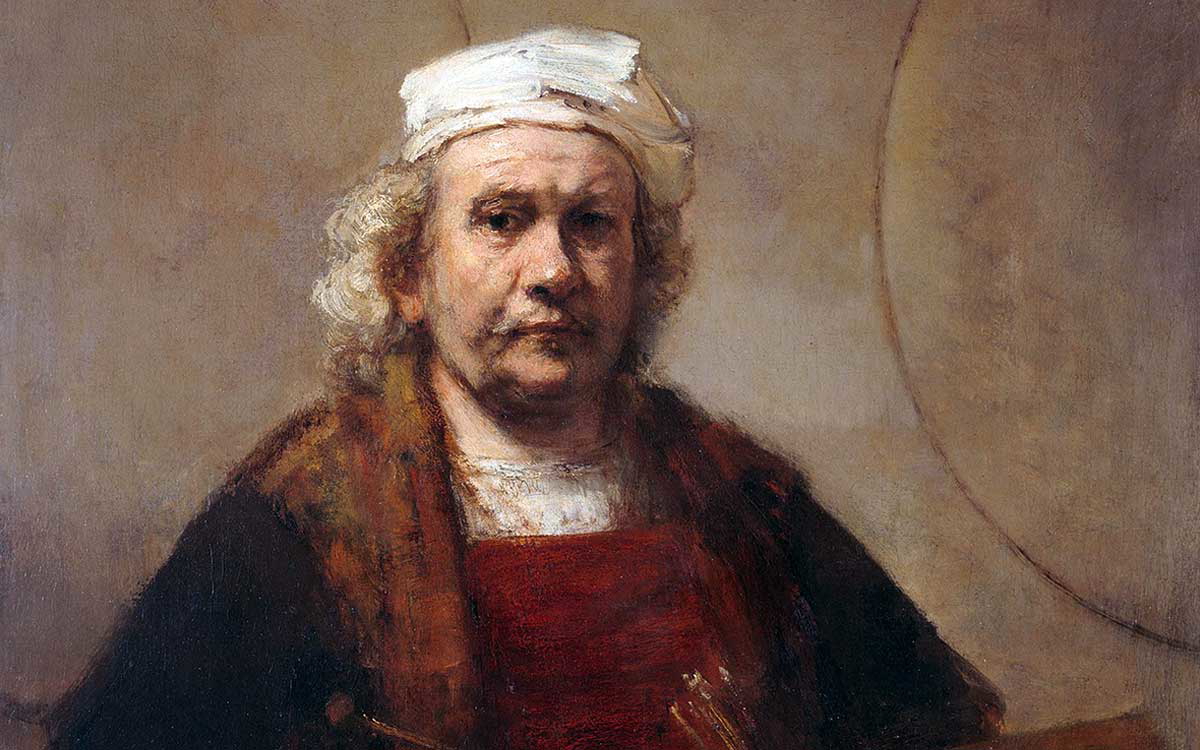
This self-portrait from 1665 is one of the most mysterious and strange paintings done by the master. It is abnormally big and it features Rembrandt with his painting tools and a white cap that already appeared in other works. The strangest elements, however, are the two circles painted in the background that seem unrelated to the rest of the composition. Some art historians believe they could reflect Rembrandt’s intent to illustrate his artistic mastery by painting perfect circles, yet both shapes are incomplete and were placed in a rather strange manner. Other researchers have tried to find a symbolic explanation for the circles, including connecting them to the concepts of Sacred Geometry or Kabbalah, but there is still not enough certainty.
8. The Last of Rembrandt’s Self-Portraits
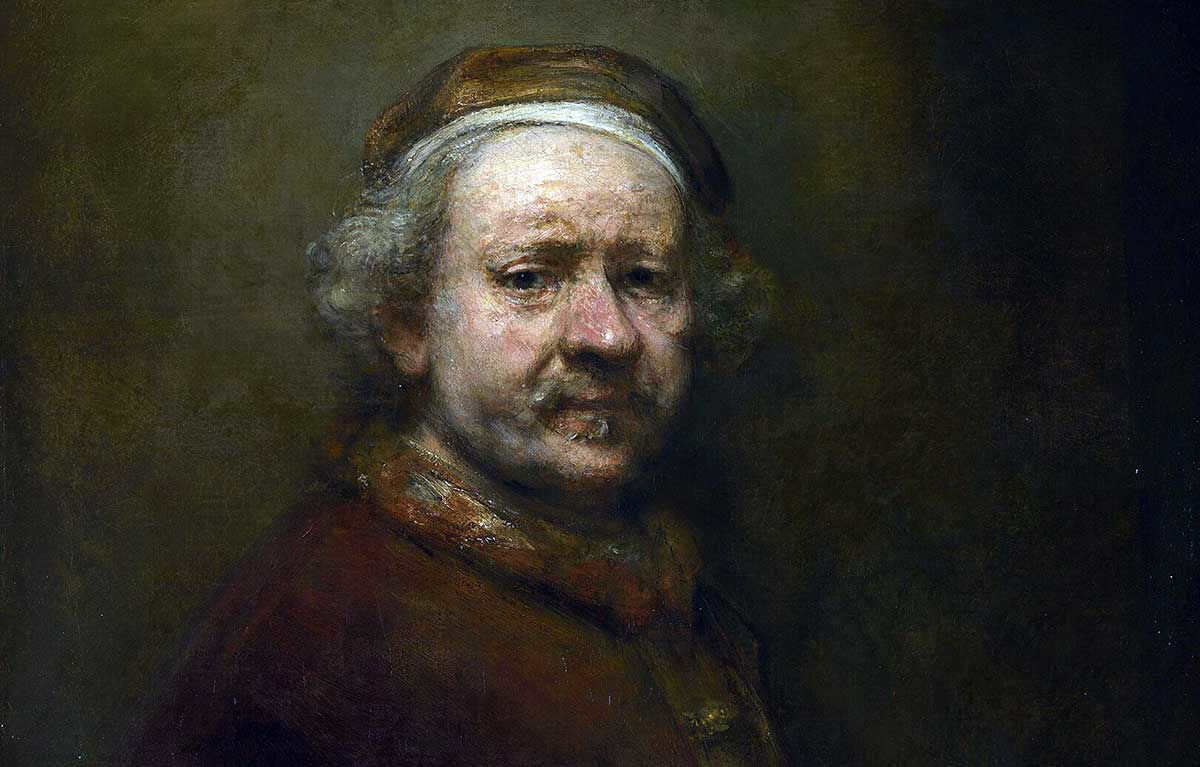
The Self-Portrait at the Age of 63 by Rembrandt was painted during the last months of his life. He died in October 1669 and had a surprisingly modest funeral, with only his illegitimate daughter Cornelia present. In one of his final works, Rembrandt did not make any attempt to look better than he felt. His face was old and tired, covered in spots and blemishes, and his eyes looked tired and dark. The X-ray scan of the work has shown that the artist repainted the section showing his clasped hands. Initially, he painted himself holding a brush in one hand and special support for weak hands to allow for more precision.