Sandro Botticelli, one of the most celebrated painters of the Italian Renaissance, was known for his unique aesthetics and refined painting skills. Most of his famous heroines, from Venus to the Virgin Mary, were modeled after Simonetta Vespucci, a Florentine noblewoman. Vespucci died at the age of just 23, but Botticelli continued to include her face in his artworks even after her death. Read on to learn more about the 10 most important works by Sandro Botticelli.
1. “The Birth of Venus” by Botticelli
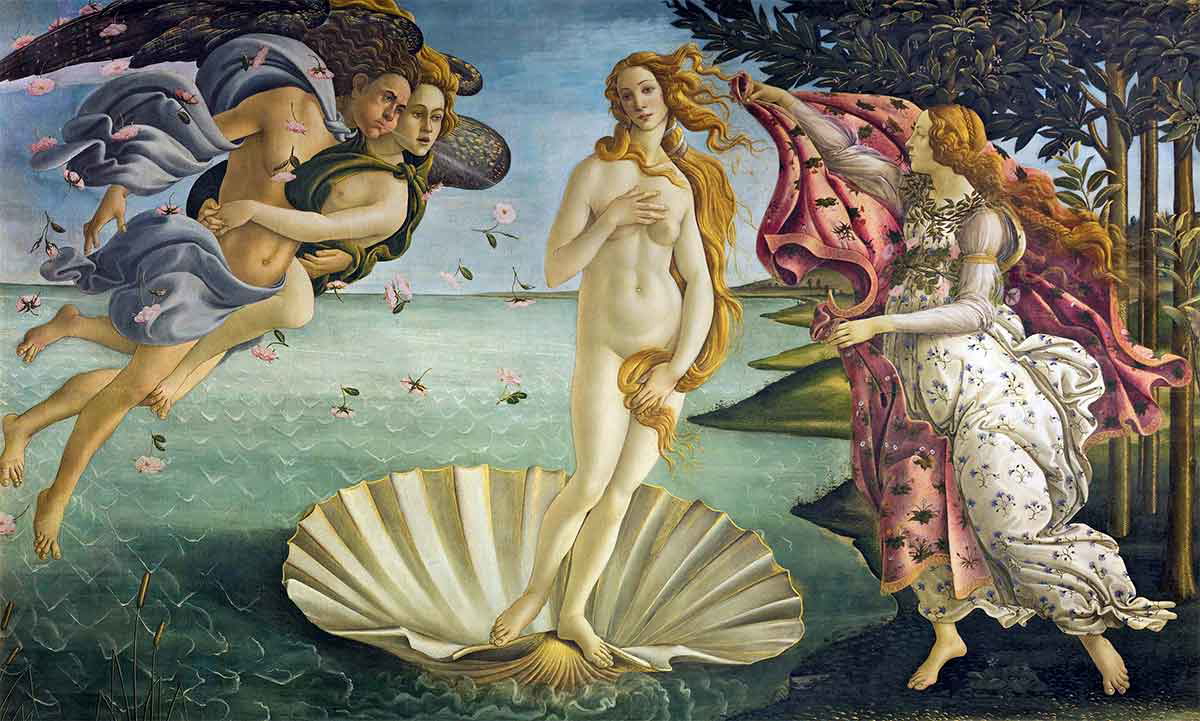
Today, Botticelli’s most famous work is a staple of Western culture, without which we would be incapable of imagining art history. It has inspired countless other artworks, photo shoots, design choices, and artistic projects. In its day, it was truly revolutionary. Sandro Botticelli was one of the first artists in the history of Western art, following its Christianization, who dared to suggest that art did not necessarily have to be religious. Apart from painting biblical scenes and devotional images, he also worked with mythological and allegorical subjects.
The Birth of Venus illustrated the Greco-Roman myth of the goddess of beauty Venus (in the Greek version – Aphrodite), who was born out of sea foam. She represented the ideal ethereal beauty, unattainable by mortals but always worth striving for. Most researchers agree that Botticelli’s visual inspiration came from the so-called Venus de Medici, the ancient Greek sculpture of the goddess, who covers her nude body as she emerges from the sea.
2. Adoration of the Magi
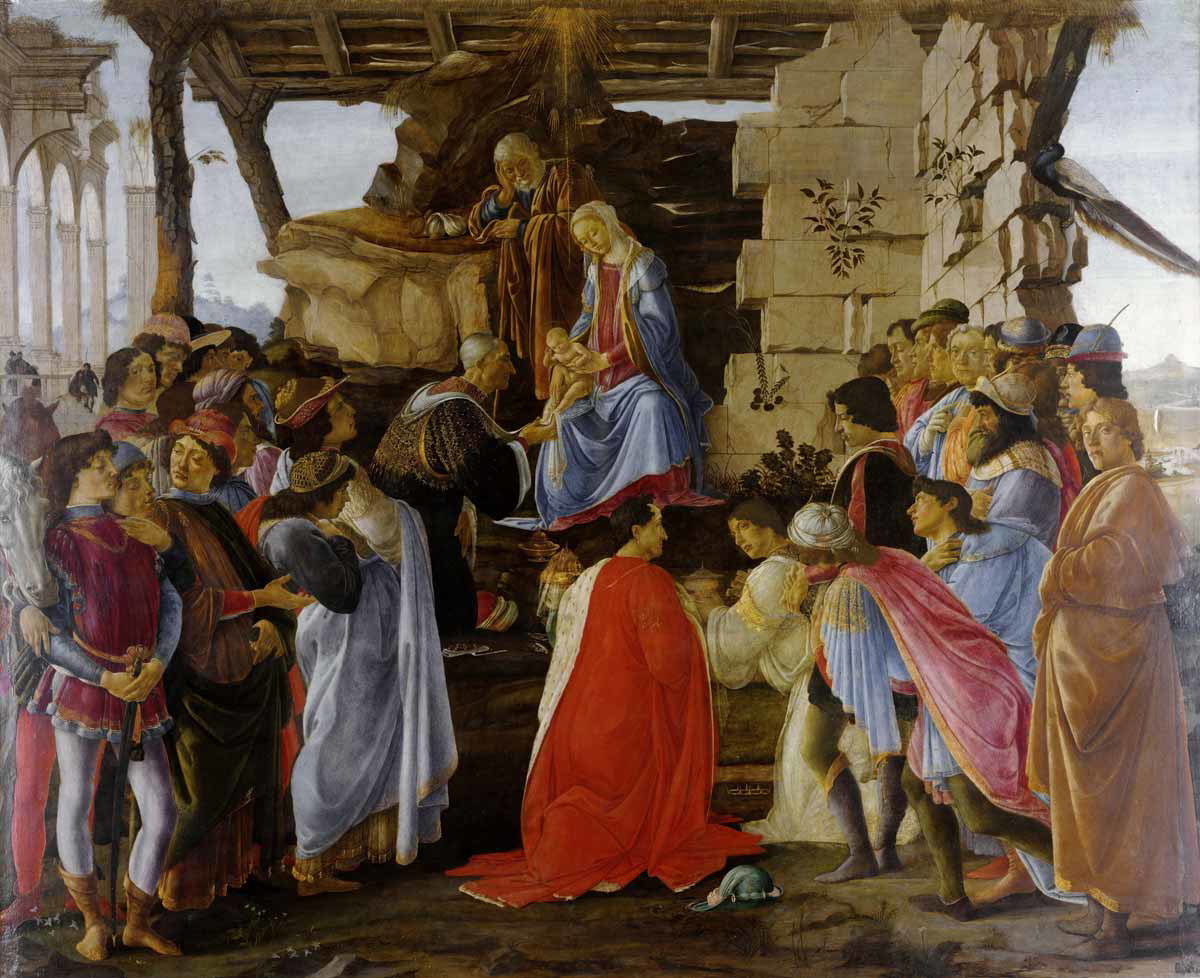
Adoration of the Magi is one of Botticelli’s early independent works that attracted widespread attention. The commissioner was a wealthy Florentine banker, Gaspare di Zanobi del Lama, a member of the Arte del Cambio (the guild of artists and artisans) and a confidant of the Medici family. The image of the crowd greeting newborn Jesus included the commissioner’s portrait on the right side of the painting, dressed in a light blue robe and making direct eye contact with the painting’s viewer. There’s also Botticelli’s self-portrait—a young man in an ochre yellow cloak. Most art historians believe that other characters, apart from Jesus, Mary, and Joseph, were portraits of members of the Medici family. Despite referencing a biblical scene, Botticelli painted his characters in contemporary clothing. The compositional complexity of the painting, as well as the mere fact of such commission, showed that Botticelli was already a famous and respected painter in his late 20s.
3. Primavera
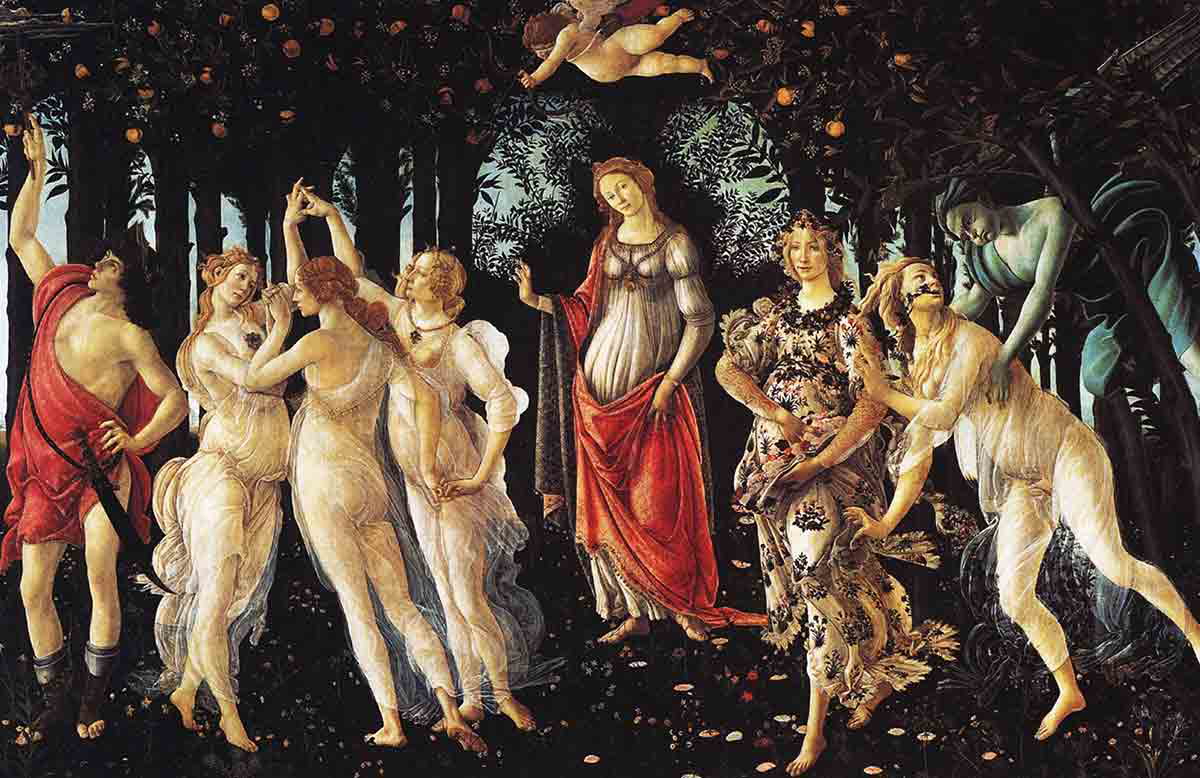
Another well-known masterpiece by Botticelli, the painting known as Primavera, or Spring, was most likely commissioned as a wedding gift to another member of the Medici family. The omnipotent clan was known for its patronage of the arts. Botticelli and Michelangelo were the artists who benefited the most from such associations, enjoying the financial and social opportunities.
The famous work featured almost all the same characters as The Birth of Venus: the goddess of love and beauty, along with minor gods and nymphs who followed her. An attentive art lover may notice that Venus has nearly the same facial features in both paintings. Art historians believe that both works were inspired by Simonetta Vespucci, the wife of a banker, Marco Vespucci, and the alleged lover of both Giuliano de Medici and Botticelli. Vespucci was renowned for her beauty and was a member of a powerful family; however, she failed to leave a substantial personal mark, as she died of tuberculosis at the age of 23 in 1476. Still, she remained the blueprint for Botticelli’s exceptional beauties, from Venus to Madonna.
4. Mars and Venus
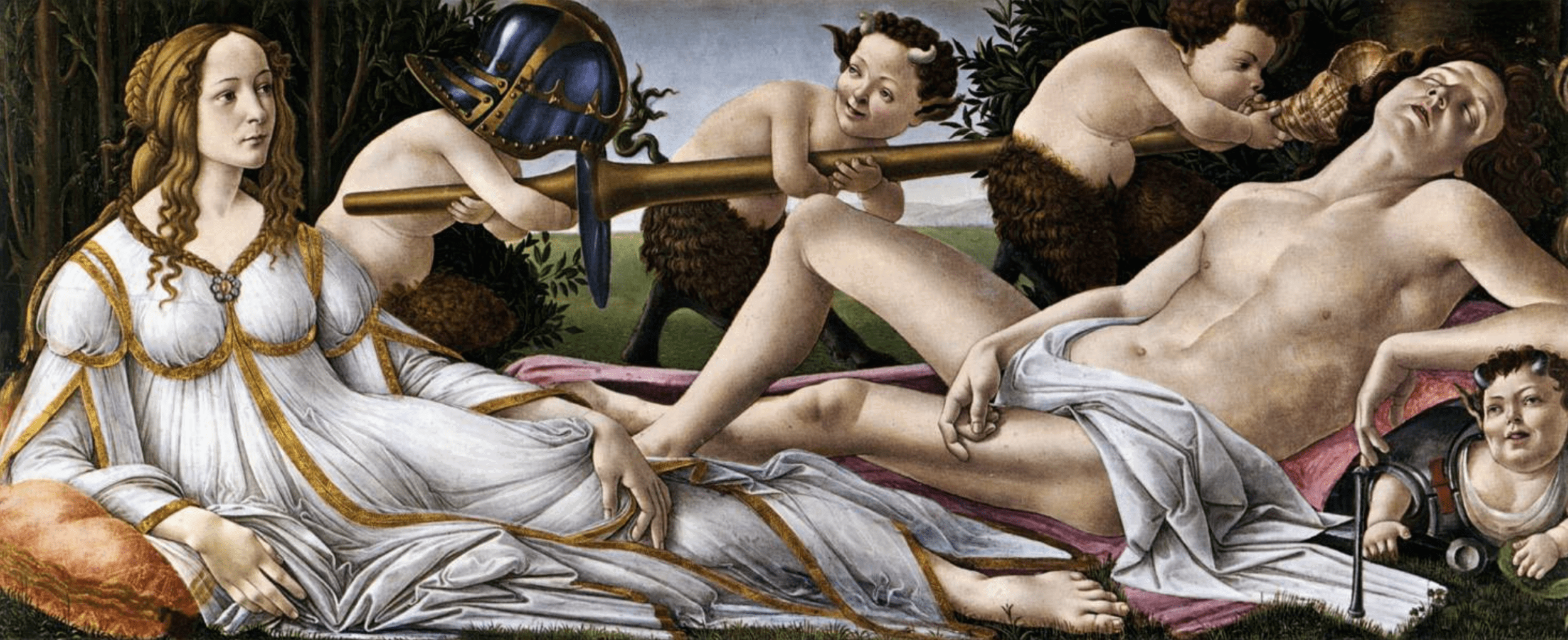
The painting Mars and Venus depicts the goddess of love and beauty, Venus, and the god of war, Mars, resting together, symbolizing the union of opposites. Around them, Botticelli painted a group of young satyrs. The panel was commissioned to celebrate a wedding in the Vespucci family, with which Botticelli was well familiar. The painting is filled with metaphors of sexual excitement and fertility, but due to its intended function as a gift to newlyweds, it did not seem frivolous to the Renaissance public.
5. Portrait of Dante
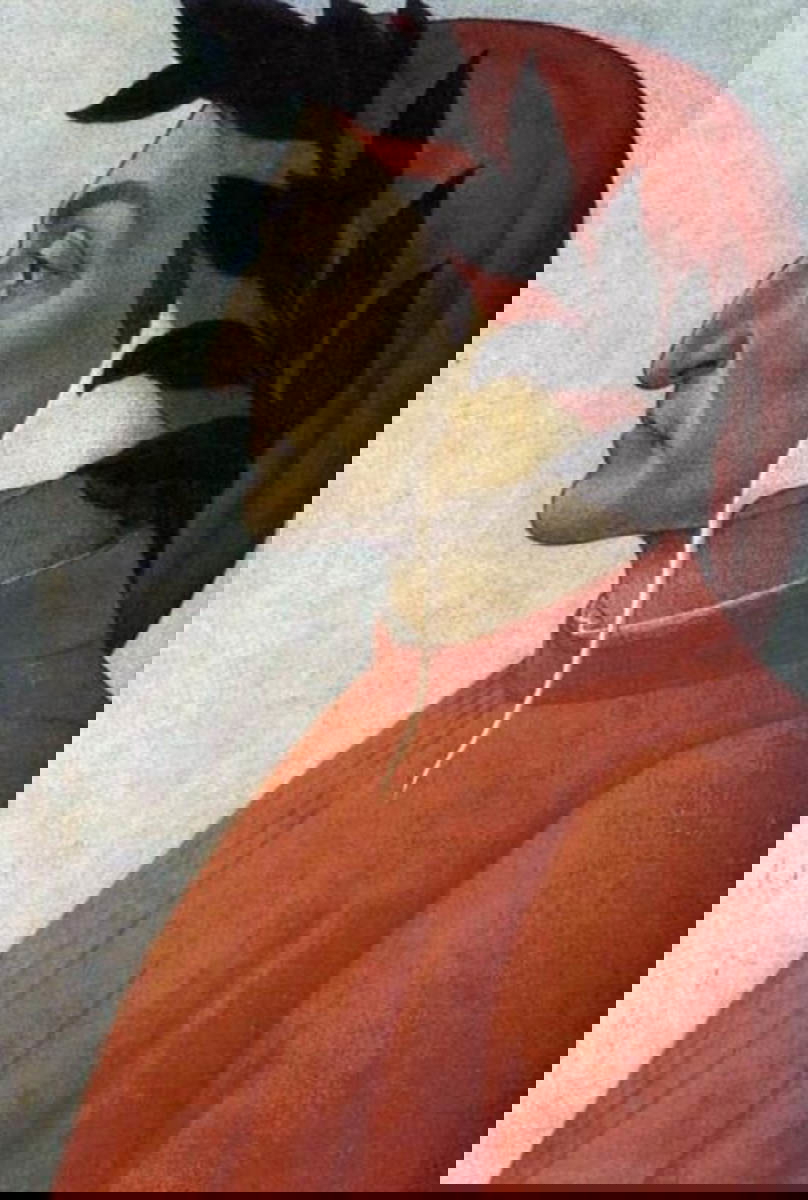
An influential, yet frequently forgotten work by Botticelli is his profile portrait of the famous Dante Alighieri, the author of The Divine Comedy. Botticelli worked two centuries later than Dante, yet in his time, the poet’s legacy was revalued and re-appreciated. Despite the fact that the two creators never met, Botticelli’s image of Dante became one of the most closely associated with the poet.
Dante was an important figure in the intellectual movement of Renaissance Humanism, which set human life and its value at the center of philosophical thought. For Humanists, the studies of Ancient Greek and Roman literature were seen as crucial for the development of the mind and spirit. In Botticelli’s art, Renaissance Humanism was reflected in his interest in mythology and the treatment of subjects.
6. Dante’s Inferno
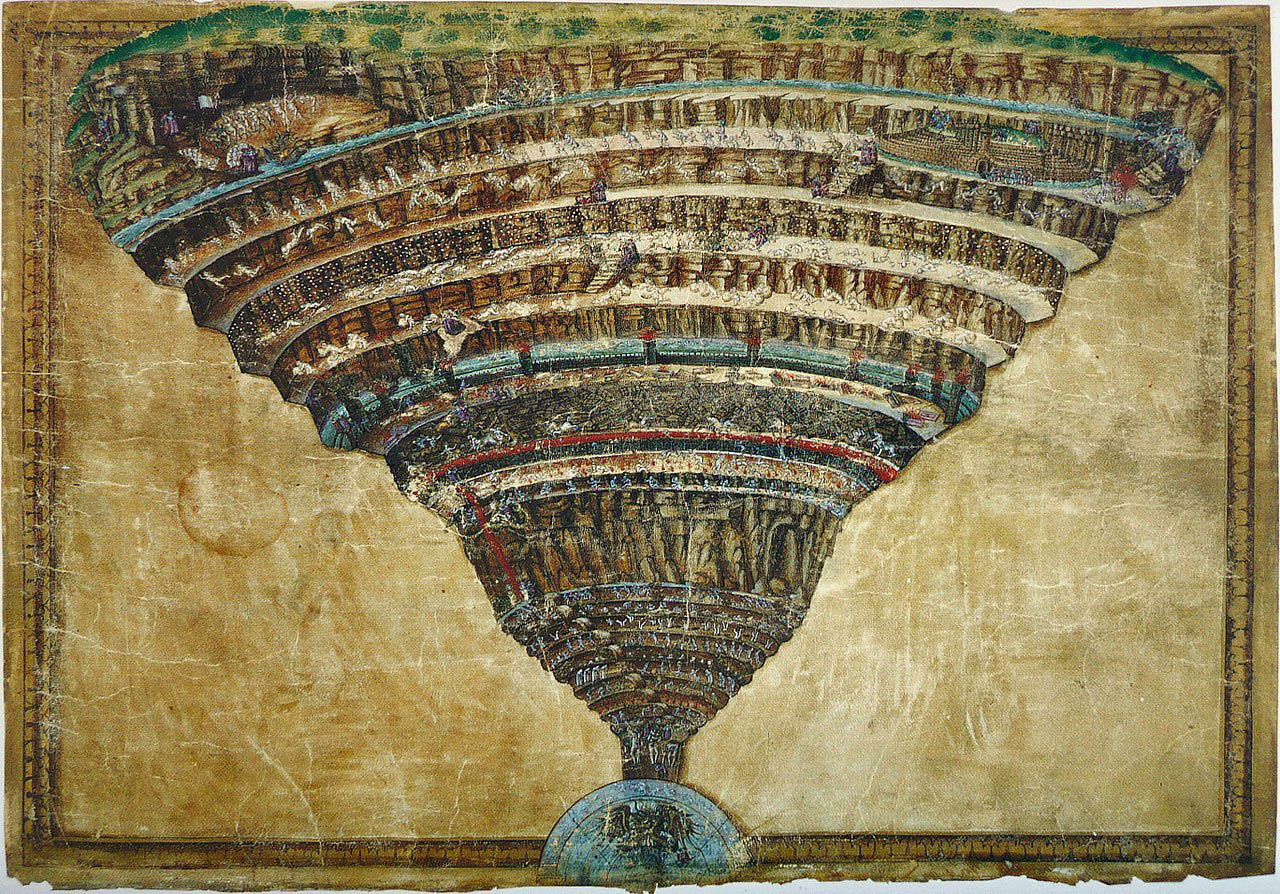
Starting from the 1480s, Sandro Botticelli created a manuscript of The Divine Comedy, accompanied by 92 full-page illustrations. The most famous of them relate to the part Inferno, which presents a detailed description of Hell, its structure, and its residents.
Most illustrations by Botticelli were created in a simple, almost monochromatic silverpoint technique, yet some of them featured full-color, detailed pages. These images were radically different from the usual aesthetics of Botticelli and presented the true depth of his versatility as an artist.
7. Madonna of the Pomegranate
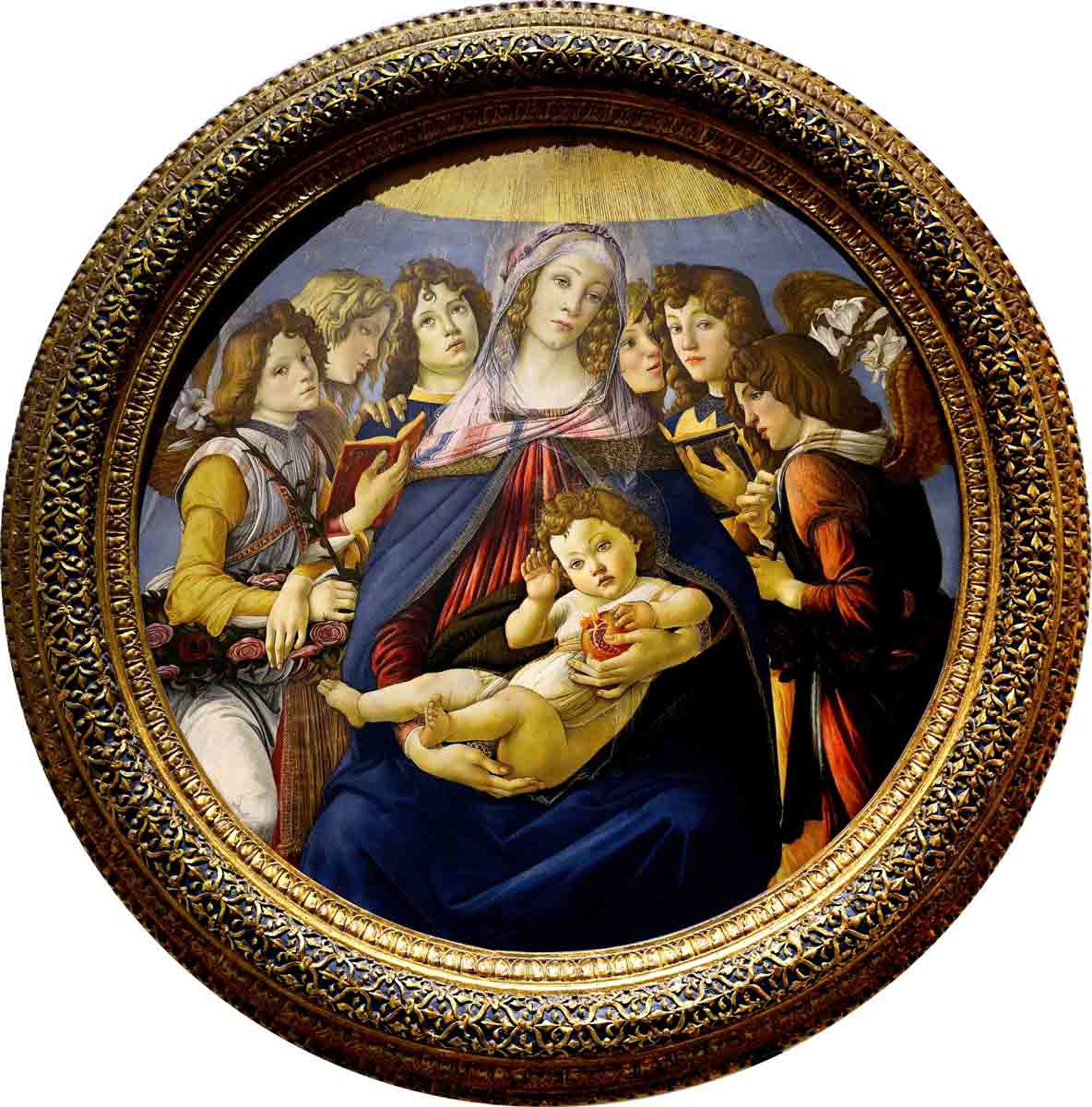
In 1487, Botticelli completed a round tempera painting on a wooden panel that once again featured the likeness of the deceased Simonetta Vespucci, this time in the form of the Virgin Mary. Botticelli’s Madonna is holding the infant Jesus on her lap, who, in turn, is clutching an open pomegranate fruit. The red pomegranate juice was a metaphor for the Savior’s blood, spilled for the salvation of mankind. The faces of Mary and her son, as well as those of the angels surrounding them, show grief and sorrow, as if already knowing what horrors and tragedies await the child in his adult life.
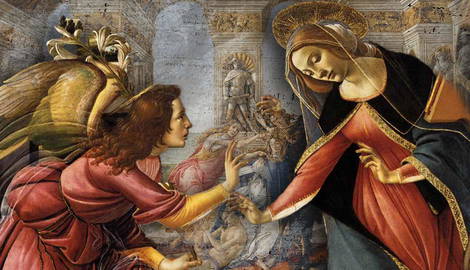
8. Cestello Annunciation
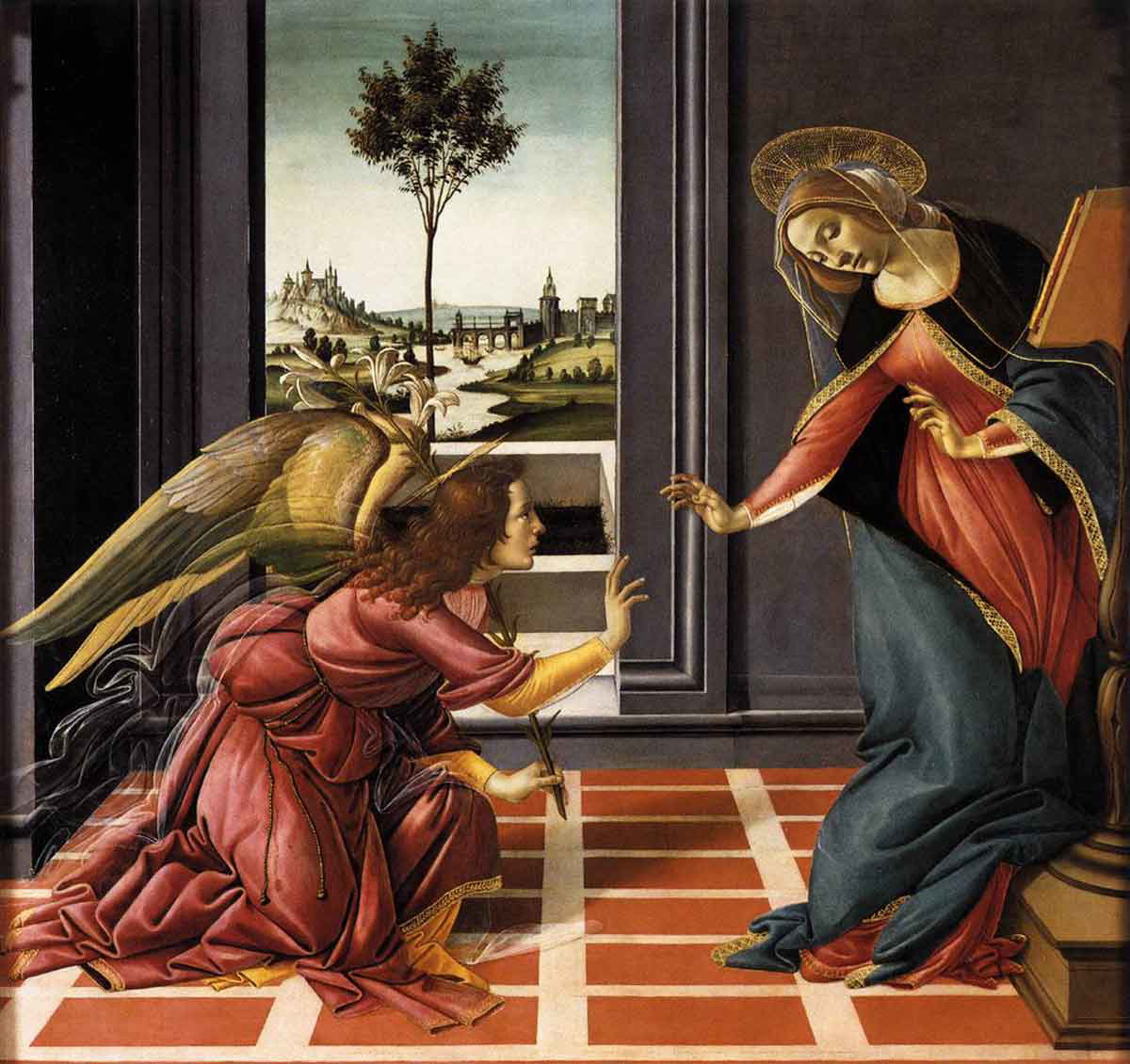
The Annunciation, or the visit of the Archangel Gabriel to the Virgin Mary, was extremely common in Medieval and Renaissance art, as it illustrated one of the key events in the Bible. The Archangel announced that Mary had been chosen to give birth to the Savior of mankind. Botticelli painted his Mary as actually accepting her future as a conscious choice, rather than meekly agreeing to the will of God, as in many other works on the same subject. The background landscape showed the influence of Flemish painting that Botticelli studied at that time.
9. Calumny of Apelles
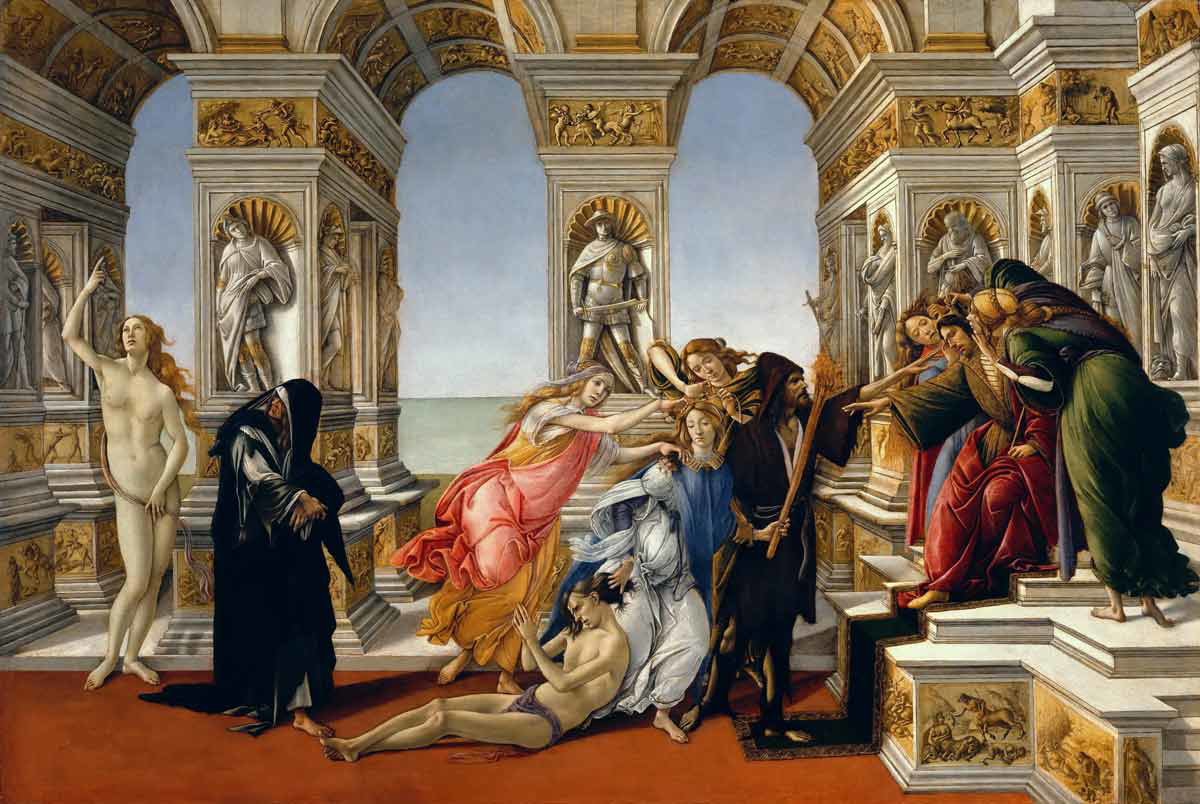
The Calumny of Apelles was a painting that Botticelli recreated from the description of a lost painting by the Ancient Greek painter Apelles of Kos. The painting was an allegory of Ignorance, Suspicion, and Slander standing in the way of Truth and clouding one’s judgment. Female figures represent various vices and virtues fighting with each other for the king’s attention. Allegedly, Apelles painted after suffering from slander coming from a rivaling artist. Around the time when Botticelli painted Calumny, he was accused of homosexuality, which could possibly lead to serious consequences. However, no official action was taken against the painter. Botticelli’s sexuality has long been a subject of speculation among art historians, yet there are not enough sources.
10. “The Mystical Nativity” by Botticelli
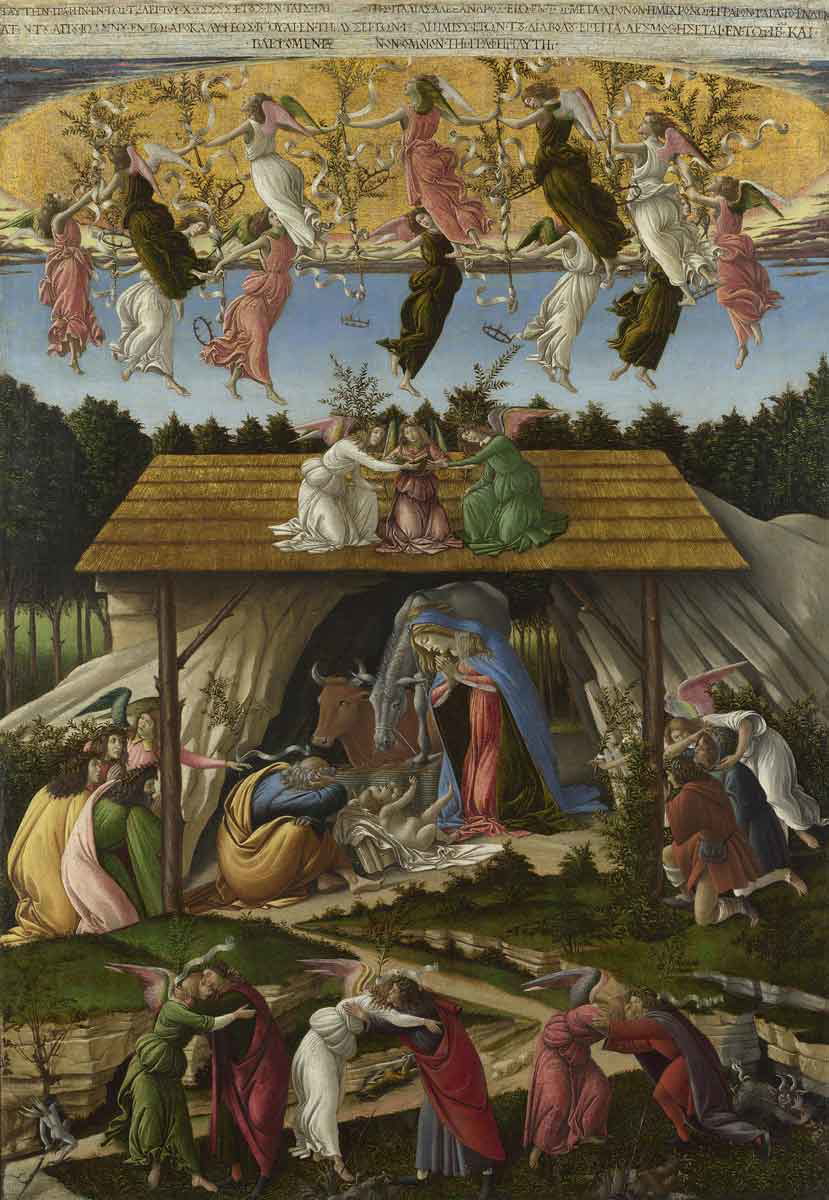
In his late years, Botticelli radically revised his views on art and society. Art historians believe that, after years of witnessing the wealth and corruption of the Medici court, he became a follower of Girolamo Savonarola, a preacher who denounced the cruelty and the greed of the ruling class. Inspired by Savonarola’s calls for asceticism, he burned some of the paintings he kept in his workshop. Thankfully, he could not get to the works that were already in the Medici’s possession. In 1498, Savonarola was captured, brutally tortured, and hanged.
Savonarola’s death had an earth-shattering impact on Botticelli. In the final decade of his life, the artist’ color palette became more somber and his compositions more reserved. The Mystical Nativity, one of the most brilliant works from this period, was full of apocalyptic premonitions. In his last years, Botticelli almost abandoned painting and spent his last years in poverty, relying on occasional donations from his former patrons. He died in 1510 and was buried next to the grave of Simonetta Vespucci, the woman he immortalized in his most famous works.