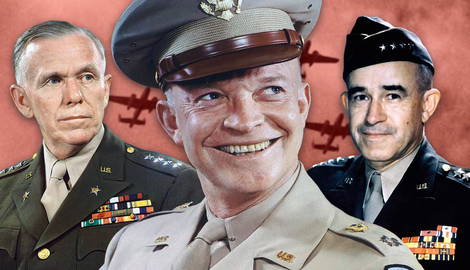
History often remembers World War II for its beachhead landings and setpiece battles. These seven American generals in the Second World War were not only effective commanders but also shaped the course of global history for the rest of the century and up to the present day. They became the 20th-century Argonauts, leaders who epitomized the theory of the Great Man and built the foundations of American hegemony.
| General | Major WWII Strategic Impact | Post-War Leadership & Legacy |
| George Marshall | Expanded Army from 200,000 to 8,000,000 men; managed smooth global command. | Secretary of State; implemented Marshall Plan; won the Nobel Peace Prize. |
| Dwight Eisenhower | Supreme Allied Commander; led invasions of North Africa, Sicily, and Normandy. | First Supreme Allied Commander of NATO and two-term US President. |
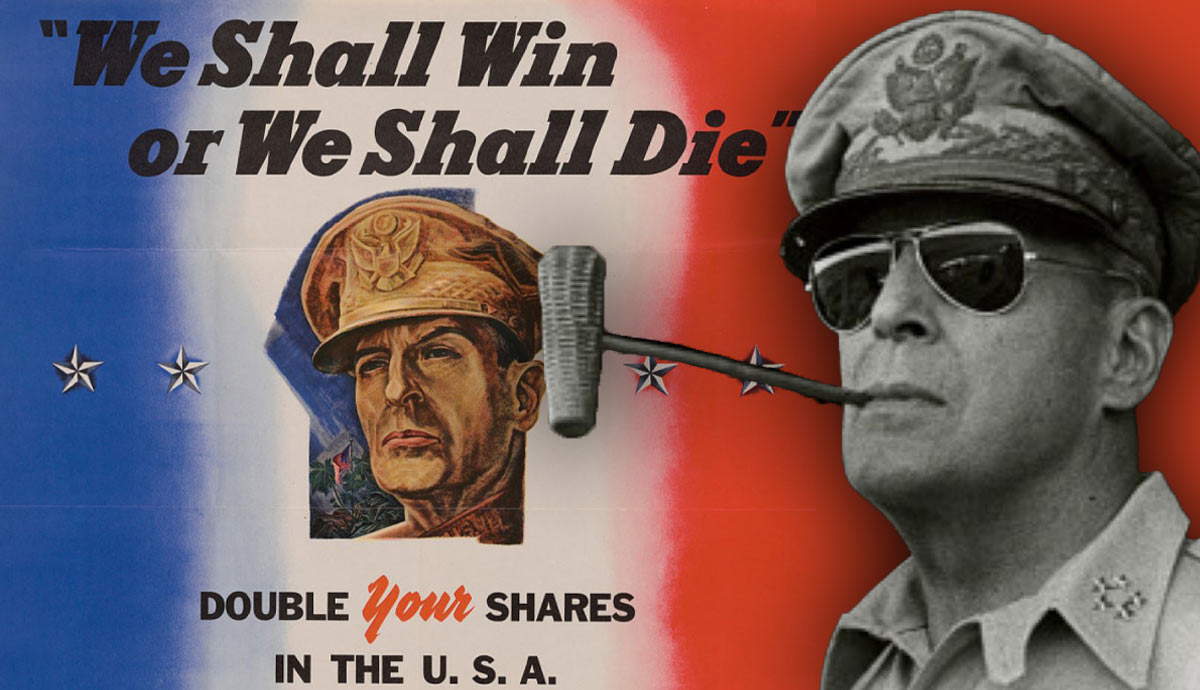
| Douglas MacArthur | Led Southwest Pacific offensives using an island-hopping strategy against Japan. | Oversaw Japan’s reconstruction and led the Inchon landing. |
| George Patton Jr. | Aggressive field commander who broke Germany’s Siegfried Line with armor. | Premier battlefield commander and the subject of a classic 1970 film. |
| Henry “Hap” Arnold | Expanded USAAF to 2.4 million personnel and 80,000 aircraft. | Lobbied for independent USAF; named General of the Air Force. |
| Omar Bradley | Commanded 1.3 million men, the largest field command in history. | First Chairman of the Joint Chiefs and head of Veterans Administration. |
| Curtis LeMay | Devised “combat box” and oversaw strategic firebombing and atomic attacks. | Strategic Air Command leader and 1968 vice-presidential candidate. |
1. George Marshall: The Architect of Victory and Peace
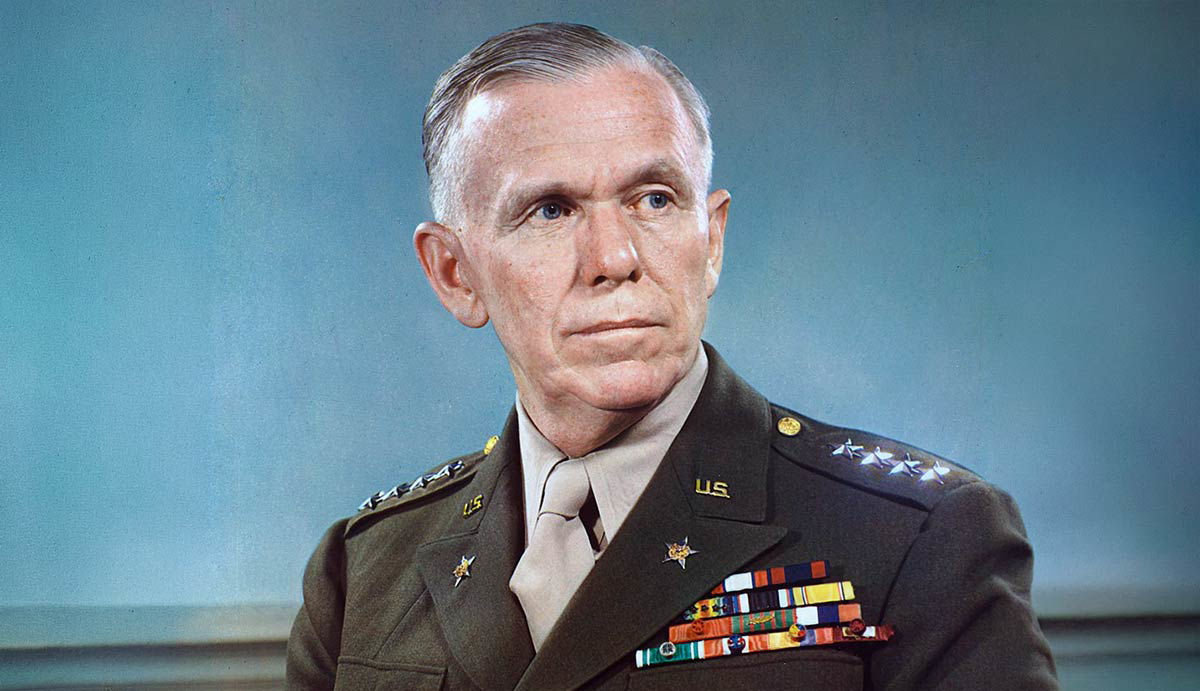
Born in 1880 in Pennsylvania, General George Marshall proved to be one of the most powerful men in uniform of any country during WWII. A veteran of the Philippine-American War and the First World War, he was a graduate of the Virginia Military Institute and a lifelong infantryman. Marshall had a talent for staffwork and organization and was nicknamed “the noblest Roman of them all” by Winston Churchill.
From September 1939 to November 1945, Marshall held the role of Chief of Staff of the US Army. On his watch, the US Army underwent the largest expansion in its history from 200,000 men to over 8,000,000 men. Additionally, he oversaw the rehabilitation of a force degraded by years of poor commanders and insufficient training, turning the army into a well-honed machine. His leadership ensured that the Americans had a smooth chain of command throughout the war.
After the end of the war, he was appointed Secretary of State by President Truman in January 1947 and oversaw the implementation of the Marshall Plan, the aid program to support postwar reconstruction in Europe. In 1953, he was awarded the Nobel Peace Prize, becoming the only career Army officer ever to receive the honor. Upon his retirement, he was one of the world’s most distinguished military commanders and public servants, a military statesman and icon of American power.
2. Dwight D. Eisenhower: Supreme Allied Commander
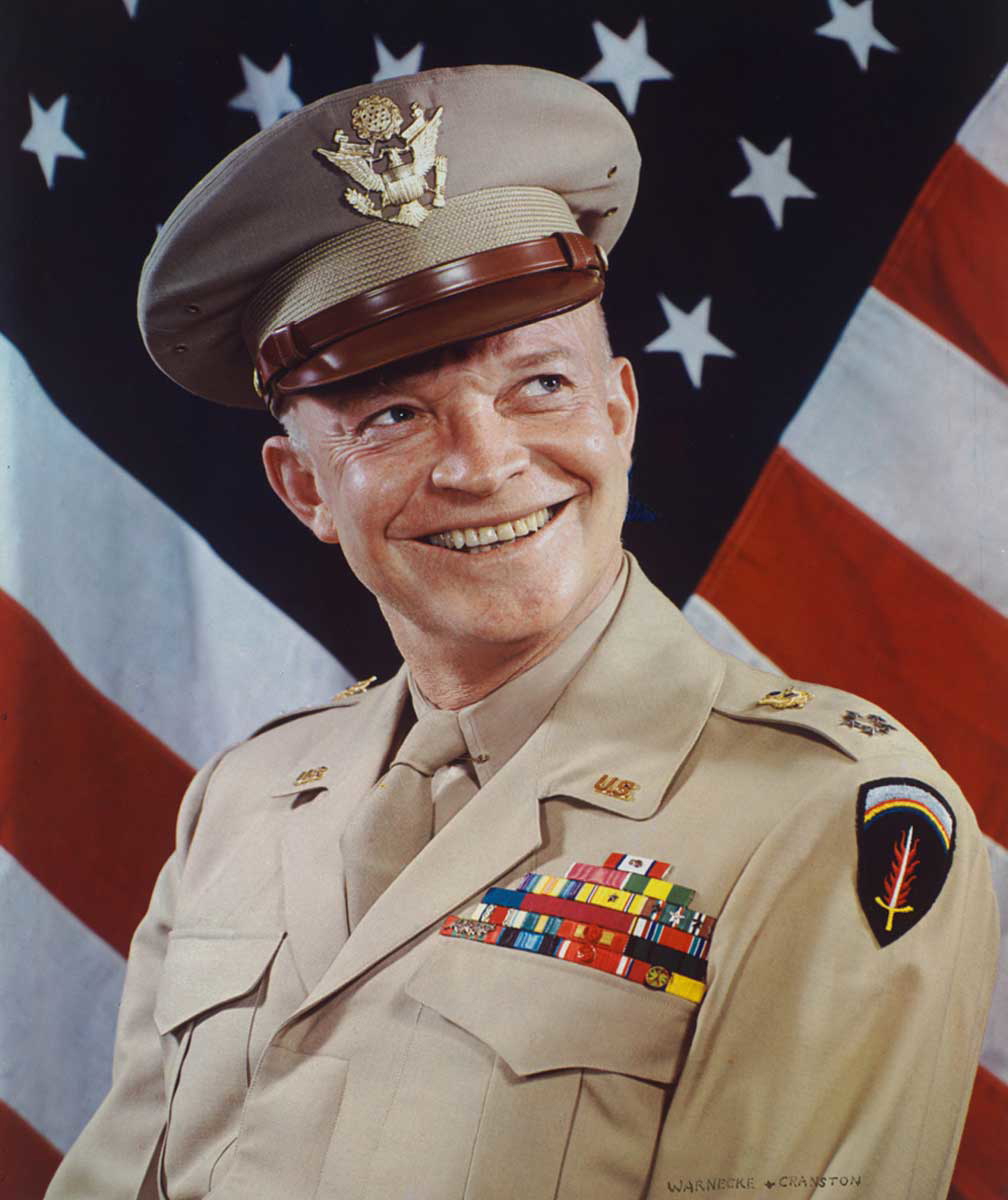
Marshall could not do it alone; he needed competent subordinates to execute the Allied war plans. One of these subordinates became one of the most famous military commanders in history, possibly more so than Marshall himself. Dwight D. Eisenhower was ten years younger than Marshall grew up in Texas. When war broke out in 1939, he was a lieutenant colonel; by 1945, he was General of the Army (five stars) and the Supreme Allied Commander in Northwest Europe.
Eisenhower oversaw the invasion of North Africa, the landing in Sicily, the Normandy invasion, and the march into Germany. By the end of the war in Europe, he commanded 91 divisions from a polyglot mixture of countries, led by prickly personalities such as British Field Marshal Bernard Montgomery and General George Patton.
Eisenhower was not always considered the best tactician or battle manager. He lacked command experience of large numbers of men in a war zone. Where he excelled was the implementation of the strategy devised by the Western Allied leadership and his ability to command a force composed of men from so many different countries. Even when there were major disputes between commanders of different Allied countries, he ensured that they didn’t hinder the plan to crush the Germans.
After the war, he succeeded Marshall briefly as Army Chief of Staff, became the 1st Supreme Allied Commander of NATO, and served as a two-term president from 1953-1961. Like George Marshall, Eisenhower was a military statesman who left a lasting global legacy in uniform and as a civilian political leader.
3. Douglas MacArthur: The Brilliant Insubordinate
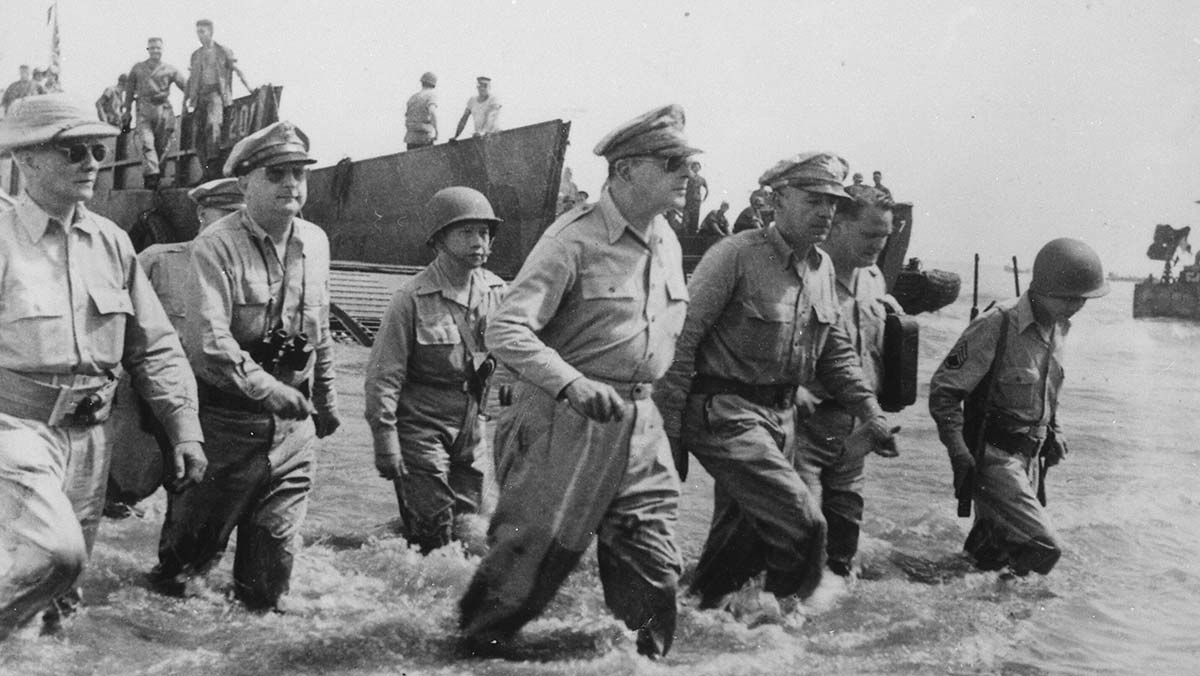
On the other end of the globe, General of the Army Douglas MacArthur, leading the Southwest Pacific Area Command, was also able to execute the Allied war plan against Japan, though with considerably more notoriety. MacArthur’s career was topsy-turvy. He had risen through the ranks, fighting in WWI and even served as Chief of Staff several years before Marshall did.
When Japan bombed Pearl Harbor and invaded Southeast Asia in December 1941, MacArthur was serving as the commanding officer of the Philippine military before they were due to get full independence. He was recalled to active service right before the Pearl Harbor attacks and led the doomed defense of the Philippines before being ordered to withdraw to Australia.
MacArthur took command of his headquarters and led a series of offensives against the Japanese in New Guinea and the Solomon Islands before fulfilling his vow to return to the Philippines. He pursued an island-hopping strategy to bypass heavily defended Japanese islands, taking advantage of Allied control of the sea. By the end of the war, he was the Supreme Allied Commander in Tokyo and oversaw the postwar reconstruction of Japan.
However, his reputation for braggadocio and feuding with the White House led to his downfall. Despite the operational brilliance of his landing at Inchon during the Korean War, MacArthur’s tendency to challenge President Truman’s policy led to his dismissal. Despite his insubordination, MacArthur continues to be regarded as one of the most talented field commanders in American history.
4. George Patton Jr.: The Peerless Tank Commander
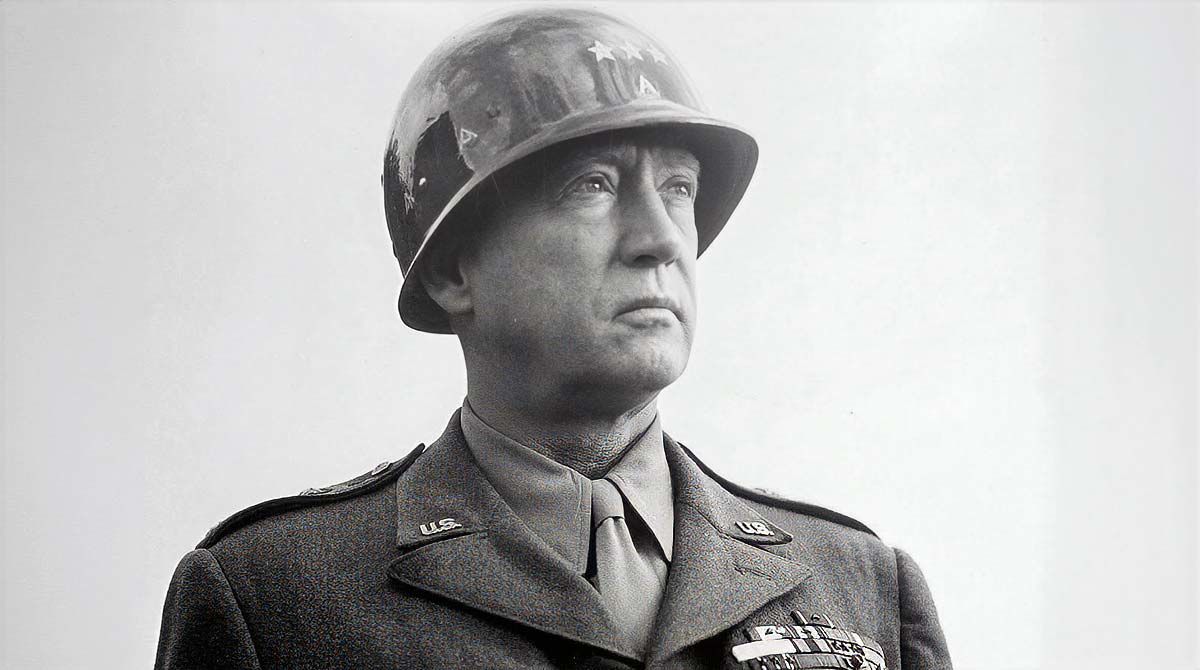
Like General Eisenhower, George Patton rose up the ranks rapidly in WWII from colonel in 1939 to four-star general in 1945. Unlike Eisenhower, Patton was a rambunctious, aggressive, controversial field commander who made his legend through his willingness to fight the enemy as much as possible and was disdainful of the other Allies during the war.
Born in 1885 in California, Patton was a veteran of the Mexico Expedition in 1916 and WWI. Unlike many other American generals, he was an experienced tank man, having commanded an armored brigade. This reinforced his sense of aggressiveness, leading him to drive his subordinates hard and insist that they lead their men from the front.
During the war, he commanded the II Corps in North Africa, the 7th Army in Sicily, and the 3rd Army in mainland Europe, where his aggressive instincts broke Germany’s formidable Siegfried Line. His command was marred with controversy; he slapped a shell-shocked soldier in the face, leading to his firing from the command of the 7th Army. He was later relieved of command from the 3rd Army after telling reporters he wanted to fight the Soviets.
Nonetheless, his reputation as a hard-driving officer ensured that he would be seen as a talented battlefield commander around the world. The 1970s movie Patton became a classic war film and a favorite of President Richard Nixon. While he was not as high ranking as the generals listed above, he was still one of the most well-known generals in military history.
5. Henry Hap Arnold: The Visionary of Global Air Power
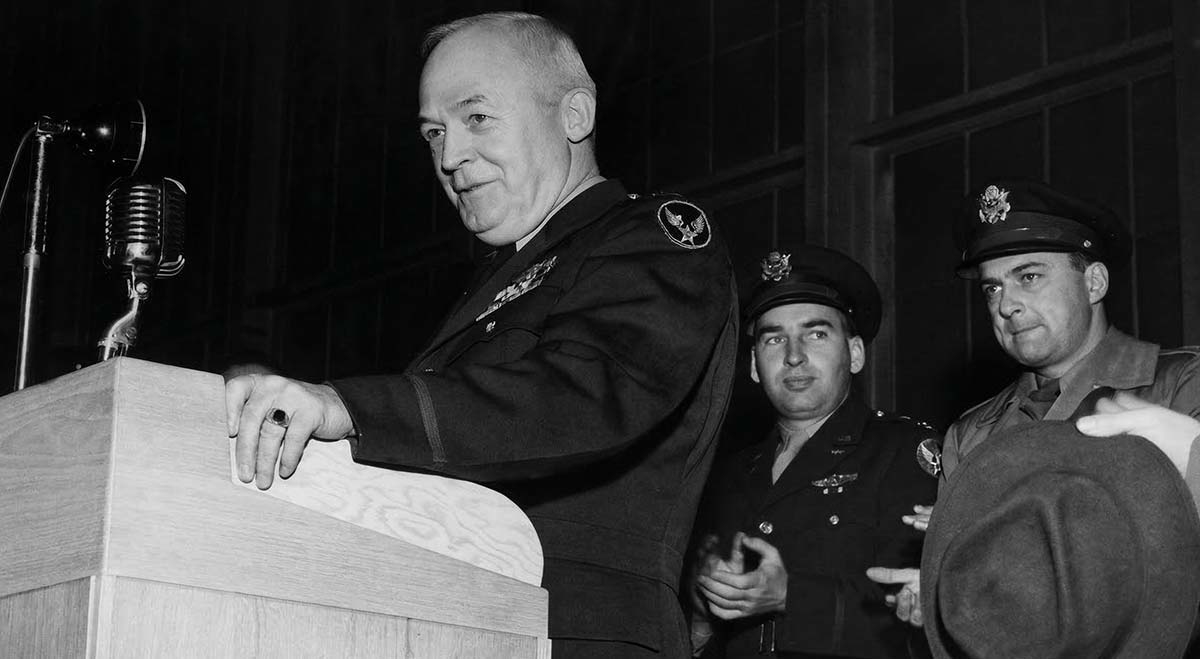
The Second World War saw the rise of the use of mass aircraft in an offensive role independent from ground operations. While the independent US Air Force did not exist during the war, the US Army Air Force did operate as an independent force when conducting strategic bombing in Europe and Asia. The commander of the USAAF was General Henry Hap Arnold. Arnold was one of the first military pilots in history and learned to fly from the Wright Brothers in 1911. During WWI, he was responsible for converting civilian factories to produce thousands of planes and engines.
After taking over the USAAF in 1938, Arnold exhibited logistical mastery in transforming the force into a lethal tool that could shatter the enemy’s ability to make war. In 1939, the USAAF had 20,000 men and a few hundred planes. By the end of the war in 1945, it had over 2.4 million personnel and 80,000 aircraft. Arnold suffered from severe stress and had four heart attacks during the war, but he managed to continue in the role.
After the war ended, he lobbied heavily for the creation of the independent USAF, which came into being in 1947. In 1949, he was awarded the five-star rank of General of the Air Force to accompany his five-star General of the Army. He was considered one of the most ruthless air commanders during the war and became synonymous with the concept of strategic bombing.
6. Omar Bradley: The GI General and the Largest Field Command
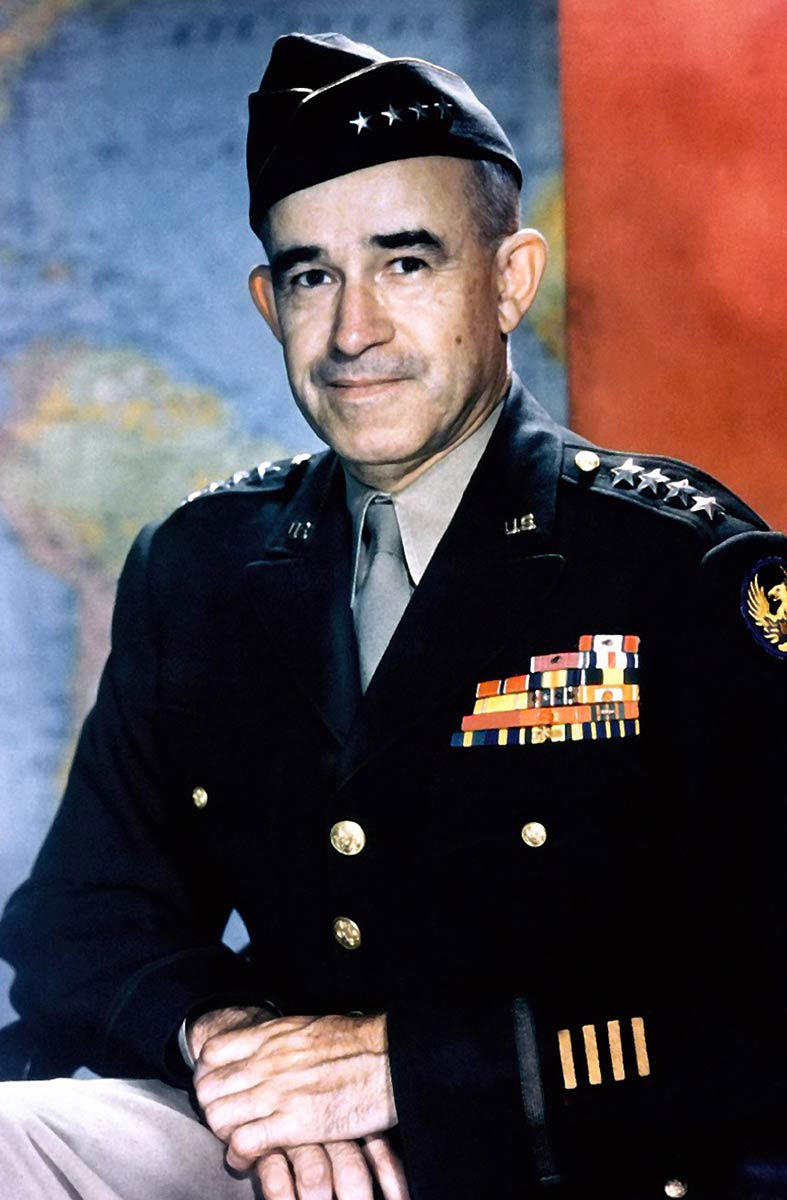
As Supreme Allied Commander Europe, General Eisenhower had three army groups under his command. The largest of these was the 12th Army Group of 1.3 million men under General Omar Bradley. This gave him the distinction of being the field commander to oversee the largest body of men in any American military formation to date. Bradley, whose calm demeanor and empathy for his men earned him the nickname the “GI General”, started the war as a staff officer at the Pentagon and ended it as one of the most prominent field commanders of any military during the war.
General Bradley took over command of the II Corps from General Patton and played a role in the destruction of the German and Italian forces in Tunisia. While he was initially Patton’s junior, he leapfrogged him as commander of the 1st Army in Normandy and then as commander of the 12th Army Group, which included Patton’s 3rd Army.
Bradley earned a reputation as a level-headed commander, overseeing the breach of the Siegfried Line, the counterattack in the Ardennes, and the crossing of the Rhine. After the war, he served as head of the Veterans Administration, Army Chief of Staff, and the 1st Chairman of the Joint Chiefs in US military history.
7. Curtis LeMay: The Ruthless Theorist of Strategic Bombing
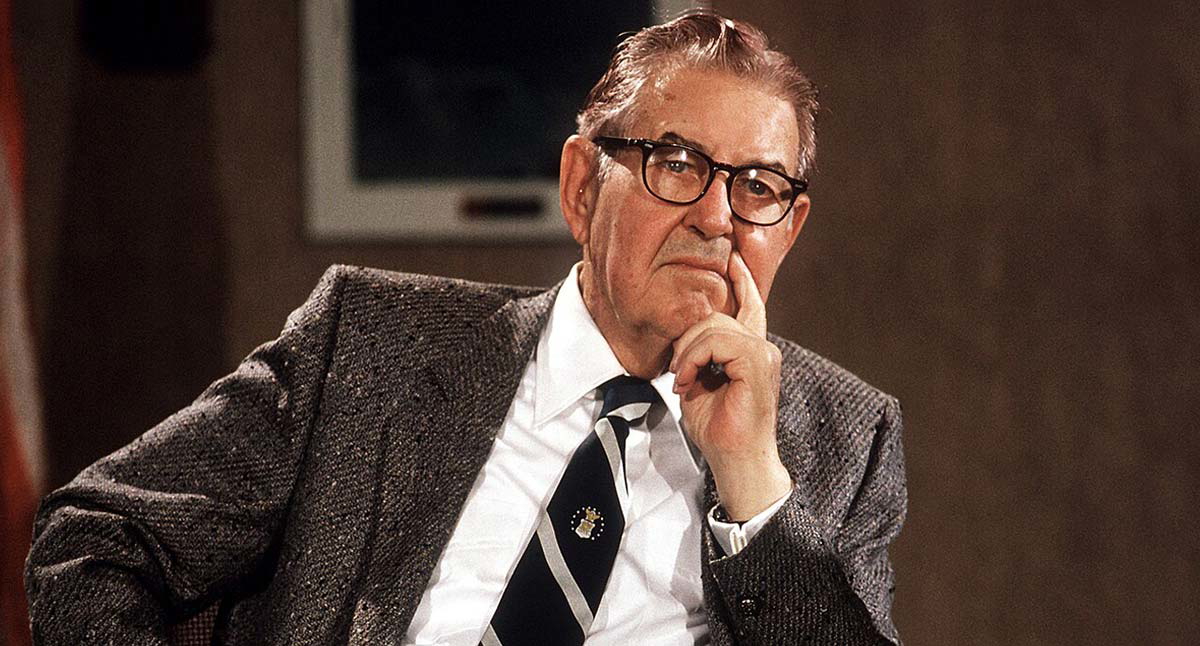
General Curtis LeMay was the equivalent of Patton in the Army Air Force: a bombastic, aggressive commander who sought to use as much force against the enemy as possible. Unlike Patton, he lived to see much of the Cold War after his service as a commander in WWII.
General LeMay started the war as a Major and became a Major General by the end at a mere 38 years old. When he took over a bomb group in Britain, he devised the theory of the “combat box”, in which bombers flew as close to each other as possible to maximize the effect of their onboard machine guns. After commanding the 3rd Bombardment Division in 1943 in England, he transferred to the Pacific where Hap Arnold ordered him to take over the XX and XXI Bomber Commands.
America was bombing Japan ineffectually and LeMay sought to change that. On his watch, the US firebombed multiple Japanese cities, bringing home the war to the Japanese public. He also oversaw the atomic bombings of Hiroshima and Nagasaki.
This proved to be some of the most controversial acts of the war and earned LeMay a reputation as a ruthless commander.
After the war, he served as commander of Strategic Air Command, the Air Force Chief of Staff and the running mate for George Wallace’s segregationist presidential campaign in 1968. Like Arnold, he became one of the major architects of strategic bombing (so-called “bomber barons”) and a major proponent of air power.
Building American Hegemony
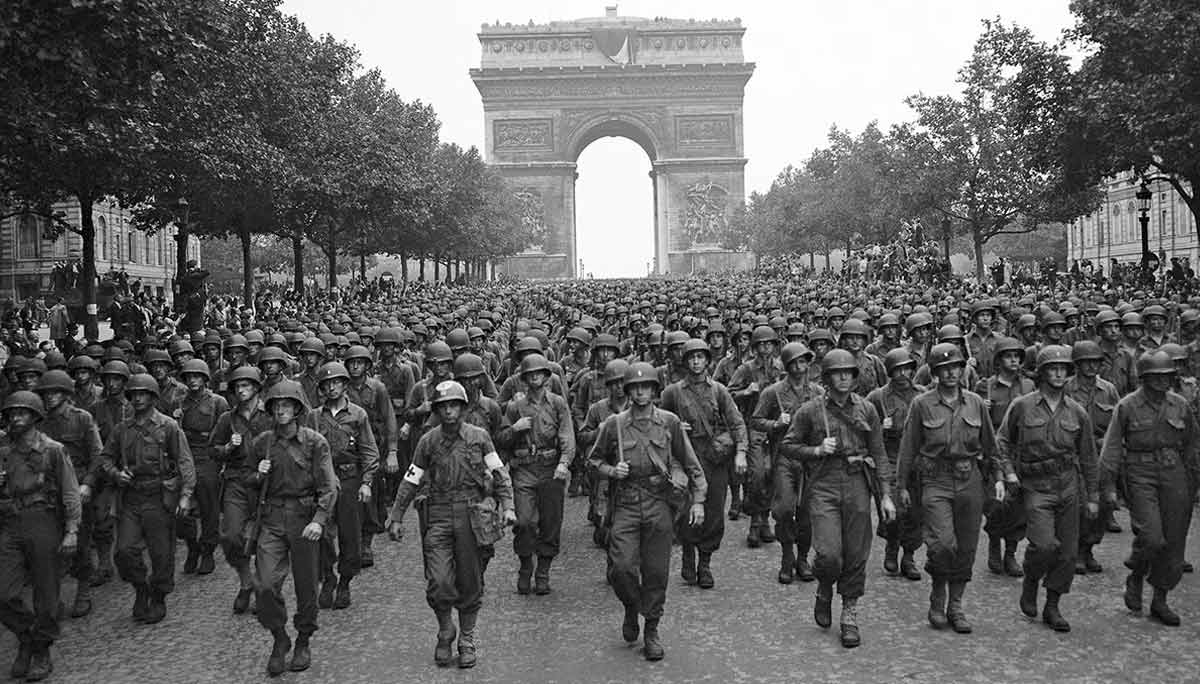
America has always had military commanders known for their competence and ruthlessness: Winfield Scott, William T. Sherman, Norman Schwarzkopf, and others. However, the generals that oversaw America’s effort to defeat the Axis Powers became legends akin to the most famous rockstars of the 20th century. These men understood the use of hard power as a tool of diplomacy and how their efforts could lead America to becoming a superpower.
The US Army started WWII with very limited resources, poor training, and a lack of confidence. Thanks to the efforts of these men, and many others, the army was transformed into one of the most powerful armies ever seen in human history. That is not to say that they were flawless. Many of them showed poor judgement in certain areas of command and morality. However, they were able to overcome whatever flaws they had to ensure Allied victory in the Second World War and facilitate American leadership in the postwar world.