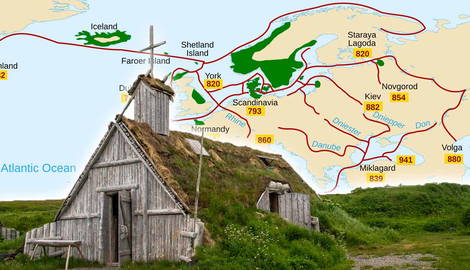
The Viking Trail might not have been drawn on parchment, yet it carried Norse crews from Norway’s fjords to North America’s wild shores for over a century. The mighty Vikings set off from Europe in sturdy longships a thousand years ago in search of greener pastures. Some crossings took days, most took weeks. Viking tales speak of hardy men huddled in cloaks, rowing in the stillness when winds failed. They sailed from Europe to the wildest coasts of Newfoundland, finding crucial lifelines in stops along the way.
Norway – The Launch Point
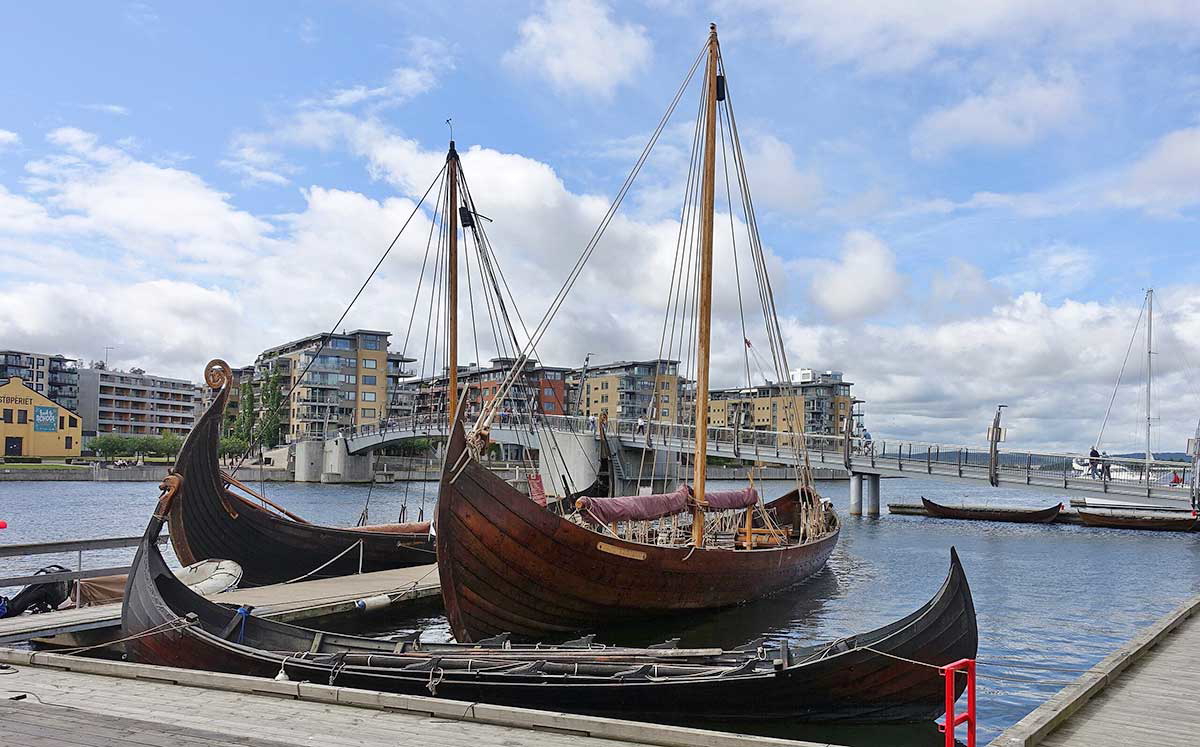
The deep-set fjords of Norway set the stage for an Atlantic crossing that defied the known world. This is the birthplace of the Viking Age.
In the deep, cold fjords of Norway, the Viking Age took root. By the late 700s, shipbuilders were crafting vessels that could cross open seas yet slip into the shallowest inlets. Life in this rugged land was never easy—flat farmland was rare, and competition for it was fierce. Younger sons, unlikely to inherit property, faced limited prospects at home. For some, the answer was raiding or trading; for others, the lure of new horizons was much more appealing. Ports like Avaldsnes became busy departure points, where crews stocked ships with food, timber, and tools before turning west toward the first stepping stone in the Atlantic: the Faroe Islands.
Did you know? Vikings sometimes carried livestock on long voyages—sheep, goats, and even cows—so they could start farming as soon as they reached new land.
Faroe Islands – The First Stepping Stone
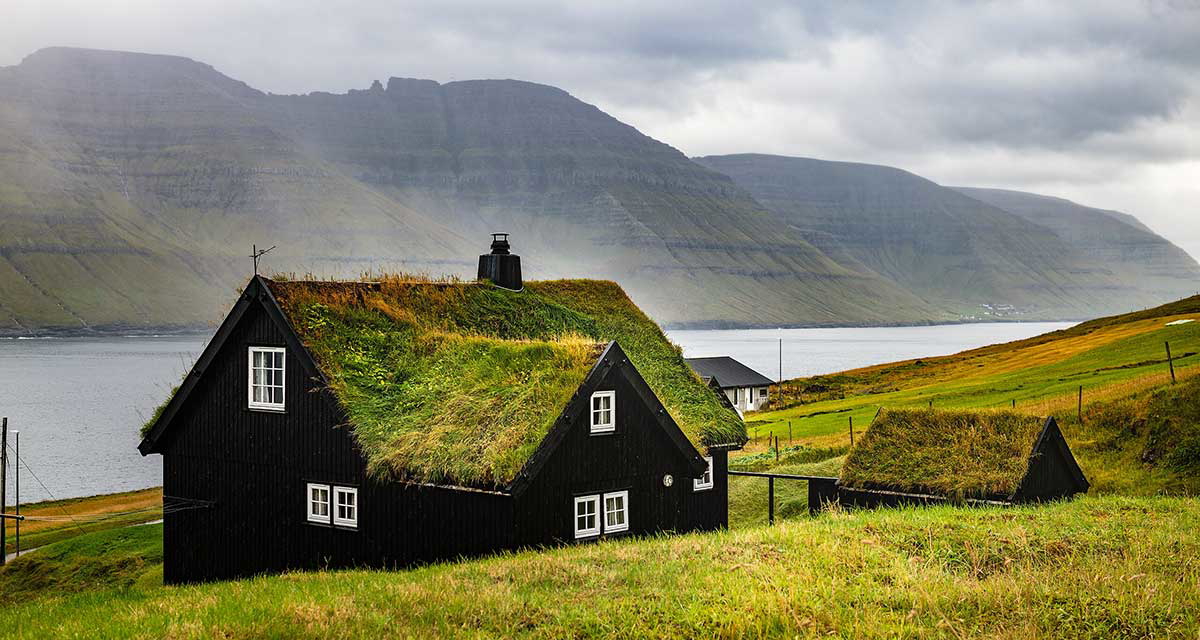
Halfway to Iceland, these treeless islands offered grazing land, fresh water, and shelter from storms—a welcome pause before the longships struck out for the horizon.
Settled by Norse sailors around 825 CE, the Faroes were a natural halfway house. Without trees, the settlers built turf-roof houses dug partly into the ground to keep out the wind, and grazed sheep on the green slopes that gave the islands their name. Archaeologists have found whetstones and spindle whorls here, evidence of everyday work that kept ships and sails ready for the next leg.
For crews bound farther west, the Faroes were a place to take on fresh water, mend torn wool sails, and wait out the storms that could rage for days across the open ocean. When the skies cleared, the longships struck out for Iceland, a much larger prize waiting on the horizon.
Did you know? Crews could swap from sail to oar in under a minute, a skill that often saved them in the Faroes’ unpredictable winds.
Iceland – Land of Fire, Ice, and Sagas
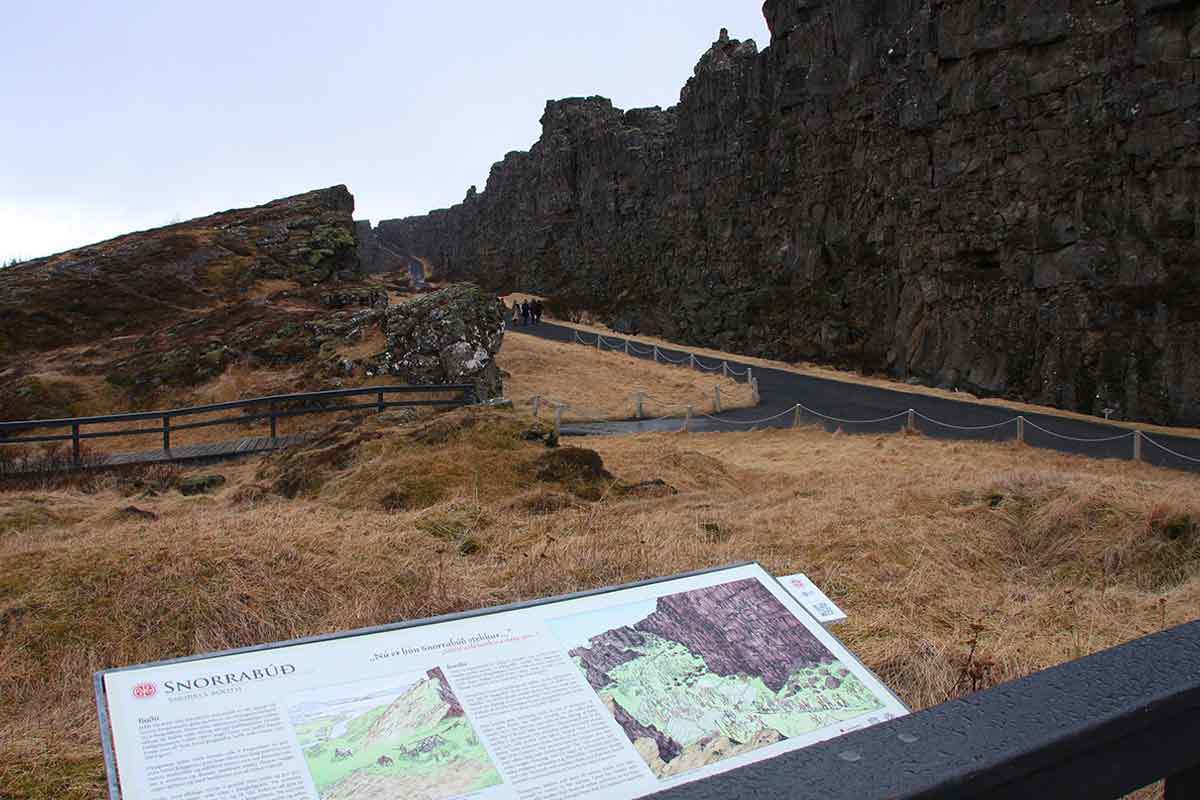
In Iceland, settlers found farmland, fishing grounds, and the spark of westward exploration—a place where sagas were born and new horizons imagined.
Iceland came into Viking reach in 874 CE, when Ingólfur Arnarson is said to have settled in the bay he named Reykjavík. Word of fertile valleys, abundant fishing waters, and untapped resources spread quickly, drawing waves of settlers over the following decades.
By 930 CE, the scattered farming communities had established the Althing, one of the world’s oldest parliaments, as a way to govern and resolve disputes far from the Scandinavian mainland. From Iceland, the Vikings pushed on. In 986 CE, Bjarni Herjólfsson reportedly sighted wooded shores far to the west after being blown off course, inspiring Leif Erikson to make the crossing a decade later.
Did you know? It is known that Viking navigators often based their movements on the migration of whales and other marine life. They are also believed to have used “sunstones,” crystals that reveal the sun’s position even through cloud or fog.
Greenland – Edge of the Known World
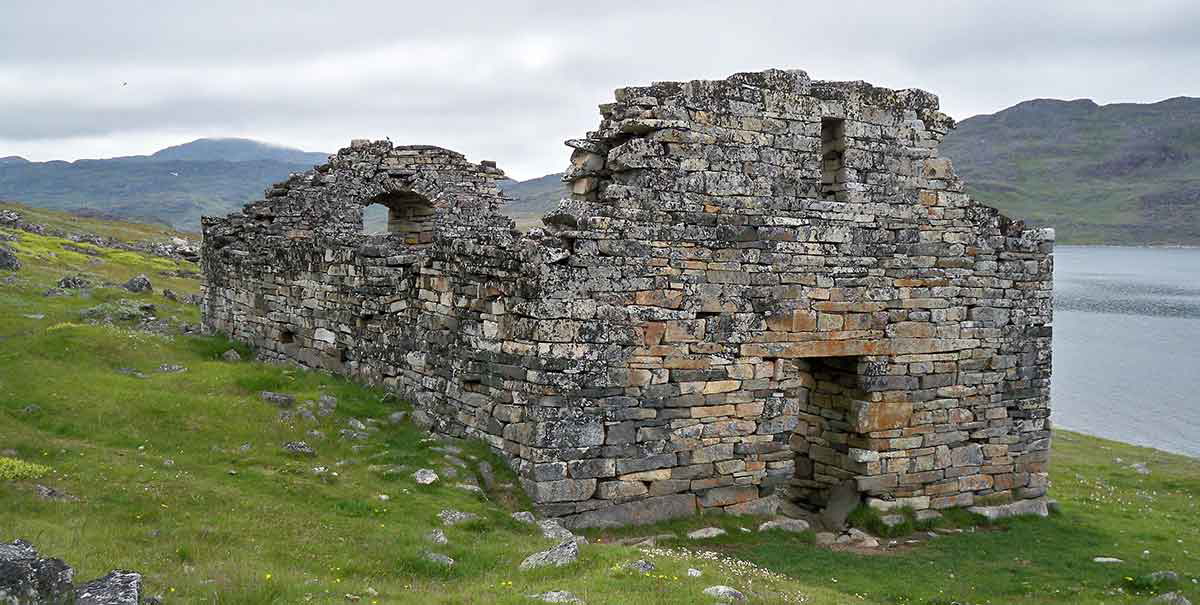
Greenland’s fjords marked the limits of Norse settlement. Here, farms clung to the land, churches rose from stone, and voyages struck out toward an even more distant shore.
Greenland was the next logical step westward. Around 985 CE, Erik the Red led a fleet of settlers to the southern fjords, drawn by reports of usable farmland. The land was marginal, but in the short summers, hay could be harvested to feed livestock through the long winters. The Norse also turned to hunting—particularly for walrus, whose ivory was a prized export to Europe. Excavations at Brattahlíð, Erik’s estate, have revealed the remains of a small chapel believed to have been built for his wife, Thjodhild, after she converted to Christianity.
The Eastern and Western Settlements supported hundreds of farms at their peak, but their isolation was absolute. Hvalsey Church, constructed in the early 14th century, still stands as the country’s best-preserved Norse ruin. A wedding held there in 1408 is the last event recorded in Greenland’s Norse history before the settlements disappeared from the written record. Climate cooling, and dwindling trade and resources, gradually eroded the Vikings’ resilience. By the 15th century, the Norse presence in Greenland came to a rather abrupt end.
Did you know? Erik the Red named it “Greenland” to attract settlers after arriving during the Medieval Warm Period (950–1250 CE), when milder summers made farming possible. Over the next centuries, the onset of the Little Ice Age brought harsher winters, shorter growing seasons, and more sea ice, making survival increasingly difficult.
Newfoundland – Vinland Discovered
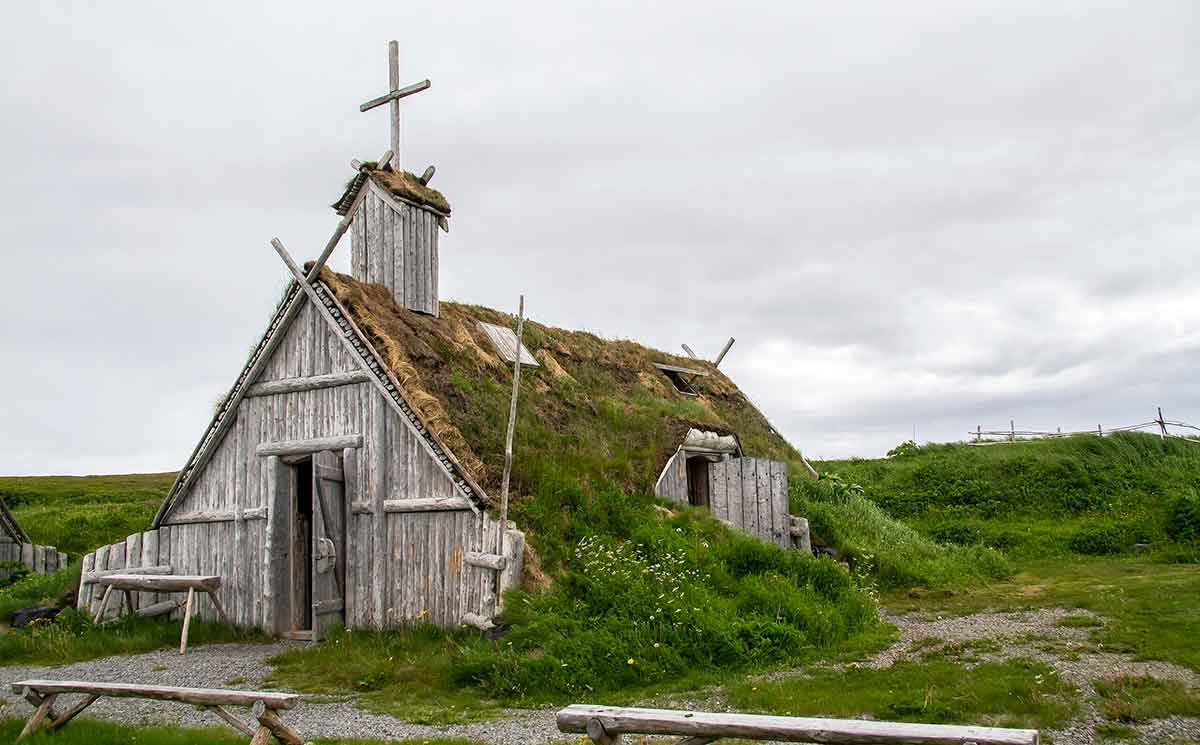
In the sagas, it was a mythical land of timber and wild grapes. In reality, it is the westernmost point the Vikings were proven to have reached.
Around the year 1000, Leif Erikson’s crew landed at the tip of Newfoundland and built sod-walled houses at what is now L’Anse aux Meadows. Excavations in the 1960s uncovered iron nails forged on-site, a bronze cloak pin from the British Isles, and the remains of butternut shells. This is a tree that doesn’t grow in Newfoundland, so it suggests the Vikings traveled farther south than this single site.
The settlement may have been a base for forays deeper into the Gulf of St. Lawrence, but it lasted only a few years before being abandoned, perhaps after clashes with the Indigenous peoples the sagas call Skraelings.
Did you know? Evidence of ship repairs at L’Anse aux Meadows suggests it was both a launch point for exploring farther into North America and a base for readying vessels for the long return to Greenland and beyond. There are strong indications that the Vikings ventured farther south than Newfoundland, perhaps into today’s Nova Scotia and beyond, yet there has been no archaeological proof of this.
Walking the Viking Trail Today
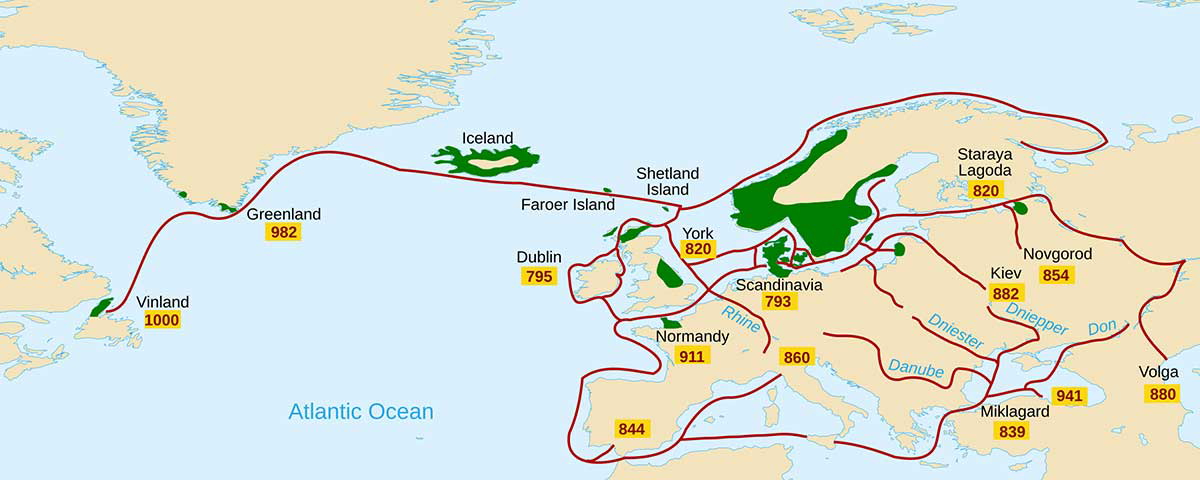
The route still exists, stitched together by museums, archaeological sites, and rugged coastlines—a living link to a time when Europe reached across the Atlantic.
Today, the Viking Trail can be followed in both directions. In Norway, start with the soon-to-reopen Museum of the Viking Age in Oslo, which displays the Oseberg ship. It was built in the early 9th century and buried with two women of high status alongside carved sleighs, tapestries, and household goods. The Faroes preserve centuries-old lifeways in Kirkjubøur, while Iceland’s Settlement Exhibition reveals a 10th-century longhouse hidden beneath Reykjavík’s streets. Greenland’s Hvalsey ruins and Brattahlíð farmstead bring you face to face with the determination it took to survive on the edge of the Arctic.
And if you happen to be in Newfoundland, take the coastal road from Gros Morne National Park to L’Anse aux Meadows. It is called the Viking Route (Route 430) and traces the last stretch of the Viking westward push, ending at the very point where Europe met North America.