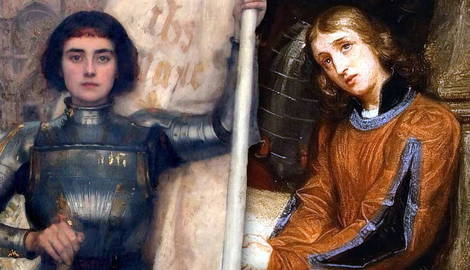
On May 30, 1431, in Rouen, the capital of Normandy, a large crowd assembled in the marketplace to witness the execution of Joan of Arc, a 19-year-old peasant girl. Two years earlier, Joan had led the French forces in a key victory at Orléans against the English. The win marked a watershed moment in the Hundred Years’ War, allowing Charles VII to be crowned king. Captured by the Anglo-Burgundian forces, she was accused of heresy in a politically motivated trial. Let’s take a look at the events that led to her execution.
Joan of Arc & The Hundred Years’ War
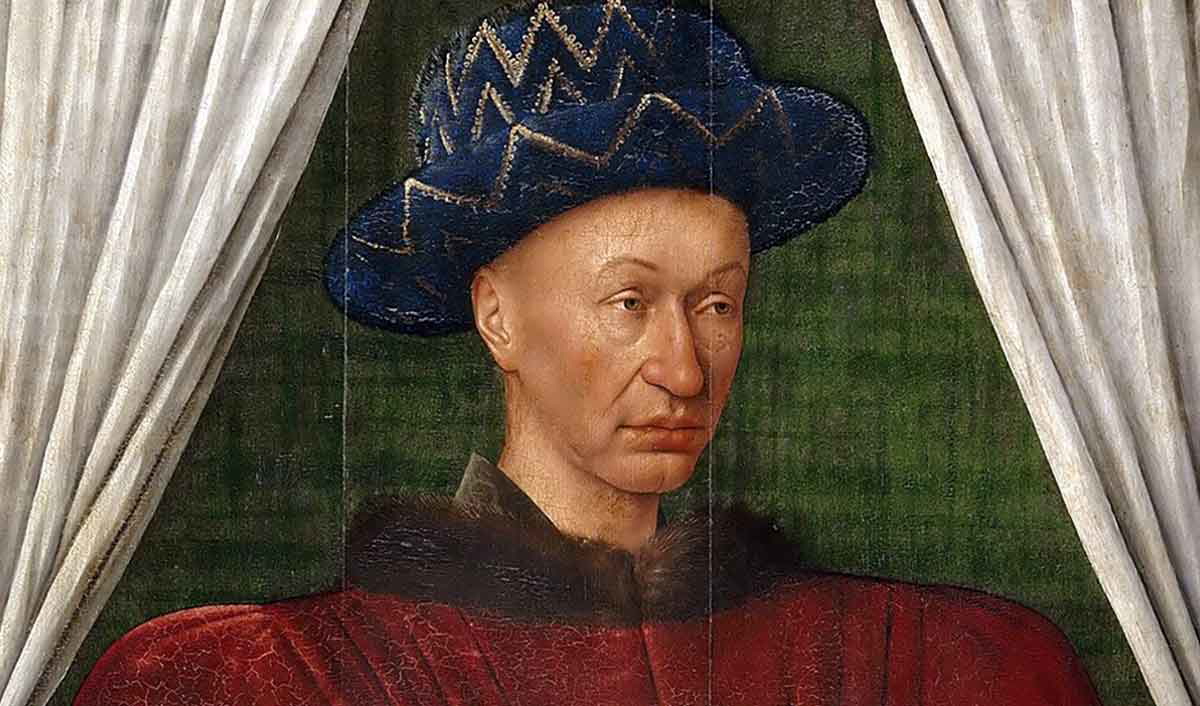
In 1429, a young woman wearing men’s clothing and accompanied by a group of men-at-arms entered Chinon, a town in the Loire Valley where Charles held court. She had previously sought an audience with the French dauphin at Vaucouleurs, but her attempt was unsuccessful.
The daughter of a tenant farmer, Joan of Arc was born in 1412 in Domrémy, on the border between the duchies of Bar and Lorraine. During her childhood years, Charles, the son of the king of France, entered into a bitter dispute with the English monarchy.
In 1422, on the death of his father (Charles VI), Charles claimed the throne. However, the Treaty of Troyes, a 1420 agreement signed between his mother, the leader of the pro-English Burgundian faction, and the king of England, had disinherited the dauphin and de facto handed control of France to the English. As a result, the death of the English and French monarchs led to the outbreak of a new wave of fighting in the Hundred Years’ War.
In 1428, John, duke of Bedford, the English regent during Henry VI’s infancy, launched a siege against Orléans, hoping to weaken Charles VII’s stronghold in the Loire. Discouraged by the English military success, Charles was close to seeking refuge in Spain or ceding to the English demands. The arrival of Joan of Arc in Chinon, however, changed the dauphin’s fate—and the course of French history.
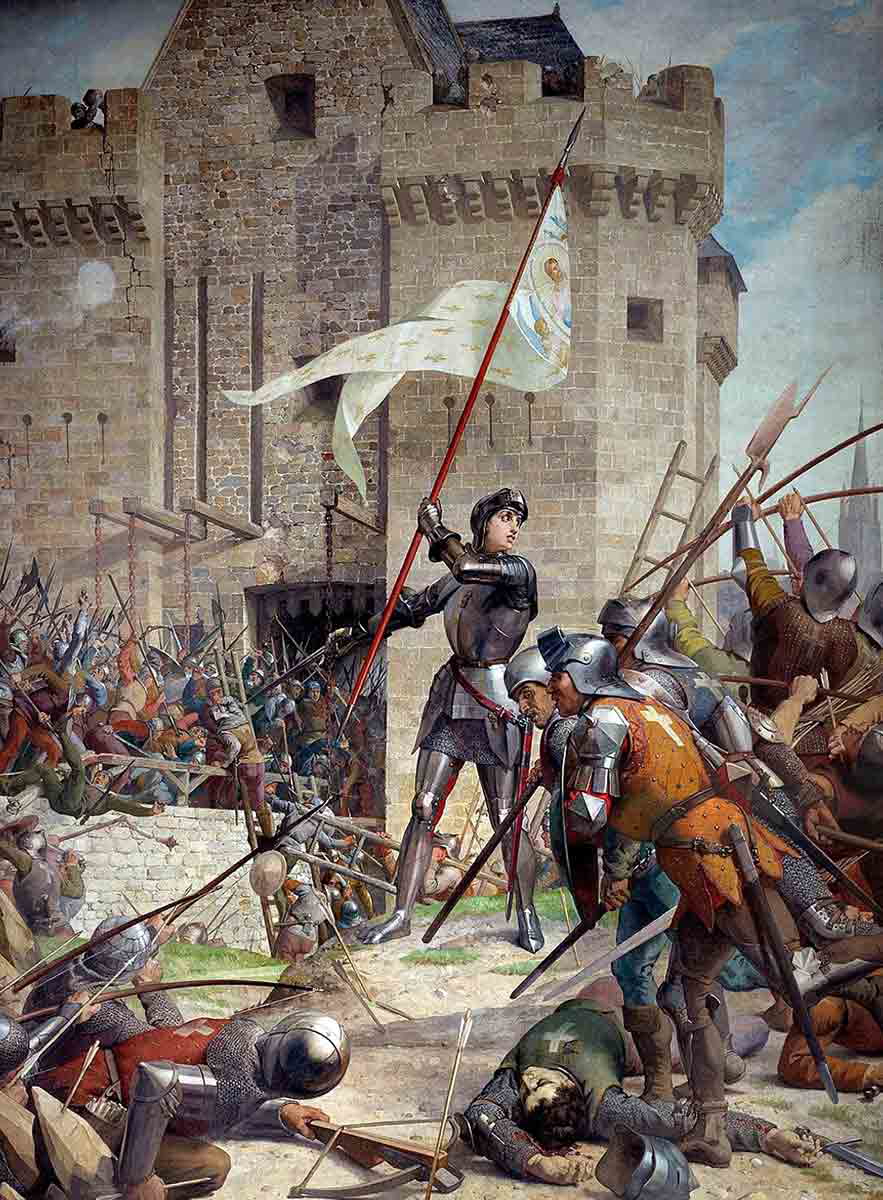
Claiming to be guided by the voices of St. Michael, St. Catherine of Alexandria, and St. Margaret of Antioch, Joan said she was given the mission to expel the English from French territories. Encouraged by his theologians to trust the young woman, Charles decided to hold his ground. Meanwhile, Joan, known as “the Maid,” sent a fiery letter to the king of England, declaring:
“She [Joan] comes sent by the King of Heaven, body for body, to take you out of France, and the Maid promises and certifies to you that if you do not leave France she and her troops will raise a mighty outcry as has not been heard in France in a thousand years. And believe that the King of Heaven has sent her so much power that you will not be able to harm her or her brave army.”
Joan, outfitted in armor, entered Orléans on April 29, bringing much-needed supplies. Her presence inspired the exhausted French troops, leading to a rousing success. When news of the victory at Orléans spread, morale among the French soldiers soared, and so did Joan of Arc’s fame.
After another decisive victory at Patay, Charles VII was crowned king at Reims, the traditional place of coronation of the French monarchs, previously firmly controlled by the Anglo-Burgundian forces.
Joan of Arc’s Capture
While Joan of Arc had successfully secured Charles VII’s claim to the French throne, the civil war dividing France was far from over. After his coronation, the newly anointed monarch decided not to march toward the Anglo-Burgundian-controlled Paris, a move opposed by Joan. Then, in early 1430, the Burgundian forces, led by Philip the Good, duke of Burgundy, advanced toward Brie and Champagne. In March, he set out to besiege Compiègne, a city that had switched sides after the coronation and aligned with Charles VII.
Aware of the imminent danger, Joan departed for Compiègne and arrived in mid-May. Over the following days, she tried to surprise the enemy forces at Soissons. The townsfolk, however, refused entry to her forces, declaring allegiance to the Burgundians. Upon returning to Compiègne, Joan planned an initially successful attack against the Burgundian army on May 23. Later outflanked by an English contingent, she was forced to fall back to the city.
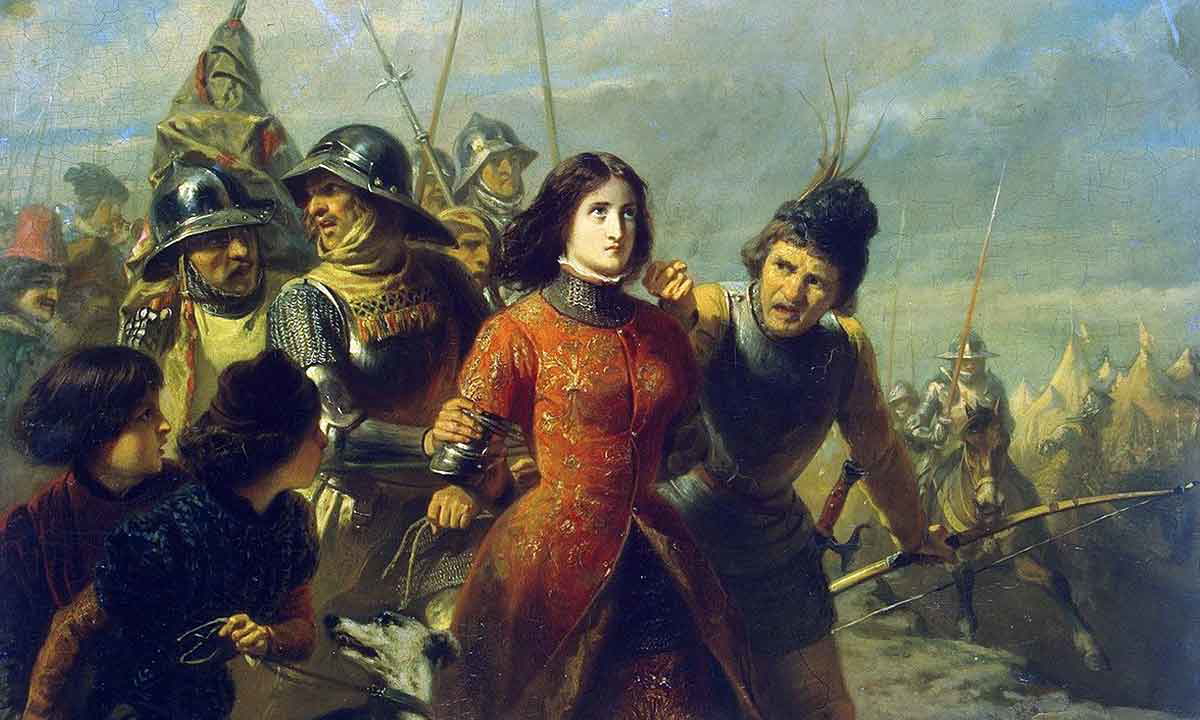
However, during the retreat, as she protected the last soldiers crossing the Oise River, she was thrown off her horse. Captured by the Burgundians alongside her brother, she was taken to Margny. Charles VII, set to negotiate a truce with the duke of Burgundy, did not come to her aid.
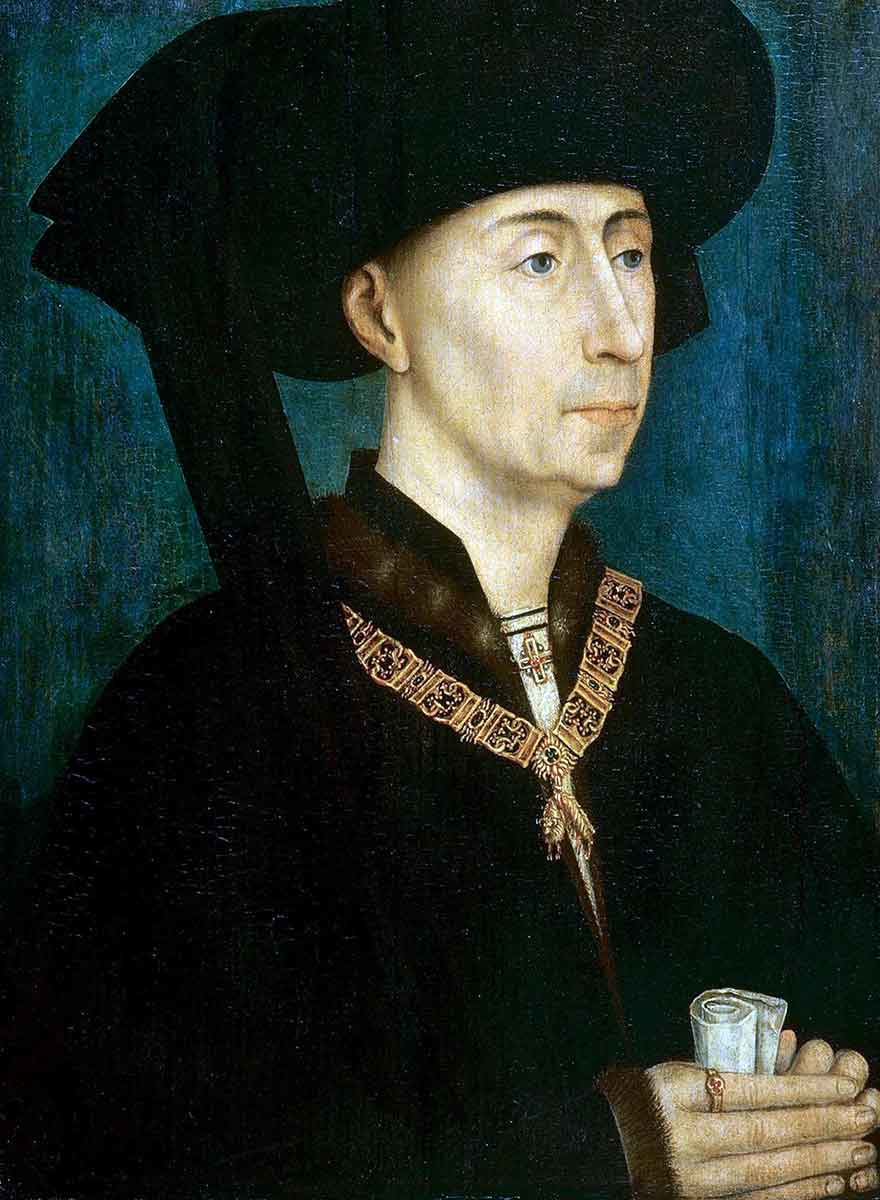
John of Luxembourg, the commander of the Burgundian soldier who captured the Maid, sent Joan to his castle in Vermandois. When she tried to escape, she was taken to a more remote location, where she made another attempt to avoid her guards by jumping off a tower. Meanwhile, the bishop of Beauvais, Pierre Cauchon, asked the duke of Burgundy to hand over Joan to him in return for a ransom of 10,000 francs. Now in Cauchon’s hands, Joan was tried in Rouen, Normandy, a region in northern France controlled by the English.
The trial began on January 13, 1431. The judges presiding over the court were Pierre Cauchon and the Vice-Inquisitor of France.
Why Was Joan of Arc Tried as a Heretic?
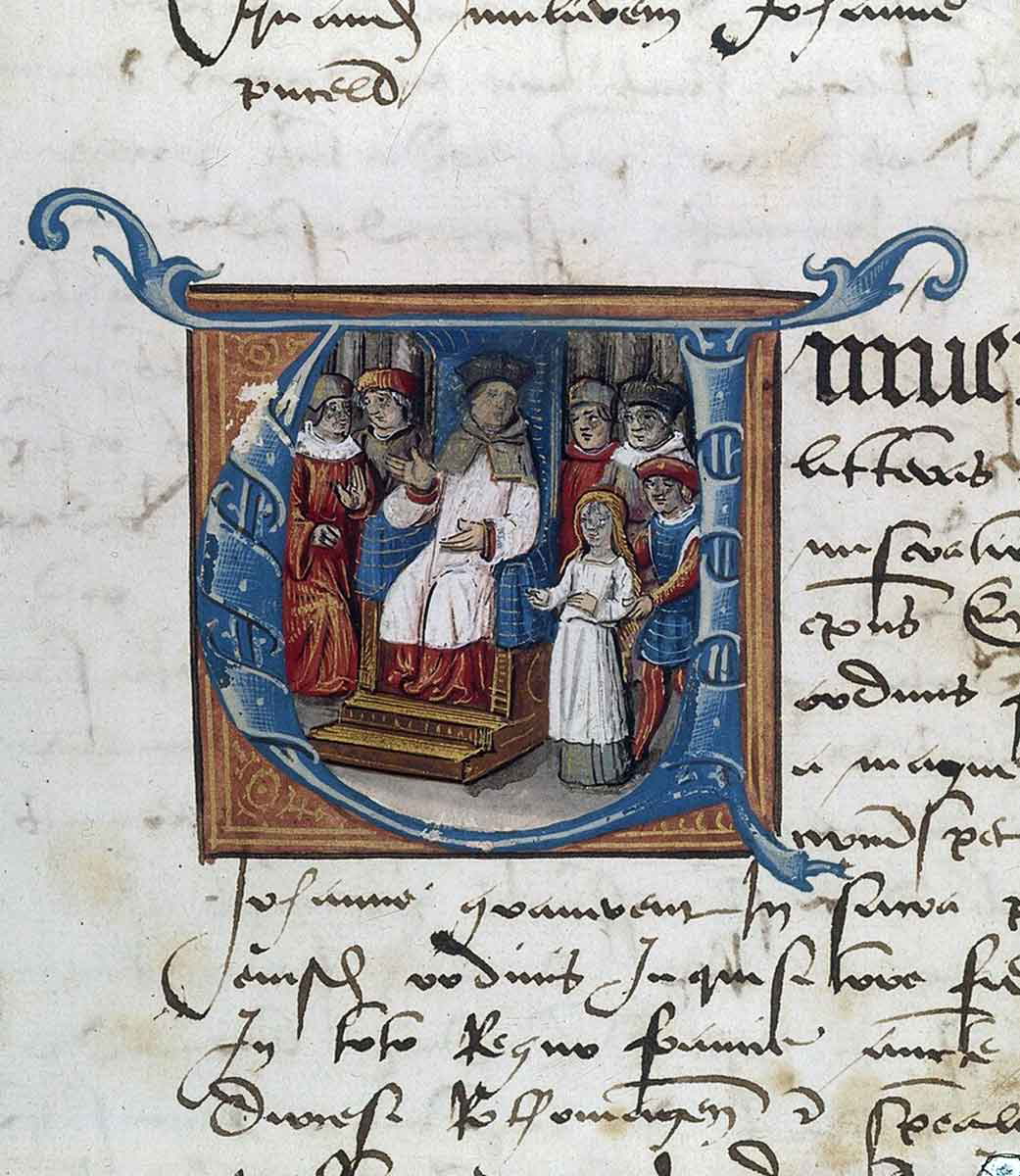
The bishop of Beauvais contacted the duke of Burgundy with the backing of the theology faculty of the University of Paris. A rector of the institution since 1403, Cauchon had led the university to take the Burgundian—and English—side. He was also one of the negotiators at Troyes, where Philip the Good and the English monarch agreed to unite France and England in a dual monarchy, with each country retaining its separate institutions. Cauchon’s animosity toward Joan of Arc stemmed also from personal reasons, as he had been forced to leave Reims, where he lived, before Charles VII’s coronation.
Upon learning of Joan’s capture, the University of Paris’ agents wasted no time in contacting the duke of Burgundy to request Joan be tried for heresy before an ecclesiastical court: “We beseech you … that as soon as it can be done safely and conveniently, … Joan be brought under our jurisdiction as a prisoner since she is strongly suspected of various crimes smacking of heresy.”
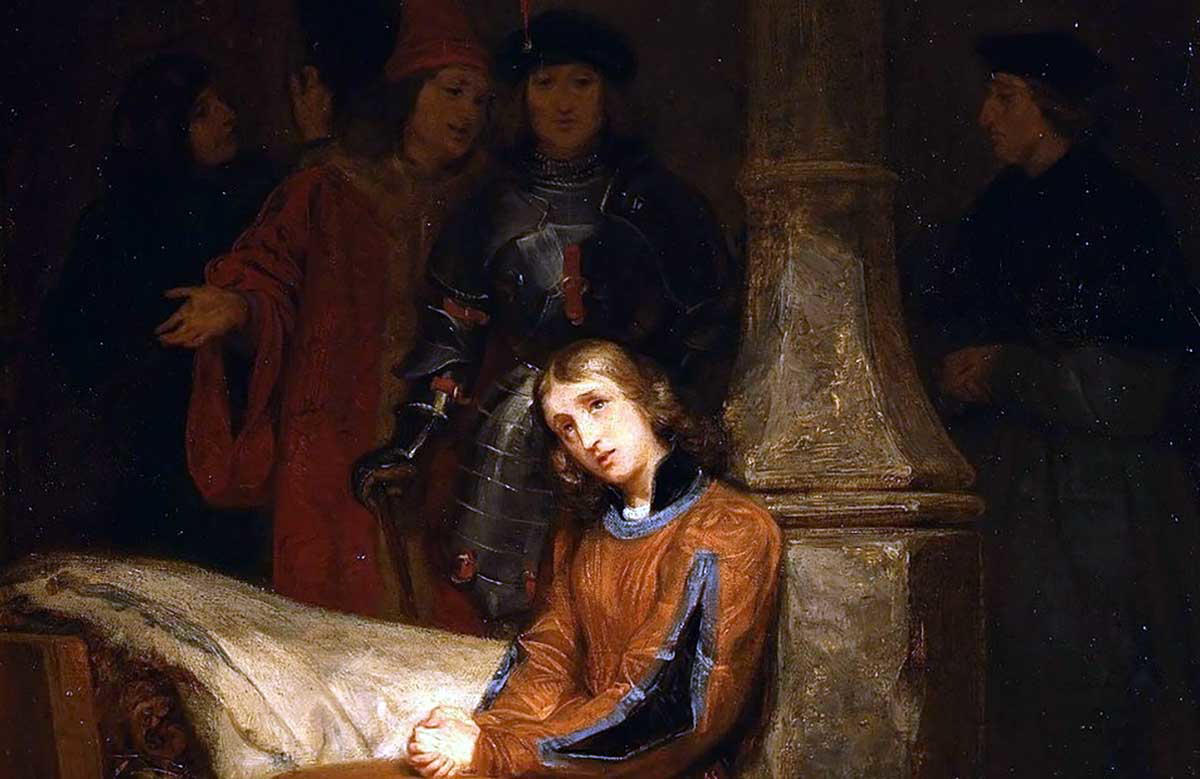
During the trial, Joan of Arc had 70 charges drawn up against her, mainly focusing on the fact that her claim of direct communication with God and the saints was blasphemous. In particular, she was accused of prophesying the future, wearing men’s clothing (more on that later), and believing her declaration stemmed from divine revelations. In other words, the judges found fault in her reliance on the direct orders of God rather than the authority of the Catholic Church.
At the time, the church was still reeling from the effects of the Western Schism (1378-1417) and the strengthening of the Conciliar Movement that resulted in the decline of papal authority. As a result, the Inquisition targeted those who seemed to move beyond the confines of strict orthodoxy and the institutional church. The accused had a hard time proving their innocence, especially as they were allowed no counsel for the defense. This made the trials highly susceptible to political influences, as was the case for Joan of Arc.
Joan had been crucial in securing Charles VII’s coronation. Thus, accusing her of heresy meant undermining the French king’s legitimacy. The rules of the Inquisition decreed that the defendant must appear before the bishop of their hometown or be tried where they committed the heresy. Joan’s trial, however, took place in Rouen, a city in the English-controlled Normandy.
Was Joan of Arc Killed for Wearing Men’s Clothes?
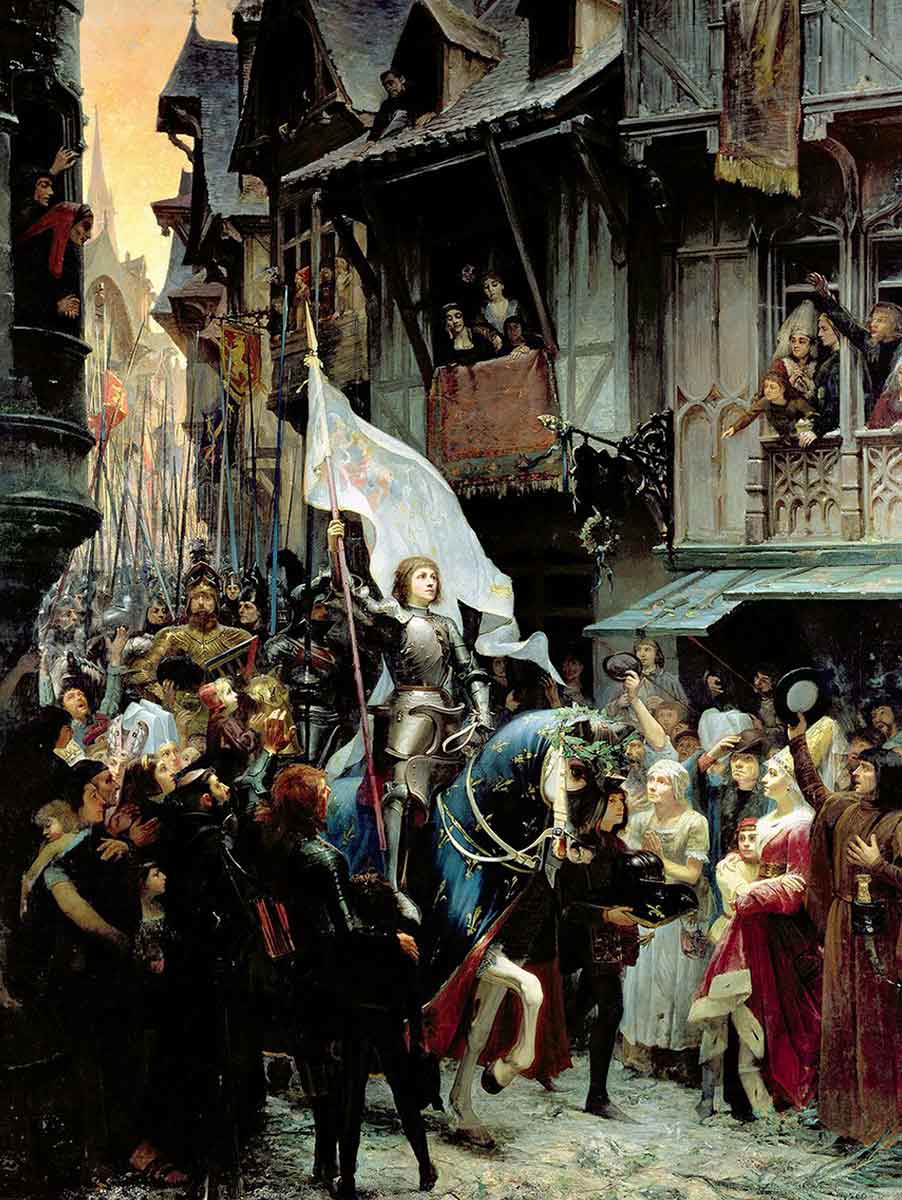
On January 3, 1431, shortly before the beginning of Joan’s trial, an edict was issued in the name of the infant Henry VI. Besides accusing her of professing “very dangerous dogmas, most prejudicial and scandalous to our holy catholic faith,” the document emphasized her habit of wearing men’s clothes:
“It is sufficiently notorious and well known how for some time, a woman who calls herself Joan the Maid has put off the habit and dress of the female sex, which is contrary to divine law, abominable to God, condemned and prohibited by every law; she has dressed and armed herself in the habit and role of a man.”
Thomas Aquinas’ Summa Theologica, the compendium of medieval doctrine, condemned cross-dressing, declaring that “it is sinful for a woman to use male clothing or vice-versa.” An exemption was granted only for necessity-based circumstances. According to various records from the trial, Joan told the court that she continued to wear men’s clothes in prison to protect herself against sexual assault attempts. At the same time, a record of Joan’s questioning on April 5, 1431, reveals that the voices of the saints “instructed this woman, in the name of God, to take and wear a man’s clothes.”
During the trial, Joan tried to skilfully avoid falling in the traps set by the judges, refusing to divulge information about her dealings with Charles or pronouncing herself on matters of faith. Faced with the lack of damning proof of her heresy, the court eventually resorted to the only visible evidence of Joan’s blasphemous ways: her preference for men’s clothes.
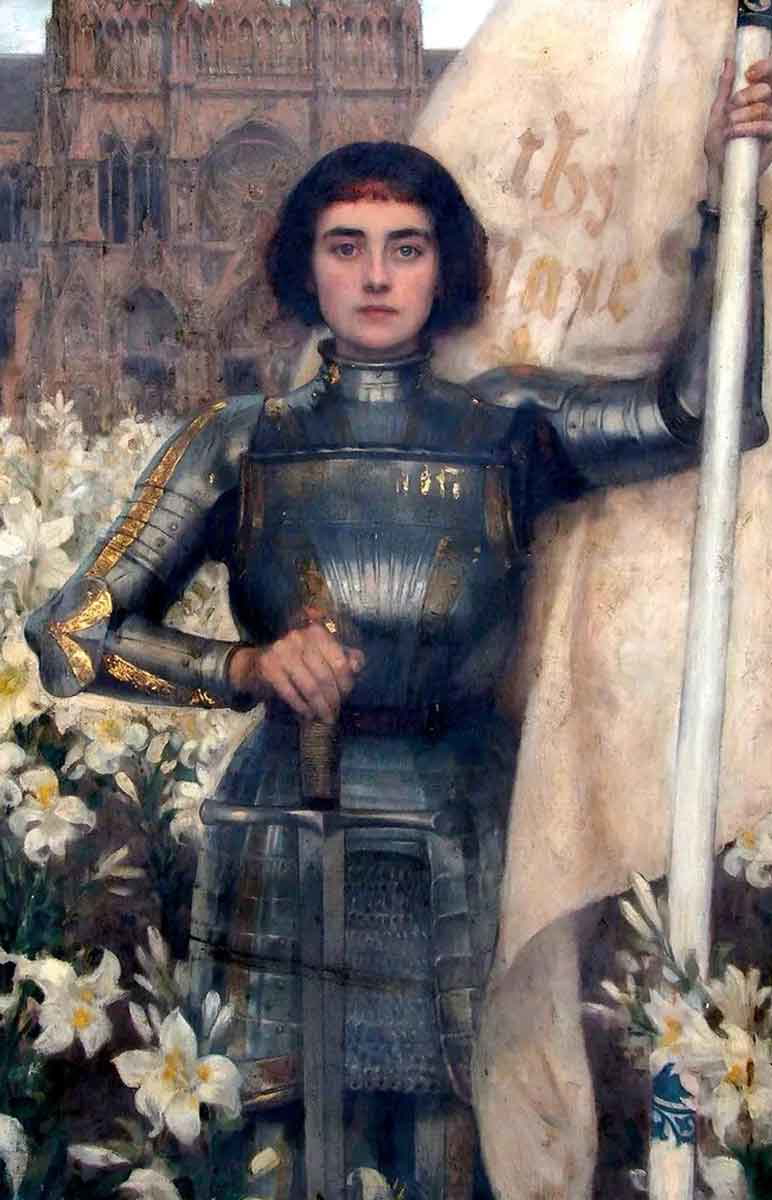
In May, when the judges threatened to turn her over to the secular authorities, Joan signed a form of abjuration. She was condemned to life in prison and forced to wear women’s clothes. Some days later, however, the guards saw her once again donning male attire. Questioned about the fact, she said that the voices of the saints rebuked her for abjuration, adding she had changed her clothes of her own free will. A witness in the 1452 retrial implied that the men’s clothes “had been purposefully left near her in the prison.”
After her “relapse,” the judges turned Joan over to the Anglo-Burgundian authorities. On May 30, 1431, she was burned at the stake at the Place du Vieux-Marché in Rouen. Joan’s cross-dressing is one of the most controversial points of her story, with some scholars seeing her preference for male clothes as a rejection of the standard of gendered appearances of her time.
Joan of Arc: A Victim of the French Civil War?
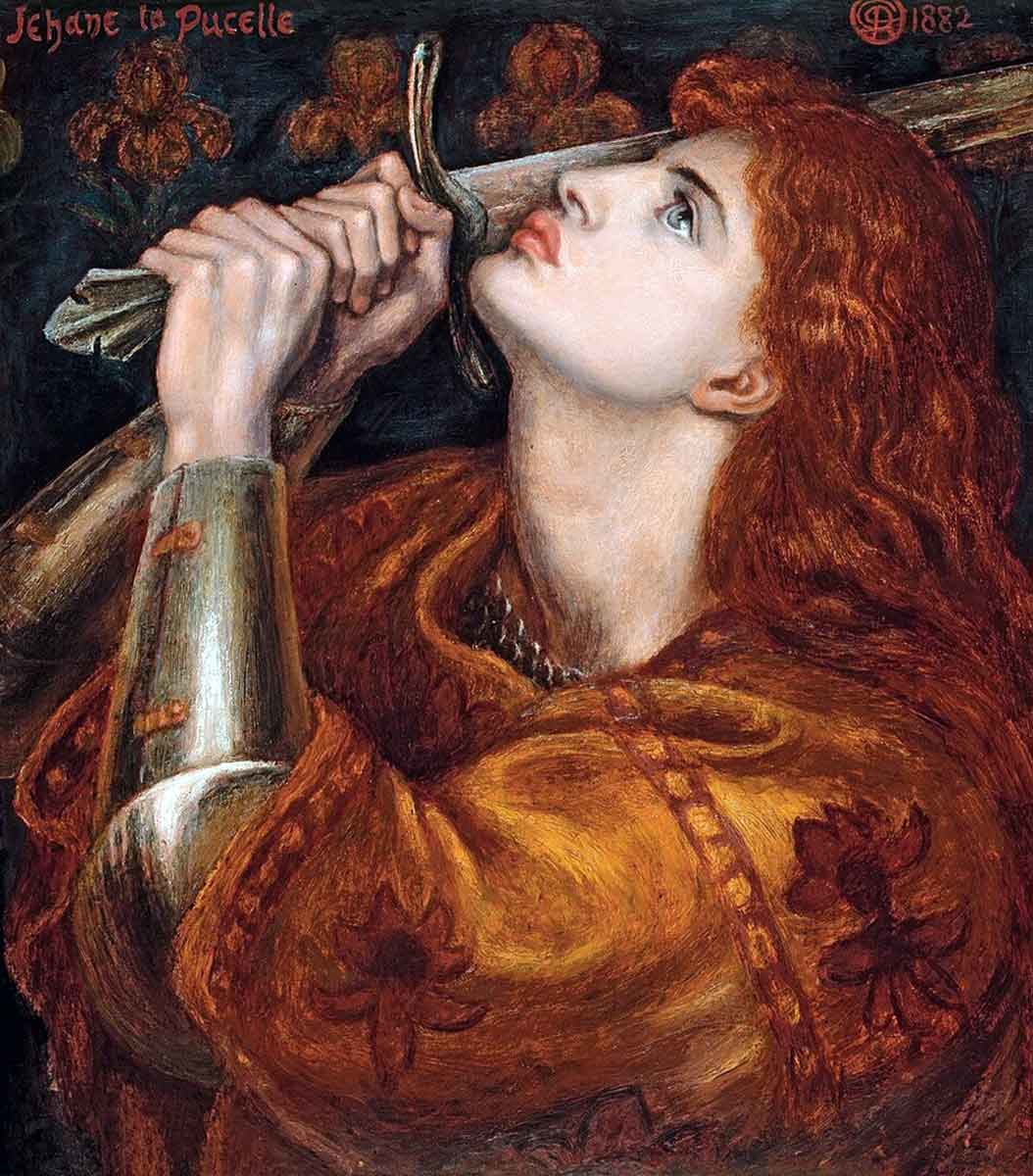
To this day, Joan of Arc remains one of the most fascinating figures of French history. Over the years, she became a martyr, a French heroine, a feminist icon, and a source of inspiration for artists. While her story lends itself to various interpretations, it is perhaps better understood in the backdrop of the bitter civil war between Charles’ supporters (known as the Armagnacs) and the pro-English Burgundians.
In 1419, the internal strife led to bloodshed, with John the Fearless, duke of Burgundy, murdered on Charles’s order. The assassination exacerbated the already tense situation, bringing John’s son, Philip the Good, to enter into an alliance with the English. In 1431, it was a court formed almost entirely by Burgundians that tried and condemned Joan of Arc of heresy, hoping to undermine Charles VII’s position.
It is not a coincidence that Charles, 20 years later, after he had managed to expel the English from France, ordered an inquiry into the 1431 trial. In 1455, her sentence was revoked. Like the original trial, Joan’s rehabilitation was similarly politically motivated, aiming to remove any suspicion of illegitimacy from Charles VII’s crown.