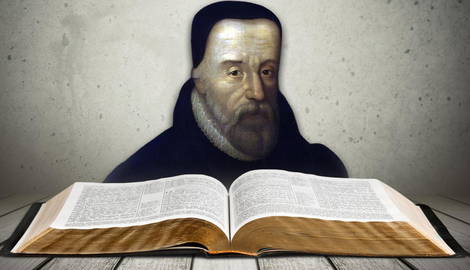
During the Protestant Reformation, the printing press developed by Johann Gutenberg was instrumental in the development of Bibles out of Latin into common languages. William Tyndale, an English Protestant theologian and scholar, was the first to produce a Bible in a common language directly from the Greek and Hebrew.
Bibles Before Tyndale
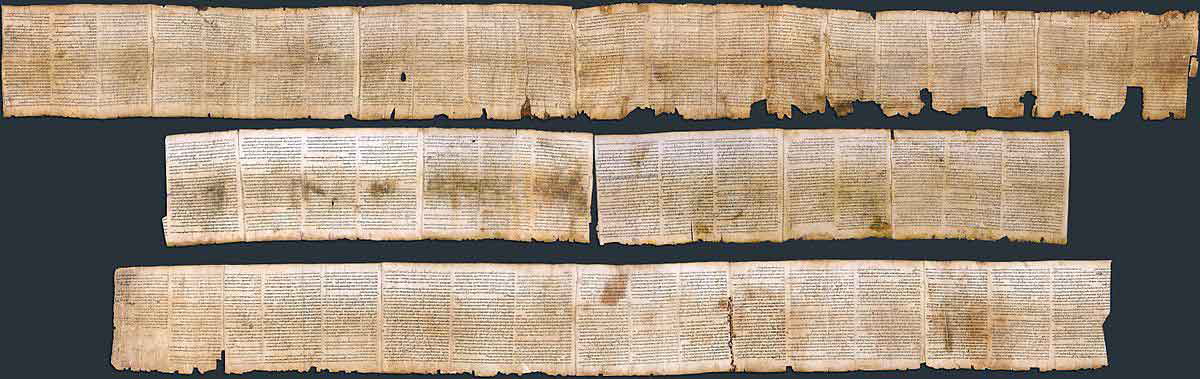
Before 1440, Bibles were typically hand-copied, which was an arduous process which required a certain amount of skill to accomplish. Access to Bibles was also generally restricted to the churches, for various reasons. Bibles were expensive and their restrictive use was not necessarily conspiratorial, but practical. Also, the Roman Catholic hierarchy and theology restricted Biblical interpretation only to authorities within the church.
When Johannes Gutenberg developed the movable-type printing press around 1440, the availability of Bibles increased exponentially, as printing them became more and more common, and the ability to print and disseminate Bibles was available to people outside of the Roman Catholic hierarchy. What resulted was an increase in literacy and people began reading the Bible for themselves, often coming up with different theological conclusions from the Roman Catholic traditions.
William Tyndale’s Pioneering Work

“I defy the Pope and all his laws. . . If God spare my life ere many years, I will cause a boy that driveth the plow, shall know more of the Scripture than thou dost.”
Before the Protestant Reformation began on 1517, Bibles in vernacular languages were rare. The Latin Vulgate, written by Jerome by about 404 AD, was the standard text for Roman Catholicism, even when few people knew and understood Latin. If a Bible was in a common language, it was translated from the more readily available Latin Vulgate, rather than the original Greek and Hebrew.
When Desiderius Erasmus compiled a Greek New Testament text in 1516, scholars were able to work on their own translations from the texts as they were originally written (or closer to the originals). After studying Erasmus’ Greek New Testament, and having a convicting conversation (where he expressed the above famous “plowboy” quote” to a Catholic friend, William Tyndale set out to translate his own in the 1520s, publishing a New Testament in 1526.

Tyndale’s translation became widely disseminated throughout England, causing significant controversy due to some of his choices in interpretation (such as “repent” rather than “do penance” in Matthew 4:17). King Henry VIII ordered the copies of his Bibles to be burned, but the King’s actions were too late.
Words Invented by William Tyndale
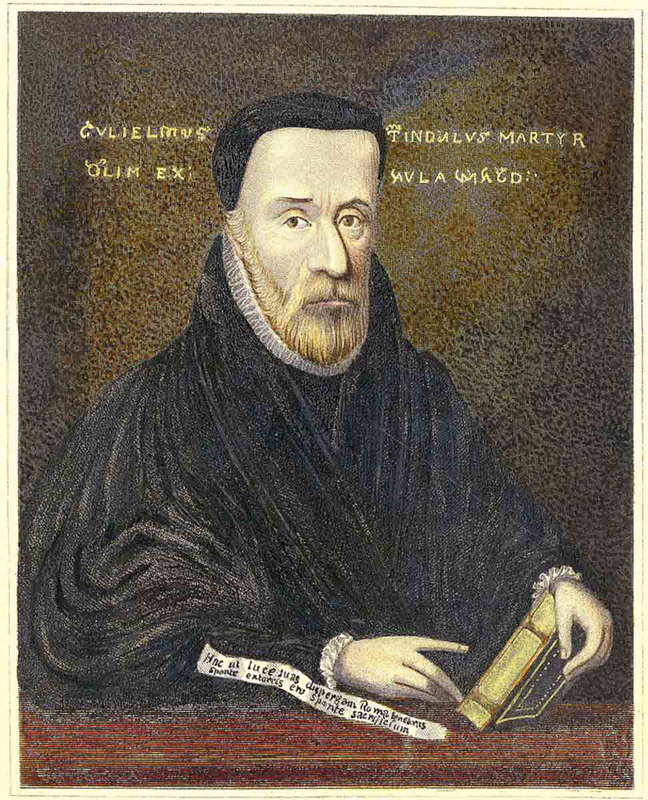
Tyndale found it necessary to develop a vocabulary for his translation, and introduced several important words into English in doing so. Many were compound words with theological or religious importance, such as Passover, scapegoat, and atonement (“at-one-ment”). Others found their way into more common usage – ungodly, beautiful, and fisherman were several. Tyndale also developed several phrases commonly used – “two-edged sword”, “blind lead the blind,” “judge not,” and “stranger in a strange land,” among others.
Tyndale’s Influence
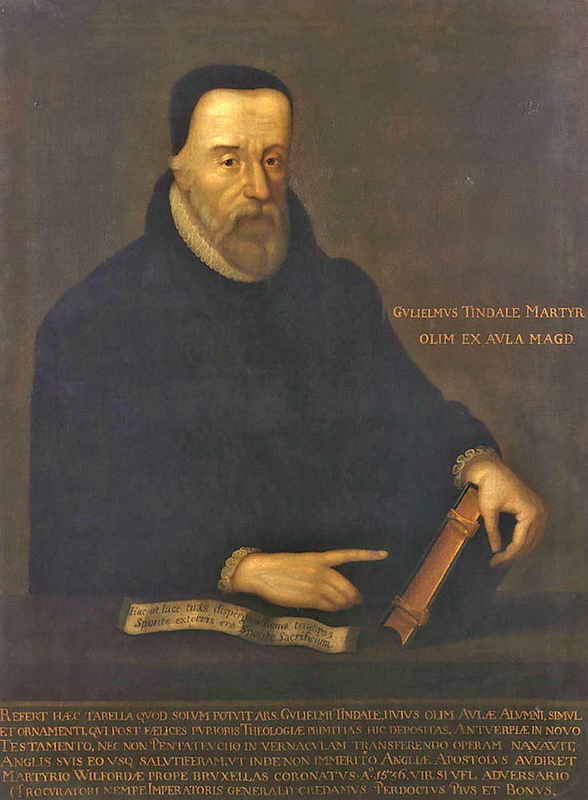
Tyndale’s translation would heavily influence future Biblical translations. The Great Bible, which was commissioned by King Henry VIII, was a translation more agreeable to the King’s liking, yet still included much of Tyndale’s work. The Geneva Bible and Bishop’s Bible were also influenced, but the major development of the King James Version of the Bible had a vast majority of its text directly from Tyndale.
What Happened to Tyndale?
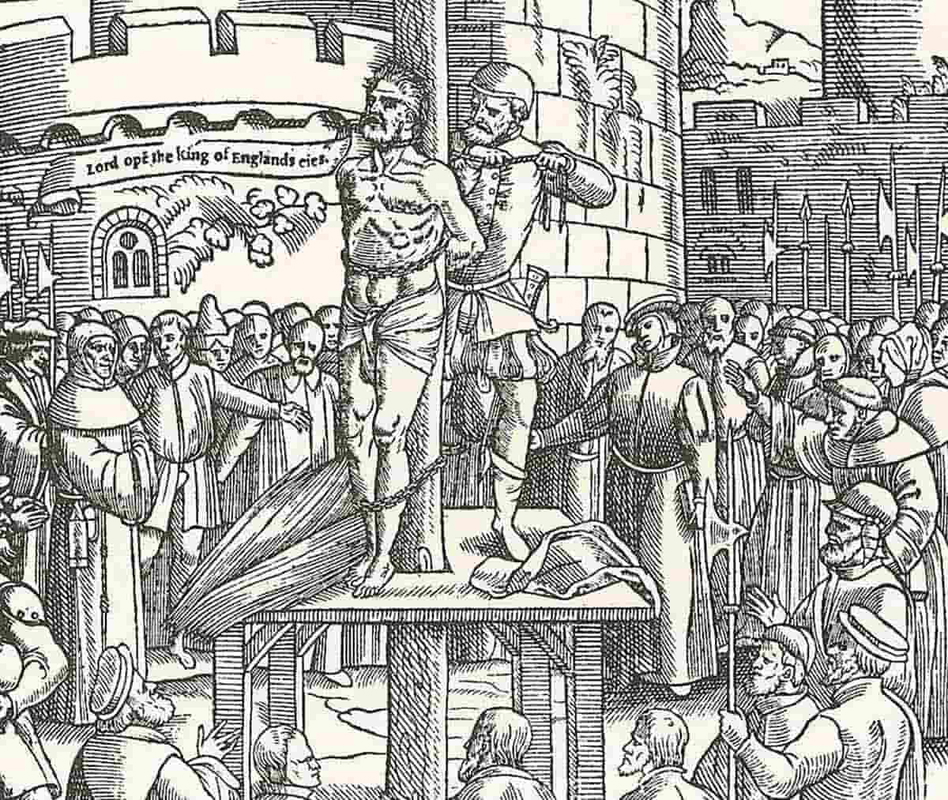
Tyndale was practically a fugitive for much of his life during and after translating his work. He traveled to various places, with Henry VIII seeking his arrest on the continent from Holy Roman Emperor Charles V. Eventually he was arrested in Antwerp in 1535 and held in Brussels. Tyndale refused to recant his views, and was convicted of heresy and strangled to death, and his body was then burned at the stake in October 1536. Among his specific charges of heresy were printing an unauthorized translation (the church allowed vernacular printings under their authority), and his general Protestant views.