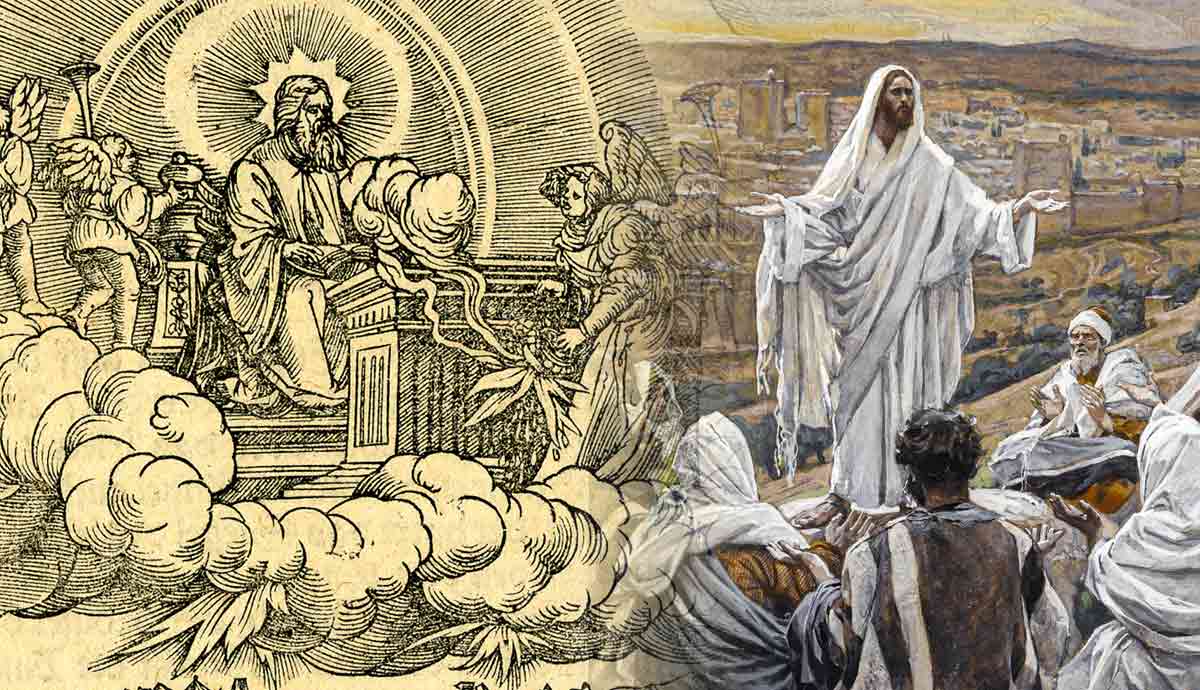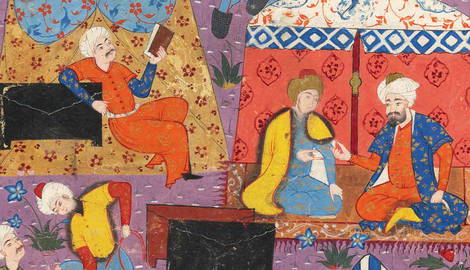

Unlike the Bible, the Qur’an does not contain extended narratives. Instead, it tends to allude to stories with which its original listeners are assumed to have been familiar. However, in the case of its references to Joseph, a narrative is provided in the Qur’an itself. The Qur’an’s version of Joseph’s story, whose name is usually pronounced “Yusuf” in Muslim communities, diverges from the biblical story in interesting ways. Because the biblical version is widely known, learning about the Islamic version can be facilitated through an exercise in comparison and contrast.
Joseph Is His Father’s Favorite Son
The second youngest of twelve brothers, Joseph is presented as his father’s favorite son. He is the first son of Jacob’s favorite wife, Rachel, who died giving birth to Benjamin, Joseph’s only full brother. Jacob does little to hide his favoritism, putting it on display by giving Joseph a multi-colored coat. This coat is featured iconically in popular dramatizations of the Joseph story, such as DreamWorks’ film Joseph: King of Dreams or Andrew Lloyd Webber’s musical Joseph and the Amazing Technicolor Dreamcoat.
While the Qur’an mentions the older brothers’ jealousy of Joseph, the colorful coat is absent. But, it does mention one of the two dreams that Joseph tells in the Bible in which eleven stars, the Sun, and the Moon bow down to Joseph. The implication is that Joseph’s family would one day prostrate themselves before him. Jacob warns Joseph not to speak of such dreams, worrying that his brothers would try to kill him.
Joseph’s Brothers Lure Him Into a Trap
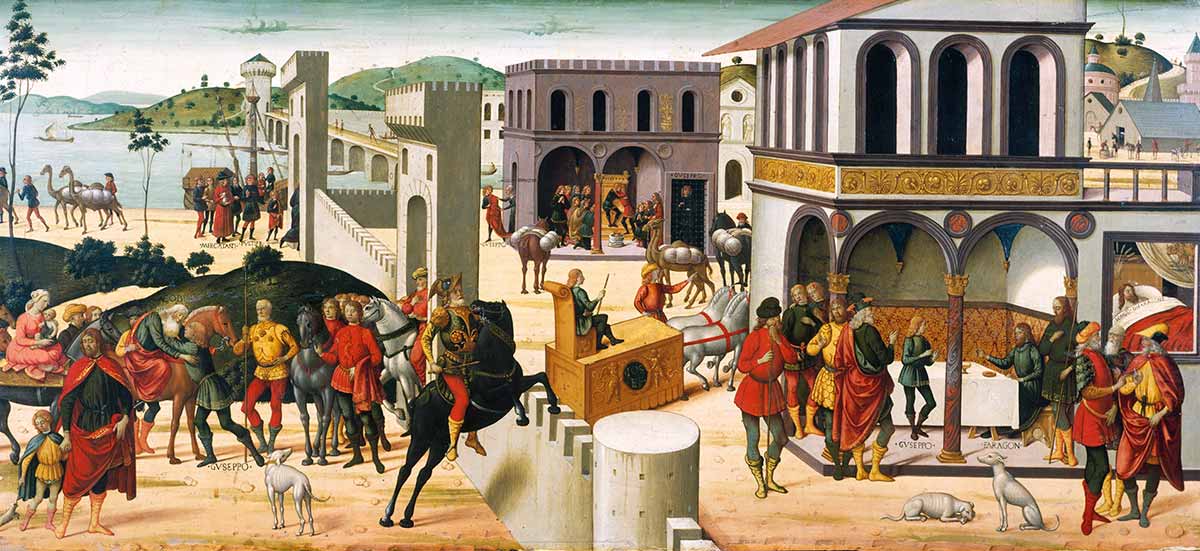
In the Bible, Jacob sends Joseph to his ten older brothers to check up on them after they had been gone to shepherd the family’s sheep and goats in a place called Shechem. It is there, as they see their younger brother coming to meet them, that a plan occurs to the older brothers to be rid of Joseph. In the Qur’an, however, the brothers trick their father into sending Joseph along with them from the beginning. Joseph’s brothers drop Joseph into a well, and then sell him to travelers headed to Egypt where he is, in turn, sold to an Egyptian official. The title of this official in Arabic is “al-Aziz,” which can also be a proper name. Due to the ambiguity, he is sometimes called simply Aziz in retellings of the story. He corresponds to the character of Potiphar in the Bible.
The Official’s Wife Tries to Seduce Joseph
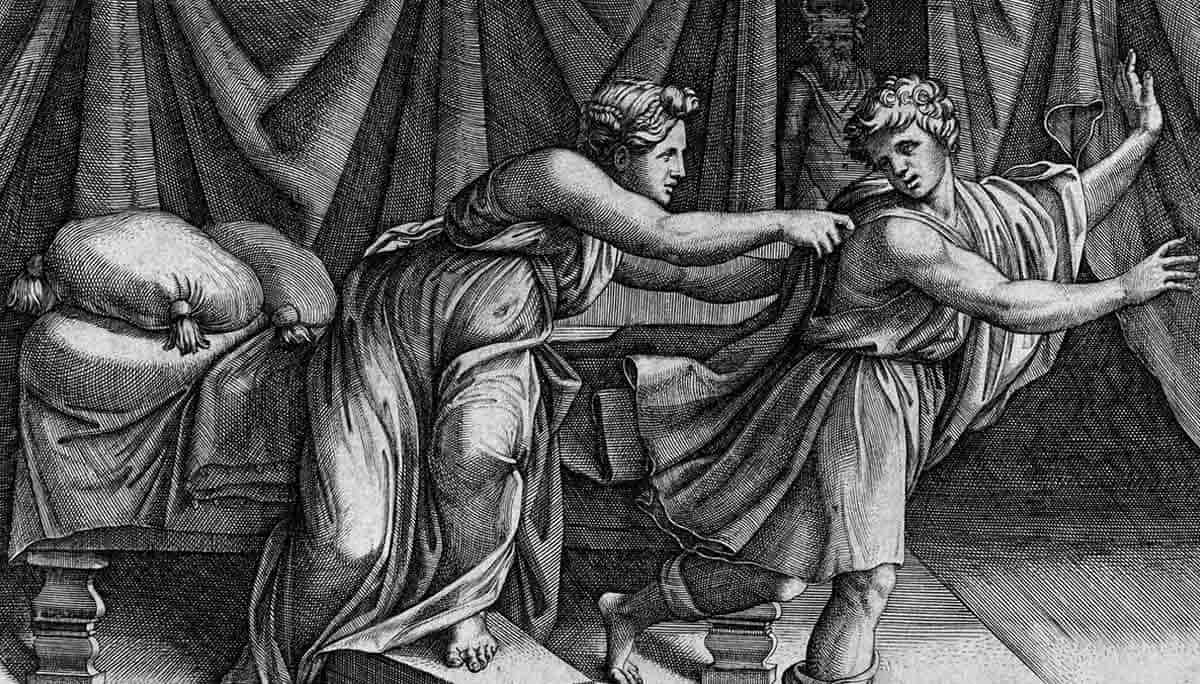
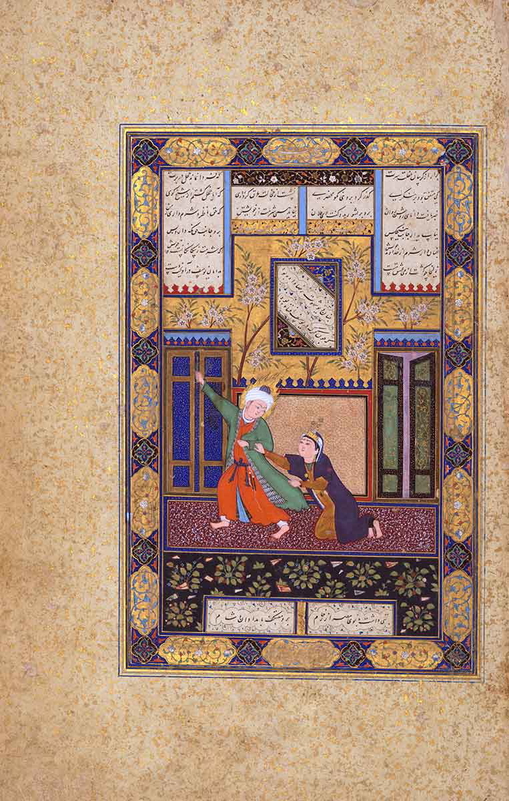
As noted, the name of the man to whom Joseph is sold as a slave in the Bible is Potiphar. Due to his talent and diligence, Potiphar appoints him the manager of his entire household. However, conflict enters the plot when Potiphar’s wife, who is unnamed in the Bible, tries to seduce Joseph. Joseph refuses her advances, and she grabs hold of his garment and tears it as he tries to run away. Pretending he had tried to assault her, she screams for help and Potiphar believes her accusations. This first part of this also occurs in the Qur’an.
But then the two versions diverge. In the Bible, Potiphar sends Joseph to prison immediately, where he languishes for more than two years. In the Qur’an’s version, however, a witness enters the scene and suggests to the Aziz that, if Joseph’s robe were torn in the front, his wife could be believed. But, it was torn in the back.
Joseph Is Exonerated, Yet Still Ends Up in Prison
In the Qur’an, thus, the official believes Joseph and exonerates him. He warns his wife against sin, and tells Joseph to forget about the matter. Nevertheless, the woman, who is left unnamed, continues to be infatuated with Joseph. When other noblewomen gossip about her inability to shed her desire for him, she invites them to a meal. Before calling Joseph to enter the room so that the women will behold his beauty and, thus, empathize with her plight, she provides each of them with a knife, apparently for paring fruit. When Joseph enters, they are stunned by his radiant attractiveness. They are so preoccupied that they inadvertently cut their own hands with the knives. The women come to understand the Aziz’s wife’s passion for Joseph, and cease gossiping about it.
Nevertheless, Joseph steadfastly continues to refuse her advances. The Qur’an does not explain how the decision was made, but Joseph ends up in prison, seemingly in order to prevent scandal.
Joseph Is Proven Innocent and Appointed Chief Minister
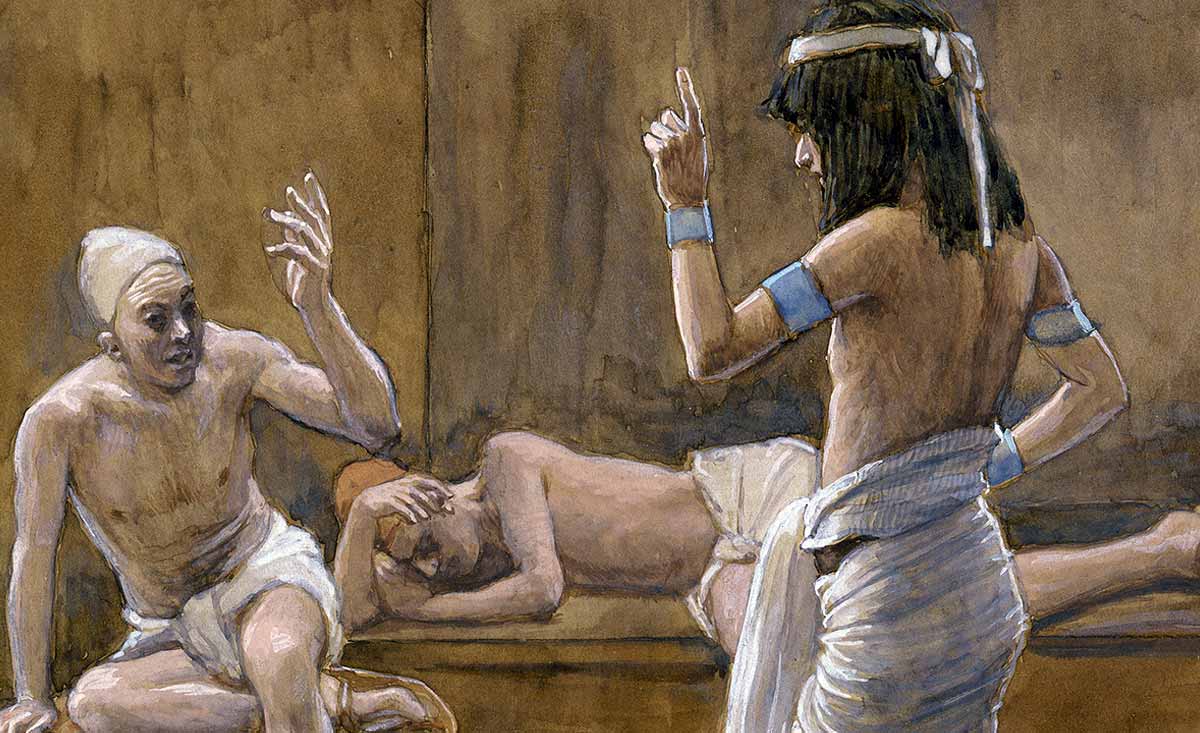
Meanwhile, in the Qur’an as in the Bible, the Pharaoh (called “King of Egypt” in the Qur’an) has a dream that predicts a famine that would later come over Egypt and the surrounding region. This incident also occurs in the Bible. But in the Qur’an Joseph interprets the king’s dream from prison before appearing in his presence.
When the king calls Joseph afterward, Joseph initially responds by bringing up the episode of the women cutting their hands. The king’s ensuing inquiry into the matter exposes the Aziz’s wife, and Joseph is proven innocent.
The king appoints Joseph chief minister to prepare Egypt for the famine that his own dreams had predicted. As in the Bible, the famine forces Joseph’s brothers to travel to Egypt. The famous biblical scene in which Joseph hides his chalice in his younger brother Benjamin’s bag is also in the Qur’an. However, in the Qur’an Joseph reveals himself to Benjamin in secret before doing so.
Joseph Reveals His Identity to His Brothers
As in the Bible, the Qur’an’s Joseph finally reveals his identity to his brothers after initially testing their care for Benjamin. In the Qur’an Joseph sends his shirt home with his brothers, telling them to throw it over their father’s face when they meet him. This would, he says, cure their father’s blindness. This miracle, absent from the Bible, occurs in the Qur’an, and Jacob is persuaded that his Joseph is alive and that he should emigrate to Egypt with his family.
Did a Woman Named Zulaikha Become Joseph’s Wife?
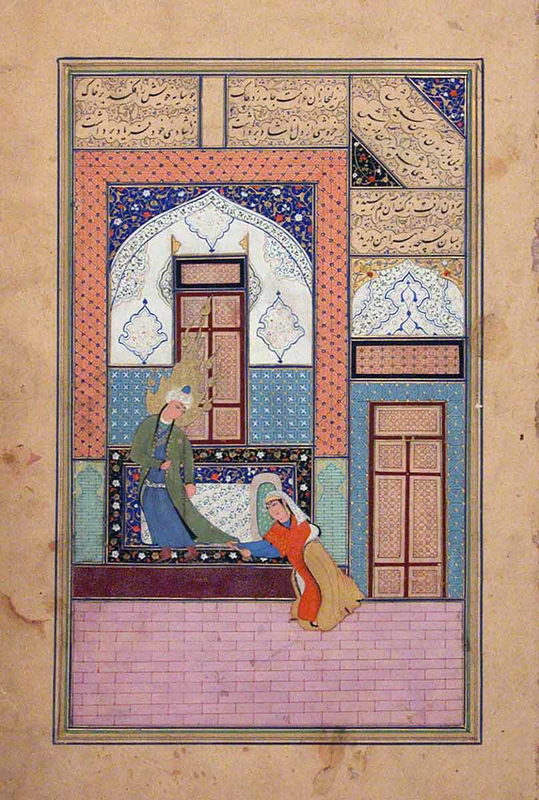
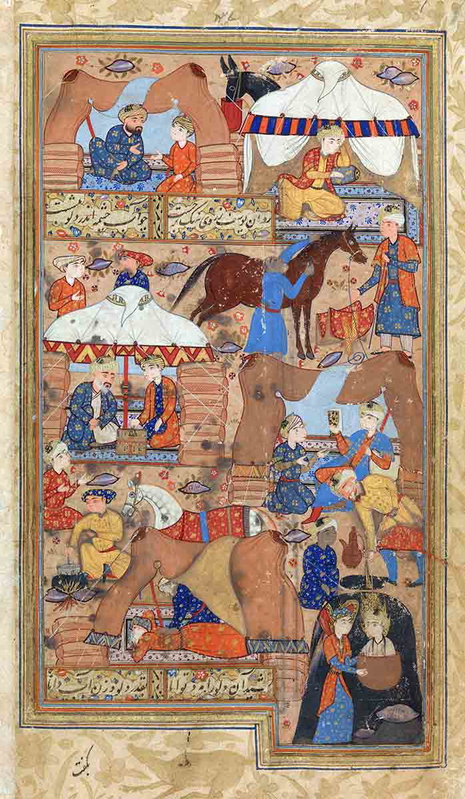
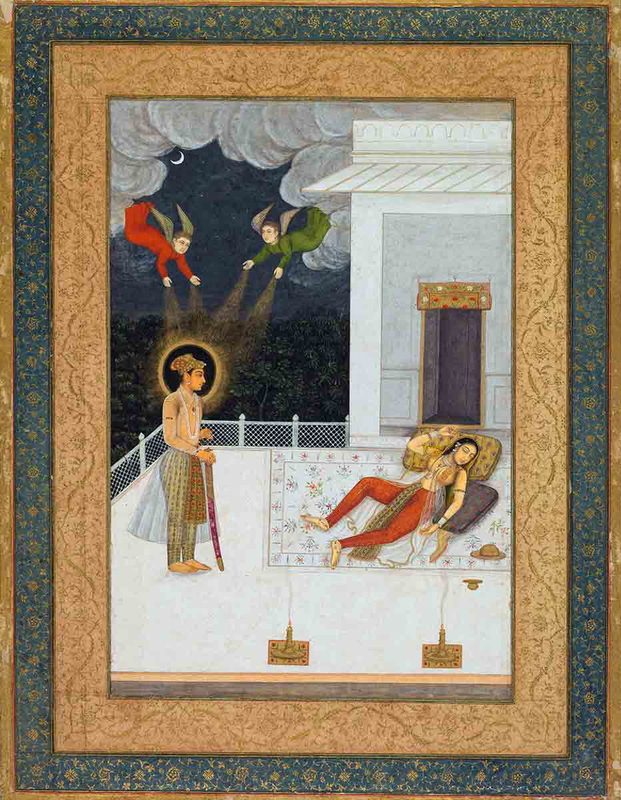
The woman who tries to seduce Joseph plays a key role in his story in both the Bible and the Qur’an, but neither names her. Muslims, however, refer to her popularly as Zulaikha, the name by which she became known in folk tradition dating to several centuries after the Qur’an and preserved and embellished by popular Persian and Central Asian poets. This literature, which does not carry religious authority as holy writ in Islam, expands the Qur’an’s story about her. In these stories, Zulaikha eventually marries Joseph and they have two children together. Her undying passion for Joseph is sometimes allegorized as the longing of the human soul for God.
In Bible, Joseph marries an Egyptian woman in the Bible whose name is Asenath, the daughter of an Egyptian priest. They have two sons, Ephraim and Manasseh, who become the ancestral patriarchs of Israelite tribes.