Shortly after the death of King Solomon, Israel was divided into two kingdoms. The northern kingdom was Israel, and the southern was Judah. Jeroboam, an influential individual who served Solomon, opposed the new monarchy. It exploited political divisions in Israel to establish a monarchy consisting of the tribes of Israel excluding Judah and Benjamin. He had to avoid any influence the Kingdom of Judah would have on his people, so he established a new religious order to draw his people away from worshiping at the Temple in Jerusalem.
Jeroboam Under Solomon’s Reign
Jeroboam was from the tribe of Ephraim. Ephraim and Manasseh were sons of Joseph. The twelve tribes of Israel received their names from the sons of Jacob. When God allotted land to each tribe, the Levites did not receive a portion because they were dedicated to the priestly ministry and received cities within each of the tribal portions of Israel. To re-establish the significant number of twelve, God gave each of Joseph’s sons, Ephraim and Manasseh, their own portion. These two tribes together constituted the house of Joseph. That is why lists of the tribes of Israel that do not include Levi mention Ephraim and Manasseh.
Jeroboam, whose mother was a widow, was a capable and industrious young man. Solomon soon recognized his talents. He appointed Jeroboam over the labor force of the house of Joseph. Israel prospered under Solomon, though the people had to do much labor and paid heavy taxes during his rule. When Solomon ordered that his labor forces must build a Millo (a rampart) and restore a breach at the City of David, Jeroboam objected. Though the Bible does not explicitly state it, it seems as though Solomon expected too much of his labor force, and Jeroboam, who was a courageous man, traveled to Jerusalem to take up the matter with the king.
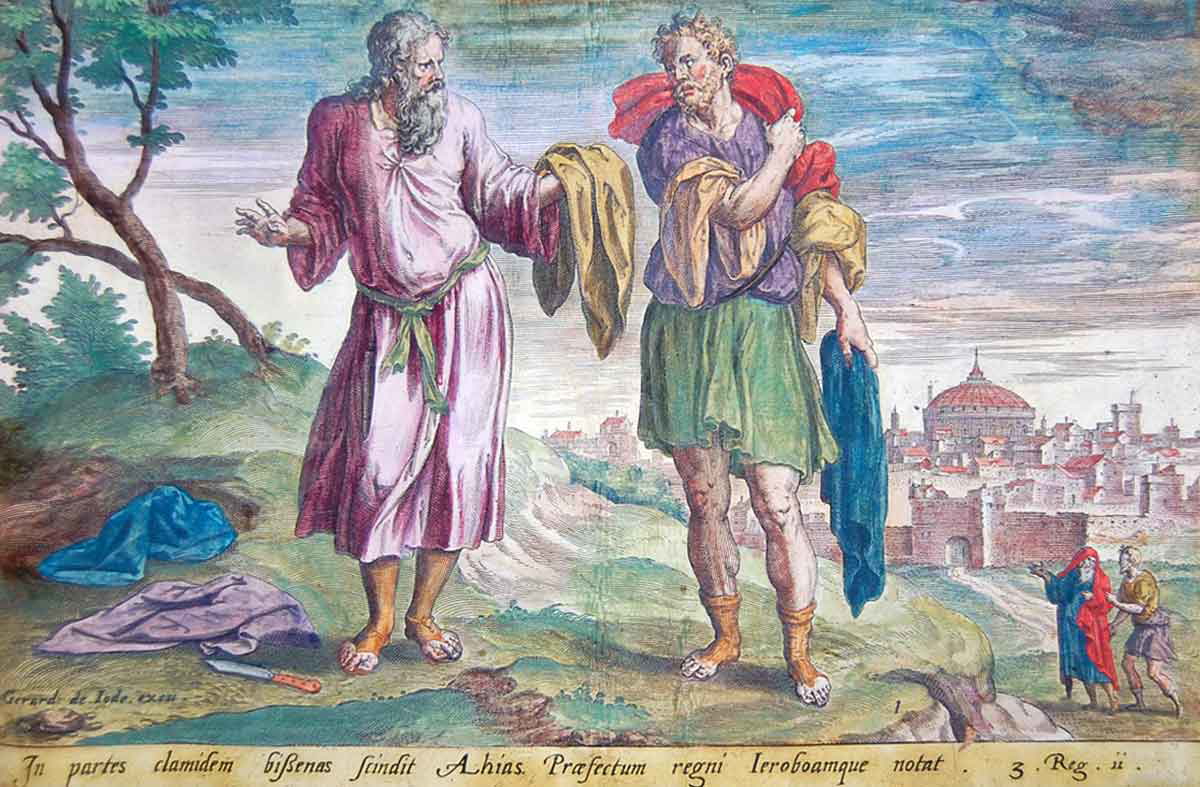
On his way to Jerusalem, the prophet Ahijah the Shilonite met up with Jeroboam and enacted a significant prophecy by tearing his new garment into twelve parts. He gave Jeroboam ten parts. The prophet then explained that the ten parts symbolized ten of the tribes of Israel that Jeroboam would rule over. He said that, for the sake of David and Jerusalem, Solomon’s descendants would only rule over two tribes and that it was because Solomon worshiped the gods of his wives: “Ashtoreth the goddess of the Sidonians, Chemosh the god of Moab, and Milcom the god of the Ammonites.”
Solomon also neglected to keep to the rules and statutes of God and so neglected to walk in God’s ways. The prophet informed Jeroboam that if he walked in God’s ways, his kingdom would prosper and last for many generations.
Though the narrative reflects that the prophet and Jeroboam were alone when they met, Solomon heard what had happened and wanted to kill Jeroboam. This was a further act of rebellion by Solomon because God told the king what would happen (1 Kings 11:9-13). By attempting to kill Jeroboam, Solomon wanted to undo what God said would occur. When Jeroboam heard that Solomon sought to kill him, he fled to Egypt, where Pharaoh Shishak reigned, and remained there until Solomon died.
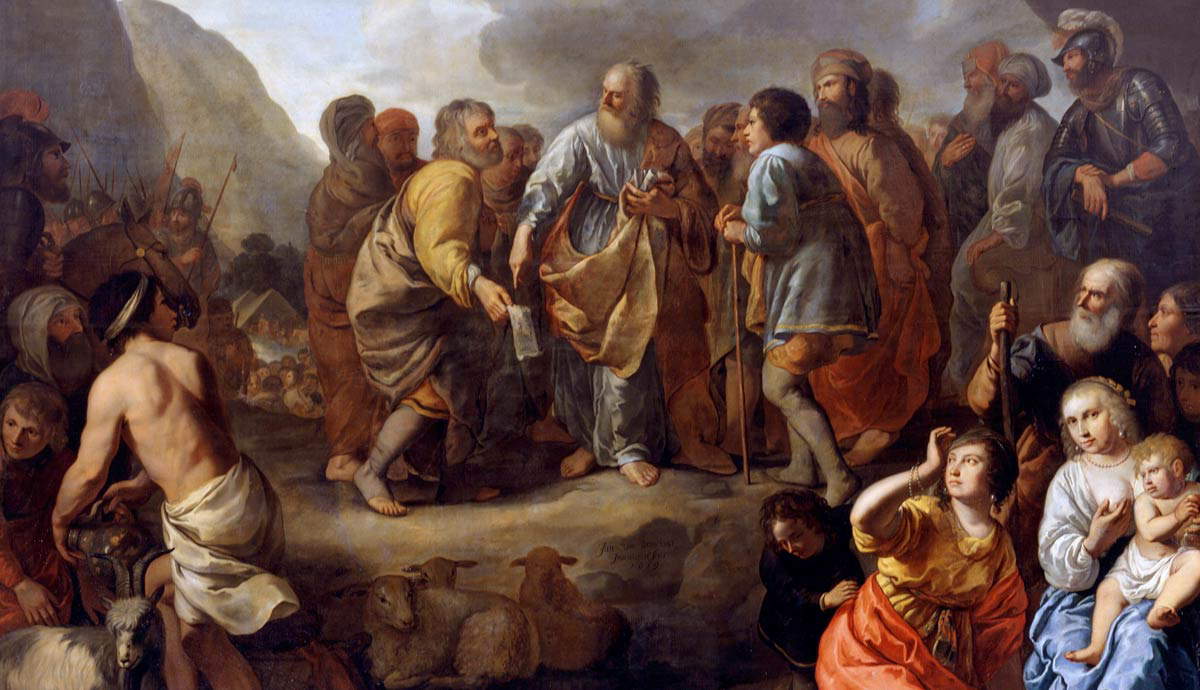
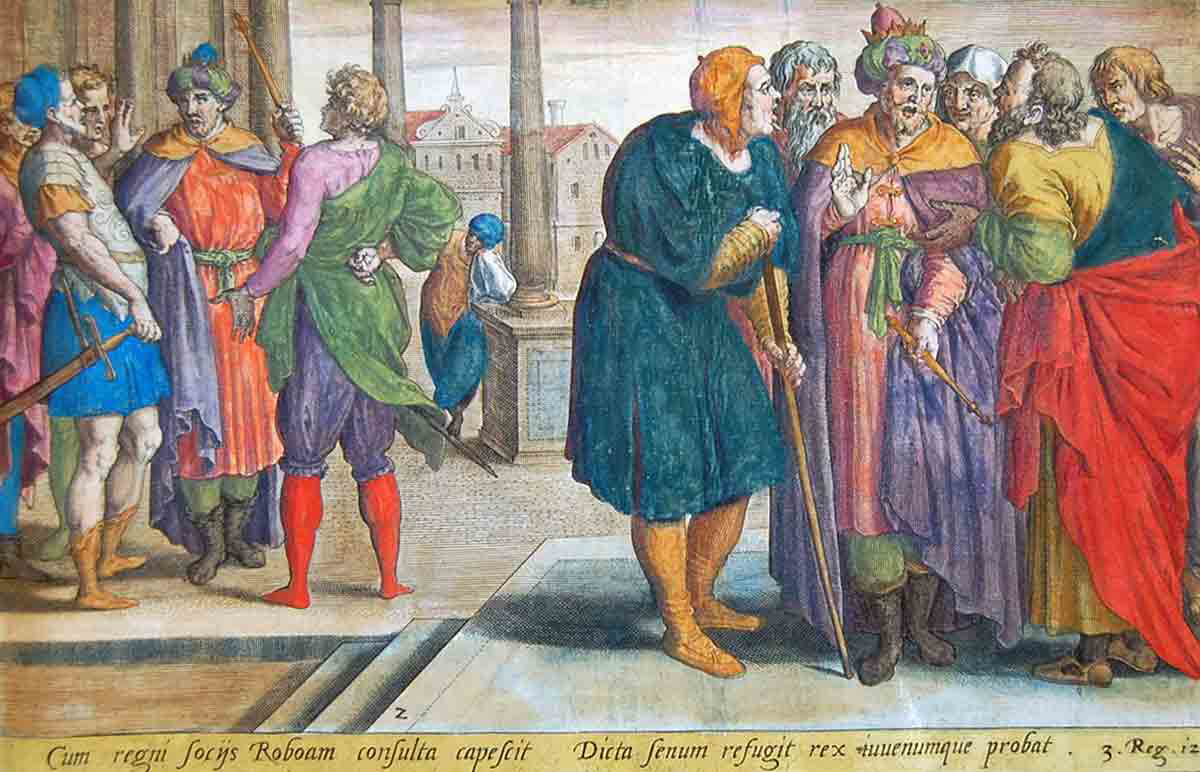
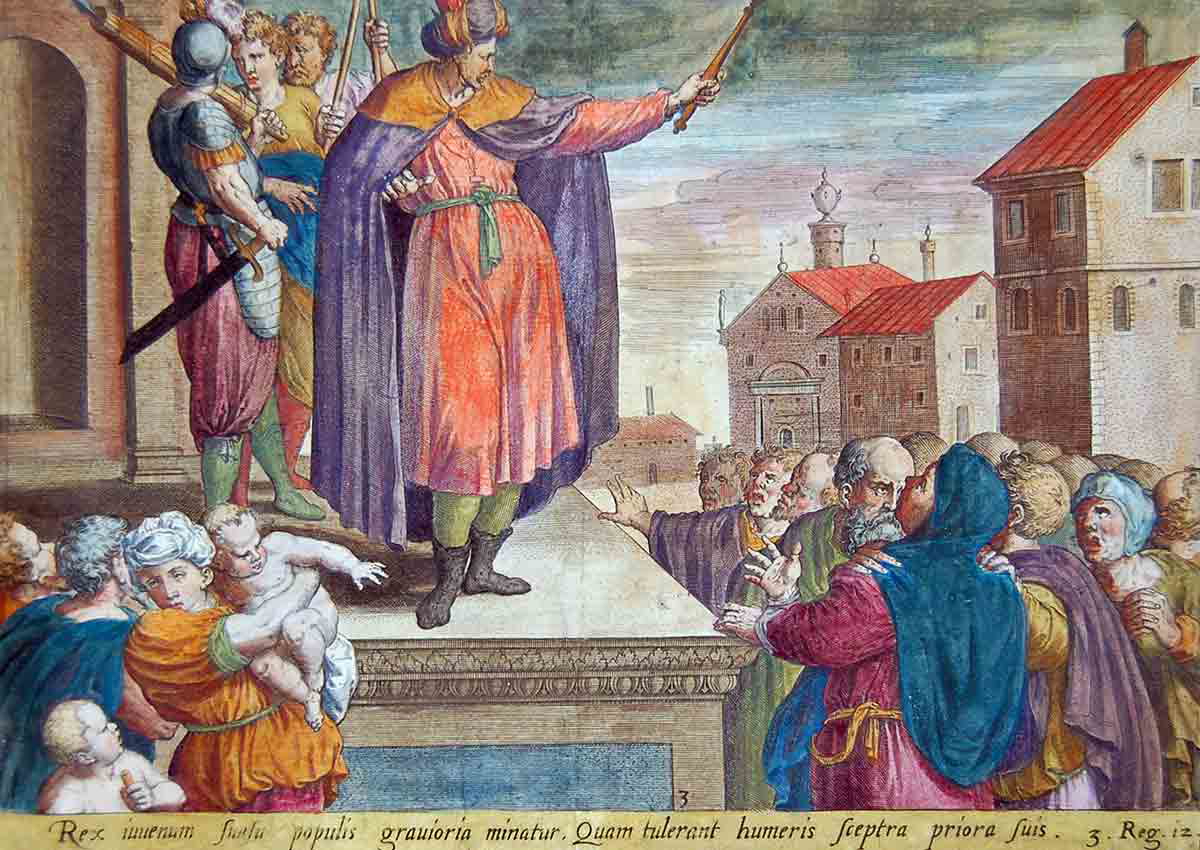
On his return, Rehoboam, Solomon’s son, ruled over Israel. He and other longstanding leaders in Israel advised Rehoboam to lighten the burden that Solomon had placed on his citizens. Instead, Rehoboam decided to follow the counsel of young, unwise advisors he grew up with, answering the call for a lighter burden with: “My father made your yoke heavy, but I will add to your yoke. My father disciplined you with whips, but I will discipline you with scorpions.”
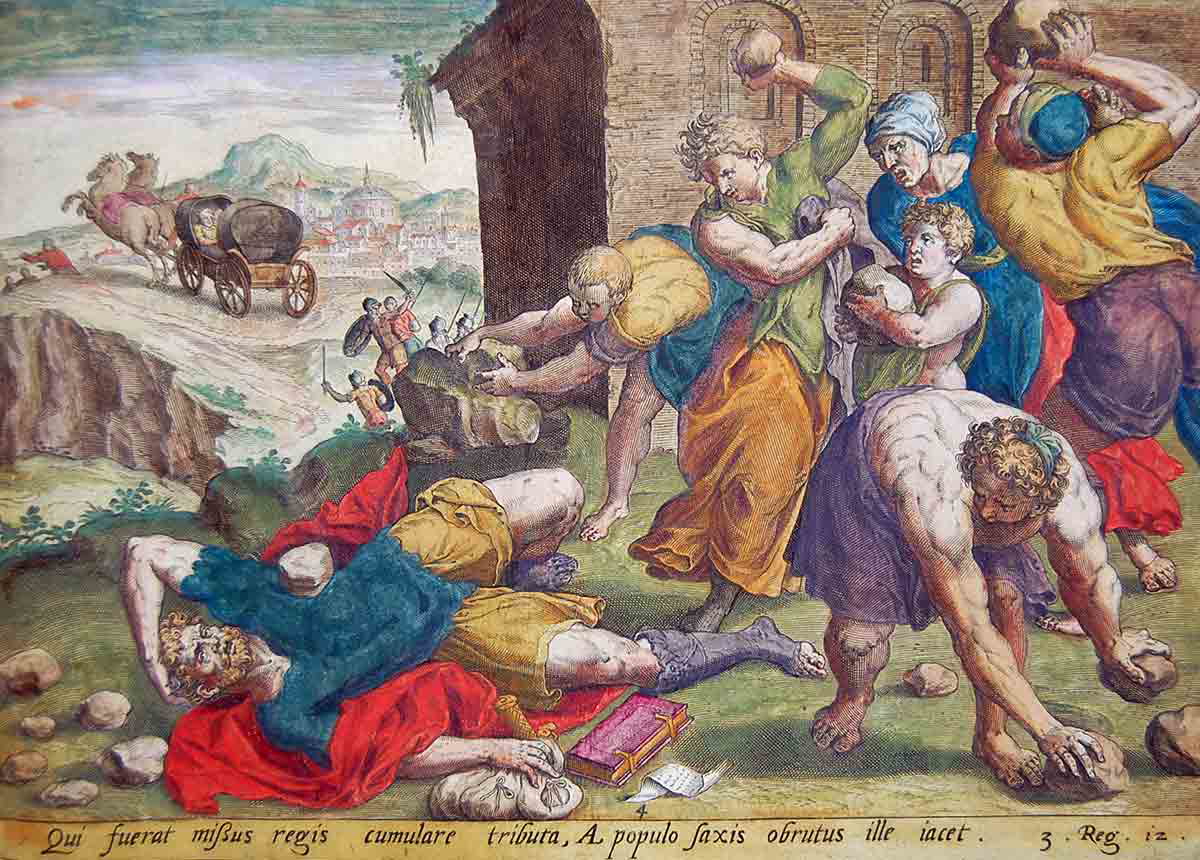
Not surprisingly, ten tribes rebelled against his reign. Events occurred according to what God had said would happen. Rehoboam stoned Adoram, the taskmaster over the forced labor in Israel. The rebelling tribes turned to Jeroboam for leadership, installing him as king of Israel. Rehoboam assembled an army from the men of the tribes of Judah and Benjamin to fight the ten tribes, but the prophet Shemaiah revealed to them that it was not within God’s will that the relatives should battle one another, so war among family was averted.
Establishing a New Kingdom
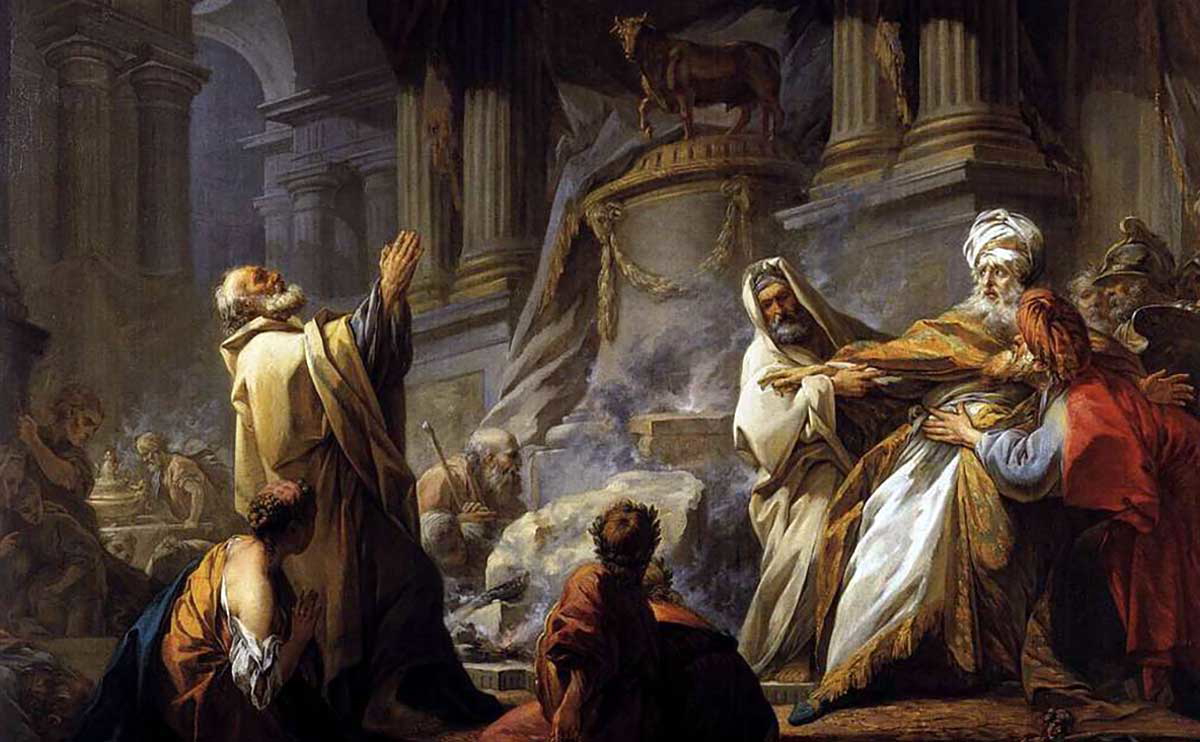
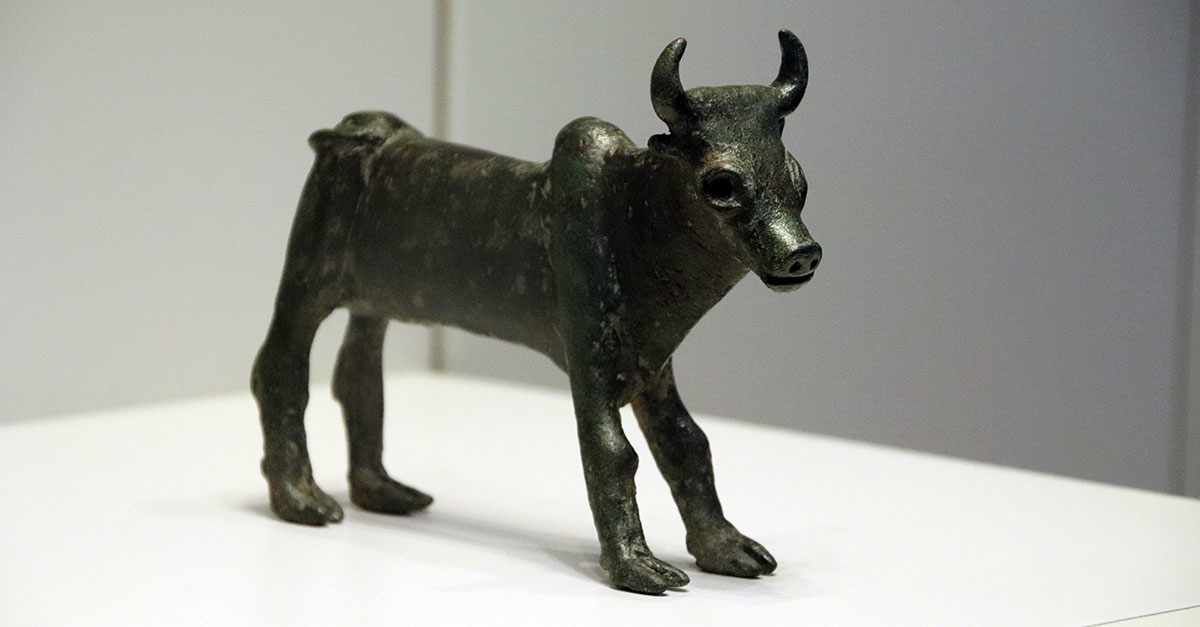
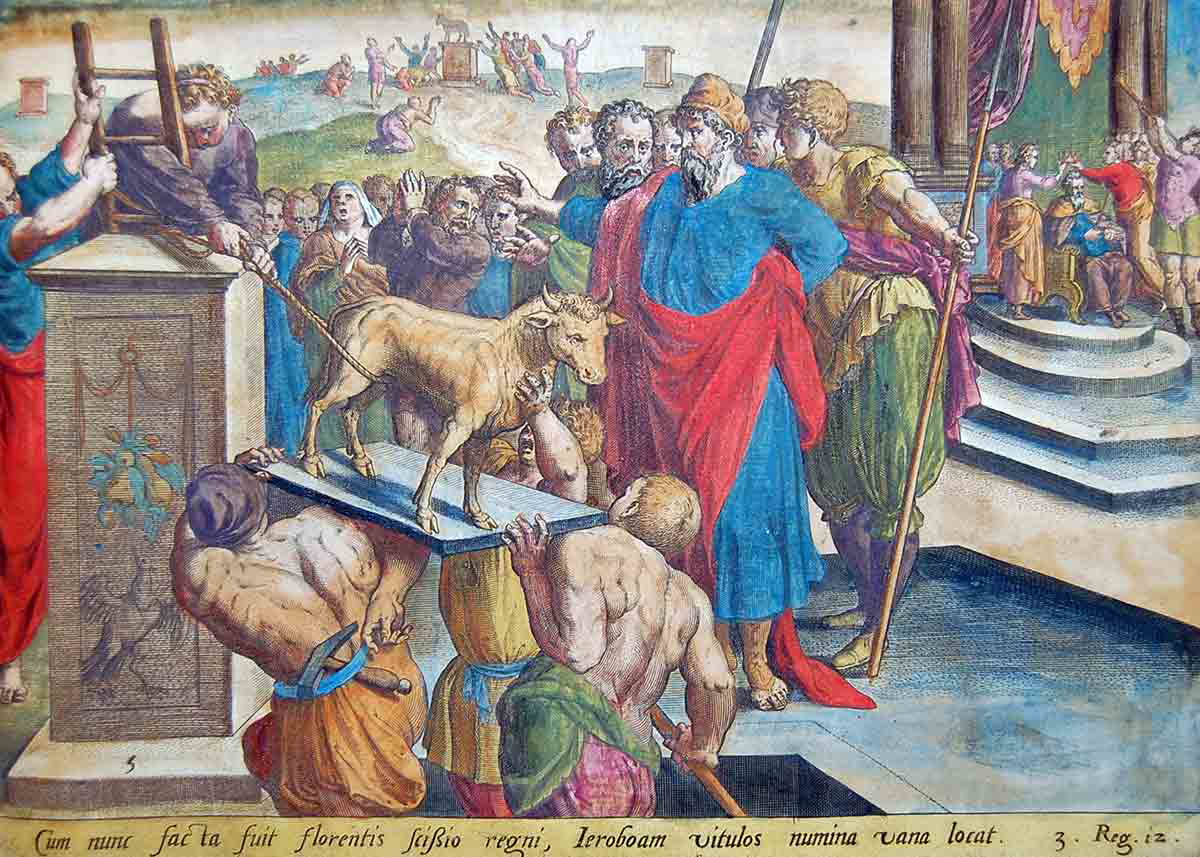
Jeroboam, with his experience working with the labor force, engaged in construction projects in his new kingdom. He was, however, concerned about the tribes returning to the House of David because they still had to worship in Jerusalem, where the Temple was. He had two calves of gold made and presented them to the new northern kingdom of Israel as their gods. Jeroboam set up places of worship for these bulls in Bethel and Dan.
Providing his citizens with an alternative form of worship meant they no longer needed to travel into the southern kingdom of Judah to practice their faith. He instituted new festivals and appointed non-Levitical priests. He also claimed that these new gods brought the Israelites out of Egypt (1 Kings 12:28). Jeroboam broke the first and second commandments that forbade other gods and the worship of idols.
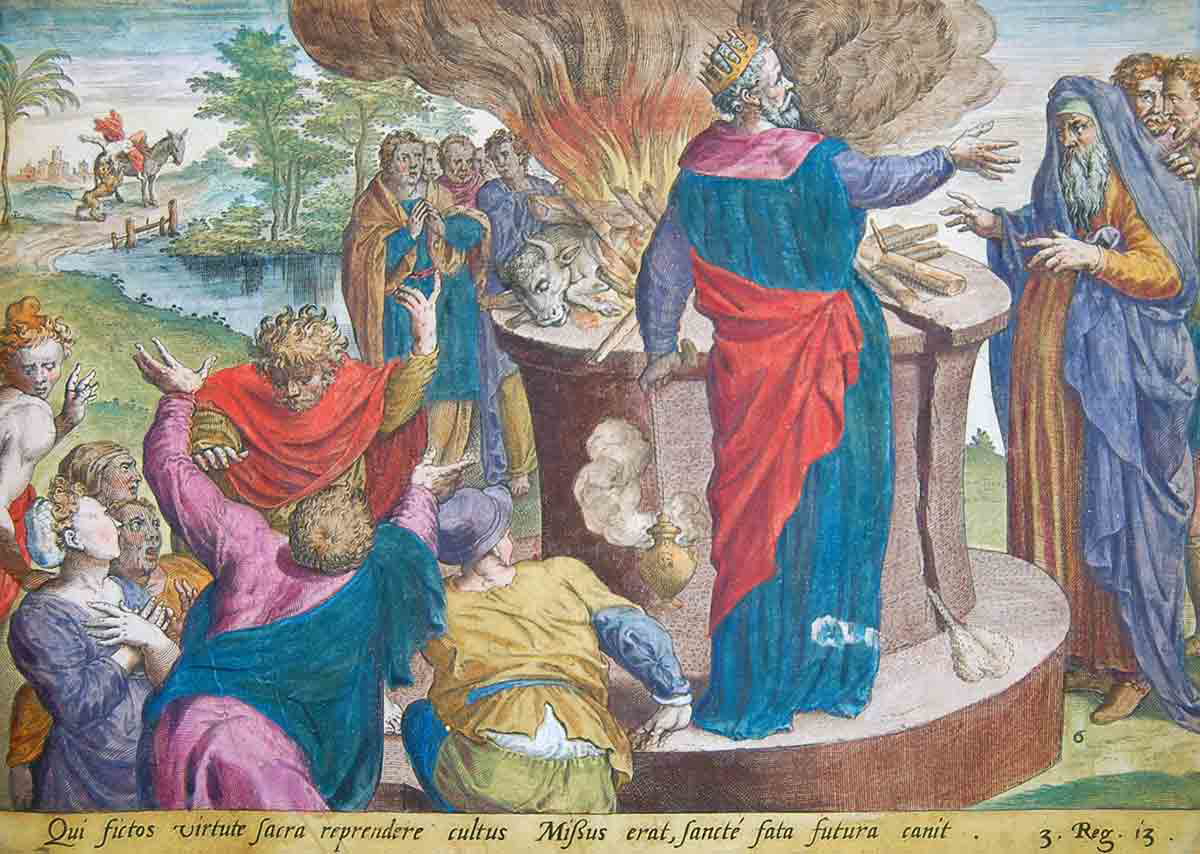
Jeroboam’s apostasy set a standard that the Bible often referenced subsequently as the “sins of Jeroboam.” 1 and 2 Kings refer to it twelve times when later kings would do what Jeroboam did. 1 Kings 13 records how Jeroboam took up a priestly role as well. God warned him through the “man of God” about what a future king, Josiah, would do to the prophets and altars the king set up. After a brief pause, Jeroboam continued to promote idolatry in the northern kingdom.
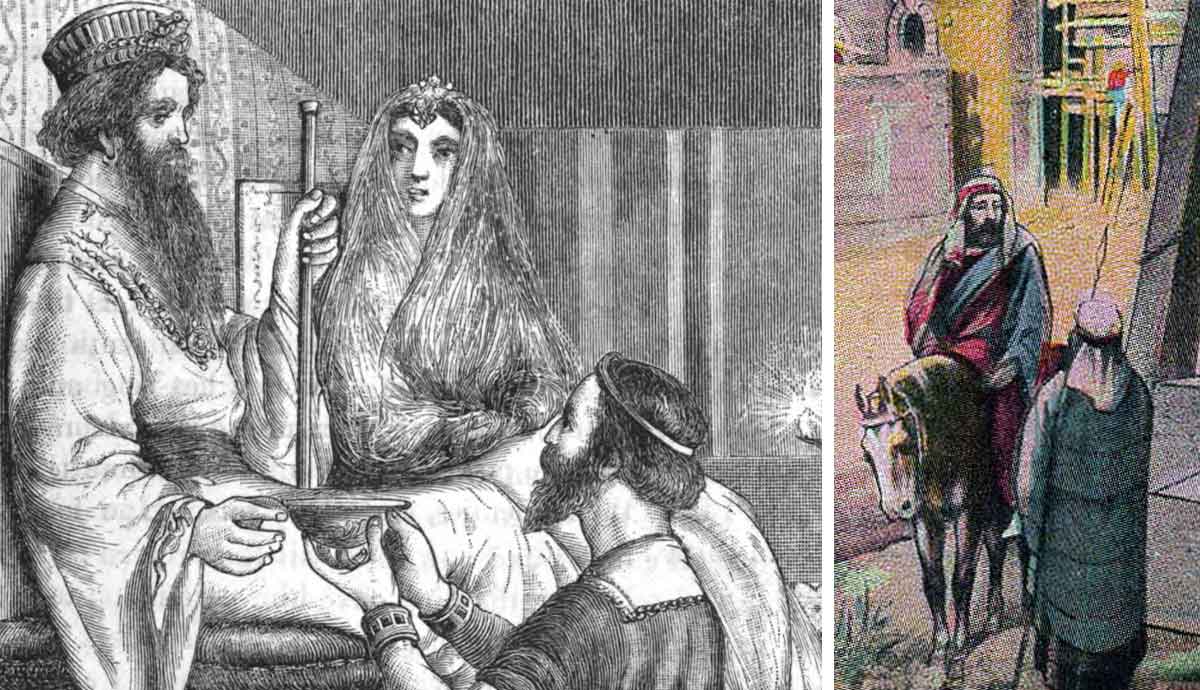
When Jeroboam’s son, Abijah, became sick, the king told his wife to disguise herself and go to the prophet Ahijah to enquire what would happen to his son. God revealed to the prophet who the woman was who would present herself under a guise. The prophet revealed her true identity and informed her that Abijah would die.
When Rehoboam, King of Judah, died, his son, Abijam (called Abijah in 2 Chronicles 13), ascended the throne. He warred against Jeroboam with vastly inferior numbers of warriors. Abijah mustered 400,000 troops, and Jeroboam had 800,000, the largest army recorded in the Bible. In a single battle, the armies of Judah slaughtered 500,000 soldiers of Israel. The hand of God in such a defeat was clear.
How Jeroboam died is not clear. The Bible notes that Jeroboam reigned for 22 years and “slept with his fathers,” a fixed expression among the Hebrews to indicate that a person died.
God, who promised to establish the reign of Jeroboam’s line if he remained faithful, then prophesied through Ahijah that the reign of the house of Jeroboam would end. It did not happen during Jeroboam’s reign but in that of his son, Nadab, who reigned only two years. Nadab continued in the wicked ways of his father, promoting idolatry. Baasha, the son of Ahijah of the tribe of Issachar (1 Kings 15:27) (not to be confused with the prophet Ahijah, a Shulamite), assassinated Nadab. Baasha then became King of Israel and completely wiped out the house of Jeroboam.
Historical Evidence for Jeroboam’s Rule
There is no direct archaeological evidence that confirms Jeroboam’s reign. There are, however, several artifacts and finds confirming the context of his reign, aligning with the claims of the biblical narrative. These include the key religious centers in Dan and Bethel.
The Tel Dan site confirms the existence of a significant cultic complex. Finds have included an altar and bamah (high place). The date of its activity aligns with the idolatry in the northern kingdom. The discovery of bull figurines in the northern kingdom also aligns with Jeroboam’s religious reforms.
Jeroboam’s Legacy
Jeroboam showed great potential as a leader among the Israelites, but his desire to compensate for political weaknesses caused him to establish a religious cult in the Kingdom of Israel. Even though his line’s reign ended with his son, idolatry became a fixture in the northern kingdom. According to the Bible, it eventually led to the downfall and exile of the Kingdom of Israel to Assyria in 722 BCE.
Like Saul, the first King of Israel, Jeroboam was a political success in establishing a new kingdom but a spiritual failure by leading his people into idolatry and apostasy. The failure of his dynasty did not deter the later kings in Israel from copying the practices of Jeroboam when the unified monarchy in Israel was divided. Instead, it became the reference point for many later kings who made the same mistakes as Jeroboam in increased measure until it reached its epitome in the reign of Ahab, the worst of all the kings of Israel. In a sense, Jeroboam’s sin caused the fall of multiple generations of Israel and brought an end to the nation. It would be fair to say that “Jeroboam … made Israel to sin” (1 Kings 14:16).