
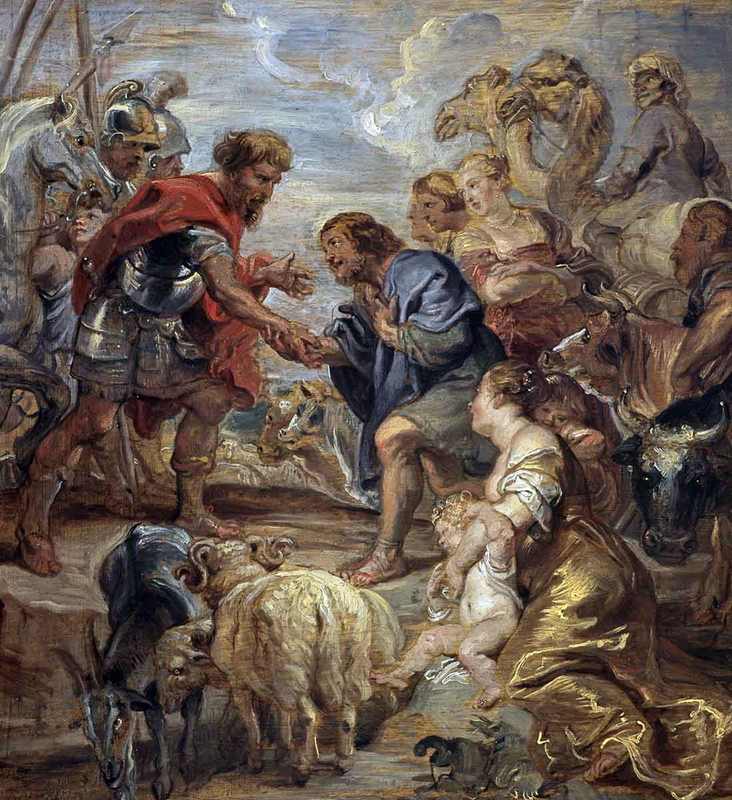
The story of Esau could be described as tragic. Though the firstborn of his family, and the favorite son of his father Isaac, Esau lost his birthright in the family and was supplanted by his brother. Not only betrayed by Jacob, his own mother inspired the plot to marginalize him. However, the story of Esau ends in peace. In an affective scene that has inspired numerous artistic renderings, Esau forgives and embraces his wayward brother.
Esau Was the Older Twin, and the Favorite of Their Father
Unlike the other patriarchs, Isaac is presented in the text as married monogamously with Rebecca. Thus, strife that plagues sister-wife relationships elsewhere in the history of Israel’s founding family do not appear in the story of Isaac. Unfortunately, however, his family still experienced conflict.
This couple, though blessed with no children except a single pair of twins, still played favorites. The Bible says that Isaac preferred Esau, the oldest, while Rebecca preferred Jacob. In a culture in which the oldest son customarily received a larger inheritance than his younger siblings, parental favoritism had tangible consequences.
Esau, who is also called Edom—“red”—in reference to the color of his hair, is described as a ruddy outdoorsman and skilled hunter. The description sounds similar to that of his uncle Ishmael who, in the previous generation, was likewise passed over as the oldest son in favor of his younger half-brother Isaac.
Jacob Swindled Esau Out of His Birthright Inheritance
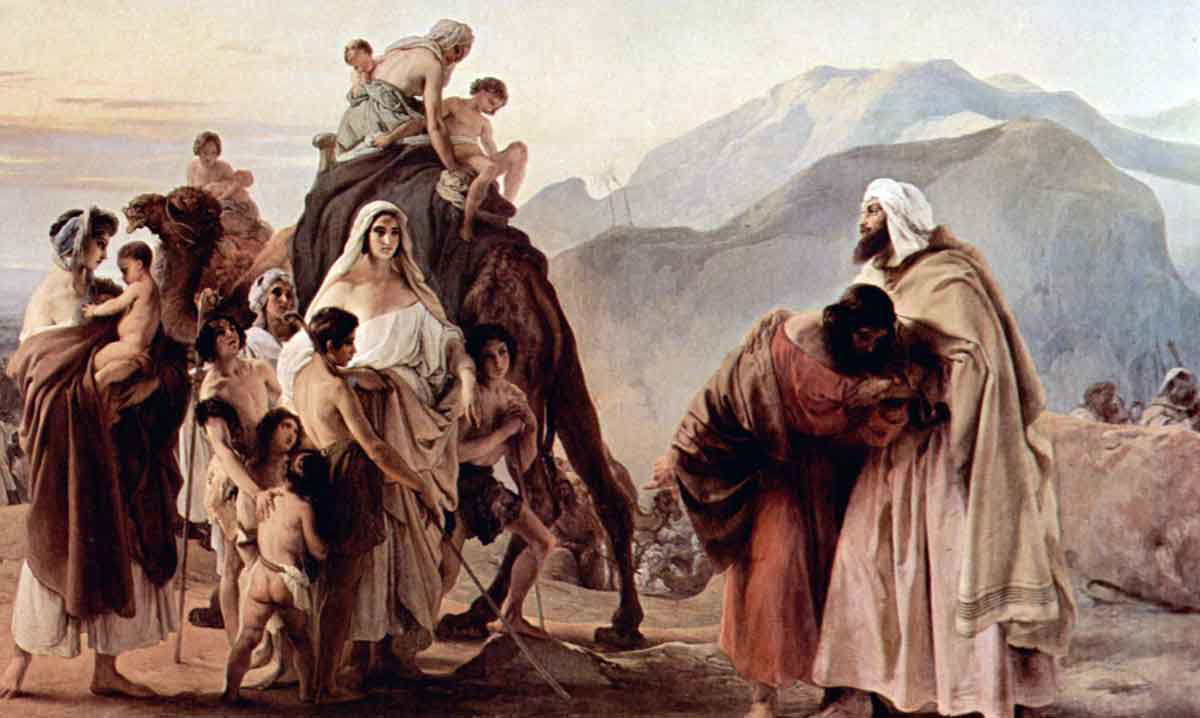
In a story scholars have had trouble fully understanding, a tired Esau returns one day from a hunt hungry and tired. Smelling a soup that Jacob has made, he asks him for a helping. Seeing an opportunity to exploit his brother’s hunger, Jacob proposes that Esau sell him his inheritance in exchange for the soup, and Esau agrees.
Esau’s reasoning, as presented in the text, is that it would be better to forgo his birthright inheritance than to die of hunger. The reader is left wondering whether or not this is intended humorously. Perhaps Esau did not think Jacob was being serious at the time. But, later, it becomes clear that Jacob was not joking.
Rebecca Helps Jacob Deceive His Father
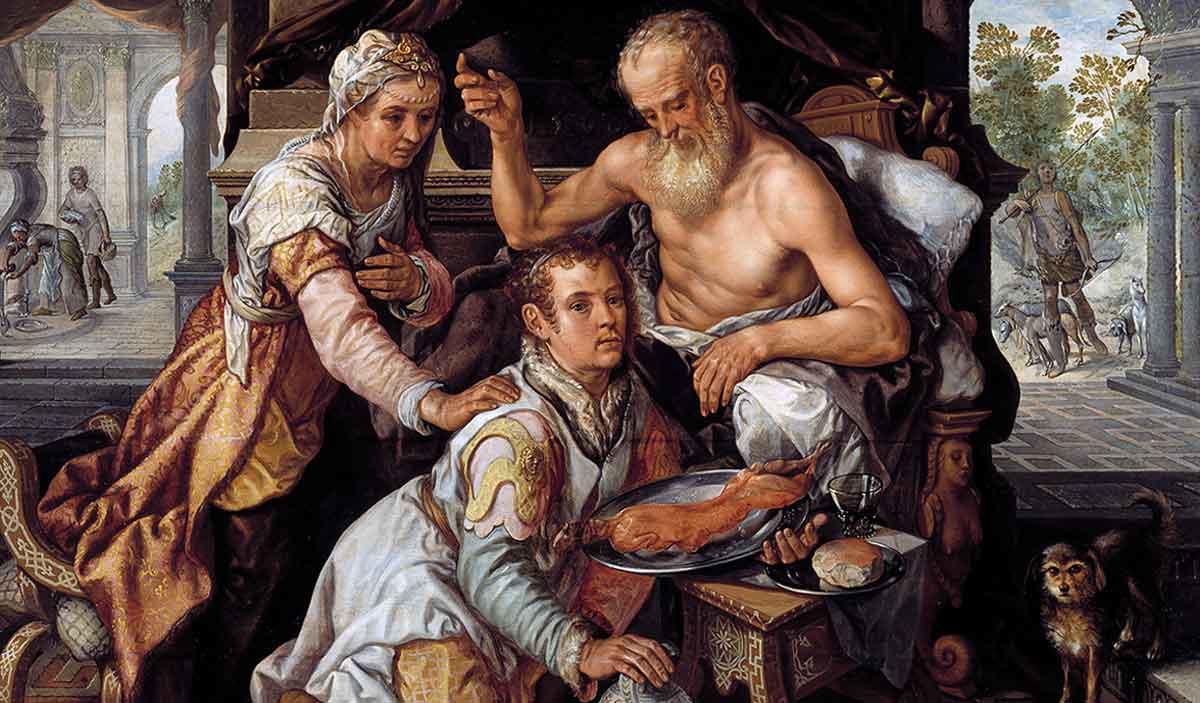
In Genesis chapter twenty-seven, Isaac is an old man with deteriorating eyesight. Recognizing that the end of his life is near, he calls Esau and tells him that the time has arrived for him to receive the firstborn blessing. Preferring the meat of wild game, Isaac instructs Esau to hunt and prepare him some venison, after which he would be given this special blessing.
But Rebecca overhears the conversation. According to divine promise but contrary to custom, Jacob was to be the family patriarch—not Esau. So, Rebecca tells Jacob to slaughter a goat, which she cooks in lieu of the venison that Esau had gone out to hunt. She then instructs her younger son to wrap his arms in the hair of the goat in order to imitate his brother’s texture which, apparently, was much hairier than Jacob’s. He would, she tells him, tell his father that he was Esau, and then proceed to steal Esau’s birthright blessing.
Jacob Stole Esau’s Birthright Blessing
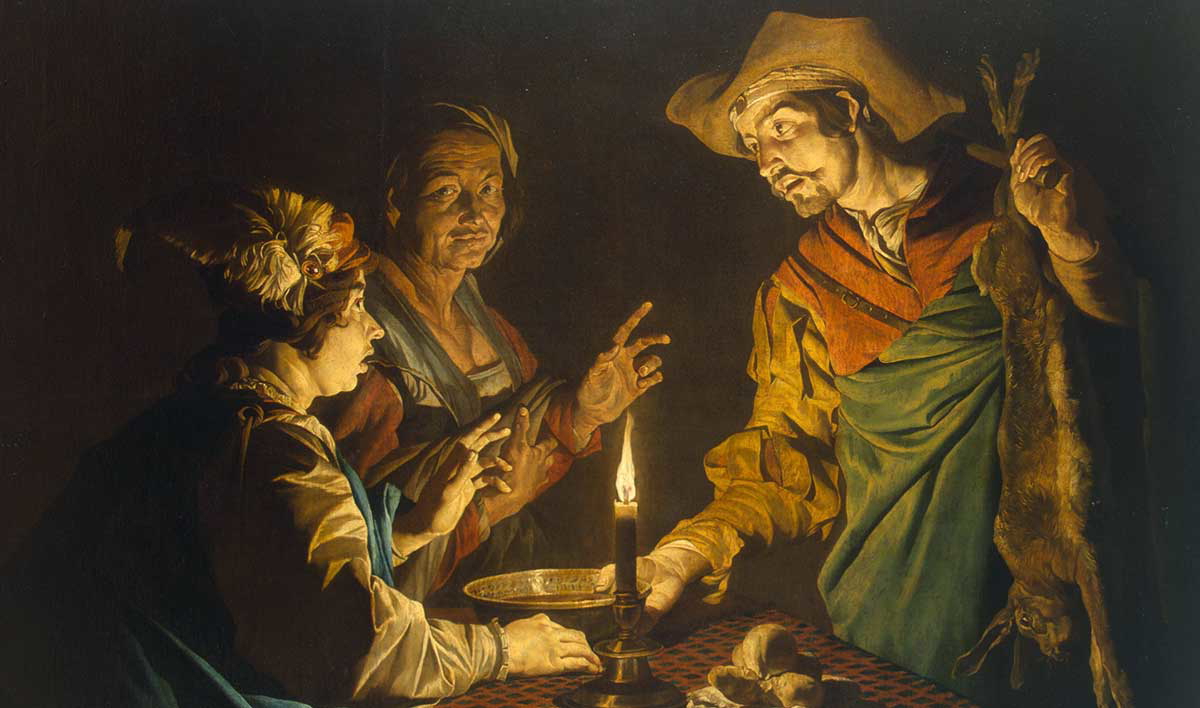
The scheme works. It is not until Esau’s return from the hunt that Isaac realizes what he had done. Esau is devastated. Not only had his twin swindled him out of his firstborn inheritance rights, he had now also robbed him of his birthright blessing.
It is not clear to the modern reader whether or not the inheritance right and the birthright blessing were seen as one in the same or as distinct rights of the firstborn son. What is clear, however, is that after Esau realizes what his younger twin had done, he also comes to feel the full weight of having lost both. Esau vows in that moment to kill his brother. Ostensibly in mercy toward his waning father, however, he decides to wait until after Isaac has died.
But before Isaac’s death, Esau would suffer a change of heart.
Esau Forgave His Brother
Esau all but exits the stage between chapters twenty-seven and thirty-three, when he finally reappears more than twenty years later. Instead, the story follows Jacob in these intervening years. Jacob flees Canaan, where his parents had settled, for fear of Esau’s wrath. He goes to Haran, traditionally located in southeastern Turkey, where Rebecca’s brother Laban lived.
Jacob lives through a series of adventures during the ensuing narrative. Notably, he experiences in his uncle Laban a man remarkably similar to himself—smart, conniving, and self-serving. Laban repeatedly tries to take advantage of Jacob, though Jacob eventually outsmarts him. The two eventually part ways, and Jacob makes his way back to Canaan.
Meanwhile, Esau’s whereabouts are not revealed. However, we are told that he married a daughter of his uncle Ishmael. Did he spend time in his uncle Ishmael’s house, even as Jacob did in Laban’s? The text does not say.
Jacob and Esau Mourned for Their Parents Together
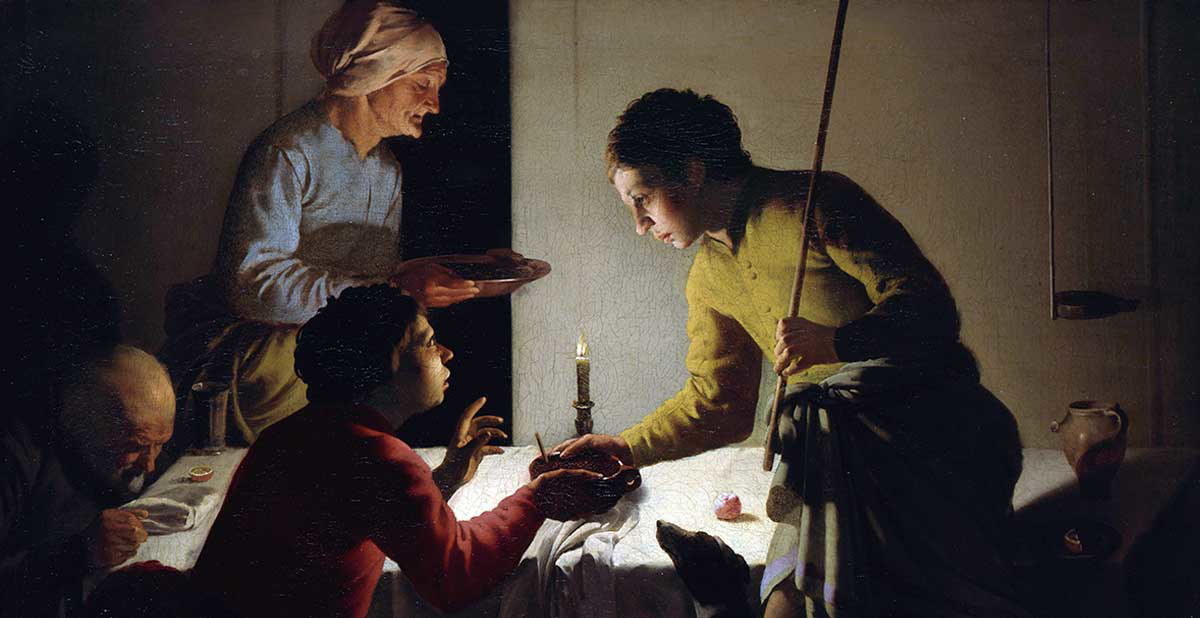
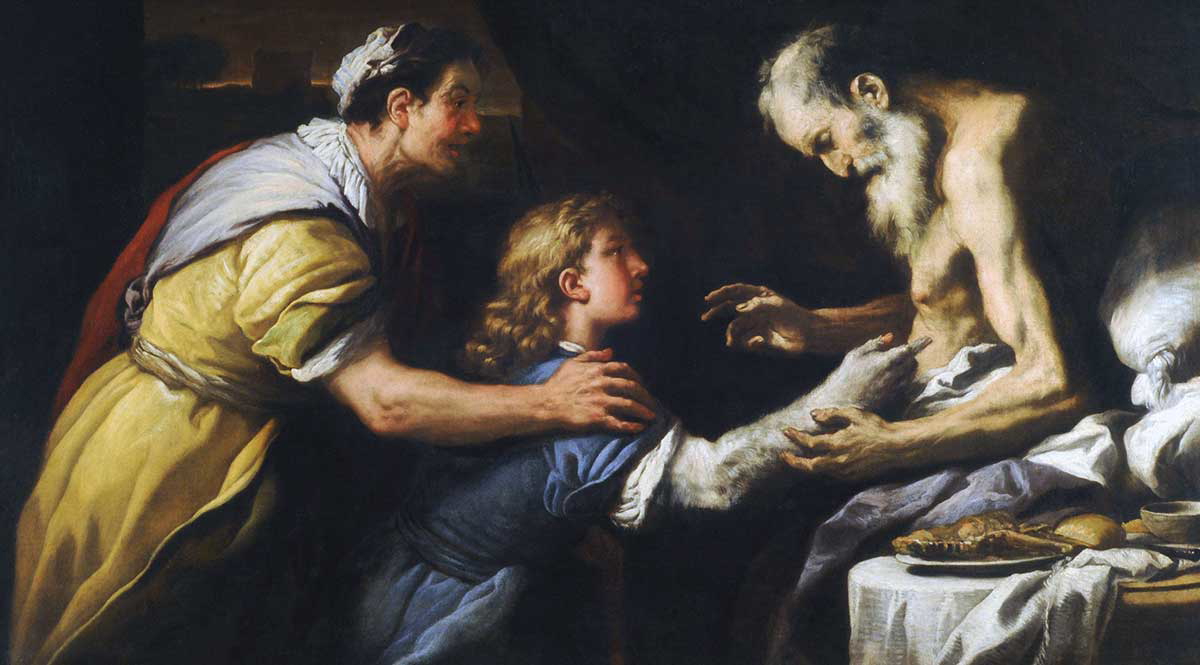
By the time Esau and Jacob meet again two decades later, Esau has undergone a radical change of heart. Instead of wanting to kill Jacob, the story depicts Esau as running to embrace his brother, falling on his neck, kissing him, and weeping over him. Whether due to pride, hesitation to trust, or some other reason, Jacob declines Esau’s invitation for the two of their families to settle together. But Esau’s desire to reconcile with Jacob is clear in the story.
Isaac lived much longer than Esau had anticipated. Though Esau had vowed to kill Jacob after their father had died, the brothers instead bury their parents together and part ways in peace.
Israel and the Edomites, identified as Esau’s descendants, are later found in frequent, bitter conflict despite Esau’s generosity toward his scheming brother. But the story of Esau’s forgiveness and change of heart was preserved in the Bible, and has inspired Jews and Christians for thousands of years.