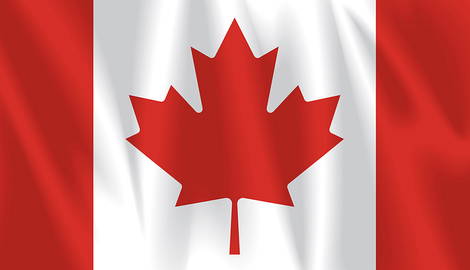
When Canada became a country in 1867 it adopted a flag known as the Canadian Red Ensign. The Red Ensign featured a British Union Jack in its top left corner and symbols representing Canada near the center of the flag. However, by the 1960s some Canadian leaders felt it was time for a distinctly Canadian flag that did not include any references to Canada’s history as a British colony. After a very contentious debate, Canada adopted the Maple Leaf as its national flag in 1965.
Canada’s Flag Before 1965: The Canadian Red Ensign
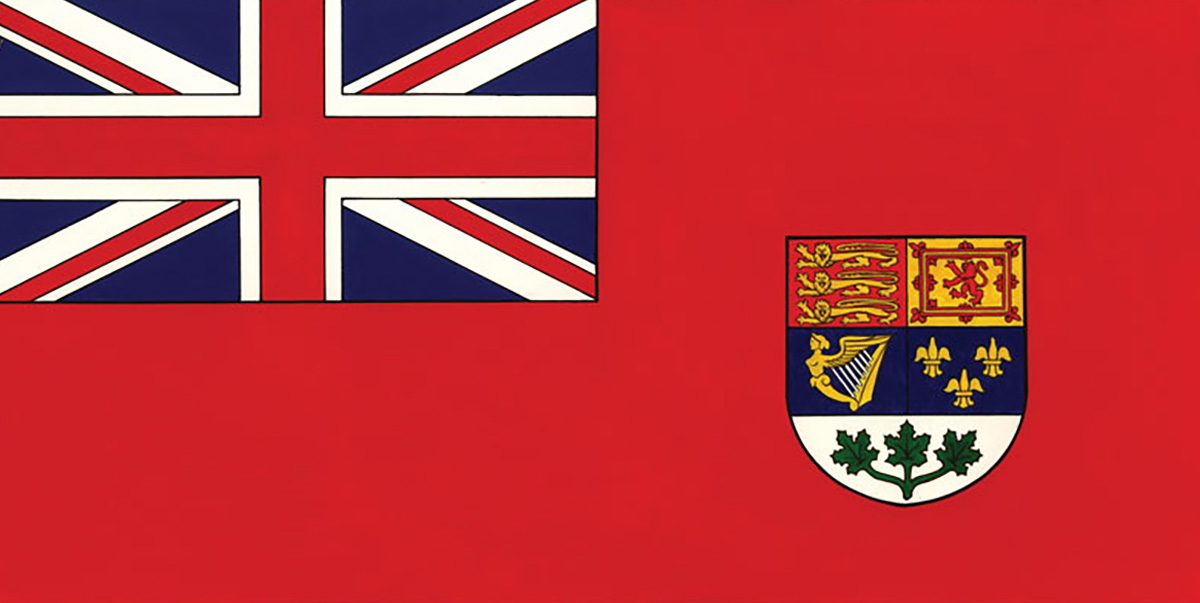
Canada became a country in 1867, but it was still part of the British Empire. The British Union Jack was therefore Canada’s official flag but, unofficially, Canada adopted a flag known as the Canadian Red Ensign.
The Canadian Red Ensign consisted of a modified British naval ensign with the Union Jack in the top left corner and symbols of Canada near the center of the flag. Since it was an unofficial flag, several variations of the Canadian Red Ensign existed between 1867 and 1965. For example, some variations of the Canadian Red Ensign had symbols representing the various provinces of Canada while others contained the coat of arms of Canada. All variations of the Canadian Red Ensign continued to feature the Union Jack.
During World War 1 and World War 2 Canadian soldiers would fight under the Canadian Red Ensign, and many Canadian veterans were deeply attached to the flag.
The Search for a Distinctly Canadian Flag

Canadian society was in a state of transition in the 1960s. Many Canadians still had ancestral ties to the United Kingdom, but a growing number of Canadians did not have any British heritage. More significantly, the province of Quebec, where most of the population is French Canadian, was experiencing what would later become known as the Quiet Revolution.
One aspect of the Quiet Revolution in Quebec was a growing sense of French-Canadian nationalism. Some French-Canadian nationalists even began to discuss the possibility of Quebec declaring independence from Canada.
Prime Minister Lester B. Pearson observed these developments and believed that it was necessary to promote the development of Canadian national identity to preserve the unity of the country. One aspect of Pearson’s plan to promote Canadian national identity was to replace the Red Ensign, with its obvious ties to the United Kingdom, with a new flag that was distinctly Canadian.
The Great Flag Debate

In 1963 Pearson announced that his government would adopt a distinctly Canadian flag that was centered around the maple leaf, which had become accepted as a symbol of Canada. Pearson invited Canadians to submit their proposed designs for consideration. Nearly 6,000 different designs were submitted for a Parliamentary committee to review.
Pearson underestimated the controversy his proposal would create. Many Canadian veterans, and others who supported retaining a close relationship with the United Kingdom, were appalled by Pearson’s proposal to replace the Canadian Red Ensign.
The Leader of the Opposition, former Prime Minister John G. Diefenbaker, led the campaign against Pearson’s proposal for a distinctly Canadian flag. Diefenbaker insisted that the Union Jack be part of any new Canadian flag.
The so-called Great Flag Debate would last for 37 days in Canada’s Parliament with many parliamentarians making passionate speeches for and against retaining the Union Jack in Canada’s flag.
Canada Picks the Maple Leaf
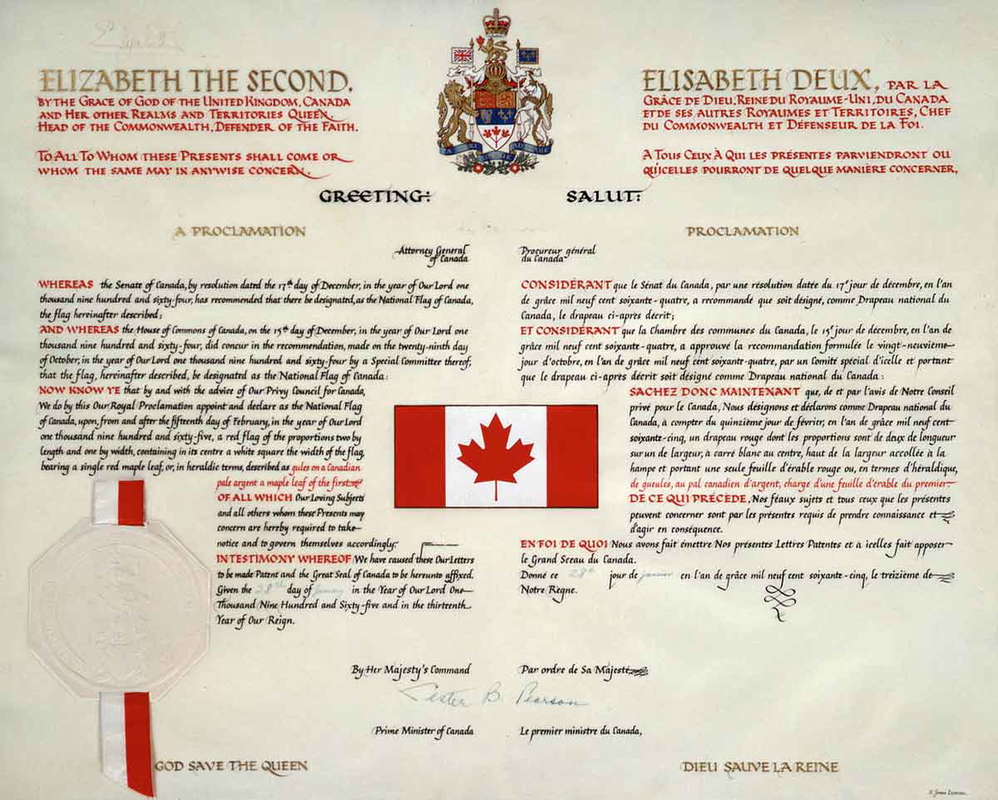
While the debate in Parliament was ongoing, the Parliamentary committee tasked with reviewing designs for the new flag had recommended that the government adopt the now iconic Canadian Maple Leaf flag. The design had been submitted by the Canadian historian George Stanley and was based off the flag for the Royal Military College of Canada.
Diefenbaker and his supporters nonetheless refused to yield and launched a filibuster against the adoption of the new flag. Pearson was eventually compelled to use parliamentary procedures to shut down further debate and force a vote on adopting the new flag, which passed 163 to 78 on December 15, 1964.
Following a Royal Proclamation by Queen Elizabeth II, the Maple Leaf officially became Canada’s flag on February 15, 1965. Notwithstanding the controversy during the Great Flag Debate, the Maple Leaf was rapidly embraced by Canadians and today is one of the world’s most recognizable flags.