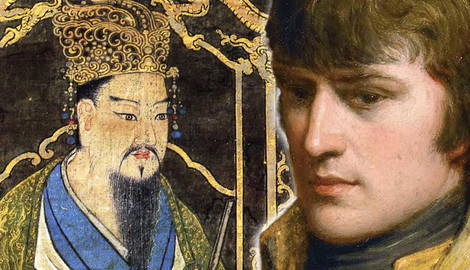
There is a chronological gap between the Napoleonic Wars and the Heian Period as they existed in two different eras. While the Heian era spanned from 794 to 1185, the Napoleonic Wars began in 1803 and ended in 1815. Both made significant impacts on the societies they affected. The Napoleonic Code which emerged from the Napoleonic Wars, for example, gave many European states a unified legal system. The wars also redrew European borders. The Heian period, on the other hand, redefined Japanese culture from the 8th to 12th centuries and is widely considered to be the golden age of Japan.
How the Heian Era Began
In 794, Emperor Kanmu of Japan made the decision to move the Japanese capital from Nagaoka-kyo to Heian-kyo due to a motley of factors that included the need to avoid the influence of the powerful Buddhist leaders. Going by historical records, the city which is today known as Kyoto, served as the seat of the imperial court for over a millennium. At Heian-kyo, the central government based its structure on the Chinese bureaucratic system and largely encouraged participation in artistic endeavors.
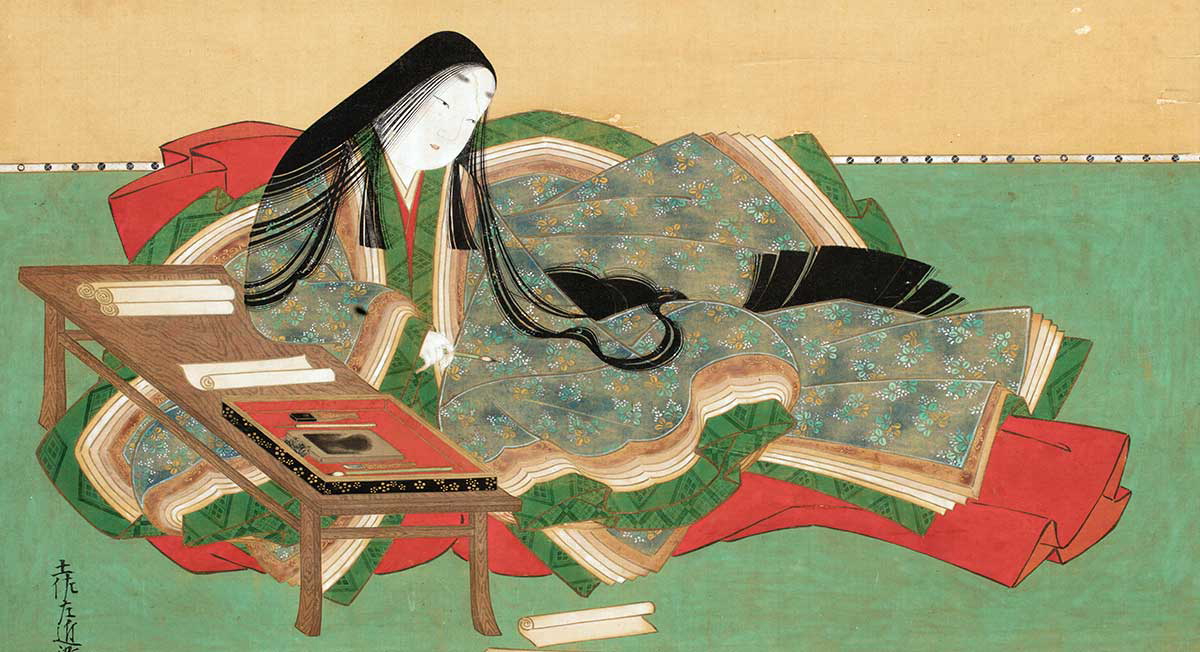
The culture at the court led to what is often referred to as the golden age of Japanese culture. Famous writers at the court such as Murasaki Shikibu wrote some notable books such as The Tale of Genji which is often considered to be the first novel in history. The book provided a rare glimpse into the court life of the elite which mainly promoted art, fashion, and literature. Yet, the peaceful atmosphere of the capital hid the rising tensions between the state and the different military clans that provided protection to the landlords in the countryside.
Factors That Contributed to the Rise of the Countryside Military Clans
Because power and authority were mainly concentrated at the courts, autonomous soldier groups began to emerge in the countryside due to neglect by the state. This was after local landowners in the countryside began to hire private guards for protection. The private guards eventually grew into the samurai class that would eventually dominate Japan for nearly 700 years.
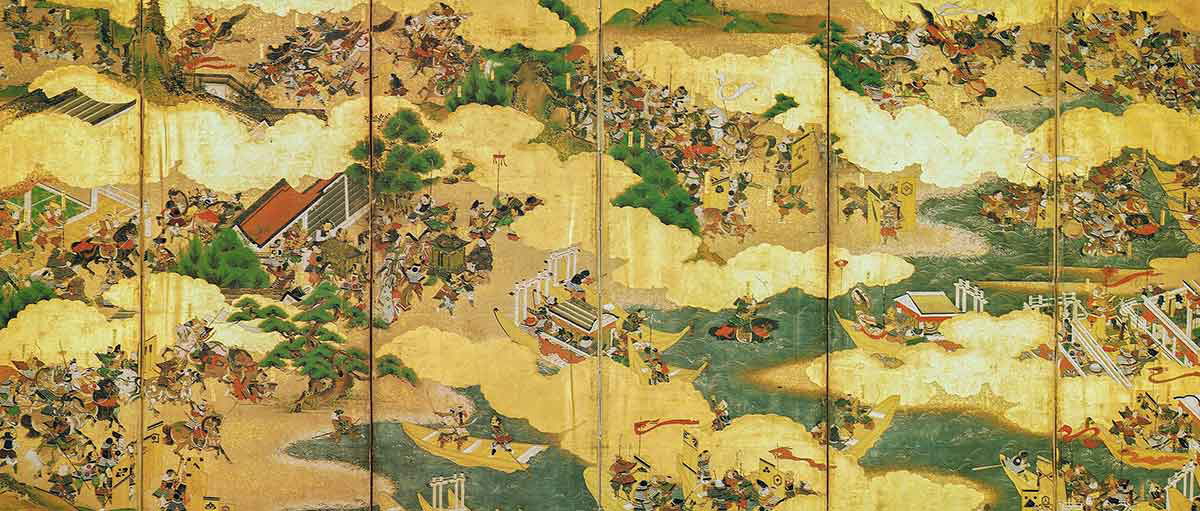
In 1156, a small conflict called the Hogen Rebellion revealed that the military families now held the real power in Japan. Soon afterwards, the Taira and the Minamoto, the two main warrior clans in Japan, fought for control of the government in the Genpei War, a bigger conflict, in 1180. The war lasted for five long years and ended at the sea battle where the Taira family was finally beaten. Minamoto no Yoritomo, subsequently, became the first shogun in 1192. He made the city of Kamakura the seat of the shogunate. The move marked the end of the Heian period.
How the Napoleonic Wars Began

A gap of more than 600 years exists between the end of the Heian period and the Napoleonic Wars. In the year 1789, the French Revolution started because the poor people were angry with the king. The revolution led to the execution of King Louis who was guillotined in 1793 for treason. At the time, Napoleon Bonaparte was a young officer from the island of Corsica who became a famous hero in the army.
By 1804, he had become the Emperor of the French at a ceremony in the city of Paris. The Napoleonic Wars began in 1803 when the peace treaty with Britain broke down. Napoleon soon won a major victory at the Battle of Austerlitz in 1805 against Russian and Austrian forces.
After the Battle of Austerlitz
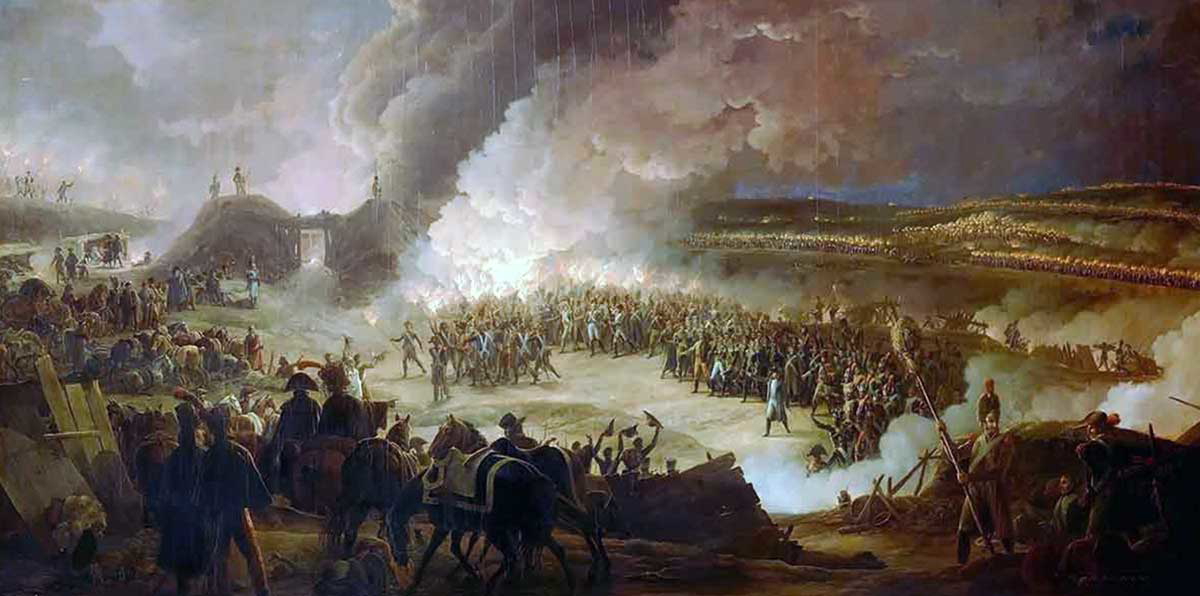
After the Battle of Austerlitz, Napoleon redrew the map of Europe and put his friends on the thrones of other lands and won a series of other battles. In the summer of 1812, however, he decided to invade the massive country of Russia with a huge number of soldiers. Over six hundred thousand soldiers marched into the east side of the country. Only a few ever came back as the Russian army practiced scorched earth policy and burned their own fields and cities during the invasion so that the French invaders lacked food.
The cold winter and powerful counterattacks killed many French soldiers forcing the army to retreat. The heavy losses encouraged other kings of Europe to band together and fight the already overwhelmed and demoralized French army. Soon, the Allied forces entered Paris in 1814 and exiled Napoleon to the small island of Elba in the Tyrrhenian Sea.
He escaped from the island in 1815 and went back to France to lead his loyal troops for one last time but was defeated. Napoleon spent his final days on the island of Saint Helena where he died in 1821.