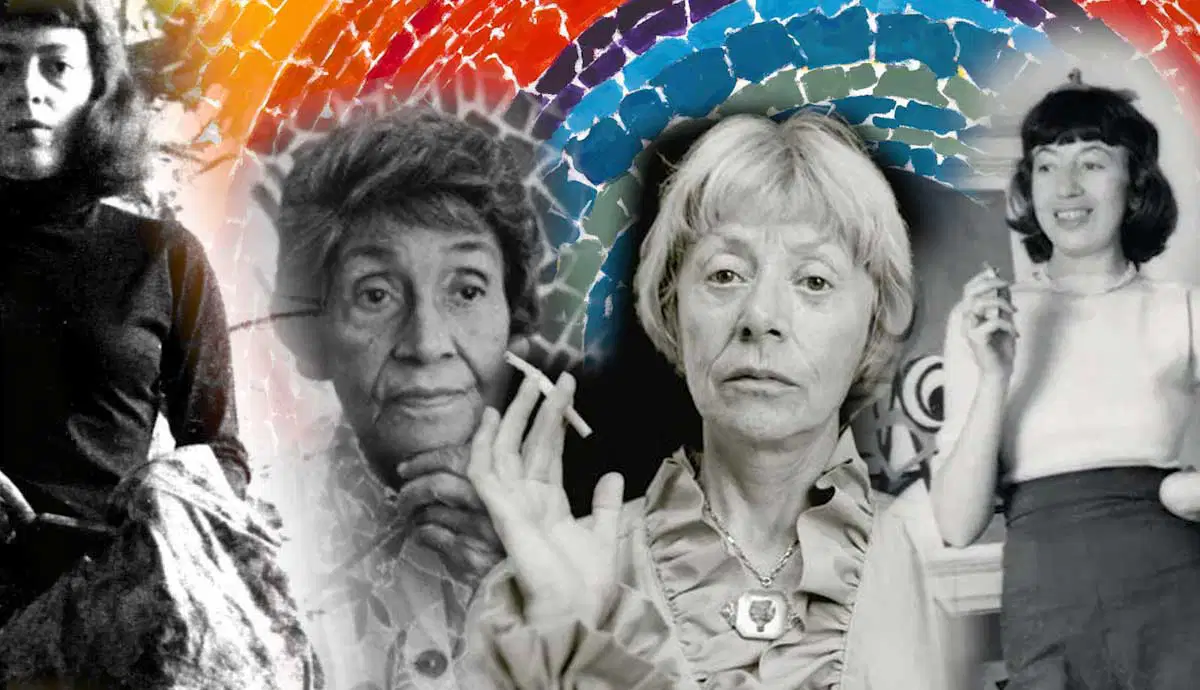
Alfred Leslie (1927–2023) was a painter born in New York City. He was known for his involvement in the Abstract Expressionist movement in the 1950s. Over the course of his career, he shifted directions and became best known for large-scale figurative paintings like The Killing Cycle series.
When viewing Leslie’s work, one can see his New York upbringing reflected in paintings that deal with the complex and often gritty nature of urban life. His career remained illustrious until his death in 2023, marked by bold figures and imagery in stunning portraits, such as Johnny Perry.
The Beginnings of Alfred Leslie
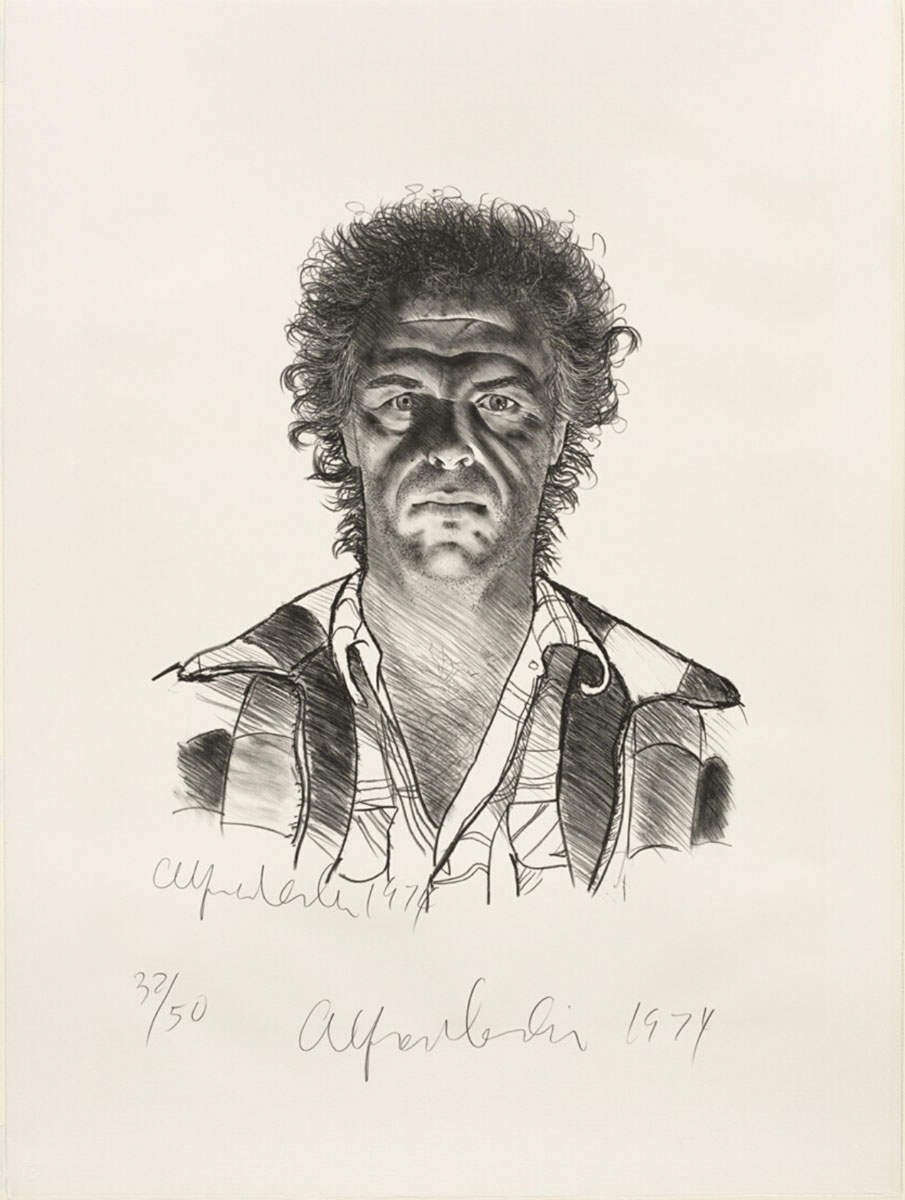
Alfred Leslie started his artistic career as an Abstract Expressionist inspired by Jackson Pollock and Hans Hofmann. Born in New York City, where Abstract Expressionism was centered, Leslie studied art at New York University after completing service with the U.S. Coast Guard in World War II. In addition to creating iconic artworks, Leslie was also a filmmaker and directed Pull My Daisy (1959), a short narrated by Jack Kerouac.
Though Leslie made a name for himself as a second-generation Abstract Expressionist in the 1950s, he changed artistic direction in 1962 when he began creating large-scale figurative paintings. Initially, these figurative paintings were done in grisaille, or greyscale, but Leslie started to add color after most of his work was destroyed in a fire in 1966. Looking at the overall catalog of Alfred Leslie’s work, one can see outstanding achievements in both abstraction and realism, as well as striking callbacks to twentieth-century Americana. Here are seven of his works you should know.
1. Abstract Expressionism: Orange and Black, 1948-50
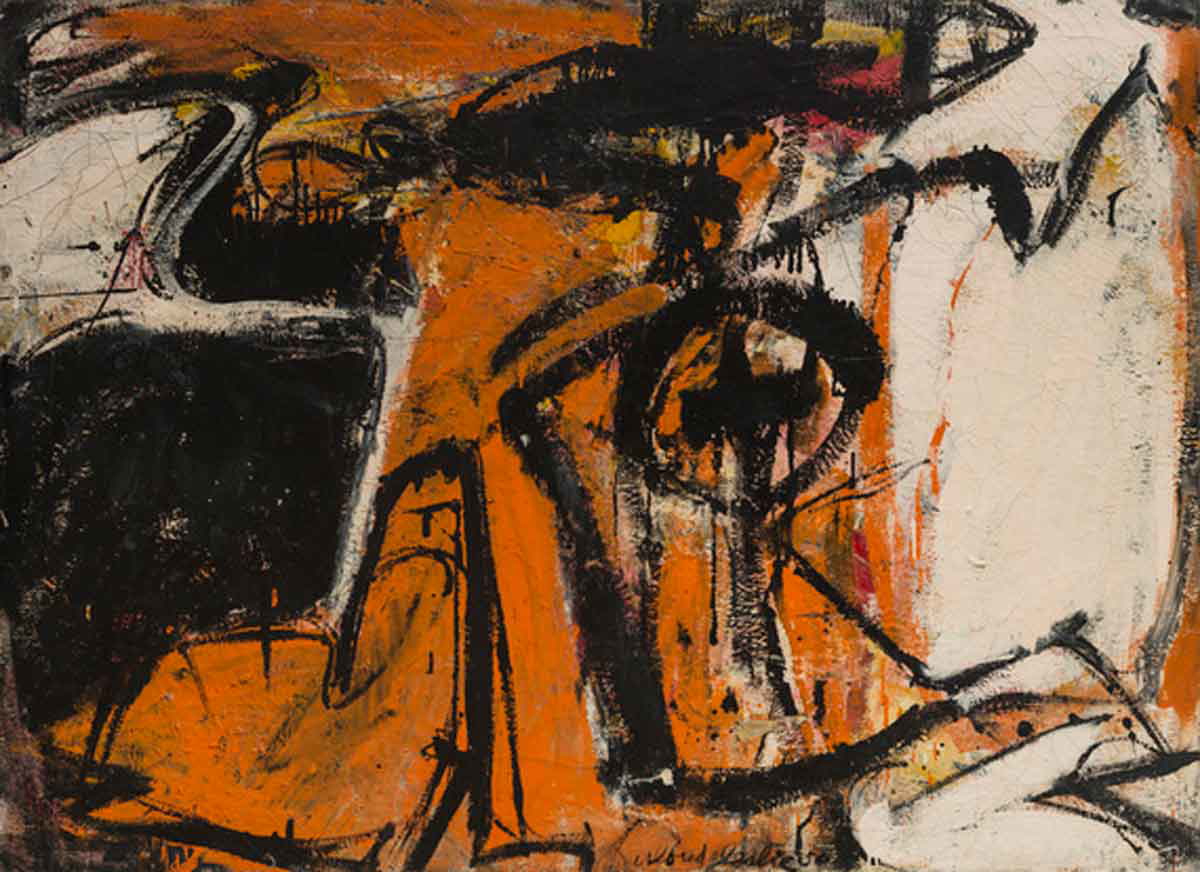
In the 1950s and early 1960s, Alfred Leslie made a name for himself as an Abstract Expressionist and drew much attention with his exhibitions. Abstract Expressionism originated in New York City in the 1940s and 1950s, defined by irregular, spontaneous brushstrokes and an emphasis on self-expression. Leslie’s Orange and Black (1948–50) is a striking example, featuring bold colors and black brushstrokes that may represent a figure. Though Leslie did not remain in Abstract Expressionism for long, his work from this time still holds up today.
2. Pink Square (1957-60): A Simple Concept with a Large Impact
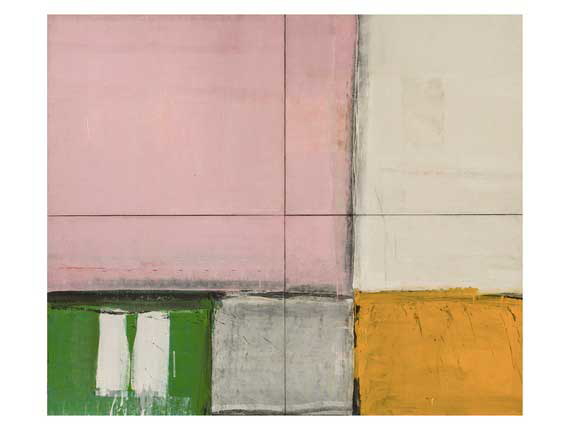
Alfred Leslie continued making Abstract Expressionist artworks in the late 1950s and early 1960s, including his painting Pink Square (1957–60). The composition—a large pink square, smaller squares in green, grey, and yellow, and black lines—still belongs within Abstract Expressionism. However, it also marks a shift in artistic priorities. Compared with earlier works like Orange and Black (1948–50), Pink Square feels less spontaneous and chaotic, signaling the changes Leslie was about to pursue.
3. Alfred Leslie (1966-67): A Deeper Look Inside
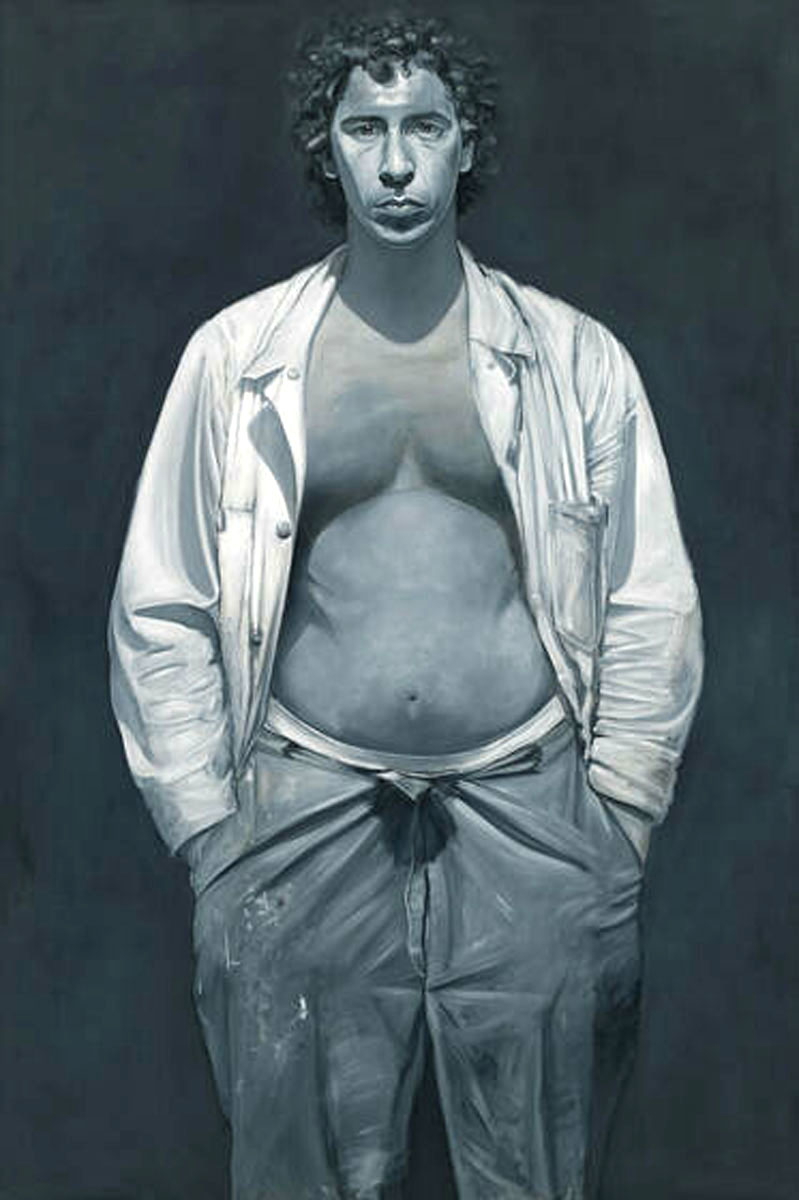
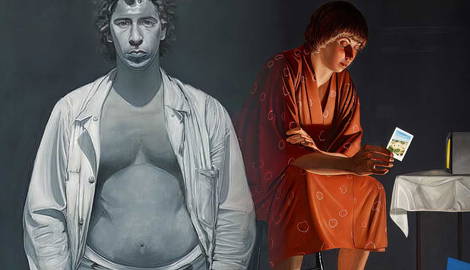
Not many of Alfred Leslie’s grisaille, or greyscale, paintings survive because most were destroyed in the 1966 fire. This self-portrait is significant not only because it is composed of shades of grey, but also because it allows the viewer critical introspection into the artist’s mind and sense of self. The details in this painting show his skill with a monochromatic palette. Leslie’s intense expression and undone clothing make for a striking figure.
Soon after creating this work, Leslie quit painting in grisaille, saying, “There was a point at which I realized that if my work was to develop and evolve, and if I was to mature as an artist, these figurative ideas could not be ignored, even though following them could seem to imply that I would be turning my back on the twentieth century, turning my back on my abstract achievement.”
4. The Killing Cycle: Leslie’s Iconic Series of Figurative Paintings
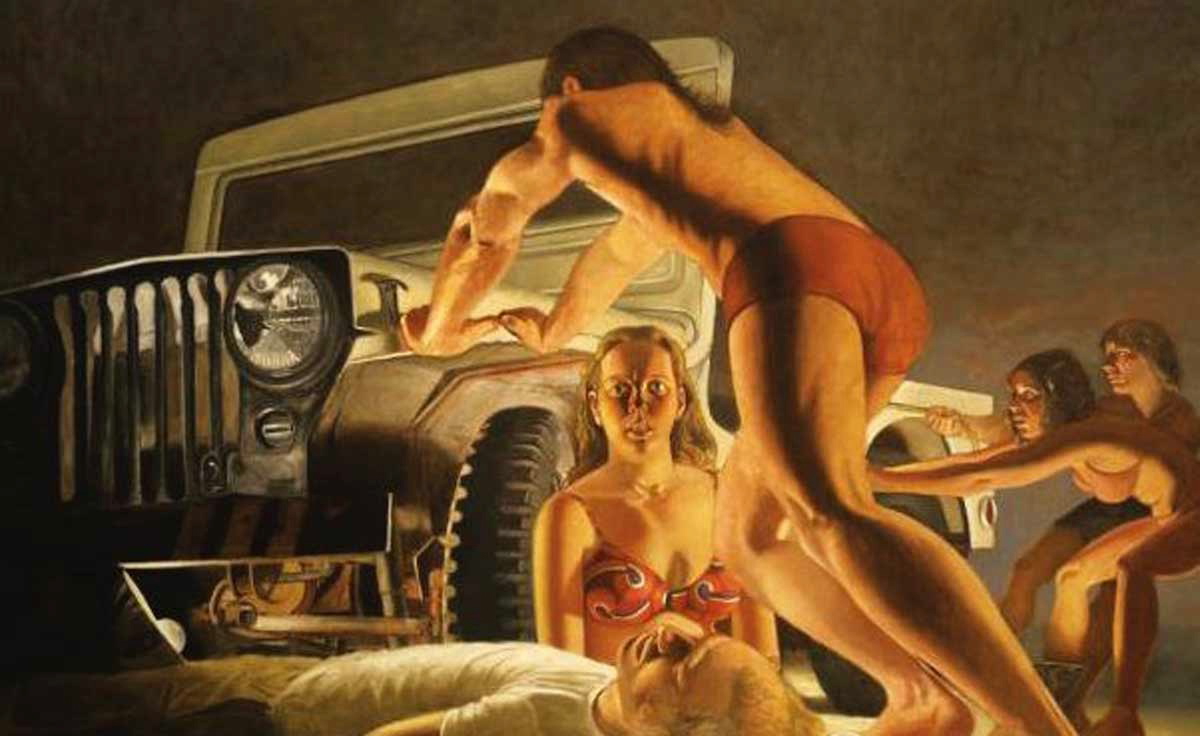
After several transitional years working in greyscale, Alfred Leslie developed The Killing Cycle, his most famous series of paintings. Conceived and created between the mid-1960s and mid-1970s, the collection explores themes of war, violence, death, and destruction with stark realism and bold colors.
One of the most recognized paintings, The Accident (1969–70), depicts the car crash in which poet Frank O’Hara, Leslie’s friend and collaborator, died. Its near photographic detail shocked viewers and cemented the series as a powerful achievement.
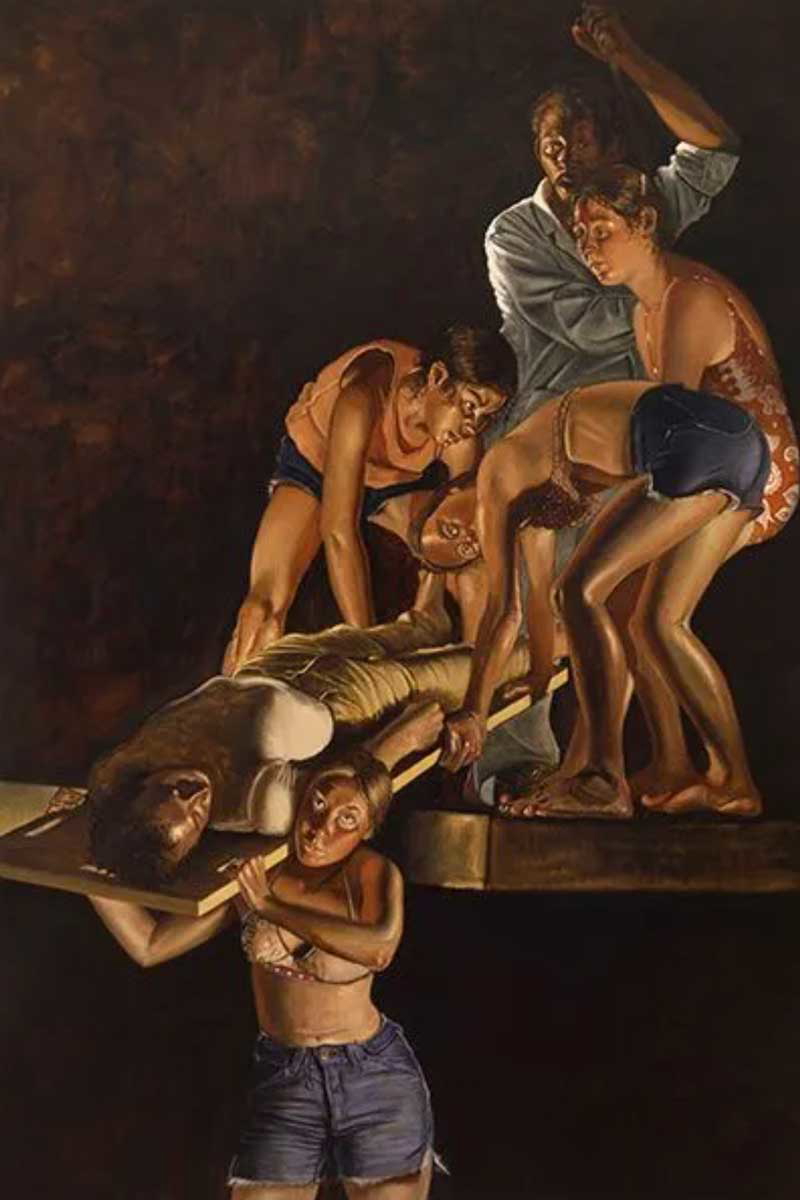
Another important painting, The Loading Pier (1975), shows a fictionalized version of O’Hara’s death. The scene is almost cinematic, with shocked women lowering O’Hara’s body, recalling the drama of Baroque masters. While the series deals with universal themes of violence and mortality, it was also deeply personal for Leslie.
5. Americans, Youngstown, Ohio (1977-78): A Striking Example of Leslie’s Americana
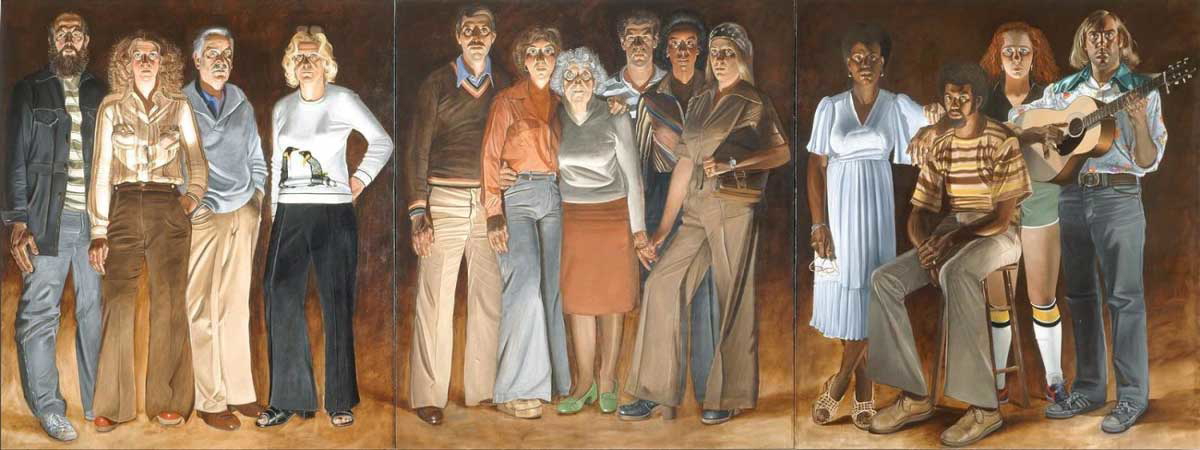
In the late 1970s, Alfred Leslie was fully engaged in large-scale figurative painting, often focusing on the American people and their circumstances. Americans, Youngstown, Ohio (1977–78) depicts workers and figures associated with Youngstown’s Butler Institute of American Art. The triptych presents life-sized figures, creating an extraordinary in-person experience. This work is a strong example of the personal artistic style Leslie developed, which many critics called The New Realism.
6. Influence from Caravaggio: Instant Pictures (1981) by Alfred Leslie
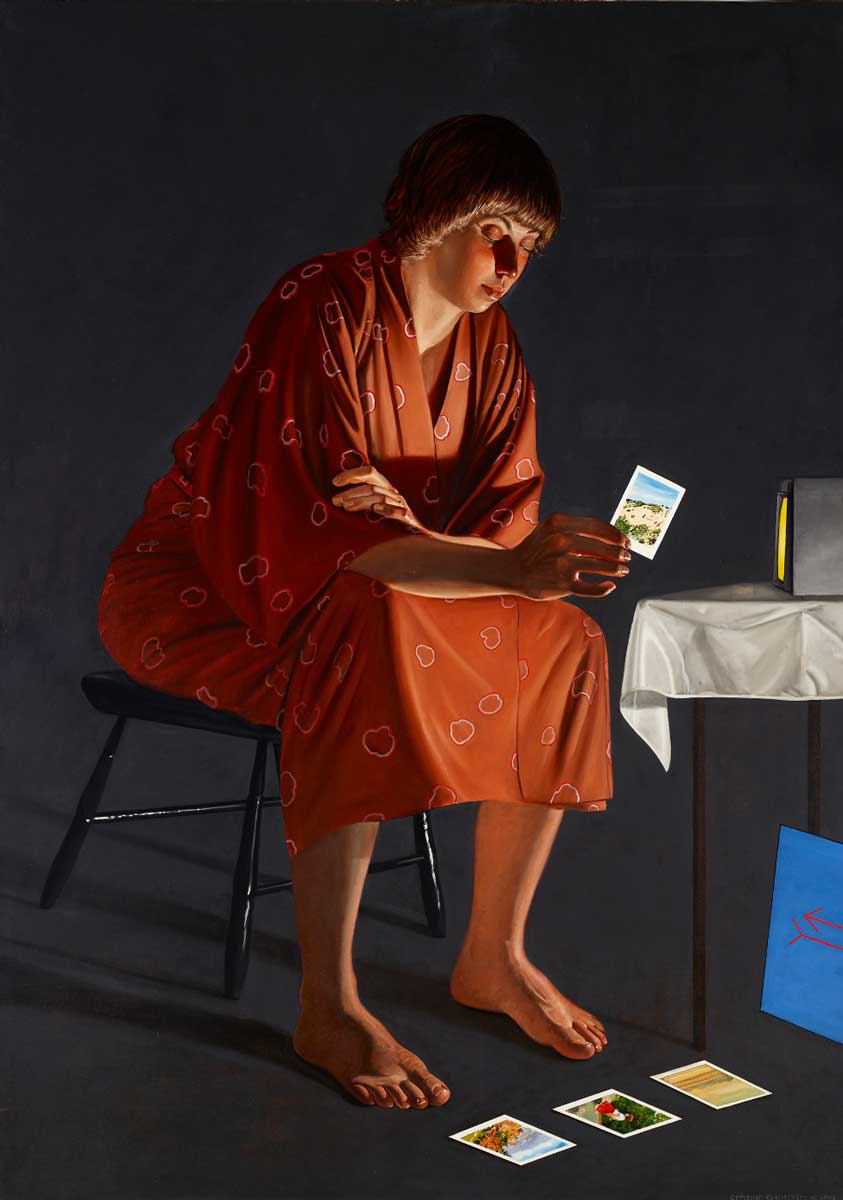
Moving into the 1980s, Leslie continued creating large-scale, realistic paintings. Instant Pictures (1981) is considered a monumental work for its clarity, realism, and the contemplative stance of the subject. The painting reflects Leslie’s mastery of tableaux vivant, or “living pictures,” blending modern and classical elements.
The subject examines Polaroid photographs, yet the dramatic lighting recalls Caravaggio, the 16th-century Italian master of realism and intensity. By this time, Leslie was firmly established in creating cinematic scenes with life-sized figures, and the woman’s reflective pose recalls classic works like Rodin’s The Thinker.
7. Alfred Leslie’s Later Years: Johnny Perry, 2013
Until he died in 2023, Alfred Leslie’s later years were marked by portraits of compelling figures and a continued dedication to artistic excellence. Beginning with his opposition to the Vietnam War, he became involved in political activism and social justice, themes that often appeared in his later work.
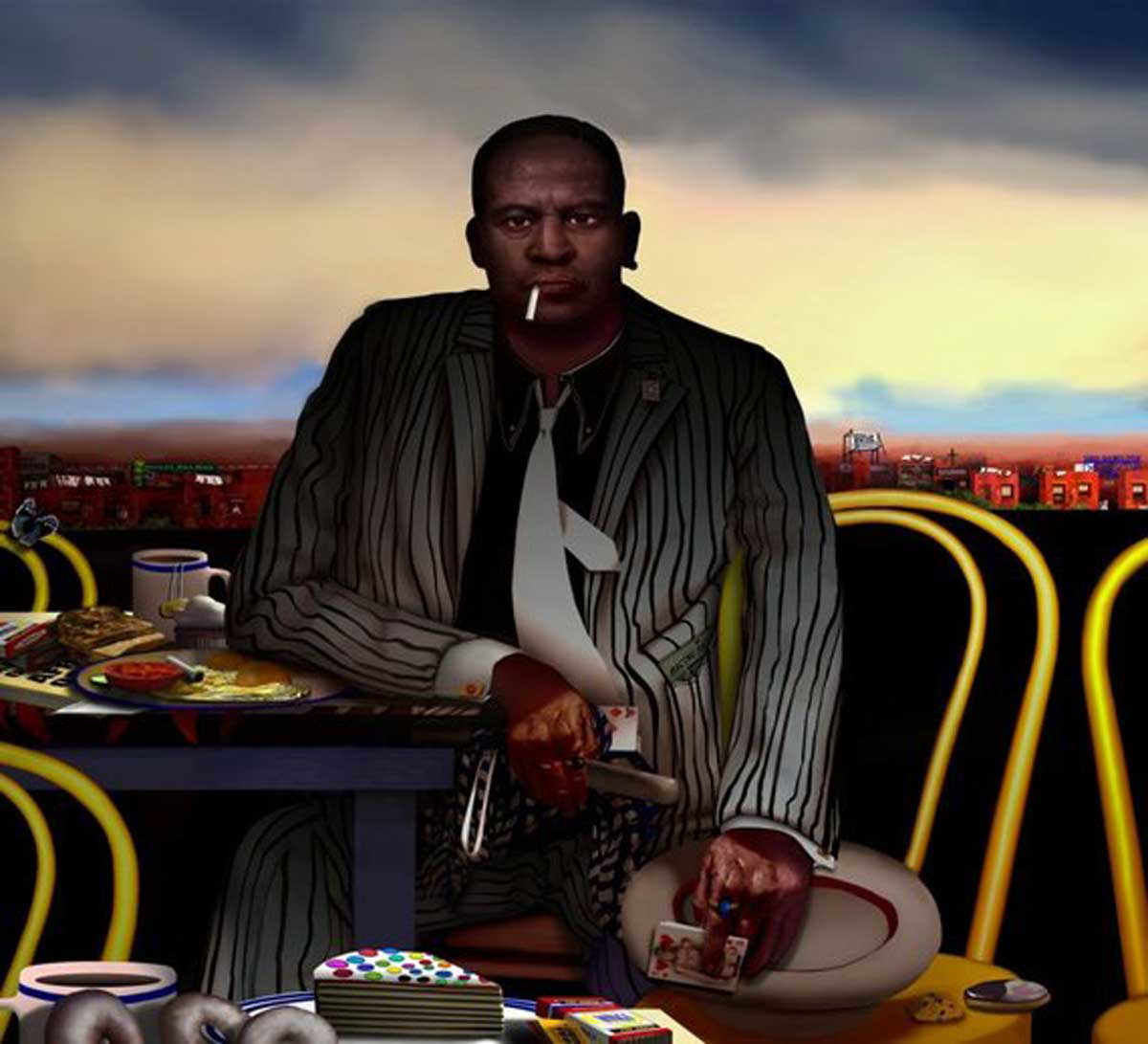
Johnny Perry (2013) is a late portrait depicting a character from Chester Himes’ novel The Crazy Kill. Perry looks directly at the viewer, cigarette in his mouth, surrounded by objects like cookies, tea, playing cards, and a slice of birthday cake. The composition reappropriates imagery associated with Alice’s Adventures in Wonderland but creates a darker, more intimidating scene.
FAQs About Alfred Leslie
What happened to Alfred Leslie’s paintings in the 1966 fire?
The fire destroyed nearly all of Leslie’s earlier grisaille paintings. This loss pushed him to abandon greyscale and begin working in bold, colorful figurative styles that defined the rest of his career.
Why is The Killing Cycle considered Alfred Leslie’s most famous work?
The Killing Cycle (1960s–70s) is a series of large-scale paintings that explored themes of violence and tragedy. Inspired by the death of poet Frank O’Hara, it combined personal grief with universal themes, making it one of Leslie’s most powerful achievements.
How did Alfred Leslie’s style change over time?
Leslie began as a second-generation Abstract Expressionist in the 1950s. Then, He shifted to grisaille figurative painting, and later embraced colorful realism. His career bridged abstraction and narrative art, leaving a unique mark on twentieth-century American painting.
What is Alfred Leslie’s place in American art history?
Leslie is seen as a bridge between Abstract Expressionism and the New Realism that emerged in the late twentieth century. His ability to reinvent himself while staying relevant makes him a key figure in American art.