Along the banks of the mighty Nile, the Egyptians built an empire that lasted for millennia. Over the course of its history, it faced countless challenges and overcame mighty powers that sought its destruction. Yet the Egyptians were also expansionistic and sought to subjugate their neighbors. None of this would have been possible without the power of its armies.
The geography and resources of Egypt played a fundamental role in shaping how it fought, from logistic considerations to the technology of its armies, and how it projected power over its sphere of influence.
A Strong Military: The Foundation of War
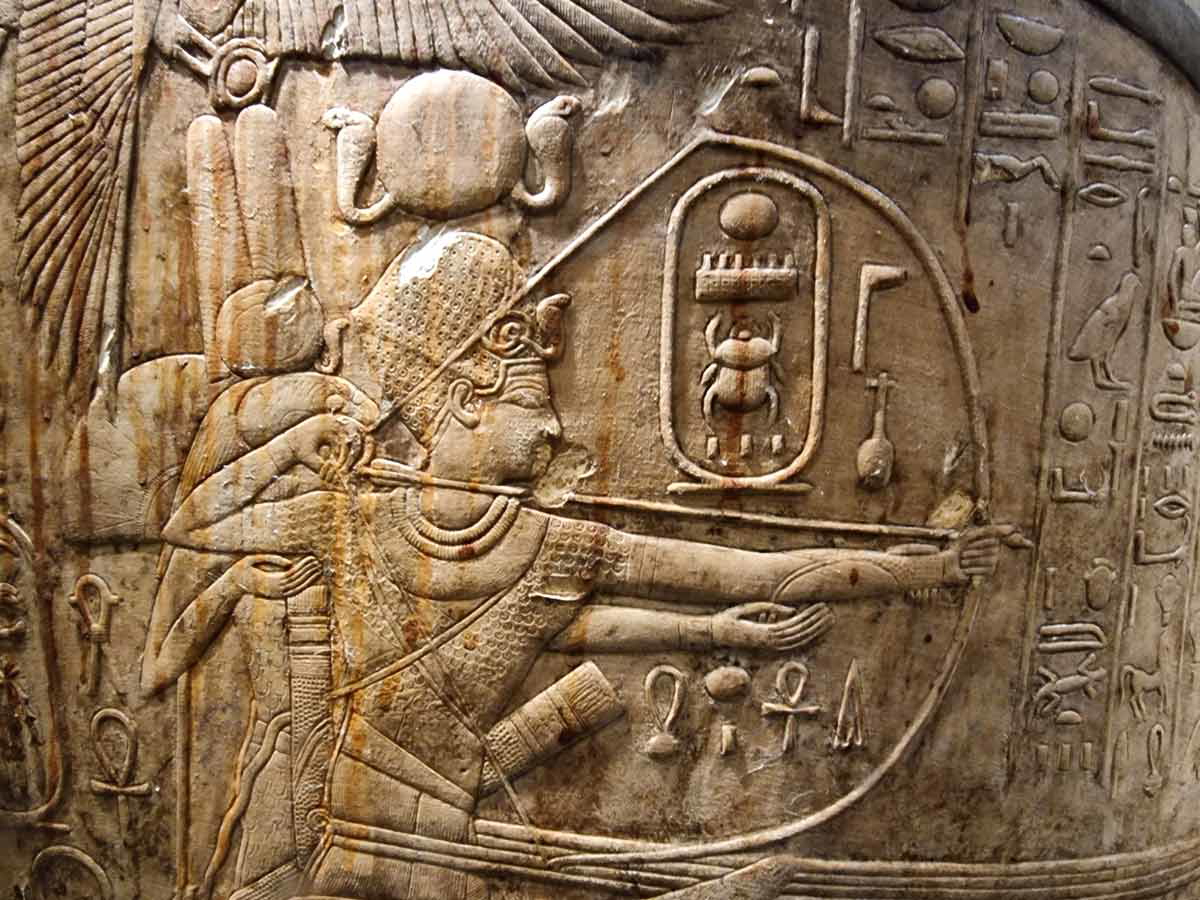
Ancient Egypt existed for around 3,000 years, and uniformity across this time span was impossible. There were times when armies were strong and times when they were weak. There were few constants. However, one that could be relied upon was that the pharaoh was in charge and existed at the top of the military hierarchy. At the head of a highly centralized state, the pharaoh exercised absolute power and was the final authority on all military matters.
During the Old and Middle Kingdoms, militaries were not as complex as in later periods, and the ranks relied more on conscription than their later period counterparts. Egyptian armies were, however, made up of many elements, including mercenaries from neighboring nations. During this time, armies were raised by local governors called nomarchs. However, during the time of the Middle Kingdom at the beginning of the 2nd millennium BCE, Pharaoh Amenemhat I created the first professional standing army in Egypt, thus seizing much of the nomarchs’ powers. The Hyksos invasion, a few centuries later, solidified this need for a professional and permanent military force.
Over time, structural improvements to Egypt’s army led to it being more effective. During the Middle Kingdom, conscripted peasants gave way to professional soldiers and an officer class that greatly improved the abilities of the army to carry out its duties, although it wasn’t until the New Kingdom that this dynamic reached its peak.
Weapons: The Tools of the Trade
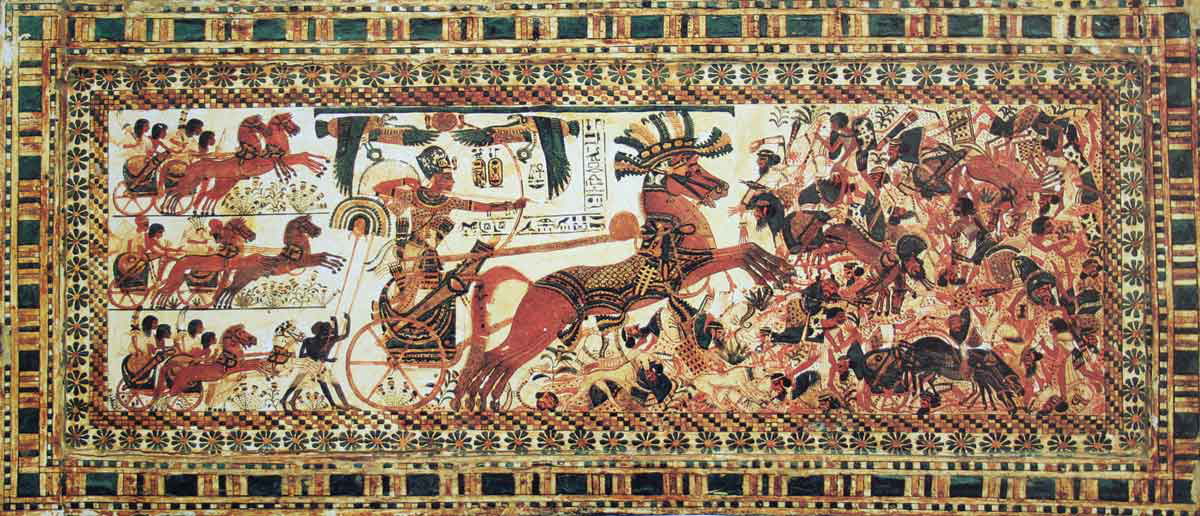
Naturally, weapons were a necessity to the Egyptian armies, and the types of weapons that were used were dependent on the technology available at the time and the ability of Egypt’s artisans to produce them. In the Predynastic and Early Dynastic Periods, spears, daggers, and wooden or stone maces were common. Bows were used, but they were simple and inaccurate. Nevertheless, massed ranks of archers could be extremely effective at weakening the enemy before the melee infantry engaged. As technology improved, however, the weapons became more complex and varied.
By the time of the Middle Kingdom, copper swords and axes were common, and troops were outfitted with leather armor. In the middle of the 2nd millennium BCE, the Hyksos invaders took control of Lower Egypt (the north) and sacked Memphis. They are credited with introducing the composite bow and possibly the chariot to Egypt, as well as advances in bronze metallurgy. The Egyptians adopted these new technologies and were able to drive the Hyksos out of Egypt. Although horses and chariots were thought to have been present in earlier times, it is reasonable to assume the Hyksos demonstrated their power in battle, greatly influencing their adoption by the Egyptians.
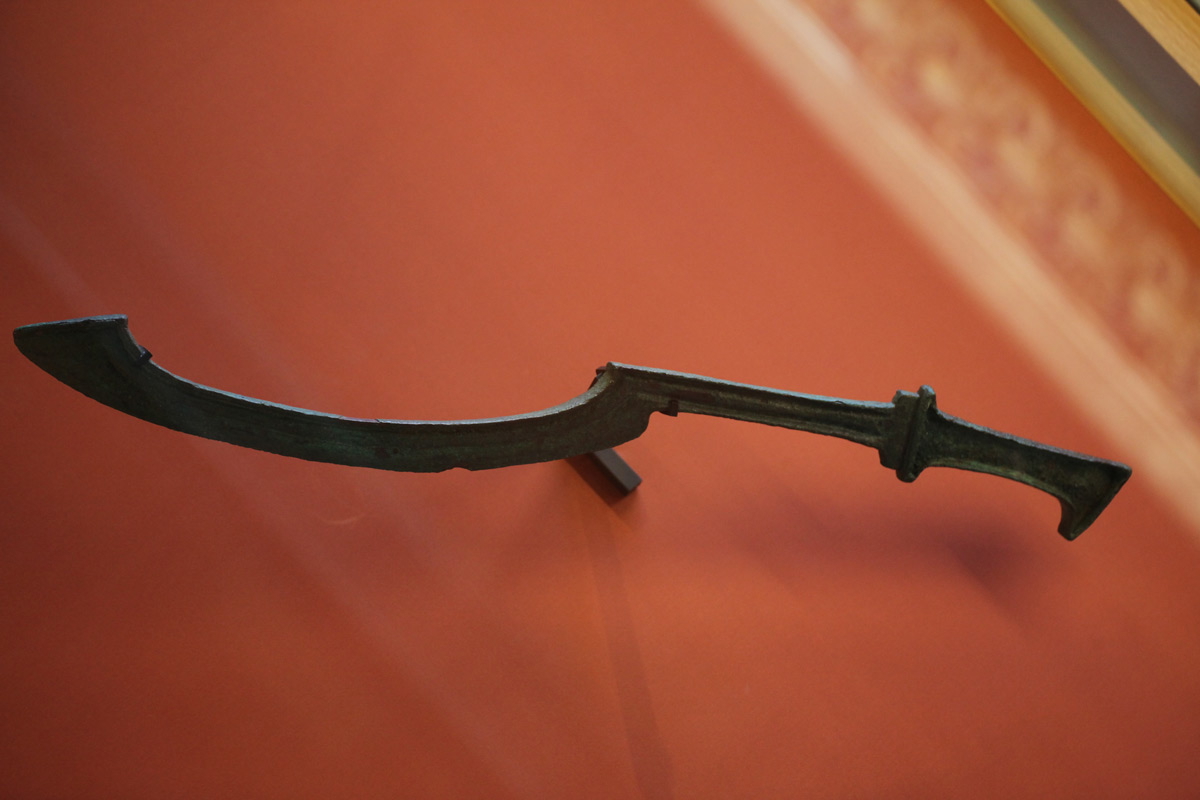
The defeat of the Hyksos didn’t end the threats to Egypt’s sovereignty, however. The following centuries brought war with the Hittites, and chaos brought by the Sea Peoples, believed to have contributed significantly to the Bronze Age Collapse. The challenges would have been insurmountable without a strong military to fend off threats and restore order in a kingdom under pressure.
By the middle of the 2nd millennium BCE, the khopesh, an axe-like sword, was introduced and became an iconic symbol of Ancient Egypt, especially of the New Kingdom, when it became more widespread. With its unique design, the weapon was multifaceted and dynamic. While capable of thrusting, the sword was designed for slashing and chopping. The inner edge, however, was curved, providing an effective tool for hooking and trapping the opponents’ weapons. The khopesh was a symbol of prestige and was associated with power and authority. The New Kingdom saw the introduction of scale armor, although it was not produced in enough quantity to arm the regular soldiers, and was mostly used by elite troops.
Bows and arrows continued to play a central role in Egyptian warfare, and the composite bows introduced by the Hyksos added a significantly more powerful dynamic to Egypt’s ranged capabilities. The bows, made from materials such as wood, sinew, and horn, added extra power and range. Complementing the use of the bow, slings and javelins were also used for ranged combat.
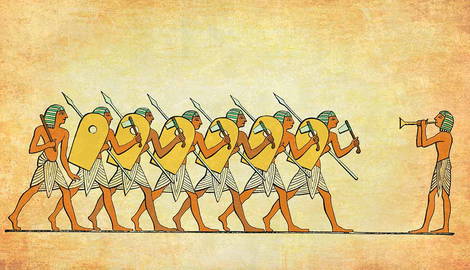
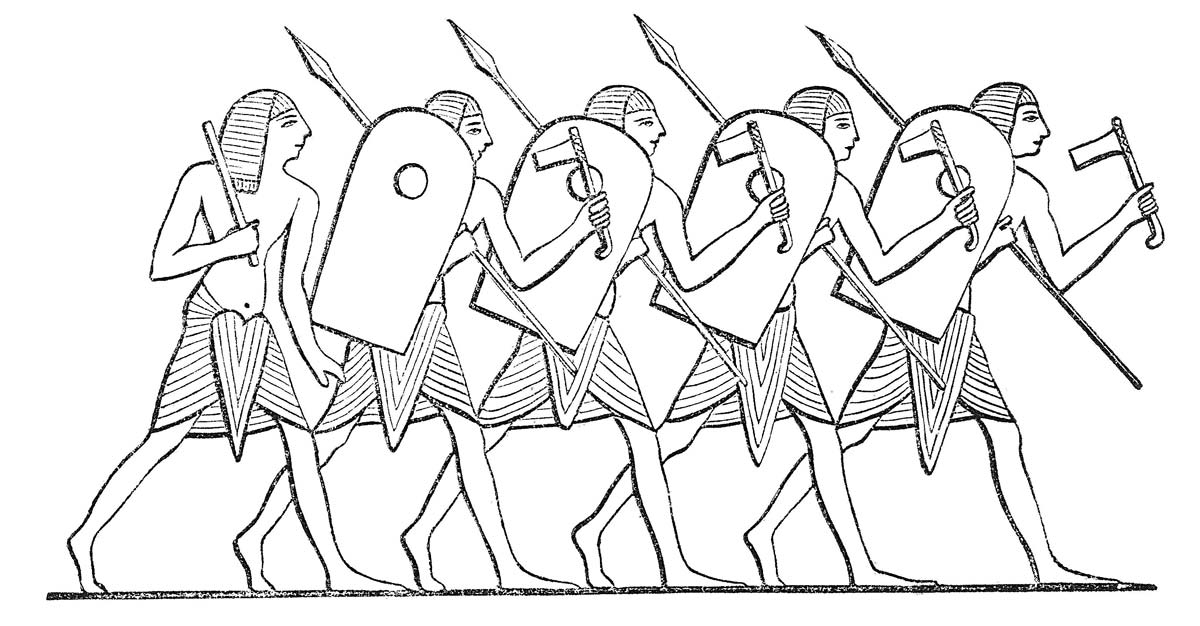
Like all armies with a strong core of infantry, shields also played a major part in the Egyptian military. Made from wood or leather, these lightweight instruments added a great amount of protection from ranged and close-combat weapons.
The Naval Factor
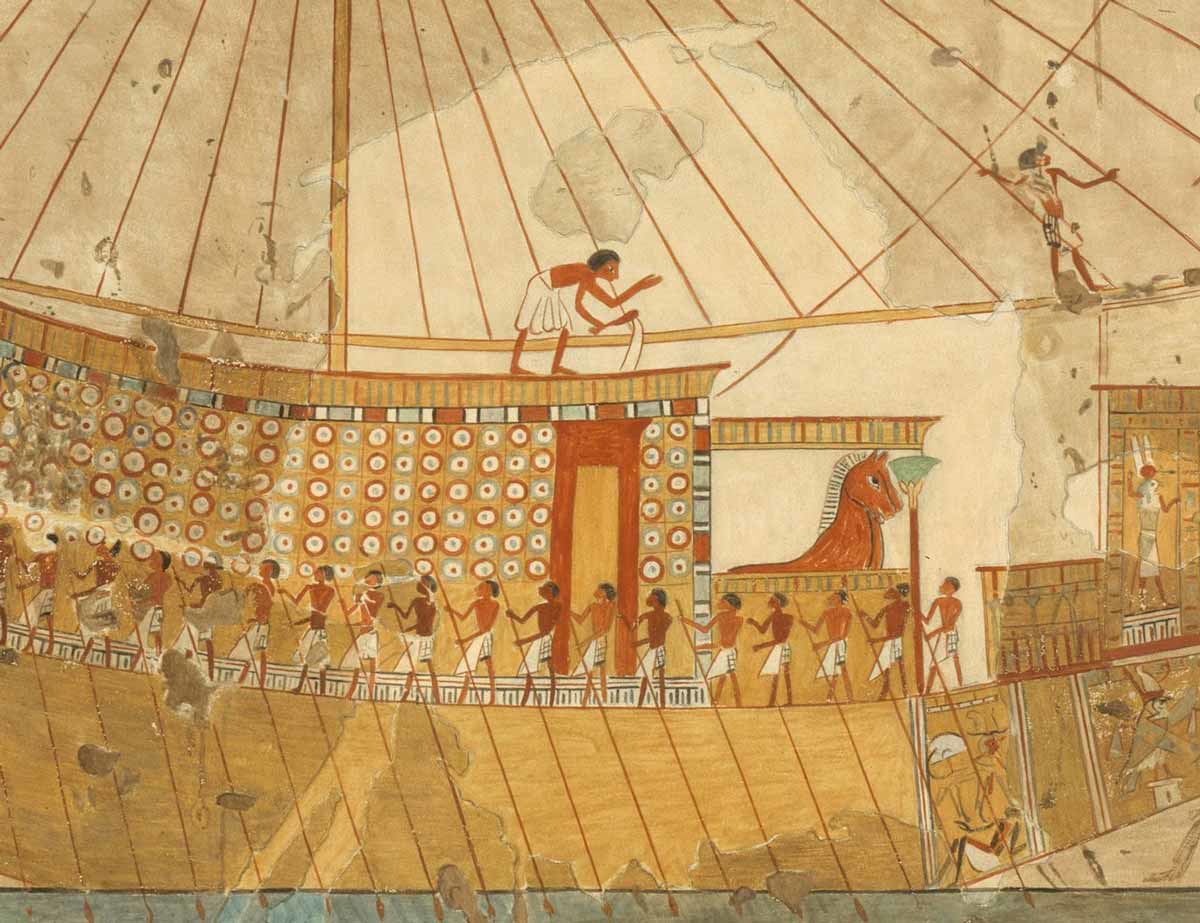
Given the importance of the Nile for transport in Egyptian society, it was unsurprising that it was integrated into the effectiveness of the Egyptian military. Until the time of the New Kingdom, Egyptian ships were used for transport and communication. Boats built of reeds were suitable for traversing the Nile; however, sailing into the Mediterranean required stronger materials. As Egypt expanded beyond the Nile, wood was needed, and this was generally cedar sourced from the area that is present-day Lebanon. Wooden ships were also acquired from other places, such as Cyprus.
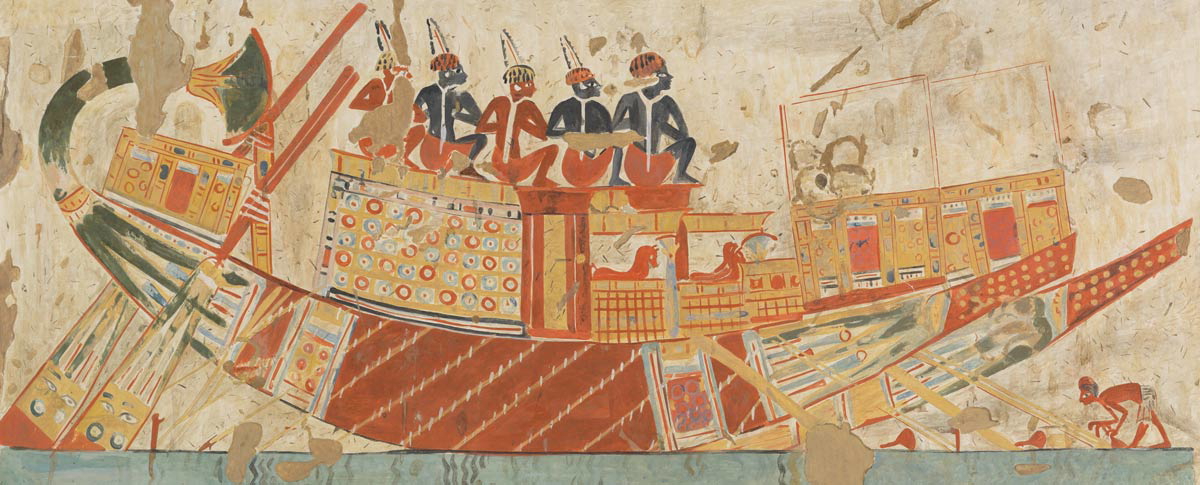
During the reign of Ramesses III (r. ca. 1186 BCE to 1155 BCE), the Sea Peoples, after bringing an end to the powerful Hittite Empire, came to Egypt. They were stopped at the Battle of the Delta, a combined naval and infantry battle in which the Sea Peoples’ larger ships were overwhelmed by the smaller and faster Egyptian ships.
In combat, ships served as platforms from which archers could attack enemy ships; however, this wasn’t always the case. Although it is a subject of debate, there is evidence to suggest the Egyptians began outfitting their ships with rams—a development that became famous in Greek naval warfare centuries later.
Desert Warfare

When the safety of the Nile was no longer within striking distance, warfare across the deserts of the region became a significant challenge that forced the Egyptians to consider many factors, such as the heat and control of water supplies. The desert was as much a barrier to invading armies as it was a hurdle for Egyptians, who built fortresses and outposts around their borders and along trade routes to deal with threats, including foreign invasion and nomadic tribes. These posts also likely held supplies and could help replenish armies on the march.
The eastern desert held great mineral wealth, and repeated expeditions led to the construction of mines, wells, harbors, and well-traveled paths that could also be utilized as a network of stations and supply routes.
Apart from making good use of Nubian soldiers who were adept at desert warfare, the Egyptians used desert roads, which they could employ to move quickly through the open terrain and perform flanking maneuvers.
Religious aspects also played a part in Egyptian warfare, and many believed that they needed to die in Egypt or have a special funeral to be able to attain eternal life. These conditions were not likely outside of Egypt, and it may have been one of the many factors that contributed to the military making use of many mercenary units.
Throughout the long era of ancient Egypt’s grand influence on the world around it, there were many battles that took place in deserts or were the culmination of vast desert crossings.
Conflict and Conquest
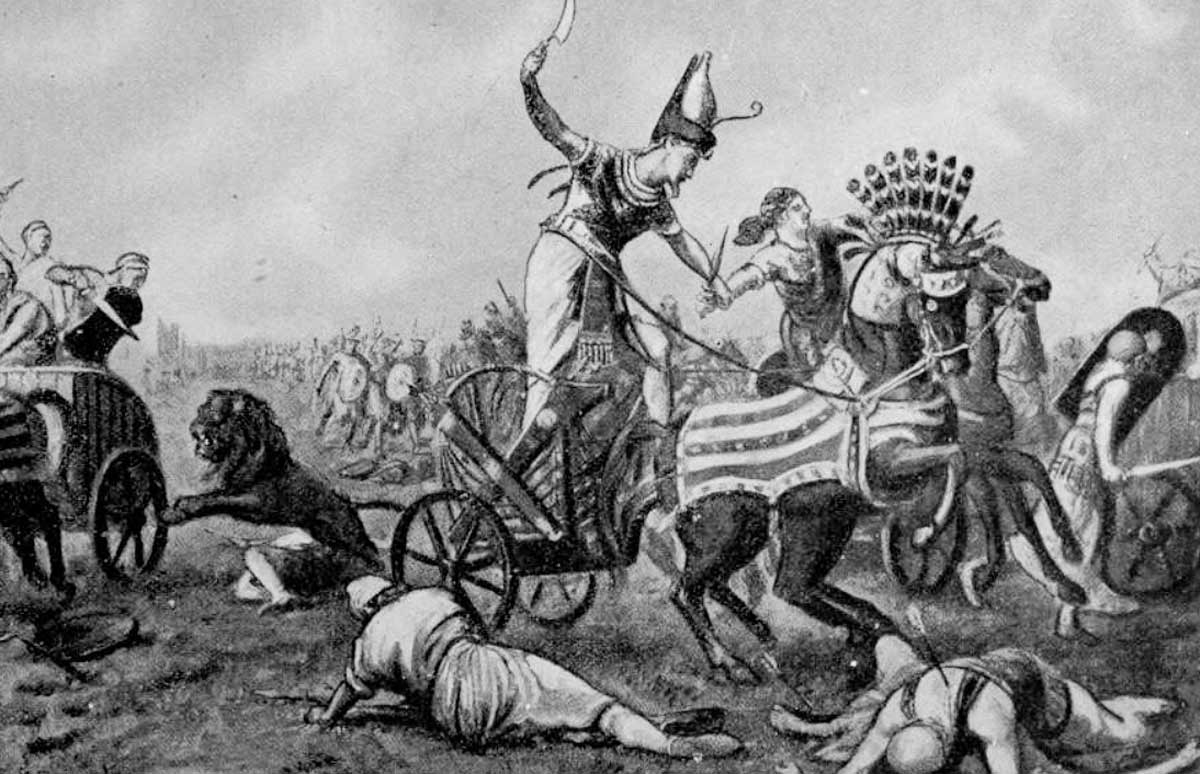
Egypt had many enemies. The relationship with Nubia to the south was dotted with periods of conflict between eras of peace and prosperity. Many other foes sought to defeat Egypt, including the Hyksos, the Hittites, the Kushites, the Assyrians, and the Sea Peoples, as well as Libyan tribes who made frequent incursions into Egypt from the west. In later eras, the Persians, the Macedonians, and the Romans turned out to be the biggest threats.
Many tense situations were resolved with diplomacy, but many led to war. In 1457 BC, Pharaoh Thutmose III led his forces to victory at Megiddo, routing a force of Canaanites and expanding Egypt’s territory.
The Battle of Kadesh in 1274 BCE between the Egyptians and the Hittites was the largest chariot battle in history and led to the world’s first recorded peace treaty.
Also known as the Battle of Djahy, the Battle of the Delta, ca. 1175 BCE, was a great victory for the Egyptians over the Sea Peoples, and saved Egypt from invasion during a period of instability.
Of course, not all battles ended in victory for the Egyptians. One of the most notable defeats was the Battle of Pelusium in 525 BC, which resulted in the conquest of Egypt by the Achaemenid Persians.
Decline of Egypt’s Power
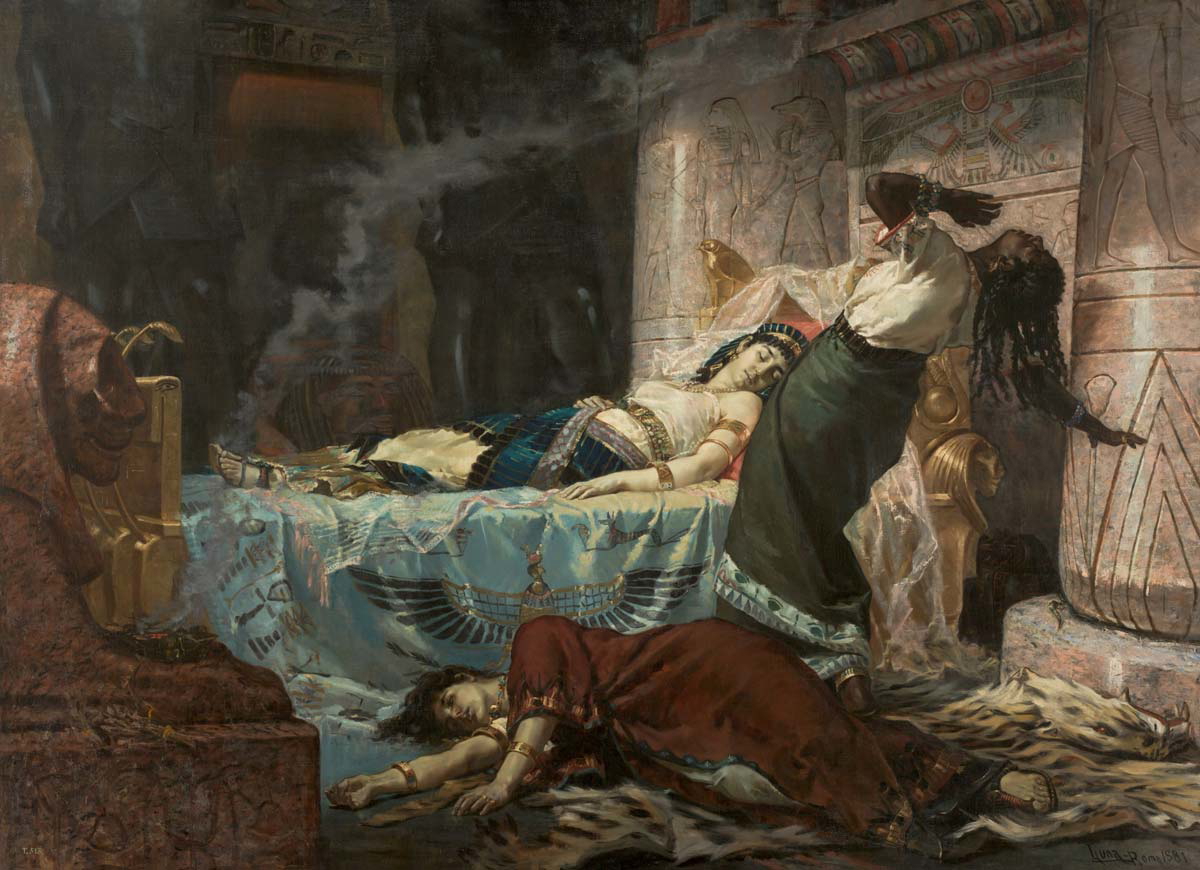
By around 1100 BCE, Egypt went into a long decline. Foreign powers pushed on Egypt’s borders, while internal strife, political division, and lack of resources weighed heavily on the state.
In 1070 BCE, the New Kingdom disintegrated and Kush, to the south, became an independent state. Growing in power over the centuries, the Kushites conquered Egypt and formed the 25th Dynasty, ruling for a century from 754 BCE. Kushitic control ended with the Assyrians, who invaded and found victory, permanently expelling the Kushite rulers from Egypt.
The Persians took control of Egypt in 525 BCE and ruled until 404 BCE and again from 343 BCE to 332 BCE, before being defeated by Alexander the Great of Macedon. Thereafter, Egypt was ruled by the Ptolemaic Dynasty until Cleopatra, the last ruler of Egypt, was defeated by the Romans, and took her own life in 30 BCE. Thereafter, Egypt was governed as a province of Rome, thus ending millennia of sovereignty.
Despite an ignominious end to the world’s longest surviving civilization at the time, Egypt and its militaries left their mark on the ancient world, determining the politics of the region from the Bronze Age through to the birth of Imperial Rome.