Summary
- Judges reveals Israel’s dark cycle of sin and redemption, where God repeatedly raises leaders to save them from their disobedience.
- God calls imperfect and flawed leaders, like Samson and Gideon, demonstrating his grace and ability to work through ordinary people.
- The book serves as a warning against moral relativism, showing the chaos that results when “everyone did what was right in his own eyes.”
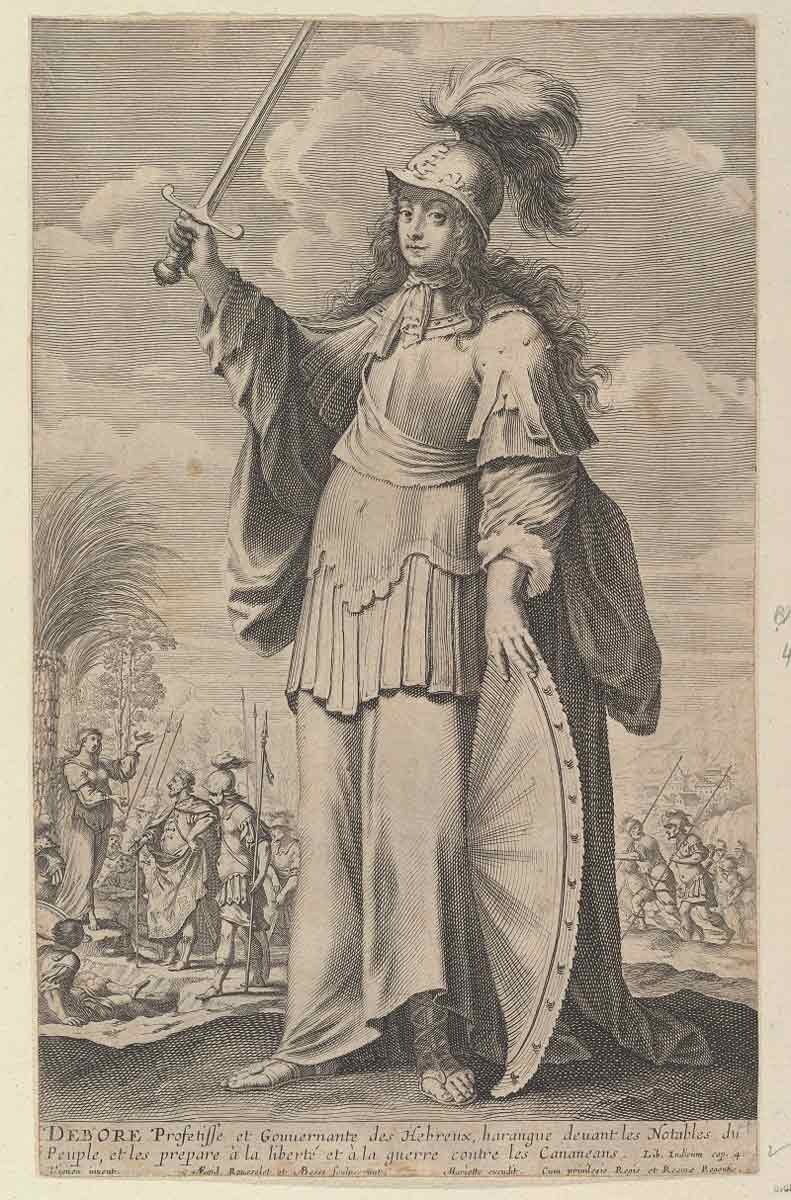
- Judges showcases strong female leaders like Deborah, whom God raised to guide Israel when men hesitated to act.
The Book of Judges has some of the most fascinating scenes in scripture but also some of the most disturbing. Samson is a legendary Biblical figure with many narratives relating his supernatural physical prowess, and story after story describing how he killed the enemies of Israel. The violence Jael perpetrated is shocking but serves as an example of the role women played in the Bible as well. The story of Jephthah and his daughter poses serious questions as well. So, without focusing on individual stories, what is the Book of Judges about?
Authorship and Date
Unlike the Pentateuch and Joshua, the Book of Judges provides no clue to its author. Tradition holds that Samuel compiled the oral narratives of the leaders of Israel between the time of Joshua and the beginning of the monarchy.
Scholars propose several theories on the authorship of Judges. One theory claims that the oral and some written traditions of the judges developed as royal propaganda during the united monarchy in Israel. During the Babylonian exile, editors shaped the final form of the book. Another theory holds that the Book of Judges shows evidence of the Documentary Hypothesis, or JEPD Theory, which implies that authors wrote parts of Judges as early as the 10th century BC and others date as late as the 6th century BC.
Historical Context
When the Israelites settled in the Promised Land, Joshua passed away, and Israel had no single individual as a leader. Instead, Israel resembled a tribal confederacy where leaders from each tribe would govern their affairs. The centralized worship at the Tabernacle was a unifying component of Israelite society. When a tribe of Israel faced challenges from enemies, the other tribes had to come to their assistance.
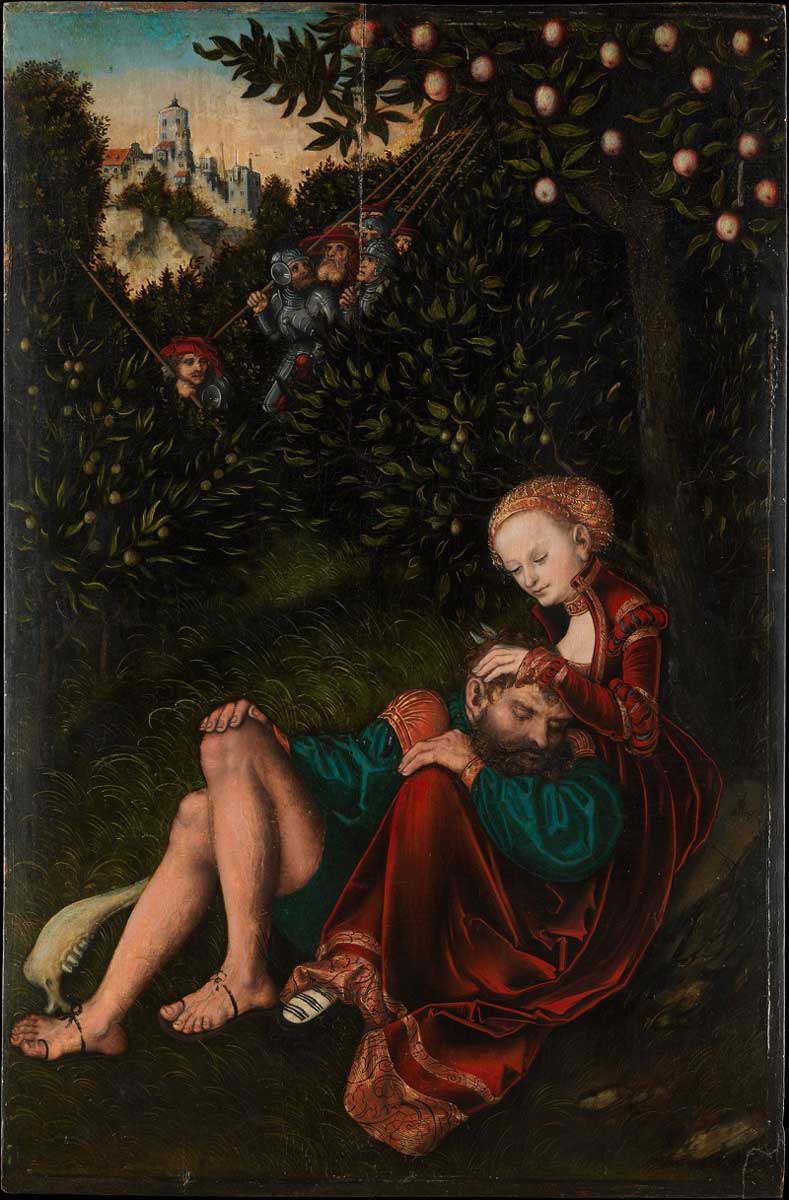
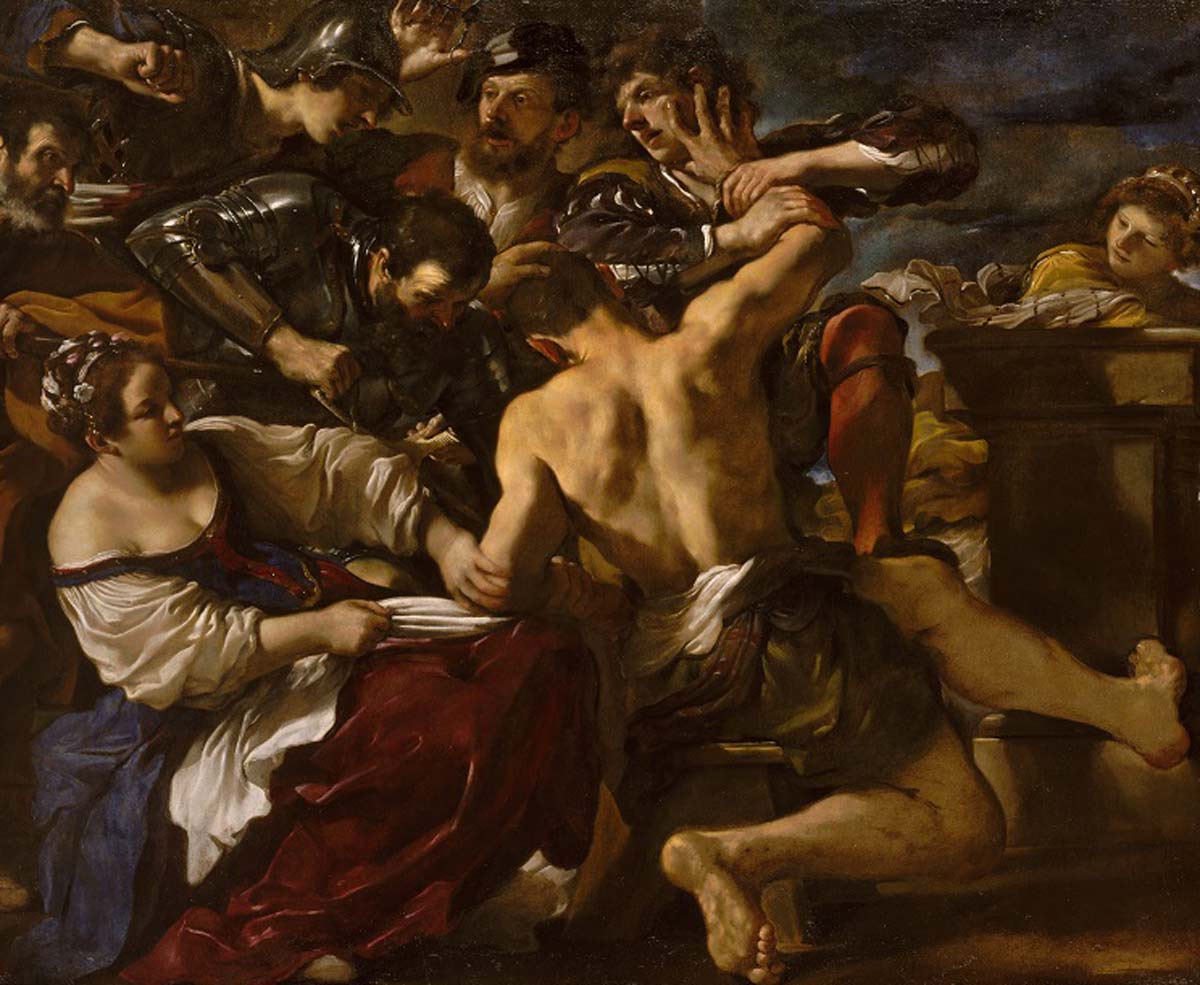
God raised judges to lead Israel in times of crisis. These crises could be enemies or moral decline among the tribes. The judges were charismatic leaders who guided the people of God, and in some instances, as with Samson, the judge had supernatural abilities. The judges were imperfect and struggled with doubt, as Gideon did, or morals, as the story of Samson and Delilah reveals.
The judges did not come from a specific bloodline like the priests did. God appointed them, seemingly based on their ability to lead in battle, enforce justice, or restore social order. They were not judges in the legal sense, though they did restore order in the civil or military spheres.
The Israelite priesthood was not always reliable, and moral decline set in among the tribes of Israel. On occasion, the tribes would even battle each other. God would then raise prophets to address the issues and convey the messages of God to the people or the judges. The judges and prophets worked together to reestablish unity in Israel, or to defeat common enemies.
The Book of Judges covers almost 200 years of Israelite history from about 1200 BC to 1020 BC. The Book of Judges ends shortly before Samuel anointed Saul as the first king of Israel.
Structure
Introduction (Judges 1–3:6)
The introduction to the Book of Judges details some political and theological challenges the people of God faced. Unlike the military campaigns under Joshua, Israel had victories but also suffered some defeats. The Israelites were not always faithful to God, and when they went into apostasy, they suffered oppression. This cycle sets the tone for many of the judges raised by God to lead the people. Whenever the tribes fell, God would appoint a judge to restore the nation.
Stories of the judges (Judges 3:7–16:31)
These chapters cover a series of narratives of how one judge after another led Israel. The most recognized judges are Deborah, Gideon, Jephthah, and Samson.
Closing narratives (Judges 17–21)
The closing chapters of Judges explain why the Levites moved the sanctuary to Dan (Judges 17–18) and how civil war broke out in Israel (Judges 19–21). First, a Danite stole an idol from Micah, resulting in the Tabernacle eventually moving to Dan. In the second section, the rape of a Levite’s concubine resulted in eleven tribes coming close to annihilating the tribe of Benjamin.
Main Themes
The angel of the Lord
A character who appears often in the Book of Judges is the angel of the Lord. In the Pentateuch, this character appears in Genesis, Exodus, and Numbers, with the story of Balaam referencing him most often. In the Book of Judges, the narrator refers to him as either “the angel of the Lord” or just “the Lord” (Judges 6:12-16). Some scholars believe that the angel of the Lord is a manifestation of God, which is what Manoah believed according to Judges 13:21-22.
Apostasy
Israel did not conquer all the inhabitants of the Promised Land and instead settled amongst them. This resulted in intermarriage and, inevitably, in idolatry. This recurring problem was, therefore, a consequence of the disobedience of previous generations of Israel. Subtle hints in the text reveal the extent of the problem, such as the reference to “Shiloh, which is in the land of Canaan” (Judges 21:12). It shows the influence of Canaanite culture in the promised land long after Israel settled there.
Key Passages
Judges 2:1-2
“Now the angel of the LORD went up from Gilgal to Bochim. And he said, ‘I brought you up from Egypt and brought you into the land that I swore to give to your fathers.’ I said, ‘I will never break my covenant with you, and you shall make no covenant with the inhabitants of this land; you shall break down their altars.’ But you have not obeyed my voice. What is this you have done?”
The first two verses of Judges 2 serve as evidence that the angel of the Lord is a manifestation of God and that the Israelites suffered the consequences of not obeying God when entering the Promised Land.
Judges 2:16-19
“Then the LORD raised up judges, who saved them out of the hand of those who plundered them. Yet they did not listen to their judges, for they whored after other gods and bowed down to them. They soon turned aside from the way in which their fathers had walked, who had obeyed the commandments of the LORD, and they did not do so. Whenever the LORD raised judges for them, the LORD was with the judge, and he saved them from the hand of their enemies all the days of the judge. For the LORD was moved to pity by their groaning because of those who afflicted and oppressed them. But whenever the judge died, they turned back and were more corrupt than their fathers, going after other gods, serving them, and bowing down to them. They did not drop any of their practices or their stubborn ways.”
This passage is a summary of the cycle the Israelites were in. The stories of the individual judges provide the details of several cycles.
Judges 6:12
“And the angel of the LORD appeared to him and said to him, ‘The LORD is with you, O mighty man of valor.’”
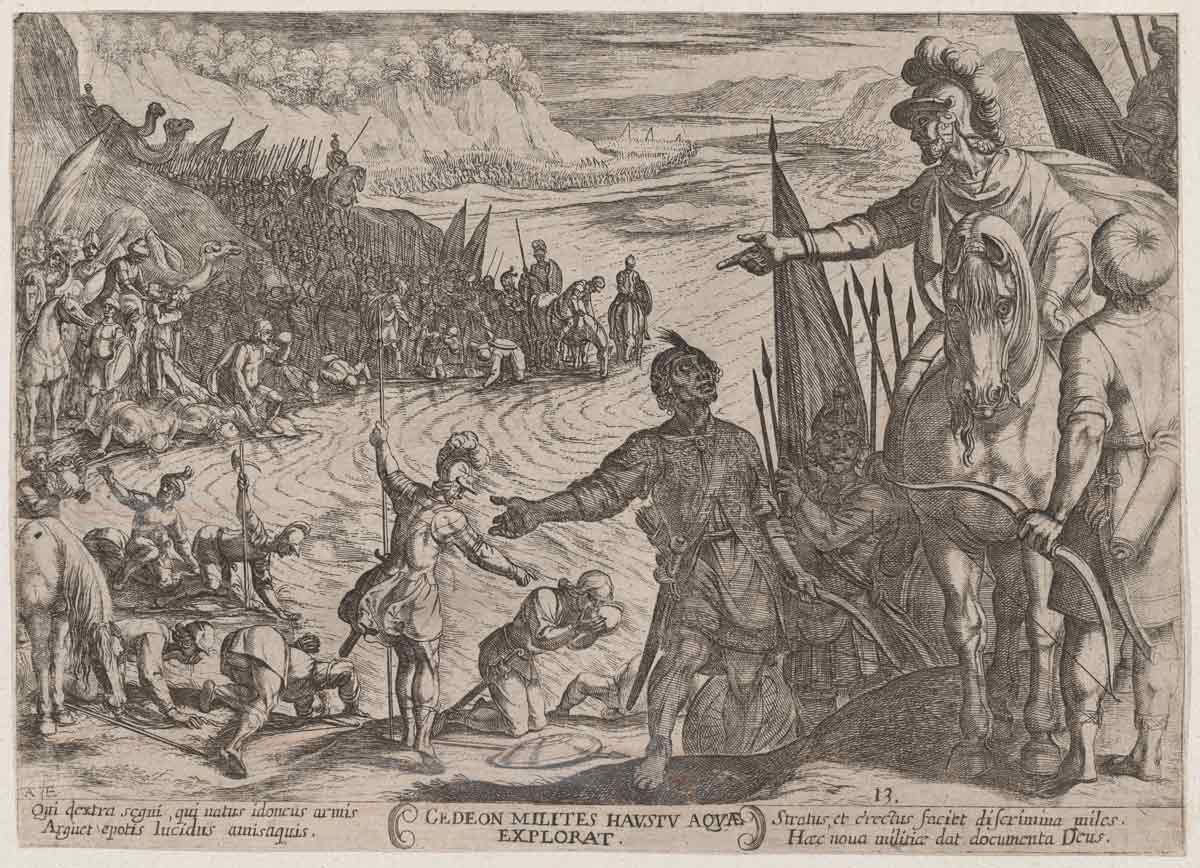
This verse is significant because Gideon did not see himself as a “mighty man of valor” (Judges 6:15). It shows that God recognizes potential in those he calls that they are often unaware of. When they remain faithful to Him, they can become what He wants them to be.
Judges 4:9
“And she said, ‘I will surely go with you. Nevertheless, the road on which you are going will not lead to your glory, for the LORD will sell Sisera into the hand of a woman.’ Then Deborah arose and went with Barak to Kedesh.”
God raised women to fill the breach when men cowered from their duties and responsibilities. Deborah is a good example of this idea. She was the only official female judge in Israel, though Jael also played a significant role in the book (Judges 4:17-22).
Judges 17:6 and 21:25
“In those days, there was no king in Israel. Everyone did what was right in his own eyes.”
The closing narratives of the Book of Judges repeat these words. It binds this section together and shows what was at the root of the internal struggles in Israel.
Contemporary Relevance
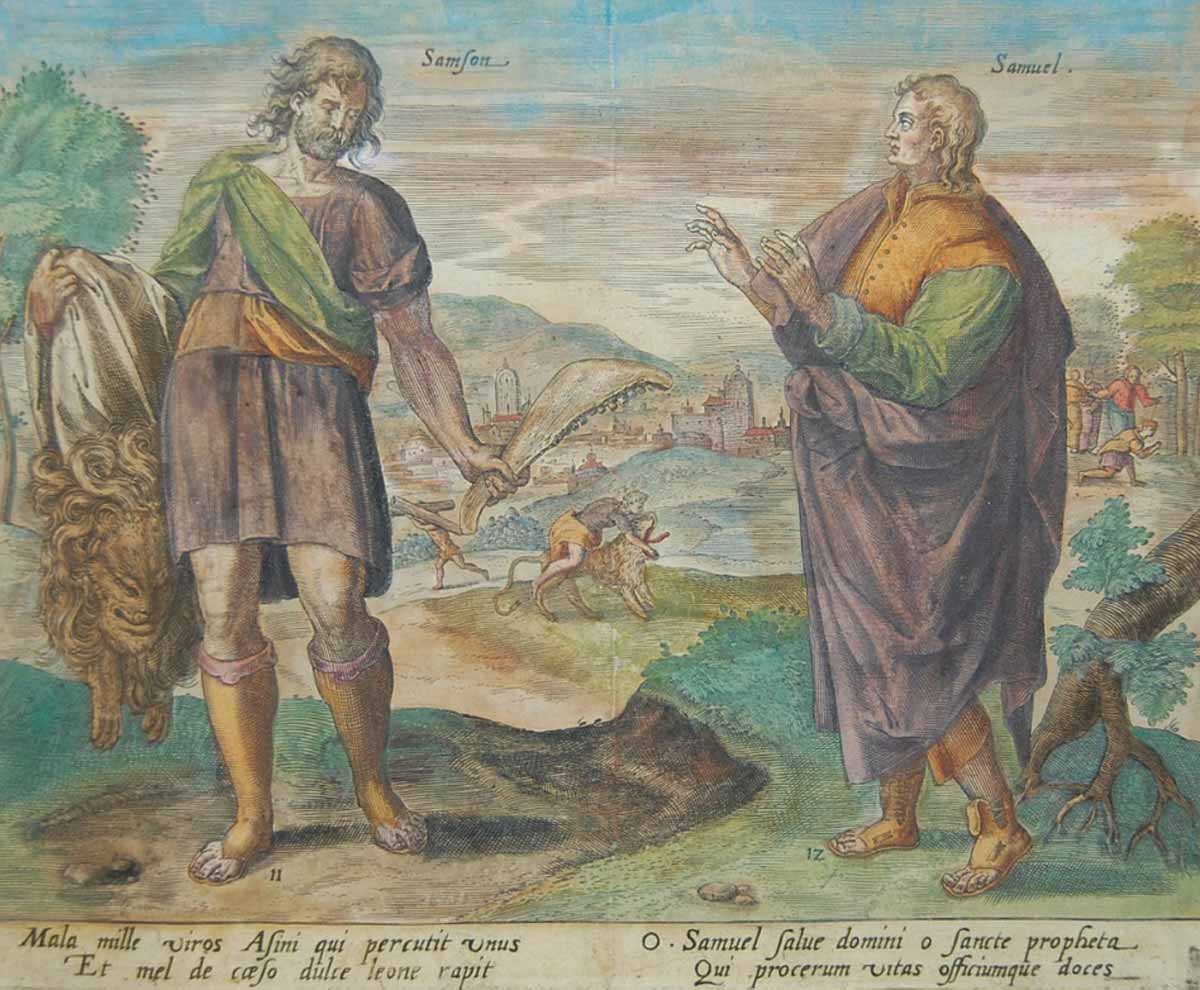
The reader of Judges will learn that God does not call people only once they are perfect. He calls some who have doubts and others who struggle with moral issues. It shows God’s grace when they fail and ask for forgiveness, and he continues to use them.
Judges also teach the consequences of disobedience. In the case of Israel, the consequences lasted for generations, but for Samson, it resulted in his death, even if it was by a miracle of God.
The Book of Judges shows that even in Old Testament times God would, against the culture of the time, raise women to positions of leadership when men did not step up to the task. It validates the position of women in spiritual and military leadership, where God creates the space.
Contemporary readers will also benefit from the contribution of the Book of Judges to the discussion on moral relativism versus unity. When everyone does as they see fit and what is right in their own eyes, it results in chaos and division. God called his people to unity. Christians must achieve unity only when it does not violate the principles God has set forth for his people.