
On the eastern banks of the Mississippi River in present-day Illinois was Cahokia, a city that reached its height between 1050 and 1200 AD. Spanning almost six square miles and home to tens of thousands of inhabitants, it stood as the most extensive and complex settlement north of what is now Mexico. Cahokia changed historians’ understanding of Indigenous life in North America. Far from isolated villages, the region was an urban center with accomplishments that could rival those of the medieval European cities of the day.
Origins and Growth of Cahokia
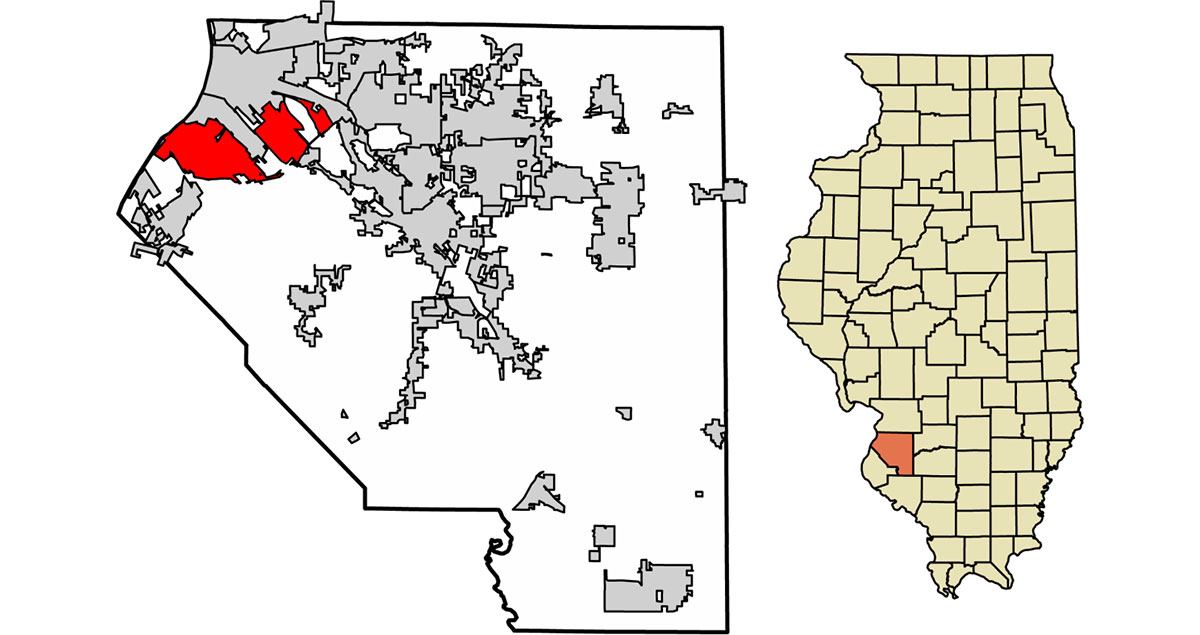
The floodplain of the Mississippi River today looks vastly different than it did a thousand years ago. At the peak of its activity, around 1200 AD, Cahokia was busy in a way modern society doesn’t often imagine for pre-Columbian North America. The fertile soil of the area, nutrient-rich due to the rising and falling of the Mississippi River, contained a layer of fine silt that was perfect for agriculture. The river also served as a means of transportation, connecting people and enabling trade from the Great Lakes down into the Gulf.
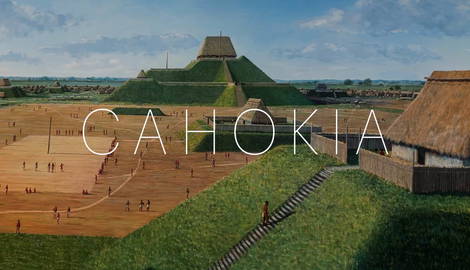
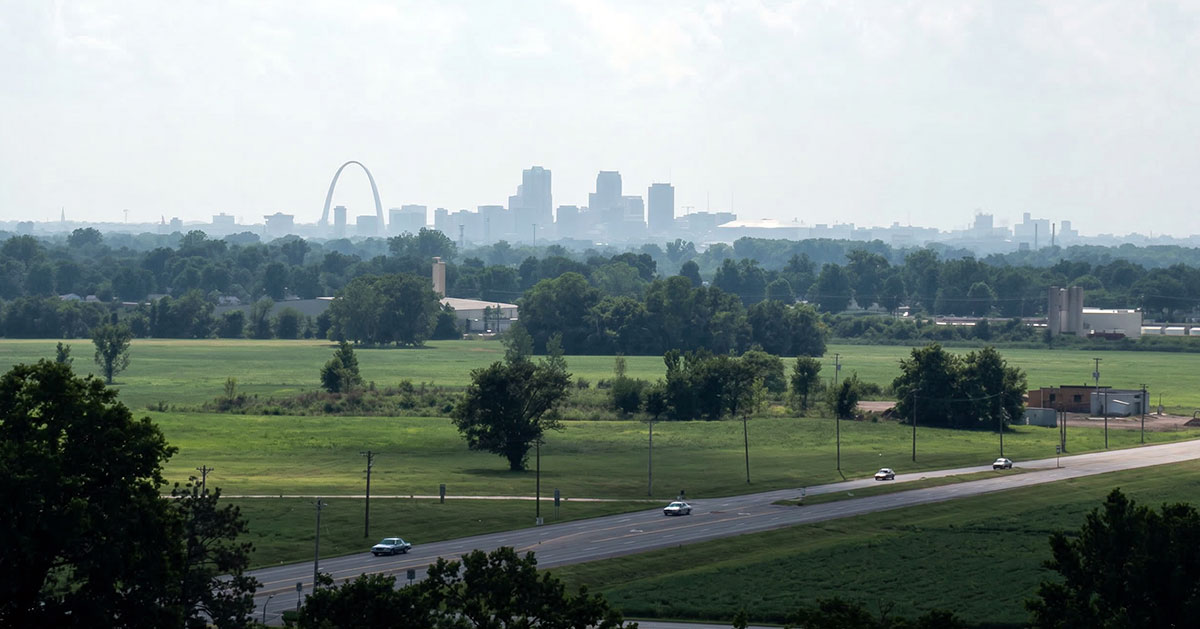
Observers in the early years, around 1050 AD, would have seen a few homes with primitive gardens and storage pits. In later years, the settlement transformed into something larger. In the center of it all, a great mound was constructed. Archaeologists call it Monks Mound. From its summit, a person could look out and see the opposite side of the Mississippi. Today, Monks Mound offers a view of the Gateway Arch in nearby St. Louis, Missouri.
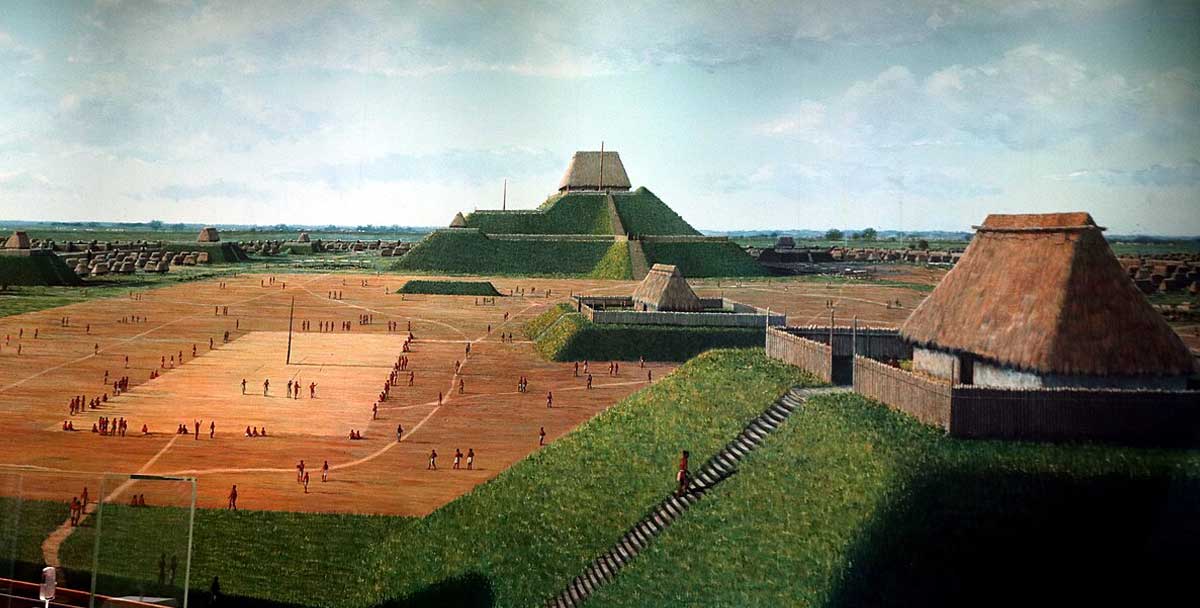
Life in Cahokia, like in many other places, was filled with the work that kept everyone fed and clothed. Farmers grew corn and managed the levees that kept the river contained. Hunters brought back deer, turkeys, or smaller game from expeditions into the frontier. On the riverbanks, fishermen caught a variety of freshwater fish, including catfish and sunfish. Traders came with a variety of goods from other regions, leading to the spread of unique items, ideas, and culture. Residents could walk through the central plaza and hear half a dozen dialects in a single afternoon.
Excavations of the areas around the mound show that some buildings and plazas were aligned with the solstices and equinoxes. This suggests that buildings served as the backdrop for a rudimentary calendar, indicating that the people of Cahokia were more advanced than previously thought. By the peak of its growth, somewhere between 1100 and 1200 AD, Cahokia’s population may have reached 15,000 in the main city and more than twice that when including the surrounding settlements; a population greater than that of London during the Medieval era. Cahokia was an organized, living city that rivaled the size and scale of some of the world’s foremost.
Monks Mound: Architecture as Power
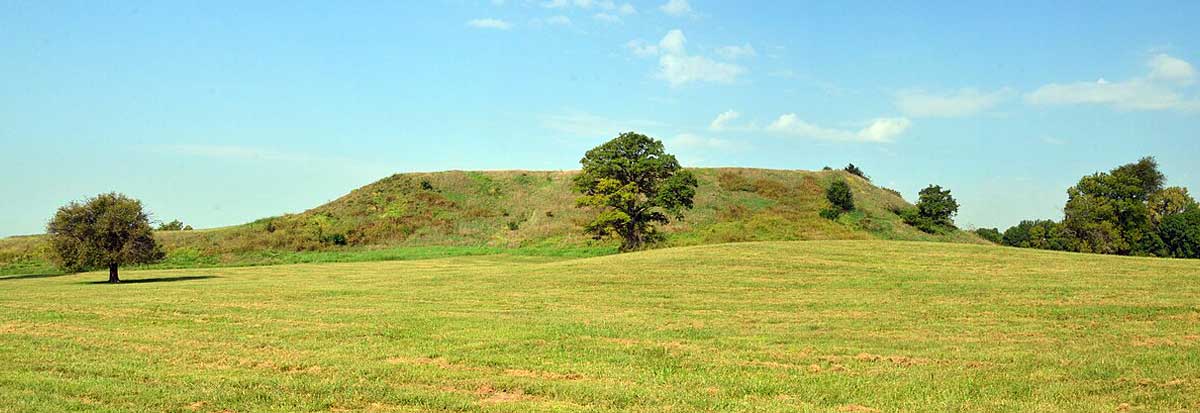
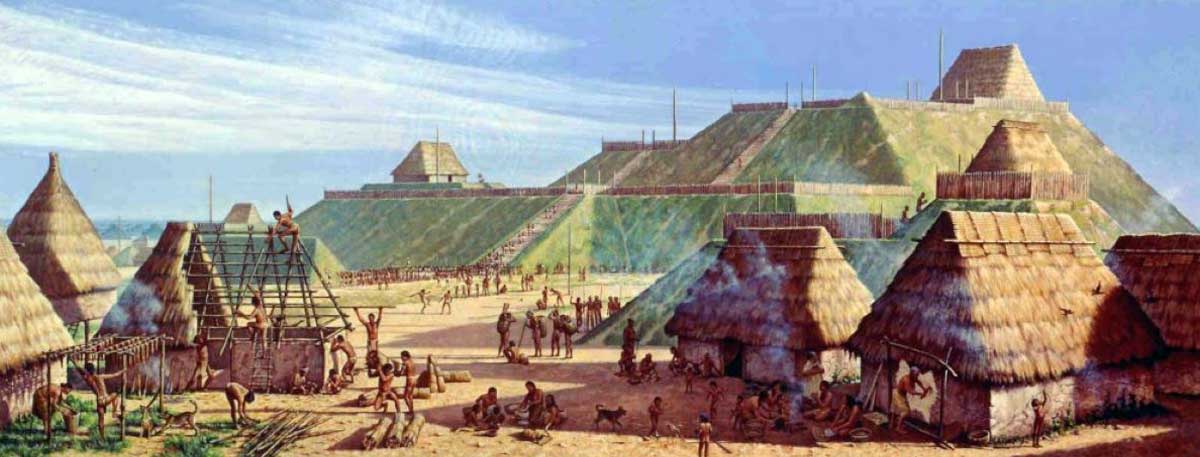
In the flatlands east of the Mississippi, a rise of earth that doesn’t belong to the natural landscape disrupts the otherwise flat midwest terrain. Monks Mound towers above the plain in four great terraces. The sheer effort behind it suggests a leadership able to marshal labor on a staggering scale, and a workforce capable of creating such landmarks.
Soil analysis shows that the mound grew in stages over decades, with each new layer changing both the height and shape of the mound. The choice of location was deliberate too. The base aligns with the city’s central plaza, placing it at the symbolic heart of Cahokia.
What exactly stood on top has been debated for decades. Archaeological digs have revealed postholes that suggest a large wooden building once sat atop the mound. This may have been the home of Cahokia’s highest leader, a council hall, or a temple used for ceremonies, similar to the Aztec pyramids. What is known, however, is that in Mississippian culture, the physical height of such structures is a reflection of social order.
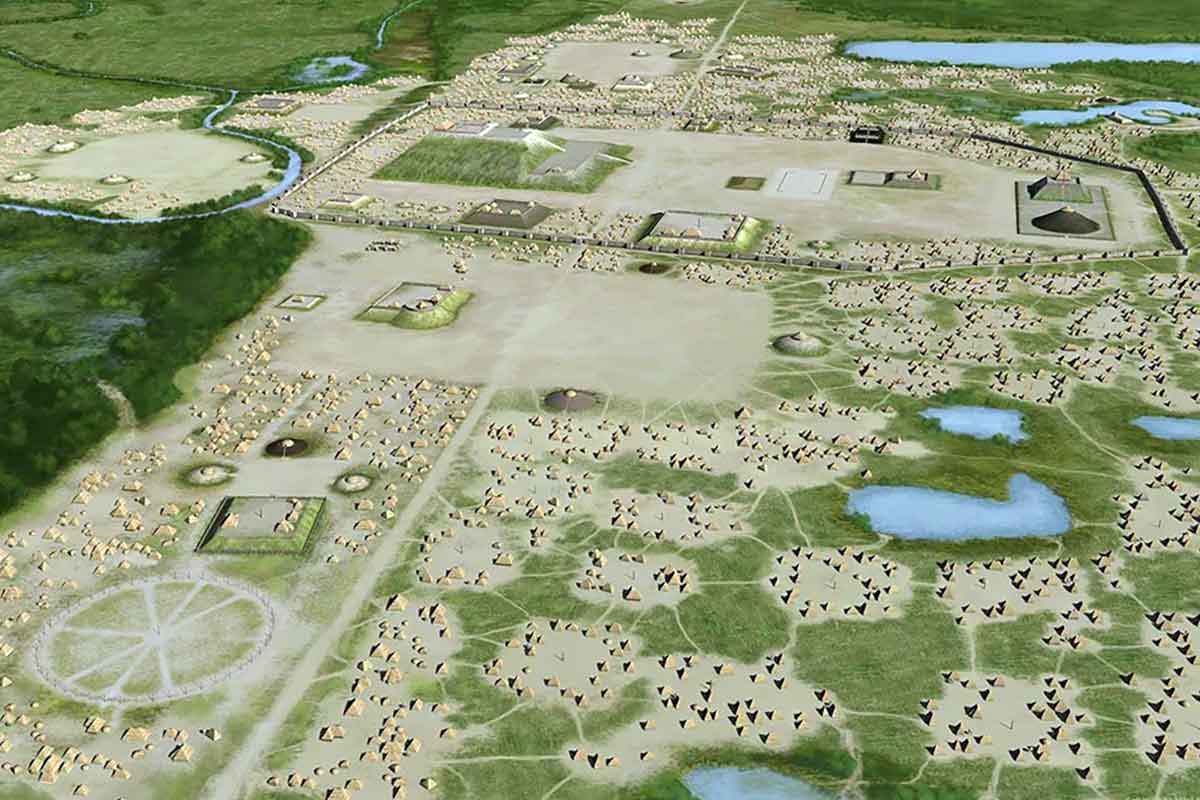
The engineering behind Monks Mound also shows an understanding of mathematics and water management. The builders shaped each terrace to drain rainwater in a way that prevents erosion and flooding. Despite their best efforts, however, the mound shifted over time. Repairs and reinforcements were part of its long life, meaning its upkeep was just as much a communal effort as its construction.
Trade, Culture, and Daily Life
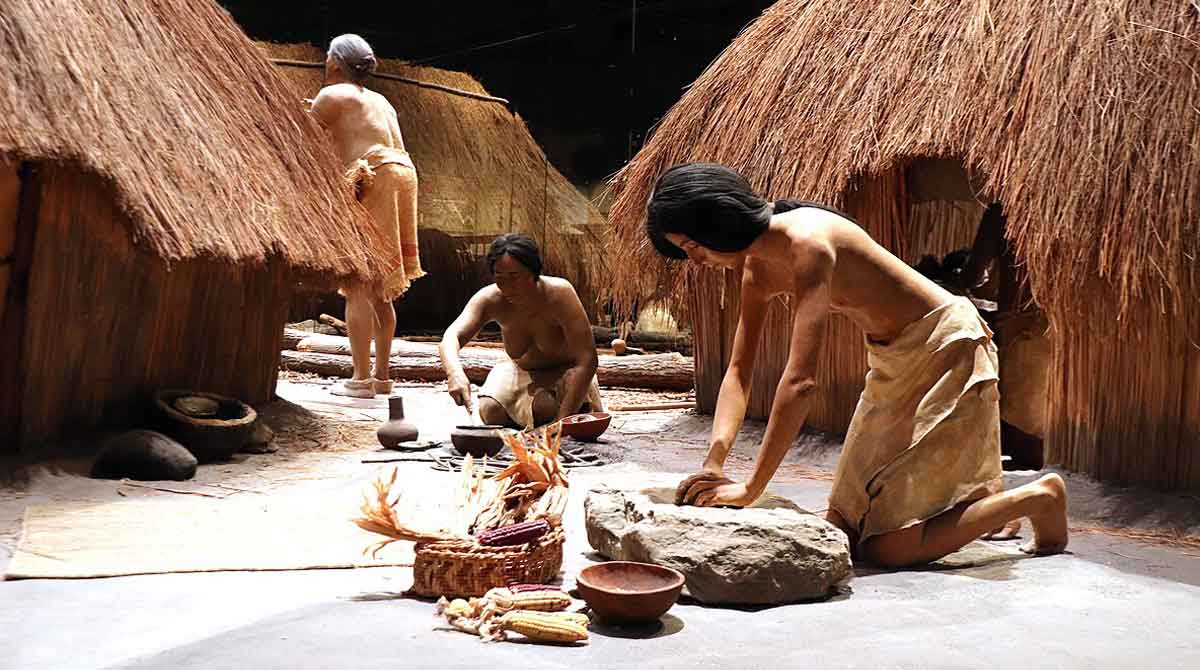
Daily life in Cahokia mirrored that of the cities and markets of medieval Europe. Farmers and hunters provided food for the city’s populus, while the city’s surplus also supported craftspeople who created a variety of tools, like bowls and weapons.
The city was a hub for goods that came from beyond the region. Archaeologists have uncovered shells from the Gulf region, copper from the Great Lakes, and obsidian, which requires volcanic processes to form. Markets were likely filled with people from a variety of areas, indicating that Cahokia was the center of a wider network of cultures.
Ceremonies and social gatherings were practiced throughout the year. Archaeological evidence suggests that many public spaces, including Monks Mound, were positioned in line with the sun’s path during solstices and equinoxes. While their exact purpose is left to speculation, the knowledge required to track the sun’s path was far beyond what early historians believed pre-Columbian peoples were capable of.
Decline and Abandonment
By the 13th century, Cahokia was in its final stages of decline. People began to migrate for unknown reasons, leaving a once-flourishing city. Environmental stress, political upheaval, shifting trade routes, or a combination of all three have been suggested as the cause of this exodus. Floods or drought could have led to famine as well. The soil that had sustained the city may have begun to yield fewer crops under the stress of constant planting.
While the reasons are unclear, what historians do know is that life became more unstable. Defensive walls were rebuilt multiple times, suggesting tension or outright conflict. Some mounds show signs of being repurposed, indicating a change within Cahokia’s society. By the mid-1300s, Cahokia was no longer the epicenter it had once been.
Legacy of Cahokia
Indigenous groups in the region told stories of Cahokia, making the city’s legacy persevere beyond the city itself. When Europeans eventually reached the Mississippi Valley, they found the mounds and speculated about their origins, often refusing to believe they were the work of Native peoples. Their disbelief echoed that of historians who viewed Indigenous peoples as primitive and Europeans as superior in culture and engineering.
Today, Cahokia is recognized as a UNESCO World Heritage Site. While an urban skyline is now visible from the peak of Monks Mound, the view downwards onto the plazas and smaller mounds below makes it easy for visitors to imagine what this active civilization once was.