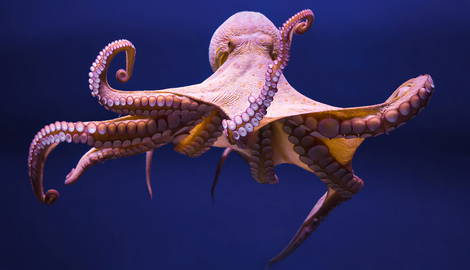
Imagine evolution running its course again on a distant planet, producing intelligent life. Would it inevitably lead to creatures like us, with a central nervous system, complex language, and technology? Or could intelligence take a radically different form? This isn’t science fiction. Evolution did, in fact, run a second, independent experiment in crafting complex minds right here on Earth, diverging from our own path over half a billion years ago. The result? Ladies and gentlemen, the cephalopods! Marine animals whose intelligence challenges our assumptions about what a mind is and how it should work offer perhaps our best glimpse of an extraterrestrial consciousness.
Our Human-Shaped Lens on Intelligence

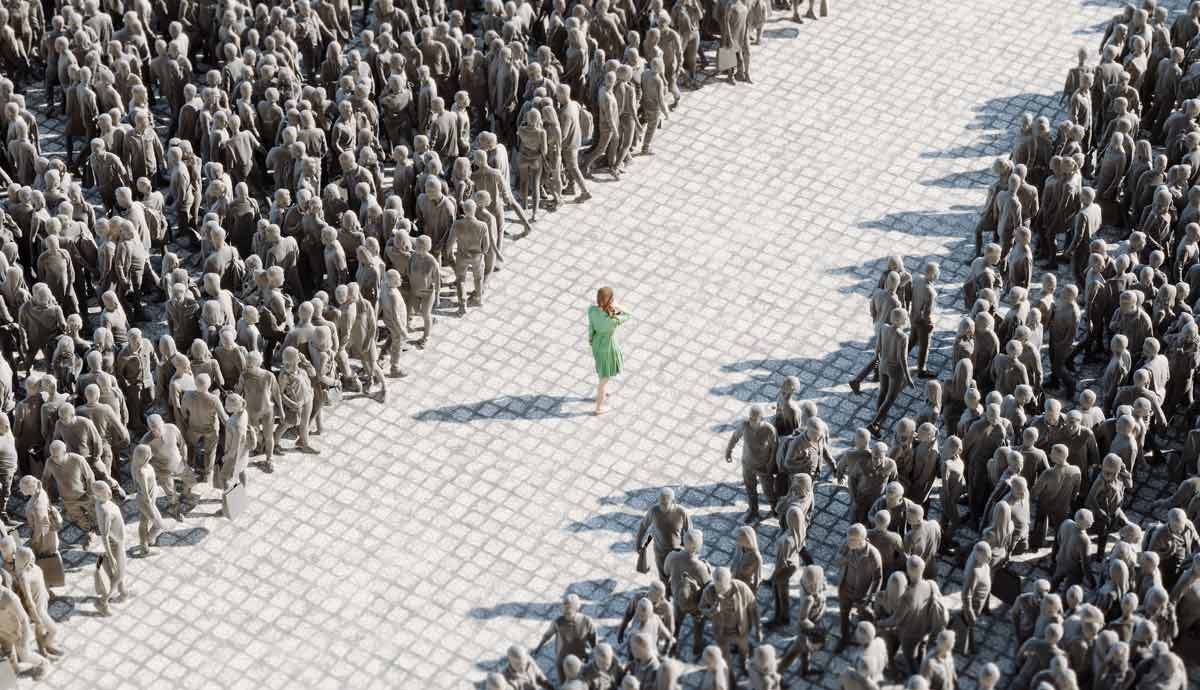
As the self-proclaimed pinnacle of intelligence on Earth, humanity harbors a fascination with finding intelligence elsewhere. We probe the cognitive capacities of our closest animal relatives, namely chimpanzees and bonobos, as well as other promising candidates like dolphins and corvids, often attempting to teach them tasks framed by scientific theories about our own intellect. Simultaneously, we observe and scan outer space, yearning for contact with extraterrestrial intelligence. Our expectations in both cases, however, often betray an anthropocentric bias.
This means that our search for other forms of intelligence, both terrestrial and extraterrestrial, may be hampered by our own perspective. We tend to measure other species against a scale derived from human development, encompassing language acquisition, complex social structures, tool manufacturing, and abstract reasoning. When we try to “upgrade” animal intelligence, we typically do so by teaching them human-like communication systems or problem-solving paradigms.
Similarly, our visions of aliens frequently involve humanoid forms (“grey aliens” from science fiction and pop culture are essentially stylized humans) or civilizations that inevitably develop radio technology and interstellar travel. This assumes a universal trajectory of technological and cognitive development mirroring our own. But intelligence, conceived as a biological solution to environmental challenges, might take radically different forms, shaped by entirely different evolutionary trajectories and pressures. The truly alien intelligence might not build starships, but perceive and interact with reality in ways we can hardly visualize.
Enter the Cephalopods: An Ancient Divergence

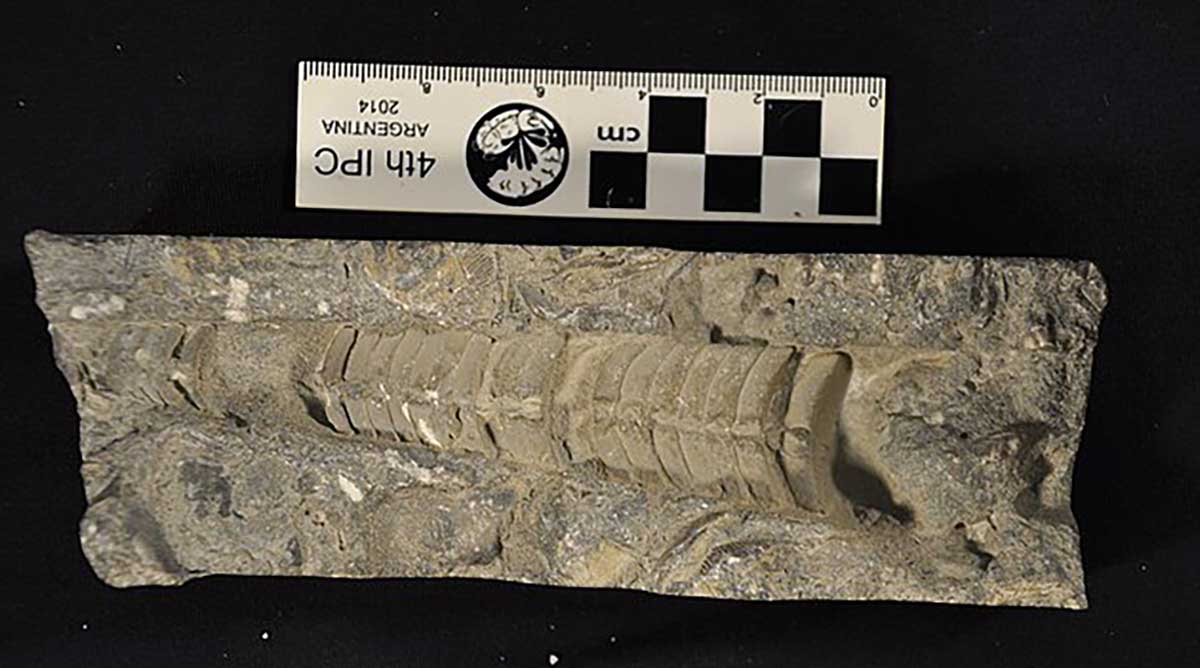
Philosopher of science Peter Godfrey-Smith, in his book Other Minds: The Octopus, the Sea, and the Deep Origins of Consciousness, claims that perhaps the closest we will get to encountering such an alien intelligence lies within the unlikely candidate within the class of mollusks: cephalopods, including octopi, squid, cuttlefish, and nautili. While we might not associate intelligence with their simpler mollusk cousins like clams or snails, cephalopods present a stunning exception. Their lineage diverged from ours some 600 million years ago. Our last common ancestor was likely a simple, worm-like creature possessing only a rudimentary nervous system.
Since that ancient split, vertebrates (including our species) and cephalopods have independently evolved large brains and complex behaviors, thereby representing two distinct, parallel experiments in crafting sophisticated minds from scratch. This vast evolutionary distance makes their intelligence particularly fascinating. Their separate development of complex cognition offers a glimpse into an alternative way of being intelligent.
The Cephalopod Nervous System
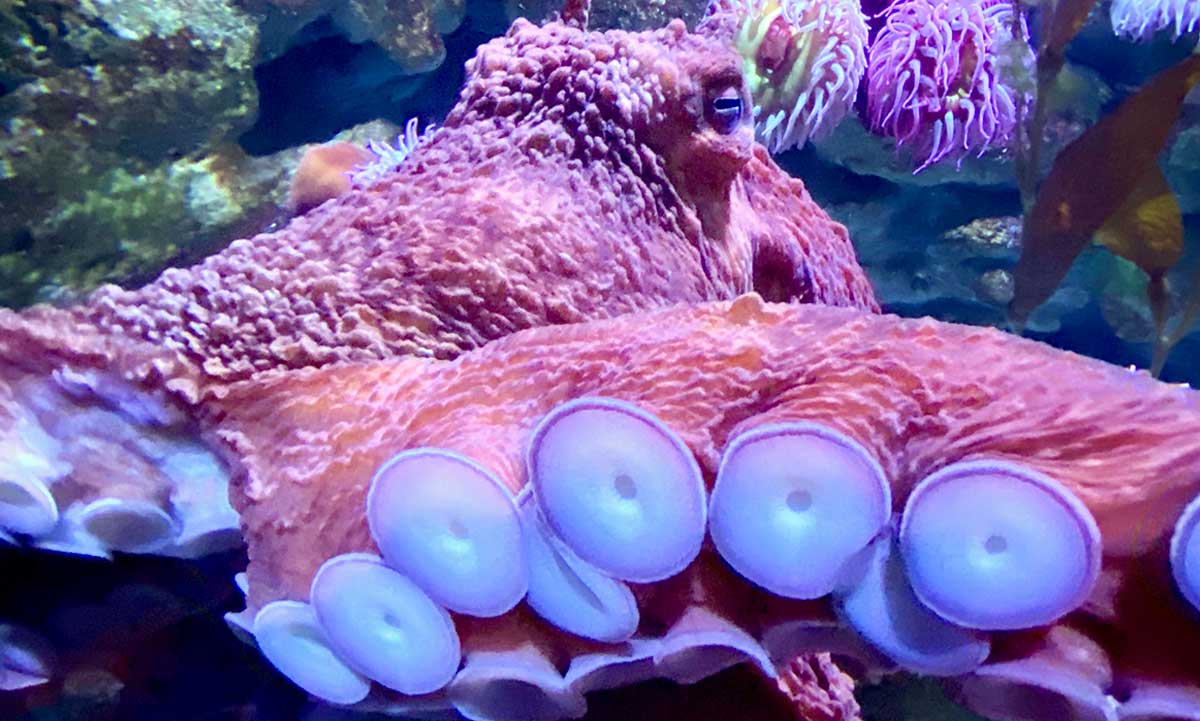
The contrast with vertebrates becomes stark when examining the cephalopod nervous system. Instead of the highly centralized model seen in mammals, including our species (which is, simply, brain and spinal cord), cephalopods exhibit a remarkably distributed neural architecture. An octopus, for instance, possesses around 500 million neurons (compared to a human’s ~100 billion), whereas the majority, perhaps two-thirds, reside not in a central brain but are distributed throughout its eight limbs.
Each limb has its own ganglia, allowing significant independent processing and control. Through its limbs, an octopus can explore, taste, manipulate objects, see, and then coordinate complex actions seemingly without constant input from the central brain.
This distributed system challenges our input-central processing-output model. It suggests a form of embodied cognition where sensing, processing, and acting are deeply integrated throughout the body, a fundamentally different organization for a complex mind.
Ours and cephalopods’ nervous systems most likely evolved from the basic need of early multicellular life to coordinate sensory input (like chemical gradients detected by bacteria) with appropriate action (moving towards food or away from toxins). The capacity to recognize a gradient in these can be seen as a cursory memory, in which a time-delayed sensing is compared to a current one to steer the course.
If the fundamental goal of the nervous system is to bridge sensing and acting, the specific architecture of that bridge is dictated by the organism’s physical form. This indicates that intelligence’s evolution is highly dependent on early factors, including early-life building blocks, the environment, and the organism’s needs. For example, the evolution of the cephalopod nervous system seemed to be constrained and shaped by the need for a malleable, hydrostatic body like that of molluscs, rather than the rigid skeleton of vertebrates like us.
Intelligence in Action: Problem-Solvers and Escape Artists
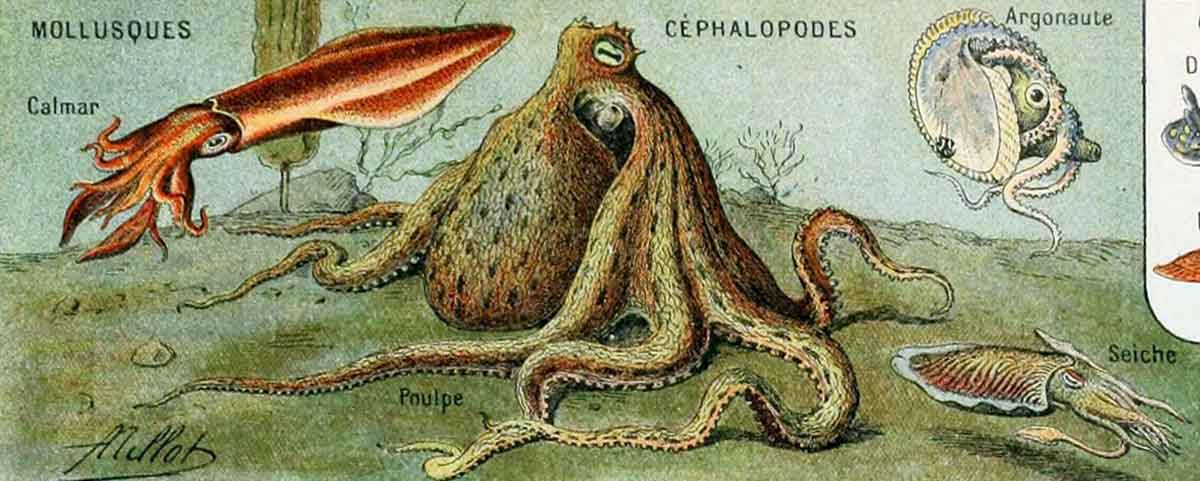
The behavioral repertoire of cephalopods provides compelling evidence for their high intelligence, often rivaling that of vertebrates in specific domains. Octopi are renowned problem-solvers, capable of learning to open screw-cap jars, navigate mazes, and manipulate latches to obtain food rewards. They demonstrate memory, remembering solutions, and applying them to variations of a puzzle.
Their curiosity is also legendary. In captivity, they explore their tanks meticulously, test boundaries, and sometimes mischievously disrupt equipment, such as water jets. They are also notorious escape artists, utilizing their incredible bodily flexibility (lacking bones, they can squeeze through openings the size of their eyeballs) and apparent cunning to slip out of tanks, sometimes even raiding neighboring tanks for food before returning, often waiting until observers are absent. This suggests not just flexibility, but planning and an awareness of their environment and observers.
Furthermore, evidence points towards sophisticated interactions and potential tool use. Octopi have been observed carrying coconut shell halves across the seabed, assembling them later for temporary shelter. This is a clear example of anticipating future needs and using objects as tools. They strategically use rocks and shells to barricade den openings.
Some species, namely the Blanket octopus (or Tremoctopus), scavenge the stinging tentacles of the Portuguese man o’ war (a colony of specialized organisms). Immune to the potent toxins themselves, these octopuses wield the detached tentacles like venomous whips, using a borrowed defense to stun prey and deter predators.
Cuttlefish exhibit complex visual communication, using rapid changes in skin color and texture not just for camouflage or mating displays, but seemingly to signal intent or disposition towards specific individuals, fish, or divers. They can even pass versions of the so-called Marshmallow test, demonstrating delayed gratification by foregoing an immediate, less preferred food item for a better reward later. This cognitive feat has already been achieved by primates, corvids, and parrots, as well.
Recognizing Individuals and Expressing Personality?
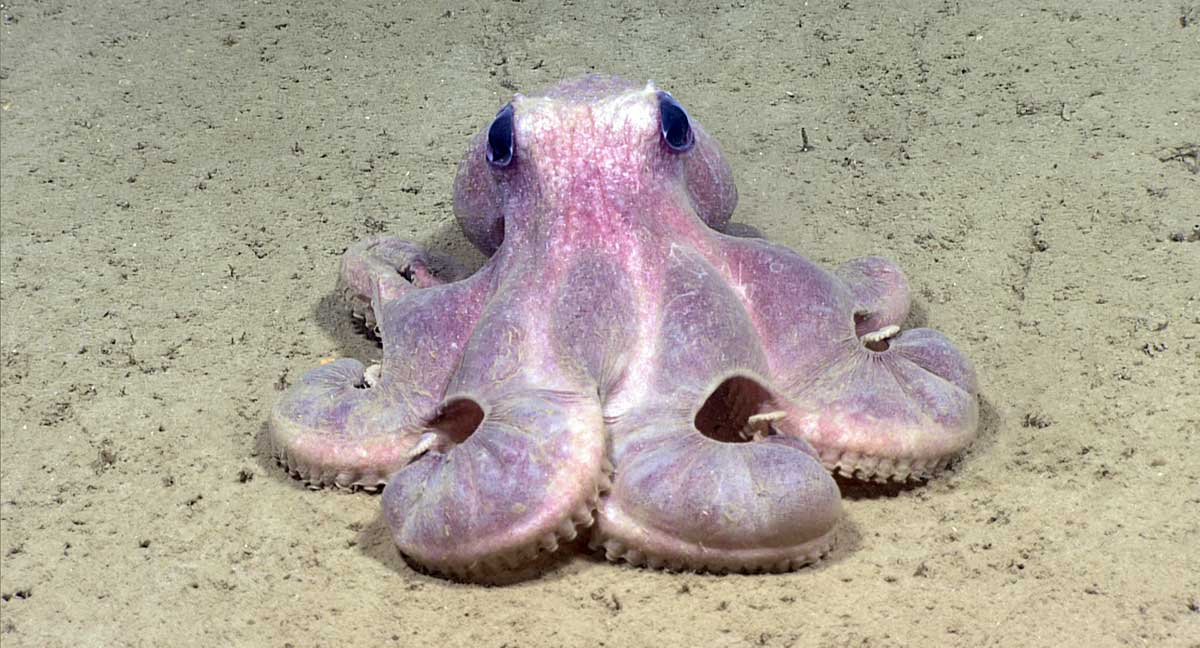
Adding another layer of complexity, cephalopods seem capable of recognizing individual humans. Captive octopi often react differently to different keepers, sometimes developing apparent likes and dislikes, expressed perhaps through playful interactions or targeted jets of water for disliked individuals. They show wariness towards strangers.
While attributing human-like personality is risky, the consistency of individual behavioral differences (“bold” vs. “shy” octopi) and their targeted interactions suggests a level of individual recognition and potentially rudimentary affective responses towards specific entities in their environment. Their complex visual signaling systems, involving patterns, postures, and textures, hint at a rich communicative life, even if it doesn’t resemble human language. Some researchers even explore their ability to perceive light and potentially see through chromatophores distributed across their skin, further highlighting their alien sensory world.
Rethinking Intelligence Beyond the Human Scale
Cephalopods help us confront the limitations of our anthropocentric definitions of intelligence. Their cognitive prowess isn’t built on the foundations we prioritize, such as complex social learning passed down through generations, symbolic language, cumulative culture, or fine-motor skills optimized for tool manufacture.
Instead, their intelligence manifests through incredible behavioral flexibility, rapid adaptation, masterful camouflage, complex motor control distributed across semi-autonomous limbs, and sophisticated problem-solving tightly linked to their unique embodiment and environment. They are masters of improvisation and physical interaction. They also differ from us in having a completely distributed sensory system, as well as a nervous system.
While the search for extraterrestrial intelligence continues, the cephalopods thriving in Earth’s oceans offer a profound, accessible encounter with a genuinely alien form of mind. They challenge us to broaden our definitions, to appreciate cognitive diversity, and to recognize that the journey to understanding other minds might begin not by gazing at the stars, but by looking into the complex, adaptable, and utterly different intelligence inhabiting the waters of our own planet. Takeaway message: instead of doomscrolling, read Godfrey-Smith’s book and think twice before ordering seafood in the restaurant.
Reference
Godfrey-Smith, P. (2016). Other Minds: The Octopus, the Sea, and the Deep Origins of Consciousness. William Collins.