Few artists enjoy such enduring popularity and prestige as Edward Hopper. The famous American artist had a unique relationship with cinema. Hopper was a known lover of the movies. At the same time, his works have had a lasting and far-reaching impact on the world of film for decades. Let’s explore the connection between movies and Edward Hopper’s timeless paintings.
Edward Hopper’s Cinematic Inspirations: Did He Paint Movie Scenes?
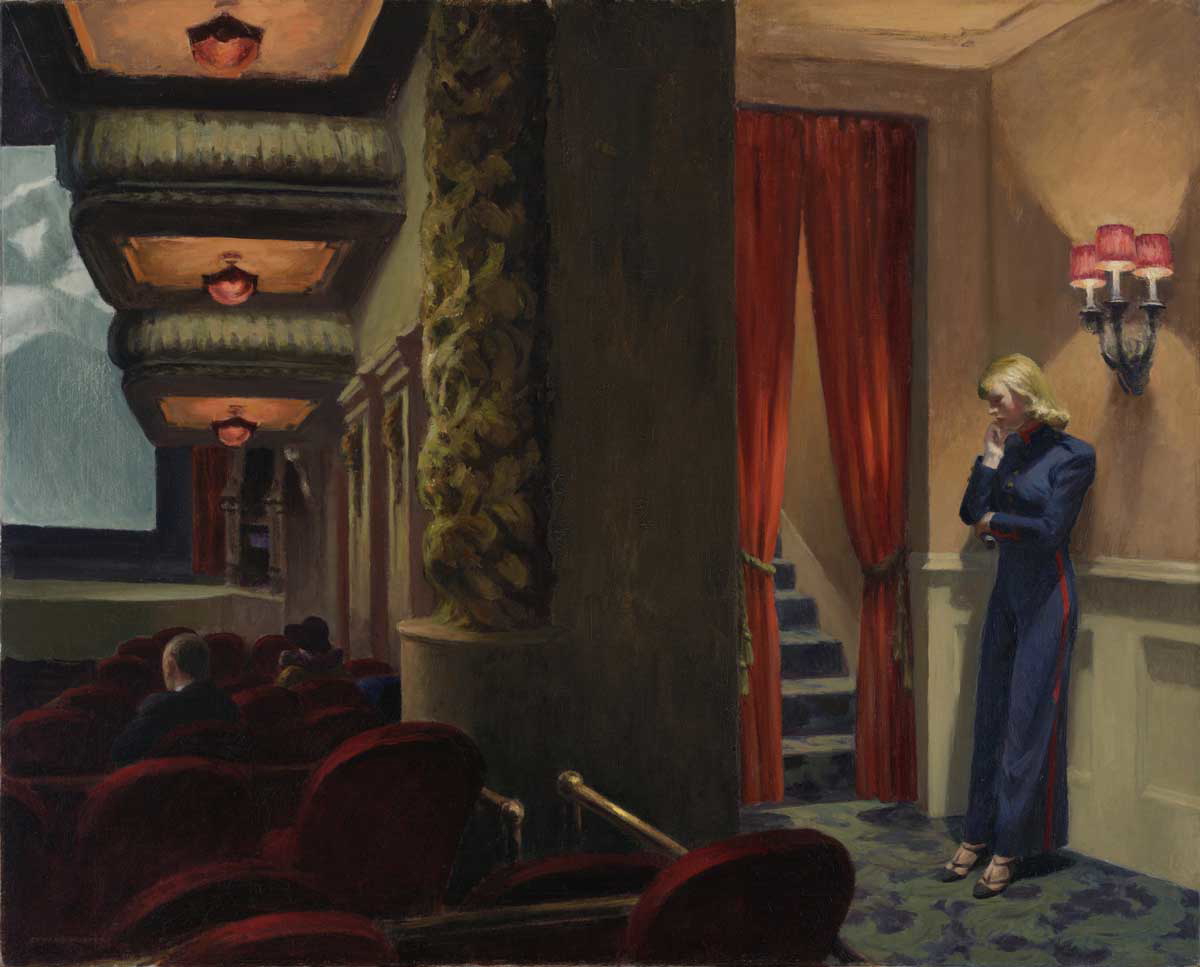
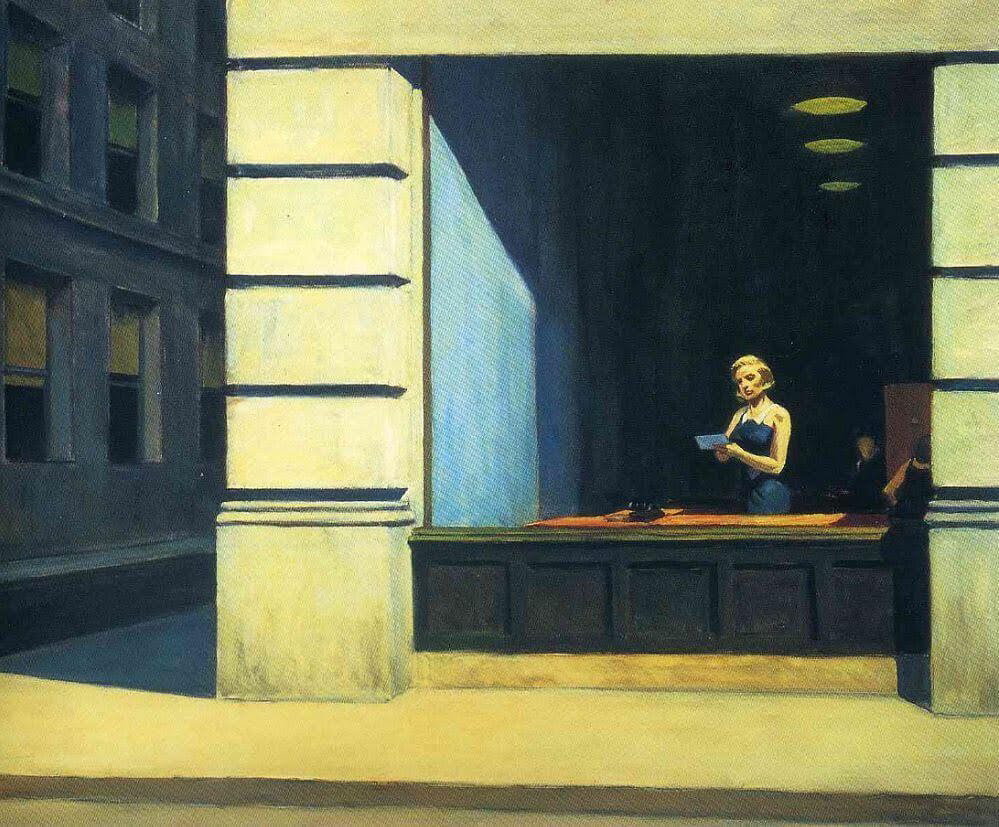
The pensive movie theater usherette of New York Movie, or the ominous mundanity of Gas, are as likely to be seen hanging on museum walls as they are on dime store walls. They are also frequently referenced in movies, cartoons, TV shows, and advertisements.
Edward Hopper is considered the ultimate painter of 20th-century solitude. He was actively painting from the beginning of the 19th century until 1965. His name is often followed by words like loneliness, isolation, alienation, and timelessness.
There is an undeniable feeling of melancholy in Hopper’s paintings. In a departure from most of his realist contemporaries, Hopper depicted urban life in a subtly stylized manner, brimming with psychological layers. His artworks stand somewhere among realism, impressionism, expressionism, and surrealism.
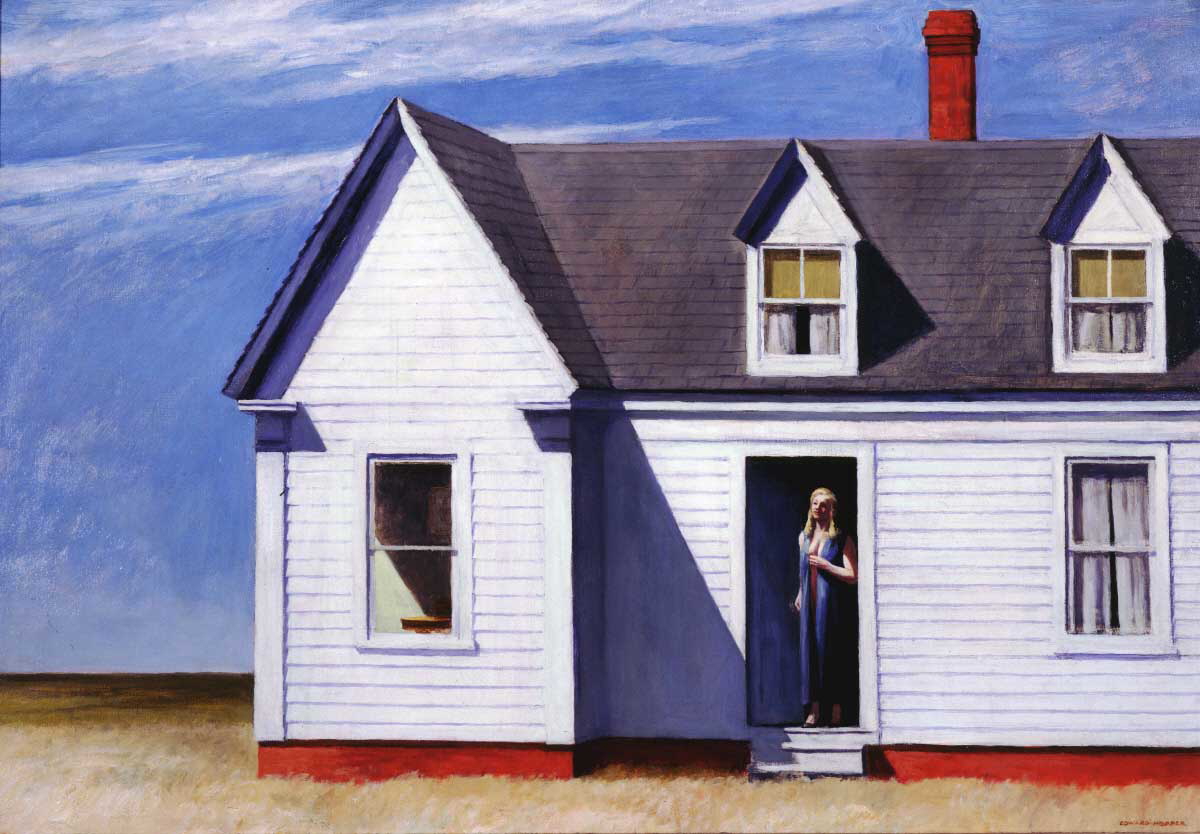
Hopper’s art is populated by lonely figures, looming buildings, ominous skies, voyeuristic windows, and mysterious facades. The pure colors, stark lighting, and economy of background noise or detail give his paintings the effect of silence and timelessness that they are so known for. His figures are solid and austere, but the work is moving, intense, and often, dramatic. Hopper’s art is often likened to freeze frames from movies. His pictorial choices—the subtle expressionism of his composition, framing, and lighting—converse closely with movies.
Hopper’s Cinematic Worlds and Narrative Tension
In his 2020 film Two or Three Things I Know About Edward Hopper, German director Wim Wenders remarks: “In front of Edward Hopper’s paintings, I get the feeling they are scenes from movies that were never made… I start wondering what’s the story that is beginning here; What will happen to these characters in the next moment?”
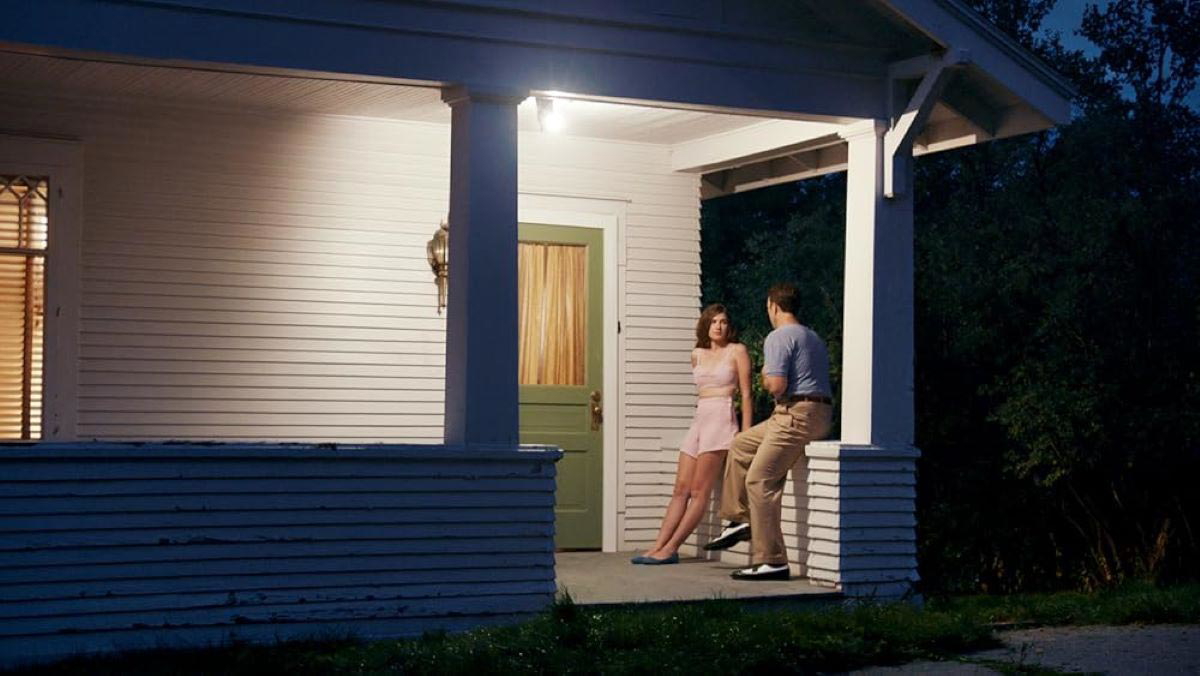
Wender’s questions echo a common reading of Edward Hopper. It seems there is a constant desire to uncover what his art is about or to bring it to life, to insert movement and narrative into the paintings. This can come across as a merely illustrative reading of the artwork, but it seems to be much more emphatically a response to the cinematic tension that is a fundamental aspect of Hopper’s career.
Hopper created worlds when he painted. Worlds filled with their own rules, moods, characters, emotions, and themes. These spaces are heavy with narrative suggestions, even if they do not need any narrative conclusion; the images are powerful enough to make the audience wonder anyway.
Exploring the Cinematic Tension in Edward Hopper’s Art
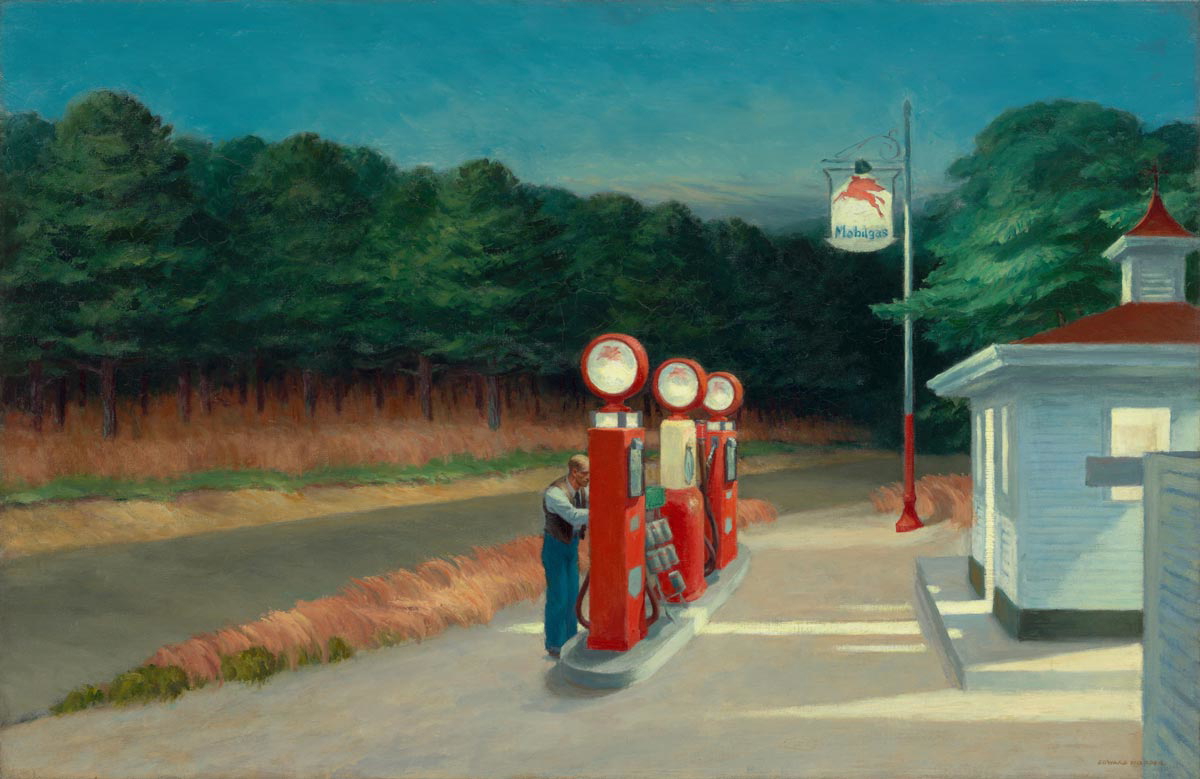
There is a kinship between Edward Hopper’s production process and that of filmmaking. Hopper walked and sketched the city for long hours, just like a location scout working on a film. He planned all his paintings in dozens of ink and pencil sketches, like a storyboard. These sketches, always accompanied by the annotations of his wife and fellow artist Josephin Hopper, resemble a cinematographer’s translation of a screenplay into visual language.
Cinematographer Ed Lachman, who has worked with Wim Wenders, Sofia Coppola, and Todd Haynes, said: “Hopper created a state of spirit, atmospheres, and emotional contexts for his characters, without telling anyone story. He only gave clues. We, photography and art directors, also work like that. Our language, the strength of cinema, is the images.”
Hopper’s Mastery of Emotional Composition
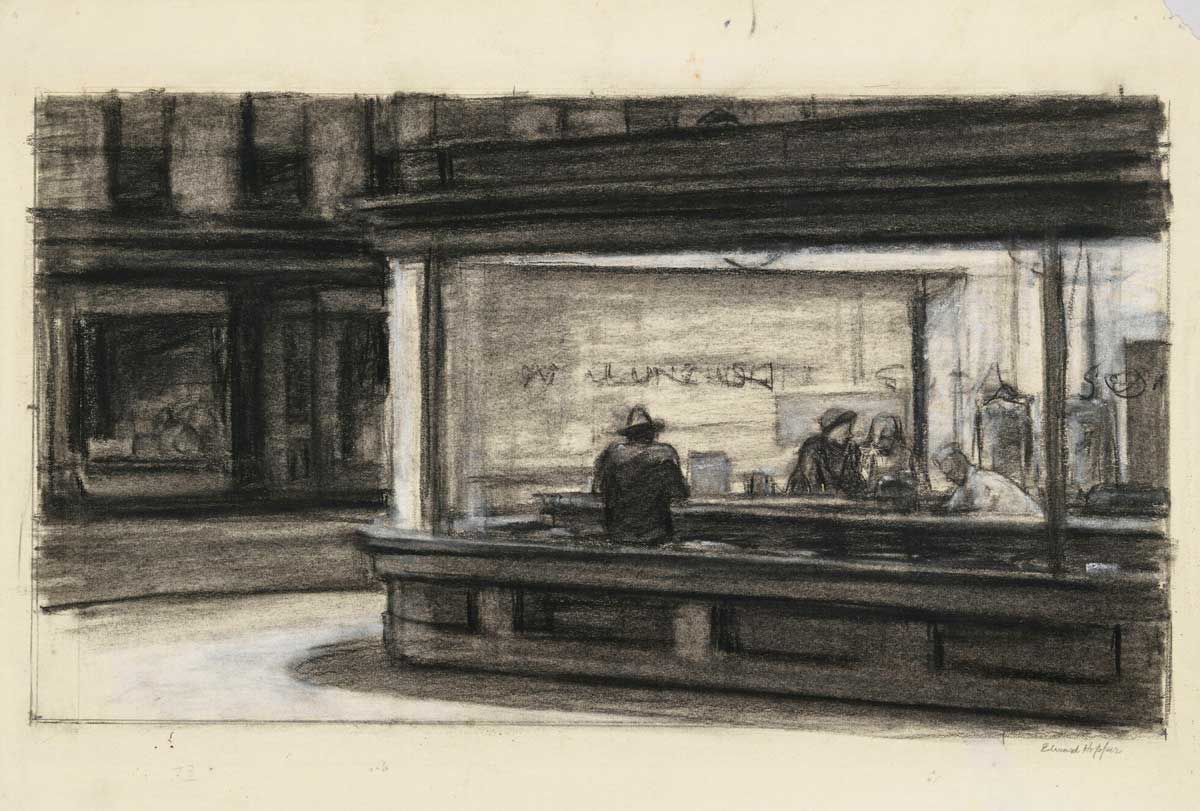
Hopper was an expert at conveying emotion and conflict through images alone. His human characters, who are often the subject of much speculation, rarely have expressive manners. The drama of his scenes is a drama of composition. The four non-conversing figures in Nighthawks do not have easily readable expressions. Some viewers project their own dysfunctions onto them, while others project hope.
The ominous quality of the painting comes from the still darkness that’s pressing down on the light of the diner. In Office at Night, nothing in the expression of the characters indicates any particular emotion. It is the harsh, artificial light, the high, oblique viewpoint, and the odd shape of the room that creates the feeling of unease.
Hopper’s Cinematic Techniques: Light, Perspective, and Tension
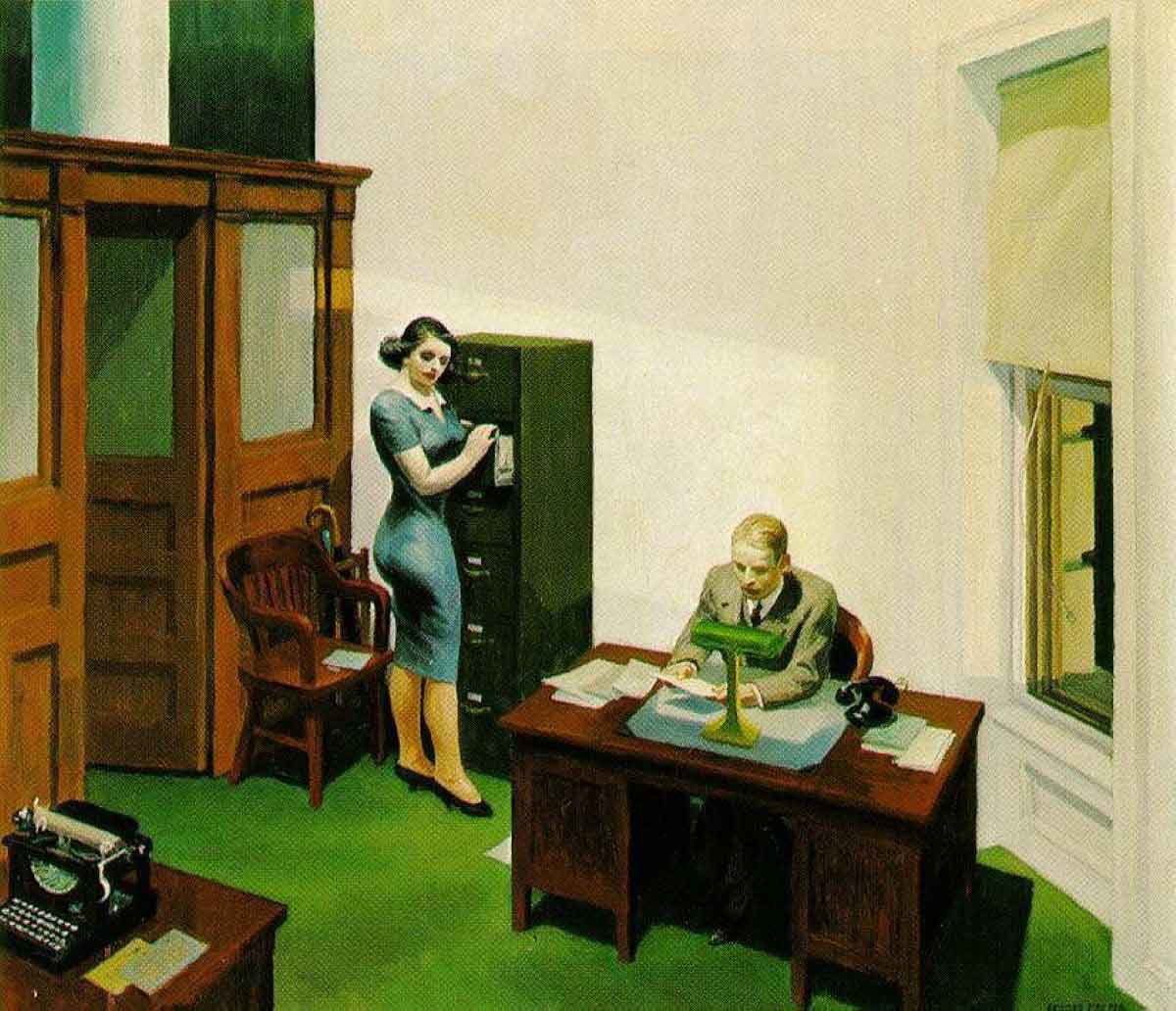
Hopper’s point of view is sometimes voyeuristic, showing us an outside view of unsuspecting subjects. At other times, he takes us inside the rooms, restaurants, train cars, and city streets of the Hopperesque world. Even when we are brought inside, we are still dislocated, much like the experience of watching a movie or a play. We follow the characters into their worlds but remain unable to affect the scene.
As a highly regarded American Realist, Hopper uses unconventional techniques to give his paintings emotional weight. He breaks the rules of realist perspective with oblique angles, contradictory viewpoints, and unstable spaces, creating an aura of disorientation that evokes visual tension, a technique also seen in silent films.
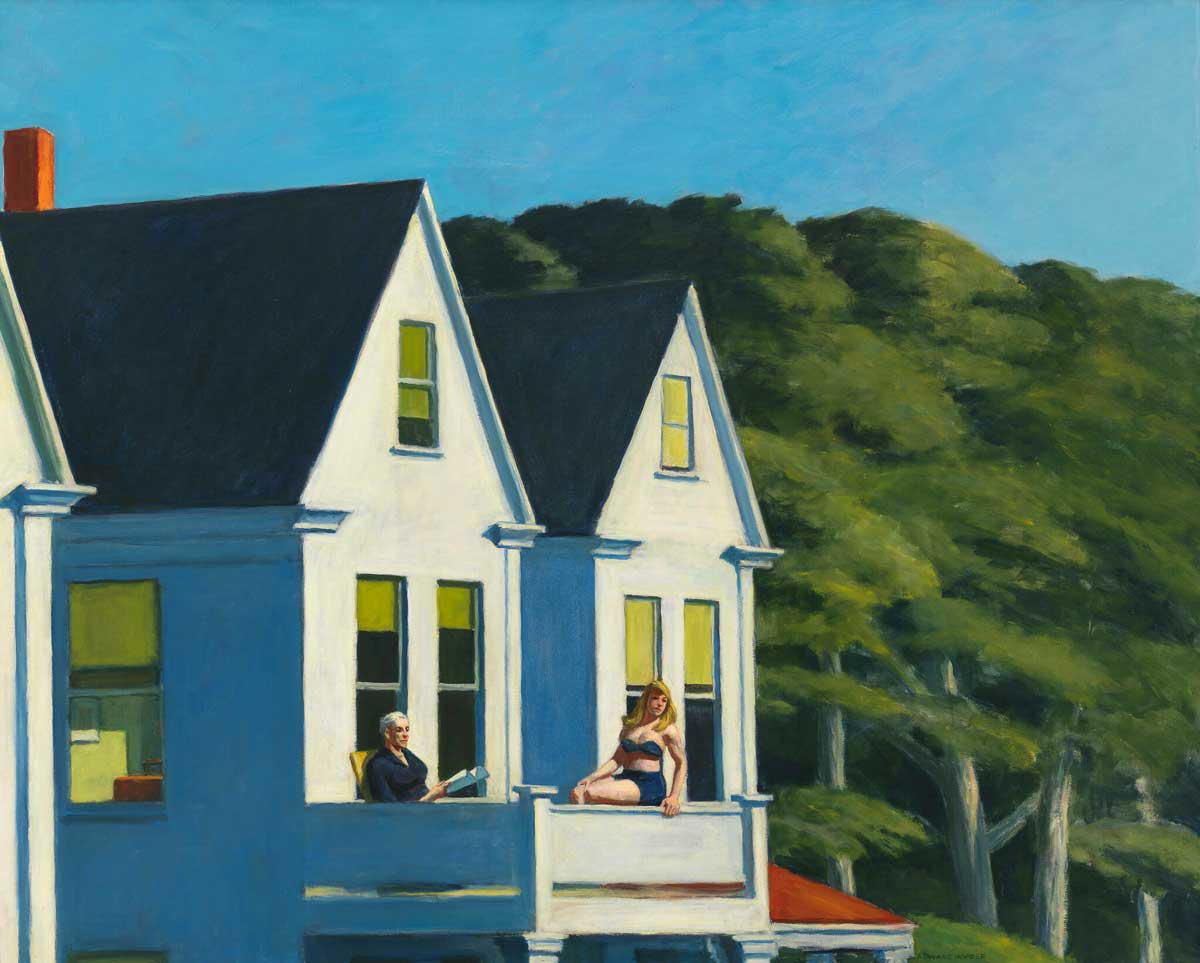
Light is a key component in Hopper’s work. The artist reportedly once affirmed, “All I want is to paint light at the side of a house.” Light in Hopper is not just light; it is color, form, and atmosphere as well.”
The artificial illumination of Automat washes out the sitting figure, and the light shapes in the background further explain her sense of isolation. The bright midday light creates stark shadows in Second Story Sunlight and House by the Railroad, dotting these buildings with unsettling, mysterious auras. Hopper’s light shapes his spaces and figures. In his works, light is so elevated that it is just as important as it is in the world of cinema.
Edward Hopper’s Love for Cinema
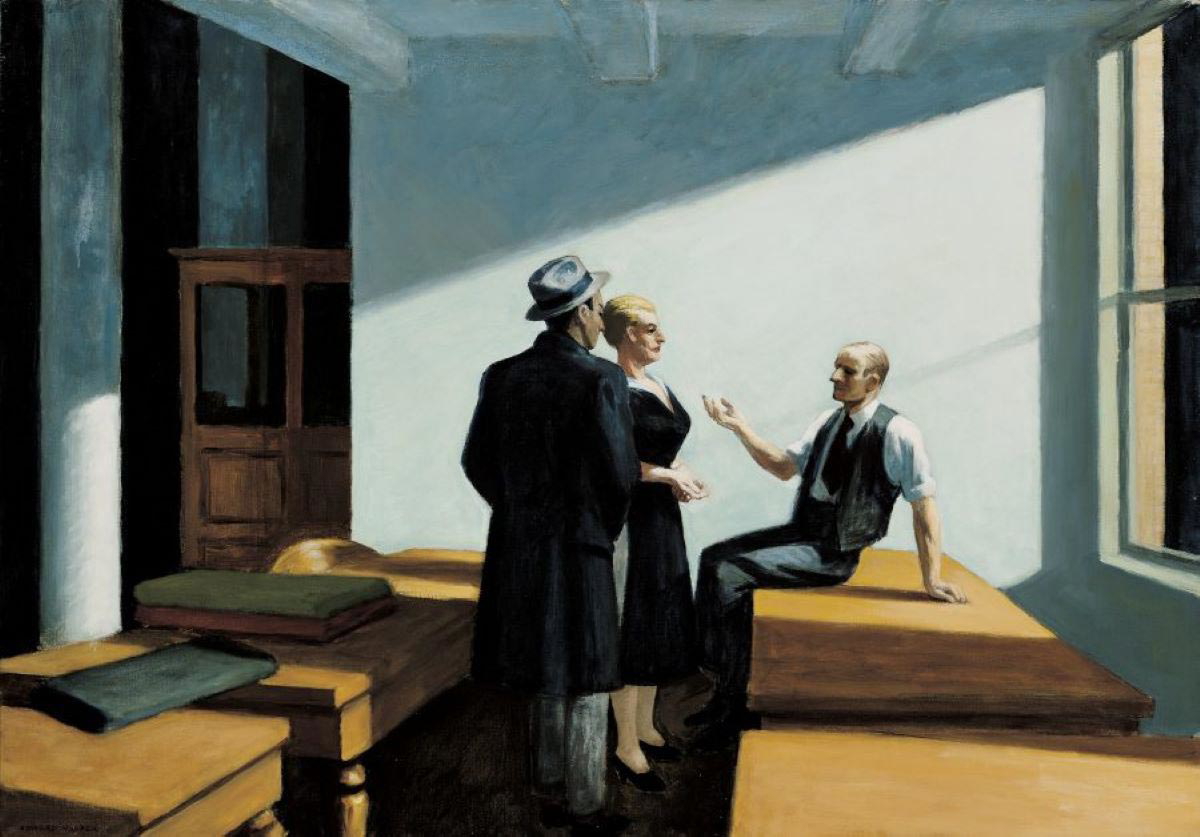
Edward Hopper’s history with cinema is a mutual affair. His love of film and theater is well documented, as is the far-reaching impact his art has had on movie directors and cinematographers. Born in 1882, Hopper saw the birth, rise, and many revolutions of cinema. He was a young boy when audiences saw the Lumière brothers’ Arrival of a Train at La Ciotat for the first time. During his student years, Hopper traveled to Europe several times, where he acquainted himself with European pictures and the European art scene.
It was around this time, during the early 1900s, that several ground-breaking film movements were developing in Europe, including German expressionist cinema. This movement pioneered several filmmaking techniques. It helped authors express their ideas through lighting, framing, and set design. Hopper seemed to develop a conceptual affinity with these movies at a moment when he was trying to find his own style. This is better seen in his etchings from this period. The 1921 etching Night Shadows marks one of his most unrealistic configurations, very similar to expressionist film trends of the time.
Hopper’s Symbiosis with American Cinema and Film Noir
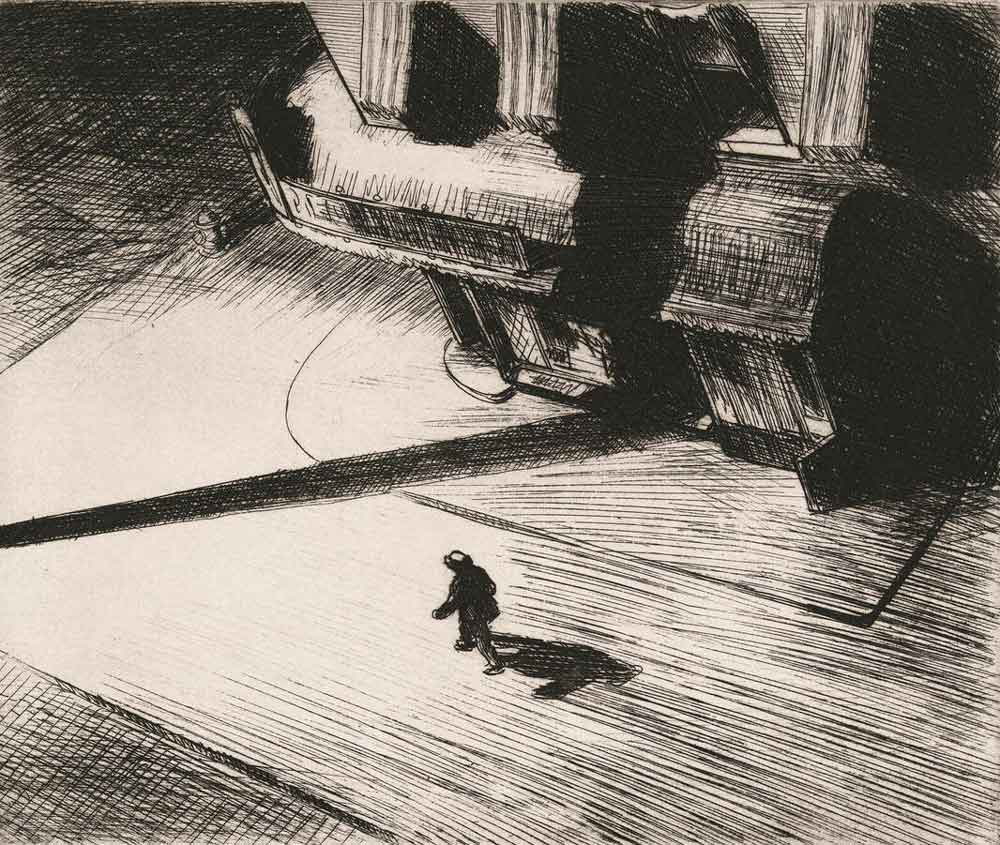
Hopper’s interest in the movies was two-fold: there were the stories told on screen and their visual language, and there were people who went to see them. Hopper observed and captured it several times throughout his career. In the 1940s, Edward Hopper and American cinema achieved true symbiosis. The transition from the Great Depression into yet another Great War ushered in a darker tone in Hollywood and the rise of film noir.
The bleak crime thrillers and violent melodramas of film noir were popular in post-war America. These seemed to be Hopper’s favorite types of movies. The noir tone had a visible influence on Hopper’s art. In turn, filmmakers found ample inspiration in Hopper’s moody, cynical, psychological, and mysterious America.
The Legacy of Nighthawks: How Hopper’s Iconic Painting Shaped Movies
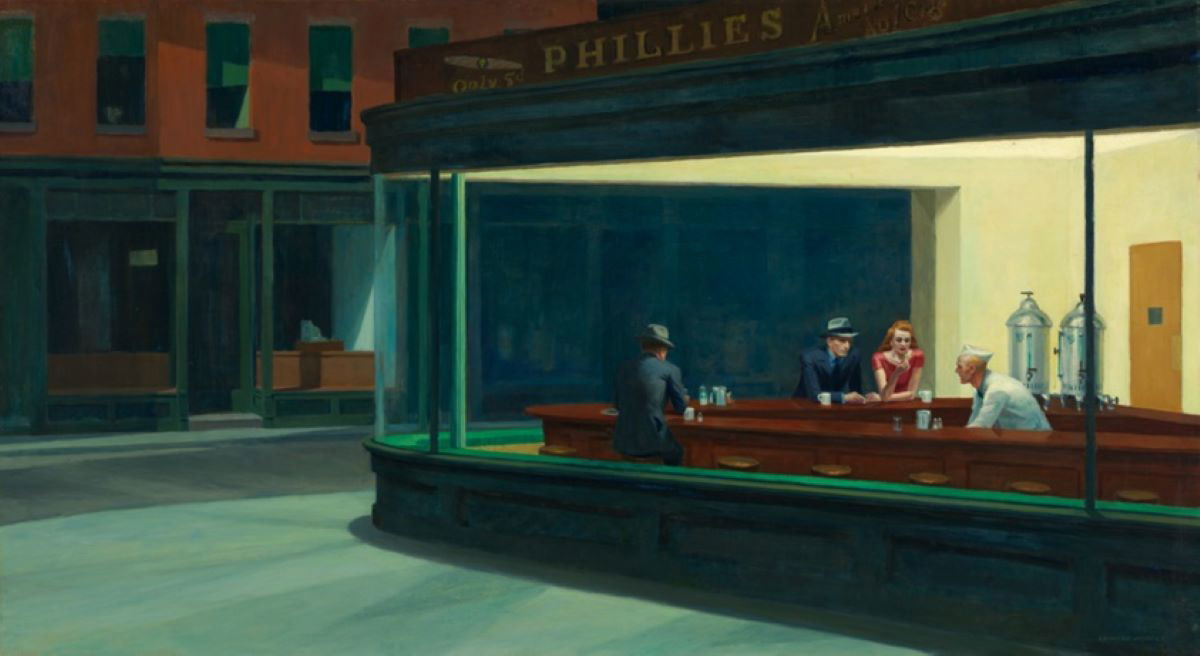
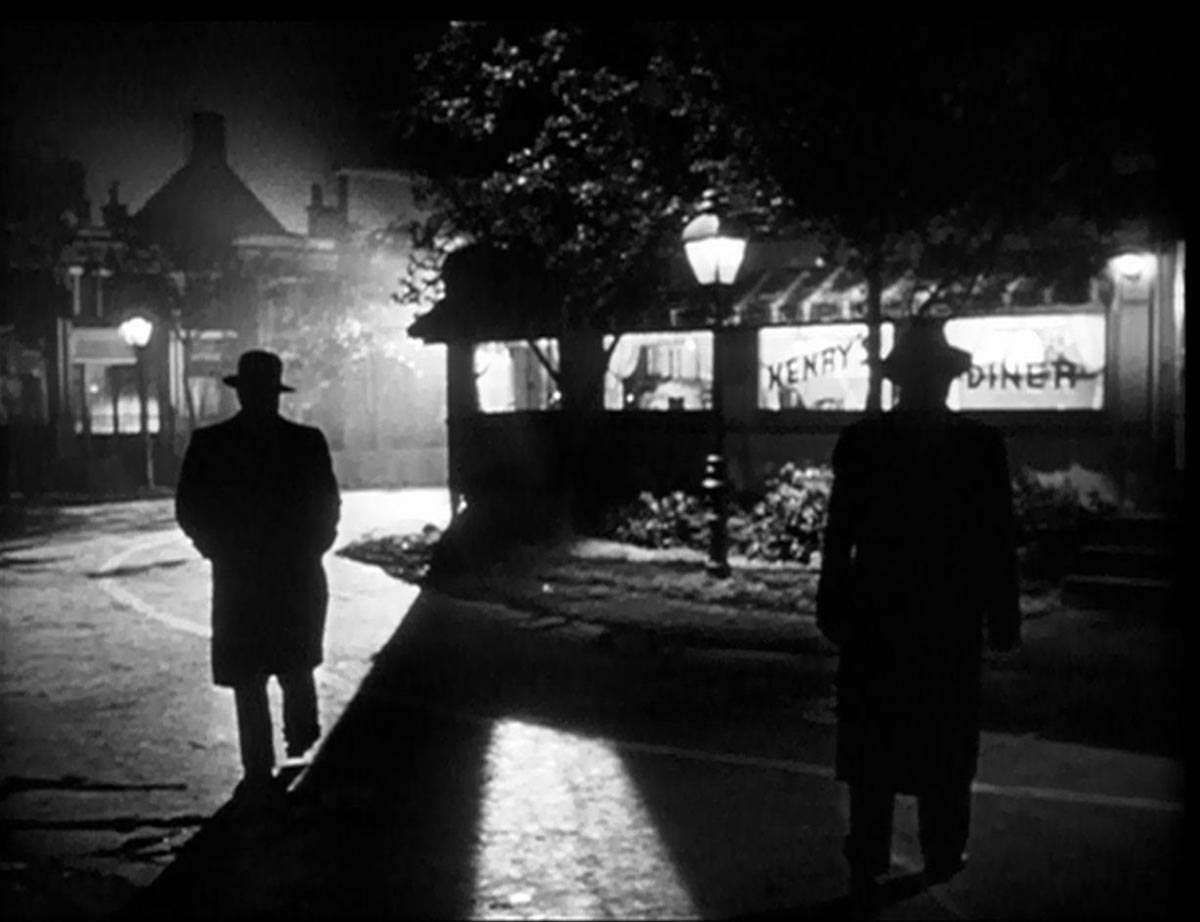
Hopper’s most famous work, Nighthawks, is a movie staple, having been referenced in everything from Twin Peaks to The Peanuts. The first of many Nighthawks references in cinema happened in 1946, in the noir classic The Killers. The Killers is a screen adaptation of Ernest Hemingway’s story of the same title. Nighthawks was also inspired by Hemingway’s book, and it incorporates visual elements of the crime films of the 1930s, even calling back to a street corner diner in the proto-noir Stranger on the Third Floor (1940). When Robert Siodmak adapted The Killers to film, he reproduced Nighthawks into the moving picture, and its cinematography features many Hopperesque silhouettes, lighting, and framing.
Edward Hopper’s Enduring Impact on Filmmakers and Movie Classics
Just a few years later, while developing his film Force of Evil (1948), director Abraham Polonsky took his cinematographer George Barnes to a Hopper exhibit, pointed to the paintings, and said: “This is how I want our film to look.” The influence of Hopper’s voyeuristic point of view and sublimated tension of banal scenes can be felt in films like The Naked City, Vertigo, Scarlet Street, and most evidently in Hitchcock’s Rear Window.
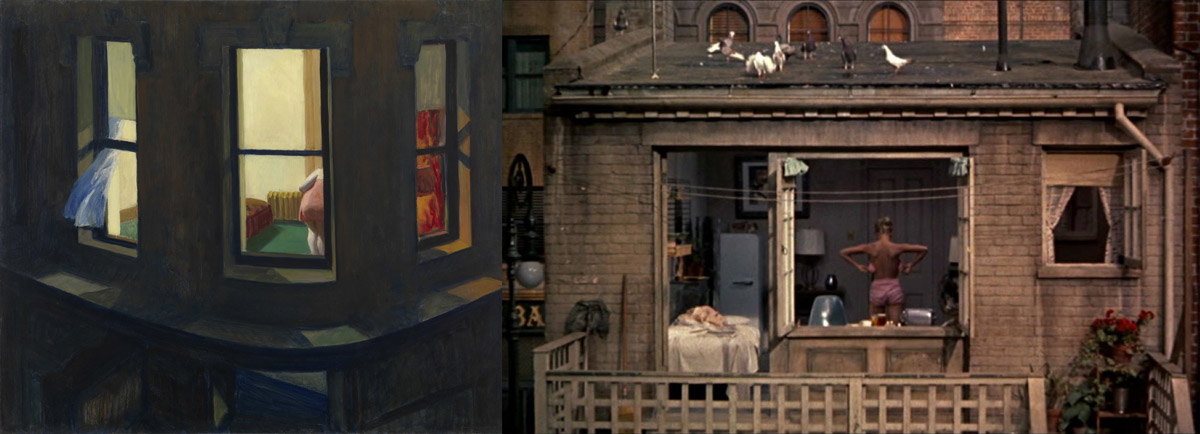
Hitchcock was very candid about Hopper’s influence on his work. The American master also influenced Michelangelo Antonioni, David Lynch, and Roy Andersen. Famously, Hopper’s House by the Railroad was a key inspiration for Hitchcock’s famous film Psycho (1960). The painting has also inspired the foreboding houses in Giant, Days of Heaven, and even The Addams Family.
Hopper’s Lasting Legacy in Cinema and Pop Culture
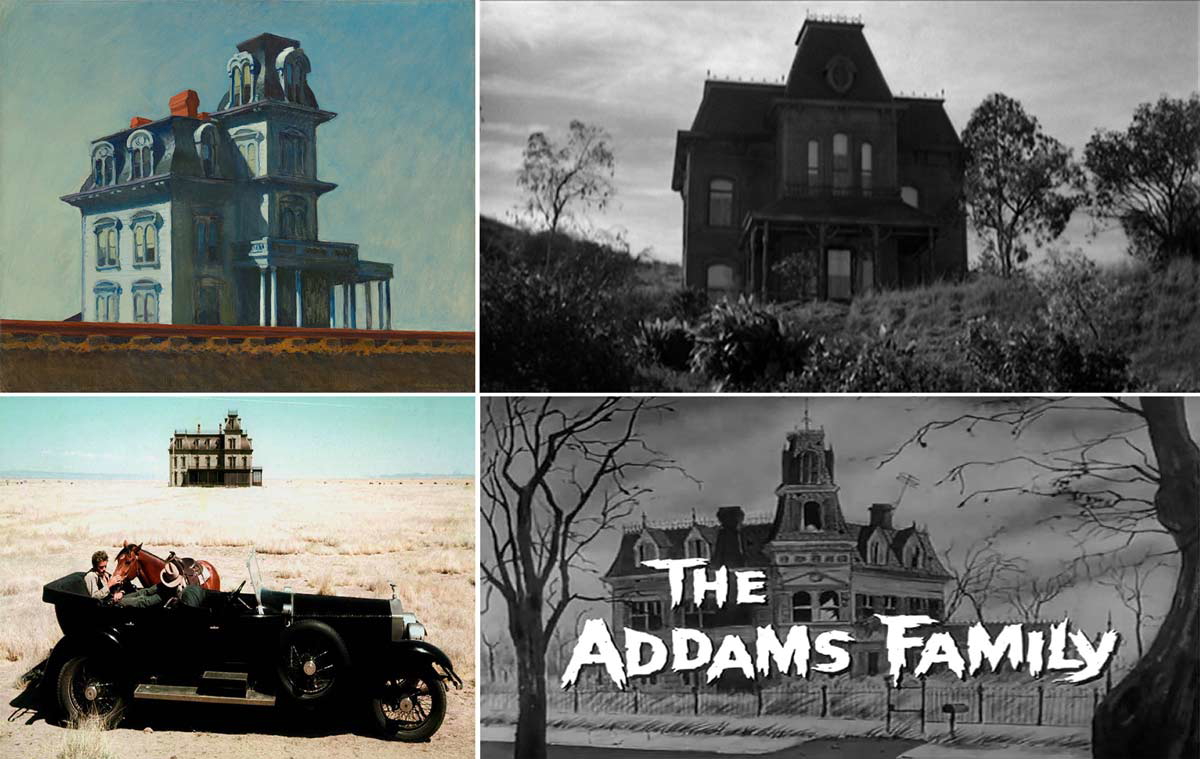
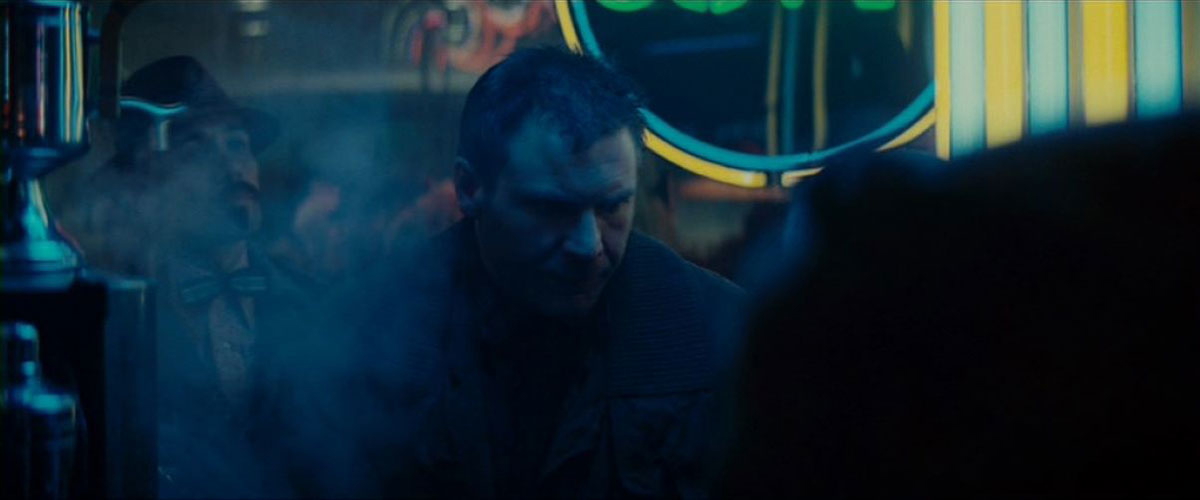
Even after his death in 1967, which coincided with a cinematic revolution in Hollywood, Hopper’s works still influenced many filmmakers. He has been referenced in cult classics, thrillers, psychological dramas, comedy cartoons, teen shows, and music videos. Forty years after Abraham Polonsky, director Ridley Scott took his crew to see Nighthawks, directing his crew to base the entire look of his ground-breaking sci-fi Blade Runner on it.
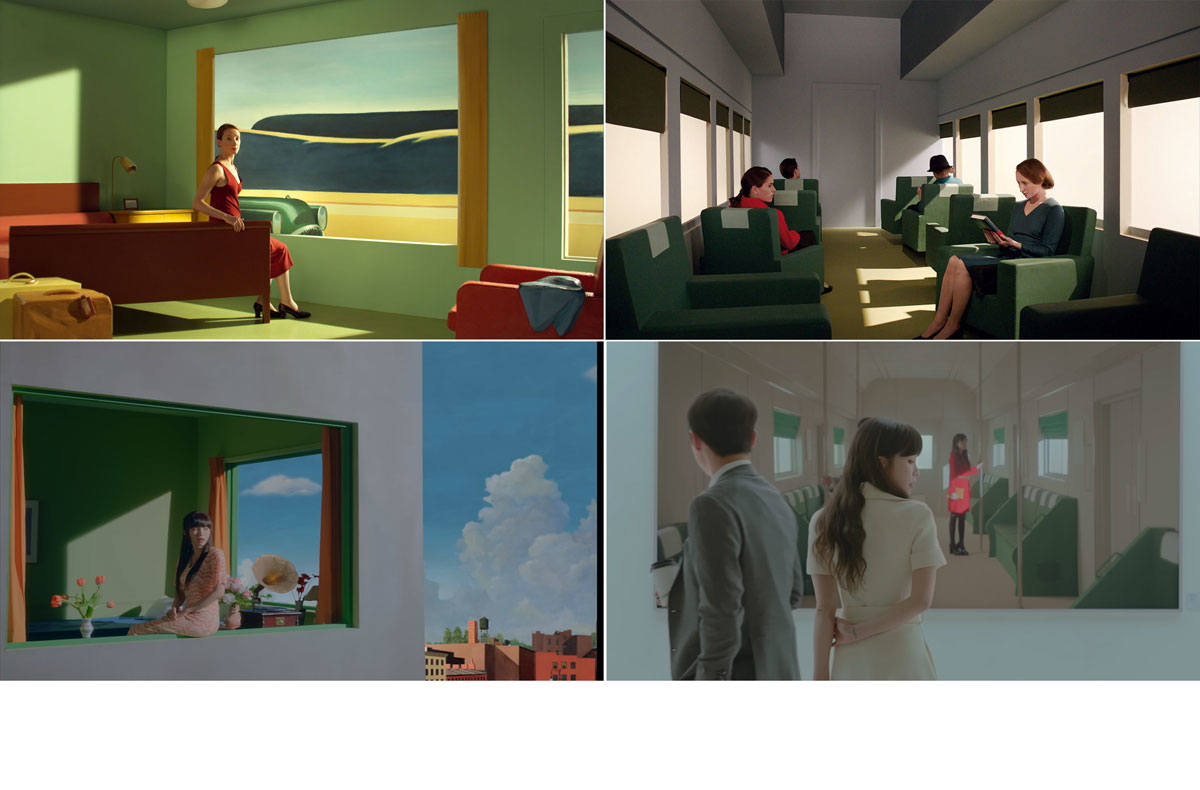
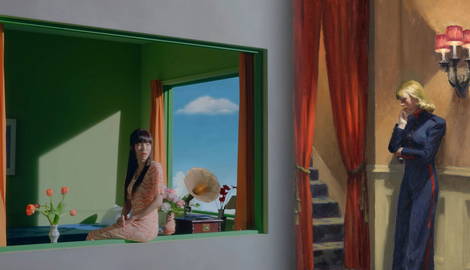
Wim Wenders channeled Hopper’s America in his cult classics Paris, Texas and The End of Violence, years before his homage 2 or 3 things I know about Edward Hopper (2020). In 2013, the Austrian filmmaker Gustav Deutsch told a woman’s life story in 20th-century America through recreations of Hopper’s paintings in Shirley: Visions of Reality.