Melencolia I is one of the most famous artworks by the German Renaissance artist Albrecht Dürer. It inspired generations of artists and illustrators and it still remains challenging for art history amateurs and experts alike. The engraving’s complex symbolism leaves room for endless interpretations. Read on to familiarize yourself with seven possible meanings of the famous Albrecht Dürer’s Melencolia I.
1. The Most Common Interpretation: Biblical Concepts and Dürer’s Self-Portrait
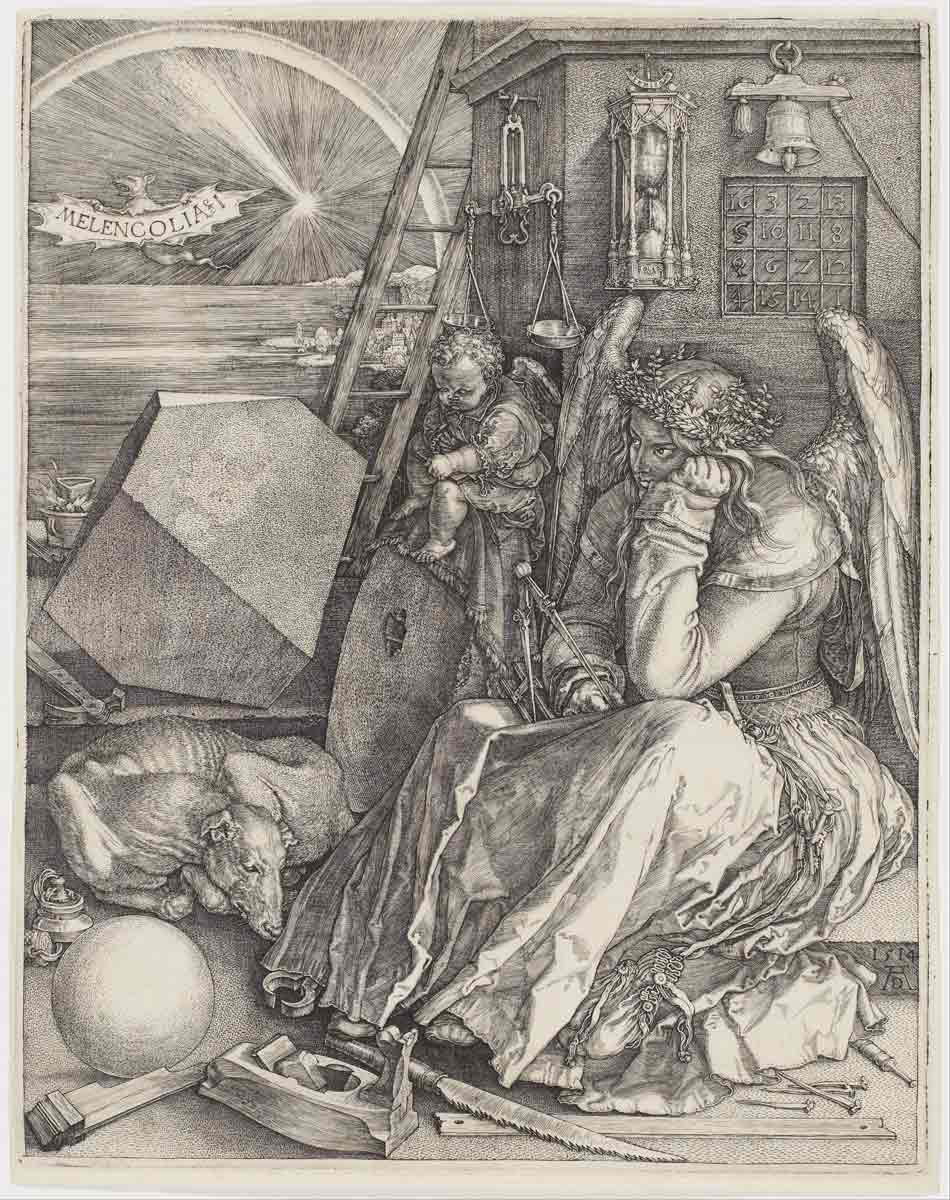
Melencolia I by Albrecht Dürer is a complex engraving overwhelmed with details and objects. A bored winged woman sits in the corner of the image, surrounded by books, clocks, and mathematical and artistic instruments, but not a single of these objects seems to bring her joy or spark interest. Even a hunting dog, a lively and proactive creature, is asleep, similarly disinterested in the scene. The most popular interpretation explaining the complex symbolism of the work can be found by linking Dürer’s image to one of the most popular Biblical passages.
As stated in Ecclesiastes, a book of wisdom from the Old Testament, “For with much wisdom comes much sorrow; the more knowledge, the more grief” (1:18). Dürer’s engraving might be interpreted as a direct reflection of that principle surrounded by countless instruments of knowledge and exploration, having mastered them all, the figure is so overwhelmed with wisdom it incapacitates her. Her knowledge led her to realize the futility of any human attempt to change or even to study the world, as its main mysteries remain close but still out of reach. The famous art historian Erwin Panofsky, who wrote about Dürer extensively, proposed that Melencolia I might have been, in a way, a spiritual self-portrait of the artist at times of crisis. Surrounded by all possible instruments and having accumulated all possible knowledge, he still, at times, felt like it was never enough.
2. The Limits of Knowledge
The key to another popular interpretation of Dürer’s work can be found not in the work itself but in the artist’s marketing strategy for selling it. One of the most treasured features of engravings for artists was the fact that, unlike with most paintings, they could sell the finished product. With painted portraits, still lifes, and religious scenes, it was the commissioner who usually defined the subject, composition, and message of the work. Printed engravings were much cheaper than paintings or sculptures and easier to reproduce, thus covering a more vast market of art admirers. This also allowed artists to fully express their ideas and highlight particular meanings in their works that might not occur in the minds of their commissioners.
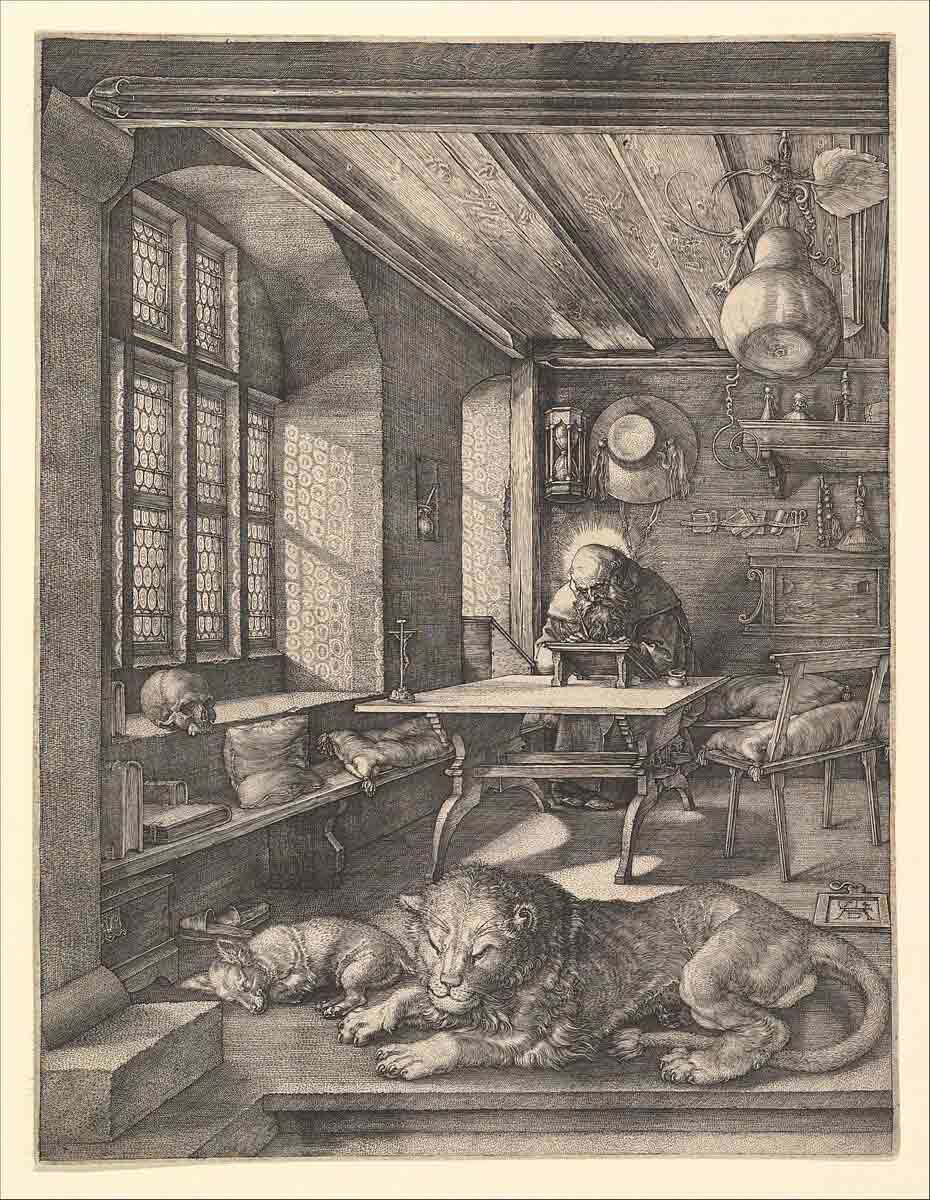
From Dürer’s notes and books, we know that he sold Melencolia I in sets with another of his famous engravings, Saint Jerome in His Study. The latter engraving, equally treasured and well-known, depicted the patron saint of scholars and translators, focused on his work on translating the Bible into Latin. At first glance, the two engravings do not seem to be conceptually linked. However, Dürer’s decision to distribute them together provides a meaningful link. Art historian and University of Toronto professor Philip Sohm interpreted the two works as commentaries on two different kinds of knowledge, secular and religious. Secular knowledge seen abundantly in Melencolia I brings no comfort and only troubles the mind. At the same time, the faithful Christian mind work of Saint Jerome provides serenity and harmony with the world.
3. Unfinished Character Series
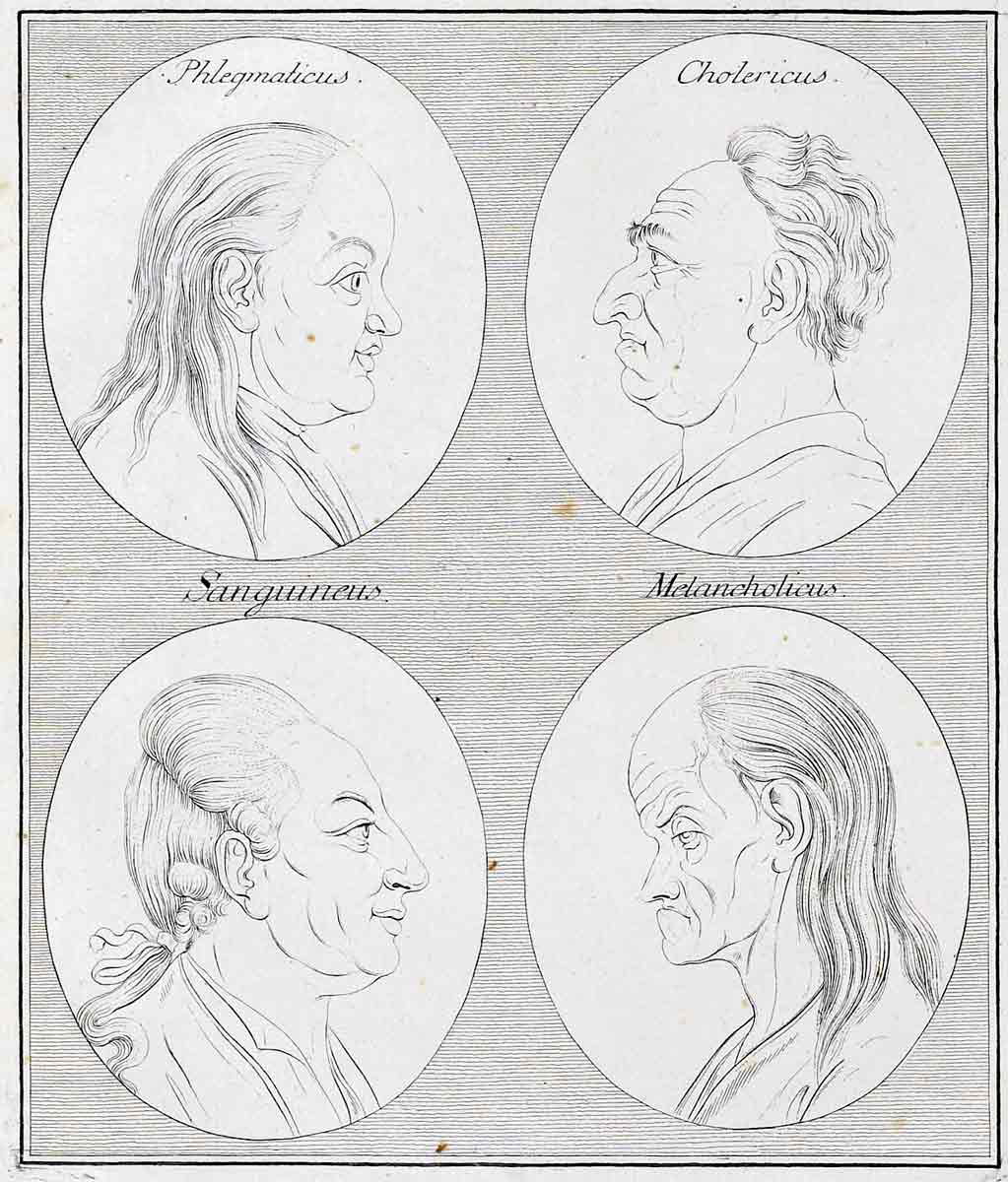
One of the possible interpretations of the work was the idea that Dürer might have seen it as the first part of the series on human characters. The typology of temperaments, known from ancient Greece, relied on the theory of four humors that were present in human bodies in different proportions and thus affected one’s character and behavior. The prevalence of blood created an enthusiastic and lively sanguine temper. White phlegm (not to be confused with present-day medical understanding of the word) formed passive phlegmatic characters. Yellow bile fueled hot-headed, short-tempered cholerics, and black bile created melancholics. Melancholy was, and still often is, associated with depression, pensiveness, quiet despair, and delusions.
However, according to Aristotle and his Renaissance admirers, melancholic character was also an artistic one, much more capable of creative expression than the other types. For Renaissance creatives, art was mostly a result of extensive education, mathematical precision, and an understanding of the laws of nature. Perhaps this was the direct consequence of Ecclesiastes’ idea that more knowledge brought more sorrow to the human mind. Dürer categorized himself as a melancholic and might have expressed his own vision of the type and its inherent struggle. However, although the theory sounds convincing, there is no evidence that Dürer ever started to work on the three remaining character engravings.
4. Astrological Interpretation of Melencolia I: Saturn and the Comet
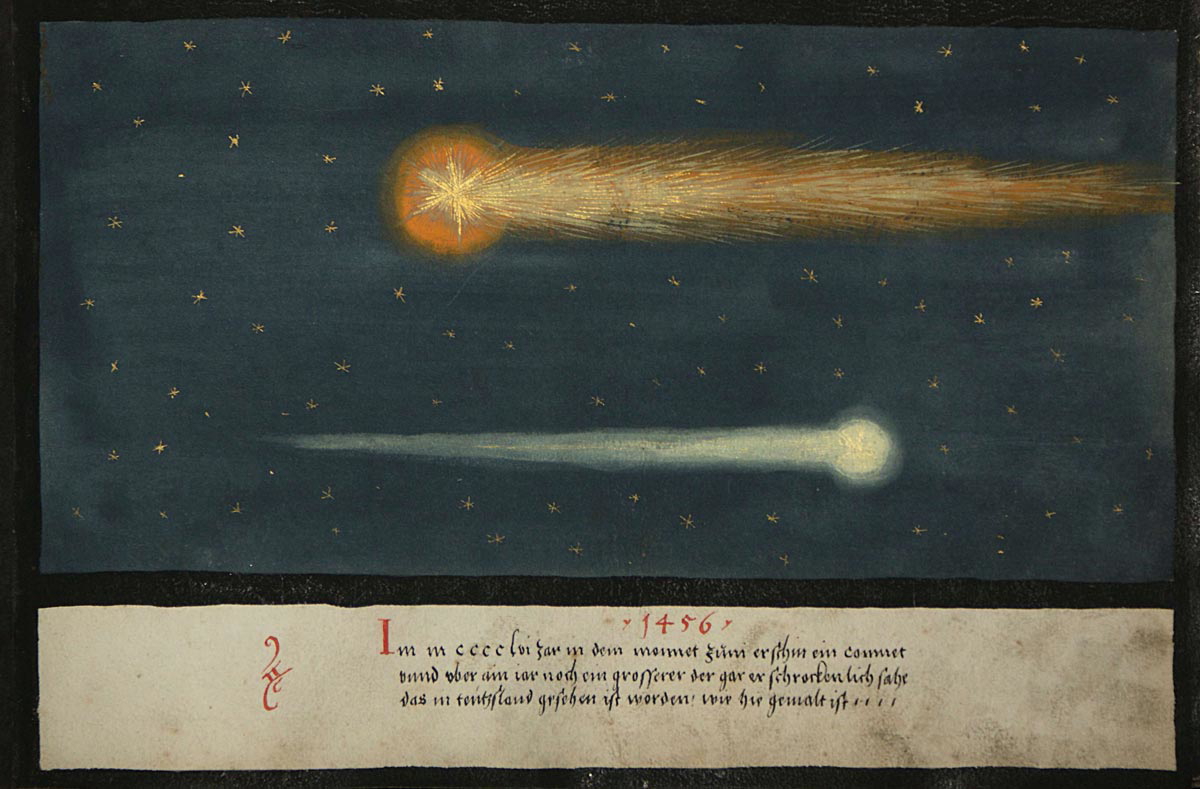
Another interpretation of the engraving originated from the Renaissance investment in astrology and alchemy. In 1513, Dürer and his contemporaries witnessed a falling comet. Comets at the time were regarded as omens of death and disease. According to his notes, the artist had tragic expectations of the events to follow.
In Dürer’s time, the appearance of comets was explained by appulses of planets and their influences. In 1513, astronomers recorded the appulse of Saturn, Venus, and Mars. According to one version, Dürer created Melencolia I for the Roman Empire ruler Maximilian I, who reportedly believed that Saturnian influence could undermine his power. The winged figure in the engraving is wearing a watercress wreath on her head. According to Renaissance astrologers, watercress acted as a protective amulet against Saturn’s energy. Another hint at the astrological interpretation is found in the scales hung next to the figure. In 1514, in the year of the engraving’s creation, Saturn entered the constellation of Libra.
5. Alchemical Interpretation
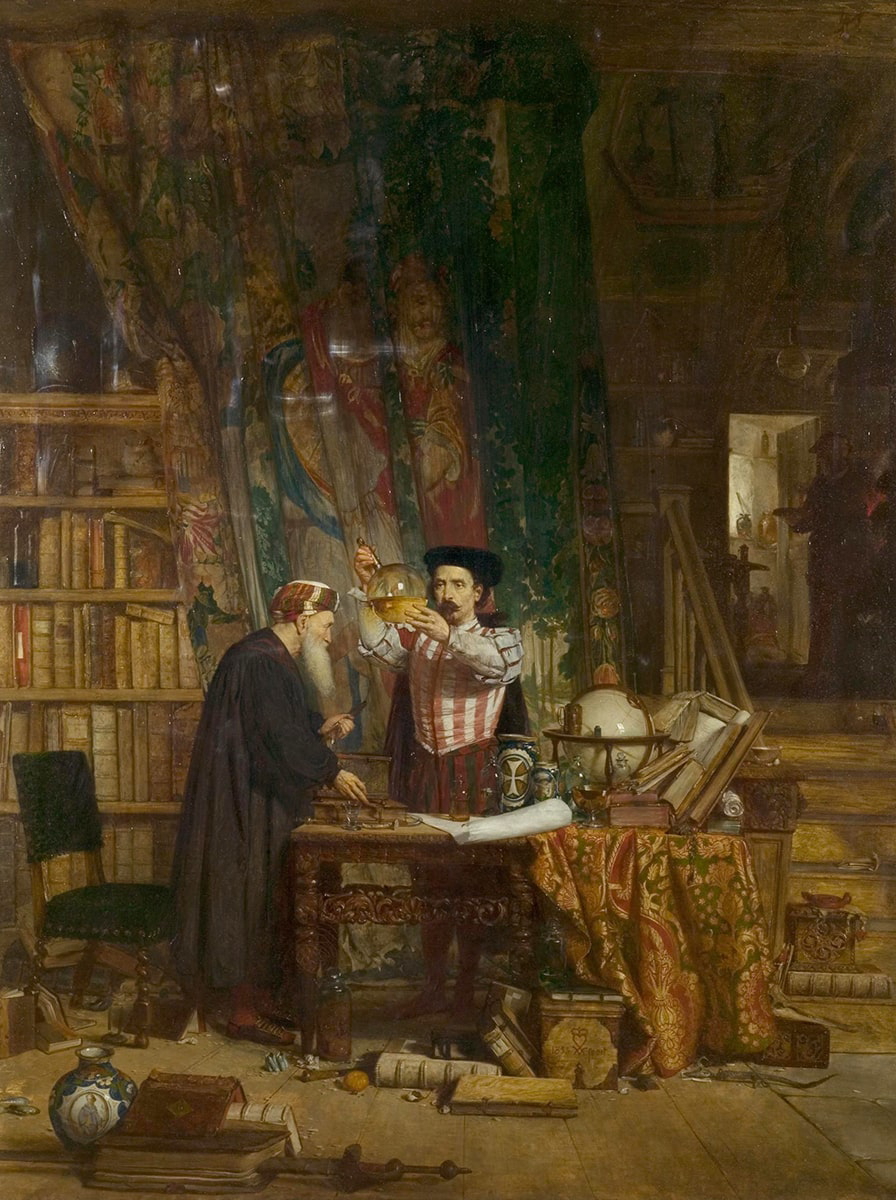
The abundance of alchemical instruments around the winged figure suggested another popular version. Renaissance scholars believed in the inherent connection of not only star signs and planets but also human temperaments and alchemical processes. The creation of the Philosopher’s Stone, or the Magnum Opus—the greatest possible achievement for the alchemist was similarly divided into four categories. The first of them, called nigredo, was usually associated with a melancholic temperament. During this stage, all components were supposed to turn into a uniform black mass.
However, the idea of the work referring to the first stage of the alchemical process has one important downfall. In Dürer’s writings and notes, there was not a single mention of his plans to create a series, although he mentioned Melencolia I several times. Dürer was a careful and disciplined planner, and it is unlikely that he would abandon an idea halfway. Moreover, as we discussed earlier, he sold the prints of Melencolia I in a set with those of his other famous engraving Saint Jerome in His Studio. He grouped them together despite no evident link in subject matter and composition, which once again makes the concept of a pre-planned series unlikely.
6. What Does “I” Mean?
Another important theoretical issue concerns the title of the work, particularly the “I” added to it. In most sources, it is interpreted as a Roman number one, possibly hinting at Dürer’s intention to create subsequent numbered works that would refer either to alchemical processes or to human temperaments. However, he never mentioned anything close to Melencolia II and did not leave any drawings that could have given a hint at his plans.
There is, however, another possible interpretation that might have explained why Dürer left no mentions of any other work planned for the series. Spanish historian of the Medieval period Ernesto Frers suggested that “I” might not be a number after all, but a Latin letter i. Moreover, it could be not just a letter but an imperative form of the verb eo. In this context, the title can be translated as Go away, Melancholia.
7. Modern Take on Albrecht Dürer “Melencolia I”
After Sigmund Freud introduced psychoanalytic interpretations of works of art in his work on Leonardo da Vinci, other Western psychoanalysts and art historians joined the trend. Melencolia I was and remains the most frequently discussed and extensively researched engraving of all, and it would be strange if the mass obsession with the new type of analysis missed it. In 1929, an Austrian psychoanalyst Alfred Winterstein published a book in which he dissected Dürer’s work from the Freudian point of view.
In Winterstein’s interpretation, the winged character appears as a mother figure, with the entire scene being a coded fantasy of Dürer’s birth and his Oedipus complex. The sleeping dog, in his opinion, represented Dürer and his submissive position in the parent-child relationship. Despite the trendy character of Winsterstein’s writing, it nonetheless never received any large-scale recognition and was largely dismissed by later scholars.