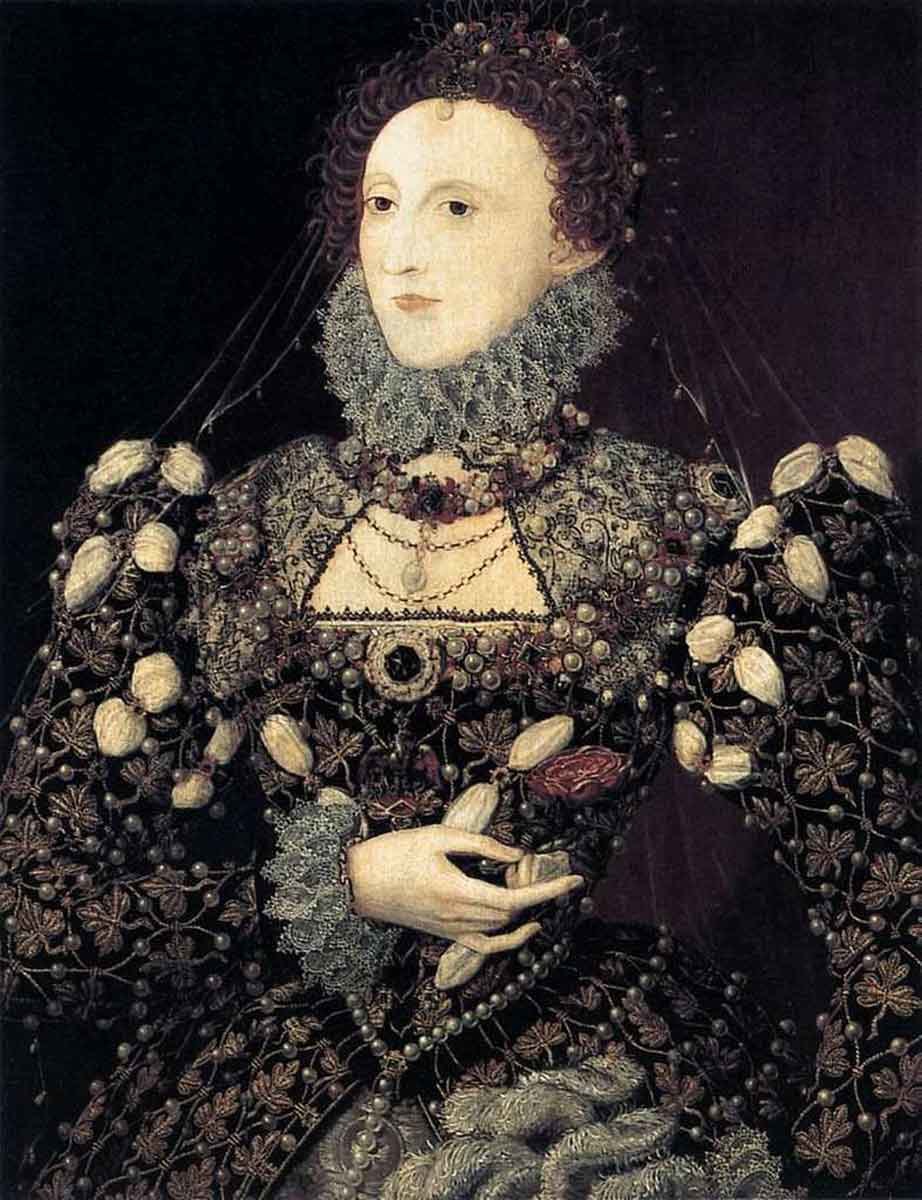
The Pelican Portrait. Even if you haven’t heard of it, you’ve almost definitely laid eyes on it at some point in your life. Although it was painted four and a half centuries ago, it remains one of the most famous depictions of Queen Elizabeth I, alongside the likes of The Phoenix Portrait, The Darnley Portrait, and The Armada Portrait.
Just like in many of her other portrayals, in The Pelican Portrait, Elizabeth I is immediately recognizable as queen. One swift glance will confirm the identity of the sitter to anyone with any interest in British history.
At first, The Pelican Portrait appears just as it should. However, on closer inspection, historians may wonder if there is more to the work than meets the eye. Are there any significant details that might have been previously overlooked?
What Is the Pelican Portrait?
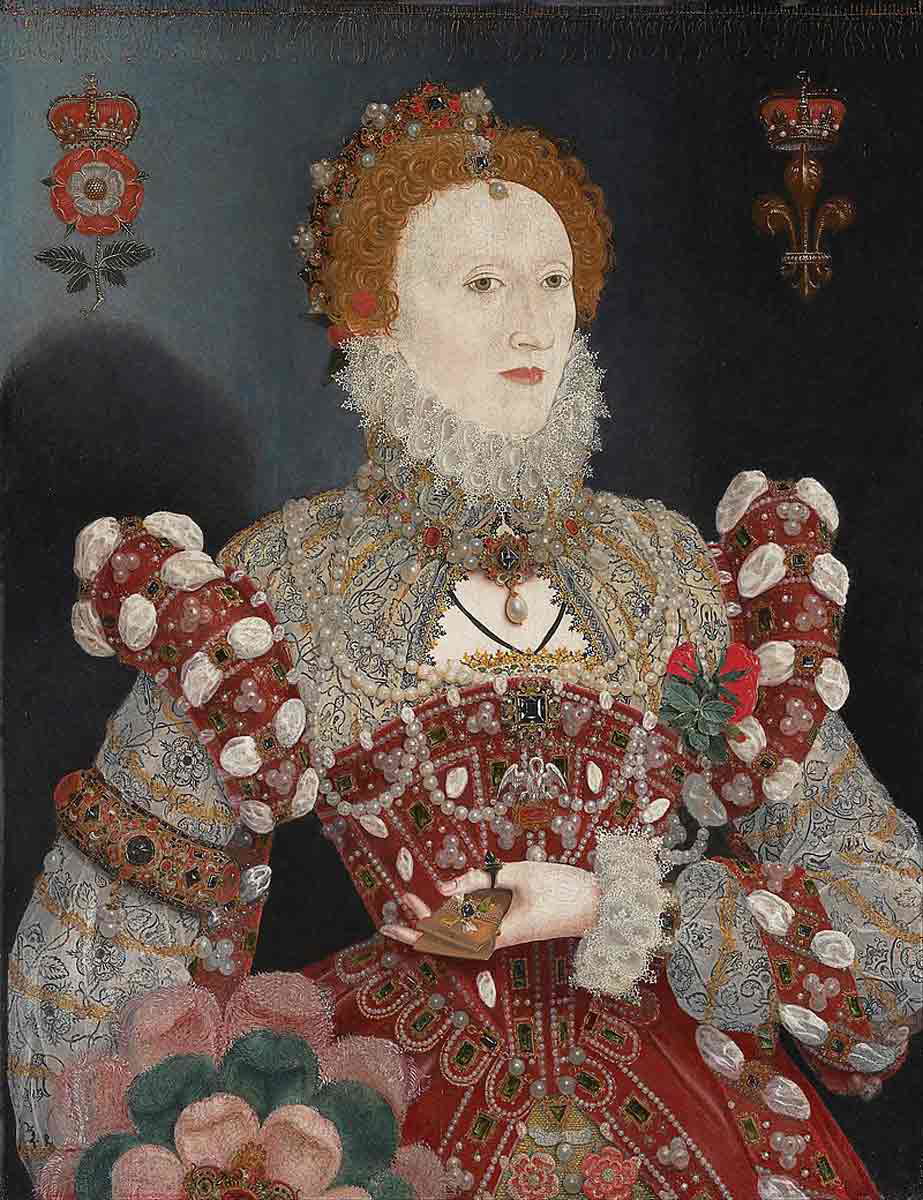
The Pelican Portrait is a depiction of Queen Elizabeth I, probably painted sometime during the year 1575, in the seventeenth year of her reign. It was painted in the medium of oil onto a wooden panel.
At the time of the portrait’s completion, Queen Elizabeth I was around 42 years old and had 26 years of her life and rule yet to come.
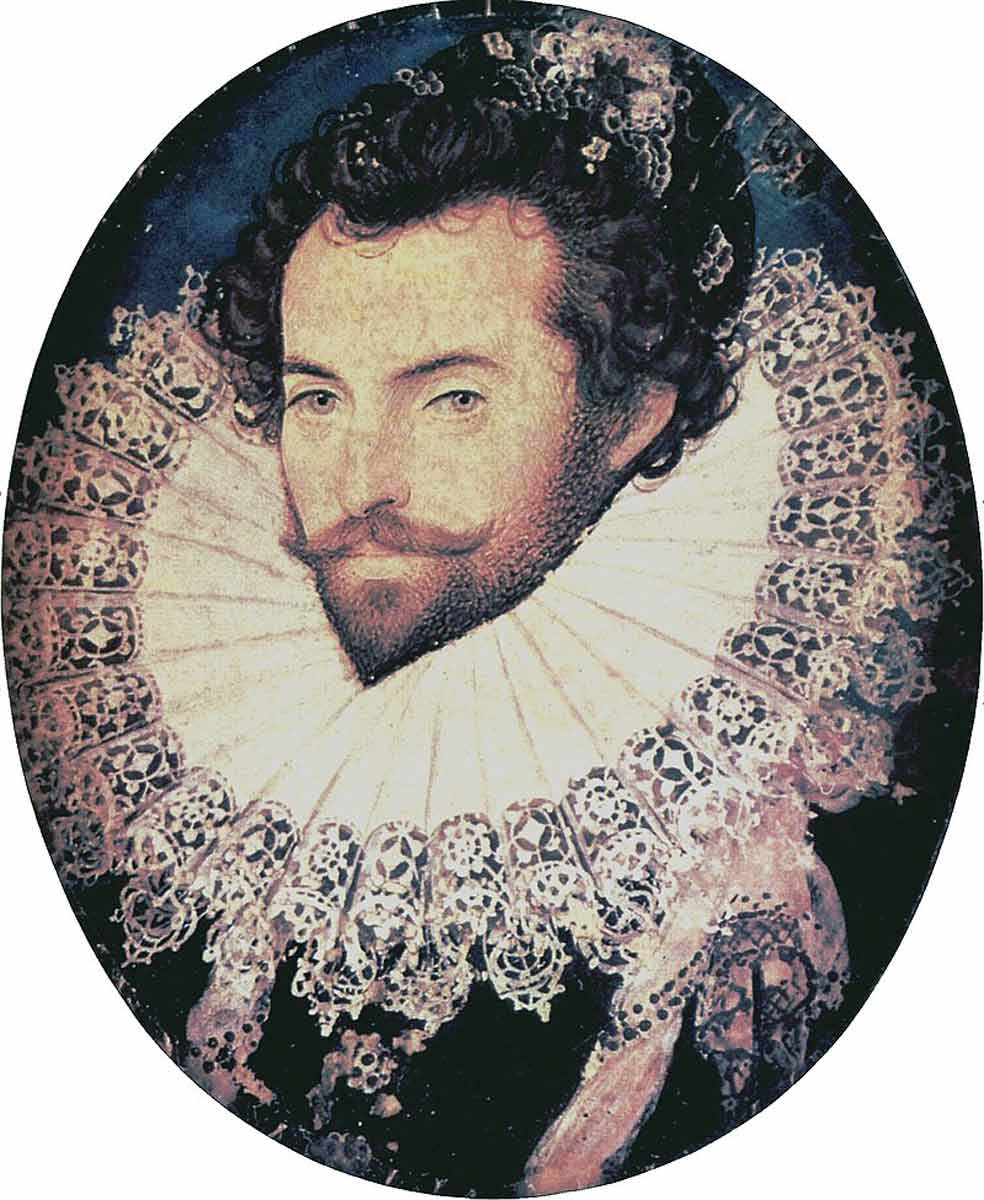
The painter of The Pelican Portrait cannot be officially identified. However, due to its many artistic and structural similarities with other works of the era, it has been generally attributed to Nicholas Hilliard (1547-1619). Nicholas Hilliard was an English portraitist, miniaturist, and goldsmith, firstly at the court of Queen Elizabeth I, and secondly at the court of King James I.
For a craftsman who painted mainly miniature pieces, and in comparison with his other portraits, The Pelican Portrait was unusually large. It has a height of nearly 79 centimeters (31 inches) and a width of 61 centimeters (24 inches).
For many generations, The Pelican Portrait was homed at Charlton House in Wiltshire and formed part of the private and extensive art collections of the Earls of Suffolk. There is a popular yet somewhat unreliable tradition that Queen Elizabeth I presented the family with the portrait as a personal gift.
It was not until over 300 years later, during the year 1930, that The Pelican Portrait changed location for the first and only known time. The seller was Margaret Howard, the Countess of Suffolk who had recently inherited the artwork. She sold The Pelican Portrait to an art enthusiast called E. Peter Jones.
It was toward the end of World War II, in the year of 1945, that Jones donated his purchase to the Walker Art Gallery in Liverpool, where it remains on permanent display even to this day.
Nicholas Hilliard: About the Artist
Nicholas Hilliard was born in the city of Exeter, sometime during the year 1547. The exact date of his birth is unknown, but nonetheless, it would have occurred around the same time as the death of King Henry VIII, and the succession of the new King Edward VI. Nicholas Hilliard was the son of Richard Hilliard, another goldsmith and artist from whom he learned much of his trade.
Nicholas Hilliard is now remembered as one of the dominant artists of the Elizabethan Era. The Pre-Raphaelite painter, John William Waterhouse (1849-1917), called Hilliard “the central artistic figure of the Elizabethan age, the only English painter whose work reflects, in its delicate microcosm, the work of Shakespeare’s earlier plays.”
The Encyclopaedia Britannica names Nicholas Hilliard “the first great native-born English painter of the Renaissance. His lyrical portraits raised the art of painting miniature portraiture to its highest point of development and did much to form the concept of portraiture there during the late sixteenth and early seventeenth centuries.”
Nicholas Hilliard died in 1619 at the age of around 72. His life spanned the reign of around six Monarchs, including (possibly) King Henry VIII, Lady Jane Grey, King Edward VI, Queen Mary I, Queen Elizabeth I, and King James I.
Nicholas Hilliard and Queen Elizabeth I
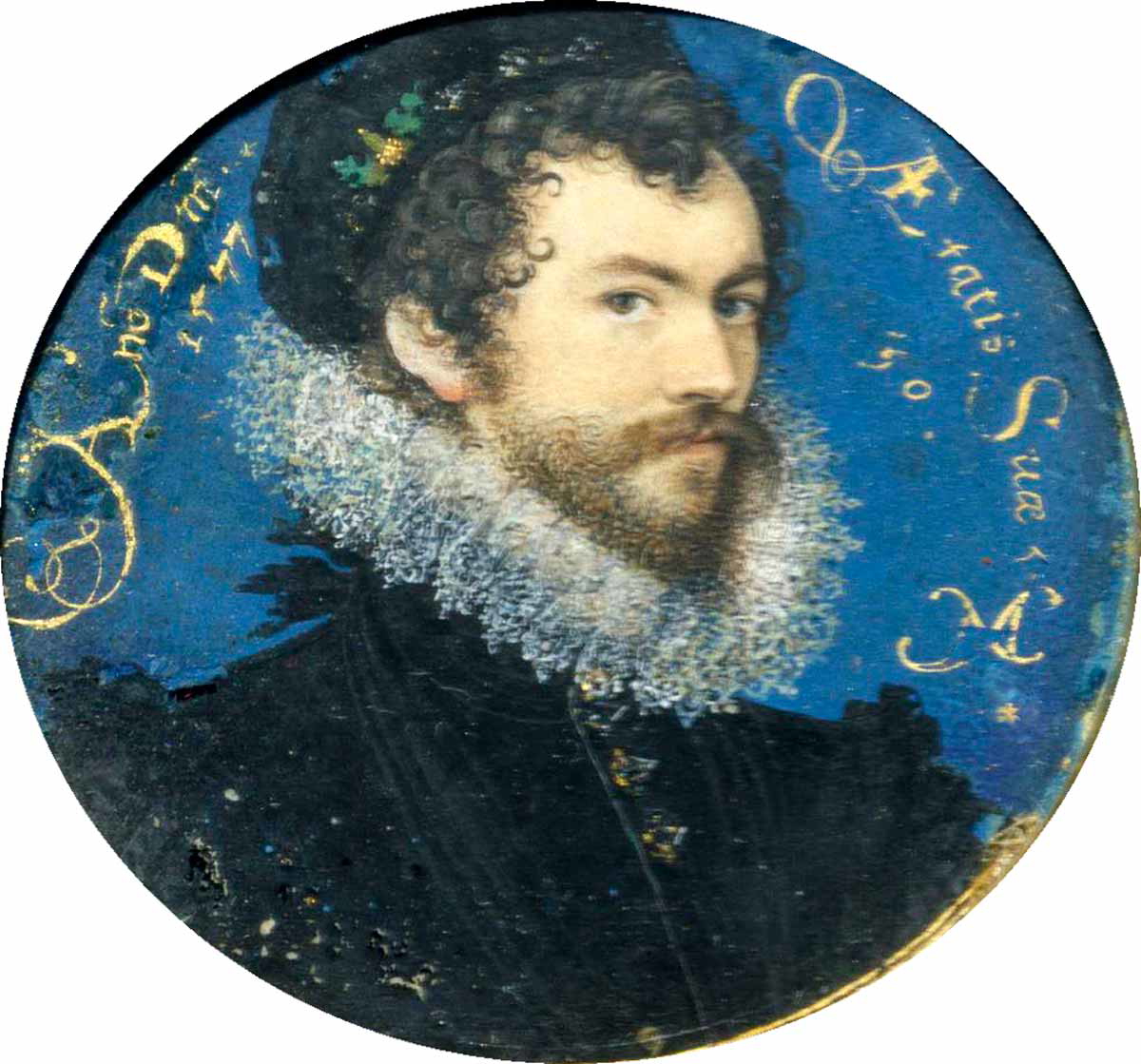
While in his mid-20s, Nicholas Hilliard was appointed to the most significant role of his life. At a time when skilled portrait painters were lacking in England, Queen Elizabeth I personally secured Nicholas Hilliard as her own miniaturist and goldsmith. Again, the exact year is unknown, but his arrival at court is assumed to have occurred in around 1572, for it was then that his first known portrait of Queen Elizabeth I was completed.
Throughout his career in England, Nicholas Hilliard created portraits of Queen Elizabeth I several times. During the latter part of her reign, it seems that she requested a new portrait of him once every five to ten years. Other miniatures of Queen Elizabeth by Nicholas Hilliard include versions painted in 1572, 1586, 1587, 1595, and 1600. One notable depiction entitled, Elizabeth I Playing The Lute, was created in 1580.
On each of these occasions, Nicholas Hilliard was required to paint Queen Elizabeth from life. She preferred to hold her sittings outdoors because she thought she would be better presented in the sunlight. In his notes based on his artistic experiences, Nicholas Hilliard noted that Queen Elizabeth sat for him in “the open alley of a goodly garden” as he worked on his many pieces. He gave complimentary remarks on her understanding of art, “seeing that best to show oneself needeth no shadow of place but rather open light.”
Nicholas Hilliard also wrote of the importance of capturing the Queen in the truest yet most flattering manner possible. In his writings, he emphasized the need to catch “the grace in countenance, in which the affections appear, which can neither be well used nor well-judged.” He advised that the “wise drawer” should “watch and catch these lovely graces, witty smilings and stolen glances which suddenly like lightening pass and another countenance taketh place.”
The part that Nicholas Hilliard played in the building of Queen Elizabeth I’s image should be neither underestimated nor forgotten. It was he who helped her to become the iconic figure she remains today.
However, Elizabeth was not the only person at court to be painted by Nicholas Hilliard. His other prestigious subjects included Sir Francis Drake (1581), Sir Walter Raleigh (1585), Lettice Knollys, Countess of Leicester (1590), and Mary Sidney, Countess of Pembroke (1590).
During the year 1599, Nicholas Hilliard was granted an annual allowance from Queen Elizabeth I. His patronage continued after her death in 1601, and he was employed as a court painter by King James I.
How Is Queen Elizabeth I Depicted in the Pelican Portrait?
The first thing to be said about The Pelican Portrait is that its subject is absolutely unmistakable. Queen Elizabeth I remains one of the most recognizable monarchs in British history, and she appears in this portrait exactly as the viewer would imagine or hope. Her image conveys many things; power, dignity, and queenship, to name a few.
Elizabeth is magnificently dressed in expensive garments rich in color. She is also adorned with elaborate jewelry. Look at her headdress and velvet gown, which are beaded with pearls. This choice of stone was not made at random. Pearls were a symbol of Artemis, the Greek Goddess of the moon and of chastity. By linking herself with Artemis, Queen Elizabeth enhanced her reputation as the “Virgin Queen.”
A Tudor Rose, royally crowned, can be seen to the left of her face. This is to represent her lineage (her Tudor father and grandfather had held the throne before her) and to remind the viewer of the legitimacy of her rule. The inclusion of the rose also brings religious symbolism into the mix, for it is often used as a symbol of the Virgin Mary. On the other hand, at the right of Queen Elizabeth’s face, a fleur-de-lis has been painted. This suggests her ongoing claim to the throne of France.
What Is the Significance of the Pelican in the Pelican Portrait?
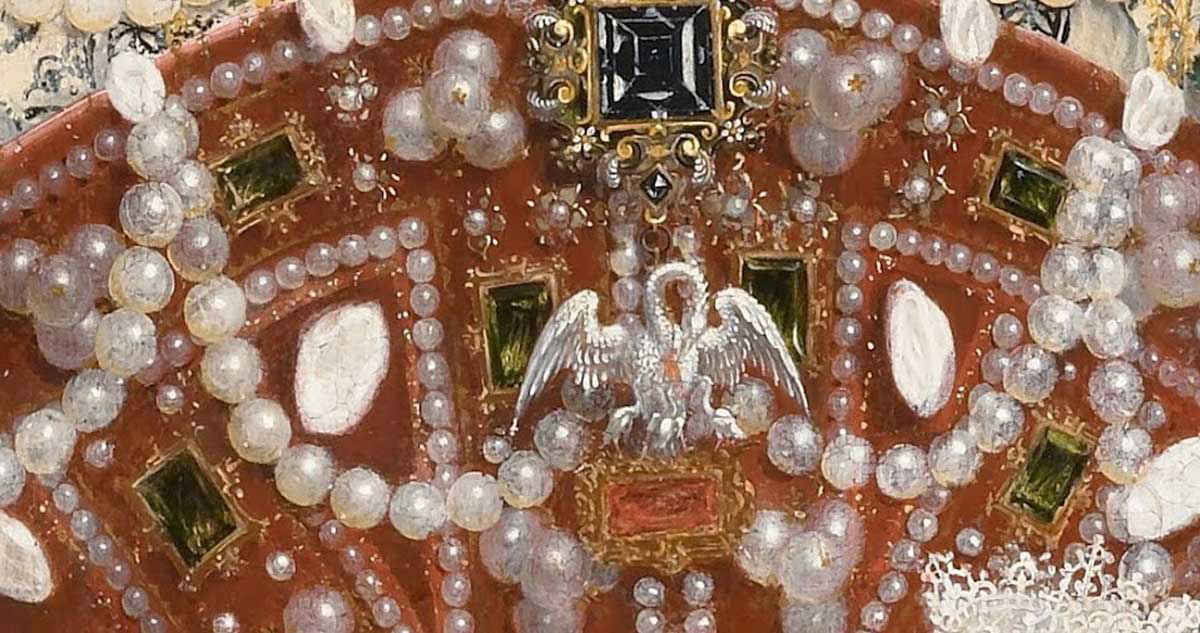
Look to the center of Queen Elizabeth’s body. Directly south from the pearl around her neck, resting on her breast and positioned just over her heart, you will find a small, silver pelican. Its wings are outstretched, and it appears to be pecking at its own chest. The small dot of almost unnoticeable red paint represents the blood that has come forth from beneath its feathers.
A pelican may not seem the most likely creature for historians to discover in a 16th-century portrait. However, the inclusion of this avian creature serves an extremely poignant purpose. The presence of a jeweled pelican at the breast of Queen Elizabeth I is neither random nor whimsical, but both meaningful and moving.
In the Medieval and Tudor eras, the female pelican was the ultimate symbol of self-sacrifice and motherly love. It was believed that when food was severely lacking, a mother pelican would feed its young with its own blood. Although these ideas have largely been proved false, it was widely known in the 16th century that these birds would physically cut themselves open, and sacrifice their own lives, to save those of their chicks.
A pelican sacrificing its blood to its young, from the Northumberland Bestiary, 1250-1260. Source: The Getty Museum
During the Middle Ages, in particular, the pelican became a representation of Jesus and the sacrifice that he made for the good of mankind. The chicks were a representation of humankind—just like the chicks, the people were saved by drinking the sacrificed blood of another.
By associating herself with the pelican, both Queen Elizabeth I and Nicholas Hilliard have jointly portrayed a generous, benevolent, loving, and self-sacrificing figure. By comparing herself to a female pelican, Queen Elizabeth I presents herself as the mother of her subjects. She represents herself as a strong, wise, and courageous ruler—one who is ready to sacrifice herself for the good of England and its people.
Within The Pelican Portrait, Queen Elizabeth I is depicted as a woman who has given her life and happiness to her country. It was she who made several claims about her special devotion, (“I have joined myself in marriage to a husband, namely the Kingdom of England”), and her motherly love and care, (“there is nothing about which I am more anxious than my country, and for its sake I am willing to die ten deaths”).