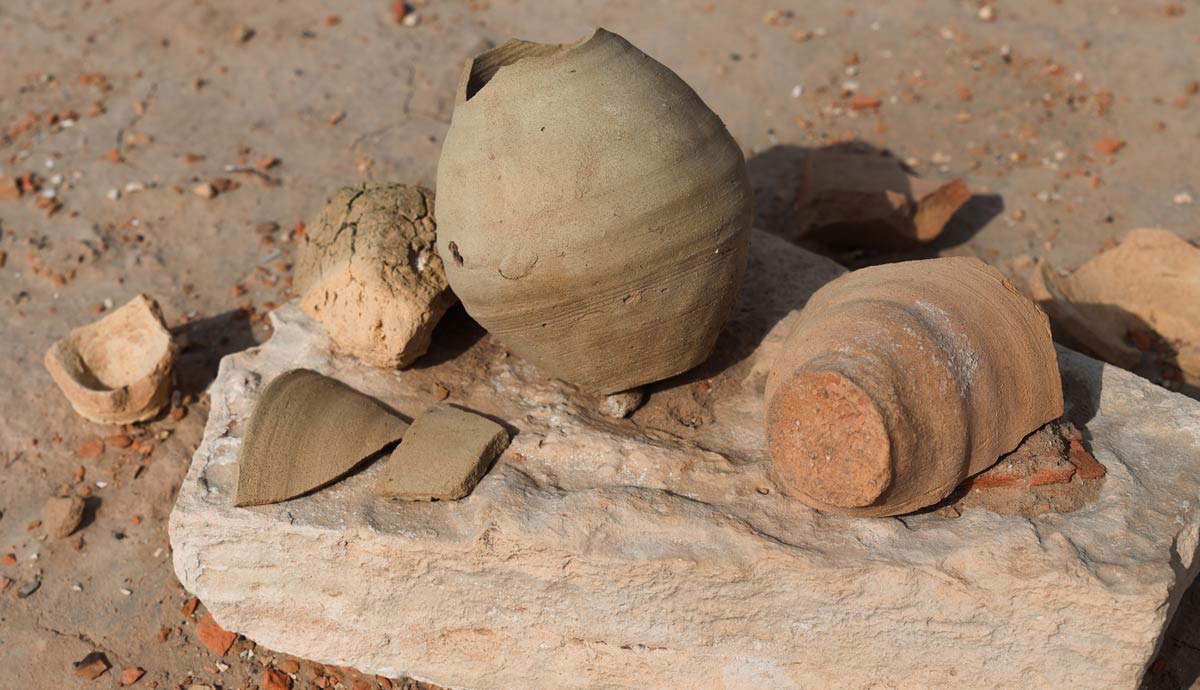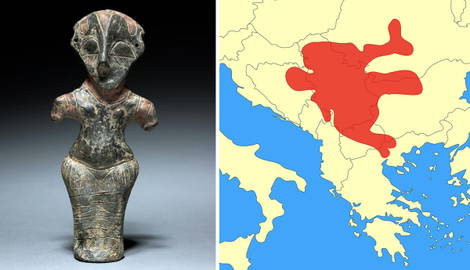

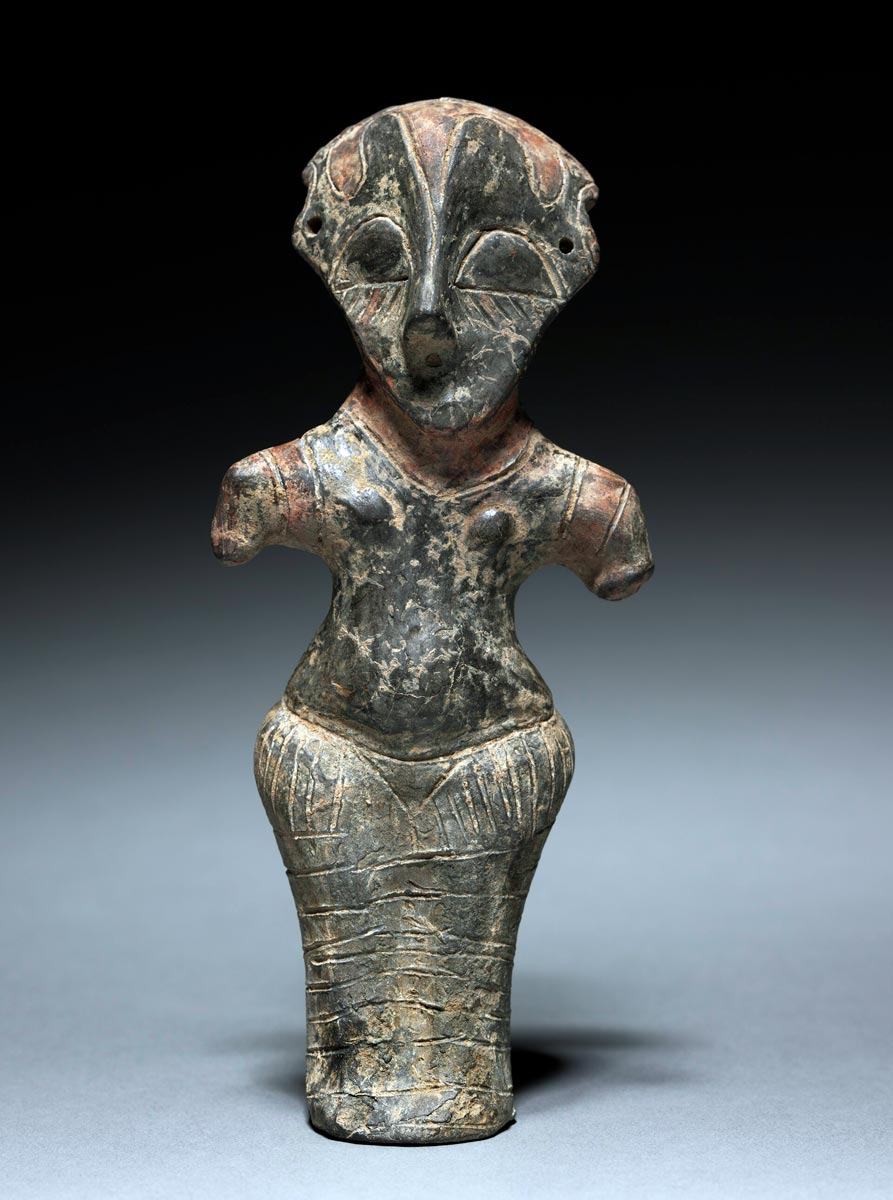
When a local stumbled upon a figurine in the mud of the Danube River in the early 20th century, he could never have guessed that it belonged to one of Europe’s oldest civilized societies. At this site, archaeologists have unearthed evidence of a Neolithic culture that was ahead of its time. Vinča functioned as a metropolis before Uruk in Mesopotamia even existed; they practiced copper smelting before the Copper Age, and there is evidence of a potential script that predates the Sumerian cuneiform.
The Accidental Finding That Rewrote the Stone Age
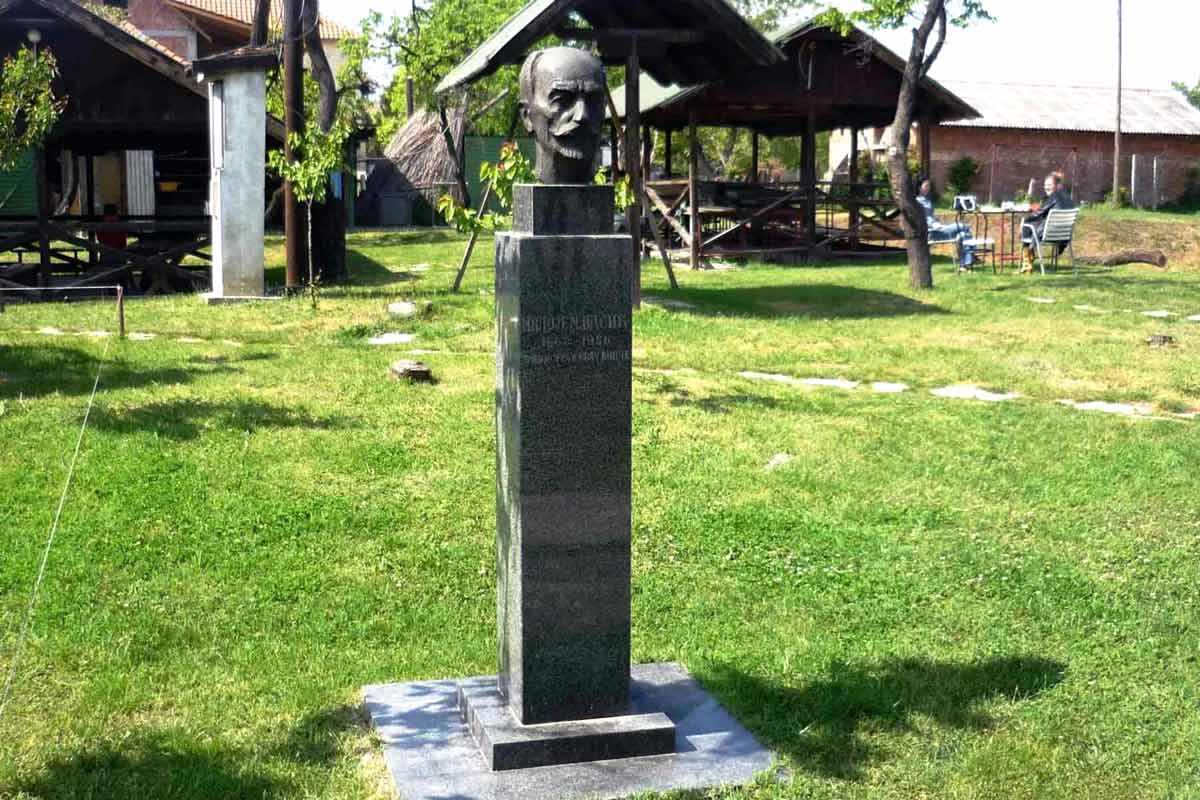
The legend behind the discovery of the Vinča culture takes us back to the year 1907. An elderly man (named Panta or Pera) was wading along the Danube’s riverbed when he stumbled upon an unusual figurine. He took it to the National Museum in the nearby city of Belgrade, and the artifact immediately caught the eye of archaeologists. The following year, they arrived in the tiny village of Vinča, 14 kilometers southeast of the Serbian capital. They focused on an area of some 400 square meters at a riverside site called Belo Brdo (literally: “White Hill”).
At the time, Serbia was a small, independent kingdom, but the chief archaeologist, Professor Miloje Vasić, managed to get the funds to keep digging. The excavations intermittently continued until World War I broke out. They were restarted in 1924, but Vinča did not become internationally recognized until the 1930s, when Vasić published his four-volume monograph: Prehistoric Vinča. The man regarded as the father of modern Serbian archaeology believed that Vinča was an Ionian colony, dating it back to the 7th century BC. The excavations in the broader Eastern European region proved him wrong, as Vinča was more unique and older than Vasić had believed.
How These Ancient People Engineered the First Cities of Europe
We now know that Vinča can be dated back with certainty to 5,000–4,500 BC. This was the Neolithic Period, or the New Stone Age, when hunter-gatherer cultures gave way to agriculture and the domestication of animals. However, the ancient inhabitants of the Belo Brdo site might have taken it a step further and formed an urban settlement.
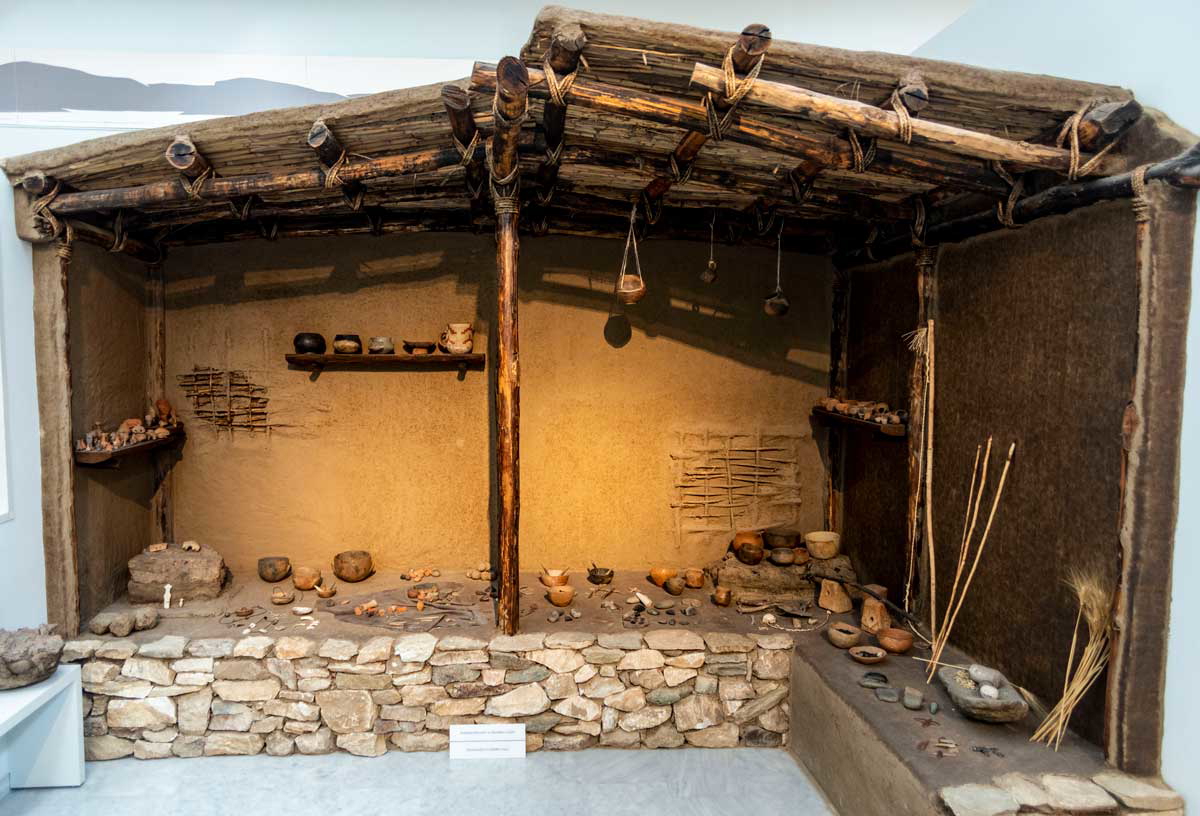
Archaeologists unearthed residences without yards, indicating this was an urban settlement. The houses were constructed using timber and clay and oriented southeast-northwest. Since they were aligned in rows, they actually formed something that resembled streets. The base was usually rectangular, the walls were vertical, and there was even evidence of painted walls.
These finds were in a layer ten and a half meters deep, and above it were a total of nine historically younger layers. These dated back to the Bronze Age and all the way into the Middle Ages. The continuity of settlement confirmed that Vinča had a population over several generations, making it a metropolis. All the evidence suggests that Vinča was not only one of the largest Neolithic settlements but also foreshadowed the first proper cities that later emerged in Mesopotamia, the Aegean, and Egypt.
Forging Progress by Mastering the Oldest Metal Smelting in the World
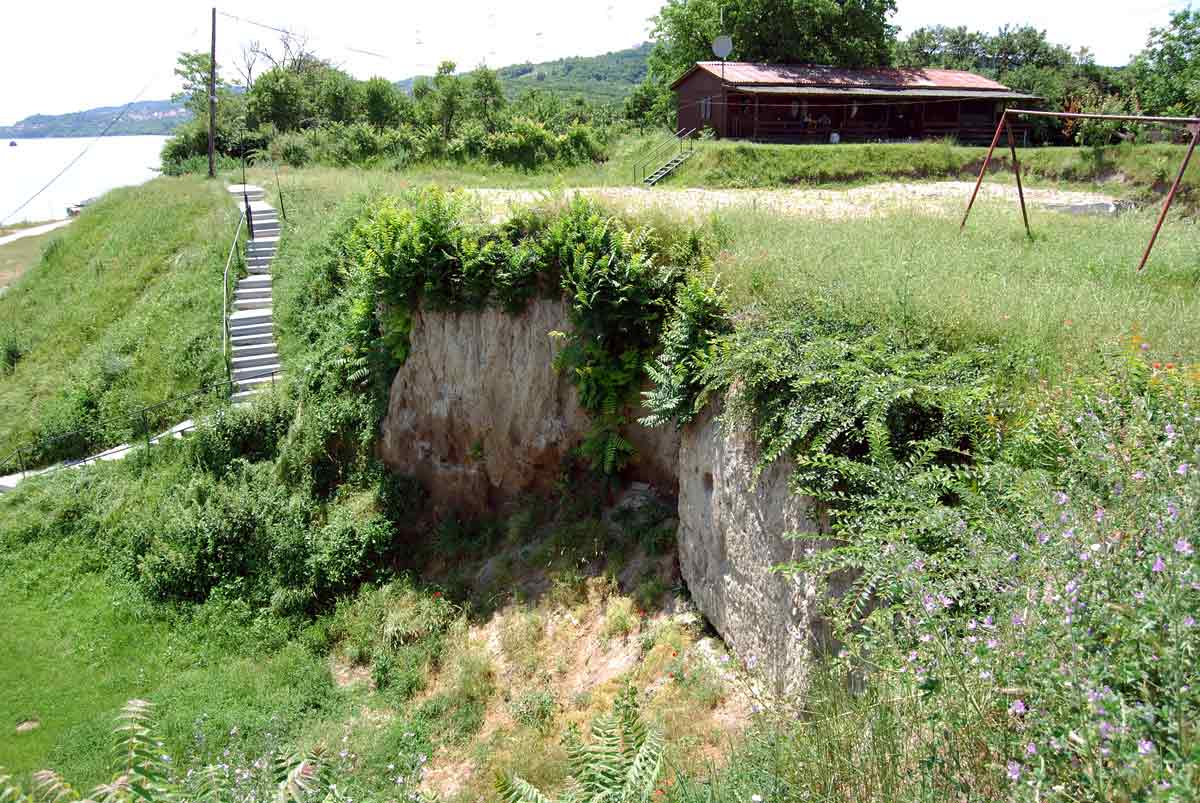
Like all large cities in the ancient world, Vinča required a water supply to thrive. This could have been Bolečica, the Danube’s right tributary, a short river (12 km) that still runs through Belgrade’s suburbs. The waterway doubled as a link to the nearby Avala Mountain. In general, Belo Brdo was ideally positioned not only for agriculture but also for trade. Its inhabitants produced more than enough food for different professions to develop, such as that of a tradesman.
An abundance of archaeological evidence reveals that Vinča was a European trade hub due to its favorable geographic location. Bracelets made from Mediterranean shells show that their trade network extended to the Aegean and the Adriatic Sea. The presence of obsidian indicated that the Vinča culture also traded with Central Europe, roughly from the region where the border between Hungary and Slovakia runs today. This naturally occurring volcanic glass was a strategic resource, as it could be fashioned into sharp blades or arrowheads.
Historians believe obsidian reached Belo Brdo down the Tisza valley, straight from the mines in the Carpathians. Likewise, they imported salt from Tuzla, which very likely arrived via the Bosna and Sava rivers. Waterways were the highways of the day because horses would not become fully domesticated in the region until much later (c. 2,200 BC). Over time, Vinča developed into a center of economic and trade activity, so it’s no surprise that the region was the probable birthplace of European metallurgy.
The Industrial Revolution of Belovode and Rudna Glava
We’ve already mentioned Avala, the symbol of the Serbian capital today, but the mountain held the utmost importance in Neolithic times as well. This is where people of the Vinča culture mined cinnabar (cinnabarite), a mercury sulfide that serves as the primary ore for refining mercury.
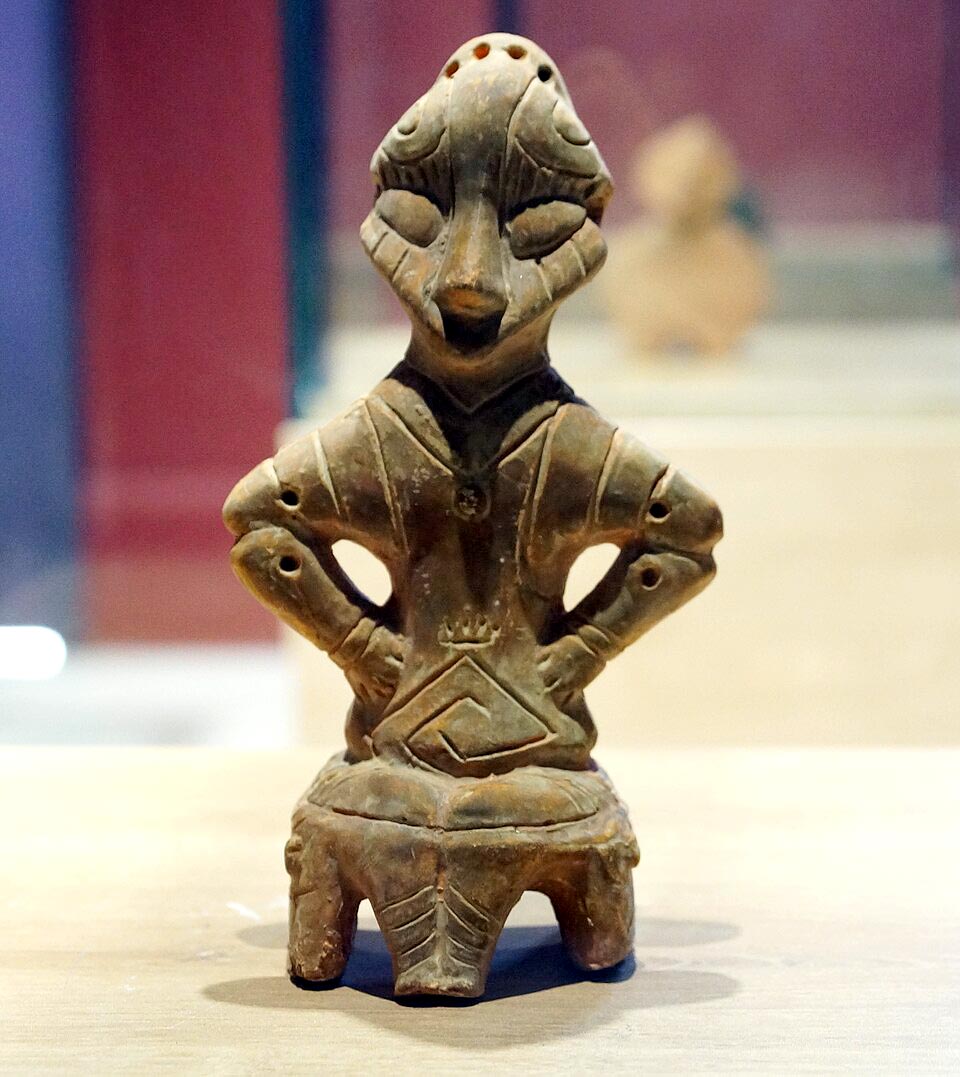
However, the Vinča people used it to produce red coloring for ceramics. Other minerals they mined for included malachite, used to produce green hues, and azurite, from which they extracted the color blue. Mining was so important to the Vinča people that Professor Vasić believed the lack of mouths on their figurines represented the protective facemasks worn by cinnabar miners.
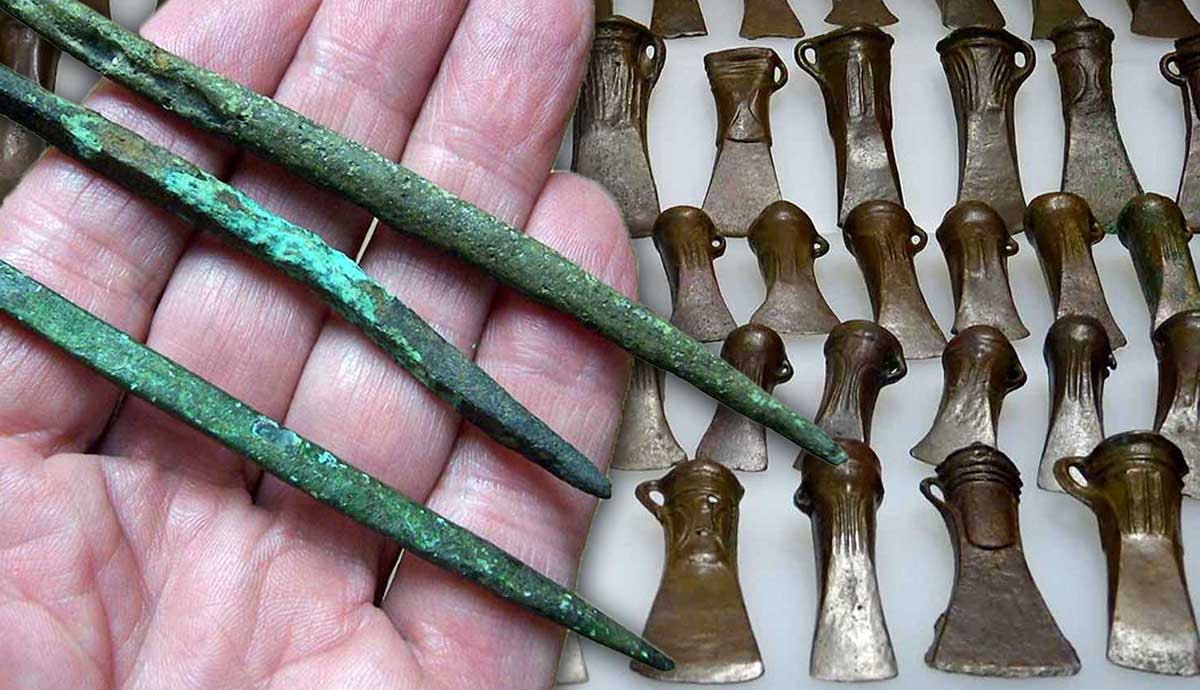
In Eastern Serbia, at the sites of Belovode and Rudna Glava, 40 kilometers apart, archaeologists found evidence of ancient copper mines. The nearby pottery associated these mines with the Vinča culture, proving they were industrially more advanced than previously thought. They cut artificial shafts and scaffolding into the hillside to get better access to the ore. The copper extracted here was predominantly used for ornamental objects, such as bracelets and beads.
Historians attribute copper smelting to the Copper Age (logically), which is supposed to come after the Stone Age, to which the Vinča culture belongs. The aforementioned mines place the Vinča culture at least a millennium ahead of the Copper Age in Europe and the Near East, making the Balkans the cradle of metallurgy.
The People Behind the Culture
The origins of the Vinča culture are debated, but the most viable hypothesis scientists have so far is that it developed locally. This would make the Vinča people descendants of the Starčevo culture, an early Neolithic farming culture originating in Anatolia in present-day Türkiye.
However, the most striking fact about the Vinča culture is what archaeologists have not unearthed: traces of organized violence. It appears that for nearly a millennium during the Neolithic, these people lived without major wars and insurgencies. This is evident from the position of their settlements on flat plains and the conspicuous lack of large-scale defensive fortifications (e.g., bulwarks). Furthermore, not many weapons were found. One of the main traits of the Copper Age societies is that they worked the metal into weapons or tools to make weapons, which does not appear to be the case at Vinča.
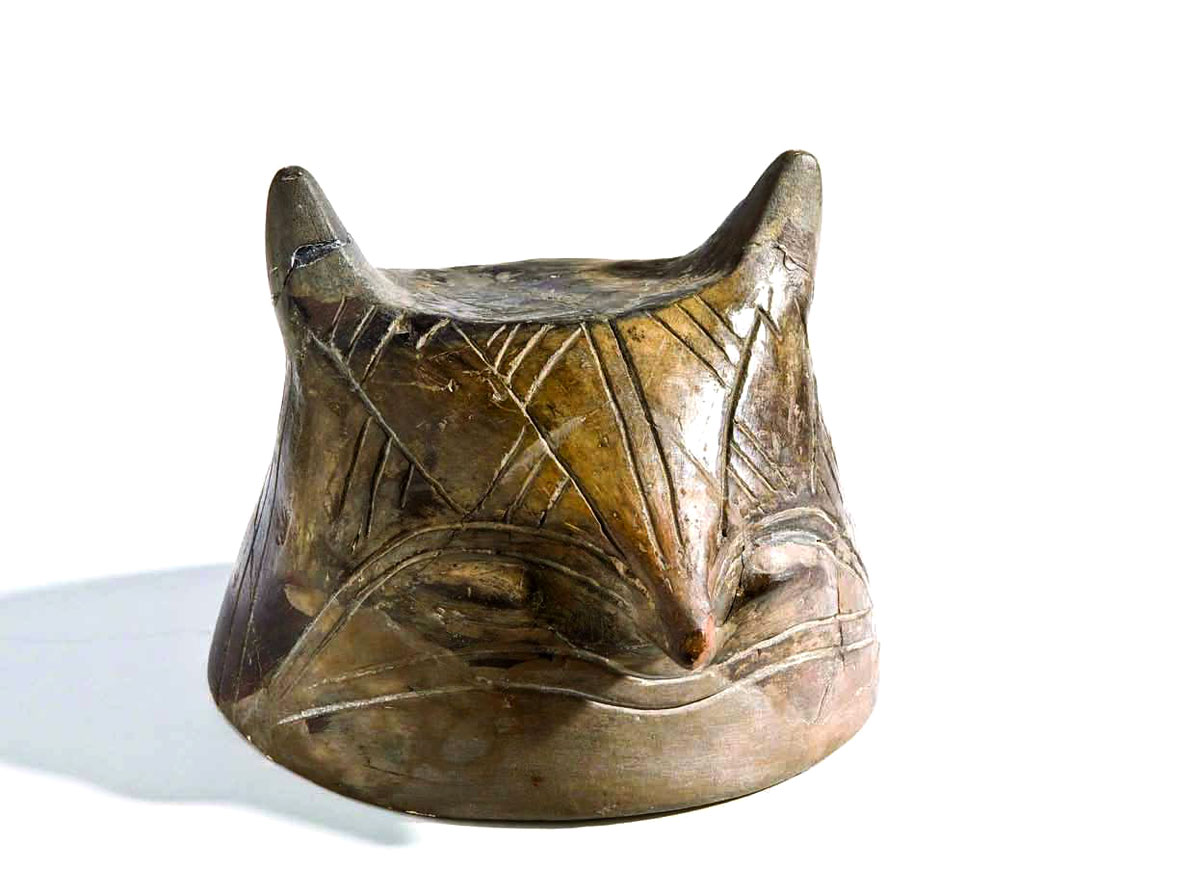
Since most houses were uniform in appearance, historians speculate that their society was egalitarian, lacking social stratification. They believe this is reflected in the anthropomorphic and zoomorphic figurines, which all look similar, suggesting that the people who made them communicated well with one another. The figurines, which are the visual hallmark of Vinča, reveal that in terms of religion, the two main cults were that of the mother (birth) and vigilance. On figurines adorning storage containers, the most prominent features are the eyes and the ears, which can be interpreted as being on alert and protecting their contents.
Decoding the Cryptic Symbols of the Controversial Vinča Script
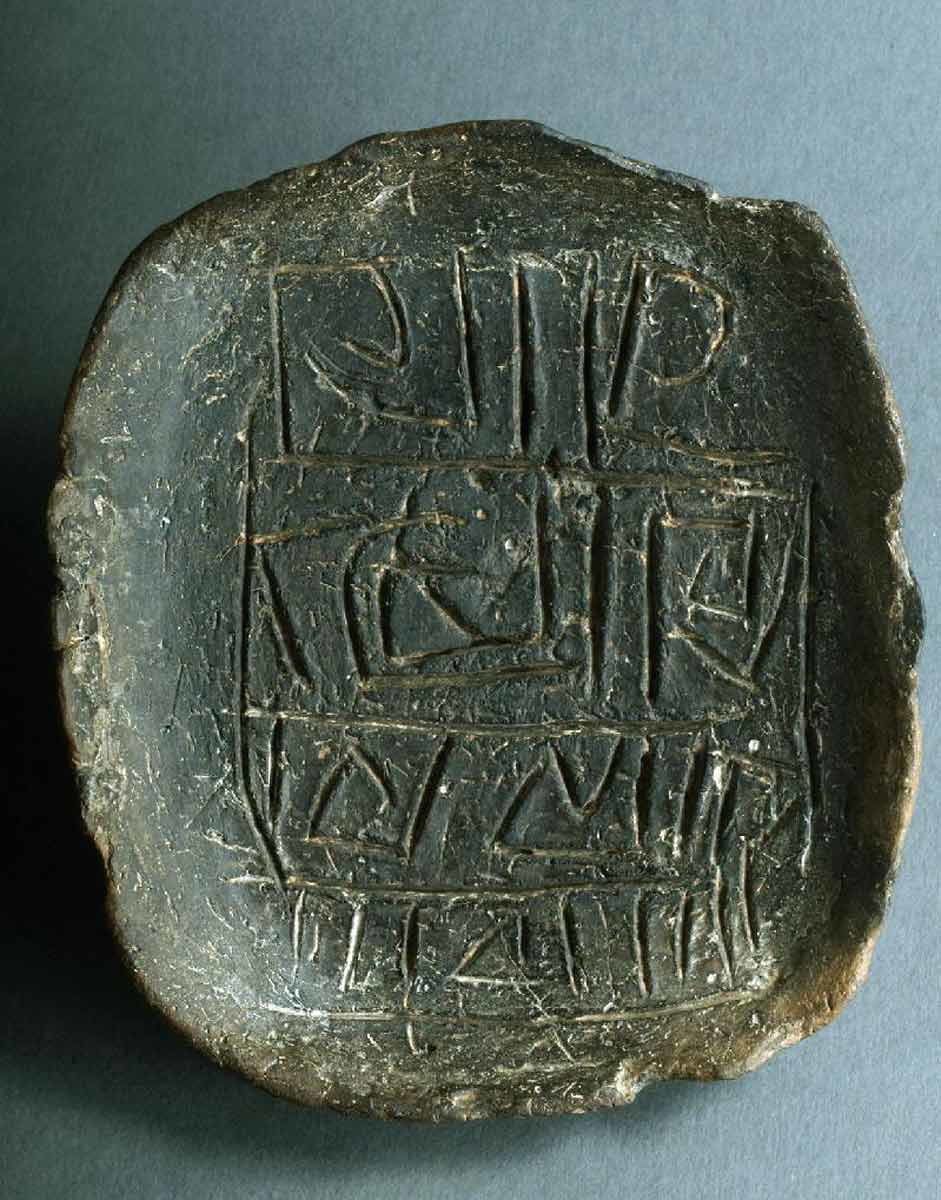
One of the most interesting, but at the same time, controversial aspects of the Vinča culture is the Vinča symbols, which some claim are a full-fledged script. Vasić stumbled upon unknown symbols on pottery fragments during the initial dig in 1908, but this was not the first time that scientists had unearthed these geometric shapes. Hungarian archaeologists found them in 1875 while excavating another Vinča culture locality in Turdaș in present-day Romania, some 245 kilometers northeast of Belo Brdo.
Archaeologists and linguists have tried to make sense of these symbols, but even though there are thousands of them, mostly on pottery, they do not appear to constitute a proper script. These pictograms definitely carry some sort of meaning, perhaps marking ownership of a particular artifact, but they are not systematic. As mentioned earlier, the apparent lack of social hierarchy obviated the need for a state system that would require a script to track resources, for example. It would appear that verbal transfer of information was enough to make the Vinča culture prosper for nearly a millennium.
Does This Prehistoric Marking Predate Sumerian Cuneiform?
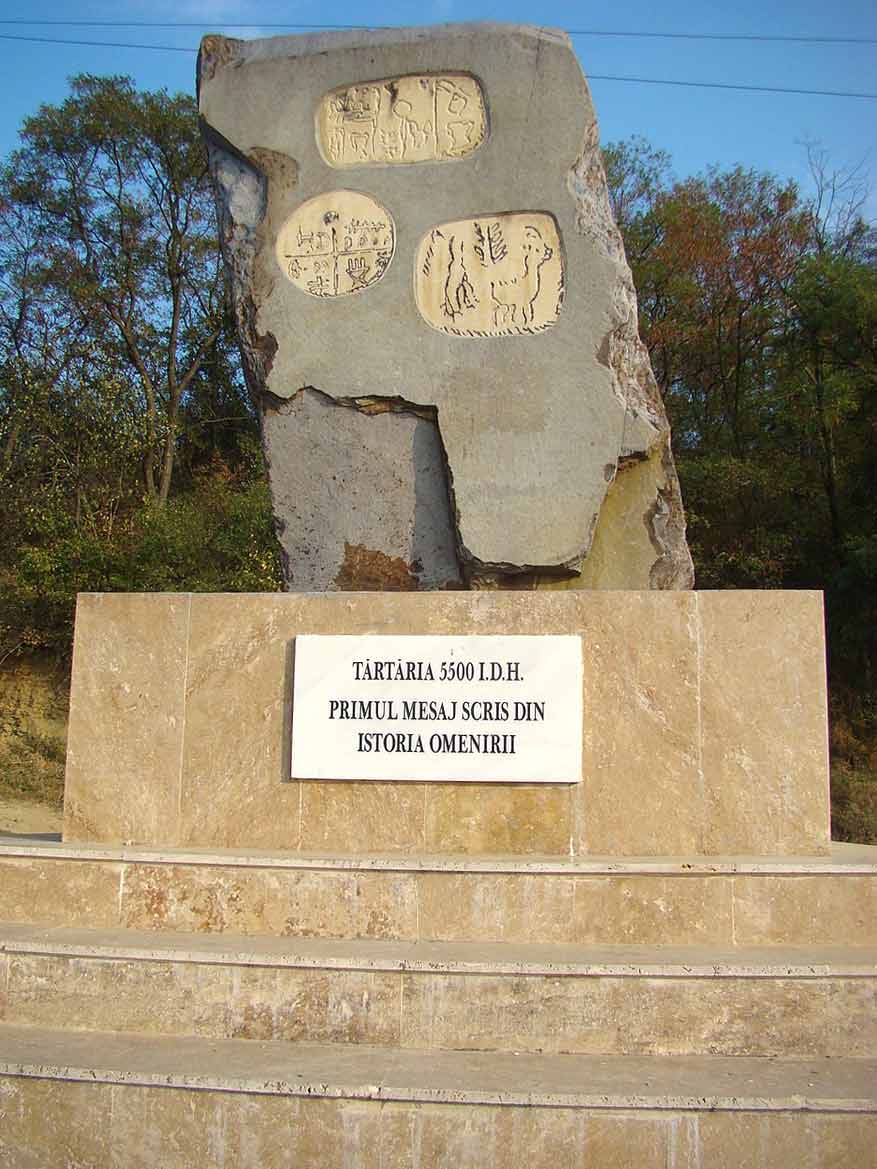
The most striking thing about the Vinča symbols is the aforementioned possibility that they might constitute a proper script. If linguists ever prove this, the discovery would rewrite history books, as these symbols would predate Sumerian cuneiform by a thousand years.
The Vinča symbols, such as the Gradeshnitsa tablets from Bulgaria and the highly debated Tărtăria tablets from Romania, do not appear to have anything in common with the oldest Near Eastern script, which indicates that the two writing systems developed separately. Once you add the fact that all inscriptions are rather short and lacking context, it’s no wonder that linguists are skeptical that the so-called Danube script represents an encoded language.
A Conspicuous Lack of Prehistoric Burial Sites in Southeast Europe
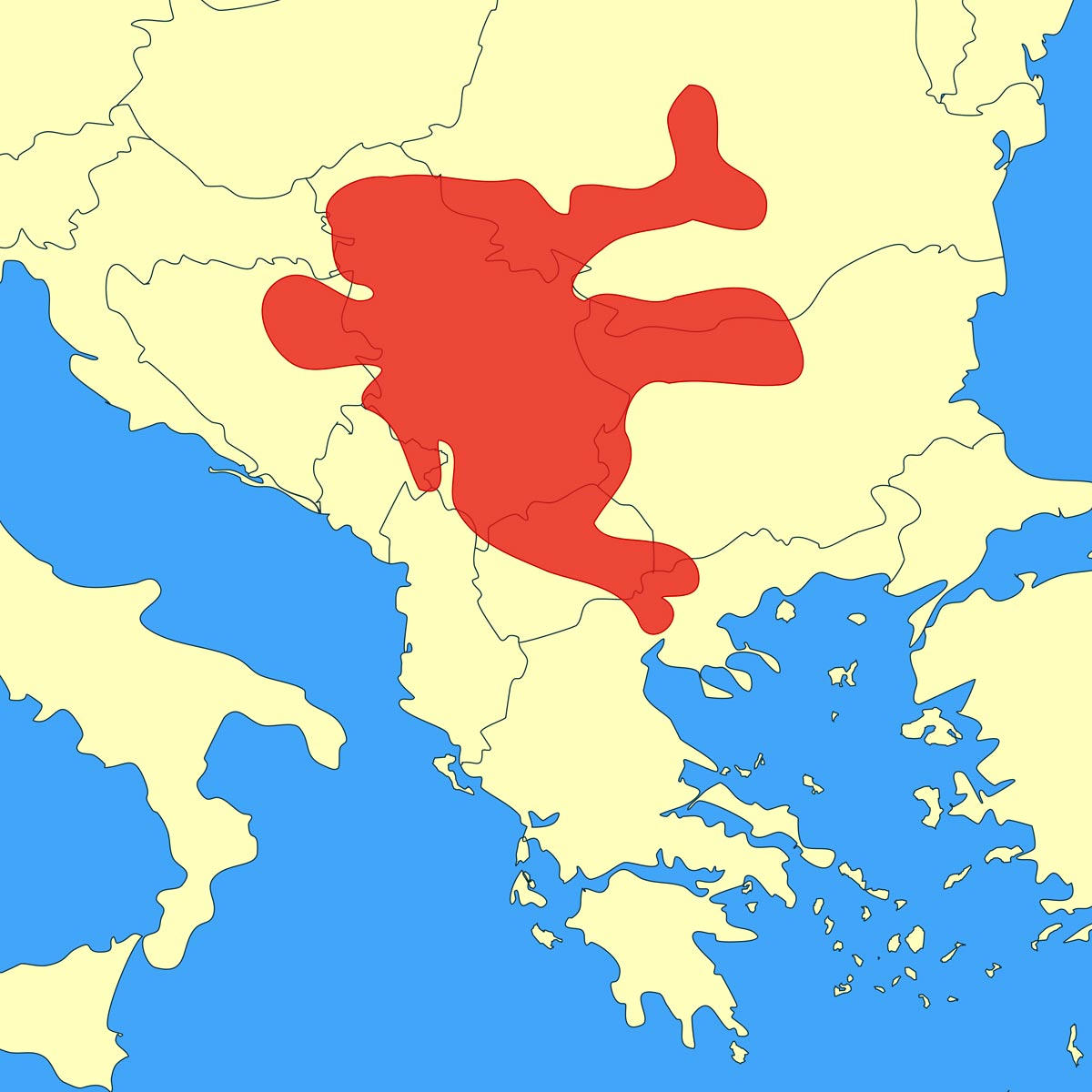
The Vinča culture is sometimes referred to as the Turdaș culture, or the Vinča-Turdaș culture. Belo Brdo is its type site, one of the best-researched prehistoric localities in Europe, but the entire culture occupied a much larger area in Southeast Europe. The central area appears to have encompassed all of present-day Serbia as well as parts of present-day Hungary, Romania, Bulgaria, Croatia, Bosnia, Montenegro, and North Macedonia. Some scholars believe the Vinča culture extended as far south as modern Greece.
Given the total area it encompassed and the fact that it lasted nearly a millennium, there are surprisingly few graves dating back to this region and time. The lead archaeologist at Belo Brdo noted in 2020 that they had found only 120 graves, a minuscule figure. The deceased were laid on their side in a fetal position, which is typical of burials during the Neolithic. This evidence suggests that the Vinča people did not have a particular relation toward the deceased, i.e., they did not nurture a cult of the dead. As previously stated, they celebrated life and a cult of fertility.
Why a Peaceful and Developed World Suddenly Vanished Into Ash
The final mystery surrounding these Neolithic people is their somewhat abrupt disappearance from the world stage. There are many theories as to why the Vinča culture went into a decline around 4,500 BC. The dominant hypothesis is that horse-riding tribes invaded from the east, i.e. the Pontic–Caspian steppe. Perhaps copper smelting played a role in their downfall, as other nations wanted the technology and the resources for themselves.
Contagious diseases, possibly from livestock, are another potential explanation, along with climate change or an economic collapse. There are also speculations that millennia of agriculture drained the earth of its minerals, or maybe the people just experienced social fatigue, so they abandoned their cultural pattern altogether. It could very well be that a combination of all of these factors brought down this largely peaceful matrifocal culture. Until new evidence emerges, archaeologists will continue hypothesizing.
Today, Vinča is a far cry from its prehistoric heyday. The eponymous village has around 7,000 residents and is arguably more famous for its Nuclear Research Institute than as a Neolithic power hub. The archaeological site at Belo Brdo is part of the Belgrade City Museum, and the modest museum building strives to make visitors feel what it was like to live on the banks of the Danube 6,000 years ago.