
While innovation and progress are hallmarks of America’s growth and prosperity, those achievements often come at a forgotten cost. The creation of Flagstaff Lake in postwar Maine is a testament to such sacrifice. In an effort to bring efficient electricity to rural Maine and beyond, three occupied towns were destroyed and submerged, their citizens forced to leave their lives in ruin. Did technology go too far? Or was the development of Flagstaff Lake a necessary consequence in the name of modernity?
A Symbol of Resilience

From its early days, Flagstaff Village embodied resilience and strength. During the Revolutionary War, Benedict Arnold and his men faced a treacherous March through the Maine winter on their way to Quebec. The going was tough, but the soldiers persevered. Stopping along the Dead River, they camped and planted a flagpole to mark their position. This gesture of resilience inspired the name of the later incorporated Flagstaff Village.
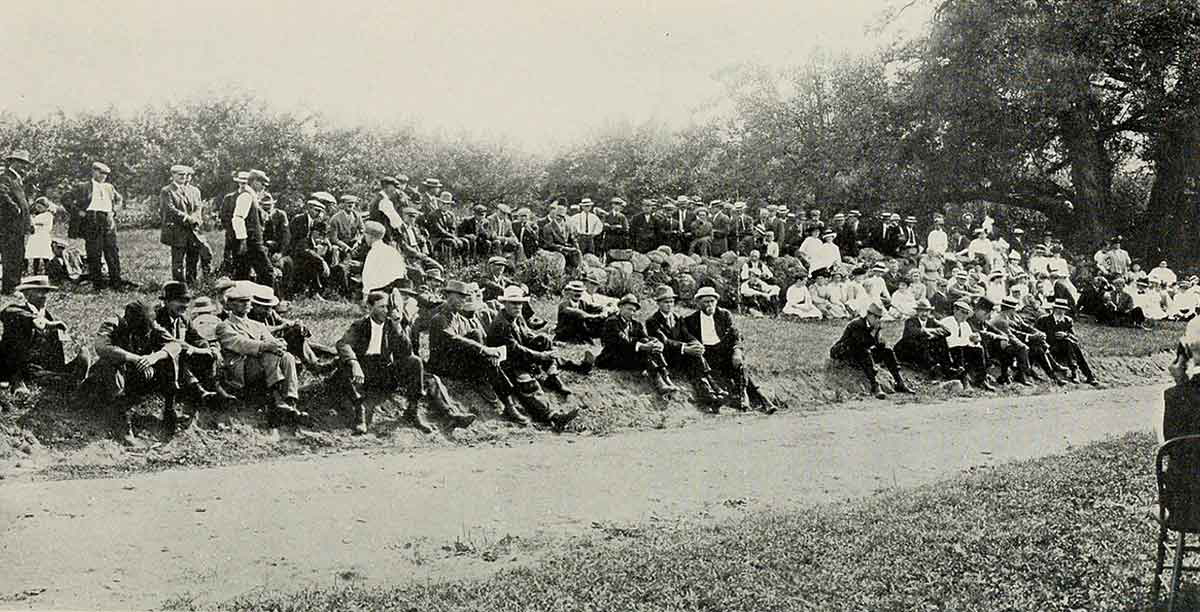
The first permanent settlers arrived in the early 1800s, and soon Flagstaff, along with neighboring towns Dead River Plantation and Bigelow Township, was thriving. The area was home to a rich timber industry, and farming was a common pursuit among the settlers. Timber-adjacent businesses, such as sawmills, sprung up through the settlements. A schoolhouse, store, and churches contributed to the feeling of community, and events such as picnics and dances were common. The bustling towns were placed among a stunning backdrop of Maine wilderness, including beautiful distant mountains, dense forests, and incredible glacial rock.
A Growing Necessity
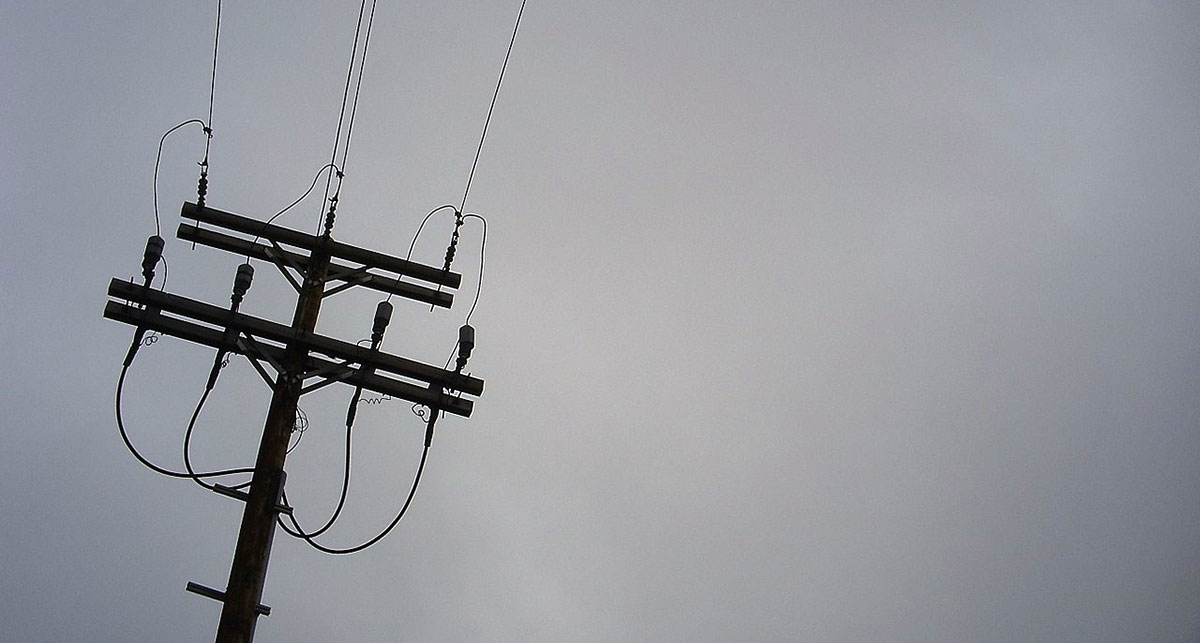
While Flagstaff was thriving, the rest of the state was growing as well. By the late 19th century, electricity was becoming a modern convenience, and local generation facilities had sprung up across the state. It is believed that Maine had more of these facilities than any other state at this time. Though there were many of these plants, they produced low volumes of electricity and served small areas, usually during hours that would be considered today as “off-peak.”
At the very end of the 19th century, a company that eventually became known as Central Maine Power (CMP) was formed by business partners Walter Wyman and Harvey Eaton. They purchased the Oakland Electric Company in 1899 and had a mission to consolidate and expand electricity in Maine. They recognized the potential that Maine’s waterways held for the future of electricity.
By 1919, CMP had purchased small electric companies in eight towns and operated five power plants to serve over 21,000 customers. Eaton resigned in 1924, but CMP continued to grow through the Great Depression and Second World War, adding new hydroelectric plants, steam plants, and storage reservoirs. In 1942, the company merged with Cumberland County Power & Light, becoming the largest electric utility in northern New England.
However, CMP had plans for additional growth that had started decades prior. To further grow its generation abilities, the company wanted to build dams on Maine’s powerful rivers. In the 1920s, Wyman’s propositions were blocked by Percival Baxter, Maine state legislator and eventual governor, who sought to preserve as much of Maine’s natural beauty as possible, keeping it out of the hands of corporations. However, Wyman kept lobbying, and eventually, a series of legislation was passed by the state that allowed for the construction of three dams. These three dams were to be located on the Kennebec River in the town of Bingham, on the outlet of Indian Pond in Northeast Somerset, and a final one on the Dead River. This legislation was especially controversial. Not only would the dam on the Dead River disrupt the natural beauty of the area, but the reservoir it was designed to create would completely submerge the three villages in the immediate vicinity. The towns of Flagstaff, Dead River, and Bigelow would be completely destroyed. The final piece of legislation passed in 1927 gave CMP the right not only to build the dams but also to claim privately owned land through the process of eminent domain as needed to complete the projects.

Eminent domain is the power of the government to seize private property and convert it to public use, though just compensation must be provided to the property owners in return. In 1930, CMP began purchasing land to build the dam on the Dead River—the villages of Flagstaff, Dead River, and Bigelow. The purchase offers were considered modest for the time, and residents of the three villages were largely unhappy that they were being forced to give up their lives to benefit the more urban areas of the state (According to the Fernald Law, which was later repealed in the 1950s, CMP could not legally sell electricity made in Maine to out of state customers or entities).
Though they were not pleased about having to relocate, most village residents accepted purchase offers from the corporation and packed up their entire lives, moving to other areas of the state. Some buildings could be moved, either whole or in pieces, but the buildings that remained were razed and burned in preparation for the dam’s construction. The few people who refused CMP’s offers waited until the last minute to move, and as a result, some buildings were left standing when the flood waters eventually arrived.
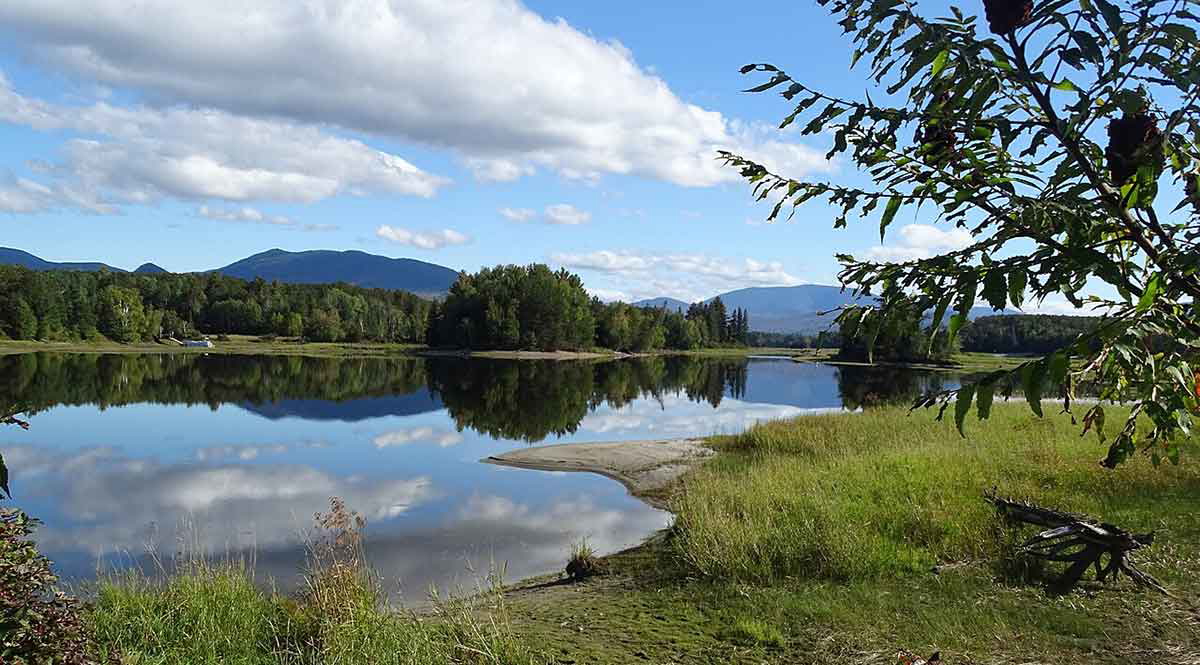
Construction of Long Falls Dam on the Dead River was completed in 1950, and the former villages slowly flooded. Eventually, the reservoir, now called Flagstaff Lake, grew to a surface area of over 20,000 acres. Today, Flagstaff Lake is Maine’s fourth-largest lake and is visited by tourists and Mainers alike, though its shores remain relatively undeveloped. It has become a destination for fishing, canoeing, and kayaking. The nearby mountains are home to recreational trail systems for hiking, ATV use, and snowmobiling. The Appalachian Trail crosses nearby, heading to its endpoint (or starting point if hikers head south) on Mount Katahdin.
Still Contested

Propelled by business successes such as the Flagstaff project, CMP is still thriving in the 21st century. Now owned by Iberdrola Group, a parent company based in Spain, the company is supplying power to more than 650,000 customers in the state of Maine. CMP is Maine’s largest utility company and the only electrical service provider in many parts of the state. The company is no longer generating electricity but operating the system on which it is distributed. The company does, however, continue to generate controversy.
A 2019 joint investigation by the Portland Press Herald and Maine Sunday Telegram found that CMP misled the public with inaccurate, expensive bills and mismanaged the rollout of a new billing system. In 2021, Maine voters rejected a referendum that would allow CMP’s parent company to build a 145-mile transmission line to carry power from Quebec, Canada, southwards for use in other New England States. Paid for by Massachusetts power customers, the building of the “CMP Corridor” would carve into areas of untouched Maine wilderness. Despite the rejection, a jury overturned the referendum vote, claiming that CMP had already established vested rights and could continue the construction.
In 2024, the state charged the company with overspending on power restoration and passing the cost onto its customers. In the settlement, under review at the time of writing, CMP will be forced to shift 850,000 dollars in spending from its ratepayers to its shareholders. The impact of CMP on the state of Maine continues to show a history of contention, three-quarters of a century after the drowning of the Flagstaff area.
Time Erased
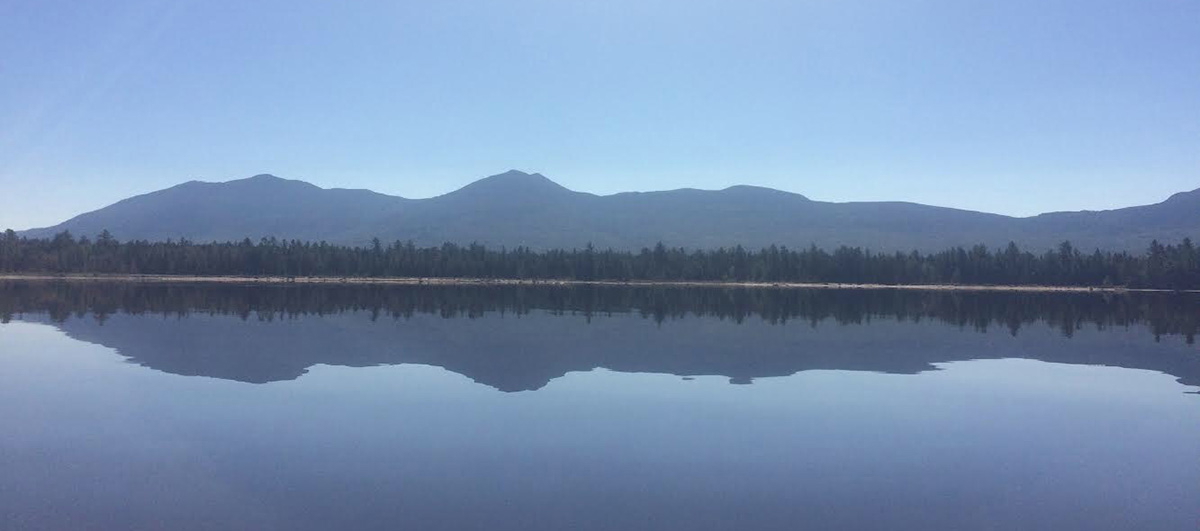
The creation of Flagstaff Lake and the destruction of the villages of Flagstaff, Dead River, and Bigelow was a slow, emotional process that forever changed the lives of many. While numerous cities and towns benefitted from the boon of hydroelectric power, and CMP saw new profits, the citizens of the former towns watched everything be taken from them. The natural landscape of the country’s most wooded state was branded with a new man-made fixture. In the name of progress, history was erased. Was it worth it? For the people once of Flagstaff, Dead River, and Bigelow and their descendants, the question has an easy answer. The poem “Man Made Lake” by Jeep Wilcox summarized the feelings of many:
“No way, could I stop their flood,
So knowing nothing I could do,
Using a token dollar or two,
They took what cost me sweat and blood.”