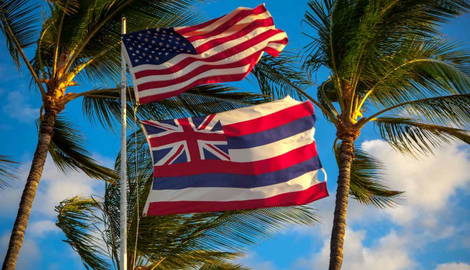

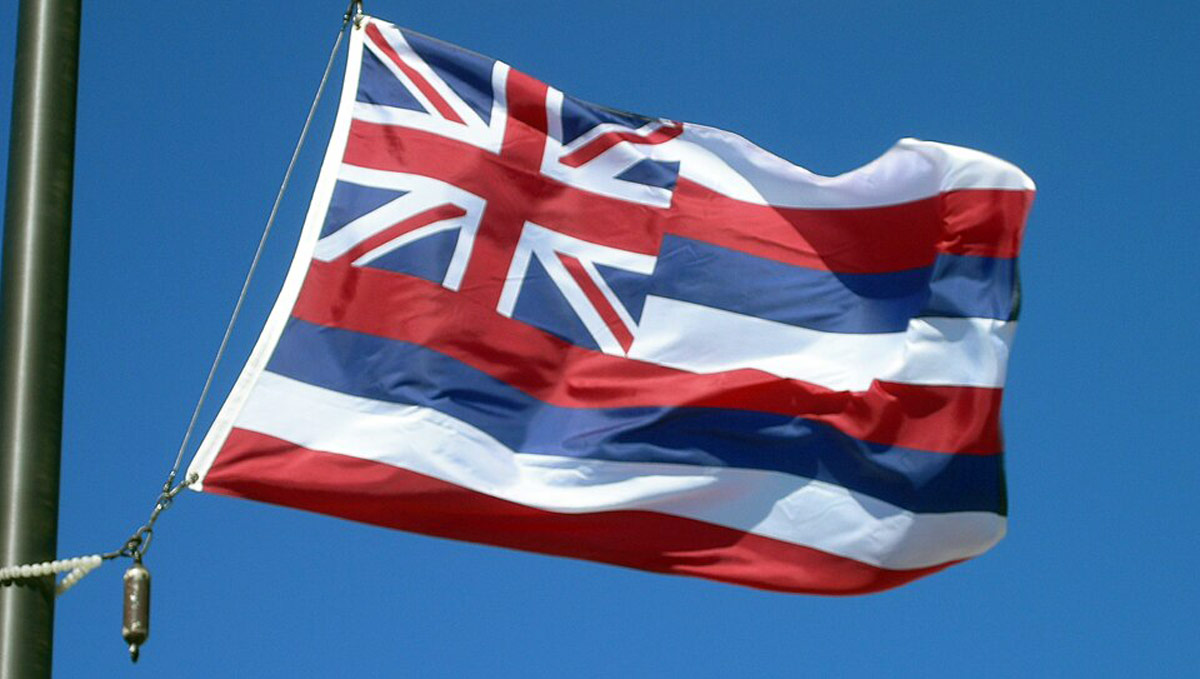
The US state of Hawaii is one of the few states to have been an independent country before joining the union, and one of only two states whose national flag as an internationally recognized independent republic became its official state flag, alongside Texas. The flag includes a British Union Jack prominently displayed in the top left corner. It was created during the War of 1812 to show that Hawaii was still friends with both the US and Britain.
Hawaii’s First Contact With Europe
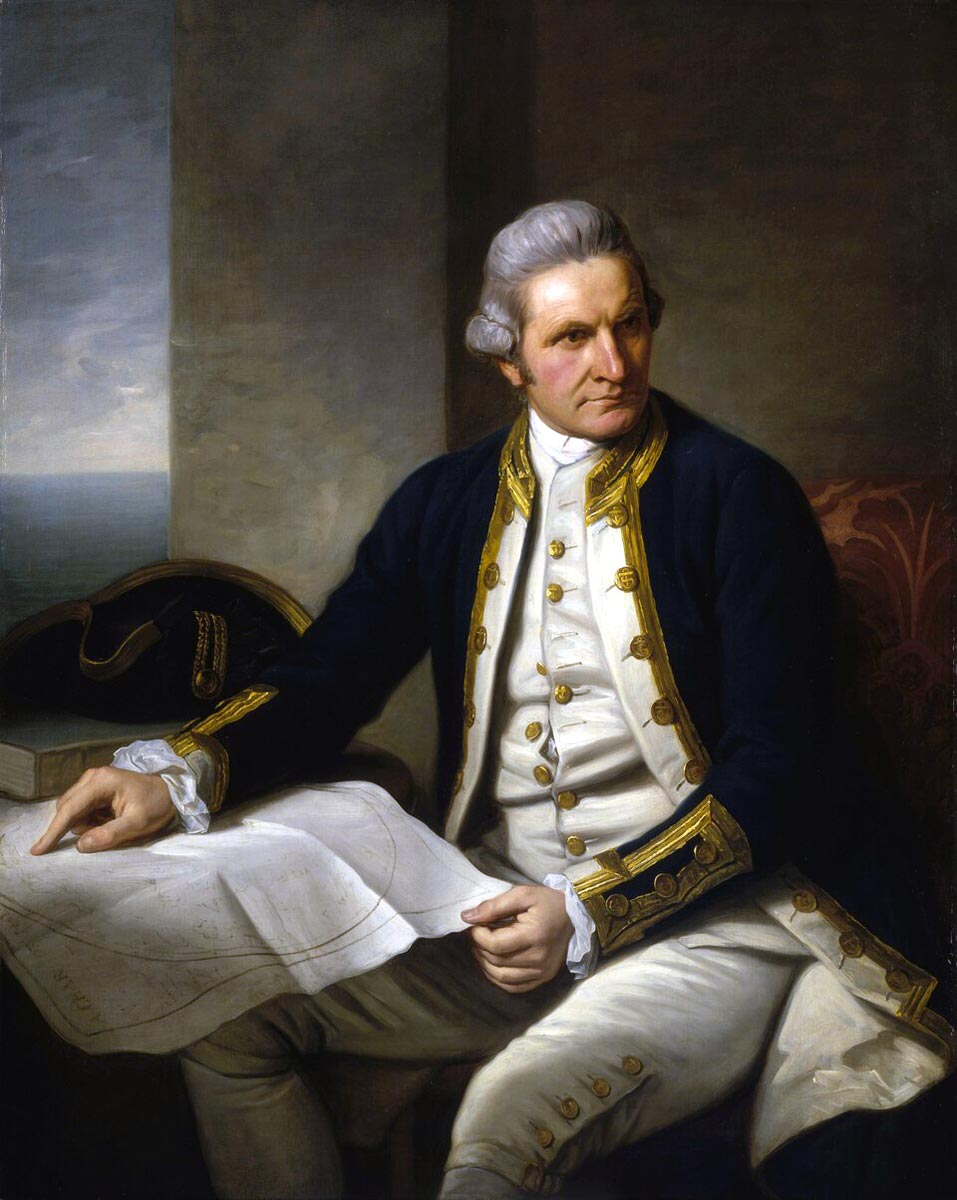
In January 1778, British Captain James Cook landed in Hawaii, becoming the first documented European to set foot on the islands. Captain Cook named the Hawaiian archipelago the Sandwich Islands after his patron, the Earl of Sandwich. Cook’s arrival was met with curiosity from the natives regarding not only these strange new people but also their massive ships and metal tools. There are conflicting accounts that Cook was welcomed by the Hawaiians as a returning god, and while this is debated, it is known that he was received with reverence and ceremonies.
During Cook’s second visit in 1779, tensions between the British and the natives began to rise, with many accounts of natives stealing from the European ships. When Cook finally left, they were quickly forced to return to the islands due to a storm. This further increased the tension and confusion among the natives.
As the British waited out the storm, some of the natives stole a small boat from the fleet, leading Cook to go to shore to retrieve it. Events did not go to plan for Cook as violence broke out and he was killed at the age of 50 by the Hawaiians.
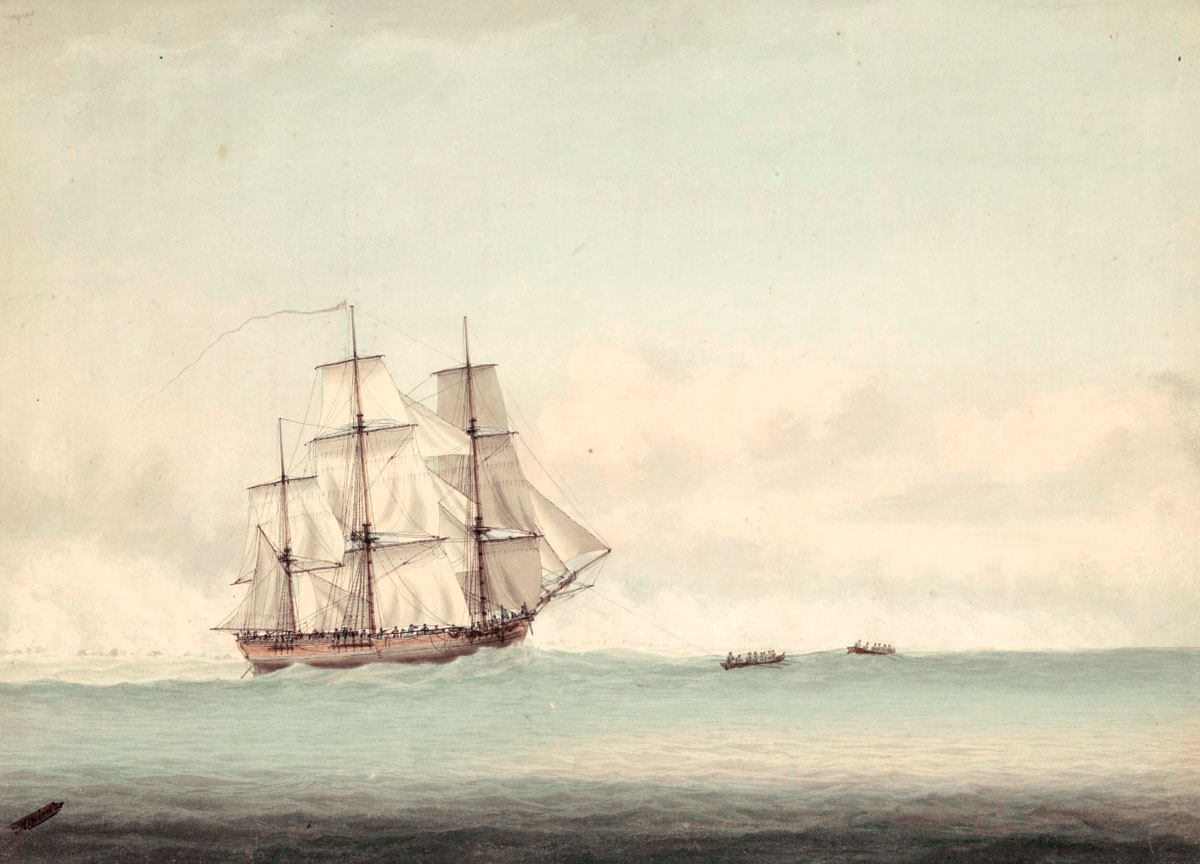
Although Cook was dead, the Old World now knew about these Sandwich Islands. Hawaii sat almost perfectly in the middle of trade routes that connected China and North America, making it an effective spot for resupply. Furthermore, Hawaii had the correct climate for high-demand crops, such as sugar, bananas, and pineapples, making it an important agricultural exporter throughout its history.
The main export during this era that changed the Hawaiian economy was lumber from the sandalwood tree. Chinese merchants in Canton paid high prices for the wood as it was of high quality for creating incense and furniture.
By the 1830s, the Hawaiian sandalwood forests were heavily exhausted. In exchange for their wood, Hawaiians could satisfy their newfound demand for cloth, metal tools, weapons, iron, and luxury goods like mirrors or alcohol. Of course, like many other stories of first contact, the Hawaiians also received the Old World diseases that ran rampant among their unaccustomed immune systems and caused hundreds of thousands of deaths.
Other Players
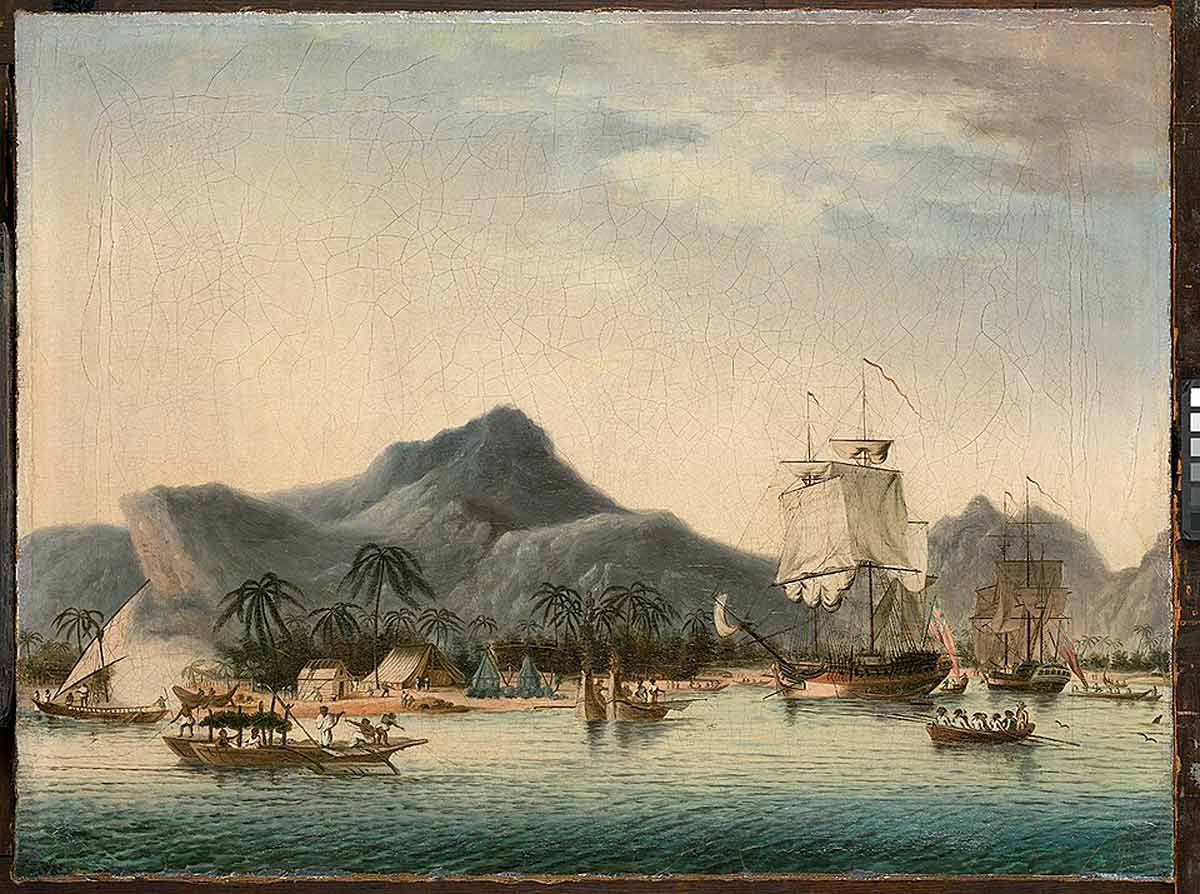
Britain was the first Western power to discover Hawaii, so it is not surprising that it became the Hawaiians’ first point of contact with the broader world. While the episode with Captain Cook ended poorly, the British enjoyed relatively strong relations with the Hawaiians, especially after they helped Kamehameha unite the islands into a single kingdom.
As might be expected, the Americans began operating in the region almost immediately after the British. Hawaii was off its soon-to-be coast, and many Americans were heavily involved in trade with China, making Hawaii a prominent region for American business interests in Asia. And while the British may have been first and closest with the Hawaiians, the Americans still gained a prominent position quickly on the islands.
Russia had a brief presence in the region when a Russian company agent, Georg Anton Schäffer, constructed forts on one of the islands in 1815. Schäffer acted outside of the authority Russia had given him, and when St. Petersburg refused to support his venture, he left the islands in 1817. France even had a presence in Hawaii beginning in the 1820s. Their presence was largely centered around Catholic missionary work, although there still were French economic interests in the region.
A Friend in Britain
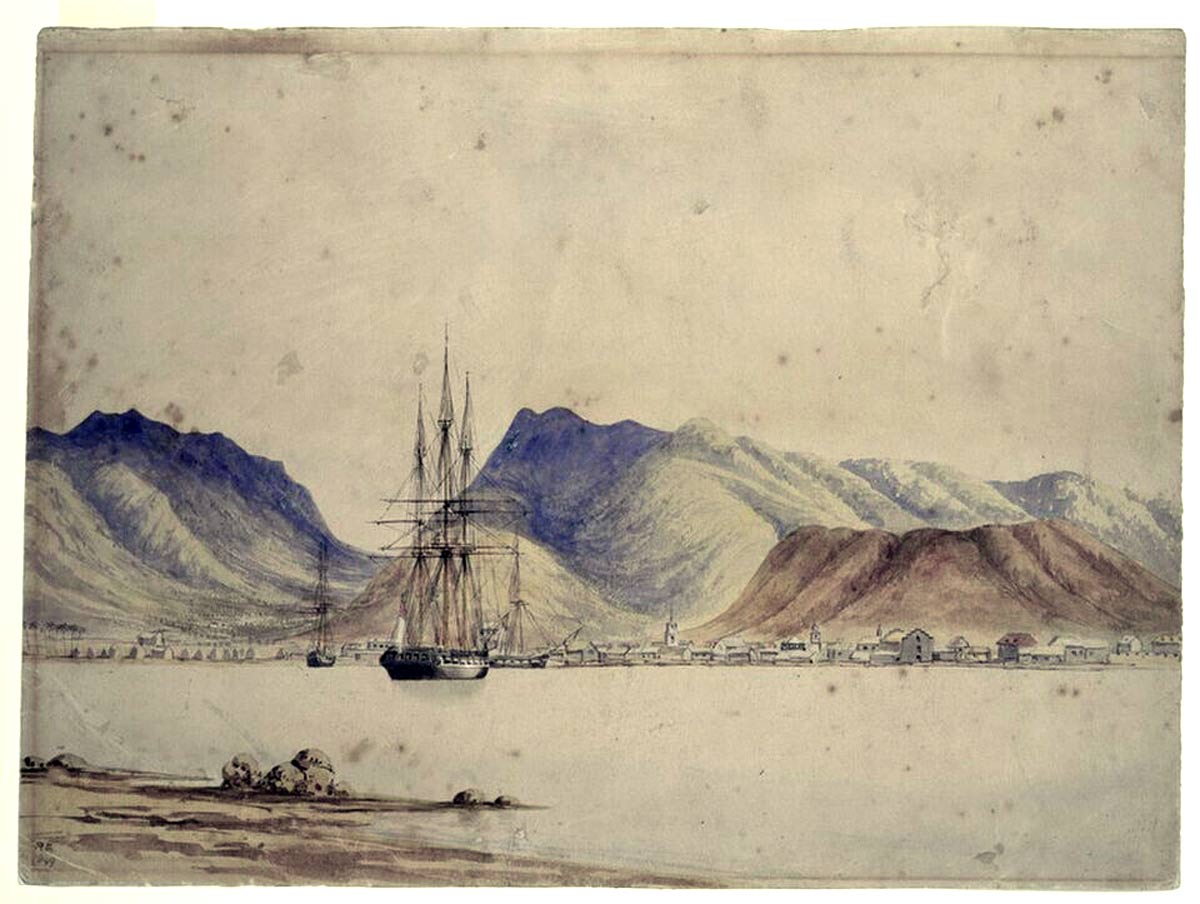
Captain George Vancouver made three voyages to Hawaii in 1792, 1793, and 1794. Vancouver sought to strengthen the British position with Kamehameha, the most prominent chief at the time, who would first unite the Hawaiian Islands. Vancouver brought Kamehameha gifts; famously, he introduced sheep and cattle to the islands, which led to the Hawaiian cowboy culture, known as the paniolo tradition. He also provided Kamehameha with military counsel and even brought over craftsmen who built the Hawaiians a small Western-style ship, which Kamehameha named the Britannia.
In 1794, one of the more confusing and academically debated episodes occurred in Hawaiian history. Kamehameha and the chiefs of the Big Island ceded the island to King George III. When Vancouver made his report to the empire about the cession, Britain did not seem interested in annexing the island or making it a protectorate, and did not ratify the treaty, resulting in little change in the relationships of the two island nations.
It is debated what Kamehameha hoped to achieve with this move, as he was a highly competent political actor with large ambitions. It would not make sense for him to simply give his territory away.
An important cultural link between the British and Kamehameha came from the sailor John Young. Young served on the Eleanora, which engaged in combat with Hawaiian sailors and civilians. Young was taken prisoner and given the option to serve Kamehameha and integrate into Hawaiian society.
The sailor took the offer and learned to speak Hawaiian fluently, married a high-ranking native wife, and was granted positions of political power; a notable feat for a foreigner. His position came from his service to Kamehameha through his technical expertise with firearms and artillery, which allowed the chief to conquer and unite the archipelago in 1810. Young also served as a point of contact for Western merchants and facilitated weapons sales along with other trade.
There was another sailor who had a similar position to Young, Isaac Davis; however, Davis was likely poisoned in 1810 while defending Kamehameha from rival chiefs. So, Davis wasn’t able to have as long a political legacy as Young, who lived till 1835.
The Creation of the Flag
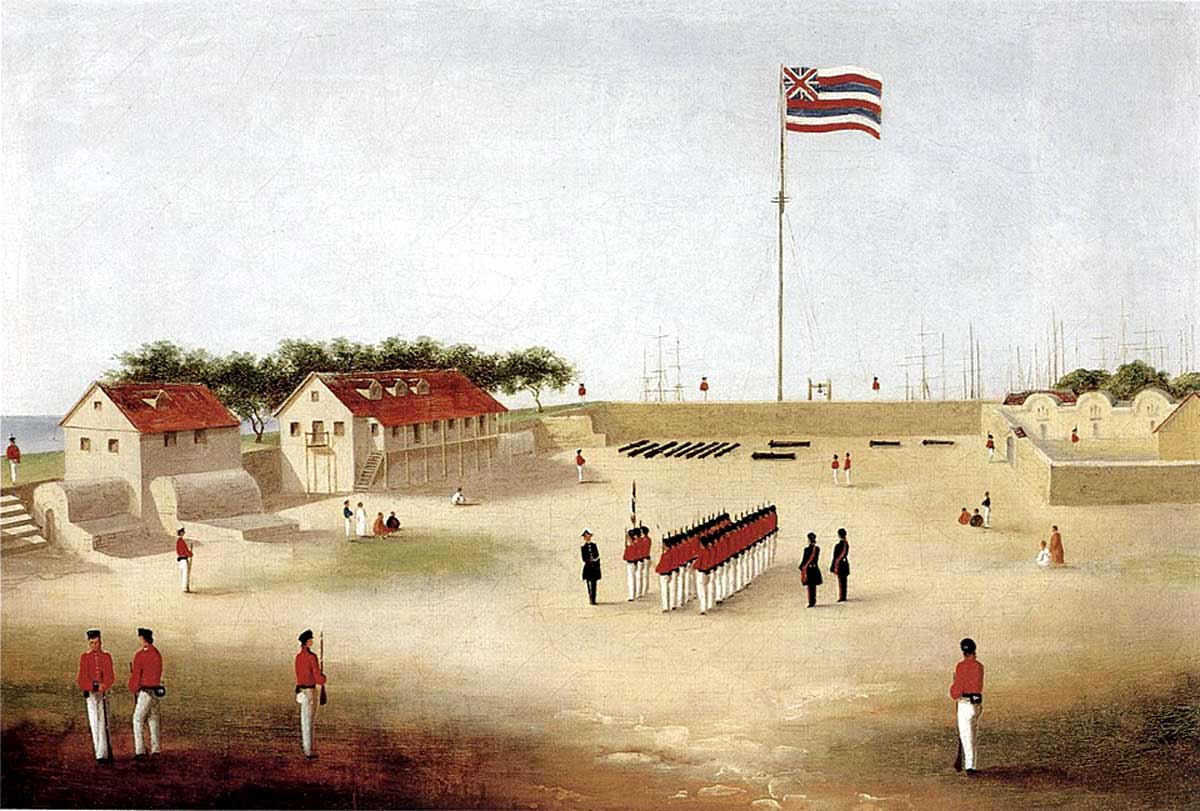
During Captain Vancouver’s last trip to the islands in 1794, he gave Kamehameha a British flag which contained the Union Jack. Kamehameha, now on friendly terms with the British, flew this flag on ships, at his court, and even in his own palace. While it may have been strange for an independent country to fly the flag of another country, it didn’t become a substantial issue until 1812. The War of 1812 broke out between America and Britain, which complicated things for Hawaii since the Americans also had a strong presence in the country.
American sailors were understandably unhappy docking and conducting trade under the flag of the country they were at war with. Kamehameha wanted to remain neutral in the conflict and maintain good relations with both nations. So, a solution came with the modern Hawaiian flag, which has eight stripes, symbolizing the eight major islands while also adopting a similar pattern to the American flag. The Union Jack in the top left corner played multiple roles: first, it reassured Britain of Hawaii’s commitment to their friendly relations while also signaling to other powers that the Hawaiians had powerful friends. In the era of colonialism, Kamehameha knew his country was at risk; history would prove him correct.
Who actually designed the flag is uncertain, with some historians claiming it was Alexander Adams, a Scottish captain and ally of Kamehameha. Others claim it was created through joint negotiations between Kamehameha, his court, including John Young, and the British. It is also unclear when the flag was first formally in use, with accounts ranging from 1812 to 1816. Furthermore, there were different variations of the Hawaiian flag, and the official version we know today wasn’t adopted until 1845.
So, despite the Union Jack in the Hawaiian flag, Britain never controlled the islands, at least not up until the point of the flag’s adoption.
The Paulet Affair
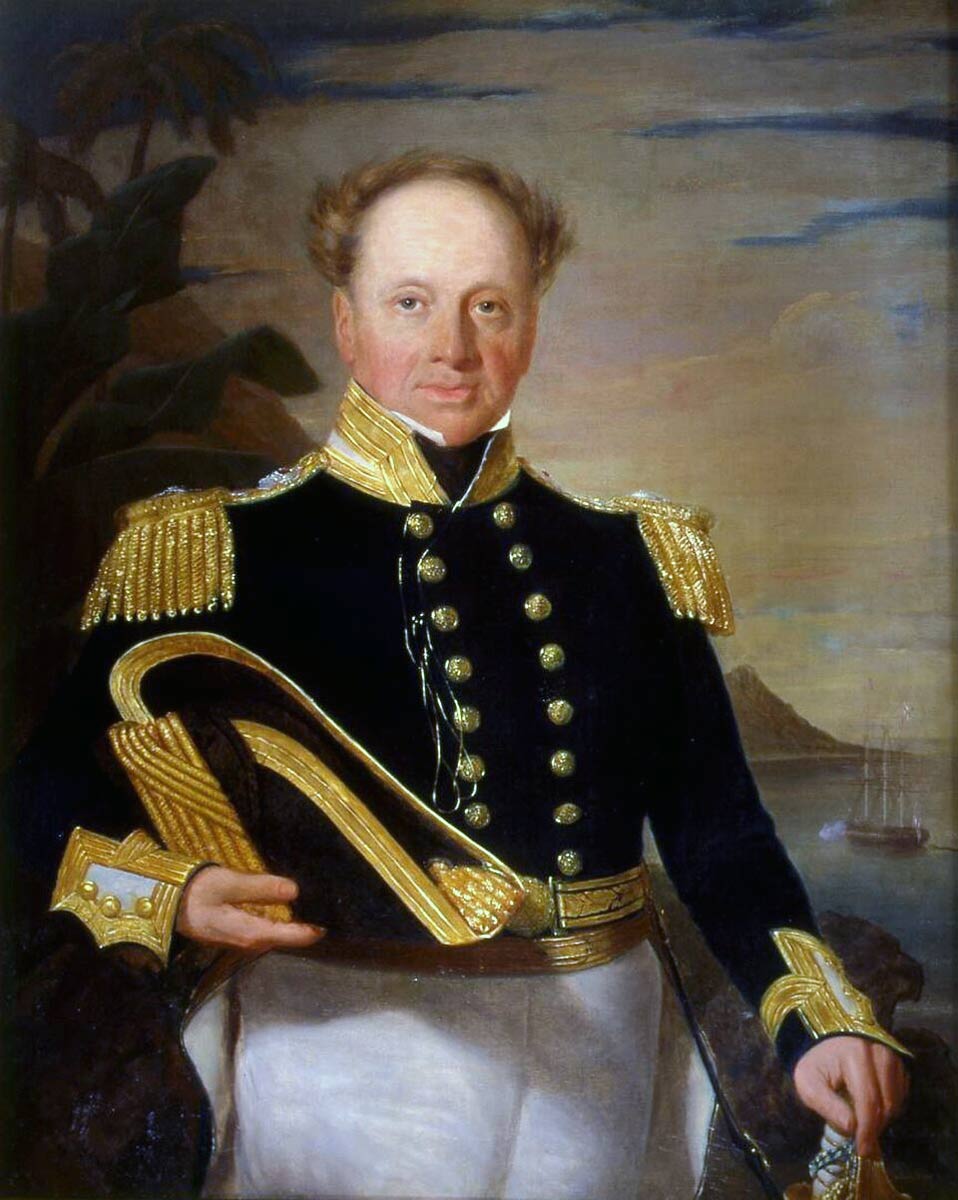
In February 1843, Lord George Paulet, captain of the British warship Carysfort, arrived in Honolulu to investigate complaints of mistreatment of British subjects by the Hawaiian government. Paulet made a list of unreasonable demands to Kamehameha III, the then-ruler of Hawaii. The captain threatened to bombard Honolulu if these demands were not met, giving Kamehameha III little opportunity to speak to Britain.
Kamehameha III had no weapons capable of fighting Paulet’s warship, so he agreed to Paulet’s requests, though under official protest. For the next few months, Paulet raised the British flag over the country and ruled as de facto governor.
The issue was resolved in July 1843, when Rear Admiral Richard Thomas, commander of British Pacific naval forces, arrived in Hawaii and deemed Paulet’s actions unauthorized and against British policy. In that same month, Thomas restored Hawaiian sovereignty to the islands and was celebrated by Kamehameha III. July 31 also became a Hawaiian holiday, known as Sovereignty Restoration Day. Later that same year, Britain and France jointly recognized Hawaiian sovereignty, with the US following suit.
Old Friends
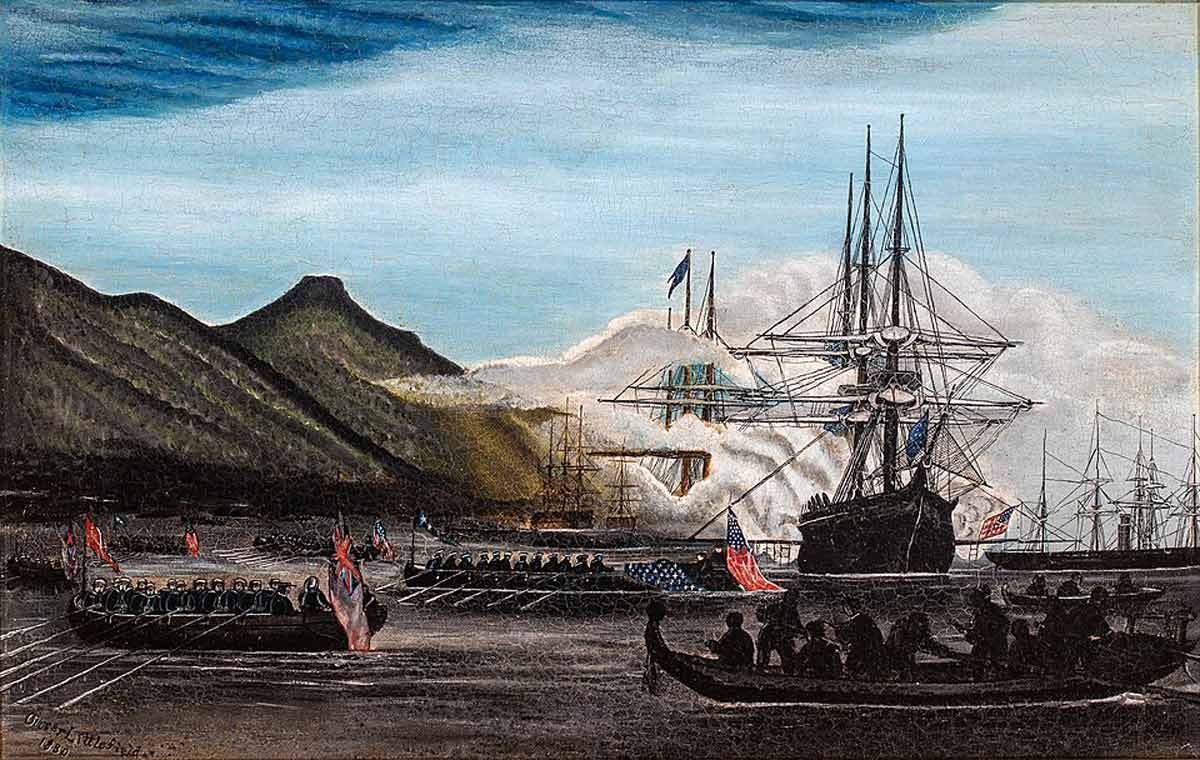
While the Paulet affair ended positively between the two nations, the British began to drift away from Hawaii. American Protestant missionaries and immigrants had become increasingly influential in Hawaiian politics and society. Hawaii left its old religion and its kapu and human sacrifice for mana and embraced Christianity. Furthermore, American business interests were what invested in the next big Hawaiian industries after the sandalwood was depleted, those being whaling and sugar cultivation.
American-Hawaiian relations further increased with the Reciprocity Treaty of 1875, which allowed Hawaii to export sugar to America duty-free. Furthermore, the 1887 renewal treaty made Pearl Harbor an American naval base. By this time, the Union Jack that sat proudly in the corner of the Hawaiian flag seemed to mean little as Hawaii was falling more and more under the influence of Washington.
With America as the most prominent power on the island, it wasn’t long before powerful people began calling for American annexation; in fact, many had been calling for it since the 1850s. In 1887, in what is known as the Bayonet Constitution, wealthy American and Western landowners presented a new constitution for the then monarch, Kalakaua, to sign under threat of violence. This new constitution gave the cabinet, which was largely made up of Western landowners, independence from royal authority and greatly weakened the powers of the monarch.
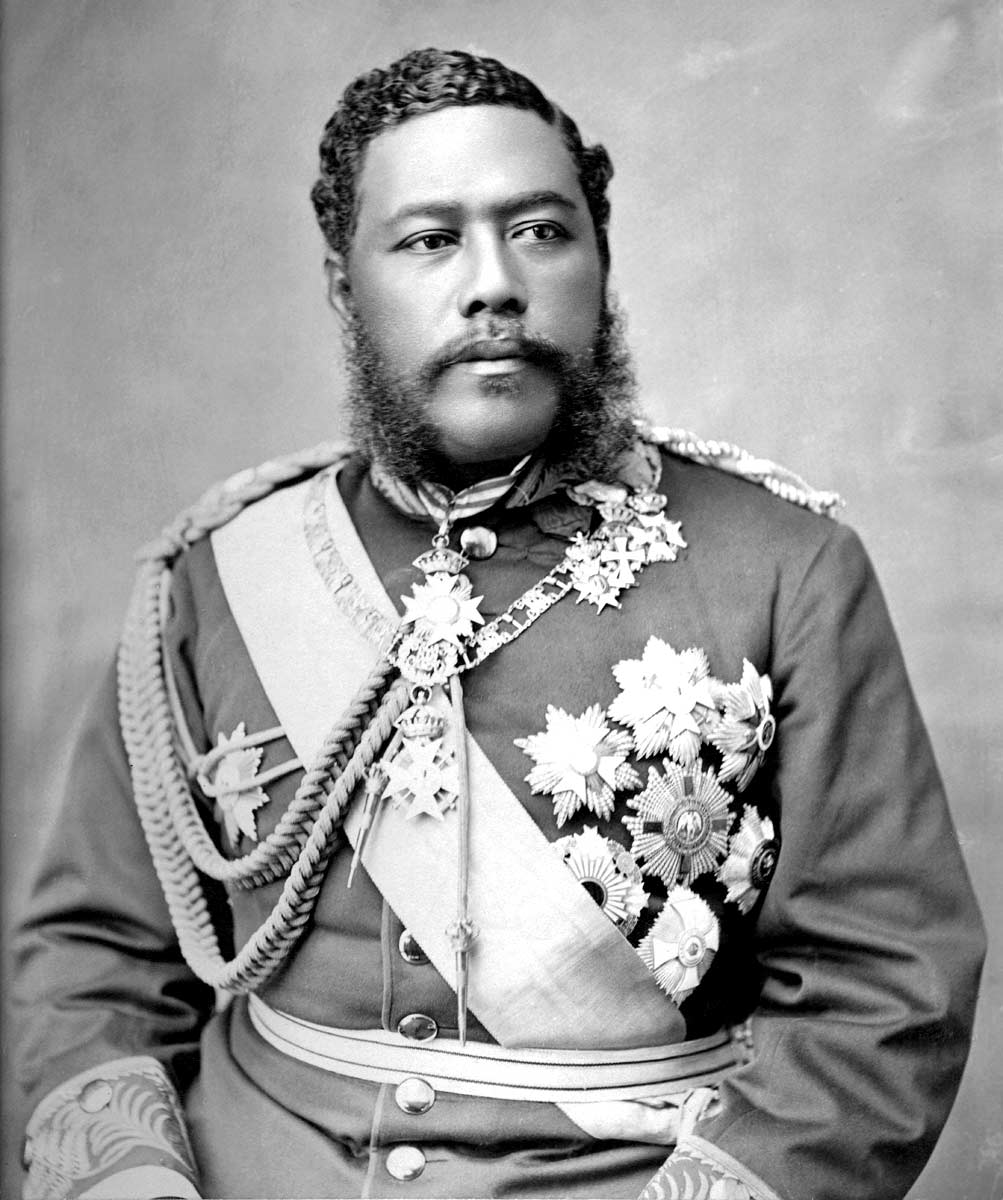
Kalakaua died in 1891 and was succeeded by his sister Liliuokalani. Queen Liliuokalani sought to undo the constitution and restore royal authority. The planter class opted for a full-scale coup, and the American minister to Hawaii, John Stevens, ordered 162 US Marines from the USS Boston to land.
On January 17, 1893, the landowners proclaimed an overthrow of the Hawaiian monarchy and the creation of a provisional government. The Republic of Hawaii sought annexation into the United States, and while there was debate in Congress about the topic, the outbreak of the Spanish-American War in 1898 convinced the country that having a strong presence in the Pacific would be useful. So, in July 1898, Congress passed the Newlands Resolution, which annexed Hawaii as a territory of the United States.
It wouldn’t be until over 60 years later, in 1959, that Hawaii received full statehood, making it the 50th and youngest state in the union.