
In the mid-19th century, South America consisted mainly of independent states with unclear borders and fragile sovereignty. Many of the nations often bore scars from centuries of Spanish and Portuguese colonization. From 1864 to 1870, however, border disputes led to a conflict called the War of the Triple Alliance.
Also known as the Paraguayan War, it was the bloodiest interstate war in Latin American history. It pitted the Republic of Paraguay against an alliance composed of the Empire of Brazil, the Argentine Republic, and the Oriental Republic of Uruguay. Motivated by a combination of unsettled border disagreements, river navigation rights, and political power struggles, the war nearly wiped out an entire generation of Paraguayans and drastically altered South American geopolitics.
How Vague Colonial Treaties Sparked Regional Border Disputes
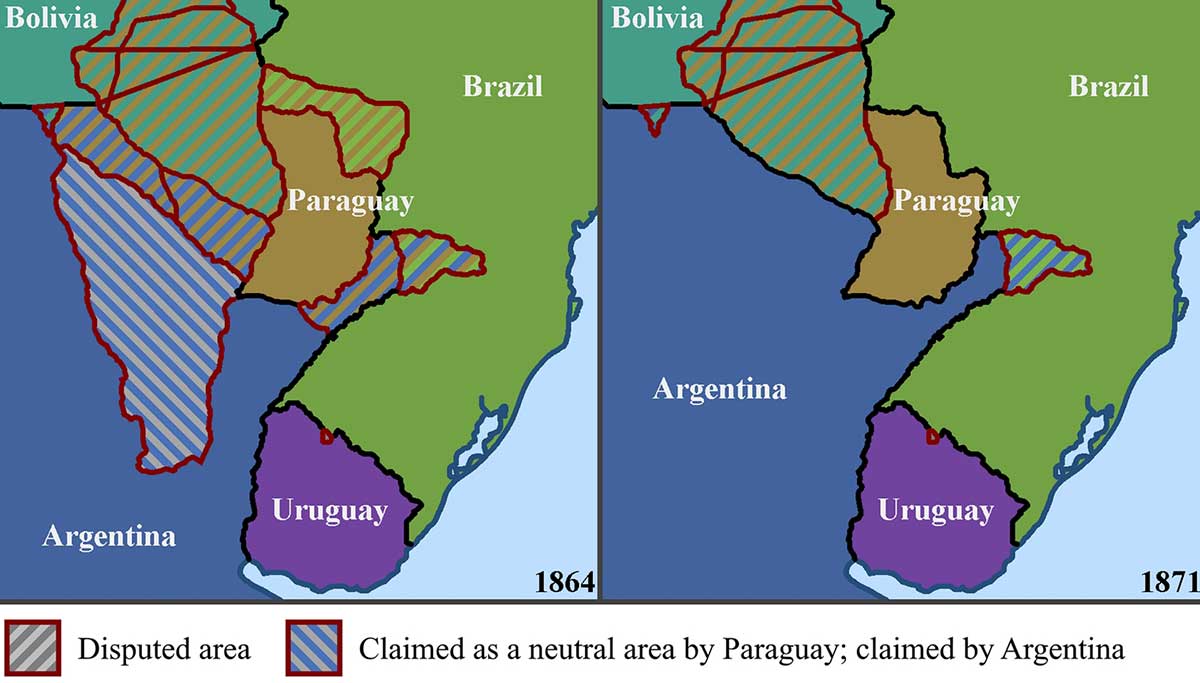
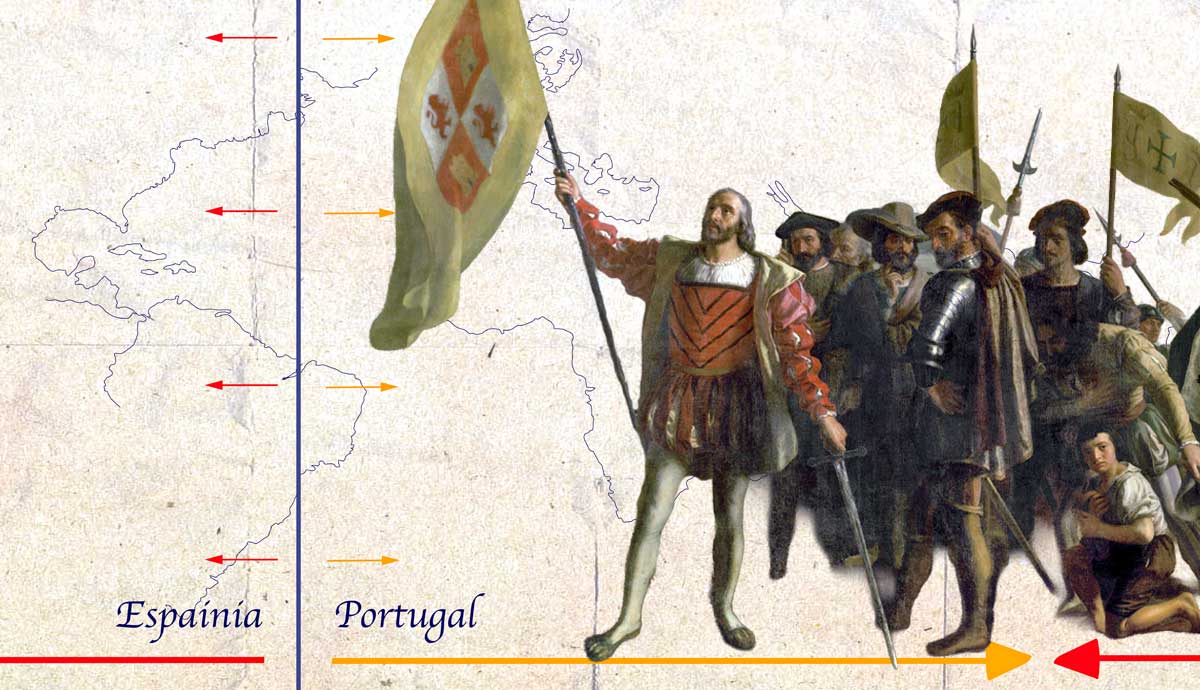
The issue stemmed from unclear colonial-era treaties that dated back to the Spanish and Portuguese conquests. Agreements such as the Treaty of Tordesillas of 1494 and the Treaty of San Ildefonso of 1777 had drawn lines across maps of vast wilderness. The lines used vague, unmapped geographic landmarks like rivers and mountains that were problematic to demarcate on the ground. Later, when Portugal and Spain left the region, the new nations faced myriad problems as they tried to base their borders on the old administrative maps. The situation led to many disagreements.
Tensions mounted when both Brazil and Paraguay claimed parts of the Mato Grosso region. At the same time, Argentina and Paraguay claimed the province of Misiones and parts of the swampy Gran Chaco region. Because Paraguay was landlocked, the border disputes put its sovereignty at risk as the country’s access to international markets depended heavily on navigating the Río de la Plata and its nearby rivers, which were in disputed territories.
In 1862, Francisco Solano López inherited the presidency from his father and a standing army of about 28,000 men. He rapidly increased it by forcing citizens to join. With a large military under his command, López sought to make Paraguay a dominant power in the region.
Why Landlocked Paraguay Escalated Tensions and Invaded Brazil
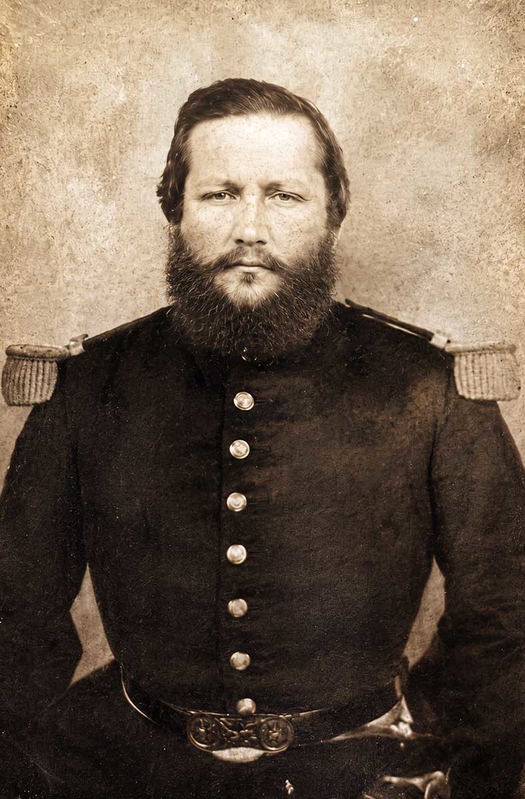
Because Paraguay was landlocked, it relied on a friendly government in Uruguay. The strategy helped maintain access to Atlantic trade routes through waterways. Having Uruguay as a political ally also helped balance the power of Brazil and Argentina, the two powerful neighbors. Not surprisingly, when civil war broke out in Uruguay, the ruling Blanco party requested military and diplomatic aid from Paraguay’s leader. While López agreed to mediate between the Blancos and the opposing Colorado Party, both Argentina and Brazil ignored his efforts. They viewed Paraguay as a small nation with no business intervening in regional affairs.
Subsequently, López took offense at what he perceived as Brazil’s intimidation. When the Brazil-supported Colorado Party looked like it could win the Uruguayan civil war, López issued an ultimatum on August 30, 1864, to Brazil demanding that it cease intervention in Uruguay. Brazil refused, prompting López to order his army to invade the Brazilian province of Mato Grosso. On November 12, 1864, Paraguayan forces captured the Brazilian steamer Marquês de Olinda on the Paraguay River. The ship was carrying the newly appointed governor of Mato Grosso, Frederico Carneiro de Campos, and in December of that year, Paraguay launched an invasion into Mato Grosso.
How a Strategic Military Error United Paraguay’s Enemies
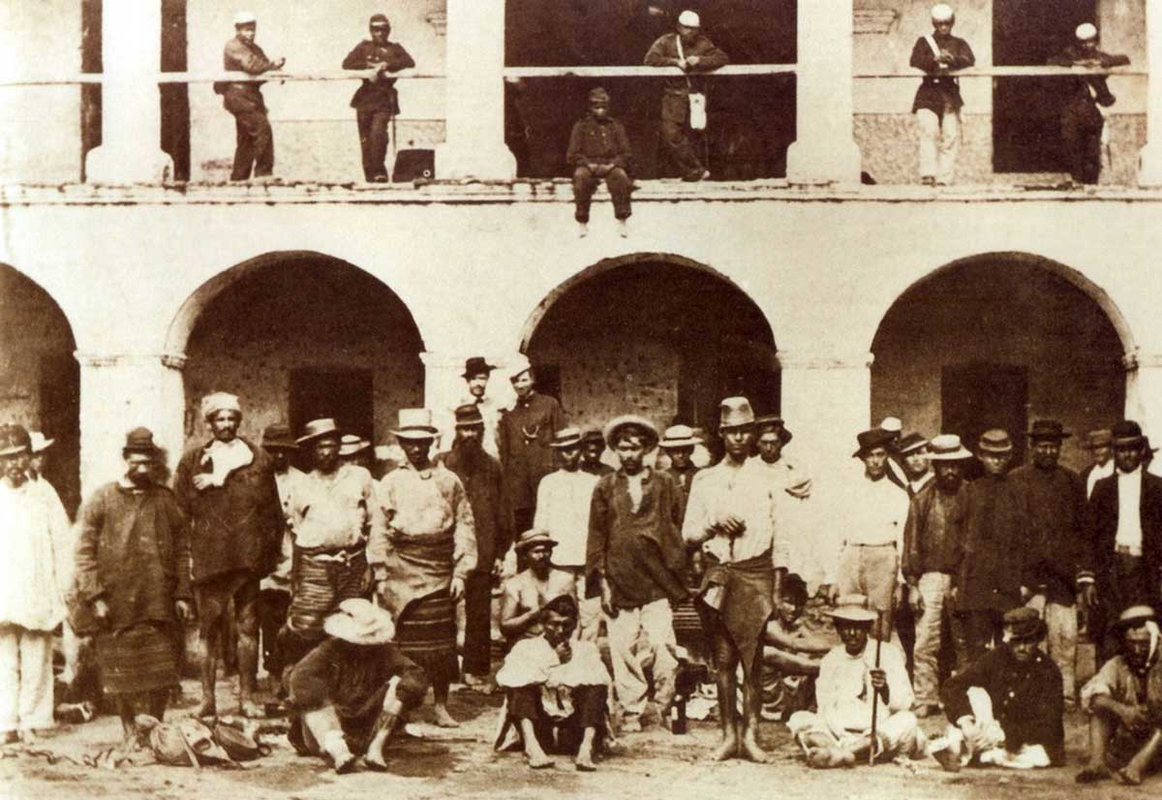
Amid the push, López also asked Argentine President Bartolomé Mitre for permission to move troops through the Argentine province of Corrientes. He wanted to attack Brazil and reinforce the Blanco forces in Uruguay. Mitre refused in early 1865. The rejection compelled López to declare war on Argentina on March 18, 1865, and he ordered his forces to occupy the city of Corrientes. The move turned out to be one of the greatest strategic errors in South American military history. By attacking Corrientes, he had united his enemies. Brazil, Argentina, and Uruguay (now led by the Paraguayan-opposed Colorado Party) soon signed the Treaty of the Triple Alliance on May 1, 1865, and agreed to fight until López was ousted.
The Devastating Human Cost That Decimated a Generation
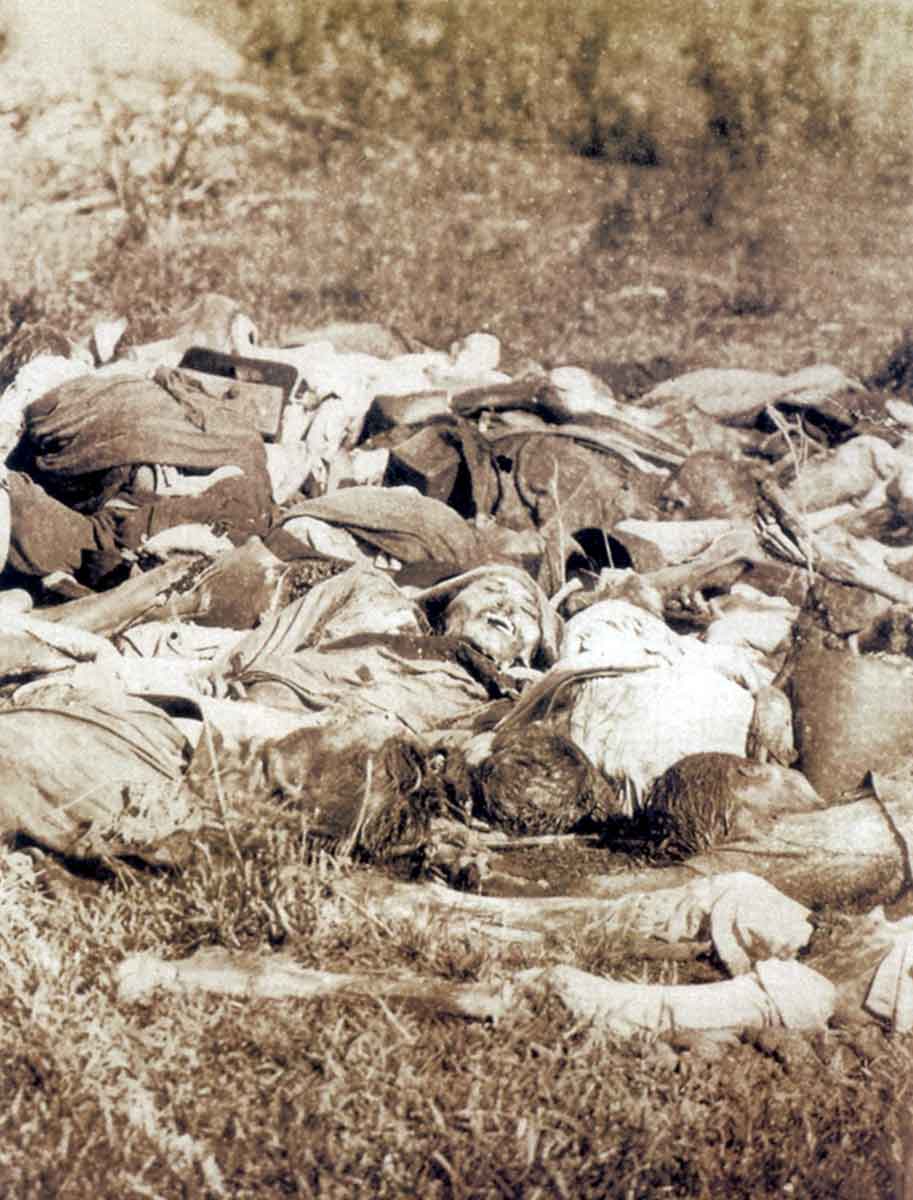
The war soon evolved into one of attrition. On June 11, 1865, the Paraguayan Navy on the Paraná River was destroyed. Paraguay, now surrounded by hostile forces both on land and on rivers, would stay completely cut off from the rest of the world for the duration of the war. Due to its immense manpower and resources, the Triple Alliance slowly wore down Paraguayan defenses and eventually killed López at the Battle of Cerro Corá on March 1, 1870. His death effectively ended the conflict.
That said, the most significant result of the war proved to be its impact on the population. Researchers studying the country after the war found that Paraguay lost more than half of its total population. Some records suggest that the number of adult men killed may have been as high as 90 percent. Overall, around 300,000 Paraguayans died during the war from both direct and indirect causes, while Brazil lost up to 100,000 people and Argentina lost around 30,000.