
When we think of the “cost” of World War II, we rightly think about its human cost: the millions of civilians and soldiers, the prisoners worked to death, and the industrialized genocide. We rarely think of the financial cost. Estimates place the total global cost of the war at $1.6 trillion in 1946 currency, or a staggering $25 trillion if adjusted for today’s inflation. While Germany and Japan spent heavily to build their war machines, they were eventually buried under a mountain of Allied gold and industrial output. Here is the breakdown of the most expensive conflict in history. The figures provide a window into why each nation fought the war it did, how it mobilized its people and resources, and the impact of the war.
| Nation | Total Spend | Adjusted for Today’s Inflation |
| United States | $341 billion | $4.6 trillion |
| United Kingdom | $120 billion | $2.2 trillion |
| Germany | $270 billion | $5 trillion |
| Japan | $56 billion | $1.1 trillion |
| Soviet Union | $192 billion | $3.5 trillion |
The Arsenal of Democracy: The United States
Total Spend: $341 billion
Spend adjusted for inflation: $4.6 trillion
Pre-War Economy
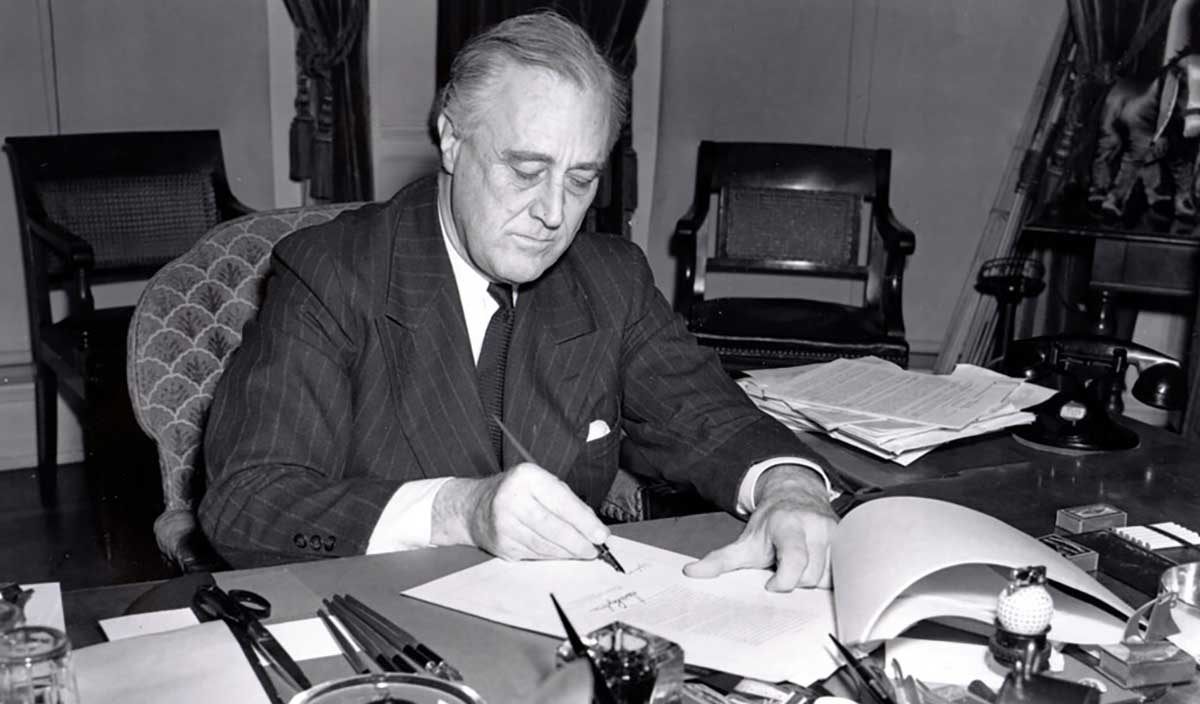
The United States officially entered the war with the bombing of Pearl Harbor in December 1941, but it had been deeply involved since 1939. The traditional story of isolationism obscures the US’s true role between the wars. While Woodrow Wilson’s dream of a US-led League of Nations was ended by the Senate vote in 1920, the US found itself shaping the post-war world by other means. It was the chief creditor of both France and Britain, essentially bankrolling their war efforts.
Following WWI, the UK and the US took steps to maintain their imperial hegemony. The Washington Naval Treaty capped the size of world fleets, leaving Britain and the US with the largest. The Four Power Treaty attempted to fix the status quo in Asia. The Dawes (1924) and Young (1929) plans saw the US use its economic power to revise the reparations settlement of Versailles and kick-start the European economy.
Wartime Spending
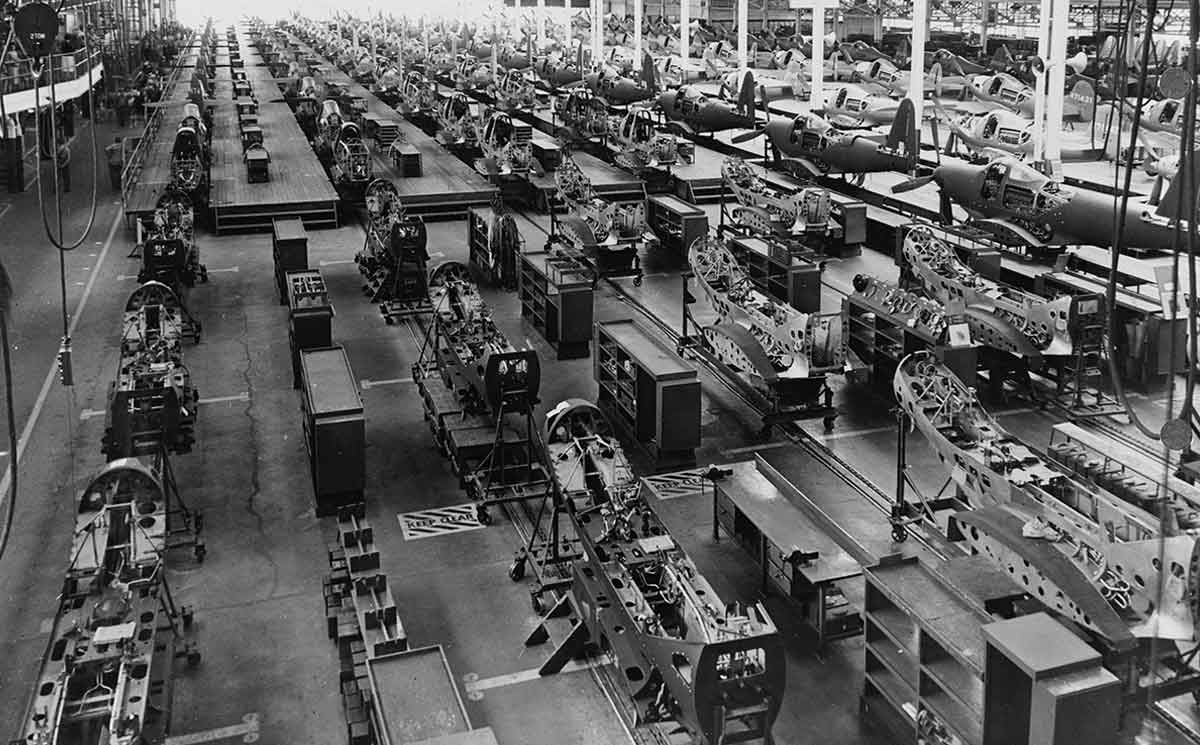
When the war began in Europe, it was obvious that financial and industrial links with the United States would be mobilized by the Western Allies, becoming Roosevelt’s “arsenal of democracy.” While France’s sudden defeat in 1940 alarmed Washington and spurred immediate emergency defense expansion, American industrial capacity, some of which was still idle following the Great Depression, was steered towards supplying Britain, and later the Soviet Union.
Britain was also heavily reliant on American credit. This started with direct borrowing from US financial institutions, and when Britain exhausted its financial resources, the Lend-Lease program, which effectively provided military supplies for free on the condition that whatever was not destroyed was returned. As more combatants joined the Allied war effort, the scheme was extended. Lend-Lease made up as much as 10% of US war expenditure.
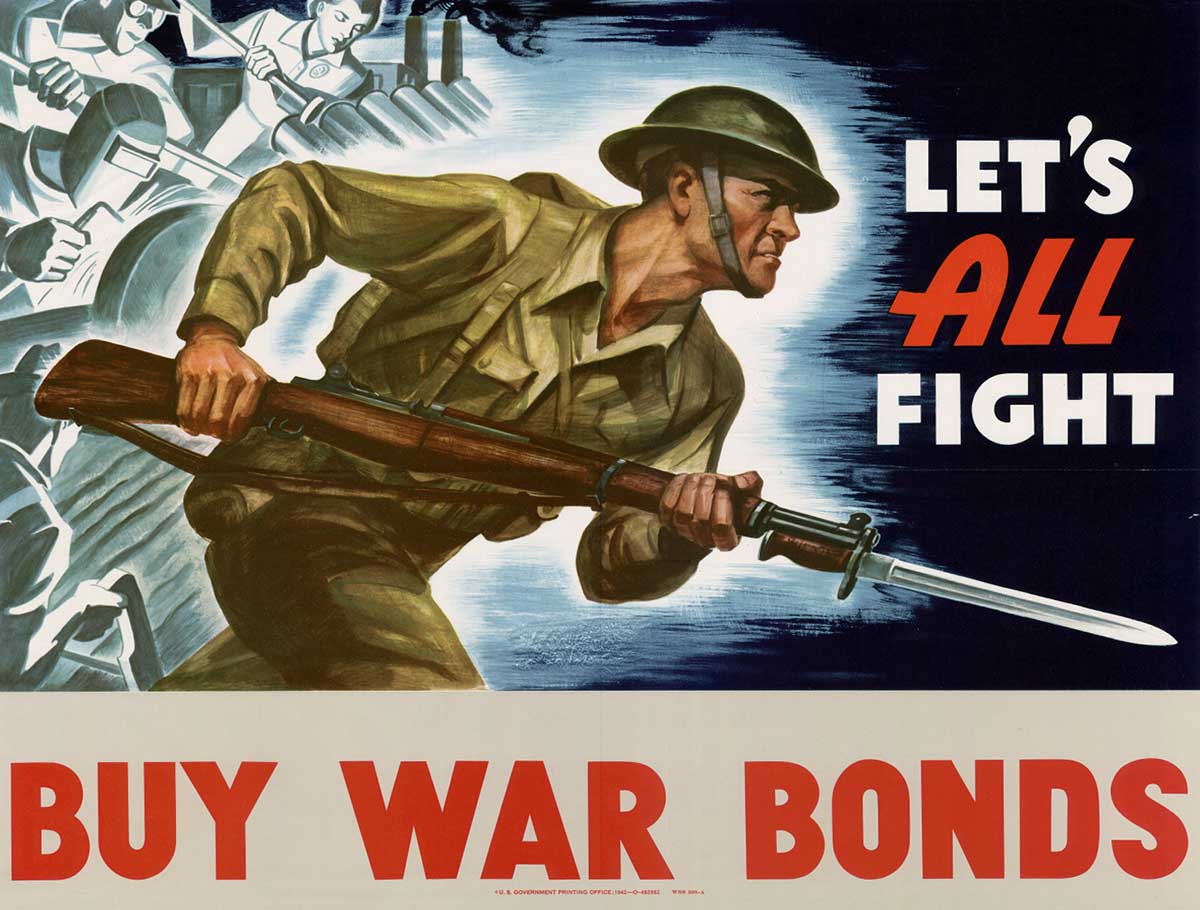
From 1939 to 1941, the US gained world market share as Britain, Germany, and Japan shifted to war production. Alongside increased military spending, this facilitated a recovery from the Depression. Following Pearl Harbor, the US funded its war and supplies to the Allies through a combination of borrowing and taxation. New taxes on income and “excess” profit covered 41% of war costs. The remainder was covered by war bonds and other debt. With money pouring into industry, the federal government relied heavily on price fixing and rationing to restrain inflation.
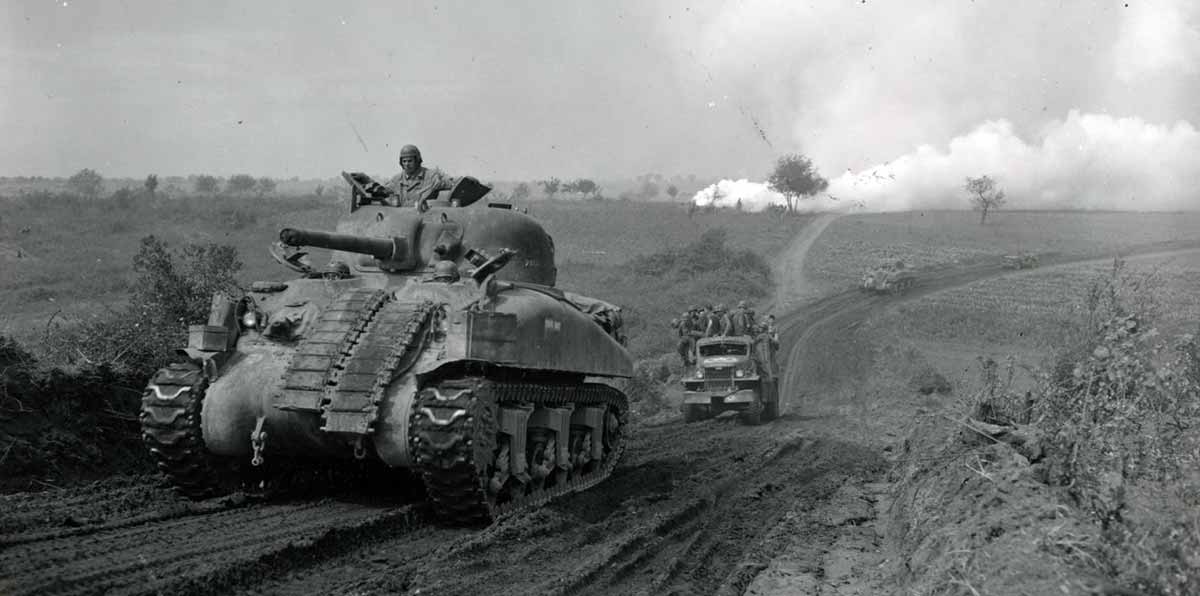
The US’s wartime productivity is astonishing. It produced 300,000 planes, 700 tankers, 8 battleships, 128 aircraft carriers, 2,700 cargo ships, and 90,000 tanks. At its peak, the US was producing more arms than all the Axis powers combined. It applied Fordist methods of manufacturing, focusing on repeatable designs for equipment that was easy to make and use.
This industry had a profound impact on the course of the war, and not only supporting the Allies. Japan’s surprise attack was driven by knowledge that a longer-term war favored American industrial strength. Hitler, too, was determined to win quick victories to prevent American industry from coming to bear. His determination to deal the final blow to Britain and avert a drawn-out conflict ultimately drove his disastrous decision to invade the Soviet Union.
Post-War Financial Consequences
American industrial production was decisive. The Axis simply could not keep up. Following Japan’s surrender, the United States had an immense economic and financial advantage over the rest of the world. It had fought a shorter war than Britain and had gained access to its imperial markets as leverage for Lend-Lease and other commitments. It hadn’t suffered the scale of industrial, agricultural, and human destruction wreaked by Germany on the Soviet Union.
The dollar was now the reserve currency, surpassing sterling. It accounted for nearly 40% of global GDP, compared to 17% in 1939 and 26% today. The United States manufactured 57% of the world’s steel, 80% of its automobiles, and was responsible for a third of global trade. It would use this economic and financial power, alongside military power, to reshape the post-war world.
The Empire’s Debt: Great Britain
Total Spend: $120 billion
Spend adjusted for inflation: $2.2 trillion
Pre-War Economy
It’s hard to overstate the impact of the First World War on Britain. The cost of the war changed Britain from the world’s creditor to being dependent on United States capital, with a debt of 135% of GDP in the 1930s.
While the 1920s were roaring for Americans, they were grim for many Britons. While Britain aggressively self-funded its early rearmament in the late 1930s, its financial reserves were rapidly depleted once the war began, making it heavily dependent on American credit and materials by 1940.
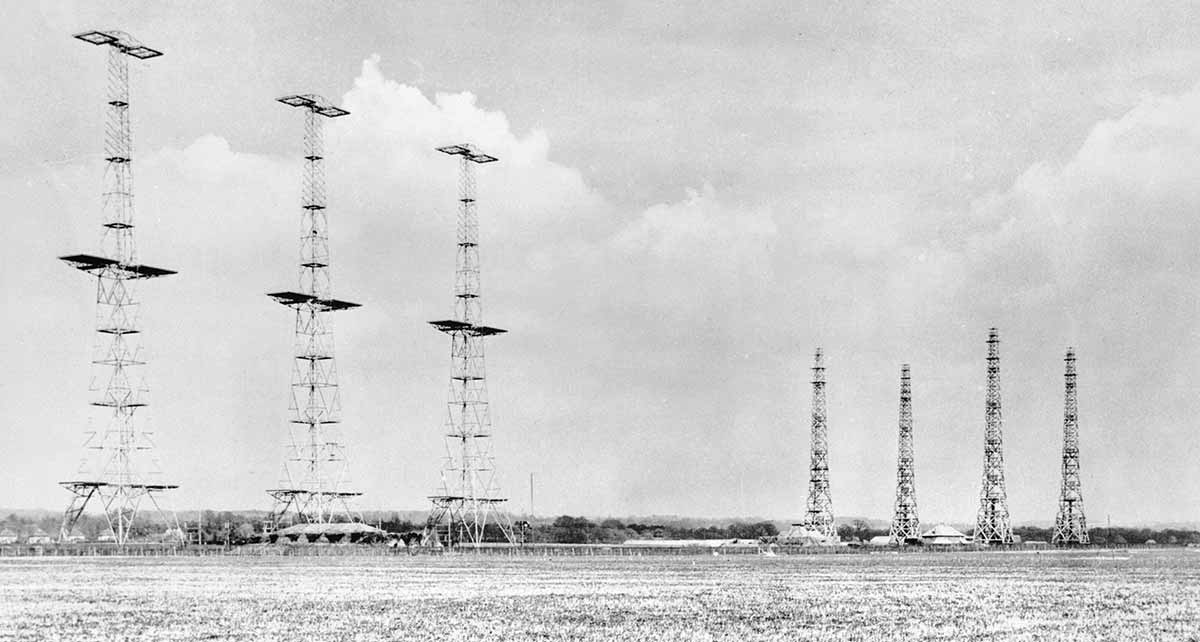
However, there is a tendency to understate Britain’s strength and advantages entering the war. This is a legacy of American historians’ domination of the narrative, Britain’s own wartime propaganda, and its long decline after the conclusion. Britain was still an industrial superpower in 1939. It had the world’s largest merchant fleet, allowing it to secure raw materials. It also had the largest navy, which it used to protect its trade and supply routes and blockade Germany. Britain built the world’s first coordinated air defense system, instrumental to its crucial victory in the Battle of Britain. This assessment doesn’t even include the capacity in Britain’s colonies.
Wartime Spending
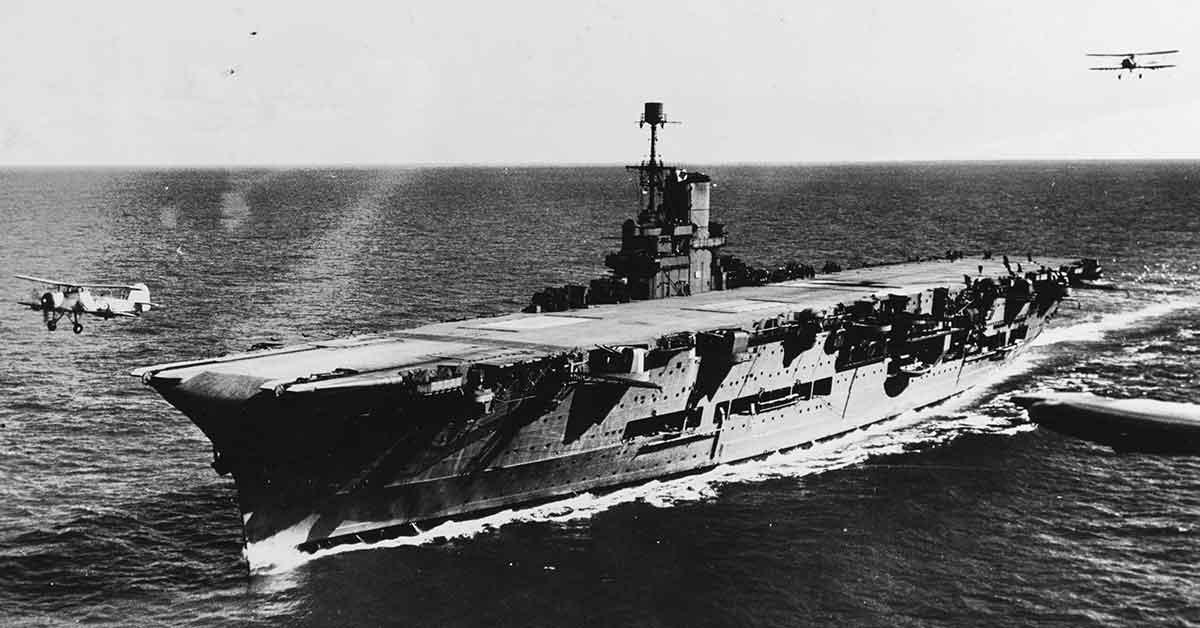
Underlying economic strength and stable politics are how, during the war, Britain produced 131,000 warplanes, 27,000 tanks, 4 new battleships, and 50 aircraft carriers (including escort carriers built in US shipyards and transferred via Lend-Lease). While lagging behind the US, Britain comfortably outpaced the Germans in many areas.
Churchill declared that his policy was “victory at all costs,” and this is what it took. Taxation rose dramatically, with the basic rate of income tax rising to 50% and higher bands reaching 90%. Britain drew down on its reserves, issued bonds to British subjects, and borrowed internationally, partly from Canada and India, but primarily from the United States. Inflation was constrained through rationing, price controls, and a national savings drive.
Most agree that, despite some notable disasters, Britain largely fought a good war. It prioritized human life, home morale, and a “steel, not flesh” strategy. It relied on its naval dominance, merchant network, and relationship with the US to succeed in the long run. The consequence, however, was that Britain’s position as a world power was effectively over.
Post-War Financial Consequences
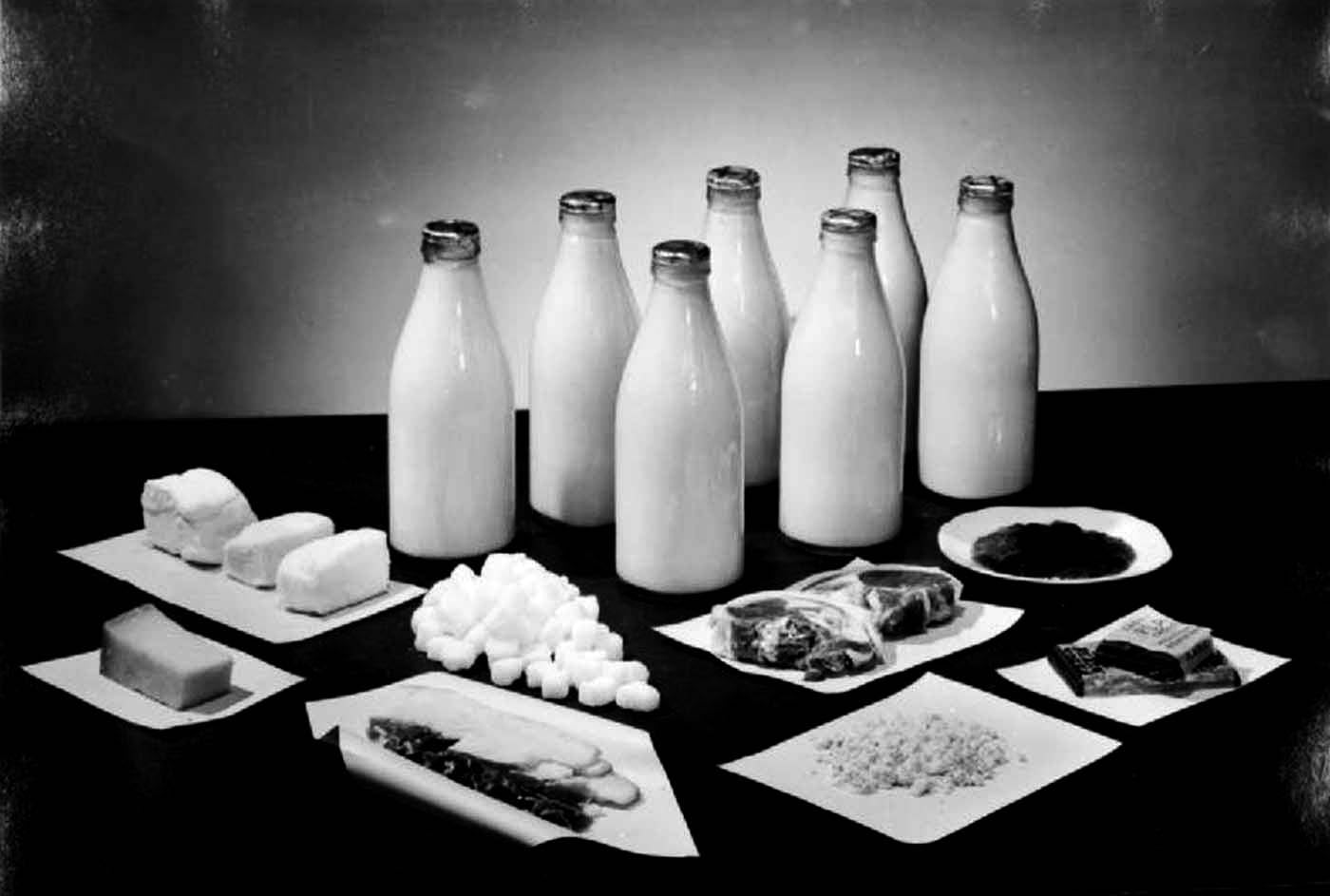
While Britain was victorious, its national debt was a crushing 270% of GDP at the war’s conclusion. It was forced to borrow even more after the war to prevent outright bankruptcy. It took a $3.75 billion loan from the United States with terms so unfavorable that it gave John Maynard Keynes, Britain’s lead negotiator, a nervous breakdown. The loan also forced Britain to open up its imperial markets to the United States, eroding its economic grip over the Commonwealth and its colonies. Sterling, previously the global reserve currency, lost its primacy to the dollar, restricting its ability to borrow and spend abroad.
Britain could no longer afford its empire, and the US had little interest in propping it up. The one exception was the Middle East, where it was expected that Britain would secure Europe’s oil supply. This too proved unsustainable following the Suez Crisis in 1956 and the continued decline of sterling as an internationally valued currency. Britain withdrew “east of Suez” from the late 1960s and hurriedly ended the rest of its imperial commitments as quickly as possible. Britain finally paid off its war debt to Canada and the US in 2006.
The Price of Total War: Germany
Total spend: $270 billion
Spend adjusted for inflation: $5.0 trillion
Pre-War Economy
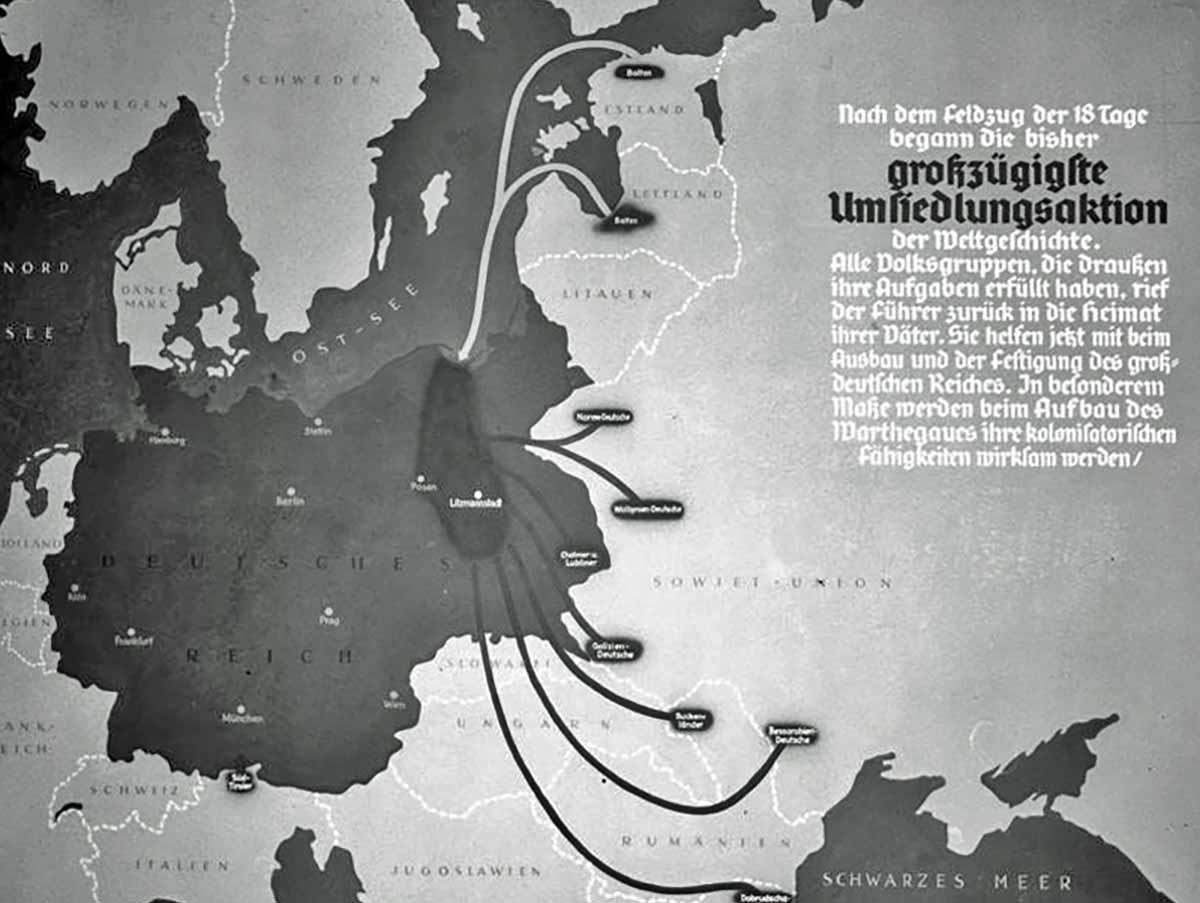
The reasons why Germany set the world on fire in 1939 are well rehearsed. However, there were other geopolitical and strategic components. Hitler’s maniacal dreams of conquest were driven emotionally by his sense of history and racial destiny. But he also described Germany as economically weak because of its lack of raw materials, trading opportunities, and living space (lebensraum). The success of the British blockade in the First World War was the best evidence of this fragility.
Hitler contrasted Germany’s weakness with Britain’s seafaring trading empire and Russia and the United States as the continental giants. Only by securing its own equivalents of the wheatfields of the Midwest and the oil fields of Texas could the German people be safe and secure. In other words, it was America, the affluent tool of world Jewry, rather than what he saw as a weak, sclerotic Judaeo-Bolshevik Soviet state, that was the true driving force of much of Hitler’s decision-making in the 1930s.
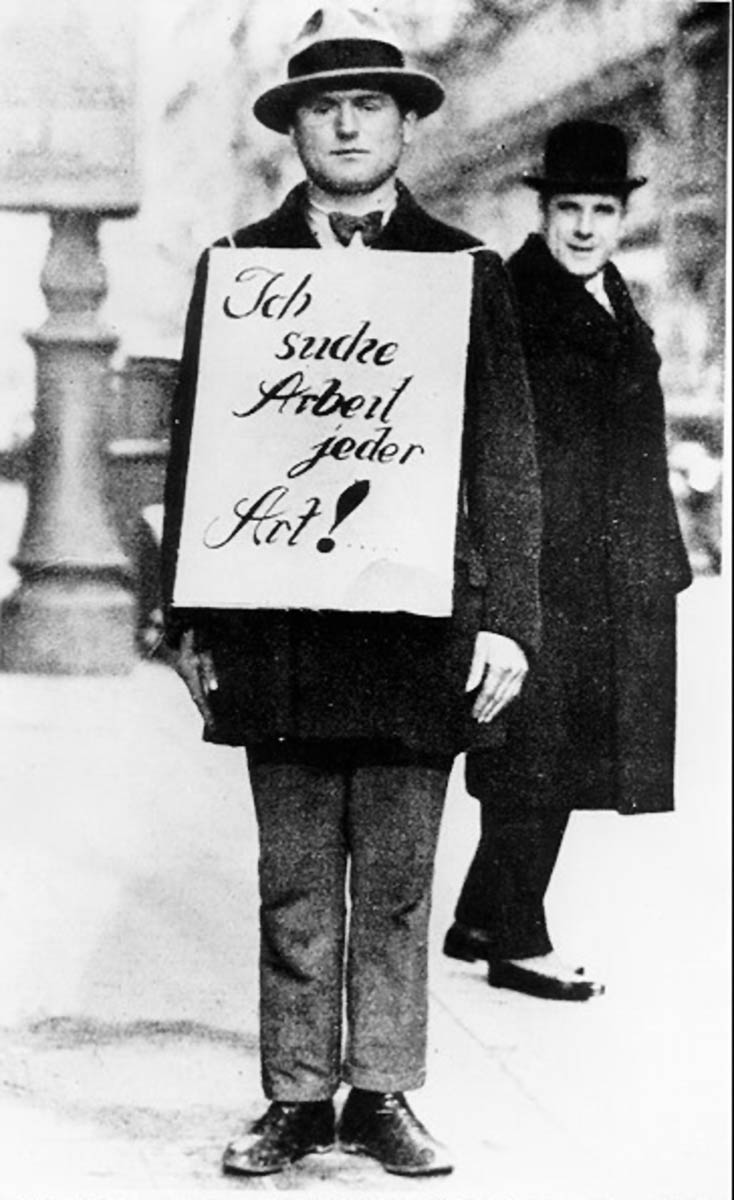
Hitler saw expansion as the solution to Germany’s economic weaknesses. It is a myth created by German propaganda, British anxieties, and the country’s modern strength that Germany was an economic “powerhouse” in the early 20th century. While it had a few industry leaders, it also had fundamental weaknesses. Germany’s per capita income was more like modern-day Iran or South Africa than contemporary Britain. Many of the country’s 65 million people still depended on inefficient peasant agriculture or traditional crafts for their livelihood.
As many countries mechanized, car ownership in Germany (now the heart of Europe’s car industry) lagged behind. Its relative lack of raw materials and inefficient agriculture meant that Germany had to spend a lot on imports, which placed downward pressure on its currency. The Weimar solution was to develop an American-style consumer economy integrated into the global economy. The Nazis believed this was only realistic and sustainable with a land empire of equal scale.
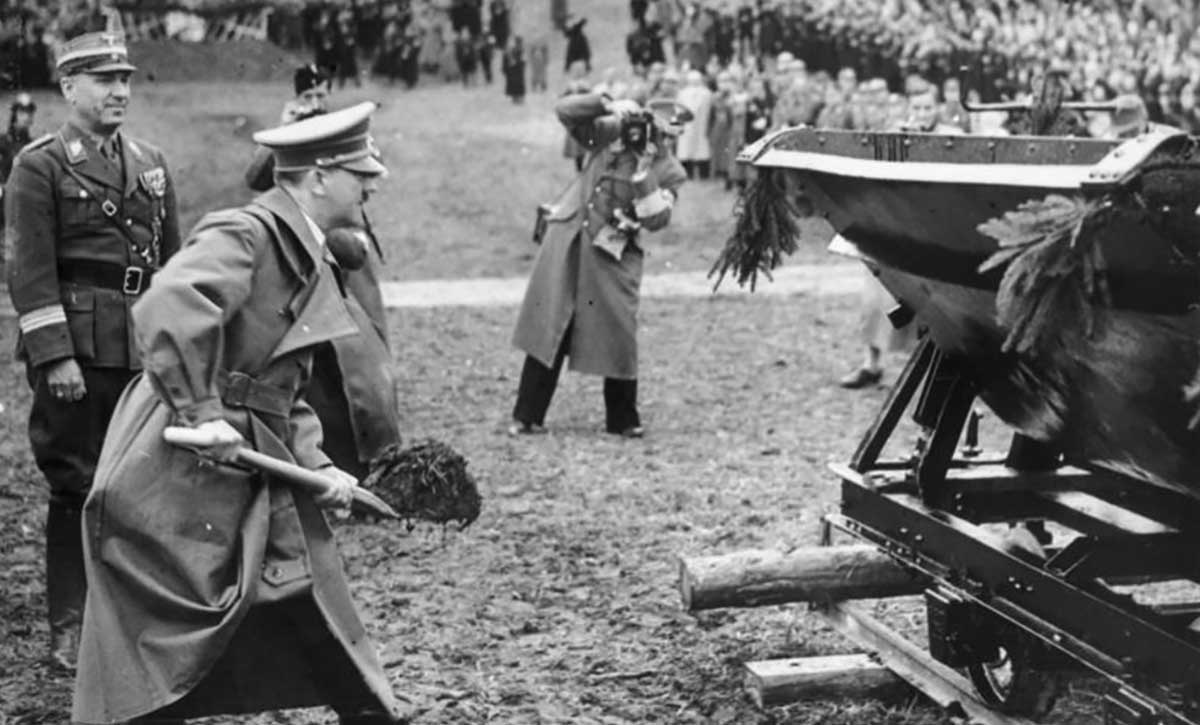
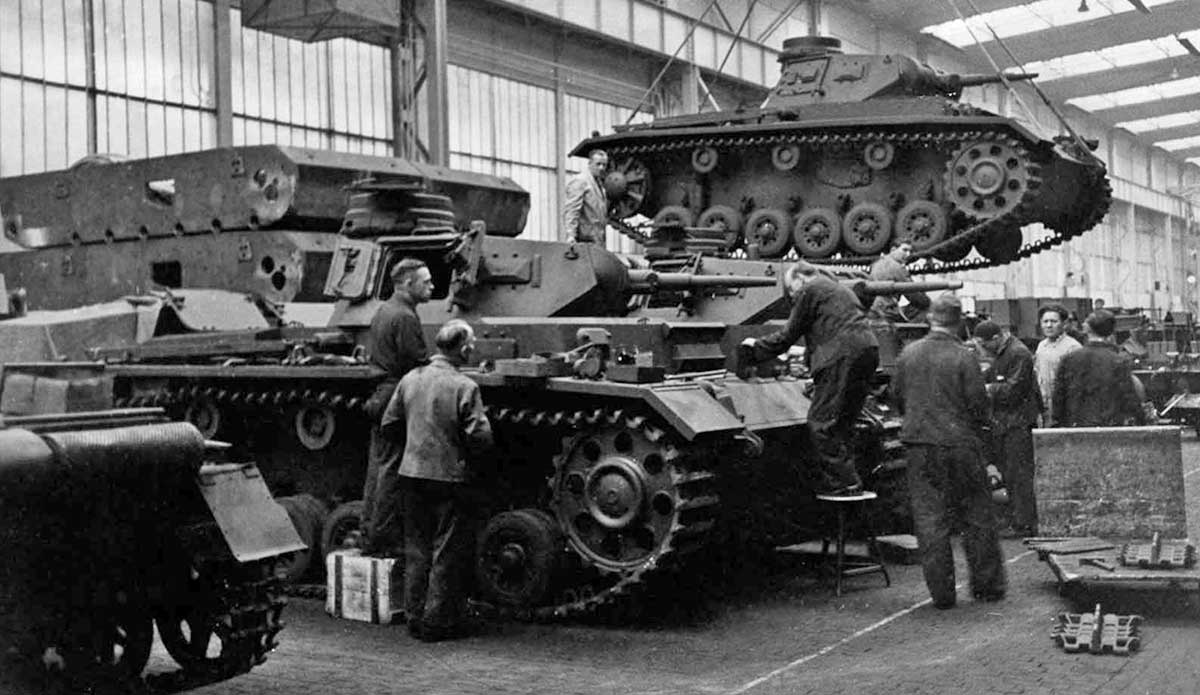
This gave a circular logic to the Nazi economy and war effort. The entire Nazi economy was geared for war from the moment Hitler came to power in 1933. Money was printed or borrowed and pumped into armament production. Military spending rose from 1% of national output to 20% between 1933 and 1938. Even the famous autobahns were conceived not to carry cars but to move tanks and troops.
The issue was that this did not address Germany’s fundamental economic weaknesses. Hitler’s economic and financial plans were dependent on territorial acquisition to provide cheap raw materials, captured treasure, and cheap (or slave) labor. The absence of these elements nearly triggered an economic collapse and the return of hyper-inflation in the mid-1930s. This was averted only by the Anschluss with Austria and the absorption of Czechoslovakia, as well as the appropriation of Jewish assets following Kristallnacht.
Wartime Spending
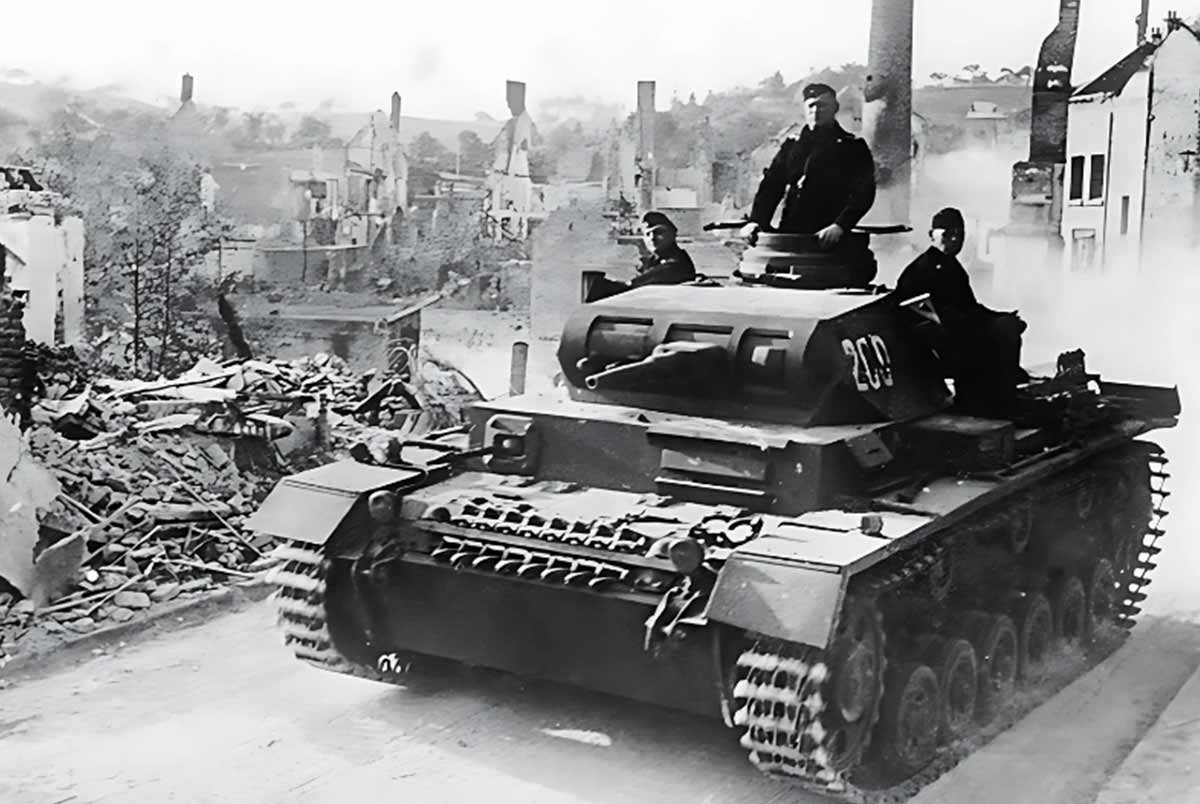
During the war, Germany followed the playbook it had used in the 19th century. In 1914, it tried to force a quick victory to prevent the industrial and logistical advantages of its enemies from being brought to bear. It seized Norway in 1940 to secure its iron ore and then systematically looted France and its other conquered lands of reserves and industrial capacity.
Failing to make peace with or eliminate Britain in the same year began to put strain on German finances, especially as it lacked the lines of credit available to its enemy. Instead, the government raised taxation again, forced occupied countries to provide loans, issued war bonds, and printed money.
The swift conquest of vast stretches of the western Soviet Union helped, as Germany seized foodstuffs, raw materials, armies, and factories. The reversals of 1942, including the battles of the Atlantic, Stalingrad, and El Alamein, changed the picture again. However, Germany was now fighting three industrially capable combatants while also propping up its faltering Italian ally.
Although its main “manpower” focus was on the eastern front, Germany was having to invest huge sums to gird itself for the air war in the west. By July 1943, Anglo-American bombing had already had a devastating impact on German industrial production, forcing it to invest in underground factories staffed with slave labor, run ruthlessly by the SS. The Royal Navy had begun its blockade in 1939, which, as the Nazi empire shrank, proved just as effective as it had in the First World War.
Post-War Financial Consequences
Naturally, defeat had devastating economic consequences for Germany. Its industrial capacity and railways were utterly destroyed. One third of German men born between 1915 and 1924 were dead or missing, and 40% of those born between 1920 and 1925. Around 14 million ethnic Germans poured into the shrunken country from the east, forced out by angry Slav populations, 1.7 million of whom died en route. In Germany, 20% of all apartments had been destroyed, while in some cities the housing stock had been reduced by as much as half.
The country was also forcibly divided, firstly into occupation zones, which quickly coalesced into two rival, communist and democratic, entities. Contrary to popular belief, Germany paid high reparations to the victors, which the Soviets took in part by appropriating 30% of East Germany’s industry, equivalent to 13% of its national income in 1953.
Eventually, Western fear of a communist uprising and the need for a buffer against the Soviets led to the Marshall Plan, the European Coal and Steel Community (the forerunner of the European Union), and the reintegration of West Germany into the European economy. East Germany, however, would remain subject to Soviet domination until 1989. It still lags behind the former West in most economic indices and is now the heartland of the radical Alternative für Deutschland (AfD) political party.
The Cost of Hubris: Japan
Total spend: $56 billion
Spend adjusted for inflation: $1.1 trillion
Pre-War Economy
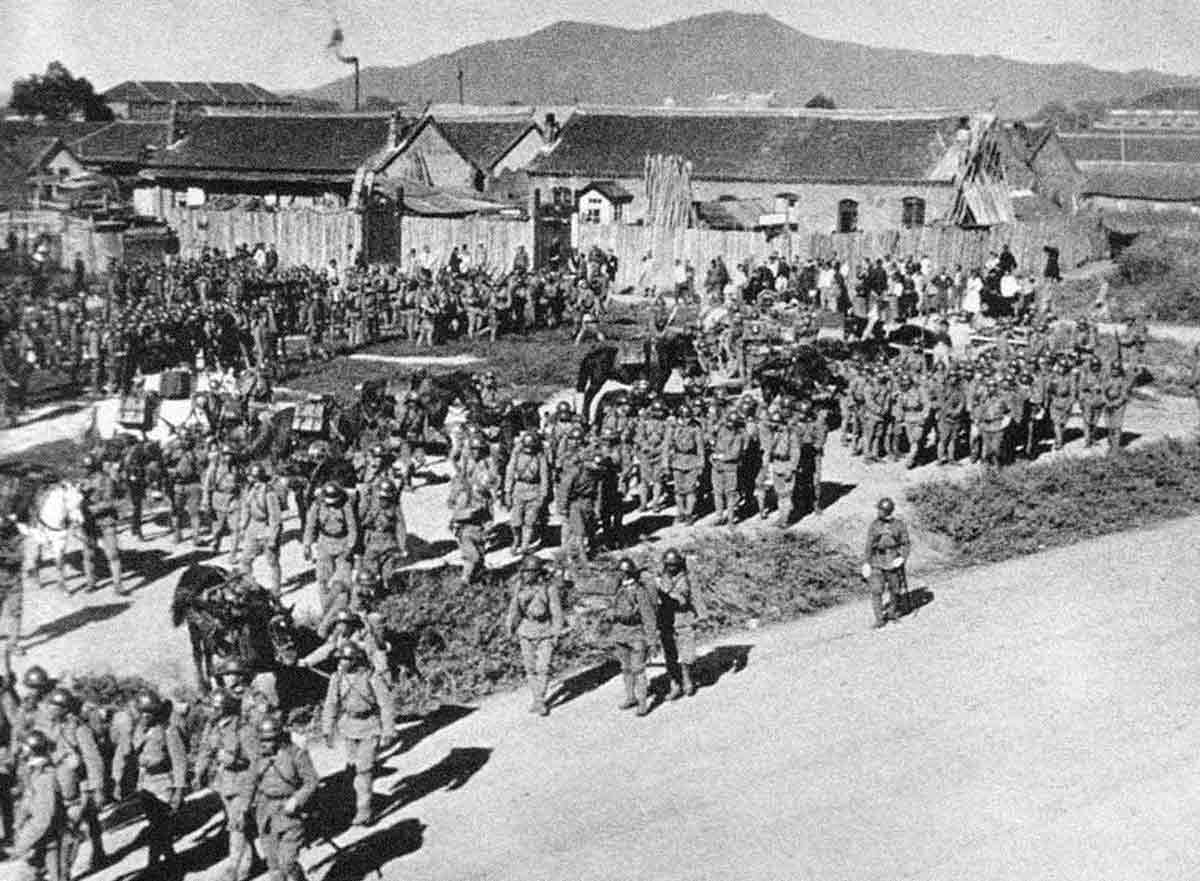
In 1939, Japan had already been preparing for a war for two years, arguably longer. In 1931, it seized Manchuria from the nominal control of the Chinese government. Six years later, it invaded mainland China, committing atrocities that still poison relations between the two countries. Japan had invaded China to enhance its own Great Power status, seize resources, and undermine what it saw as Anglo-American dominance in Asia.
A resource-poor country dependent on importing raw materials and exporting products, Japan had been particularly hurt by the world’s turn to protectionism in the 1920s and 30s. Japan’s economy was already struggling in the wake of local rice harvest failures, a financial crisis, and earthquakes. An increasingly hardline and militaristic government saw colonial acquisition as its only route to securing its independence and power.
With taxes already high, after seizing Manchuria, Japan started issuing domestic bonds. The government encouraged household savings so that banks would have the capital to lend for war spending. As it acquired more territory, it coerced loans from local banks and institutions, taxed new subjects, and exploited local resources. Japan also printed a local currency known as “scrip” to pay for services and resources. Backed by nothing and printed in excessive quantities, it triggered hyperinflation throughout the empire.
The war in China made Japan an international pariah. American public opinion turned violently against the country as news of the atrocities spread. The Roosevelt administration began to squeeze Japan economically, through tariffs and cutting off supplies, trying to force a policy reversal.
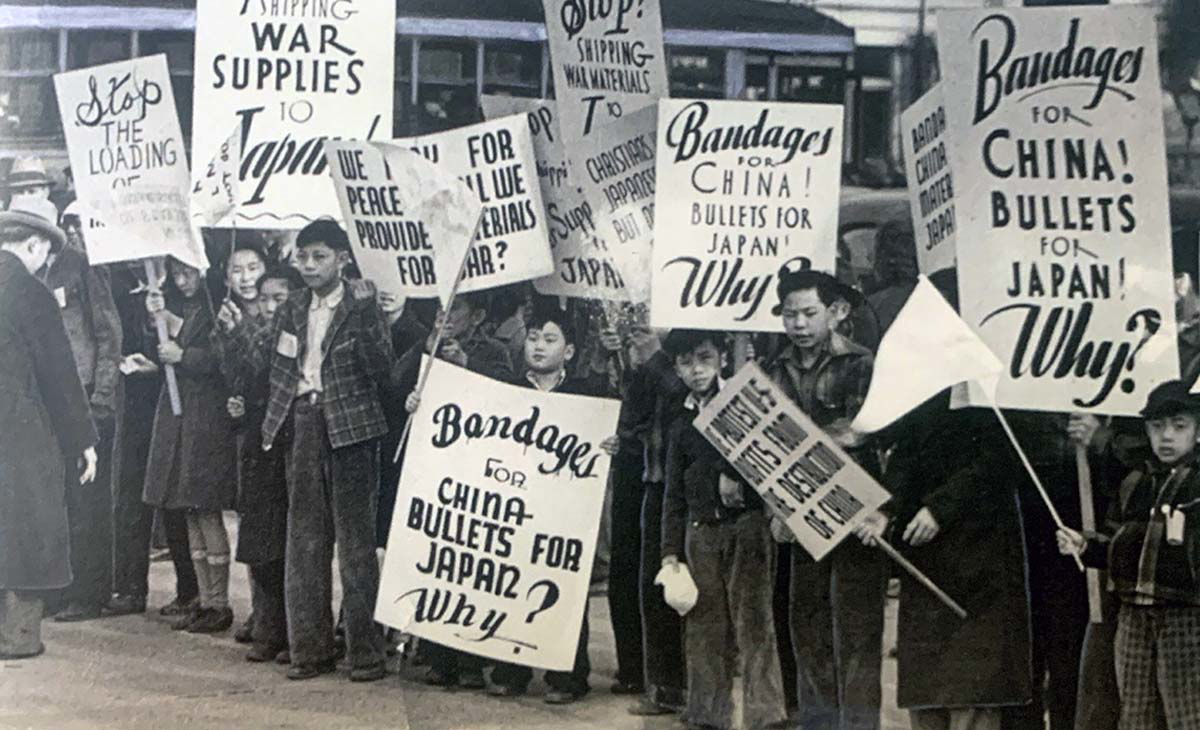
The war also lasted much longer than Japan anticipated. Just like Hitler with the Soviet Union, it believed China would collapse in months, vastly underestimating China. This, combined with the US sanctions and high borrowing underwritten by the Bank of Japan, meant inflation began to rise. Japan was unable to take the off-ramp provided by the American negotiators.
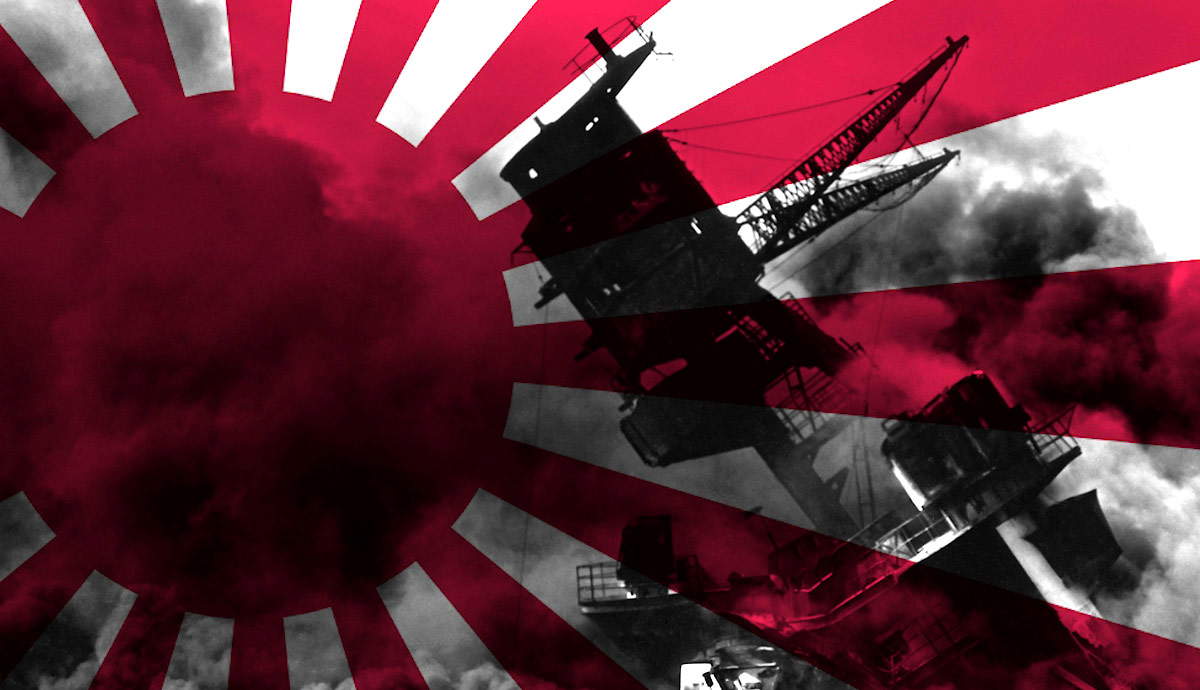
Competition between the arms of the Japanese military created a ratchet effect. It saw its only solution as further acquisition, taking Indochina (Vietnam) from Vichy France in 1940, which further riled the Americans. Limitations of key resources in 1940 were followed by asset freezes and a devastating US oil embargo in 1941, enacted in direct response to Japan’s military expansion into southern French Indochina. Desperate, Japan decided on a preemptive strike on the US and attacks to seize resource-rich territories in the British and American spheres of influence in the Pacific.
Wartime Spending
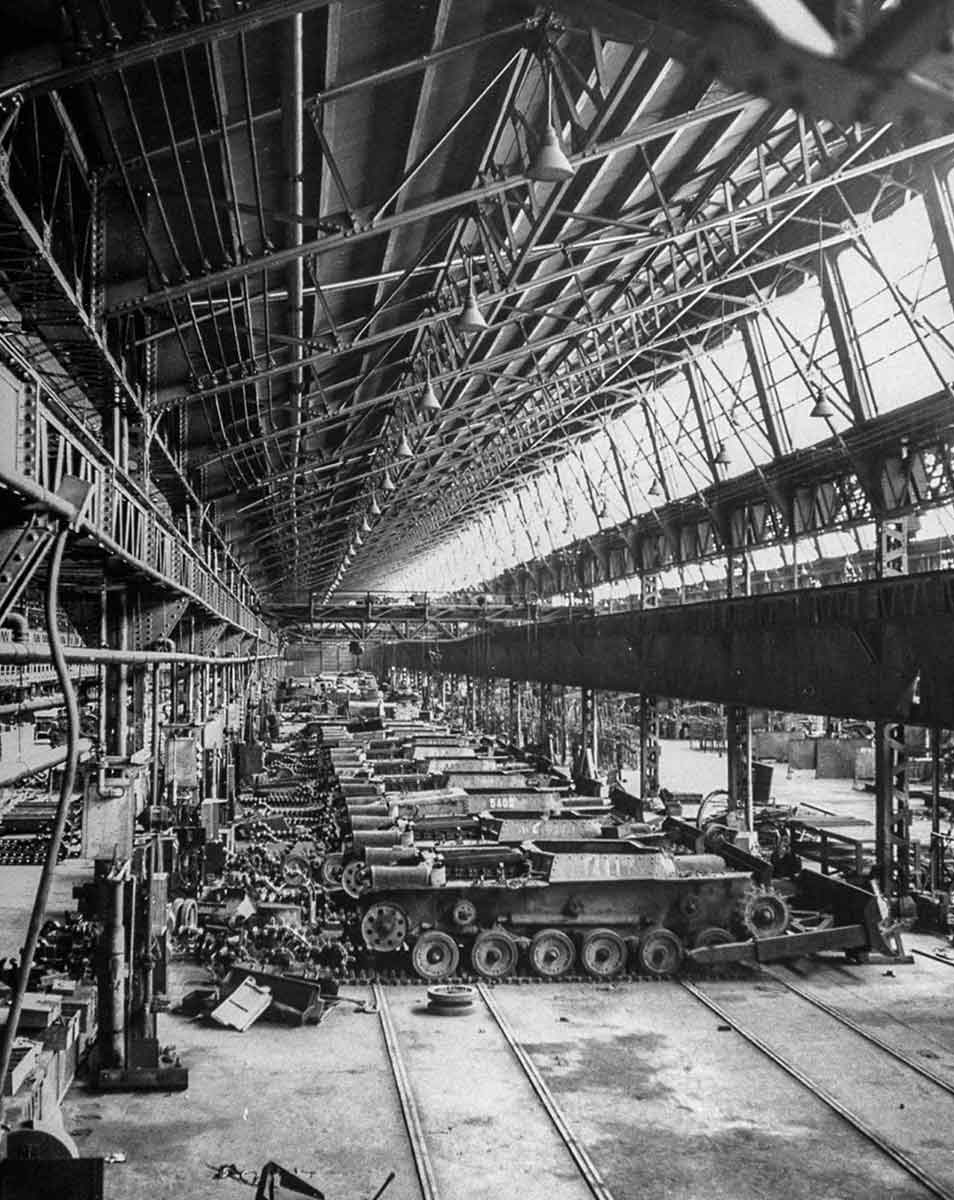
As Japan had underestimated China’s strength, it did the same with the US. Japan initially made rapid gains in Southeast Asia, securing resource-rich British Malaya and the Dutch East Indies and marching on British Burma. But it lacked the capability and time to leverage these resources.
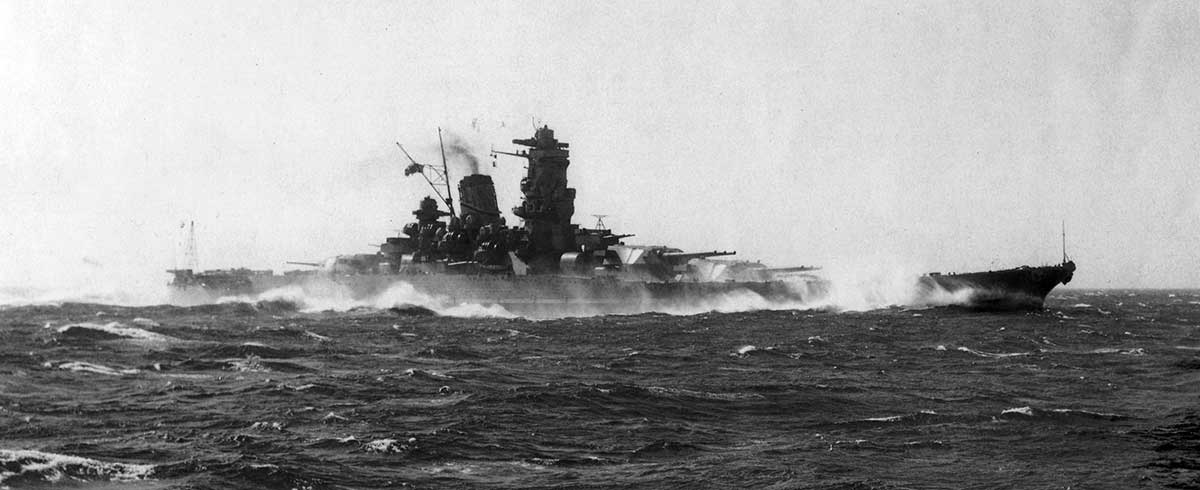
Japan’s failure to knock out the US carriers at Pearl Harbor is often cited as one of the key reasons for its ultimate defeat. But even a successful attack would only have delayed defeat. Like Germany, Japan faced two powers, Britain and America, with vastly superior operational, financial, and economic advantages. As its conquests began to be rolled back, Japan’s economic situation worsened.
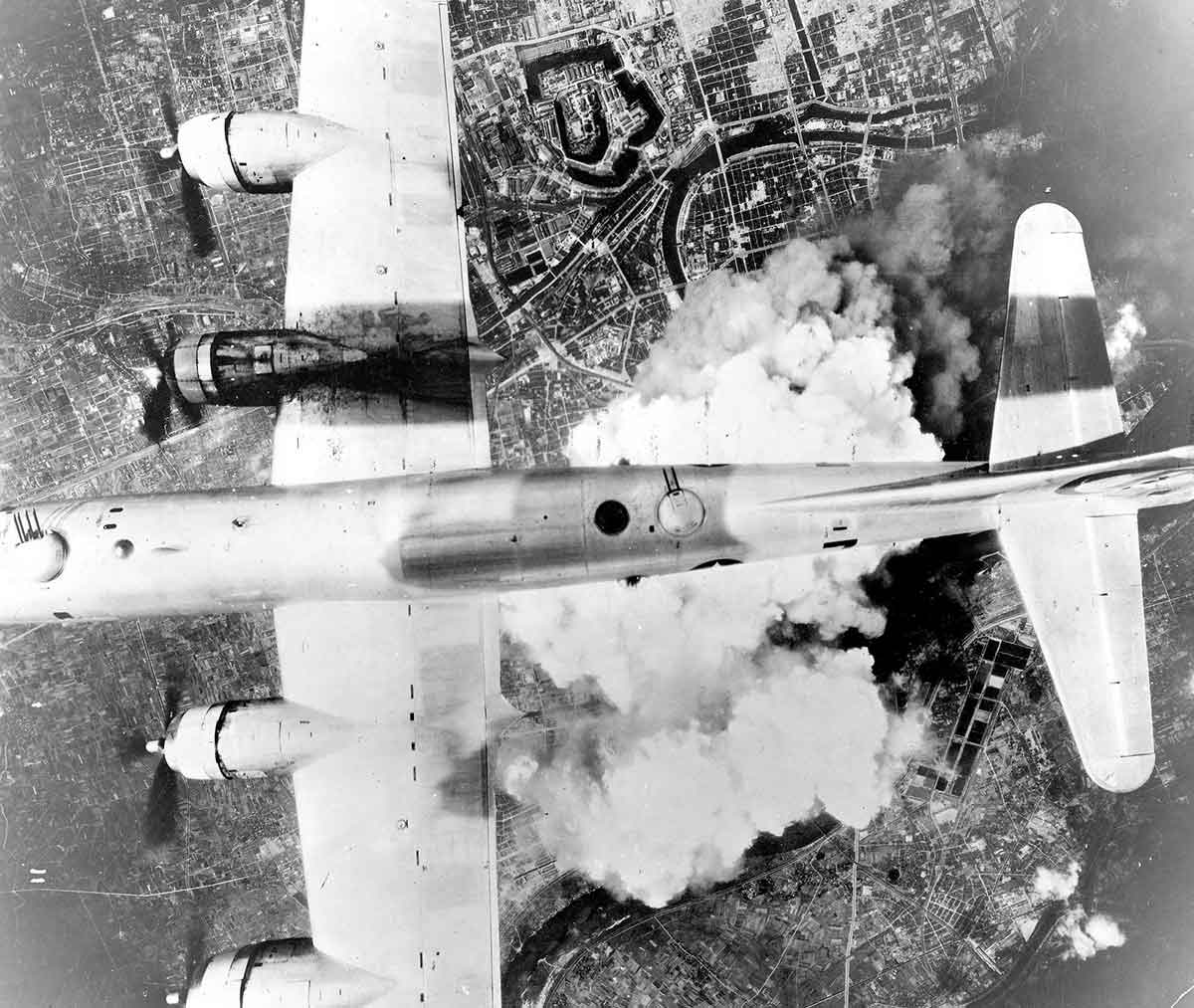
The refusal of Japanese troops to surrender even against overwhelming odds meant that they soon faced a manpower shortage. It had to import slave labor (usually under euphemisms) from its colonies to staff its factories. The Allied navies annihilated the Japanese merchant fleet, starving Japanese factories of raw materials. Once the Mariana Islands were taken in 1944, US bombs fell on the factories themselves. Inflation turned into hyperinflation, and rationing tightened. In the end, of course, it was atomic weapons that finished Japan, but it was already financially and economically broken.
Post-War Financial Consequences
Like Germany, Japan ironically benefited economically from its defeat. As competition with communism intensified, the US had an interest in developing its former enemies economically to prevent them from falling into the Soviet sphere of influence. Japanese industry recovered relatively quickly, benefiting from being able to levy its own tariffs while the US deliberately kept its tariffs with Japan low. By the mid-1960s, Japan had become one of the most industrially advanced and successful economies on earth.
Blood and Iron: The Soviet Union
Total spend: $192 billion
Spend adjusted for inflation: $3.5 trillion
Pre-War Economy
The Soviet Union’s military expenditure during the Second World War is difficult to track due to the secretive nature of its communist system. We do know that the USSR was fairly strong financially and economically in the late 1930s. Its economic system meant that it was better insulated from the Wall Street Crash and the Great Depression than others. It was still industrializing through most of the interwar period, aggressively so under the auspices of Stalin’s infamous multi-year plans.
Wartime Spending
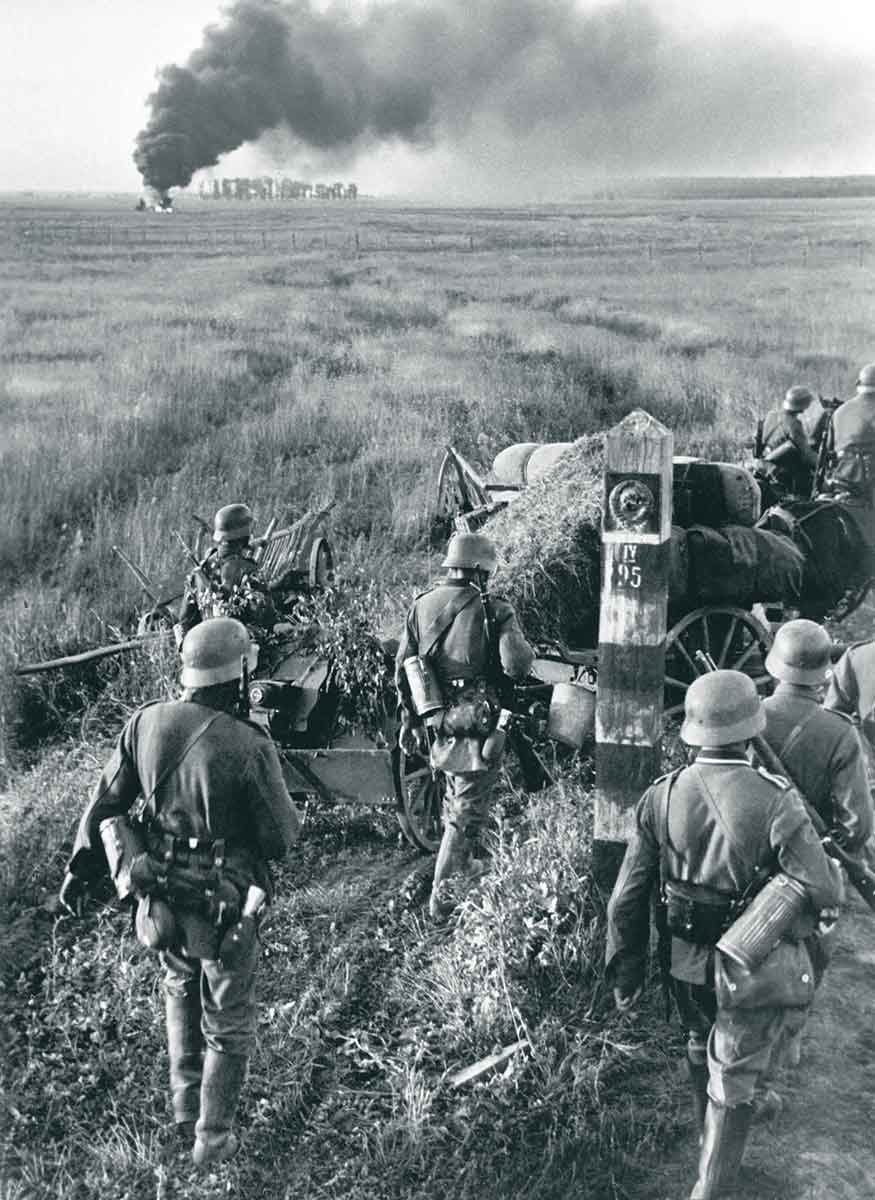
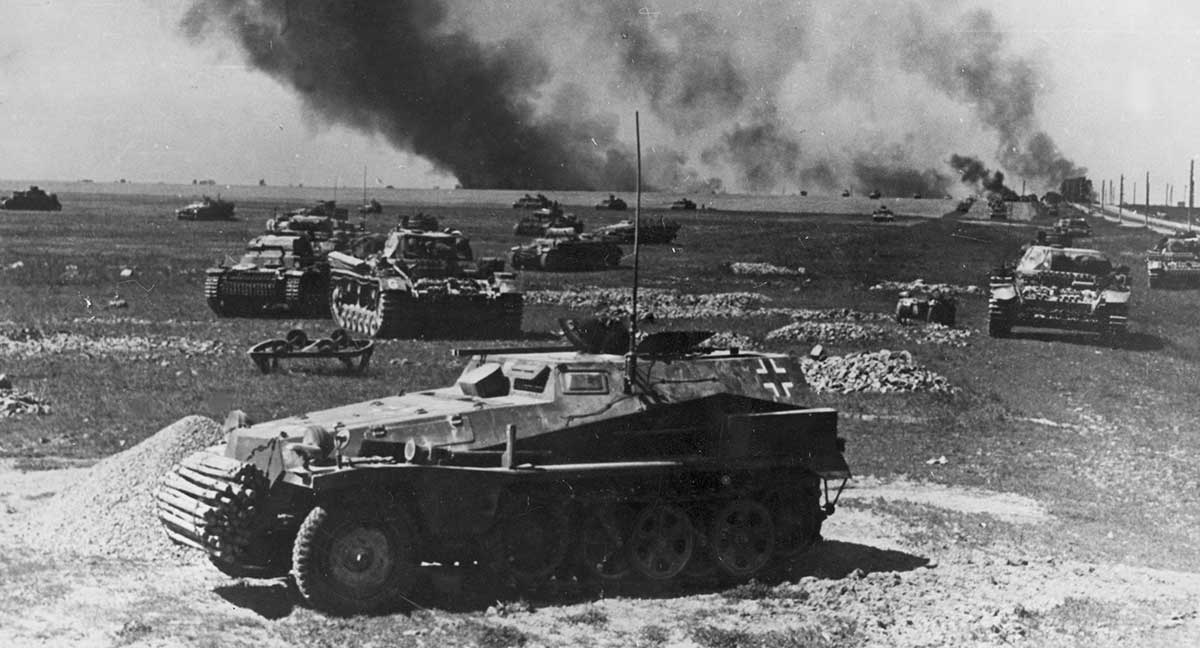
Once Operation Barbarossa began, the main problem facing the Soviet Union was the loss of fertile land, mineral resources, and up to 30% of its pre-war capital stock. Germany quickly seized vast stretches of the Union’s most economically productive areas, severely hampering potential production. The country’s GDP dropped 34% between 1940 and 1942.
The Soviets were able to move large parts of their industry beyond the reach of the Wehrmacht, shifting 1,500 factories to the Urals, Siberia, and Central Asia. It redirected the majority of its economy to the war effort, with 60% of national income devoted to military production. The Soviets’ ground forces, at their peak, were greater than any of the other Allies.
The Soviets benefited first from British aid and later from Lend-Lease, receiving $11 billion worth of aid from the US. Its controlled economy meant it borrowed little, directing resources by directive and coercion. It increased taxes-in-kind, such as forced grain requisitions, and printed money, suppressing inflation through tight rationing and price controls.
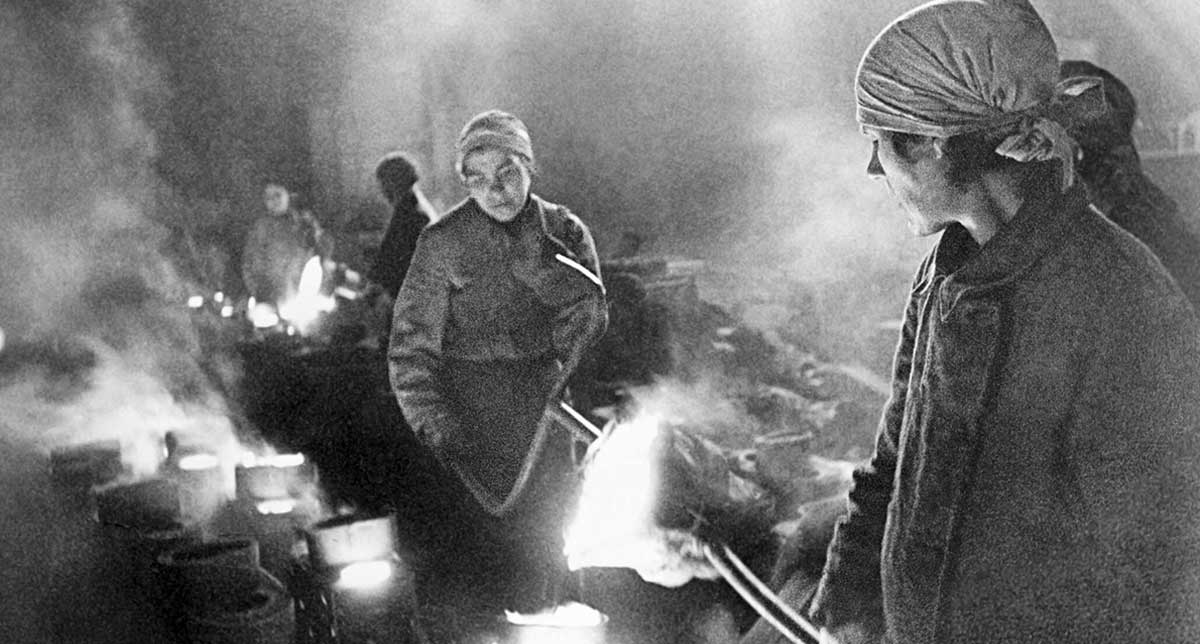
The Soviet Union was able to scale up production impressively despite the setbacks of 1941. It avoided the German problem of over-engineering by, like the US, focusing on ease of manufacturing and use. This meant, for example, that its tanks, such as the famous T-34, while not as impressive as Nazi tanks, could be produced quickly and used easily with little training.
Unlike the US and Britain, there was a strong element of coercion to Soviet production. Minerals and resources were taken with minimal payment, or none at all. Labor laws were tightened to force extreme hours, and the Gulag system was organized into a source of slave labor. Food, the supply of which was heavily impacted by the loss of Ukraine, was prioritized for ground forces, and many workers were forced into military production. This meant that rations for industrial workers were barely above subsistence. The consequence of all this was that although Soviet production ramped up quickly following the launch of Barbarossa, it began to tail off from late 1944. Fortunately, by then, the war was effectively won.
Post-War Financial Consequences
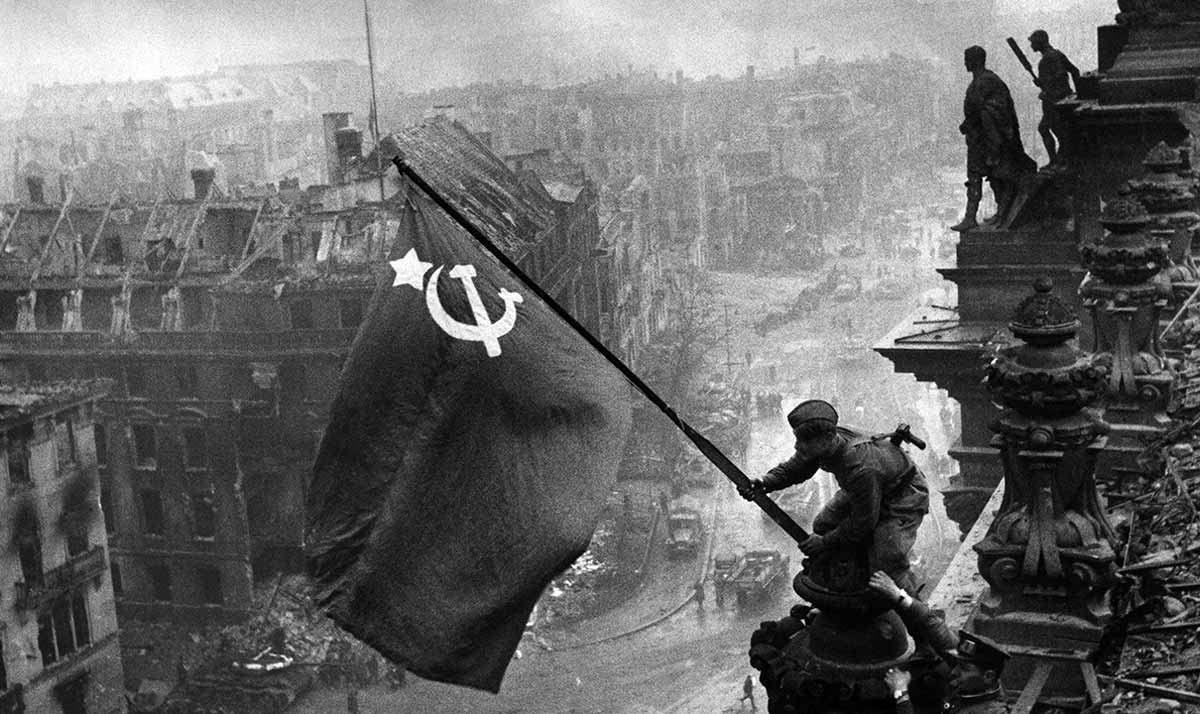
Although the war gave the USSR a new empire in eastern and central Europe, it still had severe economic problems to address. Again, it relied on coercion. It reformed its currency in 1947, which solved several issues but wiped out the wealth of many of its citizens. Bread and potato rations were further tightened as agricultural production struggled to recover from scorched-earth policies and labor appropriation. Millions of prisoners of war were mobilized as slave labor to assist with reconstruction.
The Soviets stripped their former enemies’ assets. Factories, machinery, railway infrastructure, and power stations were removed from Soviet-occupied territory and moved into the Union proper as forced reparations. Some value these acquisitions at $10 billion. Gold stored in the occupied territories was also removed to Moscow. It also embedded itself economically into its new sphere of influence, for example, seizing 60% of East German industry under the control of Soviet companies.
The Soviet Union was indeed a military and economic superpower by the end of the war. However, the economic weaknesses of its system meant that it spent far more of its national income on the military than its capitalist rivals, particularly as the nuclear arms race gathered pace in the 1950s. The Soviet economy, including that of its satellites, remained skewed towards military production, constraining the development of a consumer economy, ultimately limiting its potential growth. Its mineral wealth, including oil production, papered over this fundamental problem. As oil prices dropped in the 1980s, this would no longer prove sustainable.
The War That Reset the World
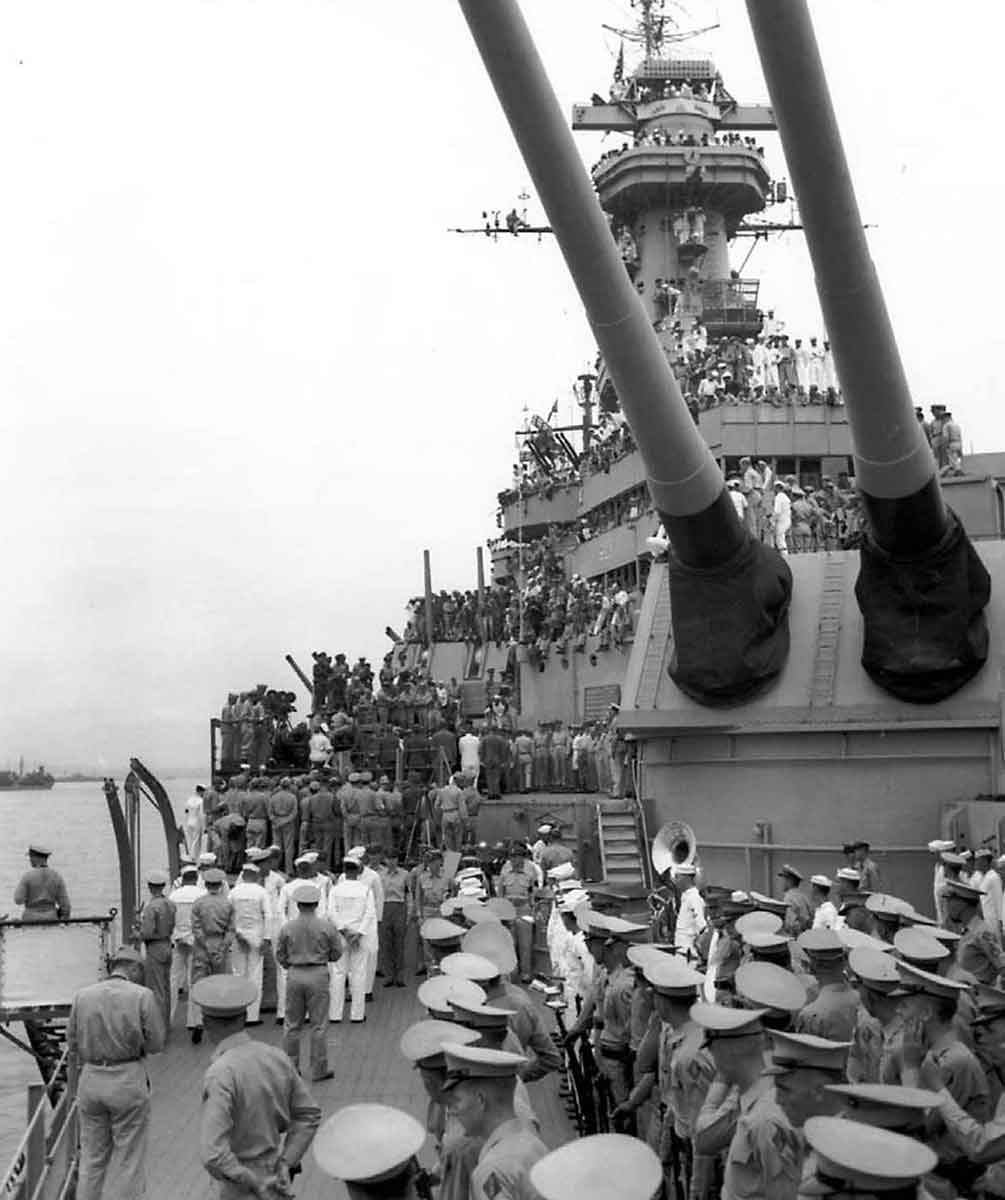
Following the war, the world wanted to address the economic problems that led to the war, principally the systems that led to the Great Depression and the rise of protectionism. The belief was that economic cooperation would enhance financial stability and reduce national competition.
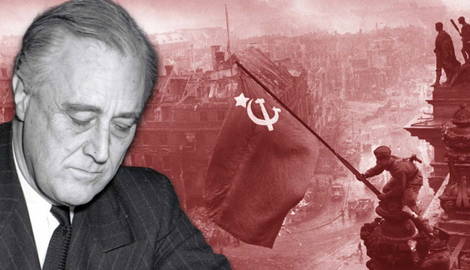
Change was facilitated by the US, using its financial leverage over its Allies and military dominance over the defeated. The Bretton Woods Conference in 1944 saw international currencies fixed to the dollar, officially replacing sterling as the world’s reserve currency. The International Monetary Fund (IMF) was established to lend dollars to nations facing financial issues. The World Bank was created to rebuild the economies of Western Europe and Japan, with American money, to ensure markets for its goods and prevent the spread of communism.
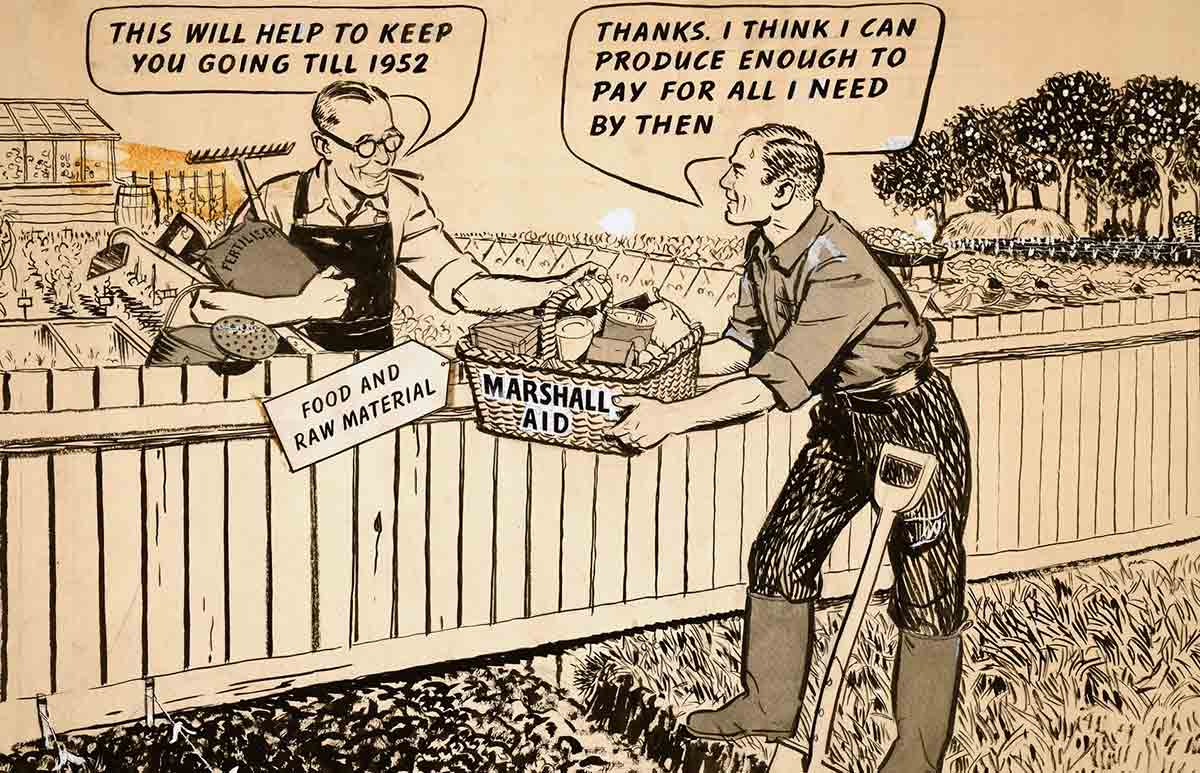
Marshall Aid saw the equivalent of $140 billion in modern US dollars spent to aid reconstruction in Western Europe. The 1947 General Agreement on Tariffs and Trade (GATT) saw global tariff cuts and, crucially, let other countries impose higher duties on US goods to rebuild industry and sell to the American market. The US was confident that its robust economy could cope and would benefit in the long run. Diplomatic agreements to share resources in Europe led to the European Coal and Steel Community in 1951, the predecessor of today’s European Union.
Arguably, this economic restructuring facilitated peace in the West for decades and eventual victory in the Cold War. But cracks began to show in the 1970s when a glut of dollars overseas caused by US spending on the Vietnam War, combined with oil price pressures, saw Nixon unpeg the dollar from the gold standard and the collapse of Bretton Woods and fixed currencies. This was the start of the move to the international economy we see in the world today.
Sources
- Edgerton, D. (2011) Britain’s War Machine: Weapons, Resources and Experts in the Second World War (London)
- Ferguson, N. (2006) The War of the World: History’s Age of Hatred (London)
- Harrison, M. (2000) The Economics of World War II: Six Great Powers in International Comparison (Cambridge)
- Herman, A. (2013) Freedom’s Forge: How American Business Produced Victory in World War II (New York)
- Tooze, A. (2014) The Deluge: The Great War, America and the Remaking of the Global Order, 1916–1931 (London)
- Tooze, A. (2006) The Wages of Destruction: The Making and Breaking of the Nazi Economy (London)