
The urge to expand into new territory and dominate neighbors is one that we can see repeatedly throughout history. Over the millennia, countless empires have risen and fallen. Some reached continent-spanning status, and while they may feel like a distance memory, their legacy have left their mark on things such as territorial borders and the languages we speak today. These are seven of the largest empires that have existed throughout history.
| Empire (Dates) | Peak Size (sq mi) |
Territories Covered
|
| British Empire (1583–1997) | ~13.7 million |
North America (Canada, 13 Colonies), Indian Subcontinent, Australia, New Zealand, vast swathes of Africa, Middle East, Hong Kong
|
| Mongol Empire (1206–1368) | ~9.3 million |
China, Korea, Central Asia, Russia, Eastern Europe, Middle East (Persia, Iraq)
|
| Russian Empire (1721–1917) | ~8.8 million |
Russia, Ukraine, Belarus, Baltics, Finland, Central Asia, Caucasus, Alaska (until 1867)
|
| Qing Dynasty (1644–1912) | ~5.7 million |
Modern China, Taiwan, Mongolia, Manchuria, Tibet, Xinjiang, parts of Russian Far East and Central Asia
|
| Spanish Empire (1492–1976) | ~5.3 million |
South & Central America, Mexico, Southwestern US, Caribbean, Philippines, Equatorial Guinea, Western Sahara
|
| French Colonial Empire (1534–1980) | ~4.4 million |
North & West Africa (Algeria, Morocco, Senegal), Indochina (Vietnam, Laos, Cambodia), French Guiana, Caribbean, Pacific Islands
|
| Umayyad Caliphate (661–750 AD) | ~4.3 million |
Middle East (Levant, Mesopotamia, Arabia, Persia), North Africa, Iberian Peninsula (Spain/Portugal), parts of Central and South Asia
|
1. The British Empire (1583-1997) 13.71 Million Square Miles
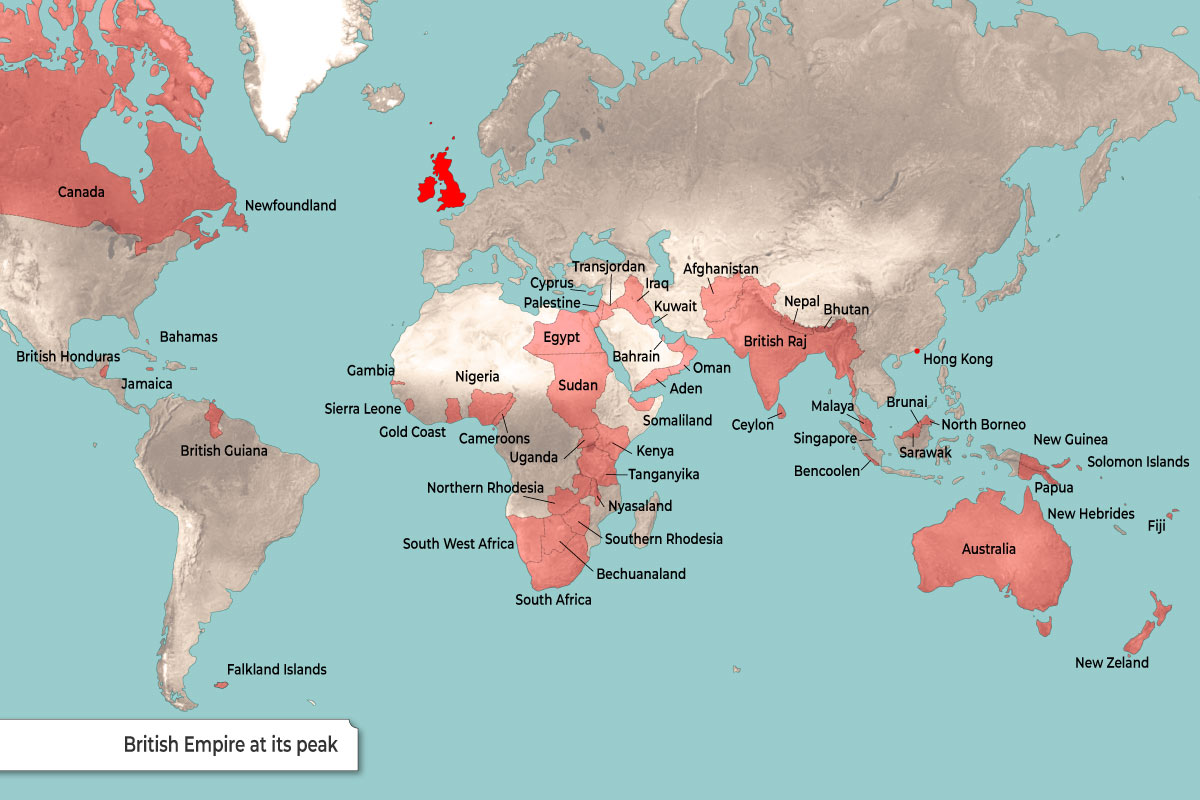
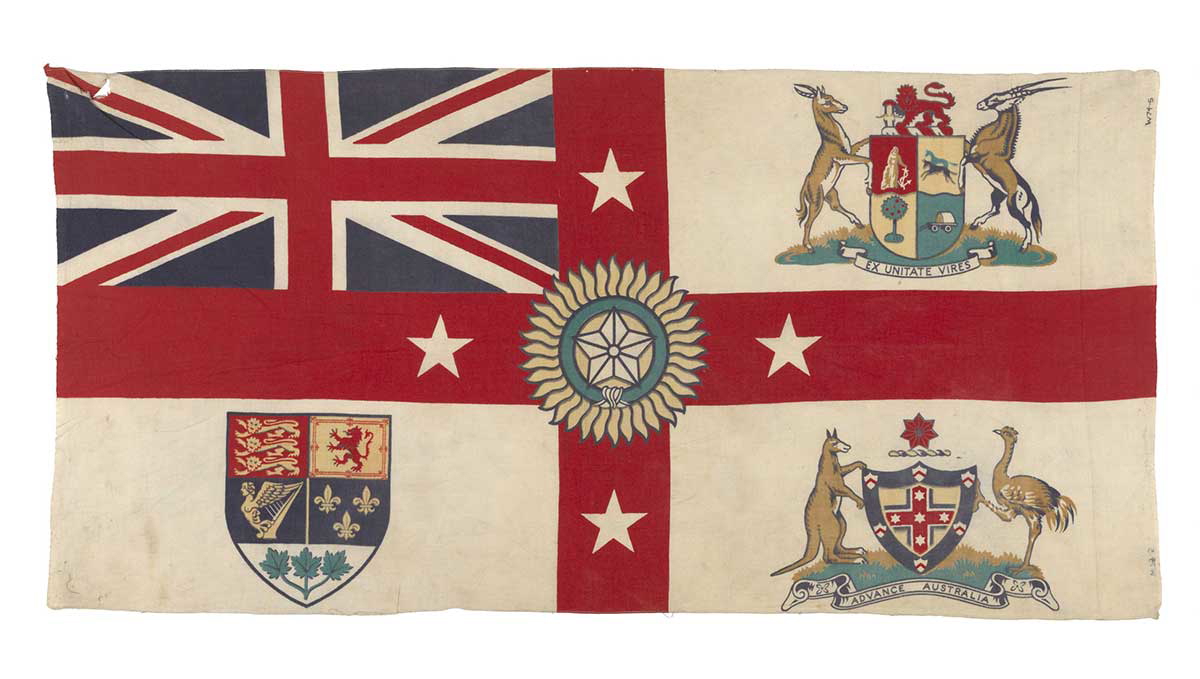
It was widely quoted that “the sun never sets on the British Empire,” and this was for good reason. The British Empire at its height spanned continents and included so many ocean territories that at any point in time during the day, there was always sunlight somewhere over which the British flag was flying.
At its zenith in 1920, the British Empire covered 13.71 million square miles (35.5 million square kilometers), which accounted for just under 24% of the world’s land surface. In North America, it owned the northern half of the continent (what is now Canada), as well as various islands in the Caribbean. In South America, there was British Guiana, and in Central America, Belize, while in Africa, much of the continent from the Cape of Good Hope to Cairo was under the command of the British.
Australia and New Zealand formed part of the empire, as well as significant areas in the Middle East. The “Jewel in the Crown” of the British Empire was India, which, before partition, covered what is now India, Pakistan, and Bangladesh. It was the most populous and valuable colony of the British Empire.
At the center of it all were the British Isles, tiny specks of land compared to the vast territories over which they held dominion.
2. The Mongol Empire (1306-1368) 9.3 Million Square Miles
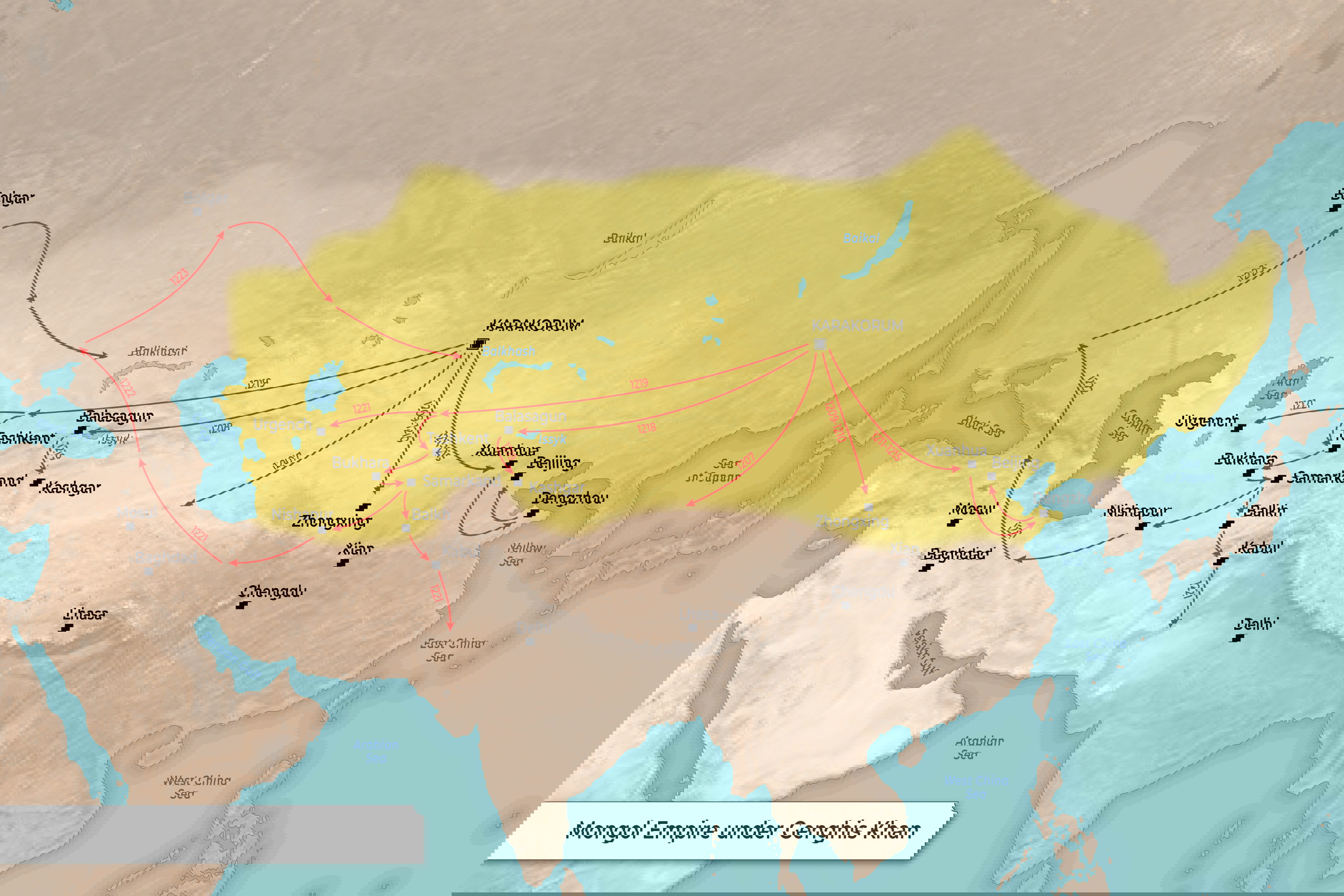
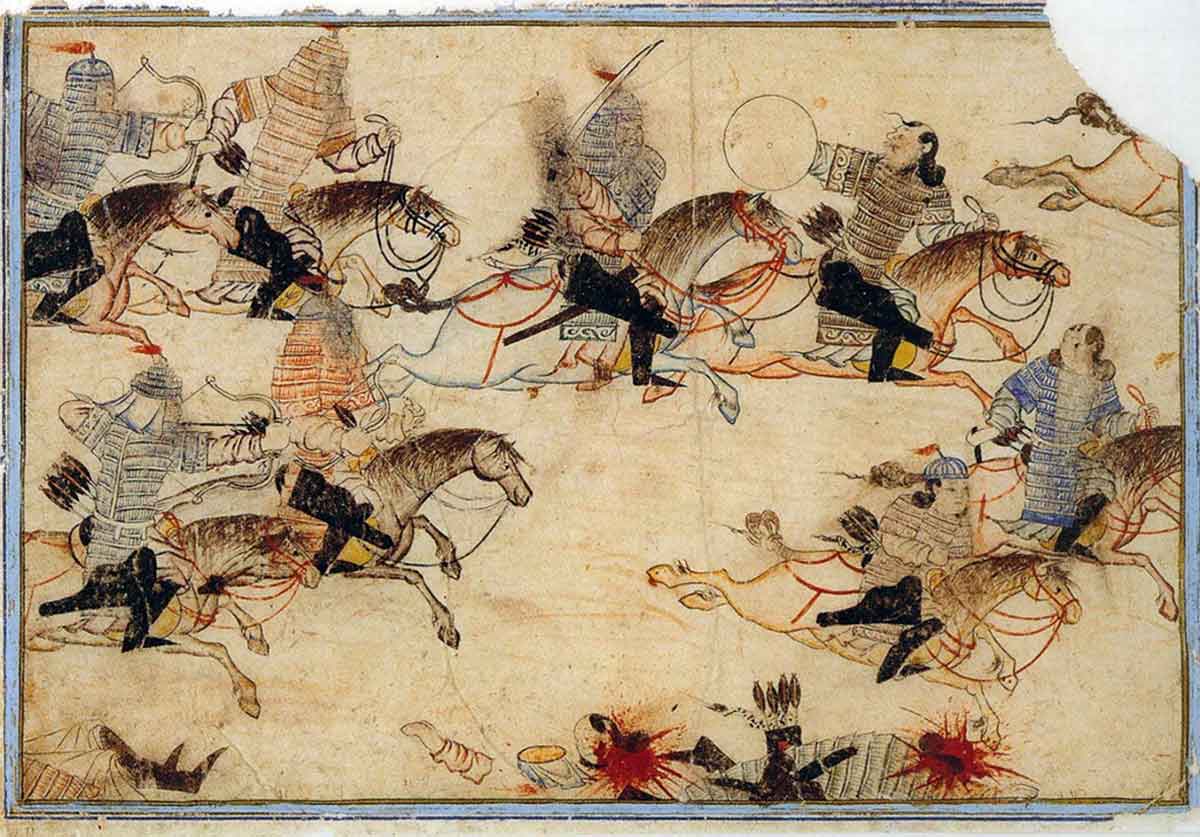
From the steppes of Mongolia, horse warriors rode out, establishing the Mongol Empire in the early 13th century. They conquered all before them, laying waste to entire nations to become the largest empire the world had ever known to that point. By the end of the 13th century, the empire stretched from the Pacific in the east to the Danube in the west, and the Persian Gulf in the south.
It was the largest contiguous land empire in history, and covered 9.27 million square miles (24 million square kilometers), accounting for over 16% of the world’s land surface. With a population of around 110 million, it was home to 25% of the world’s population.
Of major importance was the conquest of China and the establishment of the Mongol-led Yuan Dynasty, which began in 1271 and ruled over China from 1279 to 1368.
After the death of Kublai Khan in 1294, the Mongol empire went into decline and fragmented. The longest surviving successor, the Golden Horde, lasted well into the 15th century when it, too, fragmented into smaller states.
3. The Russian Empire (1721-1917) 8.8 Million Square Miles
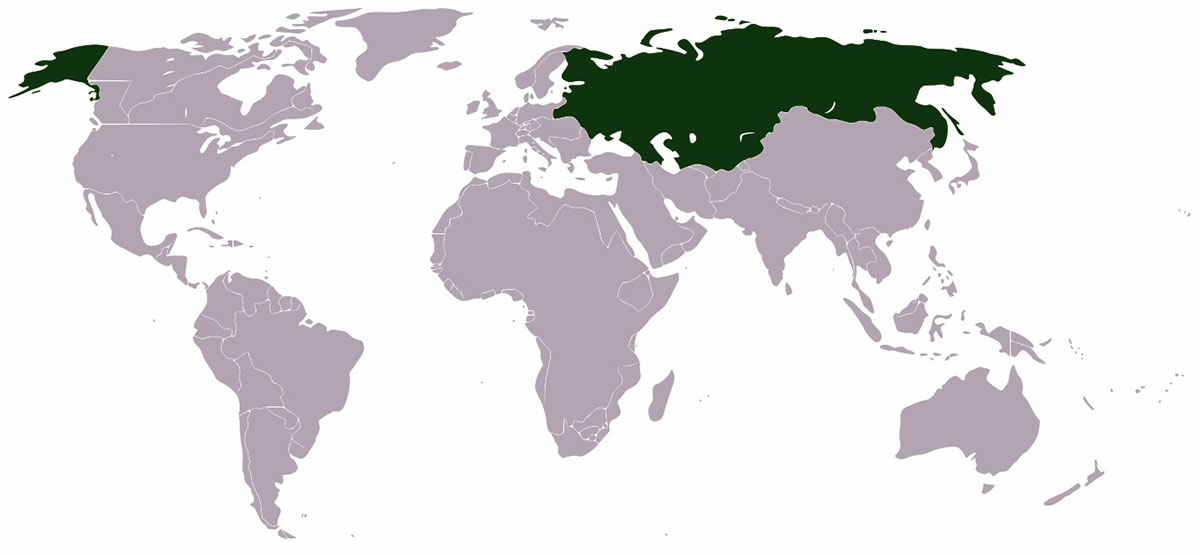
In the second half of the 19th century, the Russian Empire grew to become the third-largest empire of all time. By 1866, it stretched from Finland in the northwest to Tashkent in the south, all the way to the Pacific in the east, and beyond. In 1867, the Tsar sold Alaska to the Americans for $7.2 million, greatly reducing the empire’s size.
At its height, the Russian Empire covered 8.8 million square miles (22.8 million square kilometers), which represents more than 15% of the world’s land area. Imperial expansion stretched well beyond Eurasia. In 1812, Russia established Fort Ross in Northern California (just 60 miles north of San Francisco) to grow wheat for its settlements in Alaska. Between 1815 and 1817, Russian agents even built three forts on the Hawaiian island of Kauai in an attempt to annex the territory.
Until Tsar Alexander II emancipated the serfs in 1861, roughly one-third of the population were peasants bound to the land. Landlords bought, sold, and gambled away serf families, measuring their personal net worth not in currency, but in the number of male “souls” they owned. The emancipation of serfs was a move to modernize the empire. It was also an attempt to modernize that saw Tsar Peter the Great ban traditional robes and long facial hair.
Although reduced over the decades that followed, Russia continued to be the world’s biggest country. It was the biggest member (by far) of the Soviet Union, and even after the collapse and breakup of the communist state, Russia is the biggest country in the world, covering 6.6 million square miles (17.1 million square kilometers), which is almost twice as big as the second biggest country, Canada.
4. The Qing Dynasty (1644-1912) 5.68 Million Square Miles
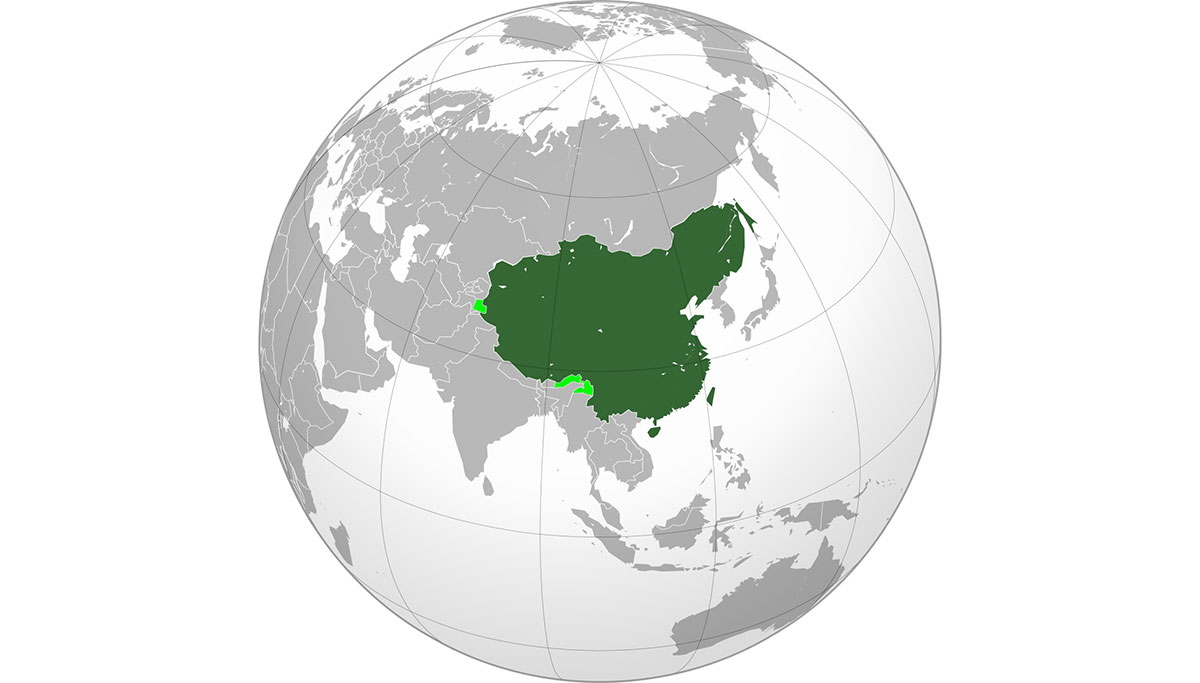
China’s Qing Dynasty represents world history’s fourth biggest empire, lasting from 1644 to 1911/12. It was the last of the imperial dynasties and by the mid-19th century, had a population of well over 400 million, making it the most populous country at the time.
Civil servants were chosen through brutal Confucian examinations (Keju). Candidates were locked inside row upon row of open-air, closet-sized brick cells for up to three days at a time to eat, sleep, and write essays. Candidates brought their own chamber pots and coal stoves. Many died during the testing process.
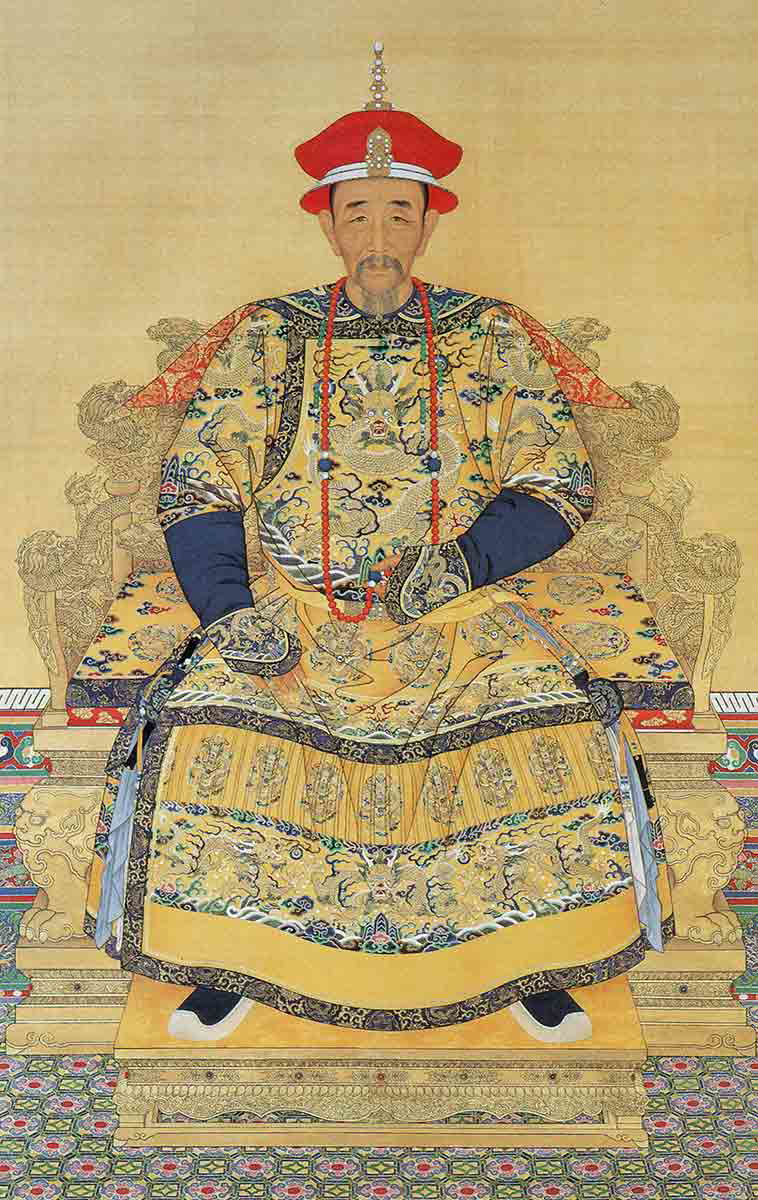
At its height around 1790, the Qing Dynasty controlled 5.68 million square miles (14.7 million square kilometers), representing 10% of the world’s land surface. It stretched from the Sea of Japan in the east to the Pamir mountains in Central Asia, and from Mongolia to the South China Sea.
The 19th century was a tumultuous and devastating time for the Qing, as the empire dealt with internal and external pressures in the forms of revolts, famines, and wars. There were land disputes, ethnic tensions, disease, and economic strain that reduced the power of the Qing authority, eventually leading to the Xinhai Revolution, which saw the Xuantong Emperor, 6-year-old Puyi, removed from the throne, ending the Qing Dynasty as well as 2,000 years of imperial rule on February 12, 1912.
5. The Spanish Empire (1492-1898) 5.3 Million Square Miles
The fifth-largest empire in history is represented by the Spanish, who controlled vast territories in the Americas, as well as the Philippines. In 1492, the Reconquista was completed, and later that year, Christopher Columbus, sailing for the Spanish monarchy, discovered the New World, providing a huge opportunity for Spain to expand.
Within decades, the Spanish conquistadors had conquered the Aztecs and the Incas, claiming vast portions of the Americas and establishing Spanish control over the New World. Although the empire experienced its golden age in the mid to late 16th century, its territorial height came later.
Over the decades that followed, claimed territories stretched from the present US-Canada border, all the way to Tierra del Fuego, the southern tip of South America, as well as Cuba and half of Hispaniola in the Caribbean. The late 18th century represented the territorial height of the Spanish Empire, but it was soon followed by a steep decline as independence movements swept through the Americas, and Spain had to accept the loss of its colonial empire.
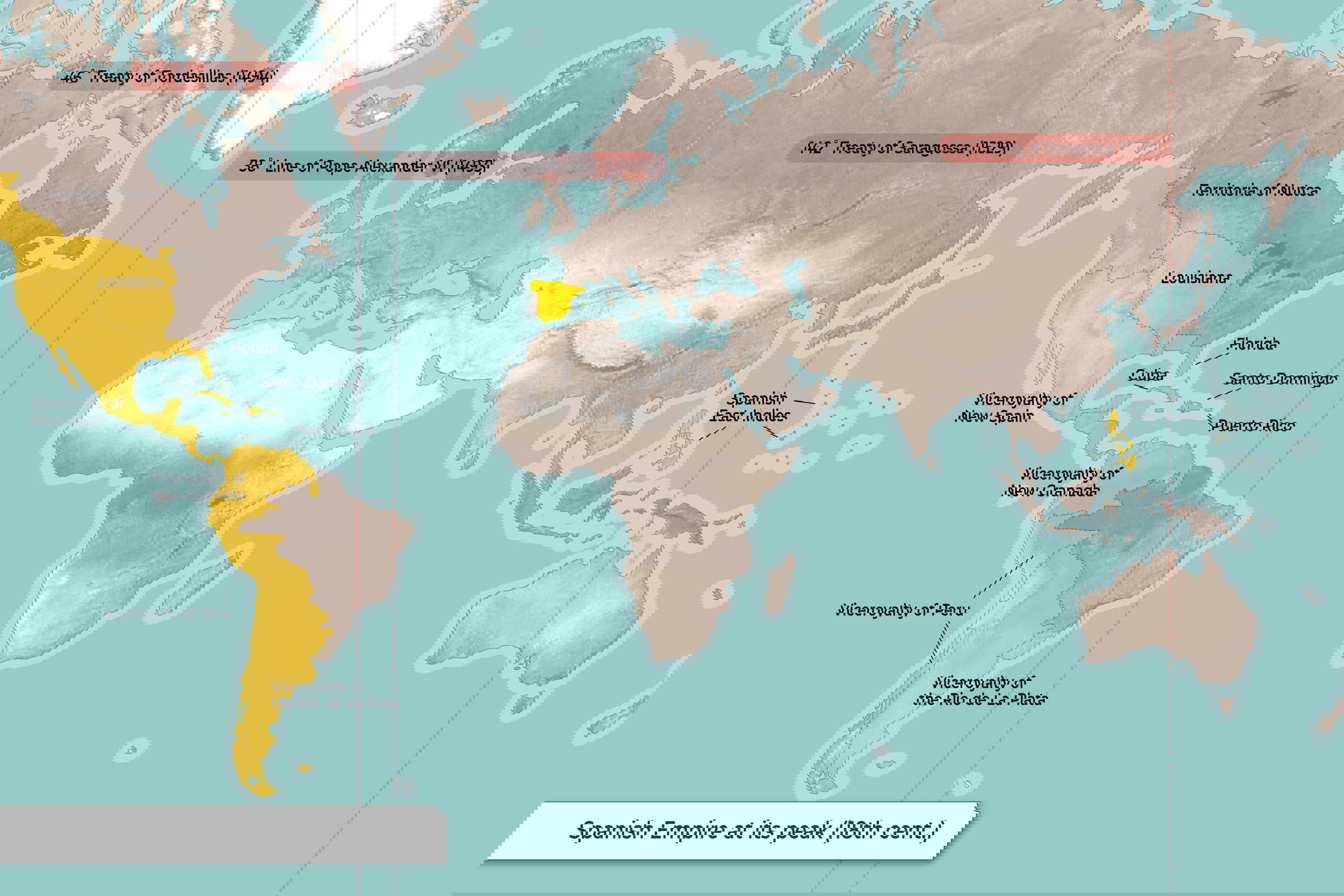
It also had nominal possession of the small territory of Equatorial Guinea in Africa, but colonization was not carried out until the mid-19th century, after Spain had lost its territories in the Americas.
At its height, the Spanish Empire covered 5.29 million square miles (13.7 million square kilometers), accounting for over 9.2% of the world’s land area. Including the extraneous and uncolonized claims, these figures can be increased, and the Spanish Empire could end up representing the third-largest empire.
6. Second (or Third) French Colonial Empire (1830-1980) 4.44 Million Square Miles

One of the great colonial empires throughout the 19th century, France controlled a considerable amount of territory, becoming the sixth-largest empire in history. At its territorial peak during the 1920s, the French colonial empire was just over a third the size of the British Empire, and covered 4.44 million square miles (11.5 million square kilometers), accounting for around just under 8% of the world’s land area.
The Second French colonial empire was established in 1830, some 15 years after the end of the Napoleonic Wars, and it began with the invasion of Algeria (which took over 70 years to fully conquer). Some historians separate the post-Napoleonic colonial period into Second and Third colonial empires, but “Second colonial empire” can also be used to encompass the entire era up until the end of France’s colonial ambitions in the latter half of the 20th century.
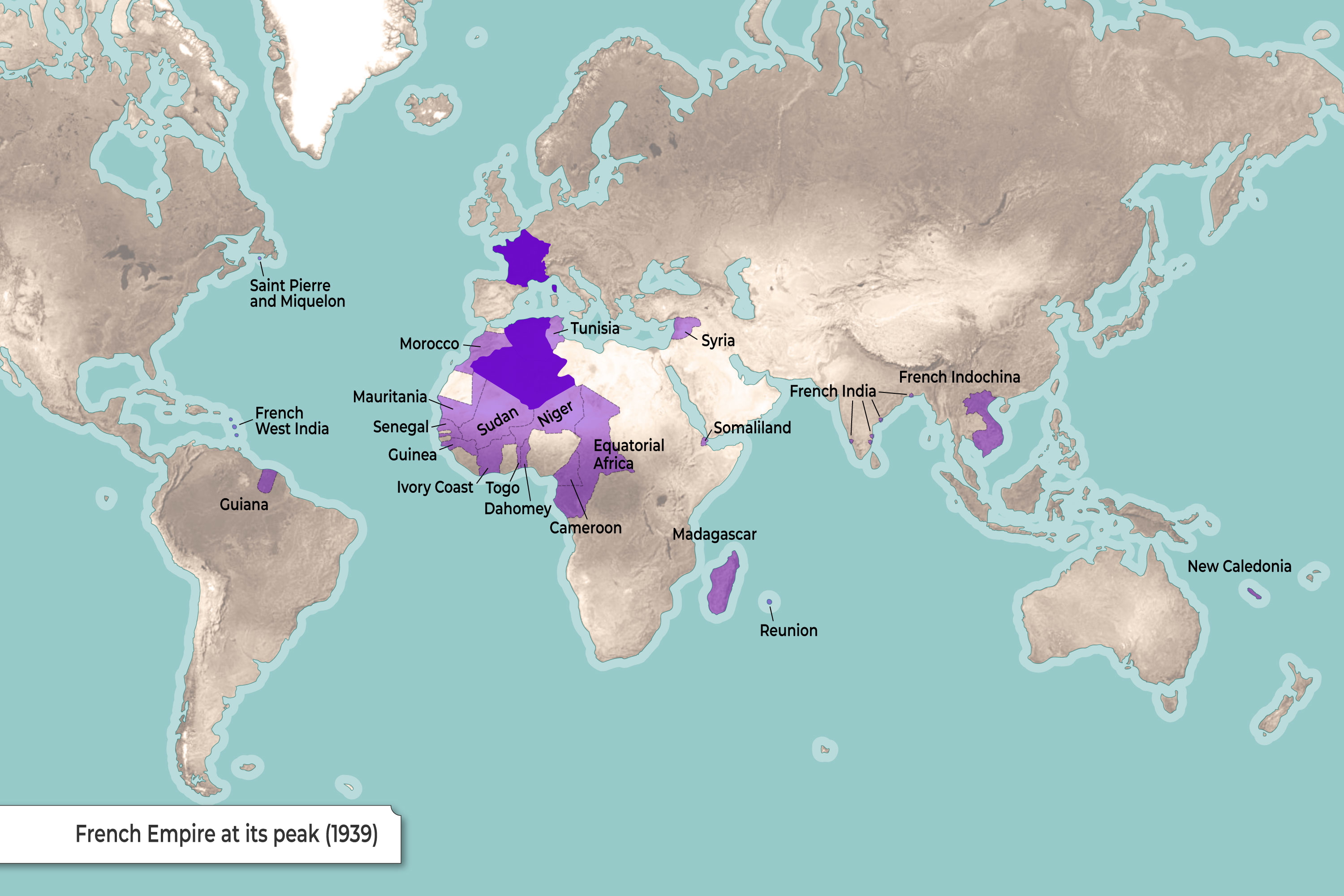
The French Empire expanded into Southeast Asia, Madagascar, and vast parts of Northern Africa, as well as Syria in the Middle East, and French Guyana in South America. Due to the defeat of Napoleon and the collapse of the First Empire, all of France’s North American and Indian colonies were lost or abandoned, with the exception of a few scattered holdings.
Of major importance at the empire’s height during the first half of the 20th century were North Africa and French Indochina. Marking huge turning points in the colonial era, however, France’s colonial ambitions would suffer humiliating military defeats in Vietnam and Algeria, as its possessions fought for independence.
7. The Umayyad (and Abbasid) Caliphate (AD 661-750) 4.29 Million Square Miles
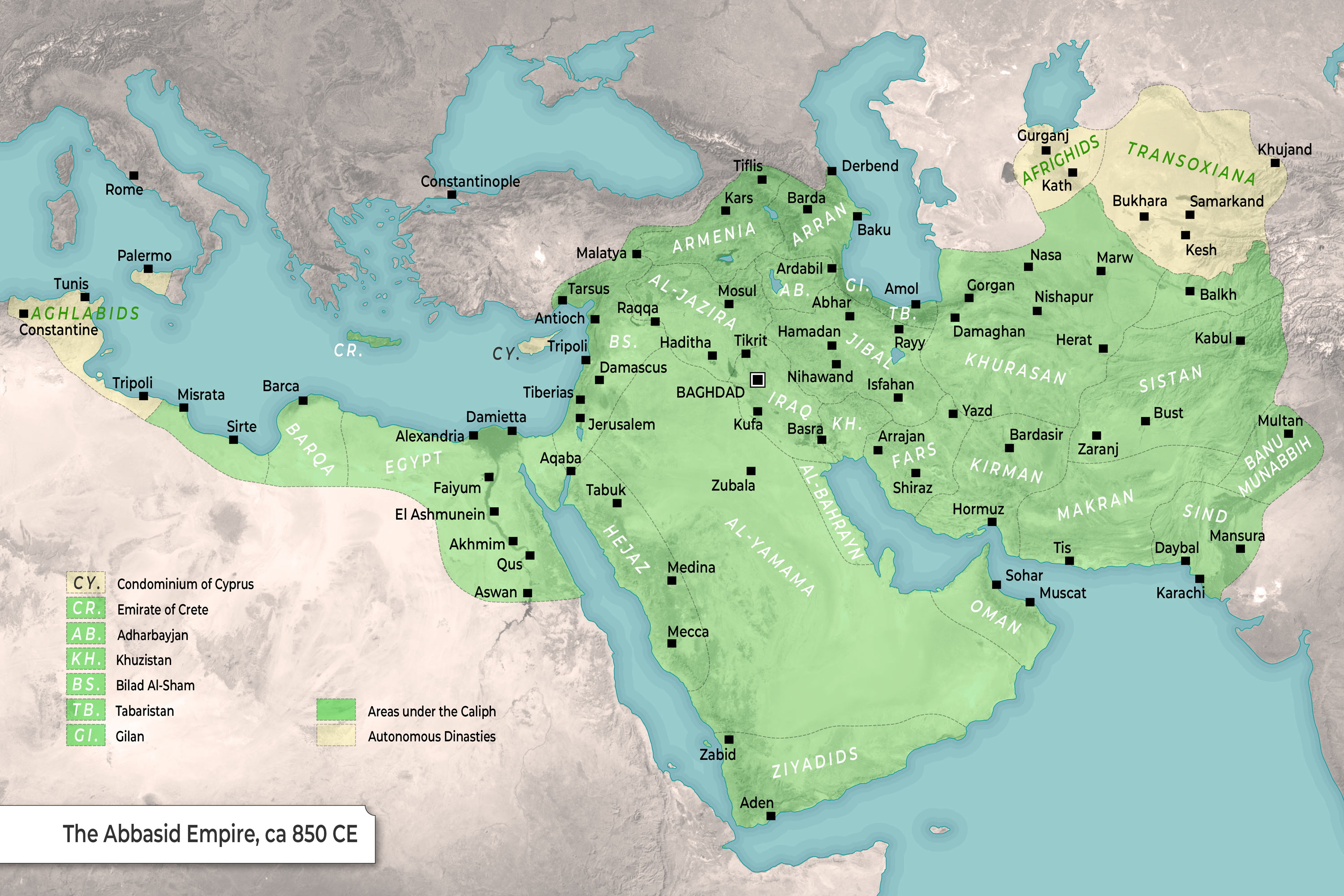
At its peak in the 8th century AD, the Umayyad Caliphate covered a huge area, from Persia in the east to the Iberian Peninsula in the west. Vast territories in North Africa were under Umayyad control, as well as virtually the entire Middle East, including the entirety of the Arabian Peninsula.
The Umayyad Caliphate was the second Muslim caliphate and followed the Rashidun Caliphate, which was established after the death of the Prophet Muhammad. The total area of the Umayyad Caliphate at its peak in the early 8th century was 4.29 million square miles (11.1 million square kilometers), accounting for approximately 7.5% of the world’s land area.
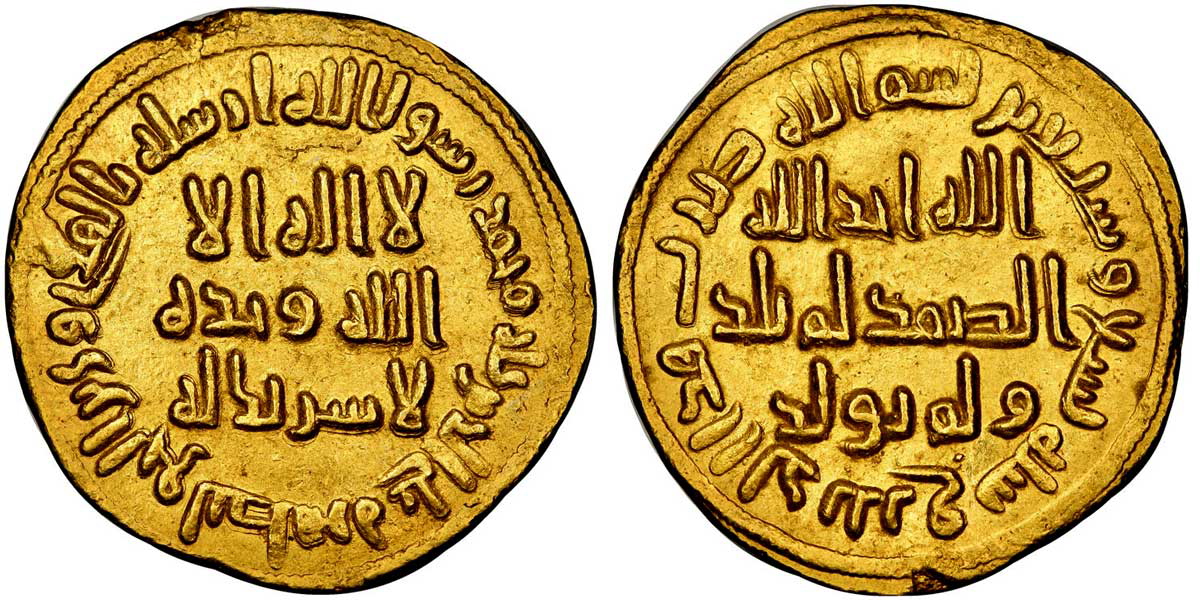
It was succeeded by the Abbasid Caliphate, which took control in AD 750, and briefly claimed all of the Umayyad territory. There were, however, various regions loyal to the Umayyads, which the Abbasids could not control, and the Abbasid Caliphate, as a result, lost much of its claimed territory on the outskirts of the empire.