Achieving independence as the United States of America was a lengthy and unlikely struggle for the 13 original colonies. Over the centuries, the territory of the 13 colonies was contested by several European powers before the British established control of the Atlantic coast. Even under British rule, the 13 colonies had their own unique geographic, cultural, religious, political, and economic attributes. It was not a straightforward task for these disparate entities to come together to resist efforts by the British Parliament to impose greater control over its North American colonies and embark on a grand democratic experiment.
| Region | Colony | Year Founded |
|---|---|---|
| New England Colonies | Massachusetts | 1620 (Plymouth); 1630 (Mass. Bay) |
| New Hampshire | 1623 | |
| Rhode Island | 1636 | |
| Connecticut | 1636 | |
| Middle Colonies | New York | 1624 (Dutch, later English 1664) |
| New Jersey | 1664 | |
| Pennsylvania | 1681 | |
| Delaware | 1638 (Swedish); 1664 (English) | |
| Southern Colonies | Maryland | 1632 |
| Virginia | 1607 | |
| North Carolina | 1653 | |
| South Carolina | 1670 | |
| Georgia | 1732 |
Early Exploration and Settlement
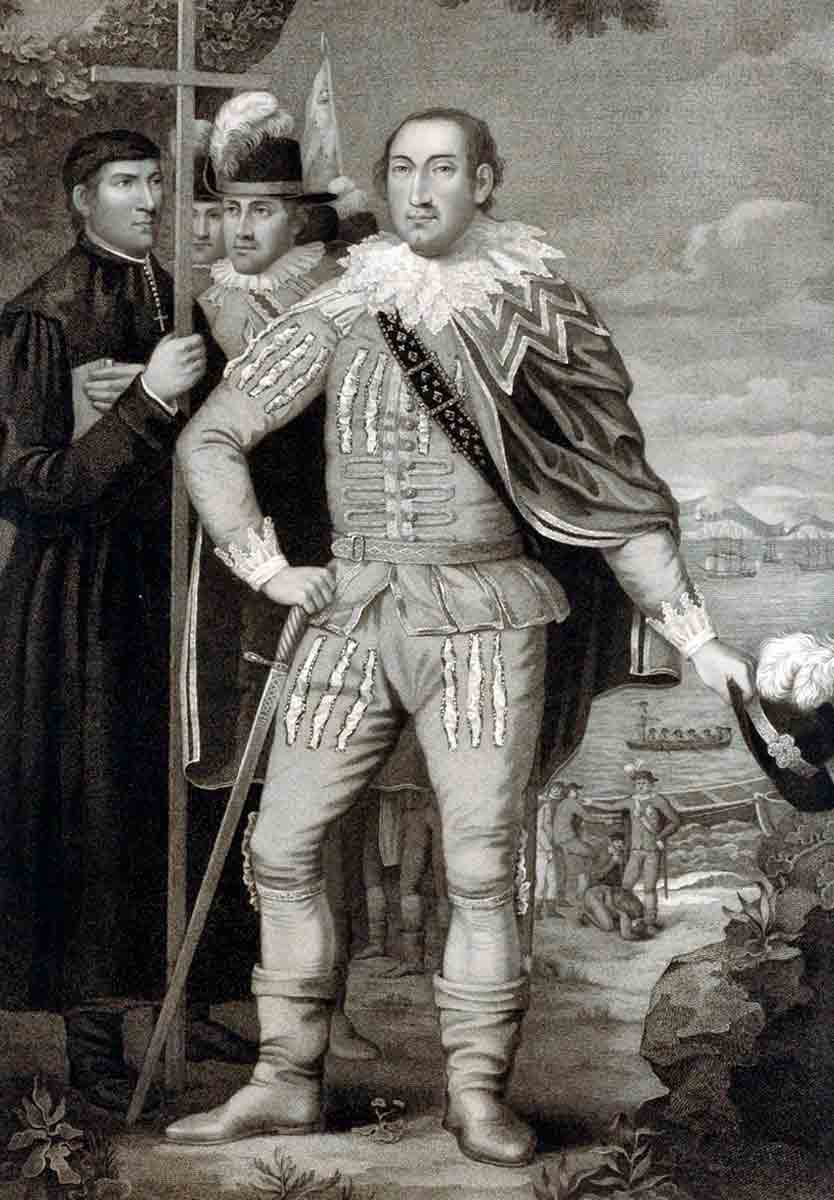
Britain’s control of the original 13 colonies, which came into being with the founding of Georgia in 1732, followed competition among European powers to colonize North America. European colonization of the Americas began after Christopher Columbus’ first voyage in 1492. While Columbus never set foot on what is now American soil, his expeditions on behalf of the Spanish Crown encouraged further Spanish exploration of the Americas. This led to the foundation of St. Augustine in Florida, the first permanent European settlement in what is now the United States.
Other European nations simultaneously explored and staked their respective claims. Frenchman Jacques Cartier navigated the St. Lawrence River in the 1530s, and his compatriots founded colonies in Canada by the early 17th century. Simultaneously, the Dutch and Swedish established their own colonies in the present-day states of New York, New Jersey, Delaware, and Pennsylvania.
While the original 13 colonies were initially divided among European nations, they all eventually ended up under British control. In 1607, England established its first permanent colony in Jamestown, Virginia. This was followed shortly by the settlement of the Pilgrim Fathers in Plymouth, Massachusetts, in 1620. While these colonies naturally spread rapidly, military superiority in conflicts such as the Anglo-Spanish, Anglo-Dutch, and King Philip’s War enabled English forces to establish control of all 13 original colonies from both European rivals and indigenous peoples.
Geography: Mapping the Colonies
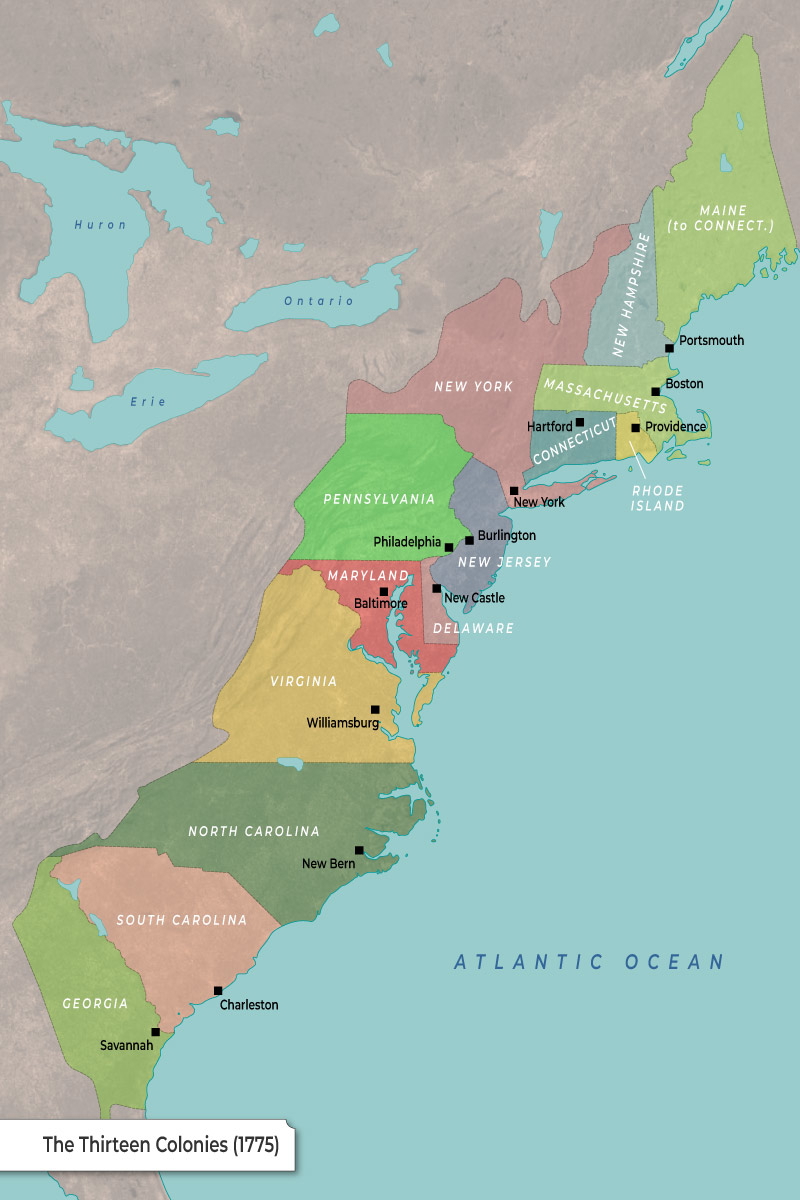
The original 13 colonies were divided into three distinct regions confined by French and Spanish territories to the north and south, respectively.
The New England Colonies and the Pursuit of Religious Sovereignty
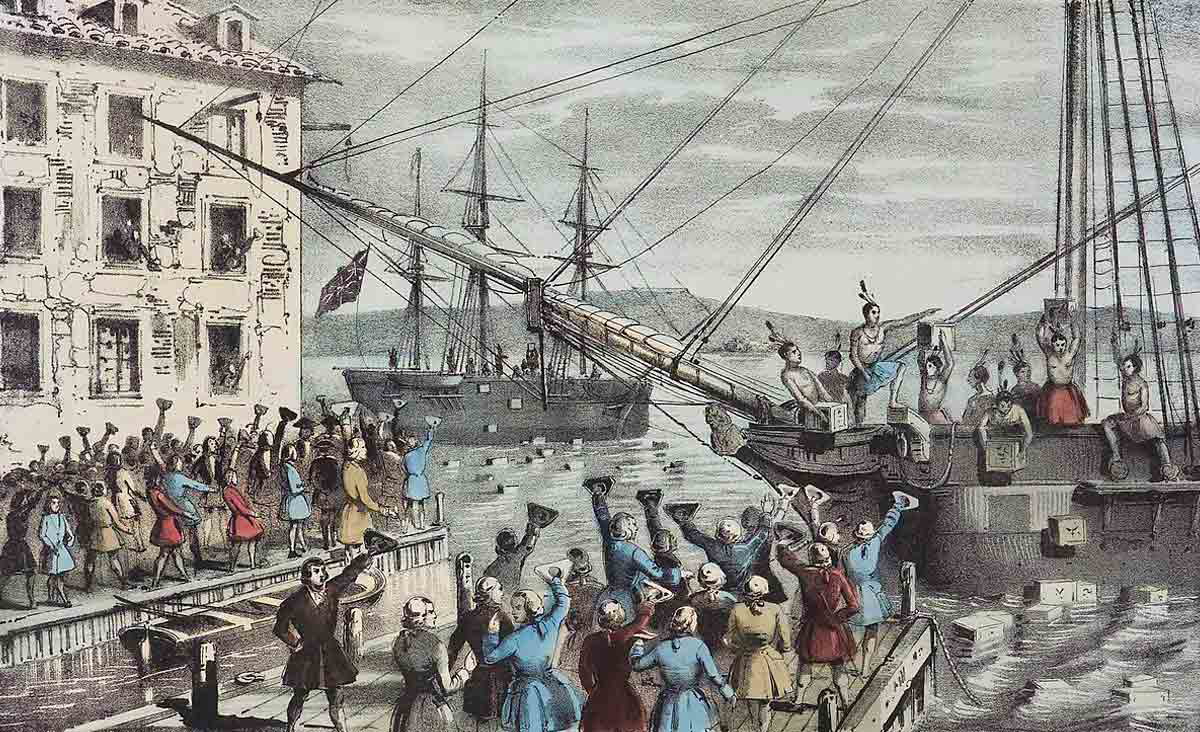
The northernmost New England colonies of Massachusetts, New Hampshire, Rhode Island, and Connecticut were defined by mountainous terrain and natural harbors. The port of Boston was an important economic hub and symbol of early patriotism following the Boston Massacre and the Boston Tea Party.
The English Crown used corporate charters to outsource the risk of colonization to wealthy investors. While the charters were designed to manage businesses, the Puritans realized that the framework granted immense self-governing powers, which they exploited to build a wall of protection around their religious communities. They then used their theocratic governance to suppress internal political dissent.
Large-scale agricultural pursuits proved futile in the region, and families relied on subsistence farming, fishing, maritime trade, and hunting to endure harsh winters. The emphasis on the Puritanism of the Pilgrim Fathers resulted in a devout and highly educated society. Some of the United States’ most prestigious centers of higher education, such as Harvard (Massachusetts) and Yale (Connecticut), are still based in New England’s original colonies.
Commercial Powerhouses of the Middle Colonies
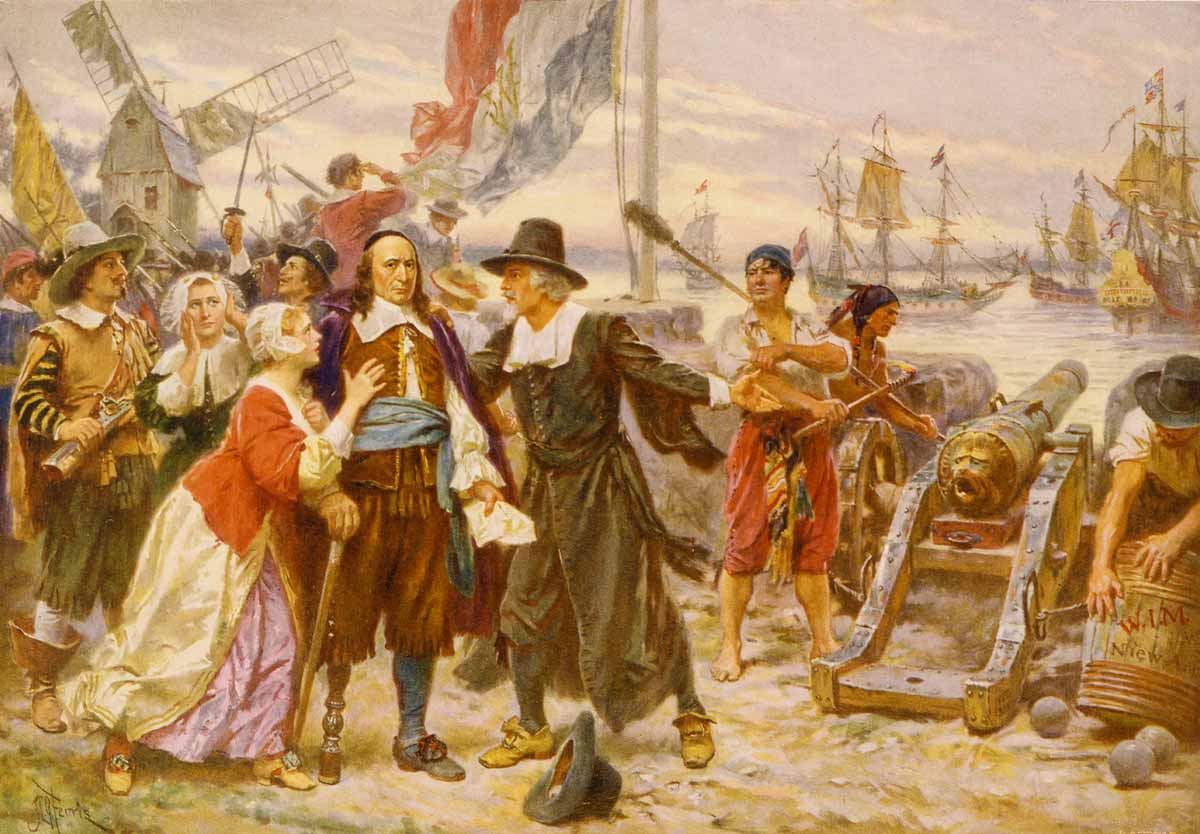
South of the New England colonies lay America’s middle colonies. Composed of the current-day states of New York, New Jersey, Pennsylvania, and Delaware, these territories enjoyed a more balanced climate, a mix of plains and rolling hills, and extensive waterways, including the Hudson and Delaware Rivers.
The New Netherlands was established as a commercial venture by the Dutch. The English wanted it for themselves, so they simply claimed it as a proprietary colony for the Duke of York in 1664. The colonists preferred to accept this rather than risk their lucrative businesses, and New York was born. Religious tolerance attracted a highly diverse European workforce, and the region thrived, becoming the breadbasket of the colonies. Philadelphia and New York soon grew into major commercial centers that rivaled European ports.
Cash Crops and the Plantation System of the Southern Colonies
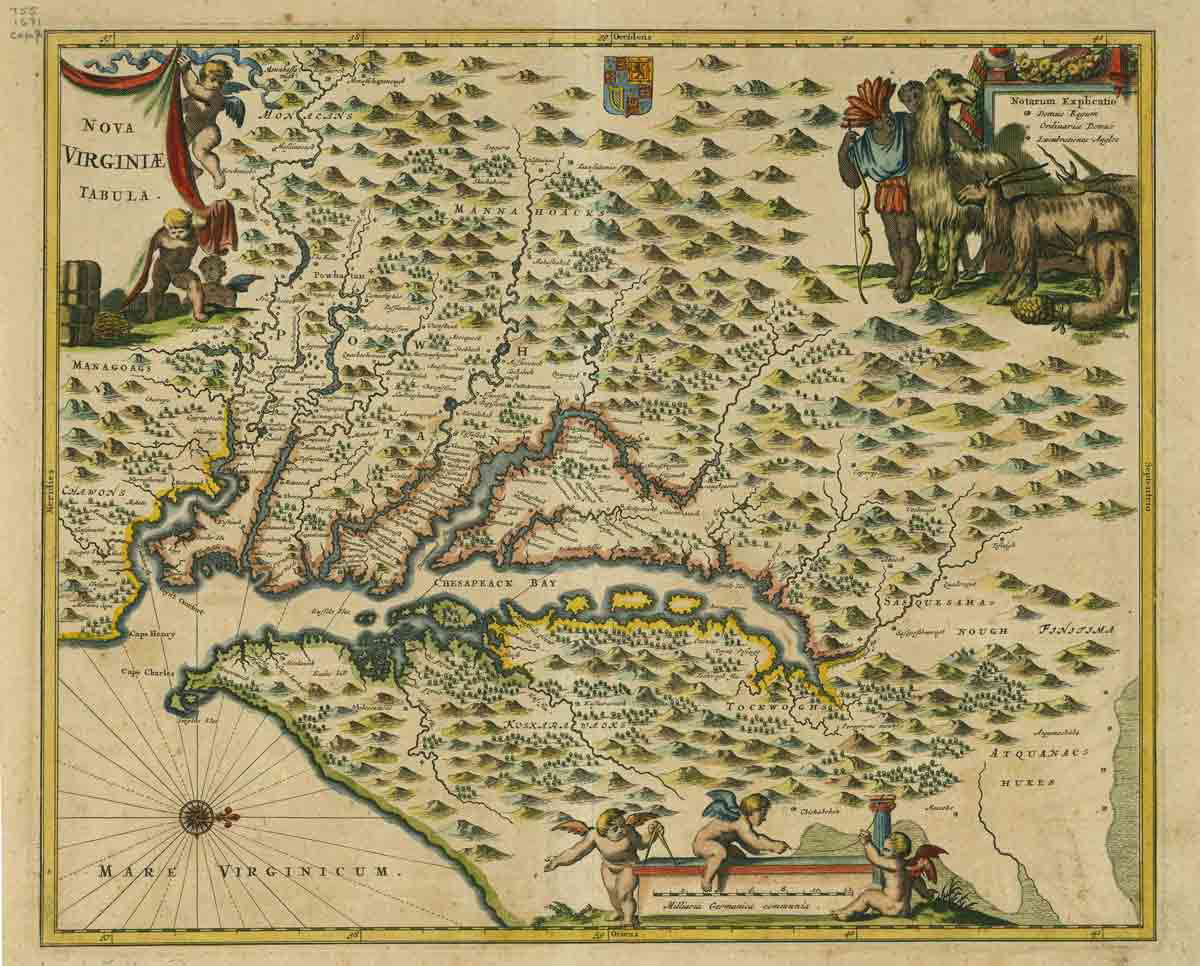
The colonies of Maryland, Virginia, North Carolina, South Carolina, and Georgia made up America’s southern territories to the north of Spanish Florida. The region’s hot summers, fertile soil, and coastal plains served as excellent agricultural land. However, these characteristics encouraged wealthy landowners to exploit the land with slaves.
Throughout most of the 17th century, Virginia’s tobacco economy relied on white indentured servants from England who worked for four to seven years in exchange for passage. There were some African laborers, but they could sue for freedom, buy land, and have servants of their own, and they worked alongside the white servants. But when the white servants finished their contracts and expected land, the elites had already claimed the best land.
This resulted in Bacon’s Rebellion of 1676. While Bacon himself died, the elite realized the risk posed by a large population of armed, landless, and disgruntled white men, supported by the local African population. They passed laws to “enfranchise” these white men, while also passing laws to make black slavery permanent. They were denied the right to own land. It was declared that children inherited the status of their mothers, meaning that owners could abuse female slaves without concern for any children born. Even the poorest white men were legally superior to a black person, creating an us-and-them mentality. Soon, the economy was completely dependent on the total, permanent legal dehumanization of African people.
The slave economy in the South was a primary factor driving sectional tensions between the northern and southern states for decades after American independence.
Government and Politics
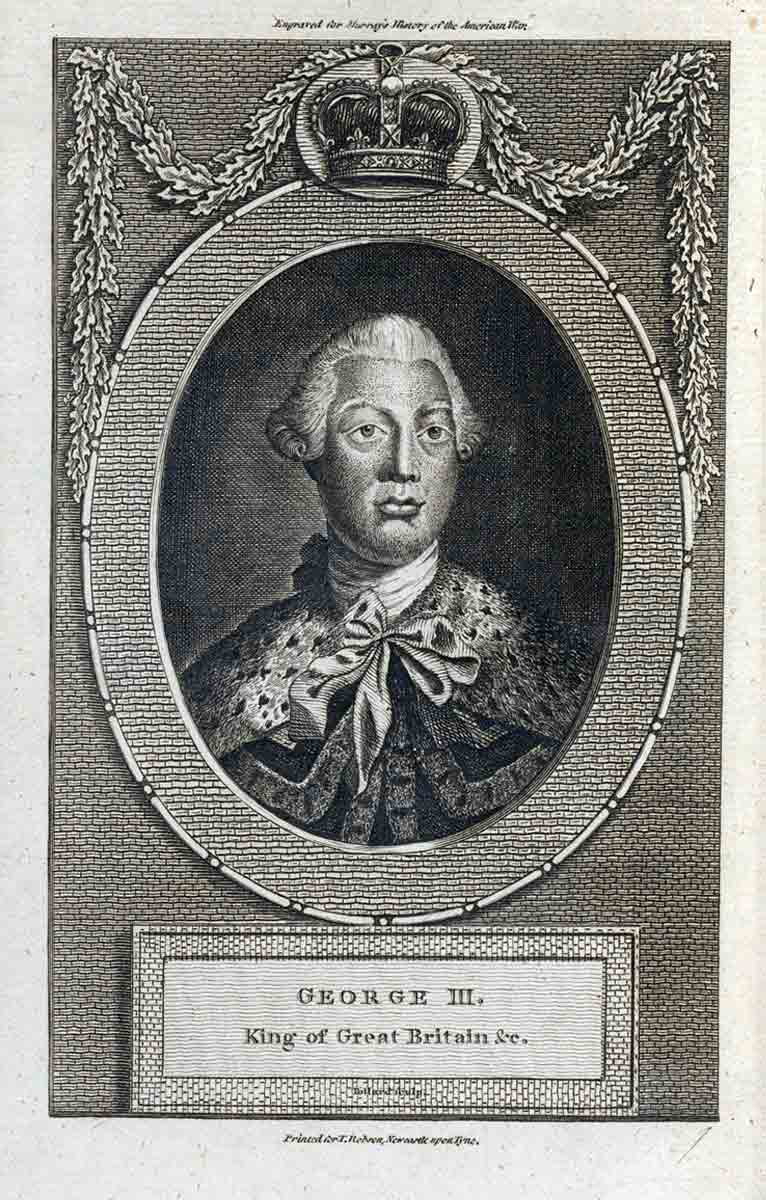
While they were all subjects of the British Empire, the original 13 colonies witnessed varying degrees of involvement from the Crown. For example, while governors were appointed in royal and proprietary colonies, corporate colonies elected their own executive representatives. Legislative bodies among the colonies, however, were more standardized. Typically, Governor’s Councils advised colony-level decision-makers, and colonists were only allowed to participate in Representative Assemblies, the lower house, if they met a certain property requirement.
Due to the dispersed nature of the original 13 colonies, perhaps the most important form of government to everyday colonists was local authority. In New England, town meetings facilitated shared understanding for families to participate in community decision-making. In the south, county systems performed similar roles with slightly less participation from everyday citizens due to ingrained hierarchies. These small gatherings allowed like-minded groups of individuals to control local laws and taxes.
While mostly unconcerned with local matters, the British government exercised clear control over colonial economies. Under the mercantilist system, the colonial economy primarily benefited Britain by restricting the flow of overseas trade to European countries other than England, demanding more exports than imports, and limiting the manufacture of goods that jeopardized English supply. Over time, early American colonists began to challenge this structure. Grievances over economic policy and taxation without representation encouraged revolutionary sentiment in the decades before the Revolutionary War.
Pre-Revolution Conflicts and Wars
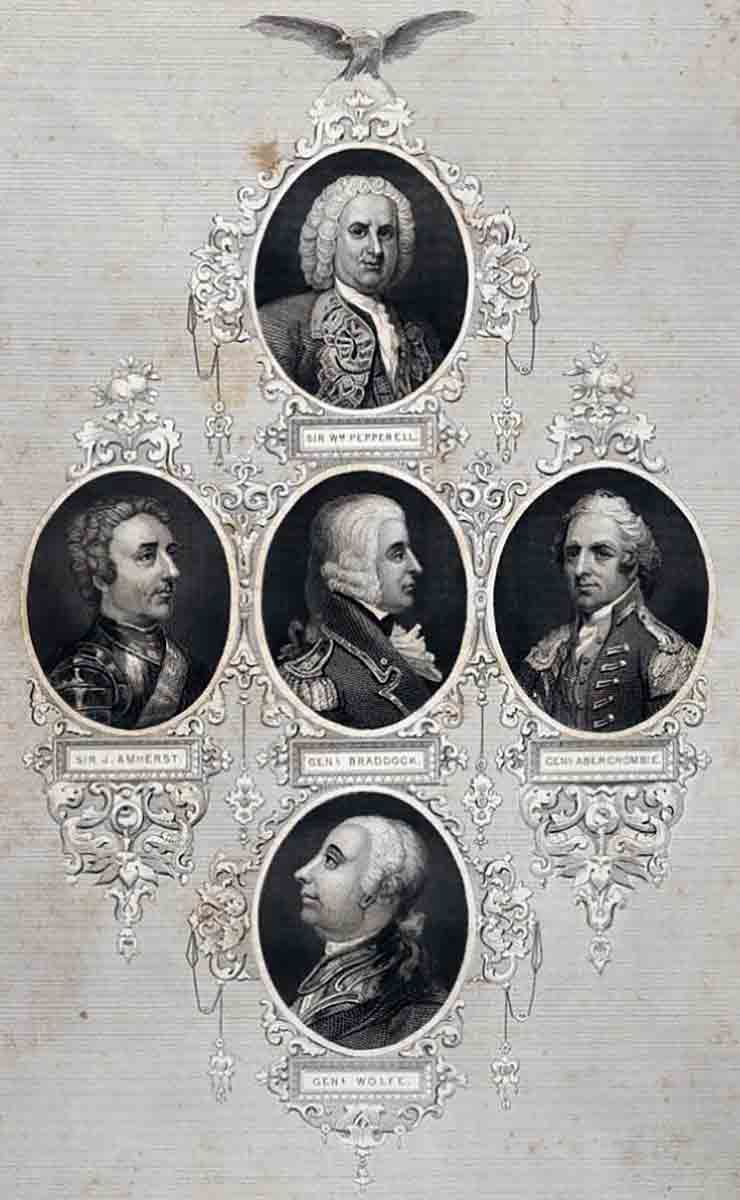
Aside from smaller skirmishes between European powers and Native Americans in North America, the original 13 colonies participated in several major conflicts before the American Revolutionary War.
Queen Anne’s War, which served as the American theater of the War of Spanish Succession, witnessed intense conflicts between British colonists against Spanish and French subjects and their respective Native American allies on the continent from 1702 to 1713. From northern fronts in Canada to southern fronts in Florida and Alabama, Queen Anne’s War impacted all 13 original colonies. After one decade of fighting, the Treaty of Utrecht marked an end to combat, granting Britain considerable territorial gains in Canada, including the regions of Acadia, Newfoundland, and Hudson Bay.
Almost four decades later, Britain, France, and their Native American allies once again squared off in North America for control of the Ohio Valley. Part of the wider Seven Years’ War fought between European powers, the French and Indian War offered combat experience to key leaders of the American Revolutionary War, including future Commander-in-Chief George Washington, who was directly involved in initiating hostilities.
After nearly ten years of fighting, the Treaty of Paris of 1763 finalized terms that saw France cede vast territories, specifically in Canada and French possessions east of the Mississippi River, to Britain. The French and Indian War left Britain with a sizable amount of debt, prompting Parliament to increase taxes on its American colonies to pay for their defense. These revenue-raising efforts inspired political opposition that would lead to the American Revolution.
American Revolution and Independence
The Stamp and Townshend Acts of the 1760s burdened an already strained American economy. American colonists were disgruntled by increases in the prices of everyday items. Americans in the 13 colonies argued that, as subjects of the British Empire, they enjoyed full political rights and could not be subject to taxation without their representatives having a vote.
Although the British authorities sought to moderate the initial taxes, escalating tensions about the powers of the British government in the 13 colonies led both sides along the road to hostilities. The Boston Massacre of 1770 further inflamed Patriot sentiment. The Boston Tea Party three years later led Britain to double down on political and economic sanctions against its New England colonies via the so-called Intolerable Acts. As a result, key American figures, including Patrick Henry, Benjamin Franklin, and Thomas Jefferson, rushed to consider the fate of the colonies at the First and Second Continental Congresses.
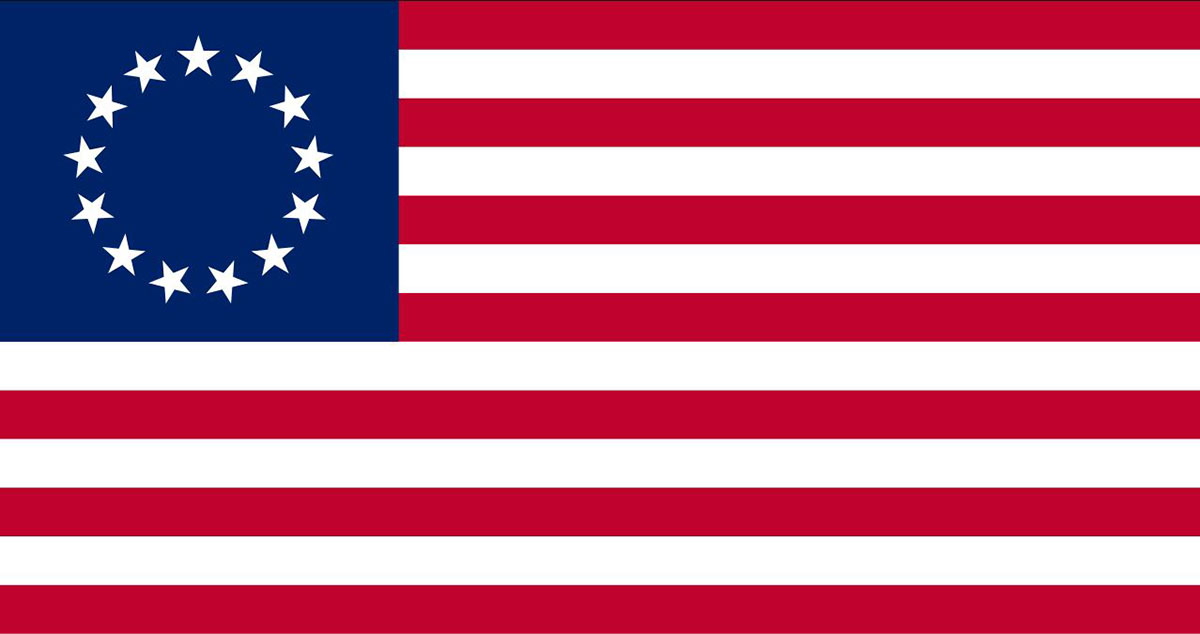
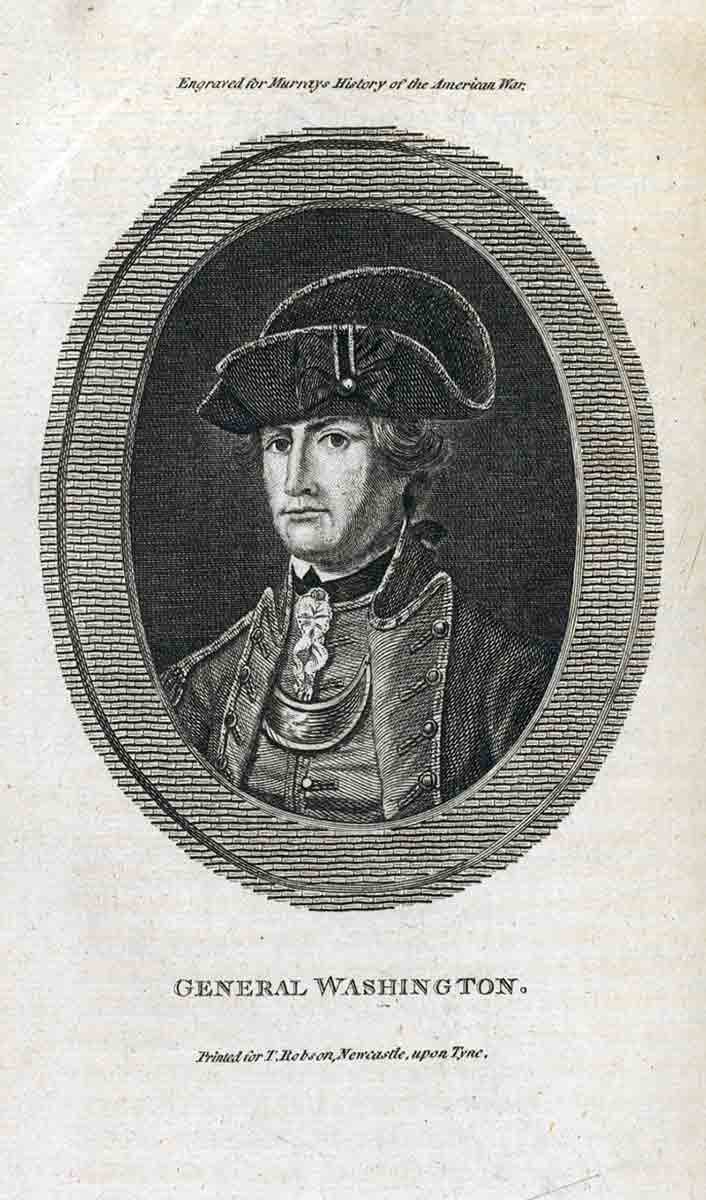
By April 1775, the American Revolutionary War broke out with fighting in the Battles of Lexington and Concord. One year later, the colonies officially drafted and signed the Declaration of Independence. After decades of political and economic tensions, and the United Colonies became the United States. Ultimate triumph, however, would not prove easy. The Continental Army, led by George Washington, recruited soldiers from each of the original 13 colonies. After more than six years of intense fighting, the United States achieved independence after forcing Lord Cornwallis to surrender at the Siege of Yorktown.
In 1781, the 13 colonies were brought together into a single political entity under the Articles of Confederation. Federalists such as Alexander Hamilton and James Madison believed that the federal government was too weak under such arrangements. They campaigned for the ratification of the Constitution of the United States in 1789, which enabled closer integration between the 13 states.
Over the centuries, with major land acquisitions such as the Louisiana Purchase, the Treaty of Guadalupe-Hidalgo, the purchase of Alaska, and the annexation of Hawaii, the original 13 states have now become 50.