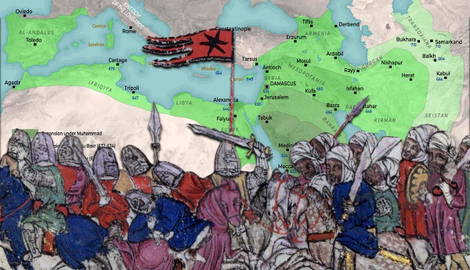

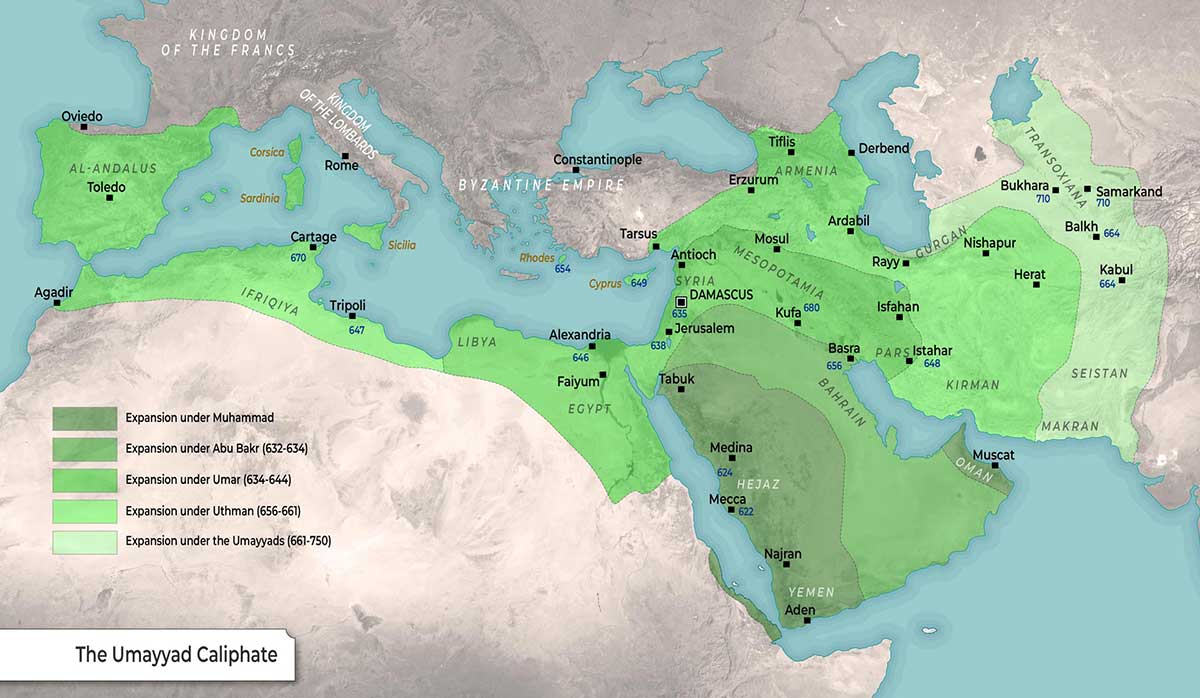
In the middle of the 7th century AD, the followers of the Prophet Muhammad led incursions against the two superpowers of the period, the Byzantine and Sasanian empires. These would prove so successful that the Arab conquests went on to cover the vast majority of the Middle East, North Africa, and parts of Iberia. These invasions would end around AD 750, by which time they had carved out one of the largest empires in history.
Byzantine-Sasanian War of 602-628
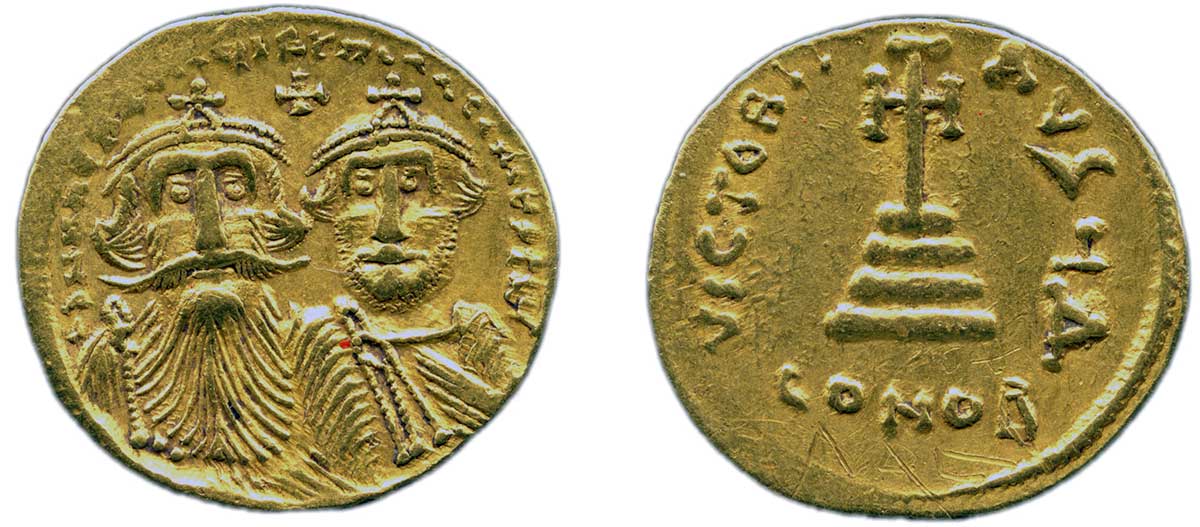
The Arab conquests could not have happened without the Byzantine-Sasanian War of 602-628, which left both empires militarily, politically, and economically exhausted. This conflict started in 602, when the Byzantine emperor Maurice was deposed and murdered by the usurper Phocas. Khosrau II, the Sasanian emperor, supposedly wanting to avenge his dear friend and father-in-law Maurice, declared war on Phocas and the Byzantine Empire. This would be the start of the longest war in Antiquity, which is often called “the last great war of antiquity.”
The start of the war went very badly for the Byzantines. They were completely overrun by Sasanian armies, who conquered most of the Levant and Egypt, the breadbasket of the Eastern Byzantine Empire. Even with the election of the emperor Heraclius in 610, this state of affairs continued unabashed for several years.
Heraclius undertook a series of economic and administrative reforms to raise funds to continue the war. Eventually, in 627, Heraclius gathered enough troops, with the help of Turkish allies, and invaded the Sasanian heartland. They met the Sasanians at the Battle of Nineveh, which was to be a long and arduous battle, resulting in a Byzantine victory. This event caused the Sasanians to surrender the following year to the Byzantines, ending the 26-year-long conflict.
Rise of the Rashidun Caliphate
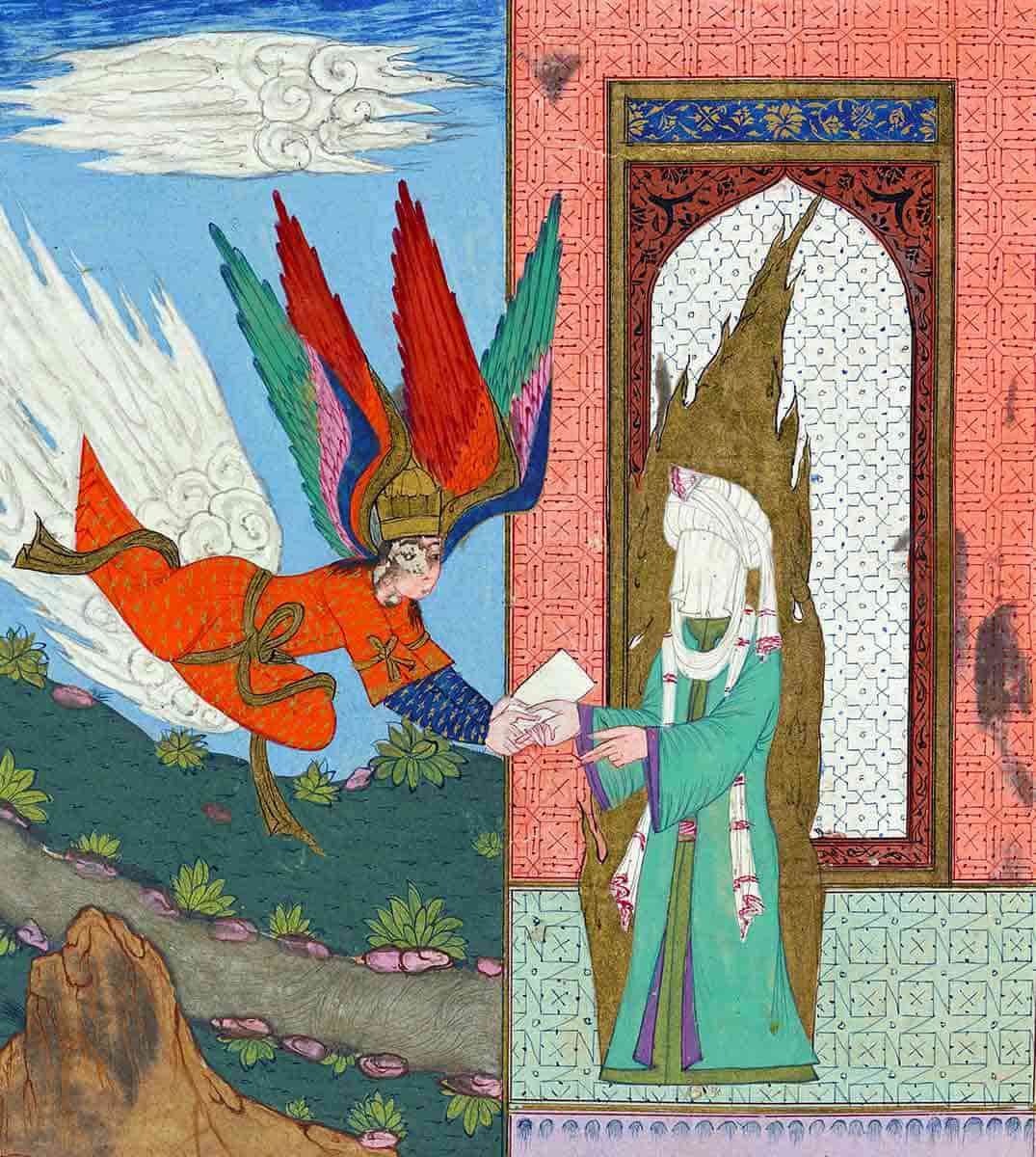
During this time, the Prophet Muhammad was converting and conquering most of the Arabian Peninsula. Pre-Islamic Arabia, called by Muslims “Jahiliya,” was a world characterized by different polytheistic tribes. Some of these tribes were used by the Byzantines and Sasanians as vassals to protect their respective southern frontiers. This society was very inequitable and had no established laws.
Muhammad’s message was largely welcomed, and he succeeded in converting and uniting the Arabic people as one community, ending the era of Jahiliya and introducing a new way of life centered around Islam. He died in 632, ten years after the Hijrah, that is, when he led his community of believers to the safe haven that was Medina after fleeing severe persecution and assassination plots in Mecca by the local ruling tribe, the Quraish.
When he passed away, he had not left instructions or rules of succession to the leadership of the Islamic State. Therefore, the heads of the community met in Medina and picked Abu Bakr to become their next leader.
The Conquests of the Levant and Persia
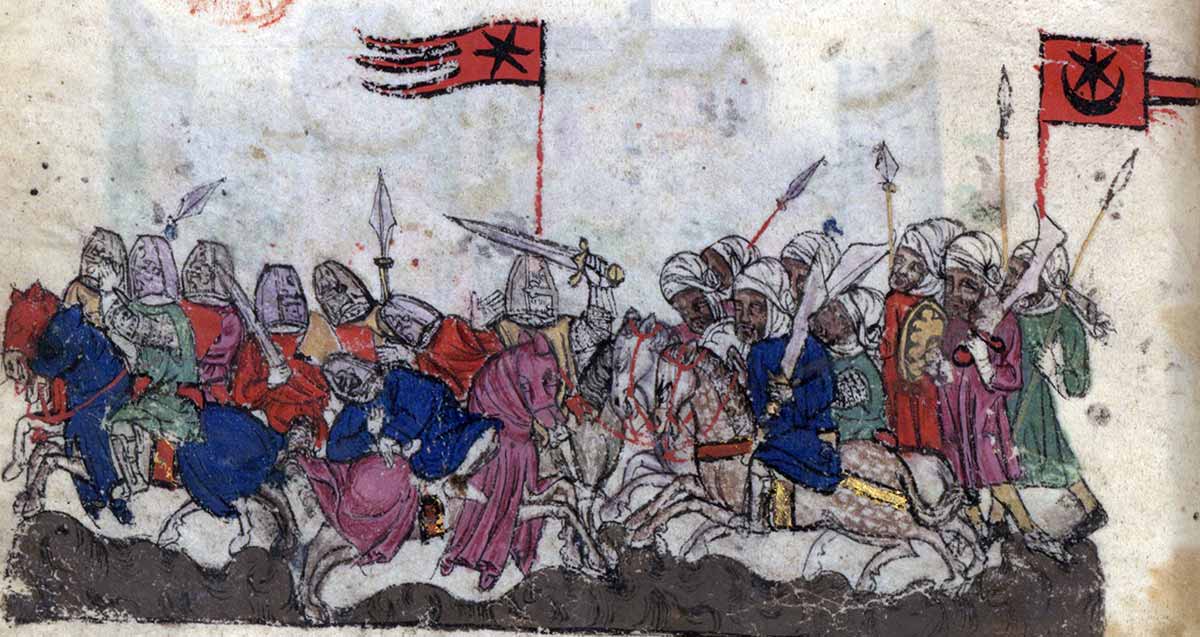
Arab raids against the Byzantines and Sasanian empires had already begun in the lifetime of Muhammad, but these were smaller in scale than what was to come. When the Prophet died, some Arab tribes rose in revolt in what would be called the Ridda Wars, rejecting Islam. Abu Bakr raised some troops and, with the help of his loyal generals, including Khalid Ibn Al-Walid, defeated all of the rebels. He had divided his army into eleven separate corps, each with its own commander and standards, allowing them better mobility and efficacy. Within a year, the vast majority of the rebel groups had been defeated.
With the Arabian Peninsula now securely under his authority, Abu Bakr sent his troops to attack and invade the Byzantine and Sasanian empires. Within ten years, almost the whole of the Levant was in Muslim hands. The Byzantines had been soundly defeated at the Battle of Yarmouk in 636, and the Sasanians at the Battle of Nahavand in 642. These victories cemented the Arabs as the new rulers of the Middle East and as a force to be reckoned with. But they did not stop there, and within a century, they had conquered from India all the way to Spain.
They started their campaigns by invading the Sasanian Empire. Yazgerd III, the Sasanian emperor, raised an army and confronted the Arabs at the Battle of al-Qadisiyyah in 636, which ended in a complete victory for the Arabs. With this, they were able to take control of all of Mesopotamia. Fighting with the Sasanians continued until the Battle of Nahavand in 642, which forced the Sasanian emperor to flee east. After this battle, the Arabs slowly advanced into Persia, meeting some resistance, but never as significant as in the first few years.
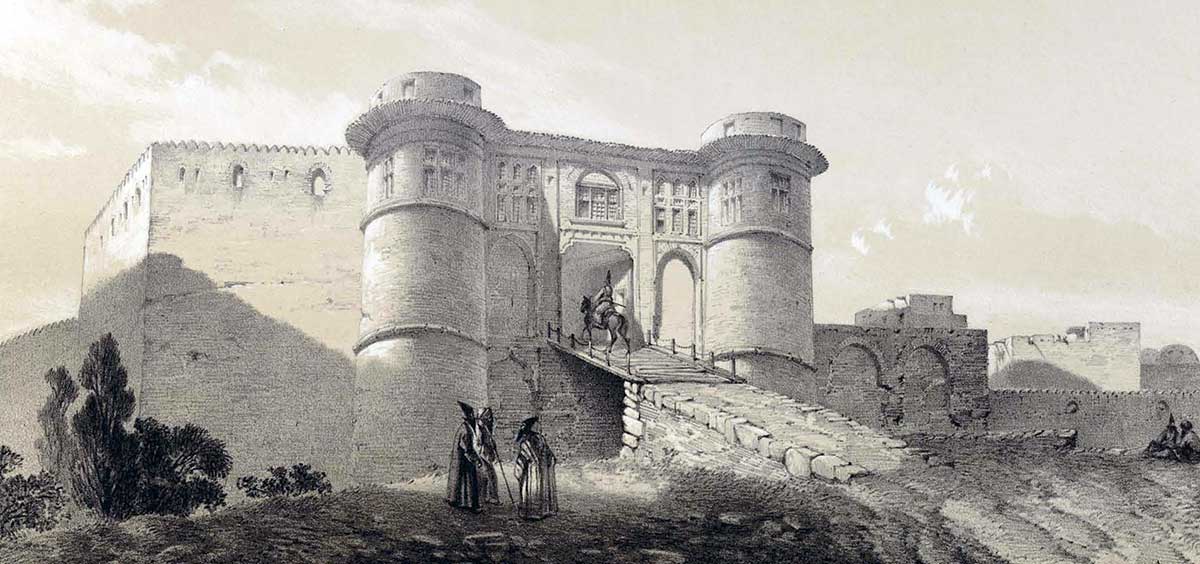
Almost simultaneously, they invaded the Byzantine Levant in 634. The Arab troops were commanded by Khalid Ibn al-Walid and soundly defeated the Byzantines at the Battle of Yarmouk in 636. Heraclius gave the order to evacuate Syria afterwards. Like with the Sasanians, the Arabs went on to conquer Syria and Palestine, meeting some resistance but never as extensive. They entered Egypt in 639 and, within five years, they secured control of the region, maintaining their hold even after defeating a major Byzantine naval counter-attack that briefly recaptured Alexandria in 645.
Reactions From Contemporaries
These Muslim invaders were often seen by contemporaries as Barbarians, coming to churches and cities. Sophronius, a Christian writer, records: “…why do barbarian raids abound? Why are the troops of the Saracens attacking us? Why has there been so much destruction and plunder? Why are there incessant outpourings of human blood? Why are the birds of the sky devouring human bodies? Why have churches been pulled down? Why is the cross mocked? … That is why the vengeful and God-hating Saracens, the abomination of desolation clearly foretold to us by the prophets, overrun the places which are not allowed to them, plunder cities, devastate fields, burn down villages, set on fire the holy churches, overturn the sacred monasteries, oppose the Byzantine armies arrayed against them, and in fighting raise up the trophies [of war] and add victory to victory … ” (Sophronius, 166-167 – translation found in R. G. Hoyland 1997, p. 72).
We can see that some writers, especially Christians, were not keen on seeing these Arab conquerors in their lands. This negative perception of the Muslim invaders continued throughout the centuries and influenced many researchers. Were these exaggerations or is there fact to these allegations?
What Does Archaeology Tell Us?
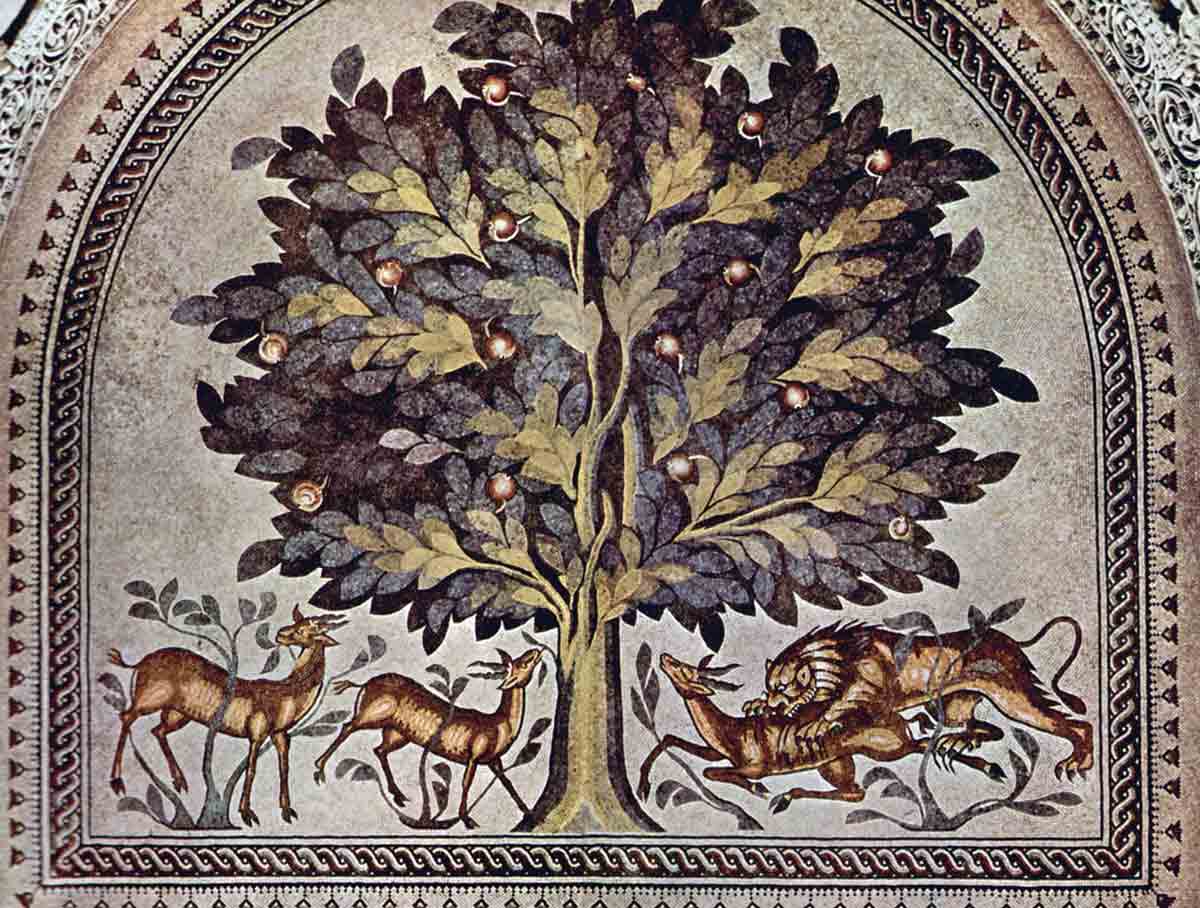
Archaeological evidence contrasts starkly with the words of Sophronius. In fact, it tells us a completely different story, one of an almost peaceful conquest. To quote Hugh Kennedy, “To begin with it is clear that there is no direct archaeological testimony to the conquests themselves. No battlefield has yielded up a harvest of bones and old weapons; there is not a single town or village in which we can point to a layer of destruction or burning and say that this must have happened at the time of the Arab conquests.” (H. Kennedy 2008).
Palestine and Syria actually experienced a growth in population and prosperity in the 6th and 7th centuries. Cities and settlements continued to be occupied, even though some were abandoned (especially in the desert regions of the Negev). New settlements were even established. Small forts and watchtowers, which were a characteristic feature of the region and were used to monitor and protect the local populations, were apparently abandoned, which reflected a greater sense of security in the region (J. Magness, 2003). This then completely refutes the remarks of Sophronius and other contemporary writers.
Then, Why Did This Myth Endure?
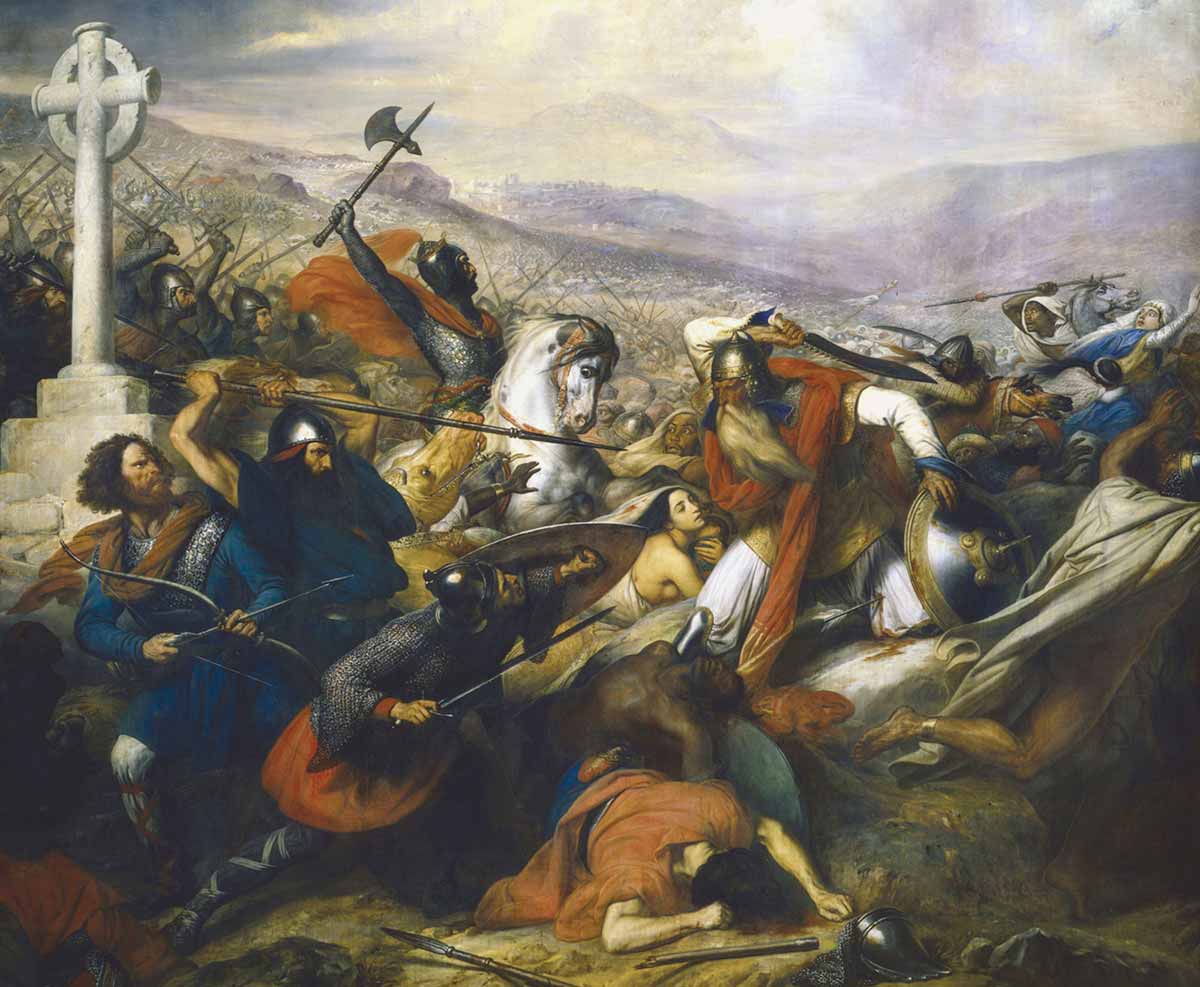
The myth that the Arabs conquered the Levant, destroying and killing everything and everyone in their path, reemerged in 19th-century European scholarship. European explorers traveled the Middle East, visiting ancient settlements that had long been abandoned and left to the mercy of the desert.
The only explanation that could be thought of to justify the abandonment of those sites was the violent invasion of the Arabs, who were perceived as the enemies of everything that was ordered and “civilized.” Researchers believed that the conquerors destroyed everything that was Christian and put a brutal end to the civilized life of the Christian Holy Land.
These ideas continued into the 20th century. Some researchers saw a parallel between these invasions and contemporary events. Yohanan Aharoni, for example, wrote: “Upon the fruit of all this zeal for building there descended in the seventh century the Arab invasion, which—on our tell as everywhere else—brought to a swift end the life of the Christian communities. So there came to an end, for the Holy Land, a chapter of its history which in our own time the archaeologist seeks so far as may be to bring to life” (Y. Aharoni 1964, p. 91).
Because of a greater number of surveys and excavation work beginning in the 1980s, researchers have questioned and rejected these ideas, opting to perceive the Arab invasions not as these violent and destructive campaigns but as smoother transitions to Islam without directly causing urban and rural settlement decline.
Sources
- Y. Aharoni, Excavations at Ramat Rahel, Seasons 1961 and 1962, Rome, Università degli Studi di Roma, 1964.
- R. Hodges & D. Whitehouse, Mohammed, Charlemagne & The Origins of Europe. Archaeology and the Pirenne Thesis, Ithaca, Cornell University Press, 1983.
- R. G. Hoyland, Seeing Islam as Others Saw It: A Survey and Evaluation of Christian, Jewish and Zoroastrian Writings on Early Islam, Princeton, Darwin Press, 1997.
- J. Johns, “Archaeology and the History of Early Islam: The First Seventy Years”, Journal of the Economic and Social History of the Orient, 46 (2003), p. 411-436.
- H. Kennedy, The Great Arab Conquests. How the Spread of Islam Changed the World We Live In, Boston, Da Capo Press, 2007.
- J. Magness, The Archaeology of the Early Islamic Settlement in Palestine, Winona Lake, Eisenbrauns, 2003.
- P. Pentz, The Invisible Conquest. The Ontogenesis of Sixth and Seventh Century Syria, Copenhagen, The National Museum of Denmark Collection of Near Eastern and Classical Antiquities, 1992.
- A. Walmsley, Early Islamic Syria. An Archaeological Assessment, London, 2007.