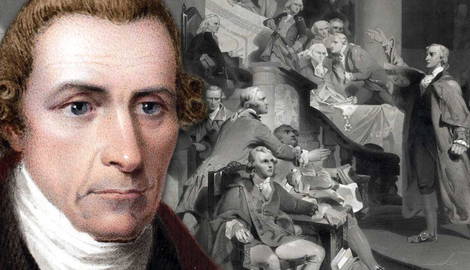

Patrick Henry etched his name in history with his masterful skills as an orator. He took the thoughts of the people and transformed them into action, earning himself comparisons to the likes of Homer. As a lawyer turned politician, Henry gained the trust of the people by leading the Hanover County militia and eventually becoming the first elected colonial governor of Virginia.
A Passionate Revolutionary
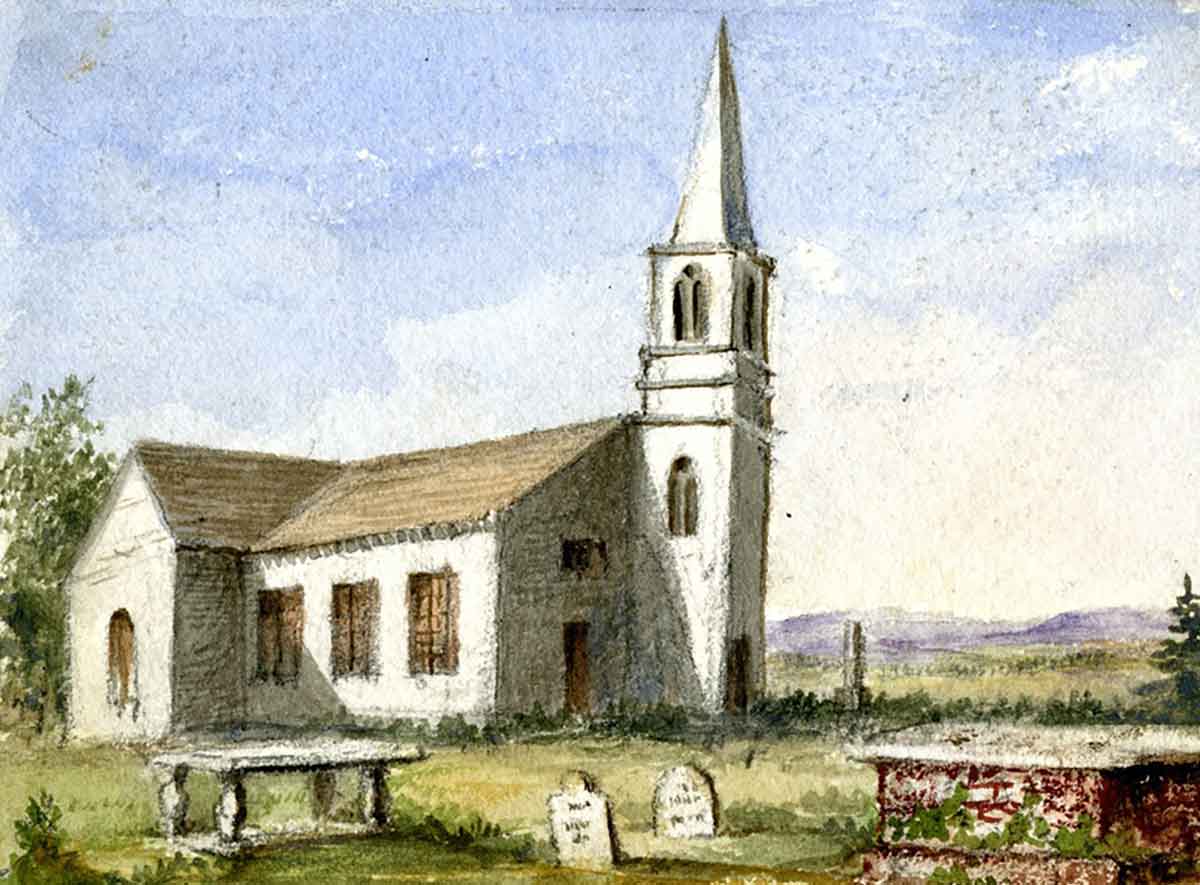
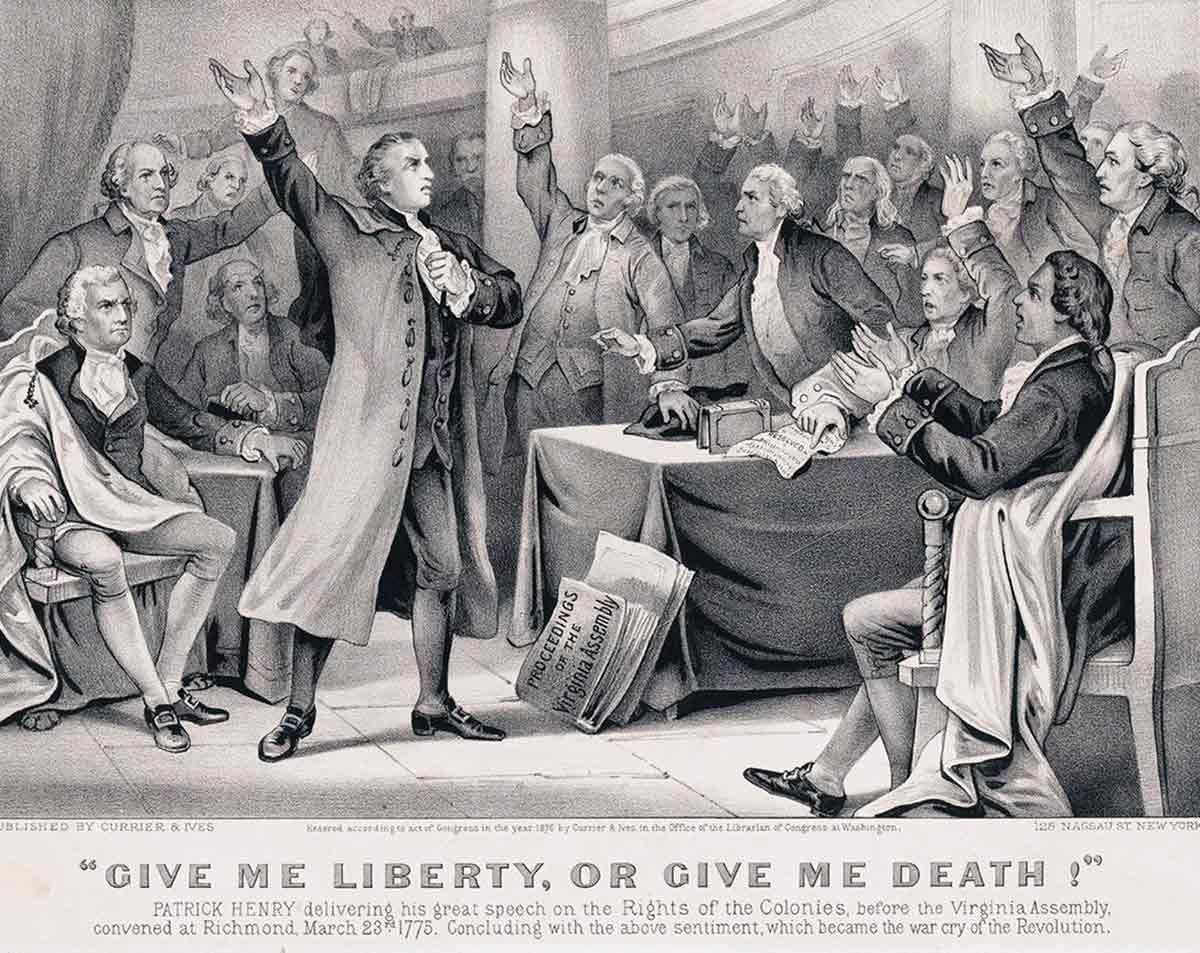
The candlelit halls of St. John’s Church in Richmond, Virginia were abuzz with debates from the Second Virginia Convention. The day was March 23, 1775, and the prospect of the American Colonies seeking independence from the Crown was preposterous to some and inevitable to others. A 38-year-old statesman and lawyer by the name of Patrick Henry fell firmly in camp with the latter. To him, a violent clash with the British was inevitable, and his passion bubbled over as he addressed the convention with conviction. Henry’s ability to capture an audience fanned the flames of rebellion, as he was able to put into words the thoughts so many held but could not articulate. His rhetoric transformed ideologies into action.
As a rising political figure from Hanover County, Henry understood the positions of rural colonists. His addresses kept his audience captive and on the edge of their seats while he perfectly encapsulated the views of many Virginians. He utilized his skills as an orator to plead with the convention to raise the militias and prepare for a war that was already at their doorstep. His address ended with a phrase that became a rallying cry for the Revolution as he cried out, “I know not what course others may take; but as for me, give me liberty or give me death!”
In the years leading to the American Revolution, Virginia was in a unique position compared to the other colonies. The Virginia militias bore the brunt of the colonial war effort during the French and Indian War and Virginians were enraged by how the British authorities in London responded after the French surrender.
The Royal Proclamation of 1763 prevented settlers from crossing an imaginary line separating the colonies from the Western Frontier, while new taxes were imposed upon the colonies for the defence of the newly acquired lands. These measures taken by Parliament planted the seeds of rebellion in the minds of many Virginians, none more than that of Patrick Henry.
While many leaders in the American colonies initially sought to reconcile their differences with the Crown and Parliament, Henry believed war was inevitable. His skills as an orator rival those with classical training as he was able to weave complex political ideas into words that could be not only felt but related to by all who heard him. His words and passion echoed that of ordinary Virginia colonists whom he represented in the colonial assembly.
A Revolutionary Legal Case
Born on May 29, 1736, in rural Hanover County, Henry had a modest upbringing. His father John Henry was a well-educated Scottish born man while his mother, Sarah Winston Syme, was a native Virginian with strong religious roots. Henry was homeschooled by his parents, which enabled him to relate to the interests of the common people while articulating them eloquently.
Prior to becoming a lawyer and a politician. Henry led multiple failed business ventures including a storefront and a farm. The struggles that Henry faced on a daily basis gave him a perspective that was not shared by most Virginia politicians. This enabled Henry to gain the support of the masses, thereby launching his path as a revolutionary leader.
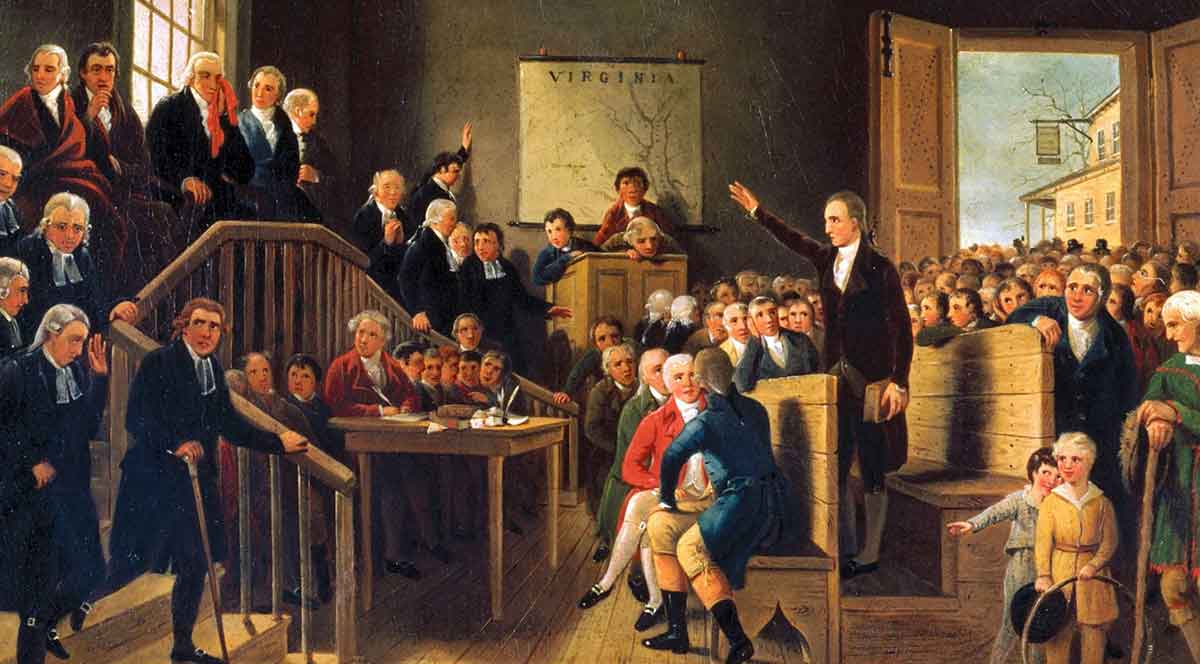
Henry remained a relatively unknown lawyer until 1763, when the Parson’s Cause case came across his desk. Prior to the Two-Penny Act in 1758, tobacco served as a form of currency in the colony. However, due to fluctuating crop prices, Virginia Legislators passed the Two Penny’s Act which required taxes and salaries to be paid in hard currency. Following complaints from local clergy, King George III annulled this new law in what some viewed as an overreach of royal powers. In 1763, the Parson’s Cause case came as a result of a lawsuit filed by Reverend James Maury, who sought repayment in tobacco.
This case was Henry’s breakout moment. He represented the side of colonial rights, questioning the authority of the Crown to veto legislation enacted by the colonial assembly. Not only were his skills as an orator on full display, but it highlighted his willingness to challenge royal authority and positioned him as a staunch advocate for colonial rights. Henry secured his reputation when the Hanover County jury sided with him.
“Caesar had his Brutus”
Only two short years after Henry won the Parson’s Cause case, he was elected to the Virginia House of Burgesses in Louisa County. On May 20, 1765, Henry made the journey to the colonial capital of Williamsburg, Virginia, where he was sworn in as a state legislator. Ten days later, Henry made a speech to the House that impressed Thomas Jefferson so much that the future president compared his eloquence to Homer.
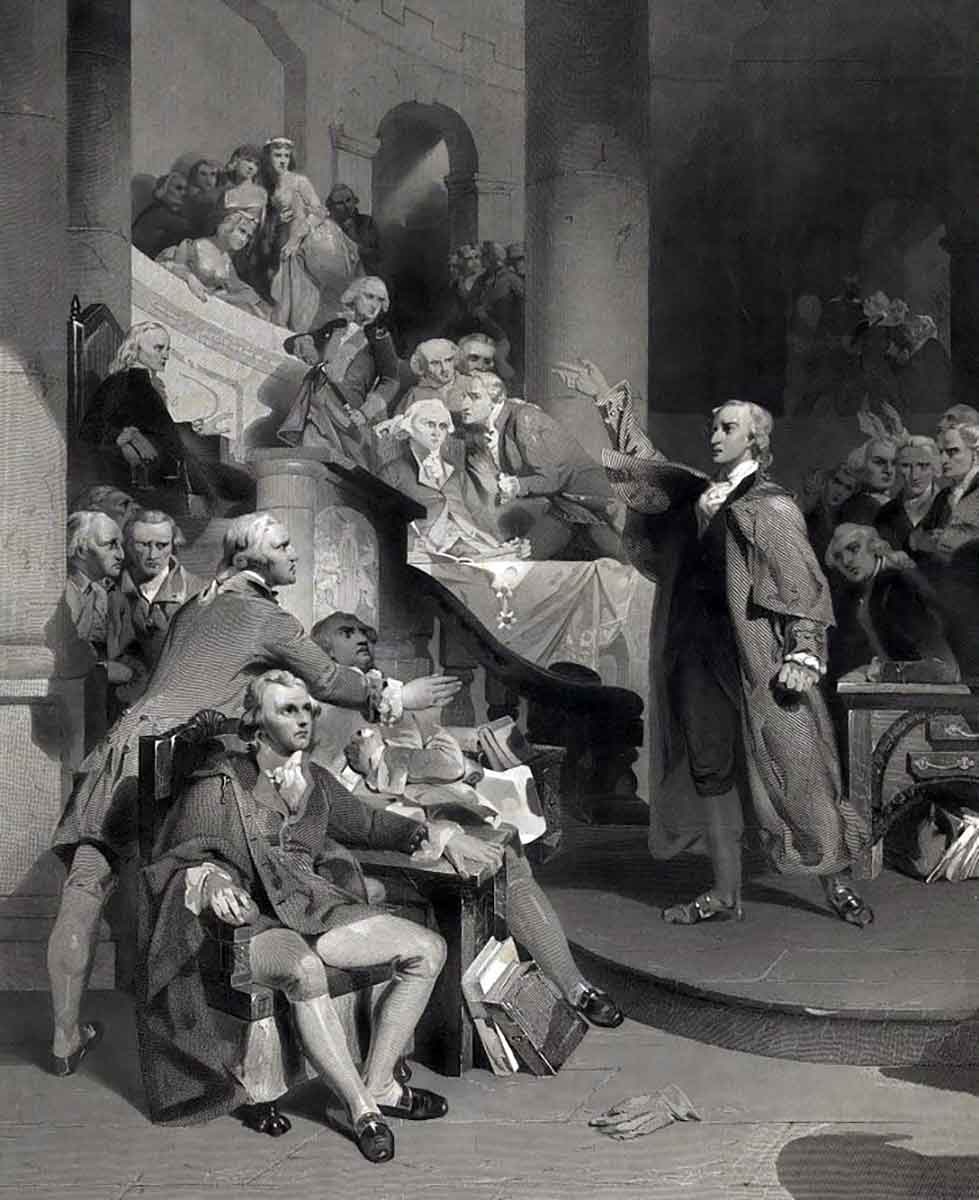
The freshly sworn-in legislator was then thrust into a heated debate over the Stamp Act and whether Parliament had the right to levy taxes from the colonies. Rising to the occasion, Henry delivered a passionate speech in which he said, “Caesar had his Brutus, Charles the First, his Cromwell, and George the Third—.” He was immediately interrupted by cries of “treason” coming from John Randolph, the Speaker of the House. Henry’s stance on British tyranny, however, was made clear, it would not be tolerated.
In the decade between his election to the House of Burgesses and his iconic “Give me liberty” speech in 1775, Henry became the voice of the revolution. His ability to relate to colonists helped spark revolutionary sentiments across the colony. While Virginia’s leadership continued to hope for reconciliation with England, Henry persisted in his call to overthrow British colonial rule.
In 1774, at the First Continental Congress, Henry represented Virginia and was among those who most strongly pushed for resistance over reconciliation. His abilities as an orator were once again on display as he attempted to create a sense of unity among the colonies. It was there that he famously delivered his line, “I am not a Virginian, but an American.” This concept was new to the delegates whose primary loyalty was to their colony, but Henry understood that any attempt to defeat the mighty British military would require a unified effort from the Thirteen Colonies.
Gunpowder Incident
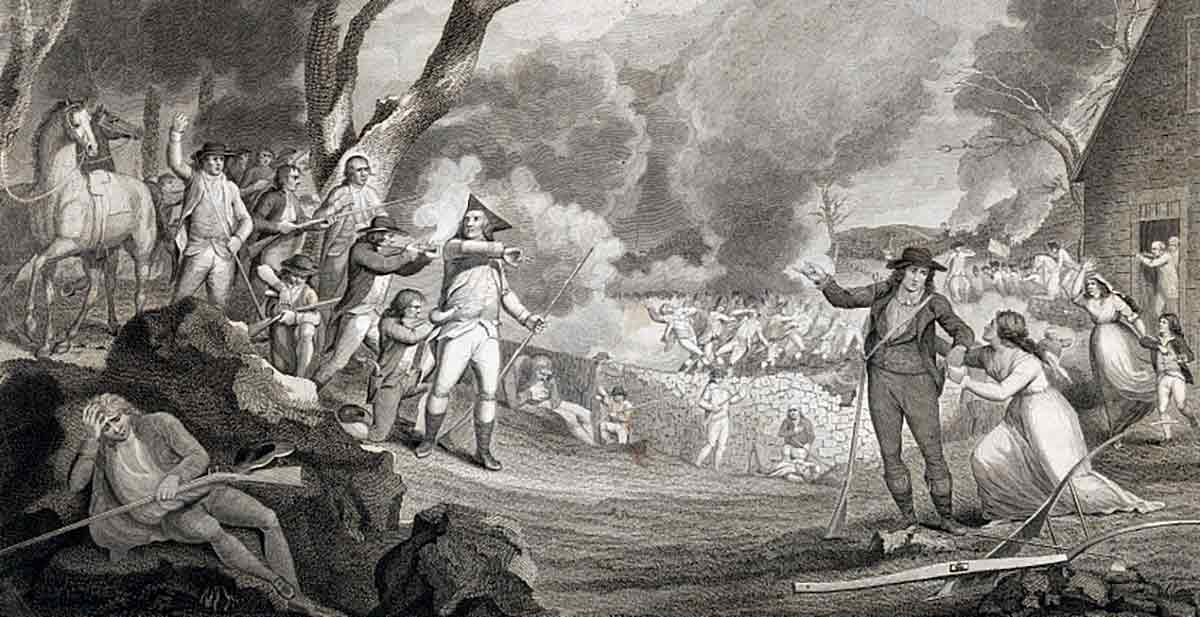
On April 20, 1775, less than a month after Henry delivered his “Give me liberty” speech at the Second Virginia Convention, his rhetoric turned to action when the royal governor, Lord Dunmore, issued orders to remove the gunpowder from the Williamsburg Magazine. Since the Williamsburg Magazine stored the bulk of the gunpowder of the colonial militia, this was viewed as an attempt to disarm the increasingly rebellious colonists.
Patrick Henry did not take kindly to Dunmore’s order. He immediately assembled and took command of an independent militia unit composed of angry colonists from all across Virginia. While most of Henry’s men came from his home county of Hanover, they marched on Williamsburg with every expectation of armed conflict with the royal forces.
However, the uproar over Lord Dunmore’s seizure of the munitions dissipated when the governor claimed that he was seeking to prevent a slave uprising. At the time, news of the conflict at Lexington and Concord had not yet reached Henry. Without knowing that British forces had already opened fire on colonists in New England, Henry pivoted his approach from violence to negotiation as he brokered a deal for financial compensation for the powder that was removed. Lord Dunmore agreed to pay for the powder and Henry’s militia forces disbanded before any violence broke out.
From Revolutionary to Revolution
The peaceful resolution of the Gunpowder Incident was short-lived, as the conflict Henry had claimed was inevitable was officially on their doorstep. News of the “shot heard around the world” finally reached Virginia, and a joint colonial response came in the form of the Second Continental Congress, which authorized the formation of the Continental Army.
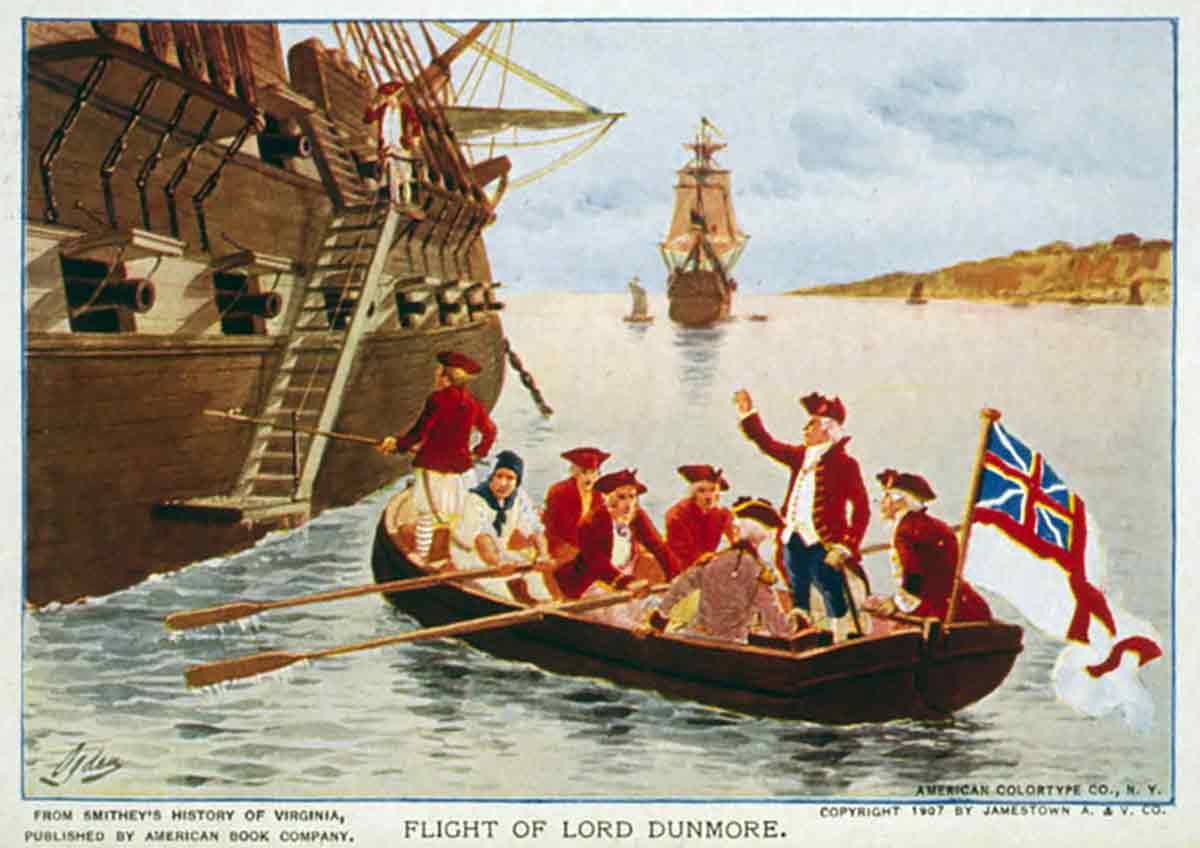
With the seeds of rebellion in a full bloom, Lord Dunmore abandoned the Governor’s Mansion in Williamsburg and attempted to maintain control from the safety of a British warship in the York River. In November 1775, Lord Dunmore issued the Dunmore Proclamation which granted freedom to any enslaved person who joined the British forces. This was one of Dumore’s final attempts to cling to power and he eventually fled the colony altogether in 1776.
With the American Revolutionary War in full swing and a vacancy in the Governor’s mansion, The Virginia General Assembly chose Patrick Henry as the first elected governor of the state of Virginia. His ability to inspire the masses with his words and willingness to act on those words made him an obvious choice to many of his colleagues. In his capacity as governor, Henry also served as commander-in-chief of the Virginia militia with responsibility for the organization and mobilization of Virginia’s forces.
Legacy
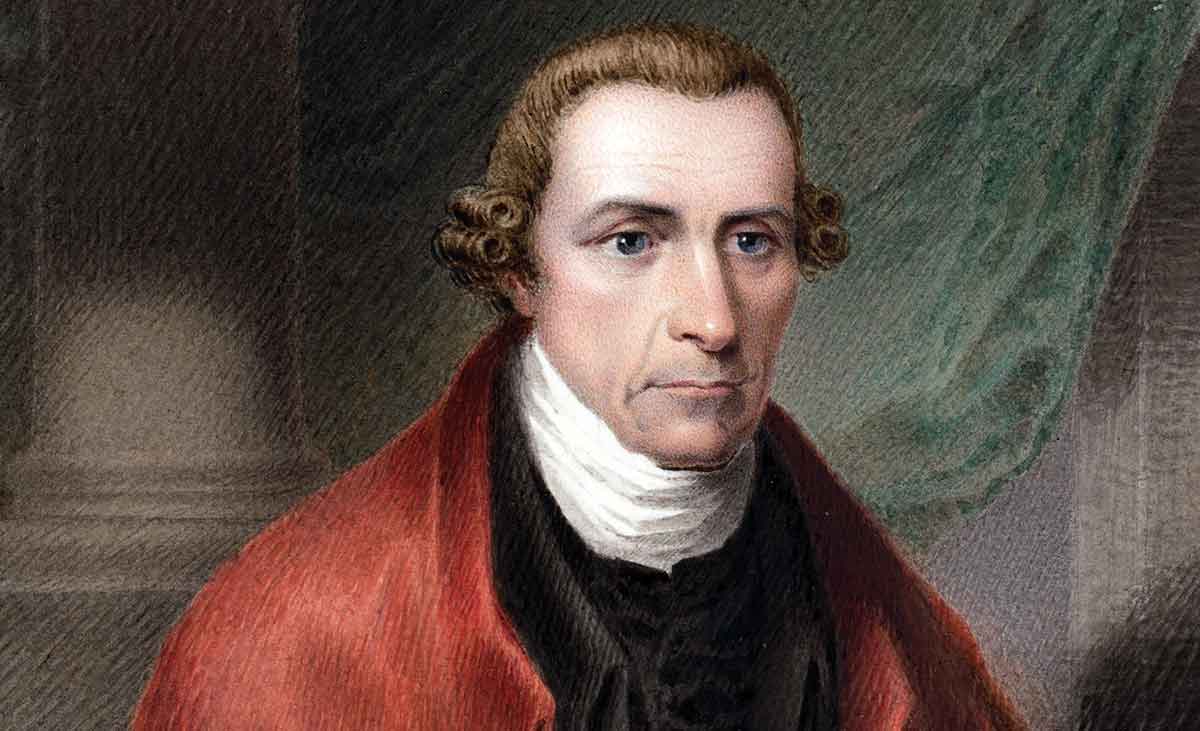
Coming from humble origins, Patrick Henry could relate to the average colonist in ways many other colonial leaders could not. He rose to prominence as a young lawyer and firmly cemented himself on the side of independence. For over a decade, Henry led the radicals in the Virginia House of Burgesses when most of his colleagues in the chamber continued to hope for reconciliation. His rhetorical skills ensured that even his political opponents hung on his every breath when he stood to speak.
After the seeds of rebellion were planted in the resistance to the Stamp Act, Patrick Henry used his ability as a classical orator to foster an environment for those seeds to take root. From the fields of Hanover County to a desk in the Governor’s Mansion, Henry etched his name in the history books as one of the most influential advocates for American independence. His passion and dedication to the cause of liberty demonstrated that revolutions were not only fought with muskets and bayonets but could be ignited by forceful rhetoric in the debating chamber.