
During the French and Indian War, the Acadian people of the northeastern Canadian provinces suffered a brutal mass displacement due to their support of the French war effort. It became one of the most infamous events of colonial Canadian history.
Who Were the Acadians Before 1755?
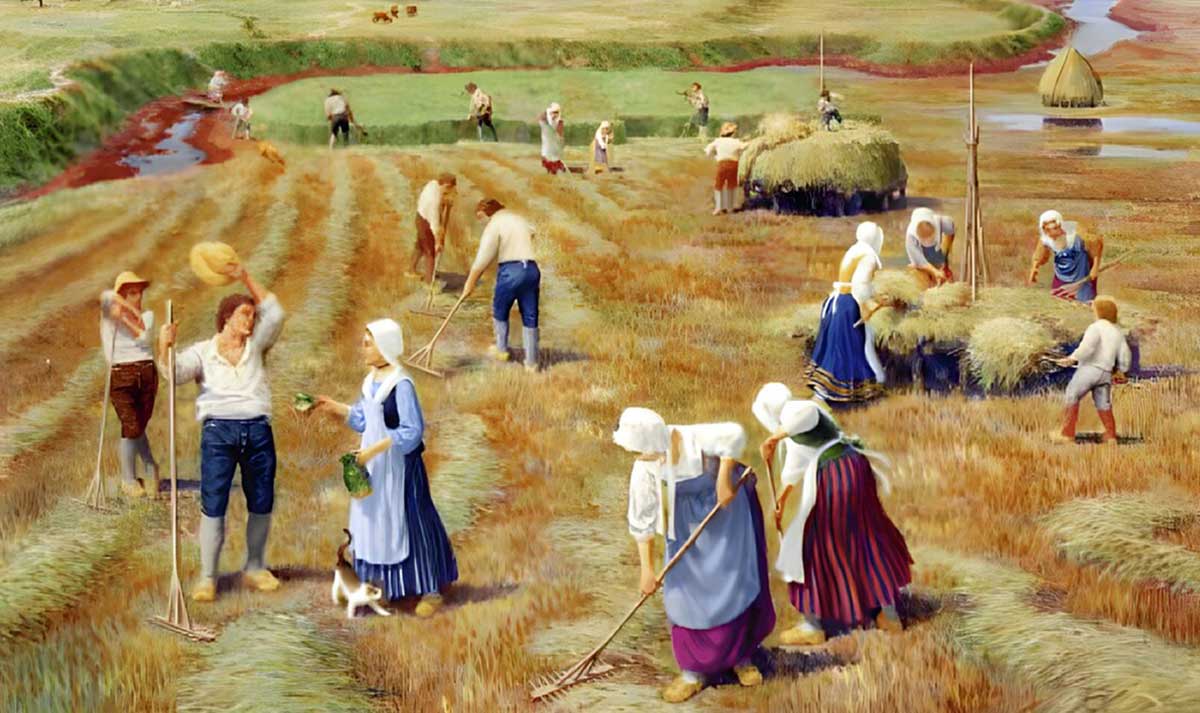
In 1604, the first French settlement in Canada was founded on Île Sainte-Croix. The settlement was soon moved to Port Royal and became a center for French colonialism in the region. Many settlers from the western regions of France arrived in the area in a quest to improve their livelihoods.
By the mid-17th century, the settlers had developed an identity separate from other French colonies like Quebec. They were known for their independent-mindedness, egalitarian social structure, and close relations with the indigenous Mi’kmaq people, which often included intermarriage. From then on, they became known as the Acadians.
In 1713, the British gained control of Nova Scotia (Acadia) from the French in the Treaty of Utrecht that ended the War of the Spanish Succession. The Acadians were unwilling to become British subjects, and many refused to sign any oaths of allegiance to the British Crown.
In 1730, leaders of the Acadian community convinced the British government to allow them neutrality. This led to a period known as the “Acadian Golden Age.” Their property and religious rights were protected and thousands more Frenchmen arrived to bolster their numbers. However, trouble brewed on the horizon for the Acadians as the British sought to consolidate their hold on North America.
British Suspicions of the Acadians in 1755
While the British authorities in London initially agreed to leave the Acadians alone, some colonial officials became more paranoid about the Acadian demands for neutrality. The local militia was restricted to citizens who signed an oath of allegiance to the British, which exempted most Acadians. In 1749, the British founded the new settlement of Halifax as a center for British immigrants to the Maritimes. The Acadians were afraid that they would soon be outnumbered by the British in their home region.
An additional point of friction was the close relations between the Mi’kmaq and Acadian communities. After several Mi’kmaq attacks on English settlements in the region, Governor Edward Cornwallis placed bounties on Mi’kmaq scalps. Many Acadians feared that the English would implement a similar policy towards them. Some Acadians even joined the Mi’kmaq to fight the British and covertly received arms from French garrisons in Cape Breton and Louisbourg.
In 1750, Father Jean-Louis Le Loutre led an exodus of Acadian families to French-controlled territories and announced a period of resistance. While most Acadians did not participate in fighting against the British, a perception formed amongst the British authorities that the Acadians were preparing for a general insurrection.
Fort Beauséjour and the Oath Crisis
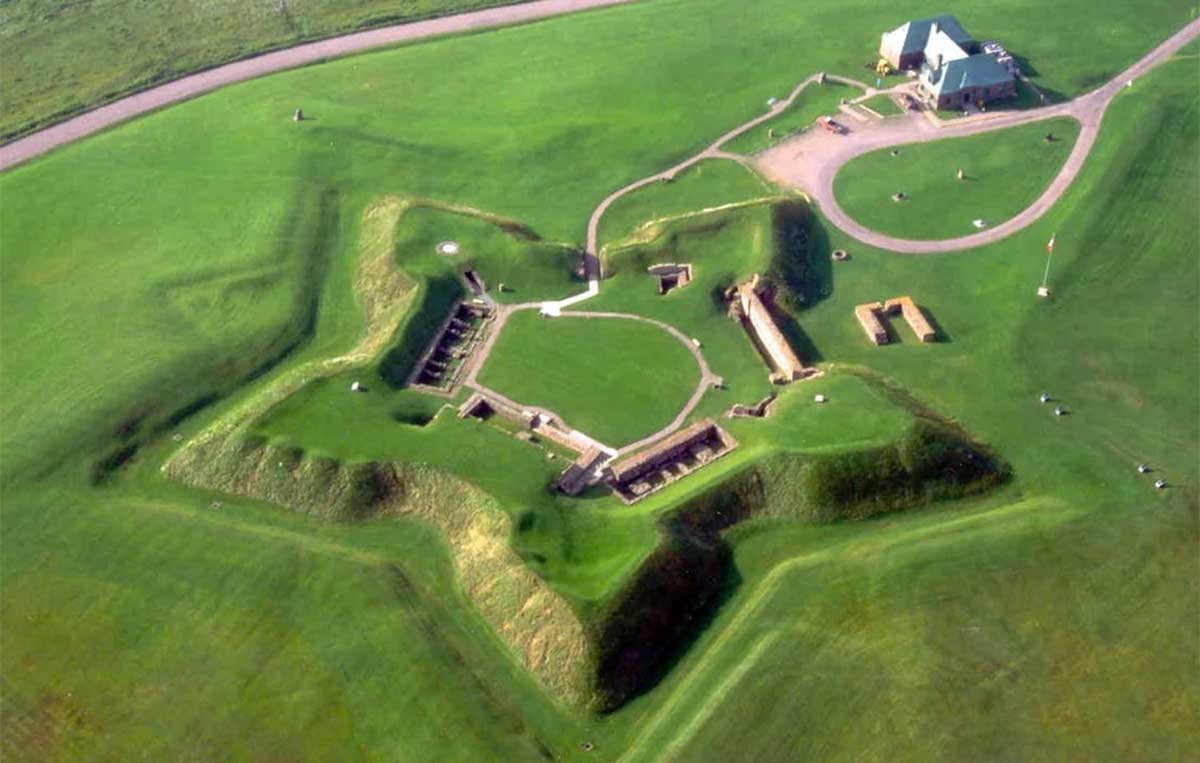
In May 1754, British and American colonial troops clashed with French forces and their Indigenous allies in Pennsylvania. This small skirmish paved the way for a global conflict that led to the deaths of over a million people and the destruction of French Canada. For the Acadians, it was a disaster.
Before 1755, the British and French had built fortifications across from each other on the Chignecto isthmus. As part of a multi-pronged assault against French garrisons in North America, the British launched an assault on Forts Beauséjour and Gaspereau in June 1755. British forces, consisting of British regulars and colonial settler militiamen, managed to seize both forts in a few weeks. Among the French garrison of Beauséjour, they found 270 Acadian militiamen.
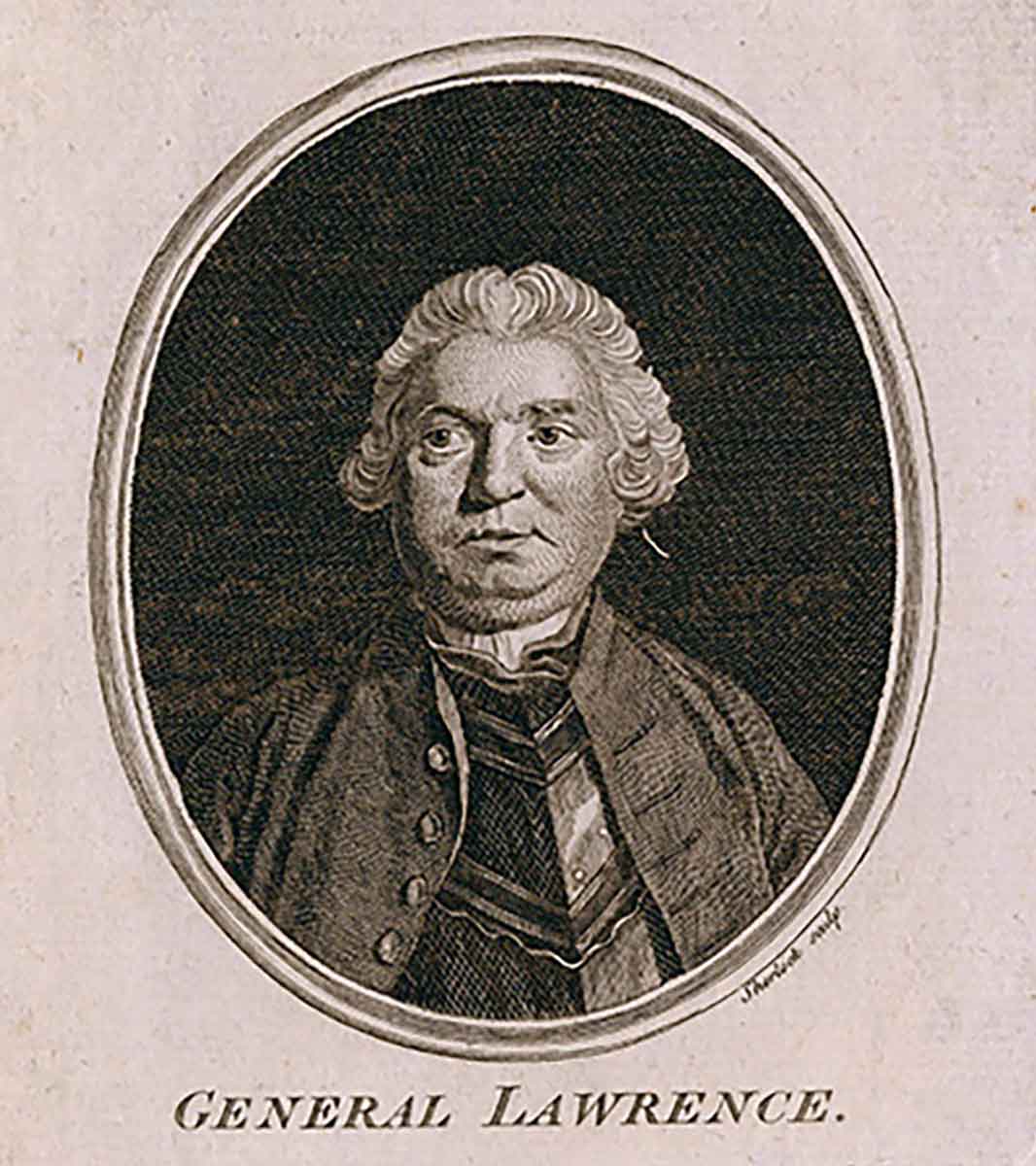
This revelation infuriated the British colonial authorities. For men such as Governor General Charles Lawrence and Massachusetts Governor William Shirley, the presence of Acadians amongst the French garrisons was proof that the Acadians of Nova Scotia were violating their promised neutrality.
Lawrence summoned several Acadian notables to Halifax later that month and insisted that the entire Acadian community take an unqualified oath of allegiance. This meant that they had to agree to fight against France. On July 28, the Acadian delegation collectively refused to sign the oath, insisting that they were “French Neutrals.” Subsequently, Governor Lawrence and the Nova Scotia Council formally authorized the forced removal of every Acadian who did not sign an oath of allegiance.
How the Deportations Unfolded
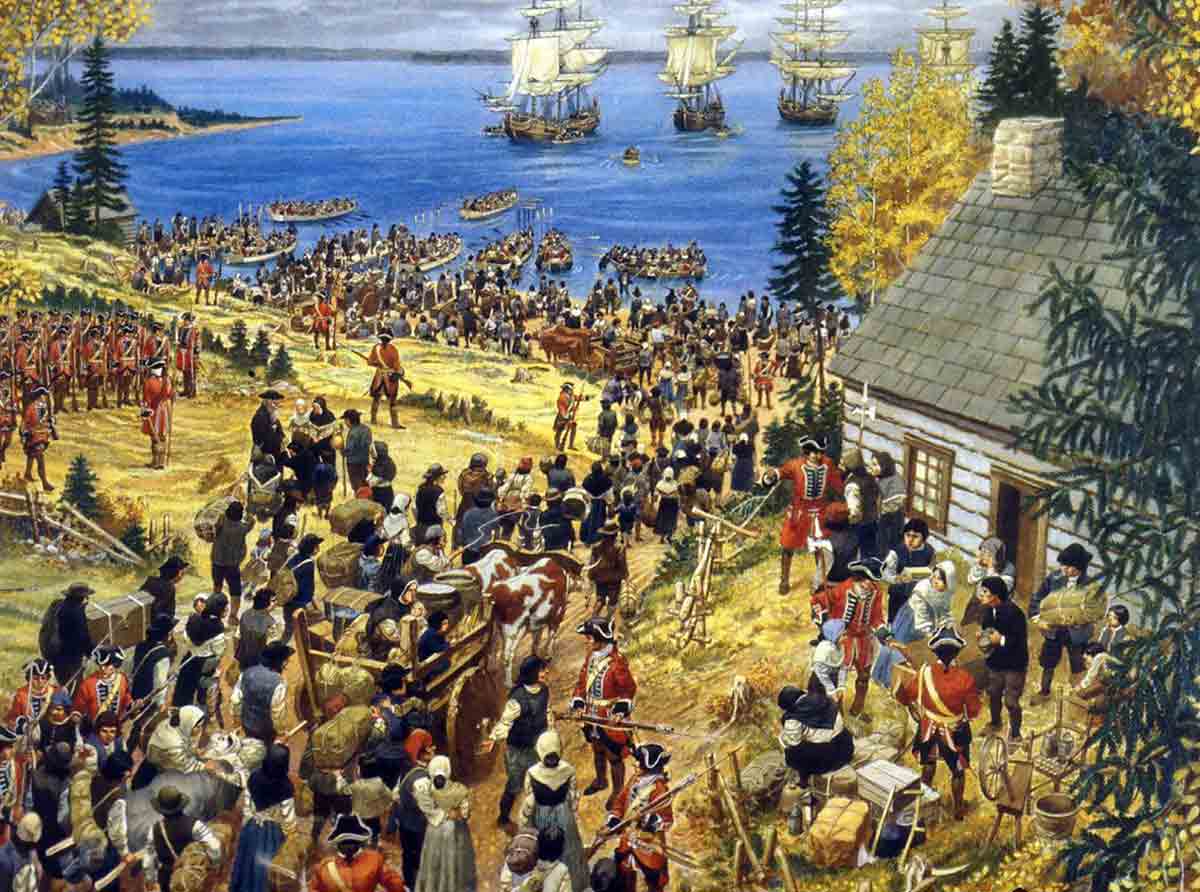
In August and September, British troops began summoning Acadian men and boys ostensibly for negotiations. As these meetings took place, British officers informed them that their lands were now forfeit and the Acadians would have to leave British-controlled territory. While the men were held prisoner, they were joined by their families, whose homes were burned by the British.
Over the course of the war, hundreds of homes and farmsteads were torched by the British and American militiamen. This was done for two main reasons: to encourage the Acadians to agree to deportation and to deprive any of the remaining Acadian refugees of shelter and food.
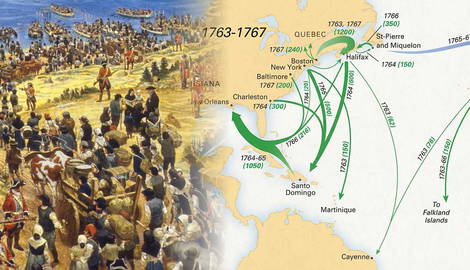
Throughout the fall, the British forced around 6,000–7,000 Acadians to leave Nova Scotia by the British. Ships took them to a variety of locations: the Thirteen Colonies, mainland France, Louisiana, and other locations. The deportations were not finished that year, however.
In 1758, British/American forces captured the port of Louisbourg and took control of Île Saint-Jean (Prince Edward Island) and Île Royale (Cape Breton). Here, they found thousands more Acadians. Around 3,500 more Acadians were deported on ships directly to France, and several hundred perished during the crossing.
Until the end of the war in 1763, the British conducted operations into the wilderness in the Maritimes to clear out any remaining Acadians. By 1764, 11,500 Acadians out of the prewar population of 14,100 had been deported from the Maritimes. Nearly 5,000 died of disease, shipwreck, or in battle.
Acadian Resistance to the Deportations
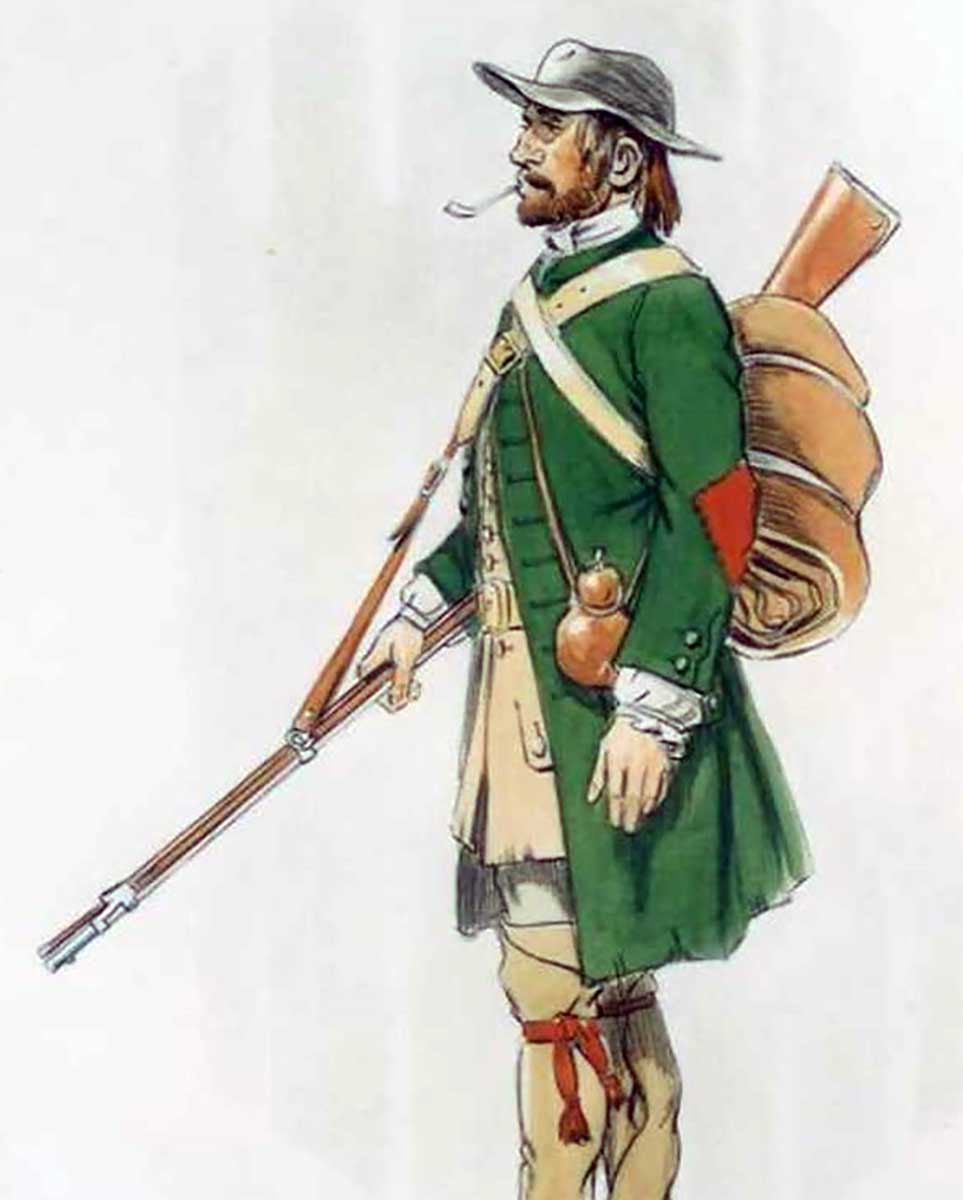
The British faced stiff resistance from Acadian militiamen who refused to be deported. After the fall of Fort Beauséjour, Joseph Broussard dit Beausoleil, an Acadian who was in the garrison, escaped to the woods and led a party of Acadian partisans to fight the British. His men were supported by French troops in Louisbourg and Mi’kmaq natives, who provided them with munitions and supplies. They even constructed a small flotilla in the Bay of Fundy to combat British naval activity in the area. Broussard’s men continued fighting until 1761, when the British finally starved his band into surrendering. He went into exile in Louisiana.
In the Miramichi, Restigouche, and Saint John River valleys, Acadian refugees organized resistance activity against the British. Others joined the French regular army and navy garrisons in Canada. Major Joseph Godin, an Acadian officer of the French regular army, led one of the largest Acadian militia units, staging ambushes against British/American patrols in the Saint John River Valley. He was captured and his family massacred, but he refused to declare allegiance to the British Crown. Subsequently, he was sent to several different prisons around the British Empire before being allowed to return to France.
The British continued brutally cracking down on any Acadians hiding in the woods. Roberts’ Rangers, a British army light infantry unit recruited from the Thirteen Colonies, proved to be the most ruthless in hunting down the Acadians. They often burned any French or Mi’kmaq villages they found to deprive the Acadians of shelter. Despite the bravery of the Acadian guerrillas, they were unable to stop the deportations or the end of French rule in Canada.
Acadians After the War’s End
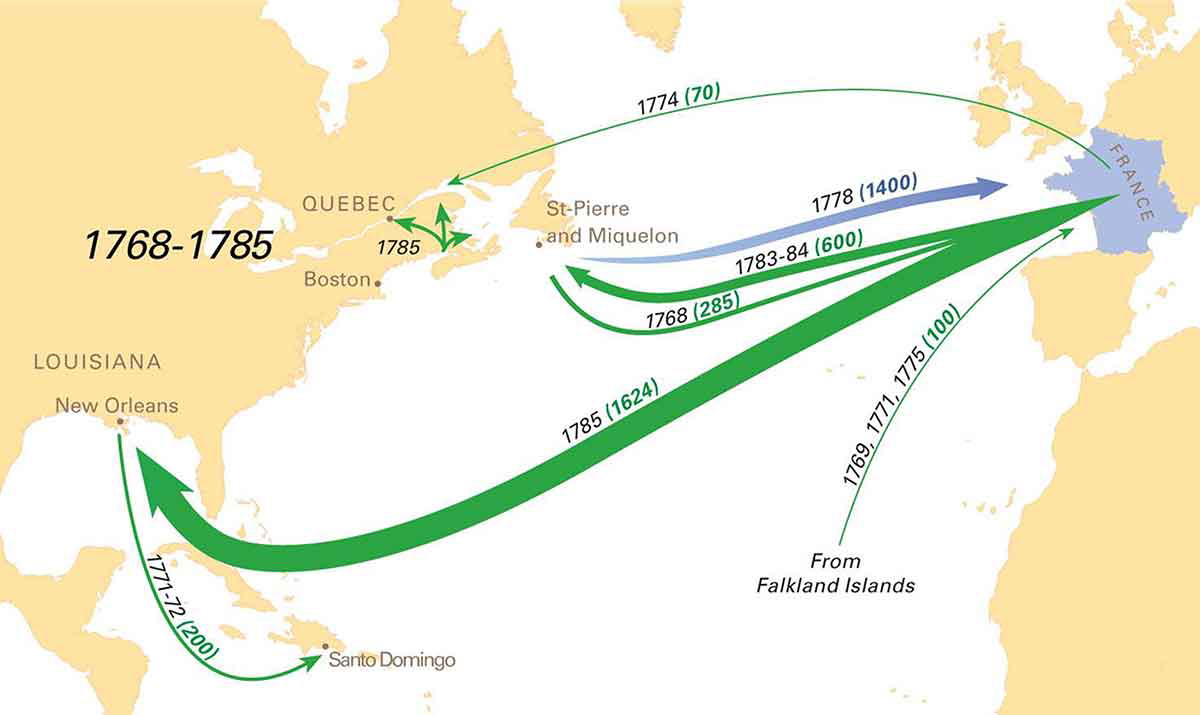
By the conclusion of the Treaty of Paris of 1763, the Acadian presence in the Maritimes was almost eradicated. Some remained in hiding in the woods or lived with other Frenchmen in Quebec or Montreal. However, the remainder were sent elsewhere around the world, including places such as mainland France, Louisiana, or the British colonies on the Eastern Seaboard or the Caribbean.
In 1764, the British government allowed small numbers of Acadians to return to Nova Scotia or the other Maritime provinces on the grounds that they swear allegiance to the British Crown. A number of them agreed to do so, only to find that new settlers had taken their homes and fields. Nonetheless, the Acadian returnees made a painstaking effort to rebuild their lives.
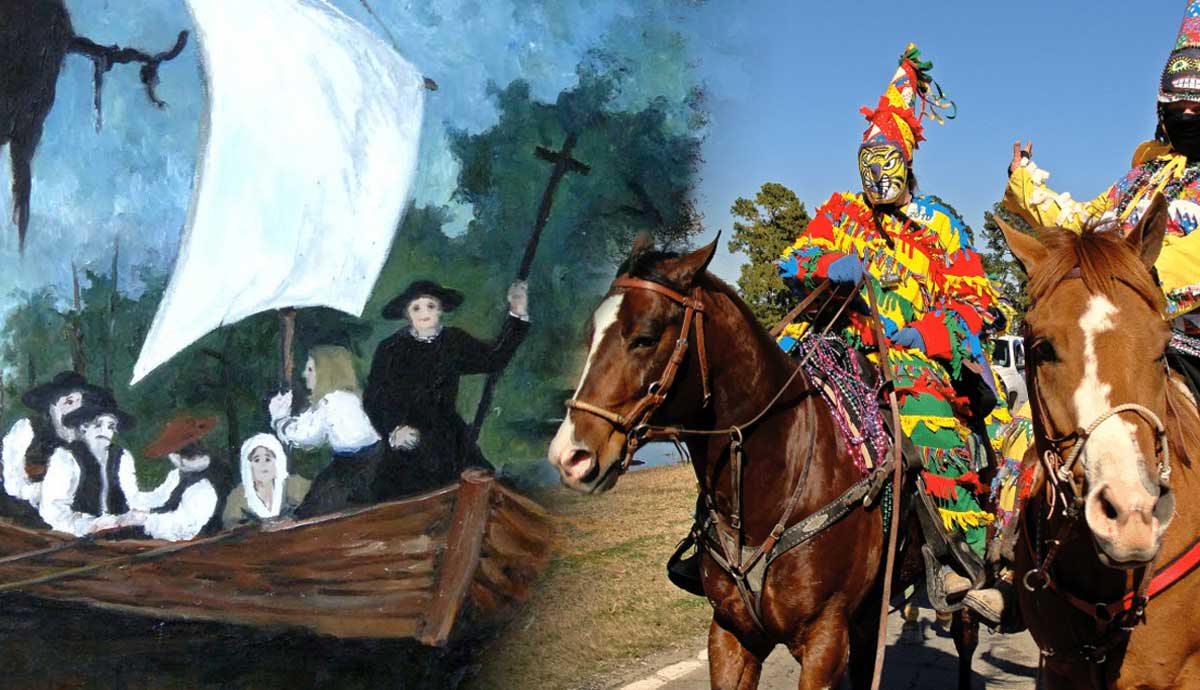
Other Acadians migrated to other parts of the world. For instance, a few thousand returned to France to live there full-time. In 1785, the Spanish government agreed to allow 1,600 Acadians to move to Louisiana, where there was already a Francophone community. Over time, the community became known as the Cajun community and became a major part of society in Louisiana.
To this day, there are close ties between Acadians living in Canada and the Cajun community in Louisiana. The Acadians were able to rebuild their society in Canada and independent Canada granted them full rights and equality. In 2003, Queen Elizabeth II formally acknowledged the misfortunes suffered by the Acadian people in her capacity as Canada’s head of state. Other native tribes in Canada also commemorate the deportations due to their longstanding ties with the Acadians. Their deportation was one of the most infamous atrocities of the Seven Years’ War.