Dickens is often called “The Man Who Invented Christmas”, and while this is an exaggeration, he certainly shaped the elements we now associate with a traditional Christmas: feasting, family, and forgiveness. Payne’s film, The Holdovers, updates these themes for a new era. Both works explore redemption during Christmas, though the source of transformation differs. The idea of the Christmas Spirit became ingrained in our culture when Dickens published his novella in 1843. In Payne’s film, characters strive to revive this spirit amid adversity, evoking nostalgia.
The Significance of Christmas Carols
The Holdovers is set at a prestigious boarding school for boys called Bartons. While most head home for the Christmas holidays, a few unfortunate students are left behind. They “holdover” at the school, supervised by the world-weary teacher Paul Hunham (Paul Giamatti). The film opens with a choir singing a Christmas carol, rooting the story in the fabled setting of Dickens’s tale. Just as Dickens structured his novella in staves, Payne punctuates his film with carols throughout.
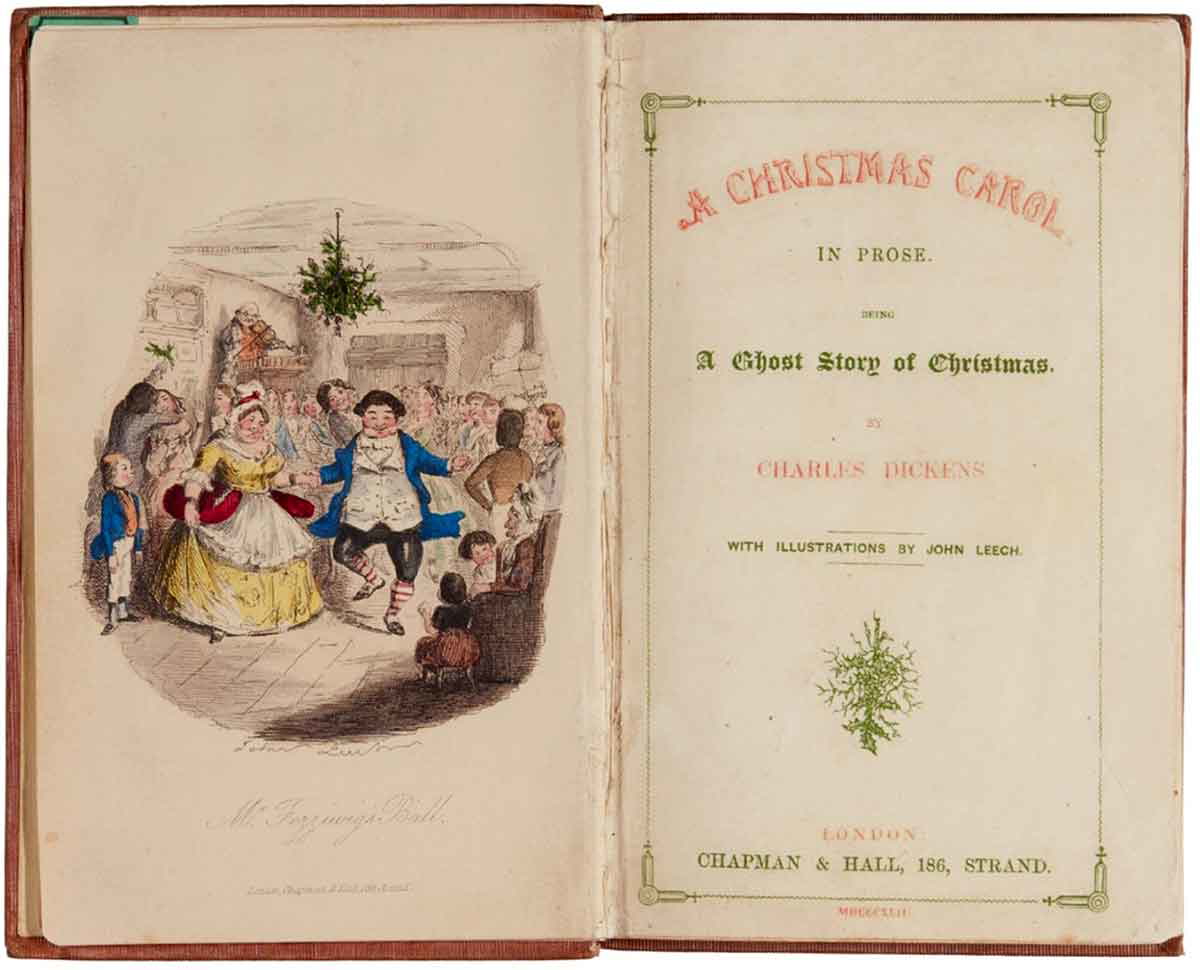
The title A Christmas Carol guides the audience to view the story through the lens of a Yuletide fable. Unlike the sweet music in the opening of The Holdovers, Dickens’s tale begins with the macabre line: “Marley was dead, to begin with.” The shadow of death looms large over both works, emphasizing that our redemption must happen in life. In The Holdovers, despite the choir boys’ sweet voices, the carol poignantly sings of Jesus’s sacrifice, setting the stage for themes of redemption. The school setting of The Holdovers makes the motif of lesson learning more literal than in Dickens’s work, but both tales aim to impart moral lessons.
Hunham: Human and Humbug
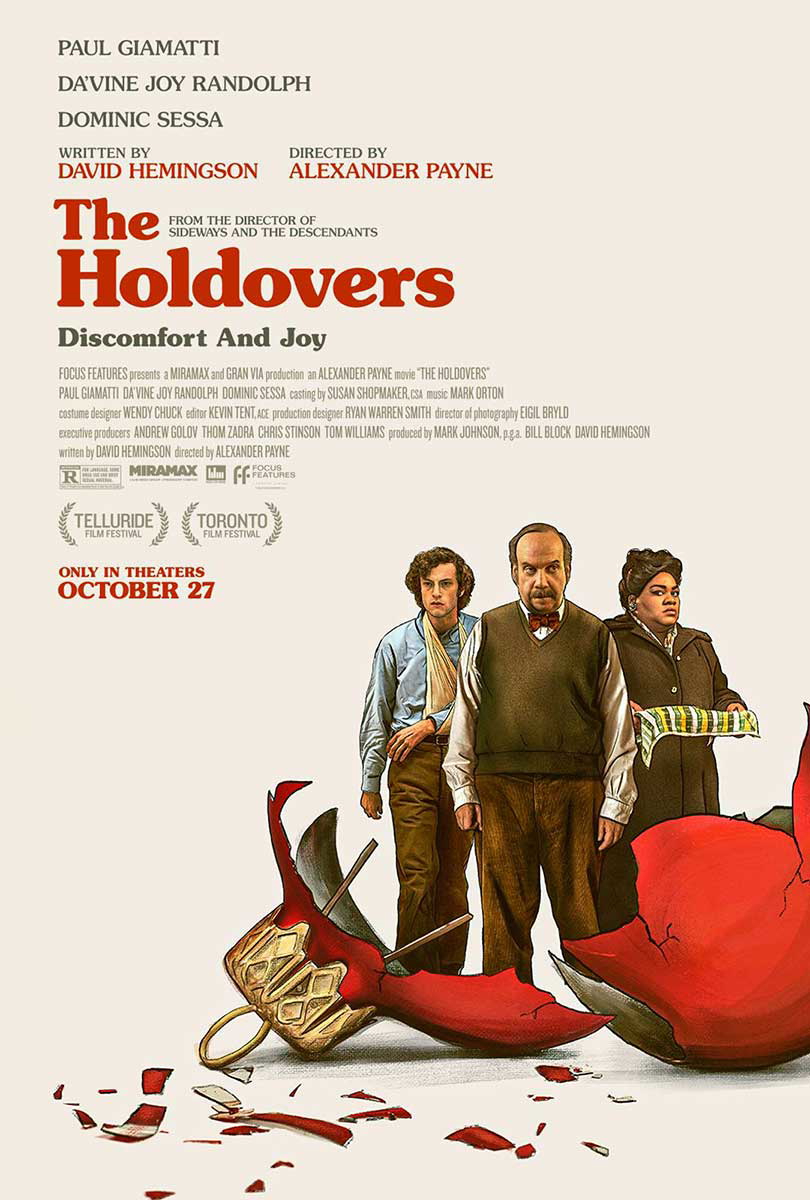
The film introduces Paul Hunham, whose name closely resembles the word human, hinting at his concealed humanity (and, amusingly, Scrooge’s favorite curse: humbug!). He isolates himself at his desk, choosing diligent work over human connection—an immediate reference to Ebenezer Scrooge’s path. The headteacher’s plea to Mr. Hunham to “at least pretend to be a human being” further highlights this, alluding to Hunham having goodness “at his core,” akin to Ebenezer’s hidden pearl, as he is described as: “solitary as an oyster.” Hunham’s life hints at familial tragedy, with parental loss and abuse leading to an awkward young man, unanchored in the world. He once came close to marriage but does not divulge what went wrong. Like Scrooge, his layered miseries have culminated in the cynical recluse we meet.
A Christmas Ghost Story

Dickens’s tale is a classic Christmas ghost story, a genre that Payne’s film explores, too. The walls of the school are lined with memorials to Barton boys killed in action, from the Great War to Vietnam—a stark reminder of life’s fragility. This intrusion of the harsh realities of the adult world into the protective school environment underscores the gross injustice of young lives lost. However, Payne also presents a more sinister class commentary. When another “holdover” boy is rescued by his father for a skiing vacation, we hear that his father is with Pratt & Whitney, an aircraft-making defense company. This profession afforded such luxuries as helicopter rides and skiing vacations in stark contrast to the soldiers on the front line, such as Curtis Lamb. His name symbolically highlights the injustice of the poor boys’ fate (referring to a sacrificial lamb).
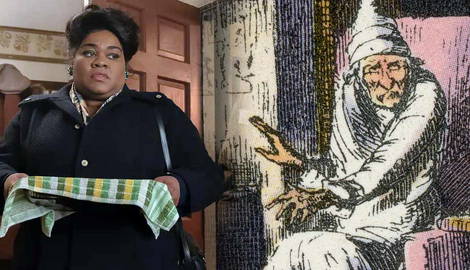
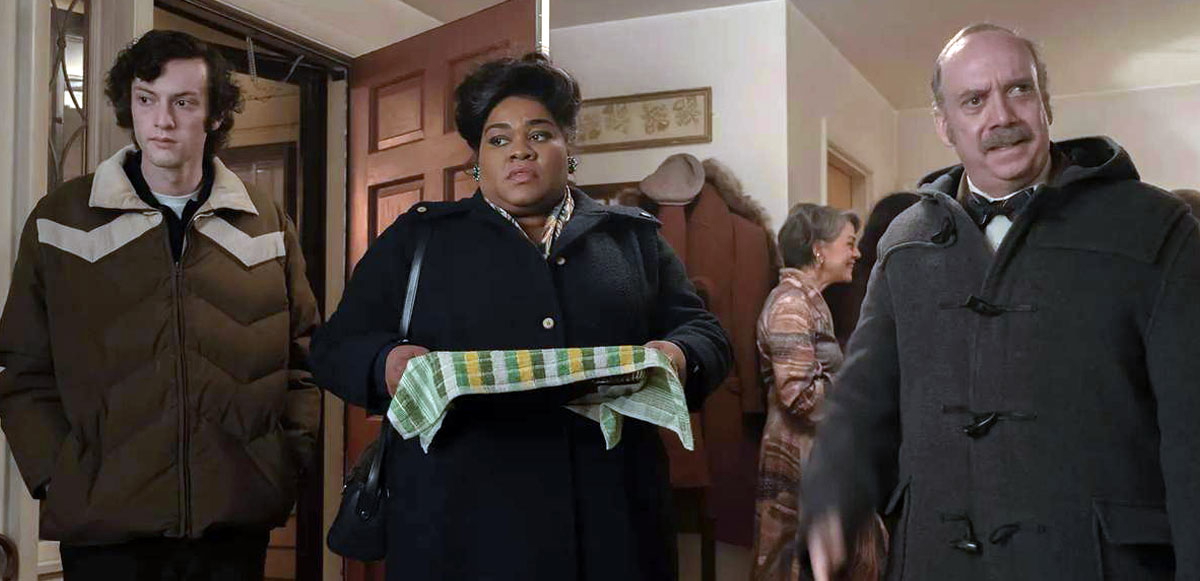
Curtis Lamb is the son of the school cook named Mary (Da’vine Joy Randolph), adding further biblical allusions that convey Payne’s social message. As Cratchit observes in A Christmas Carol, “life is made up of meetings and partings.” Grief and loss are central threads in The Holdovers, but so is rebirth. This is illustrated in the moving scene where the bereaved mother Mary visits her pregnant sister, passing on her dead son’s baby shoes and clothes so they can be given a new purpose.
Christmas Past and Future
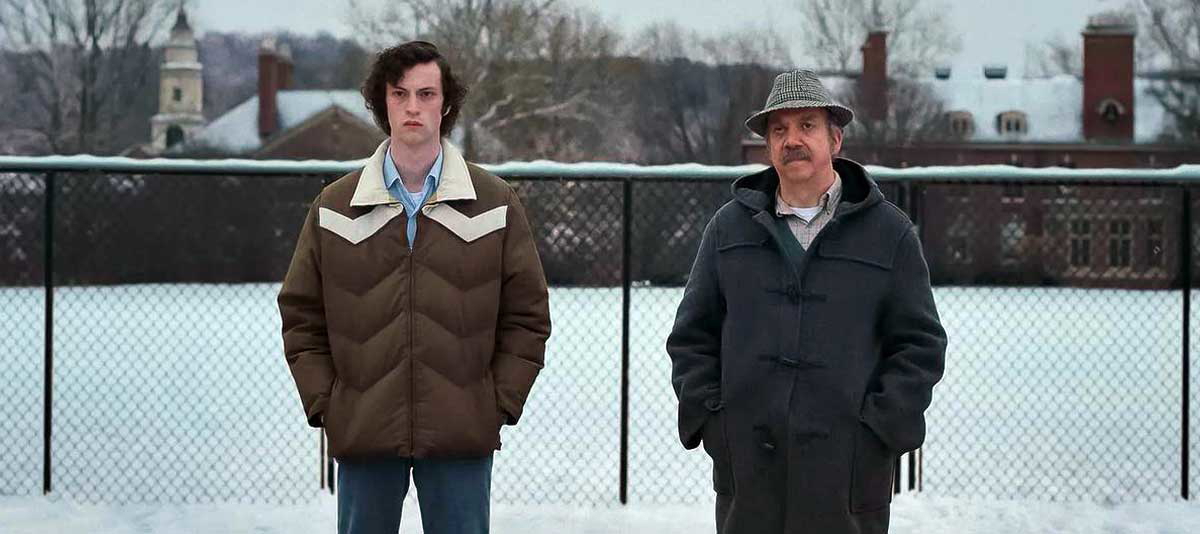
The central “holdover,” Angus Tully (Dominic Sessa), is framed like the young Ebenezer of Christmas past. Tully is left at school, bitter that his schoolmates are flown home to see their families. Unlike Ebenezer, Tully does not have to wait until old age to see the effect of such neglect. His own ghost of Christmas future is his curmudgeonly teacher, Paul Hunham. Initially frustrated with Tully’s insolence, Hunham recognizes a gifted, perceptive, and bruised young man whose absence of parental love has left him lashing out. Payne’s movie uses the template of ghostly omens, infusing them into the parallel lives of Tully and Hunham, highlighting their potential for redemption through connection with each other.
Christmas Present
Ms. Crane (Carrie Preston) stands as the heart of the film—the ghost of Christmas present. If Tully and Hunham show each other their potential pasts and futures, then the joyous Ms. Crane embodies the present. She arrives in a burst of color and light, contrasting with the drabber 1970s aesthetic. Her Christmas Eve party unites young and old, family and friends. A lingering shot of her sister and nephew (who is portrayed as having an undisclosed disability but is the center of the party) parallels Tiny Tim. The home is full of children, reminding us of life’s potential.
Tully shares a chaste kiss with a radiant young woman whose enthusiasm counteracts his gloom. This pivotal scene in presenting the Christmas present underscores the message of redemption through love and family. It is the moment when the trio of misfits—Hunham, Tully, and Mary—show compassion for each other’s loneliness at Christmas and behave selflessly to alleviate their sadness.
Ignorance and Want
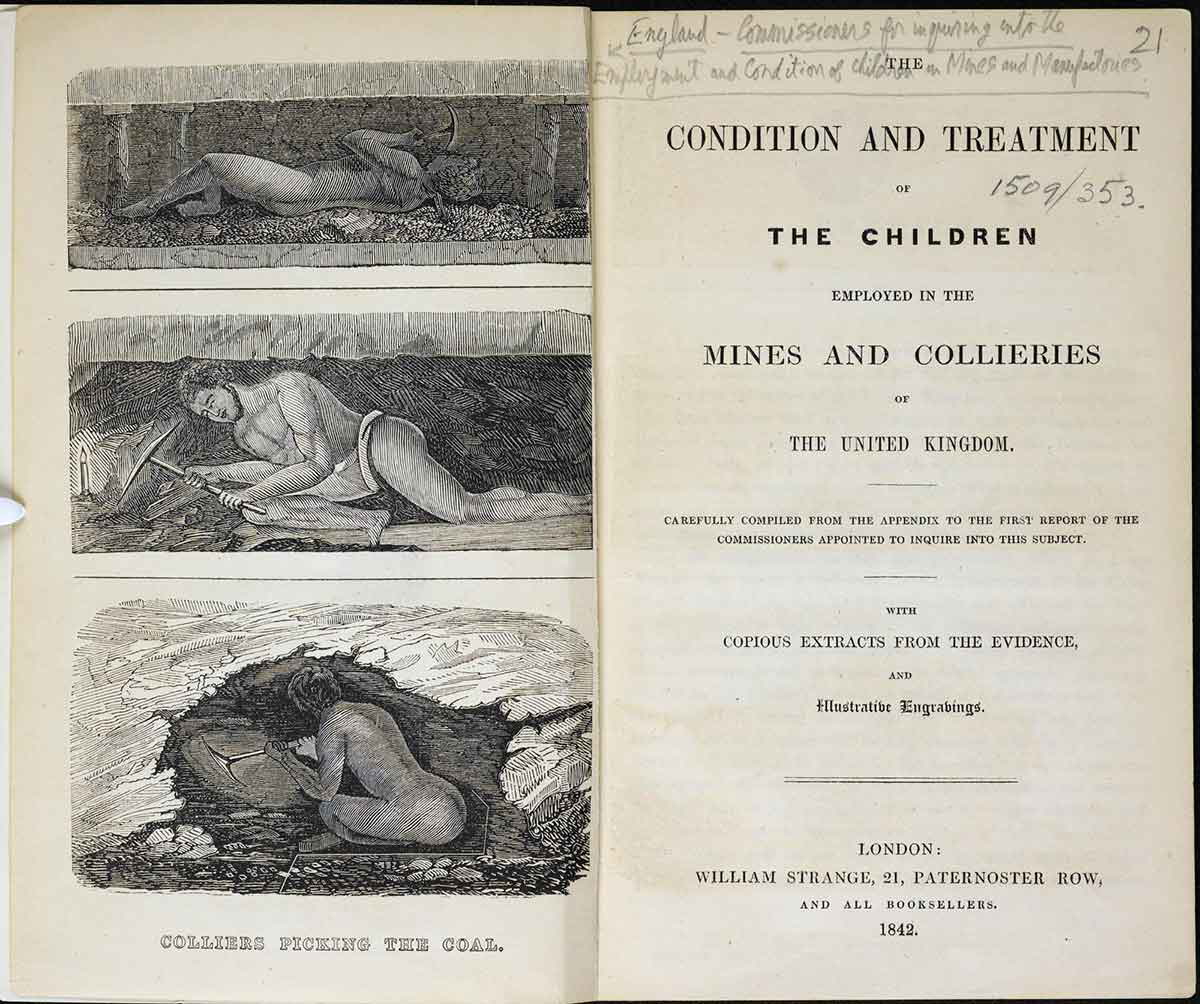
Dickens wrote A Christmas Carol as a social reformer, criticizing the punitive poor laws and attacking the cruelty of Malthusian philosophy. Payne somewhat subverts this by reminding viewers that money is no substitute for love. Tully opens a card full of cash from his absent parents but soon forgets it, opting for a fun-filled day out in Boston with his new family: Hunham and Mary. In one of the darkest elements of Dickens’ novella, Ignorance and Want are personified as ghoulish waifs. In Payne’s film, these abstract threats are embodied by the holdovers themselves.
In a shocking display of social ignorance, a holdover boy, Kountze (Brady Hepner), insists the bereaved mother Mary is merely a servant who should not be treated as an equal. Hunham balks at his ignorance, blaming their closeted world at the school for creating such a narrow worldview. In addition, the film shows us that the boys have no material wants (far from it) but crave love, safety, and nurture—something Dickens’s poor Cratchit family has in abundance. Both of these two works illustrate that neither financial security nor love alone can sustain a family; both are necessary for a young person to thrive.
Father Figures
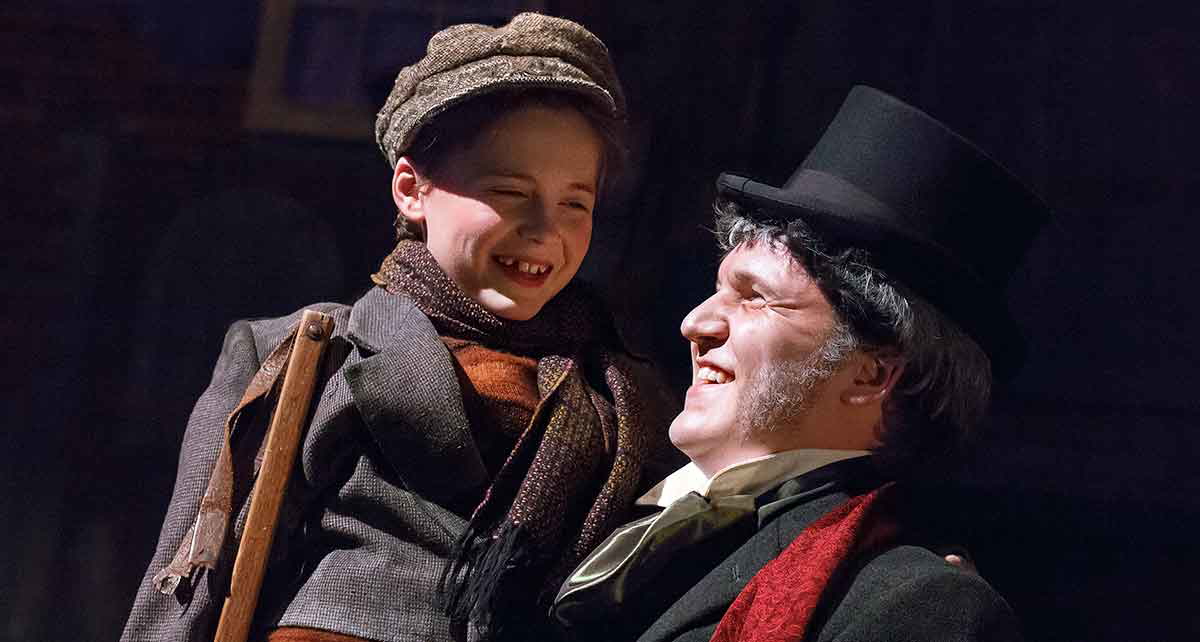
Father figures in both works are problematic. Set in a boys’ boarding school, male relationships are prominent. Hunham reveals his father beat him; Angus takes Hunham (and the viewer) to meet his father, who is in a mental hospital; his stepfather wants to send him to military school. Hunham steps into this void, reminding Angus that no one is destined to become their father.
Similarly, Scrooge’s redemption is exemplified by his becoming a “second father” to Tiny Tim. The finale signals true transformation for Hunham, who sacrifices his career and life at Barton’s so that Tully will not be sent to a military academy. The viewer has been haunted by the dead boy Curtis Lamb, foreshadowing that Tully’s enrolment in military school would almost certainly mean a tragic death in Vietnam. Like Scrooge, Hunham’s redemption saves a child from a premature death.
The Christmas Spirit in “The Holdovers” and “A Christmas Carol”
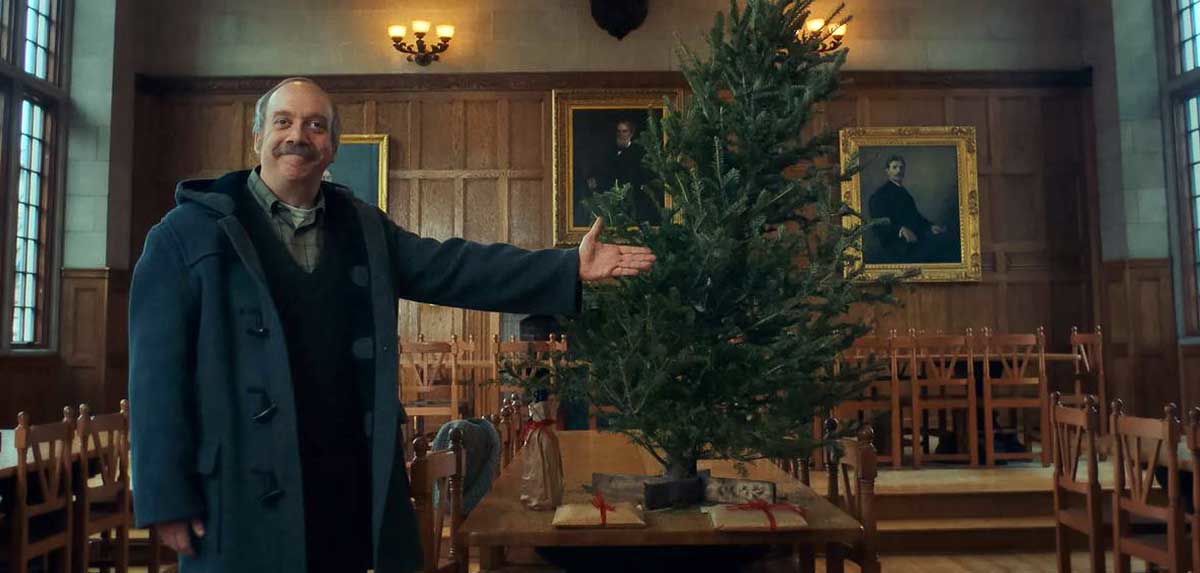
For Dickens, the Christmas spirit was rooted in a Christian message. After all, Tiny Tim’s famous cry of “God bless us, every one!” reminds the reader that companionship and love are a Christian duty. In a satisfying diversion from Dickens’s novella, Payne’s film explicitly eschews religion (despite many church scenes and religious iconography). Instead, it embodies the teachings of Hunham’s revered humanist philosopher, Marcus Aurelius. After giving Aurelius’s Meditations to both Mary and Tully, Hunham demonstrates the belief that “People exist for each other.”
The mirroring of Hunham and Tully’s final goodbye suggests their redemptions are complete. Just as the spirits in Dickens’s tale vanish once their work is done, Hunham takes to the road with his trailer and stolen cognac, a changed man. It is up to Tully to keep the lessons and the Christmas spirit alive in order to change his future.