In 1868, the Meiji Restoration abolished the samurai class and proceeded to do the same with almost every trace of Japan’s feudal history. This, sadly, included many of its castles, which the government perceived as remnants of a past that it had to let go if it wanted to enter the modern age. Only a dozen have survived in their (mostly) original forms. Today, the Matsumoto, Himeji, Maruoka, Bitchu Matsuyama, Matsuyama, and Inuyama castles are the most iconic reminders of Japan’s warrior culture. Let us learn more about their histories.
1. Matsumoto Castle
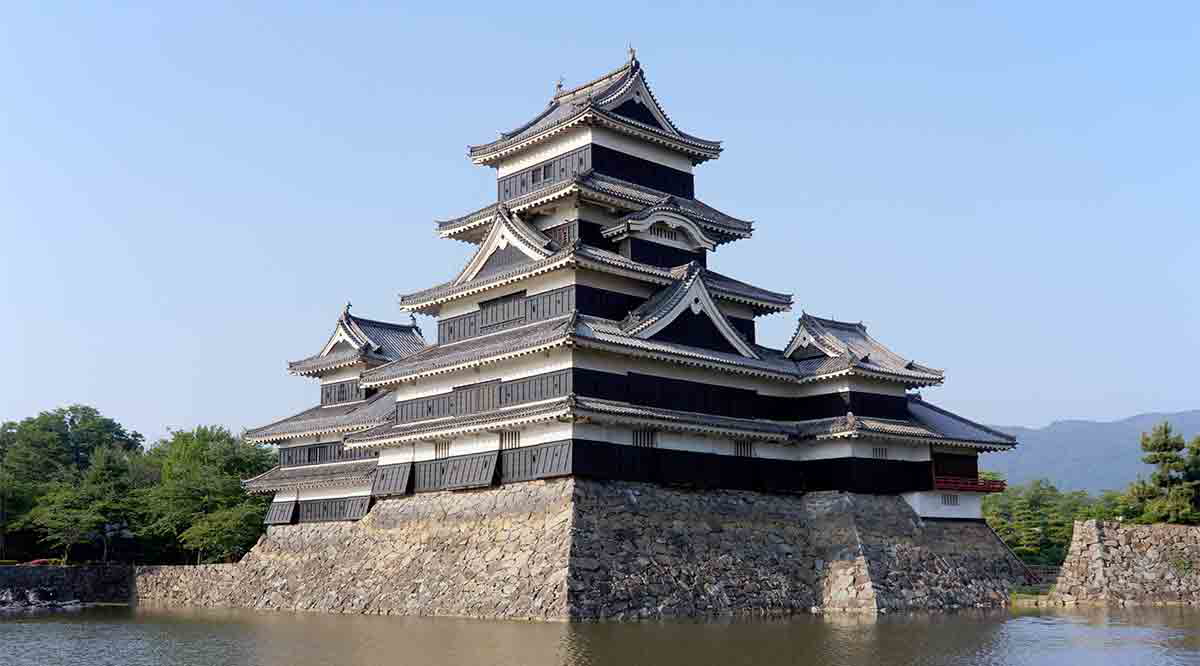
Located in Nagano Prefecture, Matsumoto Castle was constructed during the late 16th century at the tail-end of the Sengoku (Warring States) Period when powerful warlords vied for control of the country in the absence of a powerful central government. Before its establishment, the area where the castle stands now was defended by numerous mountain strongholds erected by local samurai. The most-likely ancestor of the Matsumoto fortress was Fukashi Castle, constructed by Shimadachi Sadanaga back in 1504.
The area was conquered in 1550 by the famous warlord Takeda Shingen, aka “The Tiger of Kai,” who expanded Fukashi Castle’s defenses and used it as his family’s regional military base until the fall of the Takeda clan in 1582. Subsequently, the site was reclaimed by the Ogasawara clan and renamed to “Matsumoto.” In 1590, the Ogasawara were displaced by Toyotomi Hideyoshi, the second great unifier of Japan, whose vassals undertook major construction works that added a keep, moats, and samurai residences to the stronghold, transforming it into a full-fledged shiro (Japanese castle). And thus, Matsumoto Castle was born.
During the Edo Period (1603–1868), Matsumoto Castle served as the administrative center of the Matsumoto domain, being witness to periodic uprisings, fires, and reconstruction efforts. The domain aligned with the imperialists during the Meiji Restoration. Following the abolition of feudalism, the castle was spared and became public property, though parts of it were sadly demolished. Today, it is known as “Crow Castle” because of the dark exterior of its castle keep and turrets, which has been achieved with the use of black lacquer that continues to protect the castle from the elements.
2. Himeji Castle
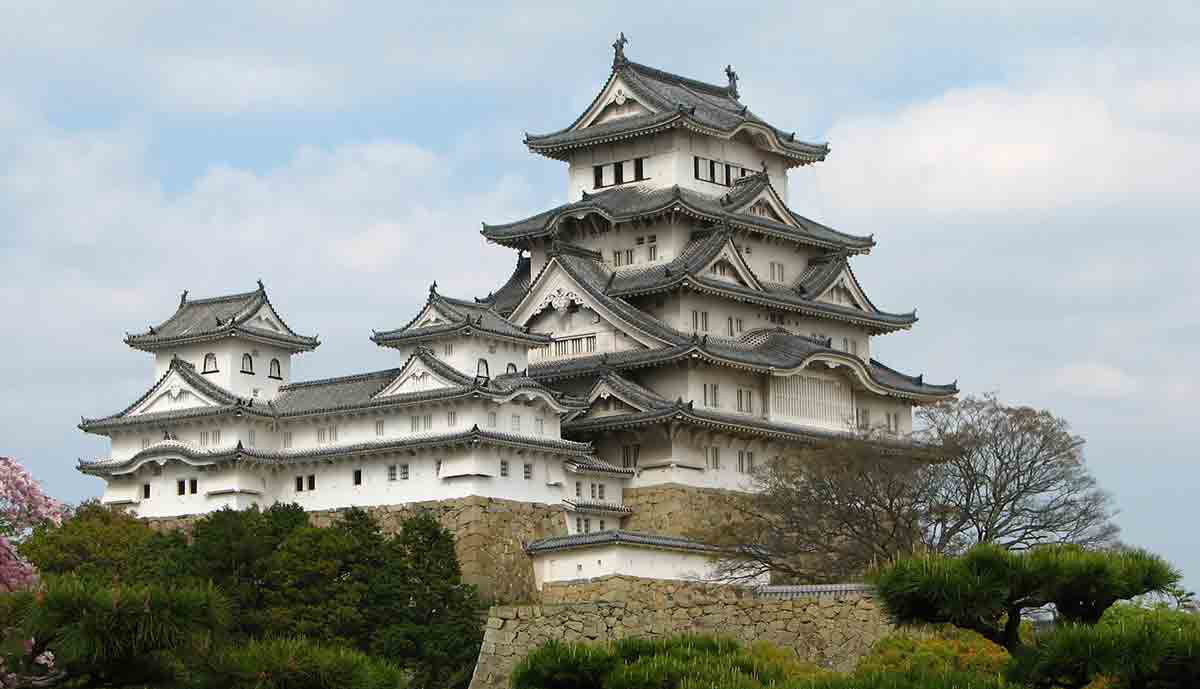
Located in Hyogo Prefecture, Himeji Castle was originally a small fort constructed in 1561 under the orders of the Kuroda clan. It gained strategic importance when Toyotomi Hideyoshi made it his base of operations in western Japan and ordered the construction of a three-story keep to expand the fort’s defenses. After Hideyoshi’s death, Tokugawa Ieyasu, the third great unifier of Japan, awarded Himeji Castle and Harima Province to his son-in-law, Ikeda Terumasa, who initiated large-scale expansion works in 1601, transforming Himeji into a vast castle complex protected by outer moats and earthen embankments encompassing its surrounding castle town. The end-result was one of the most fortified structures of the early Tokugawa period.
Following Terumasa’s death in 1613, the control of the castle was awarded to a succession of clans loyal to the Tokugawa shogunate because of the fortification’s strategic position between western and central Japan. After the Meiji Restoration, the castle was repurposed as a military base, during which time parts of it were demolished, though thankfully the castle keep survived.
Restoration efforts began in the 1930s but were interrupted by World War II. Although the area was the target of air raids, the castle remained intact, once reportedly even deflecting a bomb that failed to detonate. A major postwar restoration took place between 1956 and 1964 using traditional building techniques to preserve the site’s authenticity. Today, Himeji Castle is known as “White Heron Castle” due to its beautiful white-plaster exterior.
3. Maruoka Castle
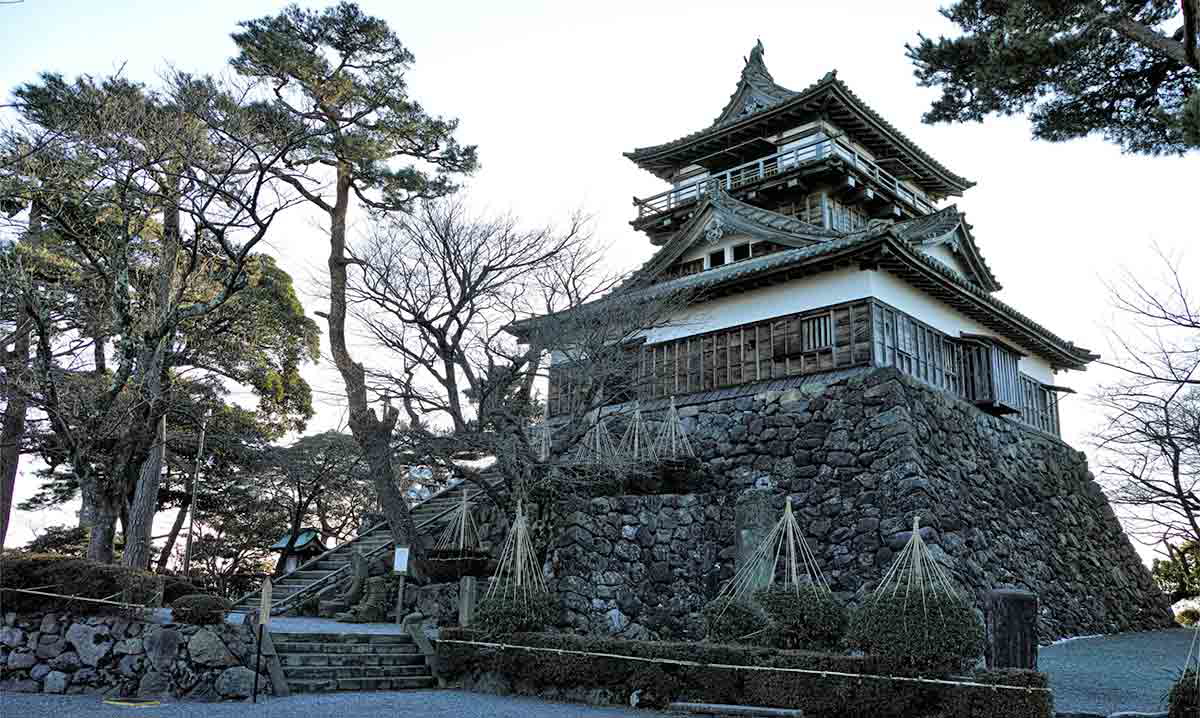
Located in Sakai City, Fukui Prefecture, Maruoka Castle was constructed in 1576 by Shibata Katsutoyo under orders from Oda Nobunaga, the first great unifier of Japan also known as “The Demon King.” The castle was established as a military outpost to counter the uprisings by Ikko-Ikki zealots in the region.
In 1613, Honda Narishige assumed control of the castle, and in 1624 he became the first lord of the newly established Maruoka domain. The Honda family ruled for four generations and were responsible for key development projects including the irrigation and expansion of the adjacent town. The castle then passed to the Arima family for eight generations. Arima Shigezumi, ruling for approximately 50 years during the late Edo Period, is today remembered for his economic and educational reforms as well as debt relief.
Maruoka’s keep is considered the oldest of the twelve surviving original castle towers in Japan, though it was reconstructed after a 7.1 magnitude earthquake struck Fukui in 1948 and toppled the structure. Though it was heavily damaged, the restoration project reused over 70% of the keep’s original materials. The castle was further reconstructed until the mid-20th century but despite modern interventions, the restored structure remains historically valuable. Maruoka Castle is also known as “Mist Castle” because of a legend that a thick mist hid it from human eyes during enemy attacks.
4. Bitchu Matsuyama Castle
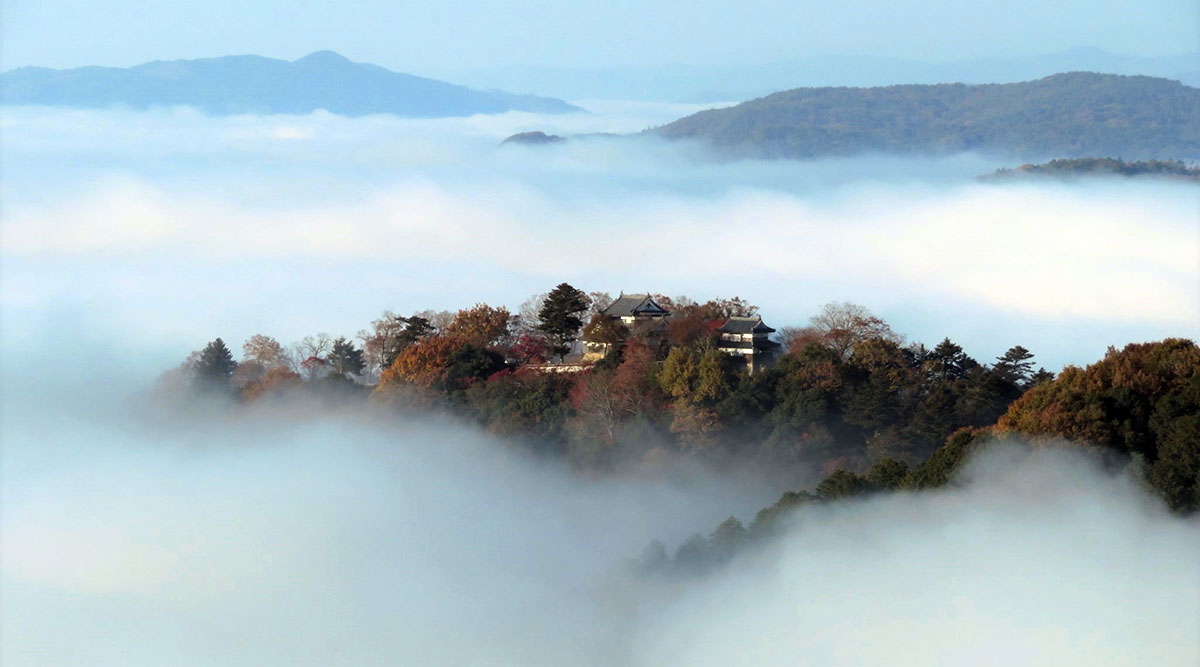
Located in Takahashi City, Okayama Prefecture, Bitchu Matsuyama Castle traces its origins all the way back to 1240 when it was constructed by Akiba Saburo Shigenobu during the Kamakura Period (1185–1333). A yamajiro mountain castle, it occupies a strategic location atop Mt. Gagyu at an elevation of 430 meters, the highest elevation for any shiro with an original castle keep.
The castle changed hands several times during the Sengoku Period. In the 16th century, the castle was controlled by the Mimura clan, who strengthened its fortifications. After Tokugawa Ieyasu’s victory in the Battle of Sekigahara in 1600 that effectively ended the Warring States Period, control of the castle and the new Bitchu Matsuyama domain eventually went to the Itakura family. They ruled for more than two centuries, expanding the existing castle structures and ensuring their maintenance.
Although most yamajiro were destroyed during the Edo Period, Bitchu Matsuyama Castle was left alone in no small part because it was so hard to reach. After the Meiji Restoration, the keep and several gates were preserved while others were dismantled. Conservation efforts in the 20th century restored parts of the structure. Because of its high elevation that puts it above the early morning mist, Bitchu Matsuyama Castle occasionally appears to be floating in the clouds, hence its unofficial nickname of “The Mountain Castle in the Sky.”
5. Matsuyama Castle
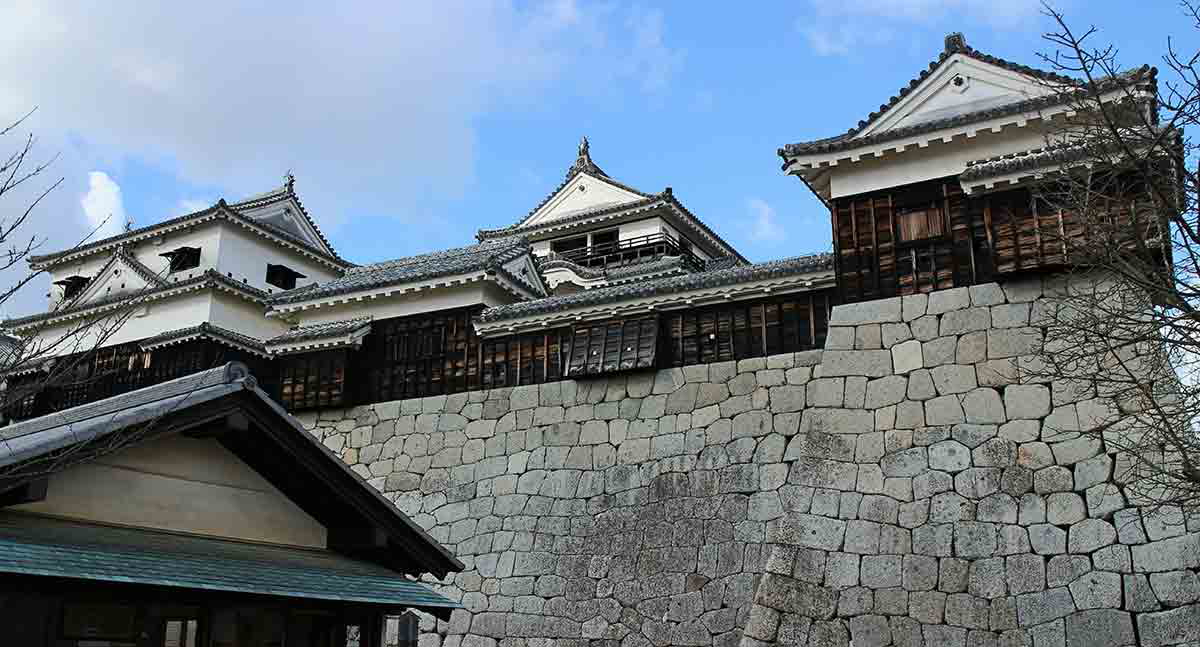
Located in Ehime Prefecture on the island of Shikoku, Matsuyama Castle was founded in 1602 by Kato Yoshiaki, a general originally in the service of Toyotomi Hideyoshi who later allied with Tokugawa Ieyasu. After being awarded the Iyo-Matsuyama domain, Yoshiaki selected the 132-meter-high Mt. Katsuyama for the site of a new castle that would serve as the administrative center of the province. Construction of the central keep and castle defenses continued for several decades, resulting in the completion of one of the more complex castles of the Edo Period.
Following the Battle of Sekigahara, Yoshiaki’s loyalty to the Tokugawa regime seemingly ensured continued support from the government. However, in 1627, the Kato family was replaced by the Gamo clan as overseers of Iyo-Matsuyama. Then in 1635, the Matsudaira clan, from which Ieyasu had originally hailed, assumed control of Matsuyama Castle and governed the domain until the Meiji Restoration.
The castle underwent multiple renovations and expansions over the years, including the addition of a new keep completed in 1854, right at the end of the Edo Period, to replace an earlier structure that was destroyed by lightning. Despite the widespread dismantling of feudal fortresses during the Meiji Period, Matsuyama Castle was preserved due to local efforts. Much of the original structure, including gates, towers, and walls, remains intact or has been reconstructed using traditional methods. The site functions today as a historical monument and a symbol of local heritage.
6. Inuyama Castle
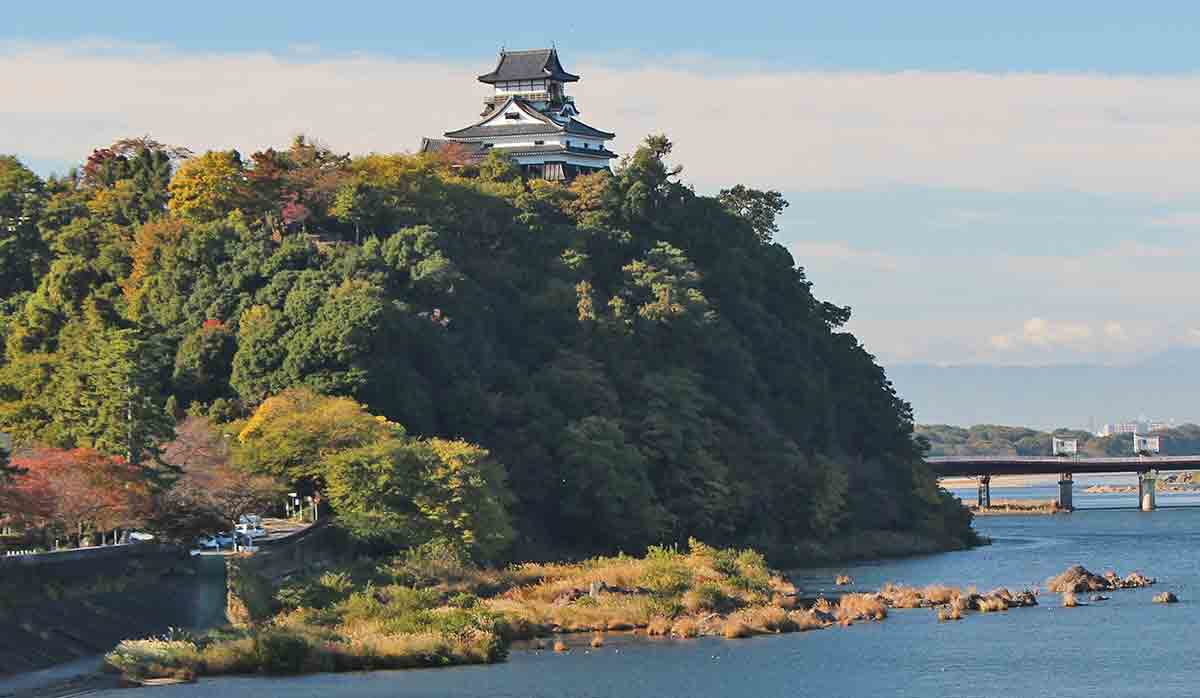
Located in Aichi Prefecture, Inuyama Castle was constructed in 1537 by Oda Nobuyasu, uncle of Oda Nobunaga. Strategically situated on a hill overlooking the Kiso River, the castle controlled a critical junction connecting central and eastern Japan. During the late 16th century, the castle came under the control of Toyotomi Hideyoshi. Following the establishment of the Tokugawa shogunate, Inuyama Castle was assigned to various Tokugawa-aligned clans, giving it a connection to all three great unifiers of Japan.
In contrast to many Japanese castles that were nationalized or destroyed during the Meiji Restoration, Inuyama Castle remained under private ownership of the Naruse family—who took control of it in 1617—for hundreds of years. Although it was briefly seized in 1871 by the government, who demolished most of its buildings except for the keep, legal complications resulted in Inuyama’s return to the Naruse clan whose private control of the castle lasted until 2004. After nearly 400 years of Naruse oversight, the fortress’ ownership was transferred to a non-profit organization. Despite the 19th-century demolition, Inuyama Castle’s keep is recognized as one of the best-preserved Japanese castle towers from the feudal era.