One of several imperial states within the Holy Roman Empire, the kingdom of Bohemia ruled over much of what is today the Czech Republic as well as parts of Slovakia, Germany, Austria, and Poland. It remained part of the Austrian Empire after the dissolution of the Holy Roman Empire and formed the basis of Czechoslovakia at the end of World War I.
Creation of the Bohemian Kingdom
During the 6th century, western Slavic tribes arrived in the land now known as Bohemia and began settling there. Before their arrival, the region had been populated by Celtic tribes such as the Boii, who gave their name to Bohemia. The Slavs who settled in Bohemia began converting to Christianity owing to the influence of the kingdom of the Franks to the west. This laid the groundwork for the creation of the kingdom of Bohemia.
When the neighboring Kingdom of Great Moravia started to unravel, the Bohemian Slavs (Czechs) began to take action to increase the territory under their control and to solidify their power. The Přemyslid Dynasty became the most powerful of the Bohemian noble families and helped create the Bohemian Kingdom. However, by 950 CE, they started to fight with the Holy Roman Empire over land and influence. After a protracted conflict, Bohemia became a duchy within the Holy Roman Empire in 1001 CE.
Until 1198 CE, Bohemia was ruled by dukes from the Přemyslid family. That year, Philip of Swabia, the King of the Romans (an uncrowned Holy Roman Emperor), granted Přemysl Ottokar the title of King of Bohemia in exchange for support during a power struggle. By 1204, Ottokar was recognized as king throughout the Empire and by the Pope. He received a large degree of autonomy from the Imperial seat in Palermo through the famed Golden Bull of Sicily. This decree, issued by Emperor Frederick II, proclaimed that the kingdom of Bohemia would be a self-governing constituent of the Holy Roman Empire.
The 13th Century in Bohemia
In the 13th century, Emperor Frederick II and his allies were determined to control as much of the Mediterranean as possible. Additionally, the empire faced internal chaos during the Great Interregnum after Frederick’s death. As a result, the Bohemians were emboldened to take as much territory from their neighbors as possible. They hoped to build a buffer zone between their territory and the Mongols invading from the east. In 1241, King Wenceslaus I, Ottokar I’s son, repelled a Mongol attack on Bohemia, ensuring the kingdom’s security.
Wenceslaus’s son, Ottokar II, became king in 1253 and ruled until his death in 1278. He had clashed with his father, even trying to overthrow him in a revolt that failed. As a result of his marriage to Emperor Frederick’s sister Margaret, he became the Duke of Austria, adding this territory to the Bohemian kingdom. Ottokar II was a warrior king who vowed to expand Bohemia’s borders, earning himself the nickname “The Iron and Golden King.” He even sent expeditions to the Baltic Sea, defeating the Old Prussians and establishing a settlement called Královec, now known as Kaliningrad. At the height of his rule, Bohemian territory stretched from Austria to the Adriatic Sea.
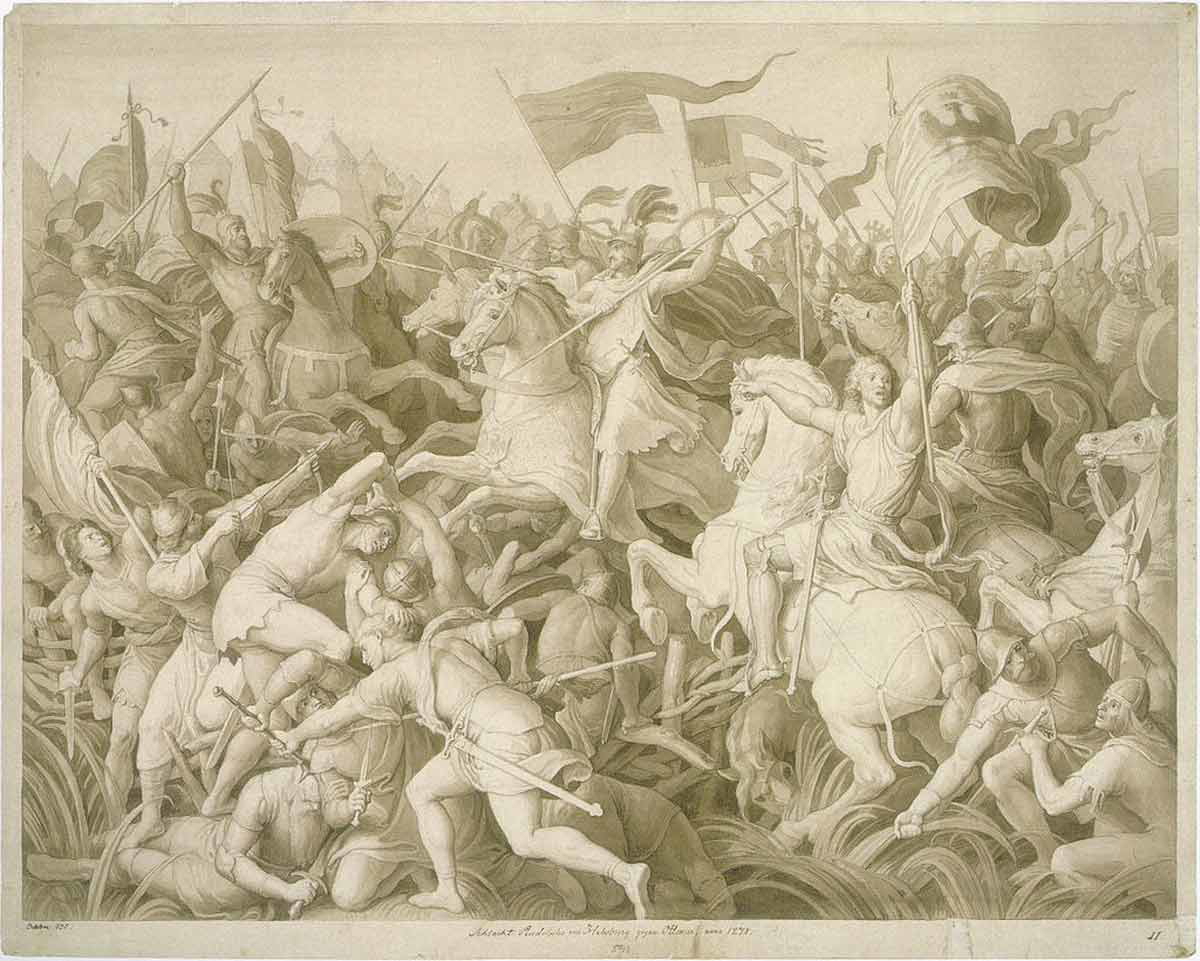
However, King Rudolf I, a member of the Habsburg family who prevailed in the Great Interregnum, began to seize Ottokar II’s possessions. He seized much of the territory in Austria conquered by Ottokar and destroyed his army at the Battle of the Marchfield. However, this did not end the Bohemians’ power. Kings Wenceslaus II and III extended their power to Poland and Hungary, setting up the kingdom for its Golden Age in the 14th century.
Bohemia in the 1300s
Despite King Ottokar II’s death and the destruction of his army, the Bohemian kingdom continued to expand and play a major role in central Europe for the next two centuries. When the male line of the founding Přemyslid dynasty died out 1306 following the death of Wenceslaus III, a power struggle broke out for the Bohemian crown.
John, the Count of Luxembourg, was elected king after his marriage to Elizabeth of Bohemia, the sister of Wenceslaus III. His rise led to the formation of the Bohemian House of Luxembourg. The Luxembourgs were closely aligned with the French court, tying Bohemia closer to the House of Valois. King John of Bohemia is perhaps best known for his death while fighting for the French at the Battle of Crécy in 1346.
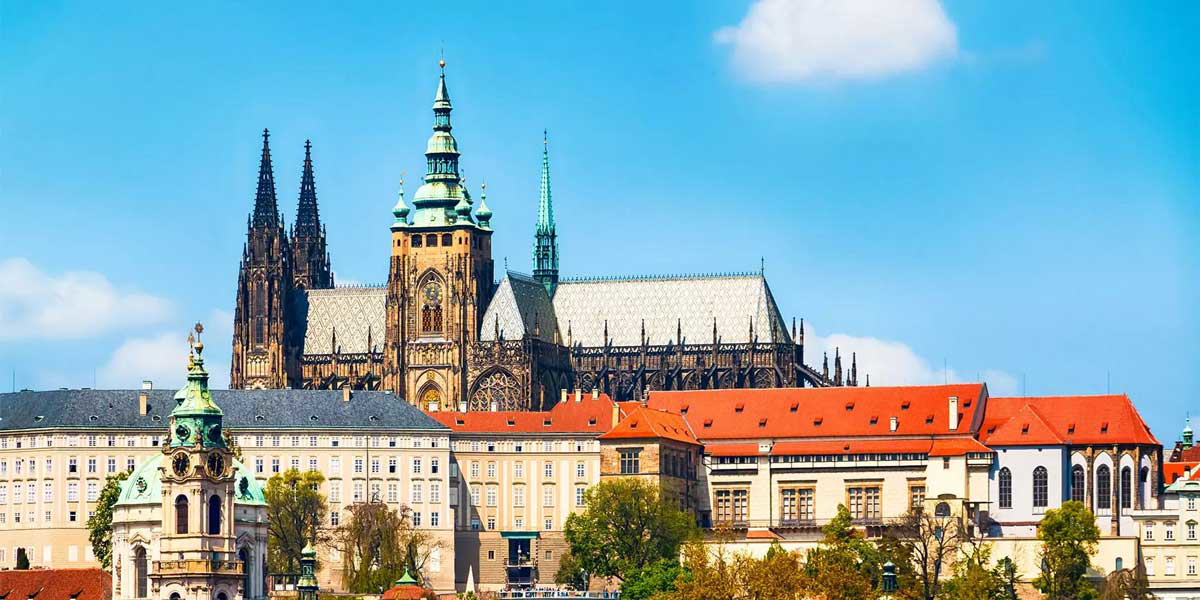
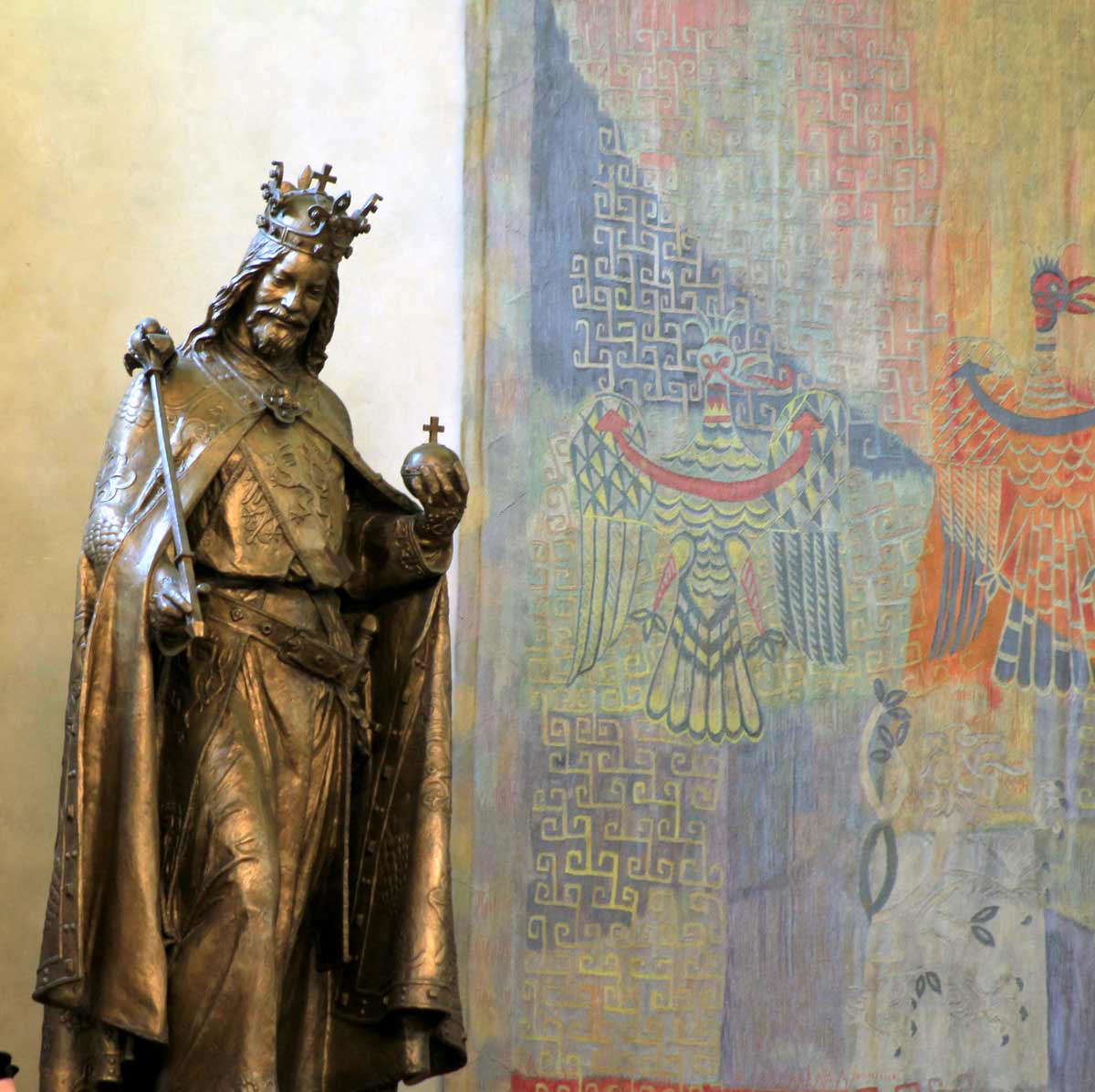
It was under Charles IV, John’s son, that Bohemia reached the peak of its power. He established an archbishopric in Prague. In 1355, he became the first king of Bohemia to be crowned Holy Roman Emperor. Despite failed attempts to link Bohemia with his ancestral lands in Luxembourg through conquest, his ruthlessness and drive ensured that Bohemia became one of the most powerful electorates in the empire. In addition to his aggressive military posture, he worked to modernize Prague, founding the New Town and rebuilding the Royal Castle. As a result, the city became one of the most cosmopolitan in Europe.
Charles died in 1378, leaving the throne of Bohemia to his son Wenceslaus IV. Wenceslaus secured election as king of the Romans but was not crowned as Holy Roman Emperor and was deposed in 1400. While the kingdom of Bohemia retained a considerable degree of power and influence within the empire, the reign of Charles IV marked the zenith of the kingdom’s fortunes.
The Hussite Wars of the 15th Century
During the 1400s, the kingdom of Bohemia was at the center of a challenge to the Catholic Church. The rector of Charles University in Prague, Jan Hus, championed clerical reform as a protest against the power of the Archbishop of Prague. Hus was excommunicated by the Church in 1410 and executed in July 1415 after refusing to recant on his views.
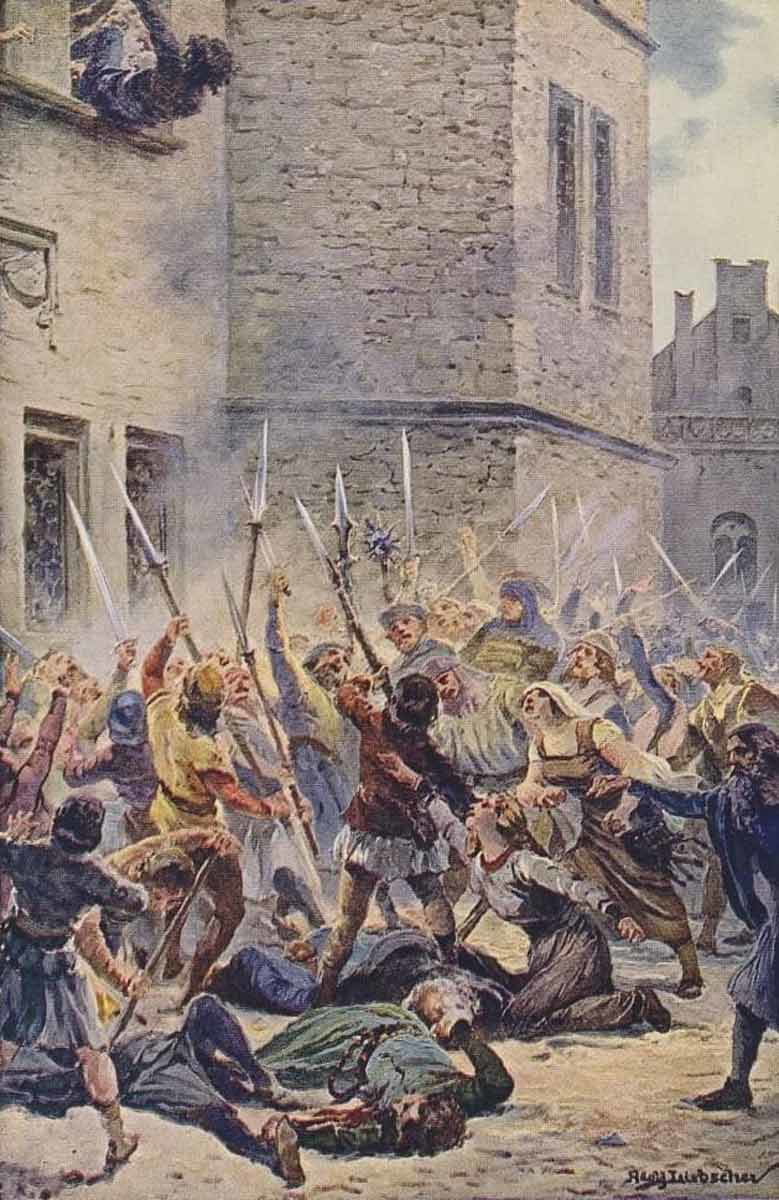
Hus’ execution did not prevent his ideas from remaining popular among Bohemian nobles, and in 1419 the Hussites murdered several Prague town council members by throwing them out of windows. As a result, King Sigismund of Hungary, the heir to the Bohemian throne, marched on Prague to stop the rebels.
Sigismund’s forces were repeatedly defeated by Hussite forces led by Bohemian nobleman Jan Žižka. Many of the ethnic Germans in Bohemia remained loyal to the Catholic Church, while most Bohemians embraced the reformist cause. However, the Hussites were internally divided between the moderate Ultraquists and the radical Taborites, who rejected church doctrine and believed in an absolutist version of the Bible. Žižka’s death in 1424 exacerbated these divisions. The Ultraquists managed to take control of Prague, but faced internal opposition from Catholics and Taborites.
King George of Poděbrady tried to reconcile all the different factions but struggled in the face of hostility from the Church. For instance, his reign was not recognized by the Pope and he was even excommunicated. The Hungarians invaded Bohemia again in 1468 and took control of parts of Bohemia and Moravia. After King George’s death in 1471, the Polish-Lithuanian Jagellonian dynasty came to power in Bohemia.
Jagiellonian Bohemia
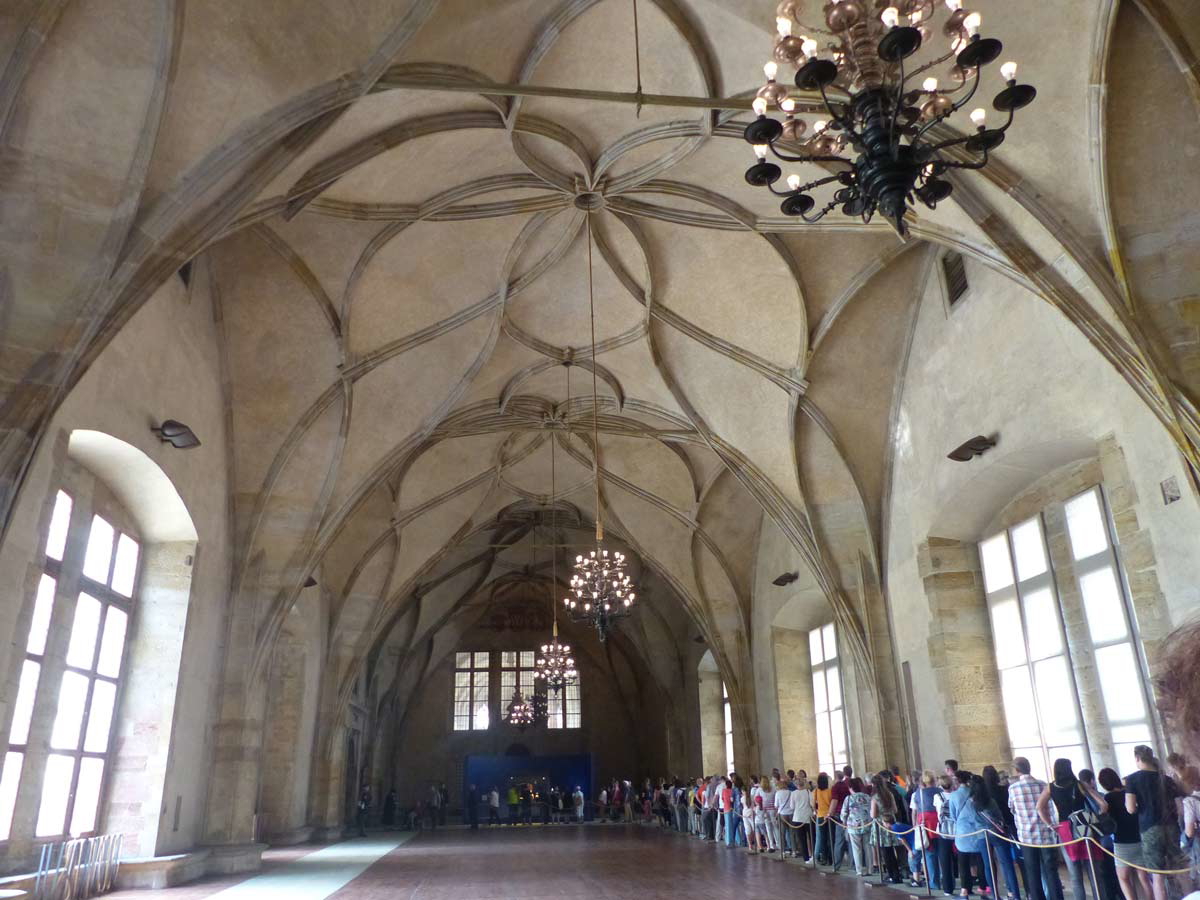
The new Jagellonian king Vladislaus II managed to make peace with Hungary in 1479, and even became king of Hungary in 1490 following the death of Matthias Corvinus. To prevent the resumption of the Hussite Wars, he urged reconciliation between the Catholic and Ultraquist communities, following in the path of George of Poděbrady. Nonetheless, tensions remained high between the Catholics and Protestants.
Vladislaus spent much of his time in Hungary because he felt more comfortable there. This remained a common theme throughout the Jagiellonian period and the government of the Bohemian lands was delegated to local nobles. Much of the kingdom was still in ruins from the Hussite Wars and the Jagiellonians did not spend time trying to repair the damage. A further Hussite revolt broke out in Prague in 1483, killing large numbers of Catholics and temporarily forcing Vladislaus to flee the city.
In 1516, Vladislaus died and was succeeded by his son, Louis II of Hungary. He immediately found himself fighting off Ottoman attacks in Hungary and Bohemia, leading to his death in 1526 at the Battle of Mohács. Afterwards, Louis’s realm was partitioned between the Habsburg Monarchy and the Ottomans. This meant the end of the Jagiellonian Dynasty and the start of direct Habsburg rule in Bohemia under Archduke Ferdinand I. From then on—with a brief exception at the beginning of the Thirty Years War—Bohemia was ruled by the Habsburgs until the collapse of Austria-Hungary in 1918.
Demographics of the Kingdom of Bohemia
Throughout its existence, the core population of the Bohemian kingdom was ethnic Czech Slavs, who spoke various dialects of the West Slavic Czech language and made up the majority of the kingdom’s rural population and a significant portion of its urban community. They were slightly different from the Slavic populations further east, being more Catholicized and being more exposed to Germanic and Frankish influences. Over time, a split occurred within the population over devotion to the practices of the Catholic Church, leading to the Hussite Wars.
To help develop the kingdom, Bohemian nobles began encouraging German migration starting in the 13th century. Many of these newcomers helped expand the economy through the growth of small businesses. Many settled in the larger population centers, turning places like Prague into sprawling metropolises. Additionally, they filled up towns in a region that became known as the Sudetenland. Just like their Slavic neighbors, they became caught up in the chaos that unfolded in the 1400s, with some aligning themselves with the Hussites and others remaining faithful to the Catholic Church.
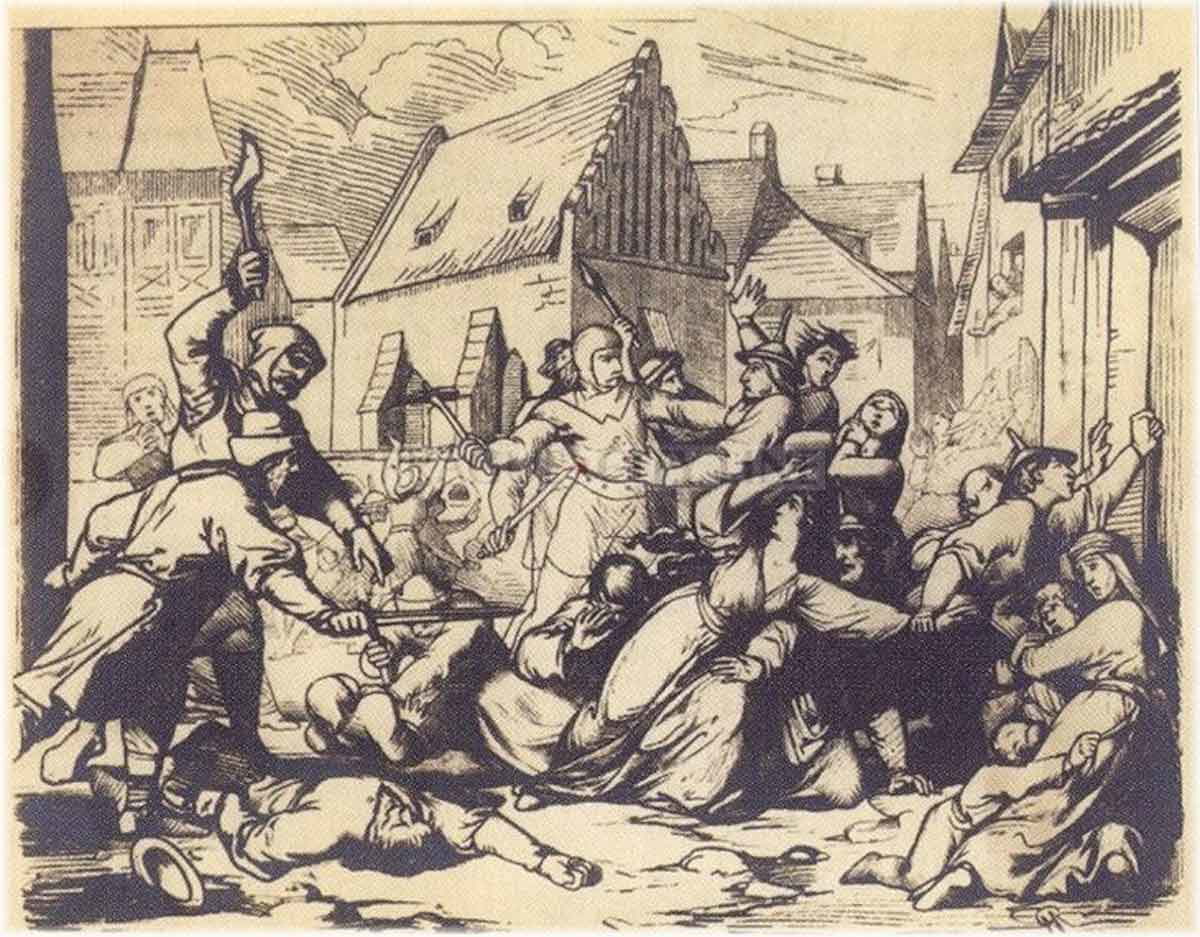
Other small minorities settled in the kingdom. The Jewish community was first attested in the 10th century and increased over time. The degree of religious tolerance they enjoyed depended on who was in power. For instance, many Jews welcomed the rise of the Hussites because they shared their grievances against the Catholic Church. In other moments, there were pogroms by angry Christians against Jews, especially in chaotic periods. Lastly, a Romani community started to emerge in Bohemia in the 1500s, fleeing persecution elsewhere in Europe.