
Leonardo da Vinci’s ‘Last Supper’ is the penultimate painting of its kind, known and celebrated all over the world. Yet many other artists have embarked on the brave endeavour of capturing the scene of the Christian Last Supper. In this article, we’ll contrast da Vinci’s painting with five lesser-known works about the same event, bringing it back to Scripture to seek historical accuracy.
An Introduction: Da Vinci’s Masterpiece
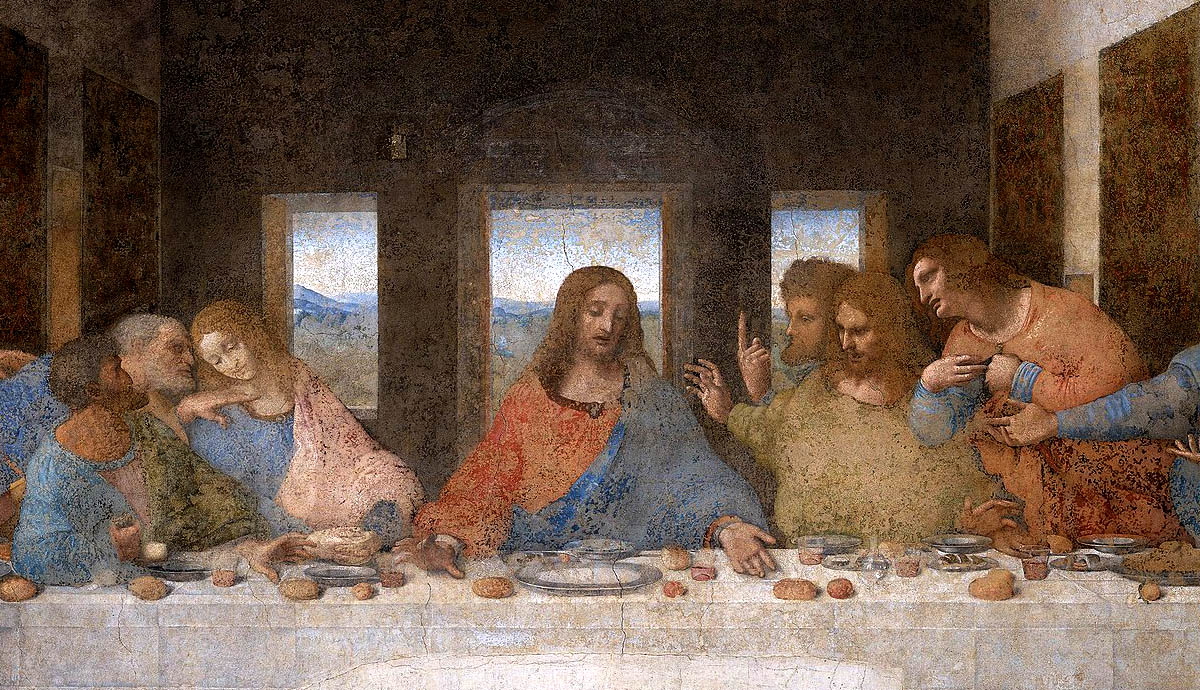
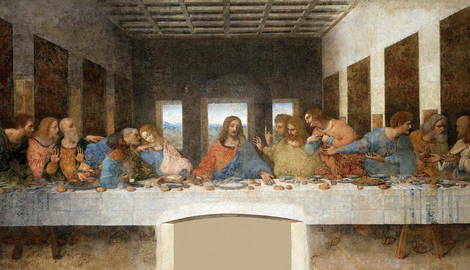
The convent of Santa Maria delle Grazie in Milan, Italy, is home to the dry wall mural of the Last Supper that caught the world’s attention for its emotional depth and wise composition. The specific moment captured in Da Vinci’s piece is when Jesus announces that the disciple Judas Iscariot will betray him. Admiring the artwork, we can see how the disciples react in groups of three with “who-could-it-be” / “it’s-not-me” body language, with the guilty Judas on the left holding his palms up.
The other masterpieces of the Last Supper may not be as famous as Da Vinci’s, but each one brings an interesting element of the Bible story to life.
Unexpected: Café Terrace at Night by Vincent van Gogh
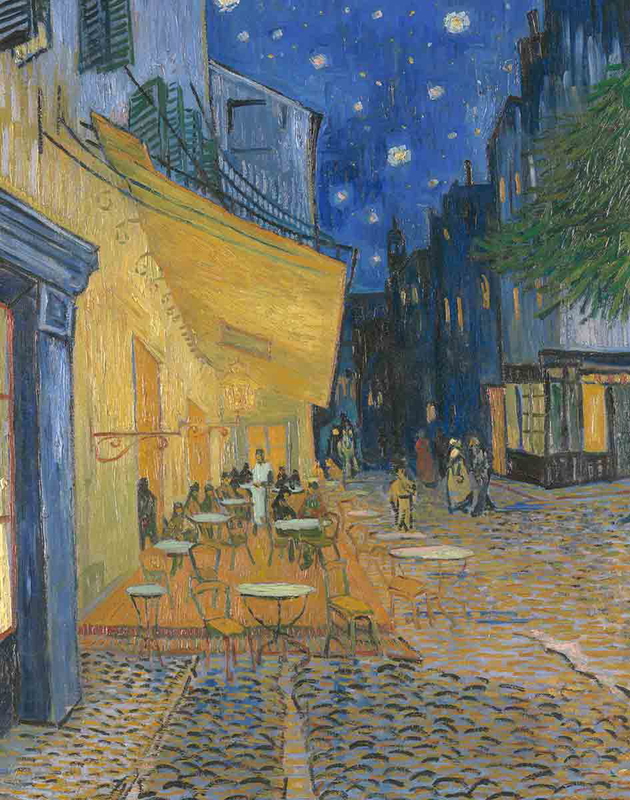
One you might not have expected is van Gogh’s Cafe Terrace at Night. There are fascinating similarities between the elements of this painting and the Last Supper works above. This is a stretch as van Gogh himself never admitted to such a theme, but it’s uncanny.
To start with, the cafe scene also depicts dinner or suppertime. Some have stated that the figure in white (between the tables on the left) might resemble Christ rather than a waiter, and those sitting down might be the apostles. Further elements adding to this debate include crosses and, of course, stars, which van Gogh grew particularly fond of after finding religion (according to a letter he wrote to his brother, Theo).
The Scriptural accuracy here is that Jesus is serving rather than being served – a characteristic he embodied and also taught about a lot. He even washed his disciples’ feet right before their meal.
Ugolino di Nerio’s Last Supper Scene
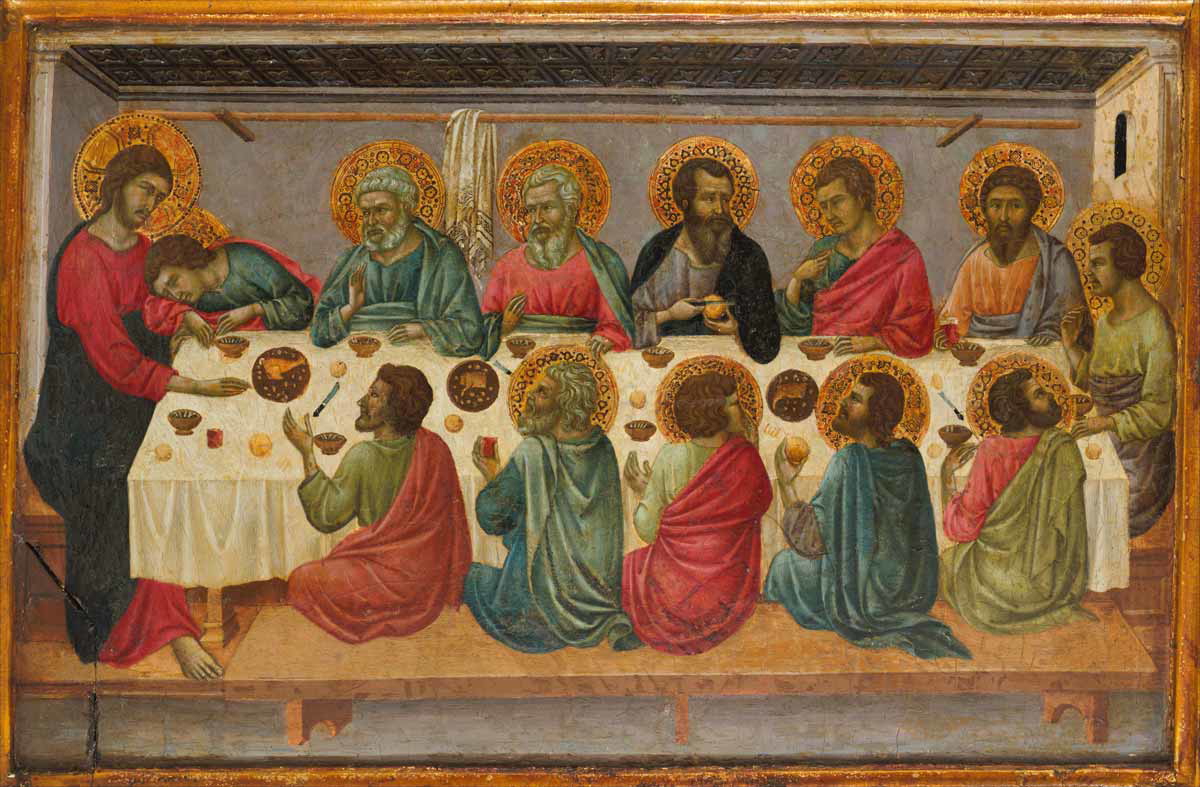
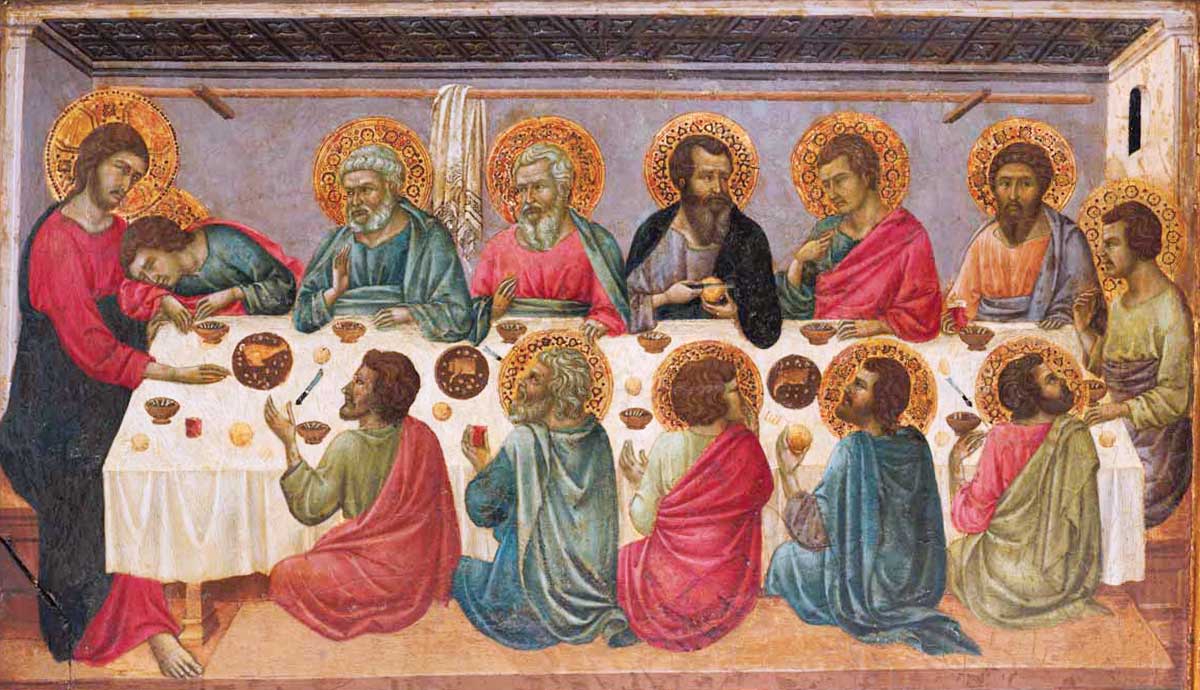
Moving on to more literal Last Supper pieces, Ugolino da Siena (Ugolino di Nerio) painted the stunning artwork above. Again, we see twelve figures around the table with Christ at the head. The low table is more similar to what Jesus and the disciples likely used, given their historical context and time, and notice Jesus’ bare foot hinting at the footwashing that occurred earlier.
Juan de Juanes, a More Accurate Last Supper
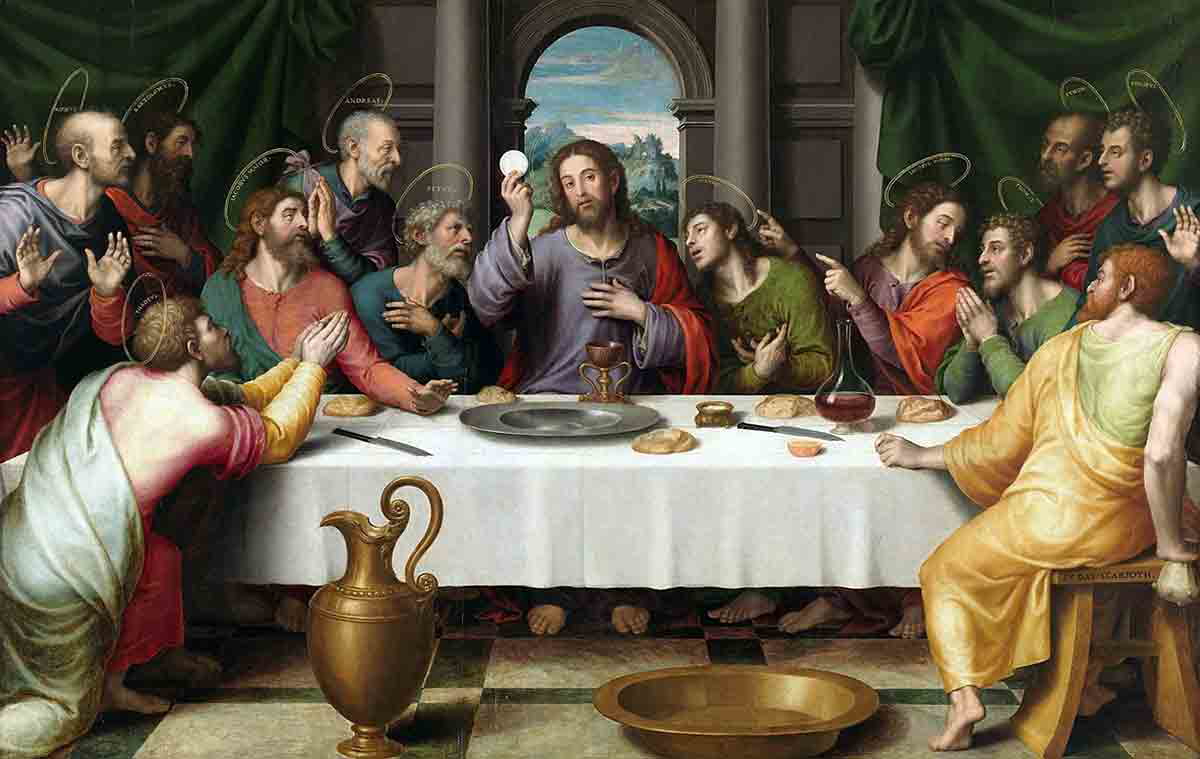
Consider de Juanes’ 1562 artwork with the feet-washing tools front and central, as well as visible bare feet. Furthermore, the disciples are named with Judas on the right in yellow, seemingly ready to leave. Even the food and details on the table seem more Scripturally accurate, as we will see in the next masterpiece.
The Passover Meal by Cornelisz van Oostsanen
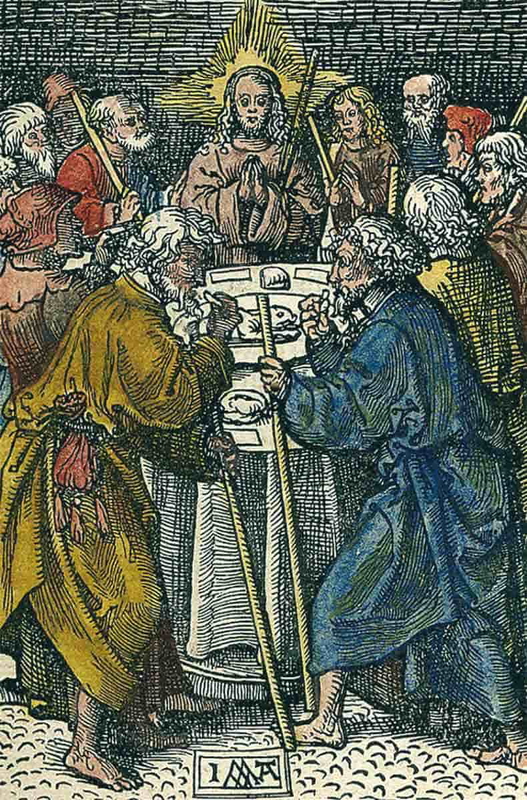
Jacob Cornelisz van Oostsanen, 1523 painting of the Last Supper scene takes it all the way back to the Old Testament. Instead of only having ‘communion’ (bread and wine) on the table, this artist put lamb and unleavened bread there.
When Jesus and his disciples gathered for what came to be known as the ‘Last Supper’, they were actually gathering for the Passover Meal. This was a Jewish festival celebrating a time before the Exodus, when God saved the Israelites by the blood of lambs and they had to quickly bake bread before leaving their homes to escape from Egypt.
Gerard Hoet, bringing the Last Supper into the Old Testament
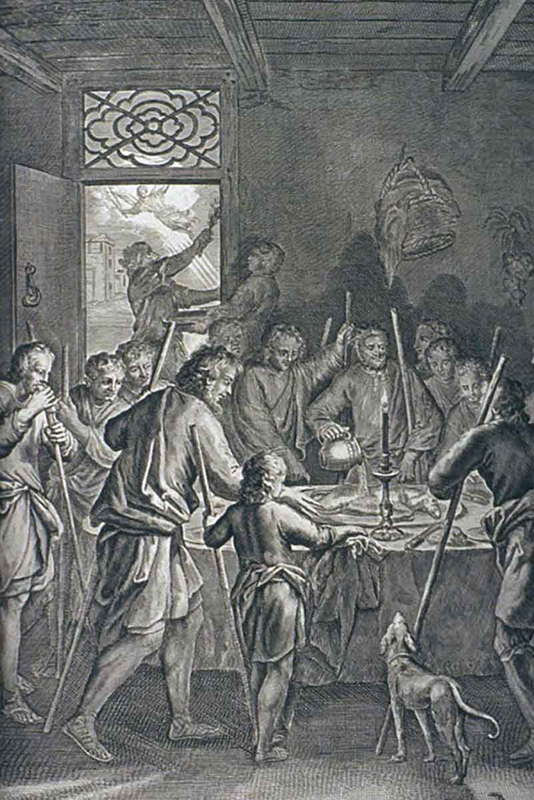
In the picture above, Gerard Hoet expertly illustrated the Passover scenes from Exodus, yet it seems to point forward to the Last Supper with twelve people gathered around a table.
The Bible tells one big story and it is impossible to read the New Testament without reading the Old Testament first. At the Last Supper, Jesus told his followers that he was taking the place of the lamb – which is why he is sometimes called Lamb of God or Innocent Lamb. It’s all connected.