Summary
- Tolstoy’s tumultuous life as a nobleman, soldier, and spiritual seeker directly inspired the realism in his literary masterpieces.
- His epic novels, War and Peace and Anna Karenina, are renowned for their psychological depth and critique of Russian society.
- A profound spiritual crisis led him to reject organized religion and embrace a personal philosophy of Christian non-violence.
- His legacy extends beyond literature; his ideas on non-violent resistance later influenced global leaders like Gandhi and MLK Jr.
Labeled by Virginia Woolf as “the greatest of all novelists,” Leo Tolstoy’s War and Peace and Anna Karenina have long ago become parts of the global literary canon. However, Tolstoy’s body of several dozen literary works, ranging from novels to philosophical nonfiction, only makes sense when considered alongside his tumultuous life story. Born into a noble Russian family, Tolstoy shunned the life of a socialite early on in favor of the search for spirituality and the true meaning of Christianity.
Tolstoy’s Childhood and Kazan Years
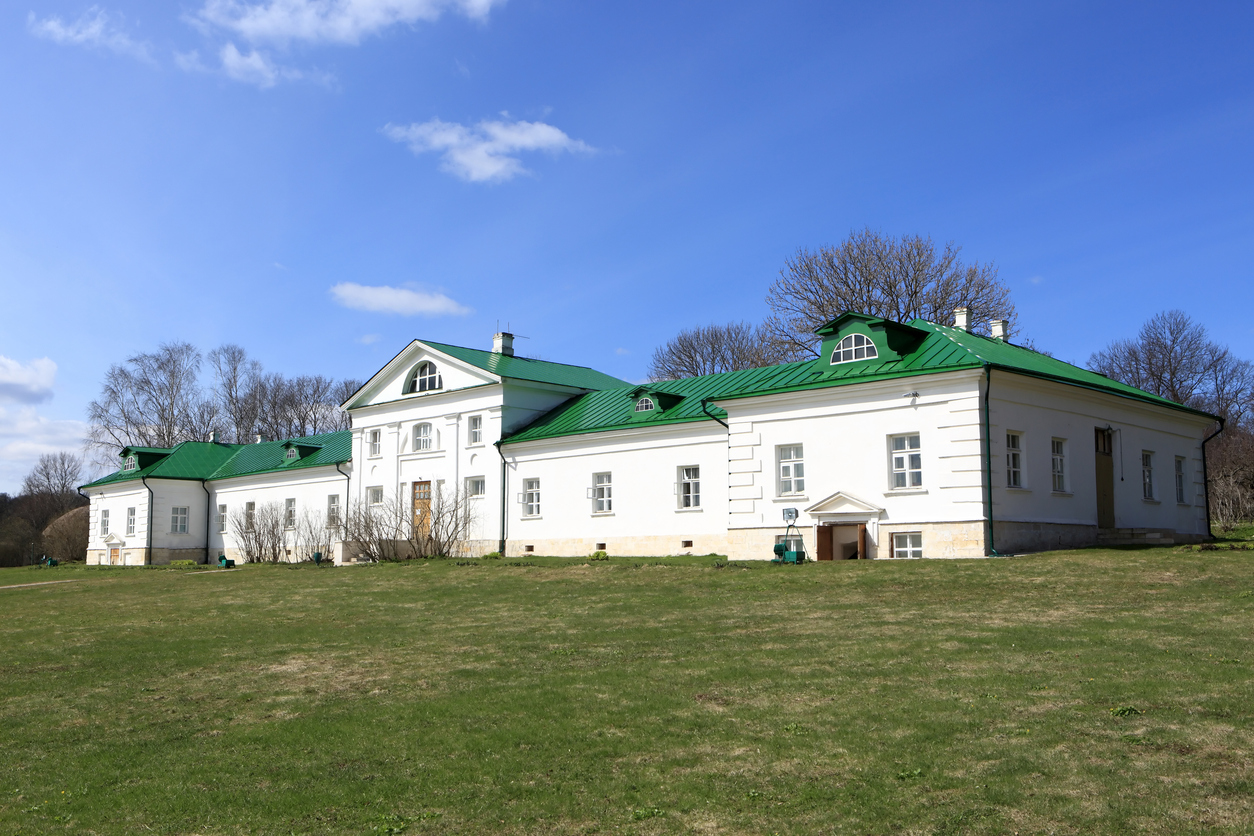
Lev Nikolayevich Tolstoy was born on September 9, 1828, at his family estate of Yasnaya Polyana, near Tula (some 200 kilometers south of Moscow). His father, Nikolai Ilyich Tolstoy, was a count and a veteran of the Napoleonic Wars. His mother, Mariya Nikolayevna Tolstaya (née Volkonskaya), was a countess from an aristocratic lineage. The Tolstoys were a renowned family of noblemen who traced their origins all the way to the 14th century, when their ancestors came from either Germany or Lithuania.
Unfortunately, Tolstoy’s parents passed away when he was a young boy, so he and his four siblings were raised by the family’s relatives. Despite the tragedy, Yasnaya Polyana was an idyllic setting to grow up, surrounded by gardens, forests, and villages. The peasants who lived there were serfs, subjugated to Russia’s landed aristocrats, namely, the Tolstoys. Young Lev (translated as “lion” in English) experienced this social gap early on, which would influence his later writings.
Tolstoy was home-schooled, and from an early age, he displayed talent for languages and literature. However, after his aunt, Tatyana Ergolskaya, passed away, another relative became the children’s guardian and relocated the family to Kazan. “The Third Capital of Russia,” as it is known today (after Moscow and Saint Petersburg), Kazan was a cultural and industrial hub in Tolstoy’s time as well. He enrolled at Kazan University to study Oriental languages when he was just 16.
An Irresolute Nobleman Joins the Military
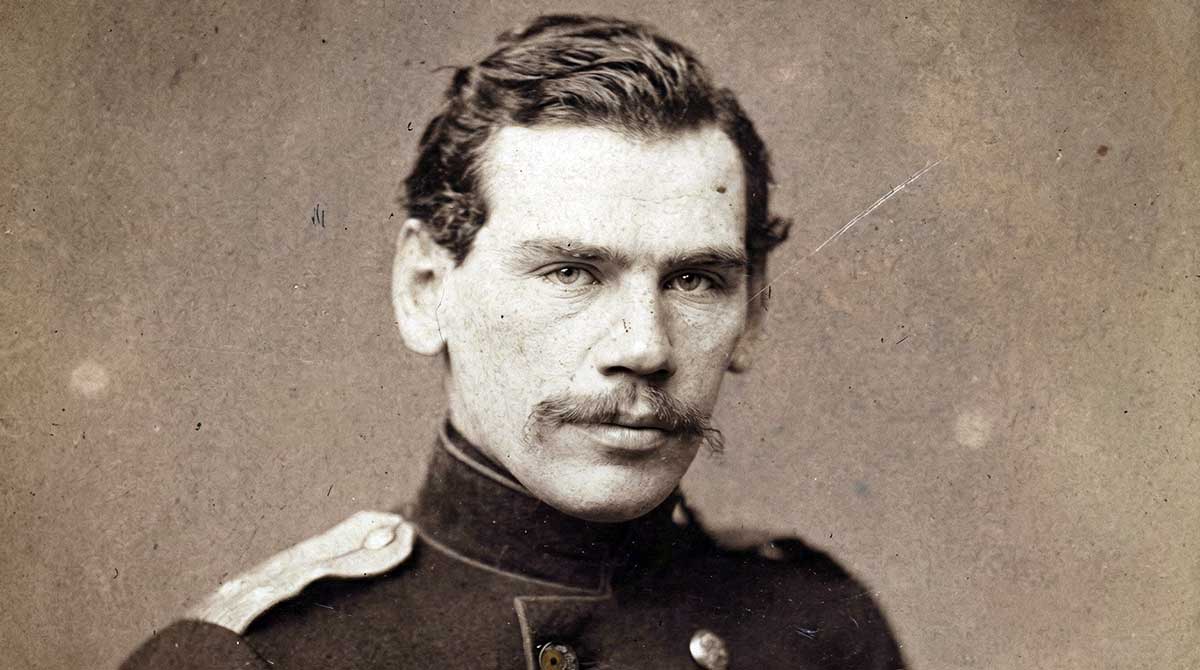
In the second year at Kazan University, Tolstoy switched to law and politics, but never got a university diploma. After a total of six years in Kazan (three at the local university), he returned to Yasnaya Polyana.
Around this time, he began keeping a diary, which reveals a man who sought to live a moral life but often struggled to do so. He made efforts to improve the lives of his serfs, at the same time living a debauched life when visiting Moscow’s high society. At 23, Tolstoy decided to join the Russian army, serving alongside his older brother, Nikolai, who was stationed in the Caucasus. The decision had a profound impact on him, as he was transforming from an irresolute young noble into a disciplined soldier, and more importantly, a writer.
At the time, the Caucasus was the frontier of the Russian Empire, so there were numerous clashes with local indigenous peoples, such as the Chechens. Tolstoy experienced the hardships of military life firsthand, as well as the injustices inflicted on the civilian population. In addition, he was constantly surrounded by nature. These experiences would later become key motifs in his literary output.
Childhood (1852) was his first published story, followed by Boyhood and Youth in the subsequent years. This series of autobiographical narratives was followed by Sevastopol Sketches, which documented Tolstoy’s experience during the Siege of Sevastopol, where his unit was deployed during the Crimean War (1853-1856). The work was a prelude to one of the greatest works of world literature: the novel War and Peace.
War and Peace (1869)
Having resigned from the military at the age of 27, Tolstoy spent the next decade of his life trying to further improve the lives of his serfs and traveling Europe. These must have been inspiring enough for him to start writing a novel (1863) that would become his magnum opus.
The sheer scope of the plot of War and Peace is enough to make it a classic: several hundred characters appear across four Parts that took Tolstoy some six years to write. The narrative is centered around four aristocratic families (the Bolkonskys, Kuragins, Rostovs, and Bezukhovs) and their destiny during the Napoleonic Wars from the beginning of the 19th century.
The novel opens in Saint Petersburg, where we are introduced to characters such as Pierre Bezukhov, a young noble who has recently inherited a fortune; Andrei Bolkonsky, a brave officer preparing for the impending war; and Natasha Rostova, a young and spirited noblewoman who ultimately becomes engaged to Andrei. The second part further develops these characters, revealing their inner psychology and social struggles.
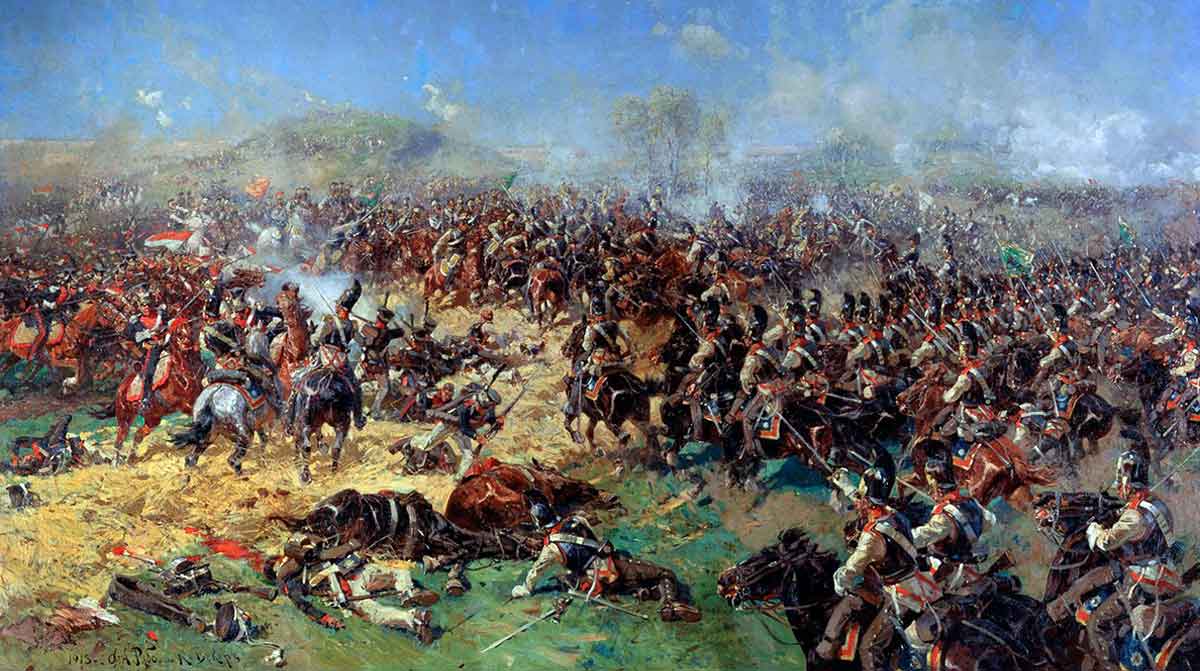
The third part contains war scenes, most notably the Battle of Borodino, as Napoleon invades Russia in 1812. The burning of Moscow set the stage for ordinary people and soldiers to display courage, which is a recurring motif in Tolstoy’s work. In the end, Pierre is captured by the French, triggering a spiritual transformation in him, while Andrei dies with Natasha by his side. The epilogue reveals that Pierre married Natasha after returning to Moscow.
The Spiritual Search for the Meaning of Life
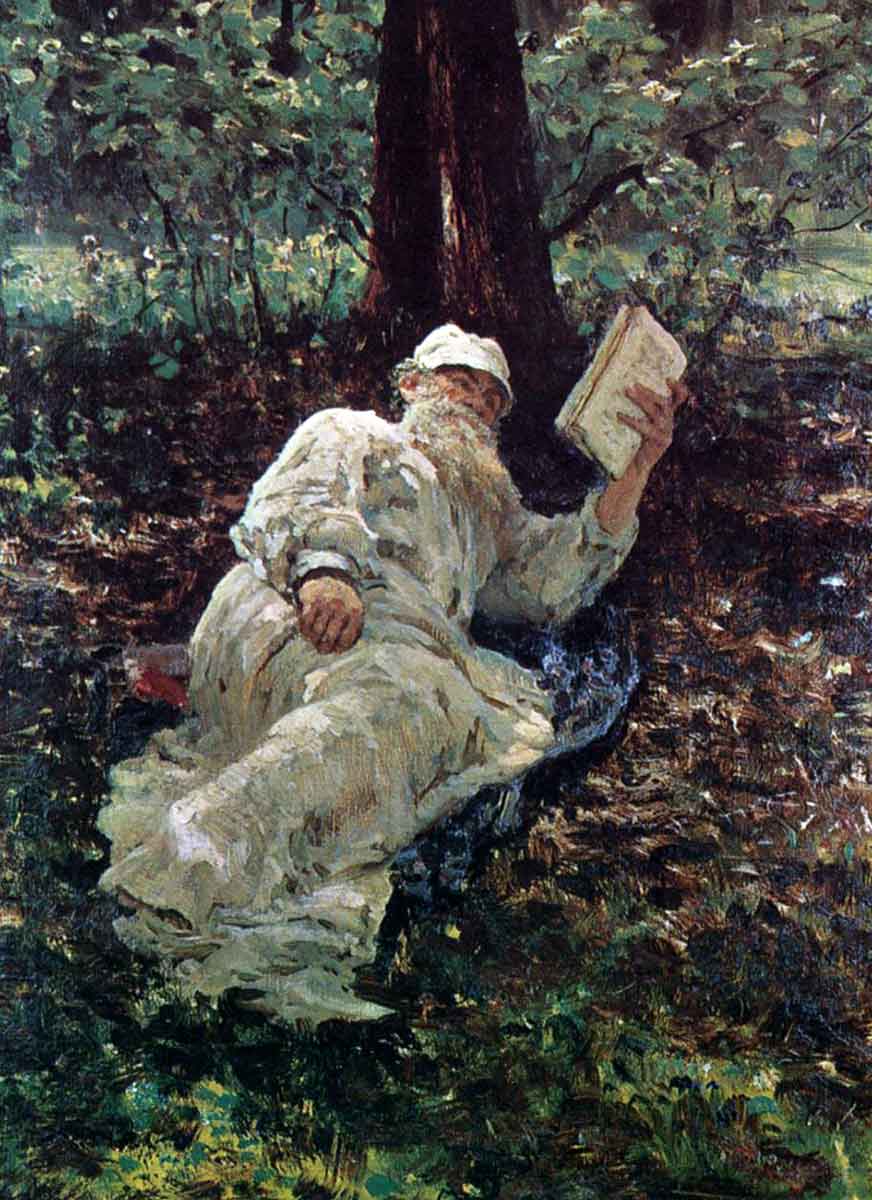
War and Peace has a whopping 361 chapters, 24 of which do not advance the narrative but rather present the author’s comments and philosophical views. For instance, the character of General Kutuzov reflects Tolstoy’s stance on history: it is shaped by the collective masses, rather than by great leaders.
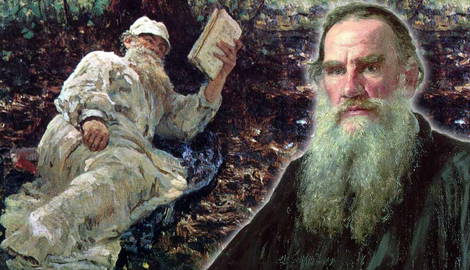
The writer reached these worldviews after a profound search for the meaning of life. He had been reading the works of great philosophers, such as Schopenhauer and Rousseau, as well as studying the Gospel. Neither gave him definite answers, as he deemed philosophy and the practices of the Orthodox Church far too intricate.
The decades after the completion of War and Peace were marked by a somewhat idyllic family life for Tolstoy at the Yasnaya Polyana estate. He and his wife, Sofya, had a total of thirteen children. However, he observed how his serfs, who were mainly poor and uneducated, demonstrated an unwavering faith in God, indicating that “simplicity” was the keyword in his personal search for spirituality. Around 1873, Tolstoy set out to pen his next great novel, Anna Karenina. Much of his pondering about the meaning of life was about to get a literary form.
Anna Karenina (1878)
The novel initially appeared in serial installments in The Russian Messenger from 1875 to 1877. Tolstoy then published it as a book in 1878. Anna Karenina is foremost a psychological novel, but it is also a social critique; the war motif from earlier works takes a back seat in this one.
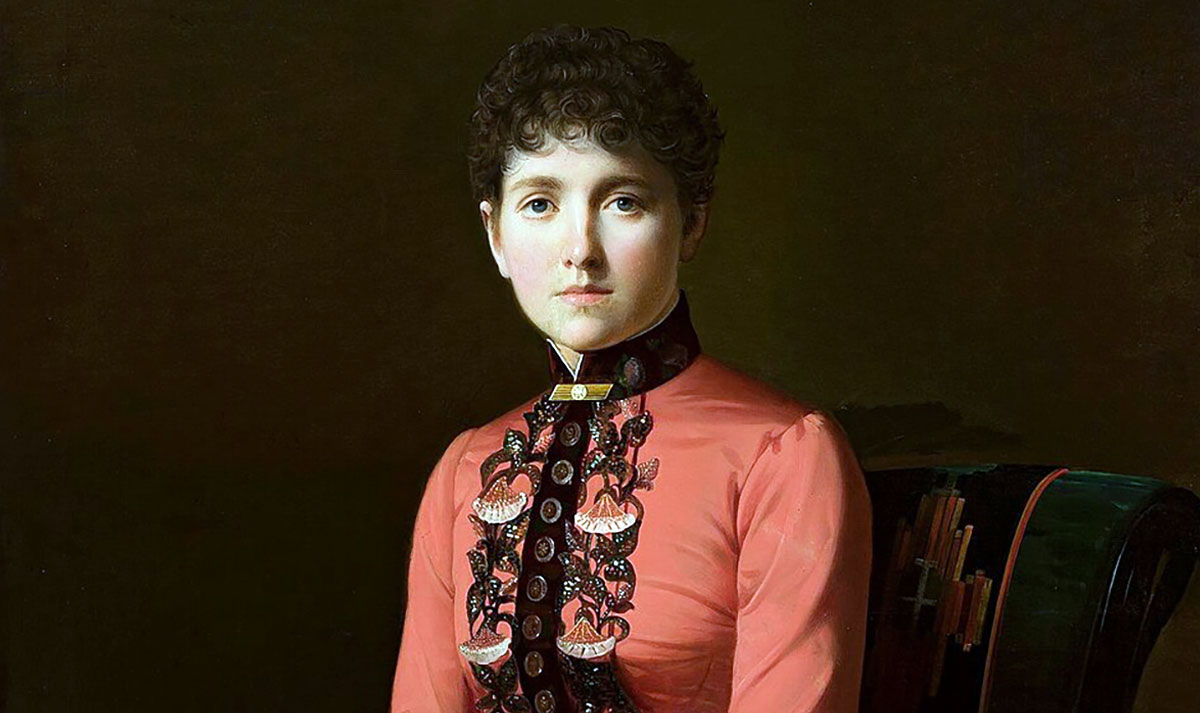
The main plot centers on Anna Arkadyevna Karenina, an aristocratic woman who meets Count Alexei Vronsky at a train station, which is an excellent example of foreshadowing in literature. He soon becomes her lover, but she is unable to legally leave her husband, Alexei Alexandrovich Karenin. The relationship turns scandalous as the Russian high society shuns Anna for her adulterous affair. With only Vronsky to confide in, Anna’s mental health rapidly deteriorates, leading to her throwing herself in front of a train, one of the most famous deaths in the history of literature.
The novel’s subplot is centered around Konstantin Levin’s attempts to court Kitty Shcherbatsky, who is initially infatuated with Count Vronsky. After he rejects her, Kitty matures as a person and eventually marries Levin. Their spiritual relationship is counterpoised to the main protagonists’ tumultuous affair.
Critics argue that Tolstoy modelled the character of Konstantin Levin, a landowner who is constantly on a moral and spiritual quest, after himself. His marriage at the end of the novel represents a philosophical closure that Tolstoy strived toward in real life.
The Death of Ivan Ilyich (1886)
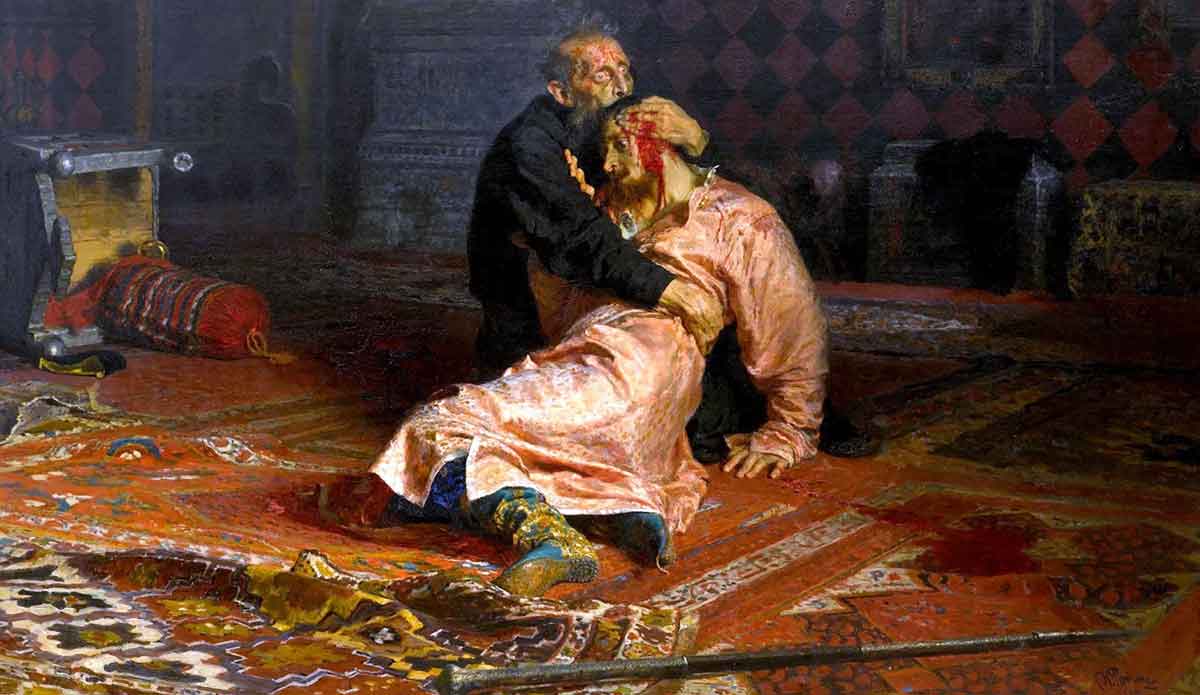
The four-year period during which Tolstoy wrote The Death of Ivan Ilyich coincided with a profound spiritual crisis for the writer. Tolstoy drifted away from the Orthodox Church’s official doctrine and embraced a form of Christianity that preached non-violence and humility. These stances were reflected in the very format of his 1886 work. The Death of Ivan Ilyich was a novella, that is, a short novel, that lacked the greater social panorama and the multiverse of plotlines and characters that had marked his previous novels.
The plot opens after the death of the protagonist, Ivan Ilyich Golovin, a magistrate who led a socially acceptable but rather plain life. His issues began when he injured himself trying to hang some curtains. Benign at first, the illness slowly turns from physical pain into an existential crisis. The doctors fail to reveal the cause, but it becomes clear that Ivan Ilyich is terminally ill. His family regards Ivan Ilyich’s withering as a nuisance, forcing him to seriously ponder his life and pose the earnest question: “What if my whole life has been wrong?”
Up to that point, Ivan Ilyich firmly believed that his life story was a success. Impeding death makes him question everything he had believed in, as his God-fearing peasant servant, Gerasim, seems to be the only one who expresses genuine compassion toward him.
At his deathbed, Ivan Ilyich comes to terms with the terror of death and expresses compassion for his wife and son. The story’s ending makes it terrifyingly contemporary: Tolstoy makes the reader ponder whether their life would make sense if they were to die at that very moment.
Later Life and Death
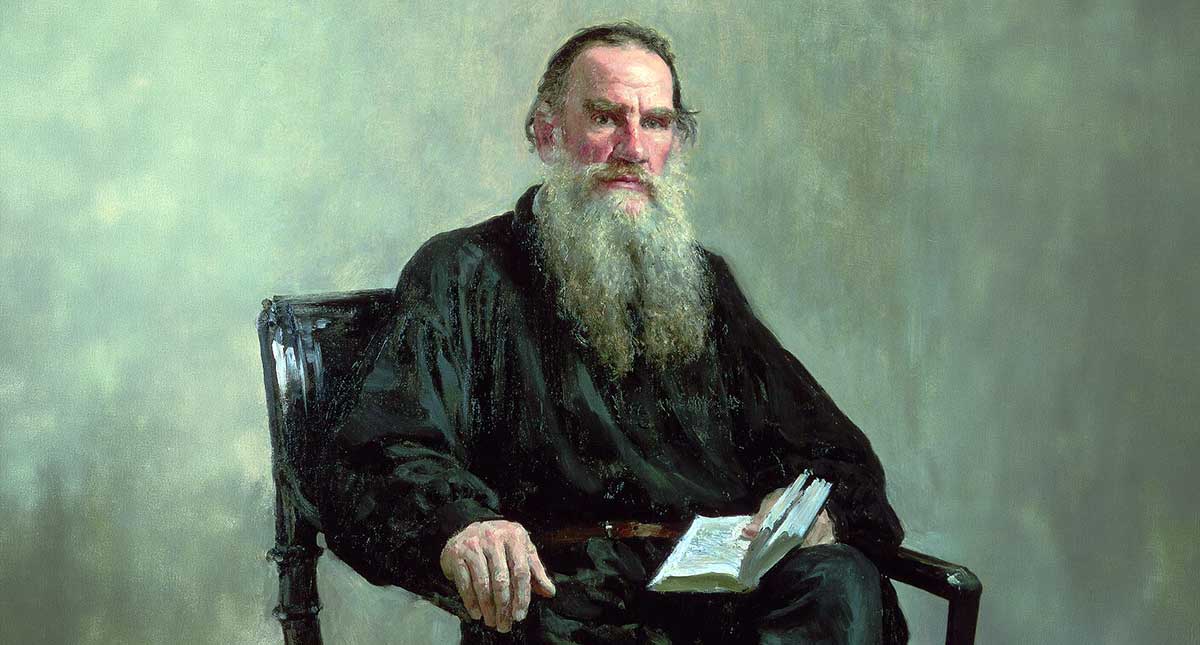
The last two decades of Leo Tolstoy’s life were marked by a stark contrast. On the one hand, he was one of the most revered writers in the world, while on the other, he deemed himself not a novelist but a Christian preacher.
He endeavored to the best of his ability to live out the moral ideals put forward in The Death of Ivan Ilyich and in his last novel, Resurrection (1899), which brought him into conflict with his family, the Church, and society at large. In 1901, the Holy Synod finalized Tolstoy’s excommunication from the Russian Orthodox Church. The writer was unfazed because he swore allegiance to Christ and not to organized religion, which he deemed had betrayed the very essence of Christianity.
Apart from the public image, his marriage suffered because of his ardent religious beliefs. His wife, Sofya Tolstaya, was concerned by Tolstoy’s desire to sell off his property and give up on literary rights. These would leave her and their eight children (who had survived to adulthood) destitute. Although her husband refused to accept royalties for his later works, he still cared about his family’s financial security.
Torn between domestic responsibilities and Christian ideals, Tolstoy left Yasnaya Polyana in secret in October 1910. His intent was to spend the remainder of his days in spiritual solitude, but his deteriorating health got in the way. While on the road, he fell ill with pneumonia and ended up at a small railway station in Astapovo, some 100 kilometers away from home. He passed away in the stationmaster’s house on November 20, 1910. He was 82 years old at the time of his death.
The Legacy of Leo Tolstoy
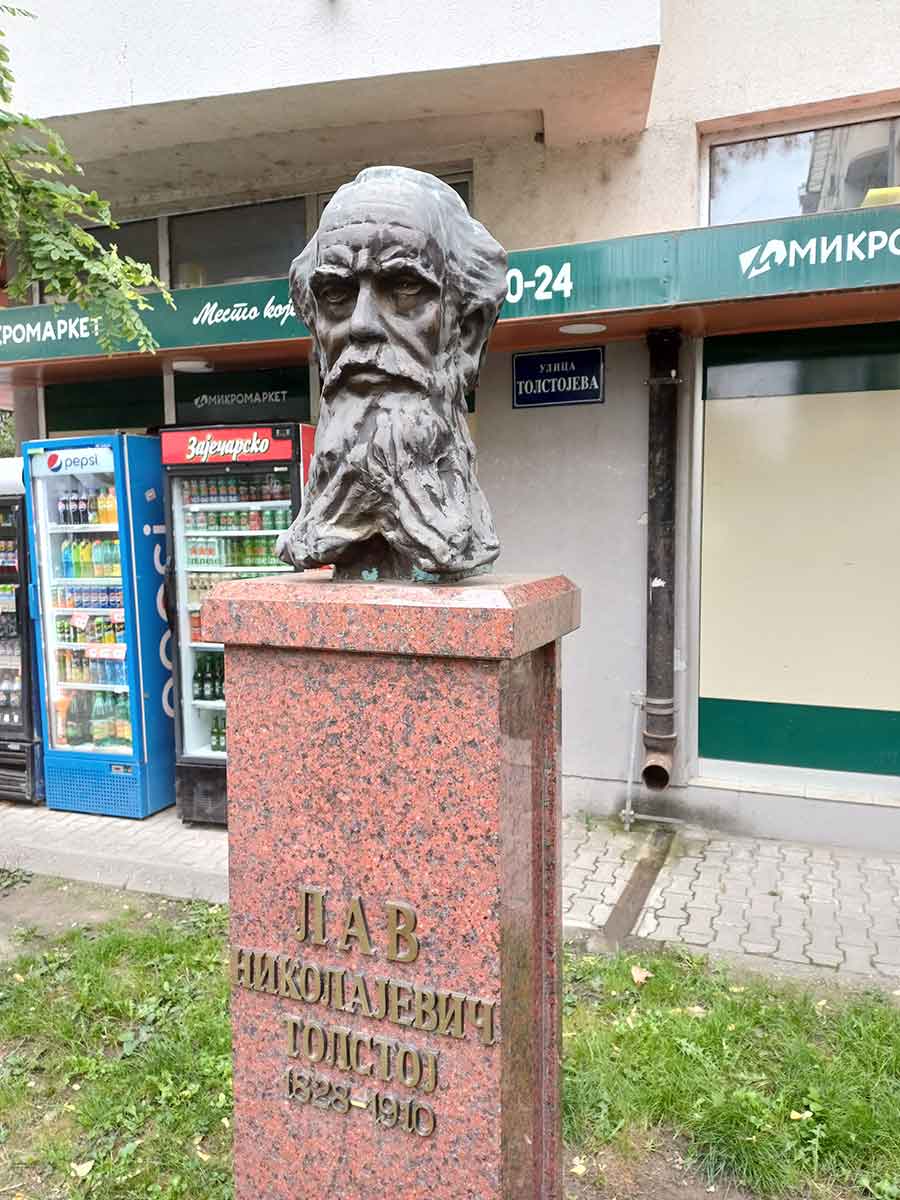
Eight years after Tolstoy’s death, the authorities renamed the village in Lipetsk Oblast where he died in honor of the great man of letters (“Lev Tolstoy”). Russians widely regard Tolstoy as a pillar of Russian literature, together with Pushkin and Dostoevsky. His works have become required reading in schools, and his home estate at Yasnaya Polyana is designated as a state memorial. Nearly every city in Russia has a “Tolstoy” street, and there are countless statues and busts of him across the country.
Tolstoy’s literary legacy far exceeds his homeland. His works have been translated into more than a hundred languages worldwide. His themes were universal, as Tolstoy redefined the format of the novel, narrating historical events from a multitude of individual perspectives.
His contemporaries, such as Henry James, Virginia Woolf, and Thomas Mann, praised the psychological insight and the realism of his literary characters, although they often disagreed with his moral adamancy. In the 20th century, Tolstoy’s influence extended beyond literature, as Gandhi and Martin Luther King Jr. drew inspiration from the Russian writer for their principles of non-violent resistance.