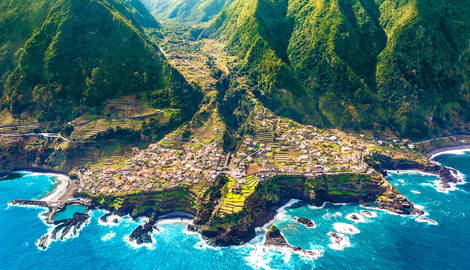
In this article, you will learn all about Madeira, the first land the Portuguese discovered in the 15th century, the UNESCO heritage of Laurissilva Forest, and several historical landmarks that have witnessed the passage of time.
Madeira Over the Centuries
The first reference to the Madeira archipelago appeared in the Book of Knowledge of All Kingdoms, written in 1385 by an unknown author from the Kingdom of Castile. It mentions the existence of three islands named Leiname, Diserta, and Puerto Santo.
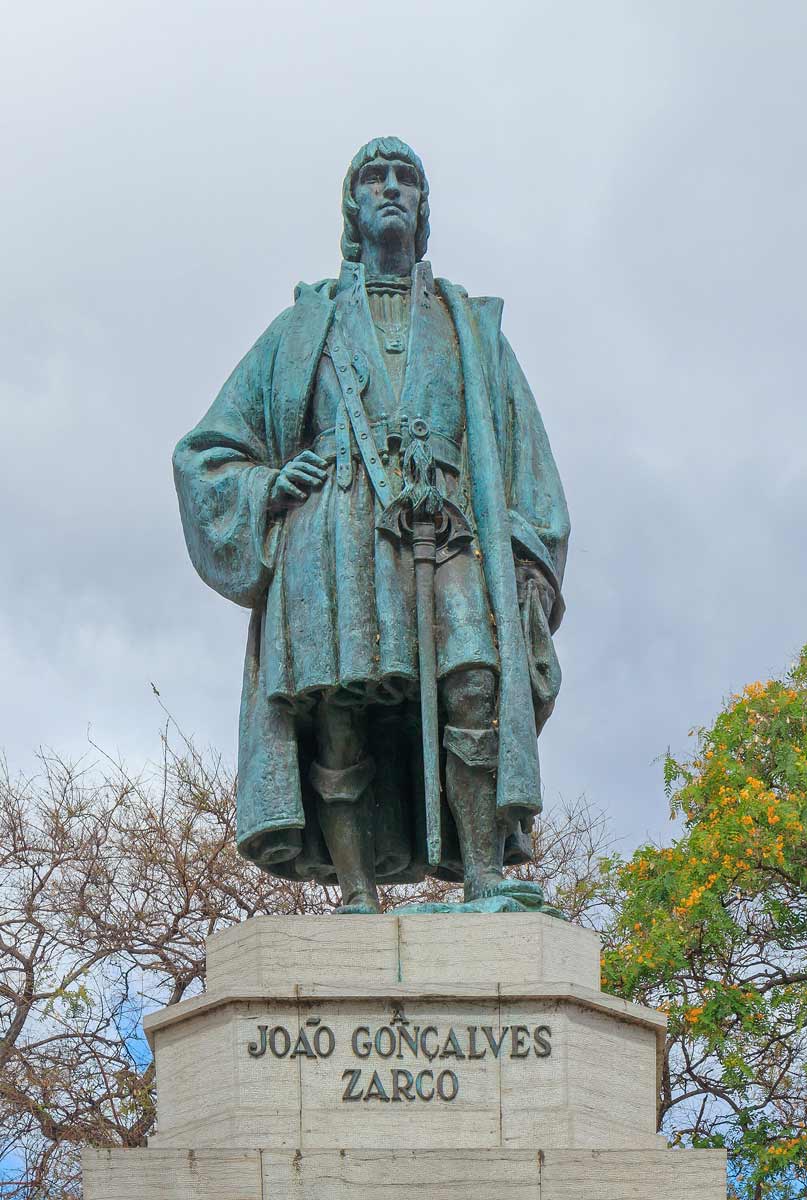
However, in 1418, the Portuguese sailors João Gonçalves Zarco and Tristão Vaz Teixeira were the first to set foot on these islands. They discovered the islands of Madeira, Deserta, and Porto Santo. The sub-archipelago of Ilhas Selvagens, which is part of Madeira Natural Park, was discovered a few years later.
The islands were uninhabited and offered unique weather conditions and a strategic location. Its proximity to the African coast and warm climate allowed for its colonization and economic development.
In 1425, under the rule of King João I, sailors Tristão Vaz Teixeira, Bartolomeu Perestrelo, and João Gonçalves Zarco and their families were the first settlers in the Madeira archipelago. Over the years, commoners, a few members of the low nobility, and some former prisoners settled here.
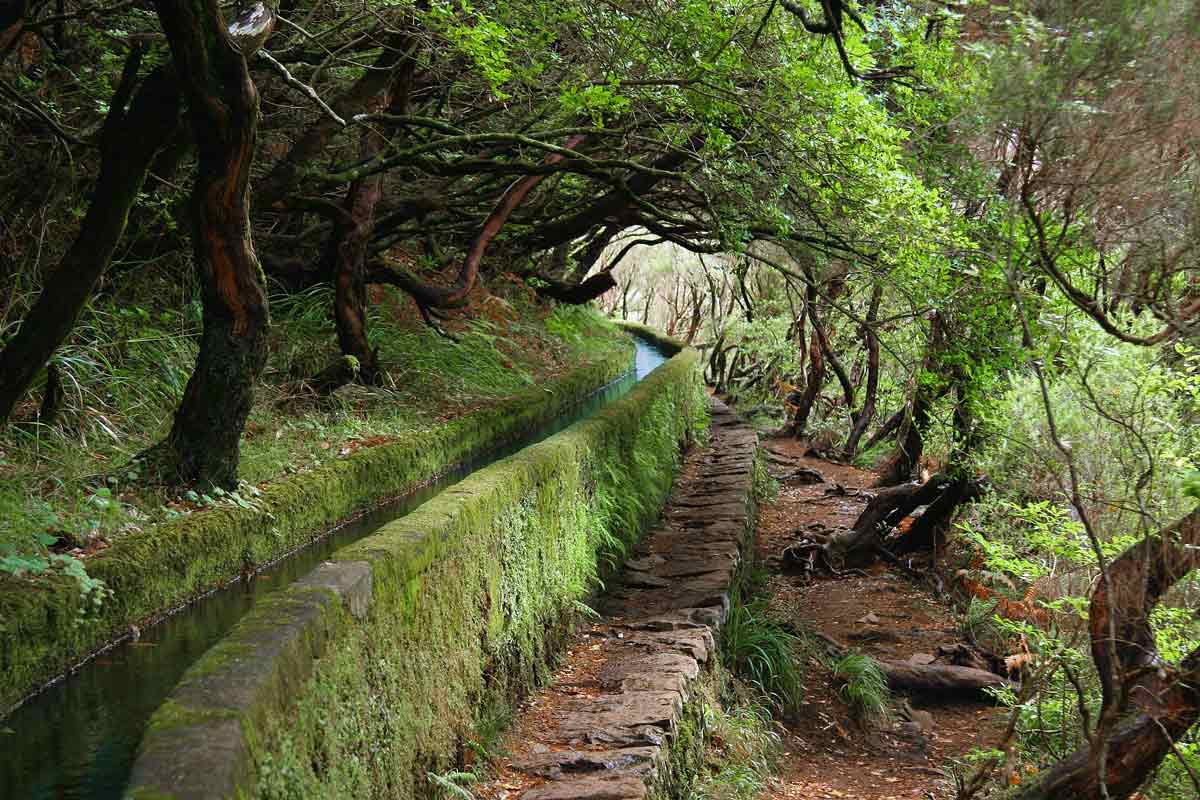
To succeed, these settlers had to develop agriculture in a wild and pristine environment. As a result, they cleared a portion of the Laurisilva Forest and built water canals to transport the abundant water to the island’s driest areas.
During the settlement’s first years, fish, fruit, and vegetables were the main food sources. Over time, the economy developed with the export of cedar and yew wood and dyes, such as indigo and dragon’s blood.
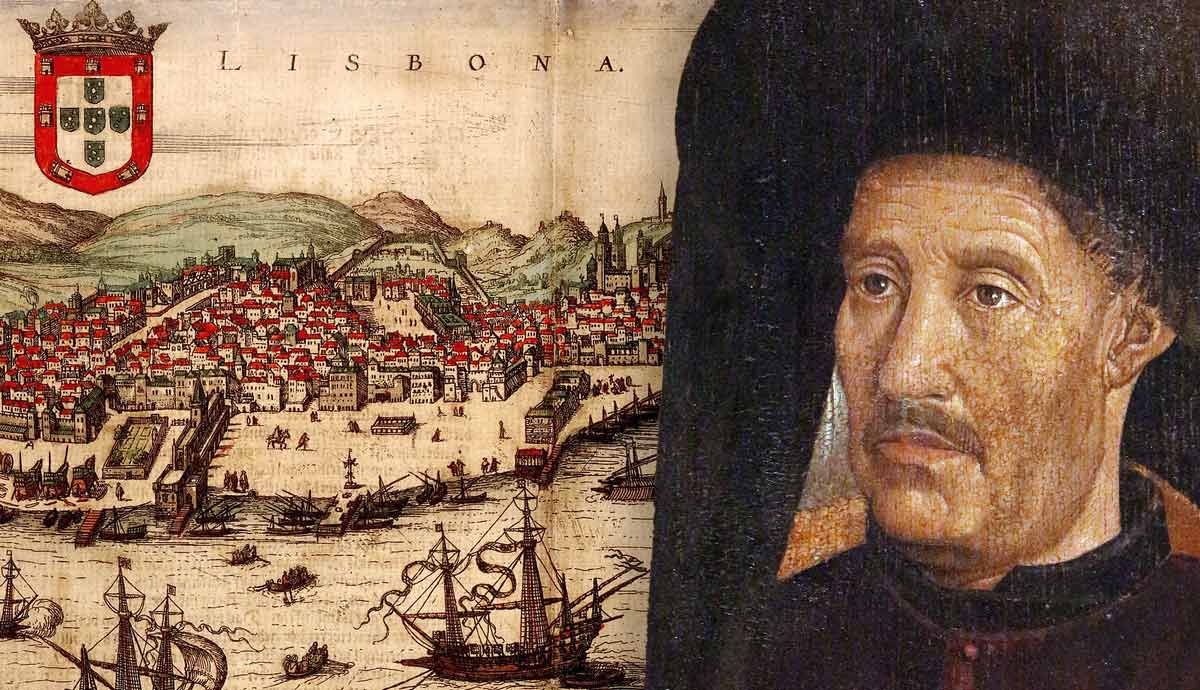
In 1450, agriculture had developed enough to allow the export of wheat to mainland Portugal and the African colonies. However, when wheat production declined, Prince Henry the Navigator ordered sugar cane to be planted, which was considered a rare product at the time.
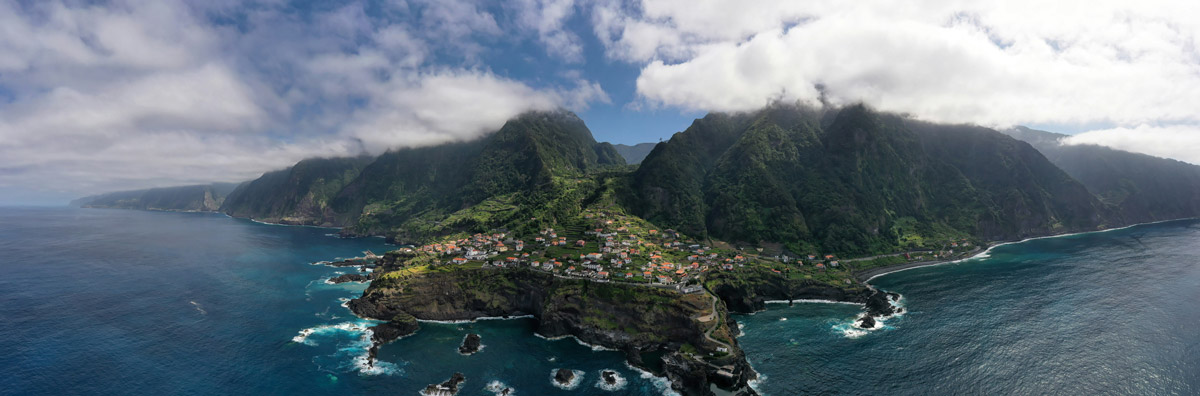
In the 15th century, Madeira was a key trading post since it connected Funchal to Africa, mainland Portugal, and Europe. During the 15th and early 16th centuries, sugar cane production helped Madeira’s economy thrive. European merchants settled here looking for profitable trade. However, in the second half of the 16th century, sugar cane production declined due to plant diseases.
At the same time, Madeira faced serious competition from the Canary and São Tomé islands and Brazil. These events led farmers to replace sugar cane with wine production. From the 17th century onward, Madeira wine became increasingly popular and the main export product.
In the 18th and 19th centuries, most of the island’s visitors were scientists, wealthy aristocrats, and the ill. All of them were attracted by the island’s therapeutic properties. As a result, the first information guides for visitors appeared in 1850 and focused on the island’s history, geology, flora, fauna, and traditions. These were the foundations of the tourism industry in Madeira, which is the main economic activity of the archipelago.
Top Sites in Madeira for History Lovers
1. Laurisilva Forest
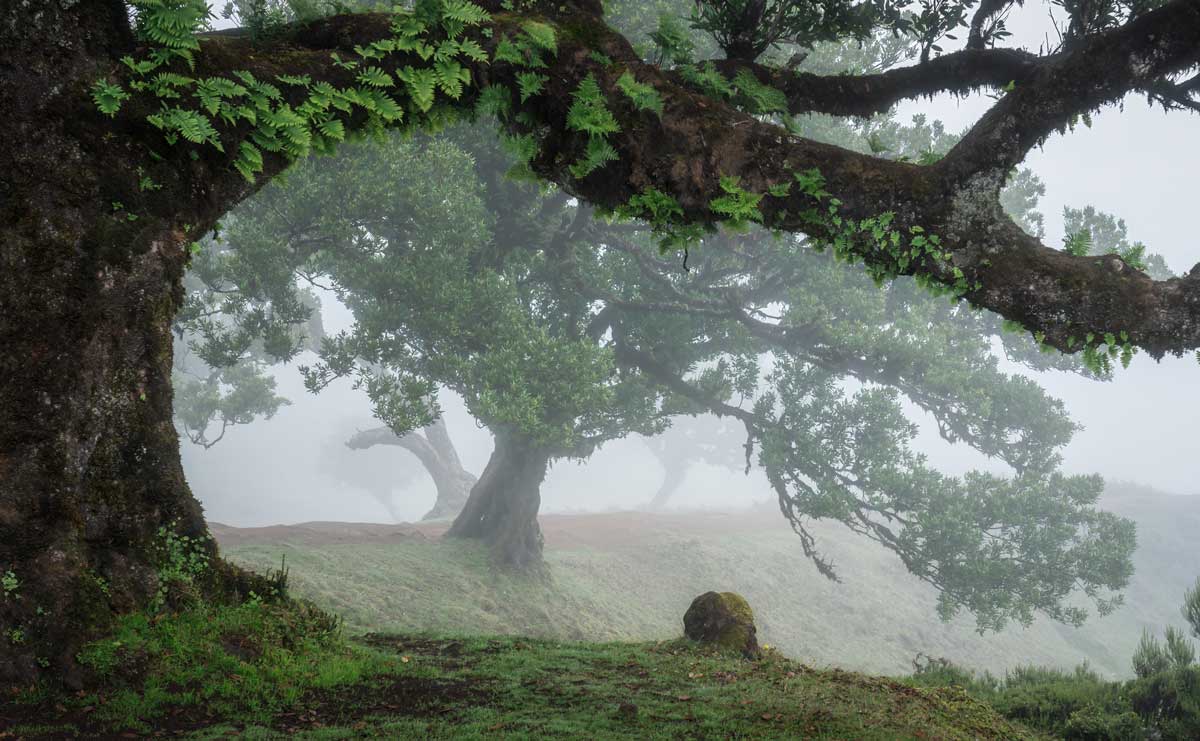
The Laurisilva Forest is a 20-million-year-old subtropical humid forest and the oldest natural landmark in Madeira. It dates back to the Miocene and Pliocene periods of the Tertiary Epoch, which makes it a living fossil. This vast ecosystem is composed of endemic species of Macaronesia. Some of them are centenarian trees of the Lauraceae family.
Today, this UNESCO World Heritage Site covers around 20% of the island’s land. However, when the first settlers arrived in Madeira, the Laurisilva Forest covered most of the island.
These settlers removed several portions of the Laurisilva Forest to make Madeira their home. They also built “levadas” (Madeira’s water canals), to transport water from the most humid and rainy regions to the island’s driest areas.
The best way to see these man-made structures is by hiking. At Levada do Moinho, Ponta de São Lourenço, and Lagoa do Vento, you will find some of the best trails to see the levadas.
2. The Traditional Santana Houses
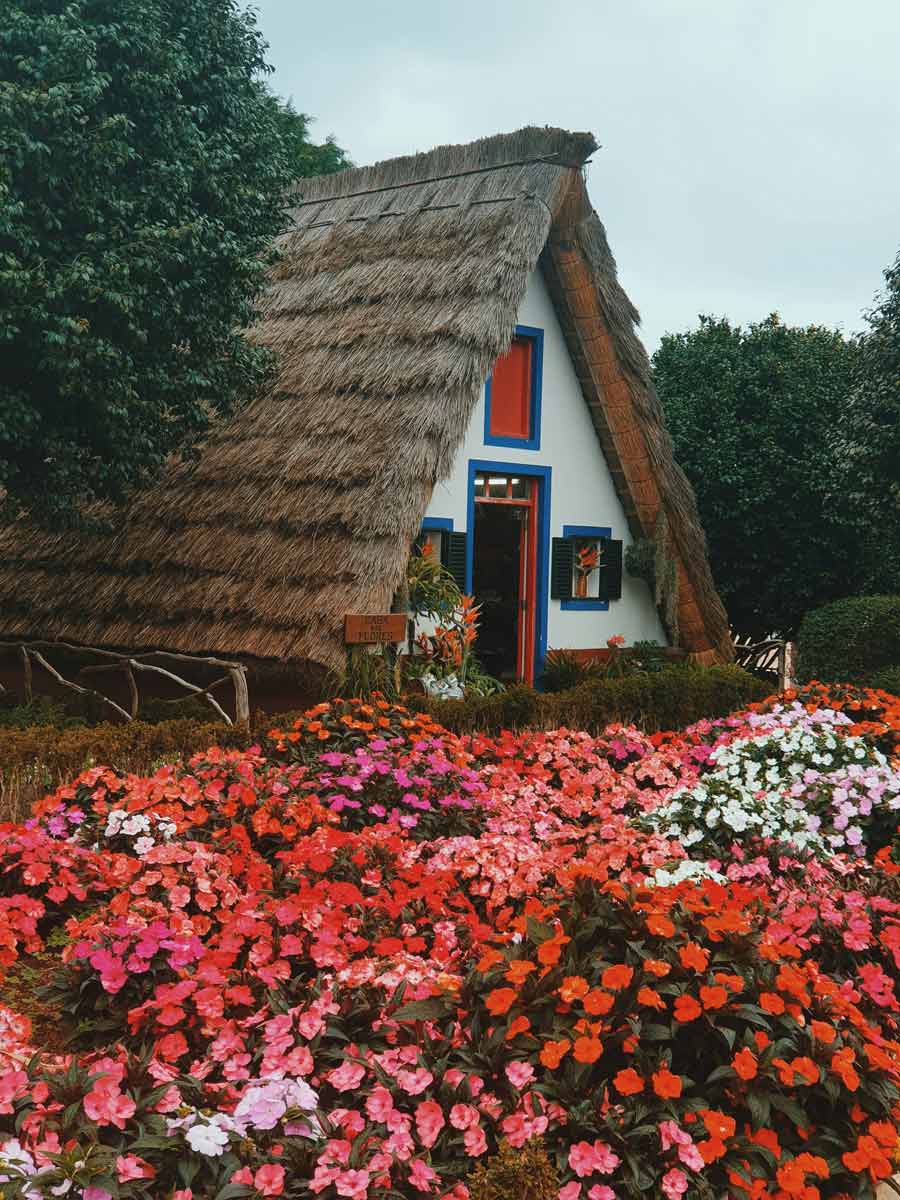
These triangle-shaped houses with thatched roofs make for the most recognizable postcard images of Madeira Island. These houses are the remnants of the island’s first constructions during colonization.
Since there was little hard stone available, builders used the island’s abundant wood for these structures. For the roofs, they used the straw from cereal plantations to cover people’s houses and animal shelters. It was possible to adjust them according to the seasons, all year round, making these homes cool in the summer and warm in the winter.
These houses come in two designs: built on the ground on wooden logs and built on basalt stone walls, with the ground floor comprising three rooms, a living room, and two bedrooms. On the upper floor, there were other bedrooms and a storage area where seeds for the next year’s crop were stored.
3. Santa Clara Convent
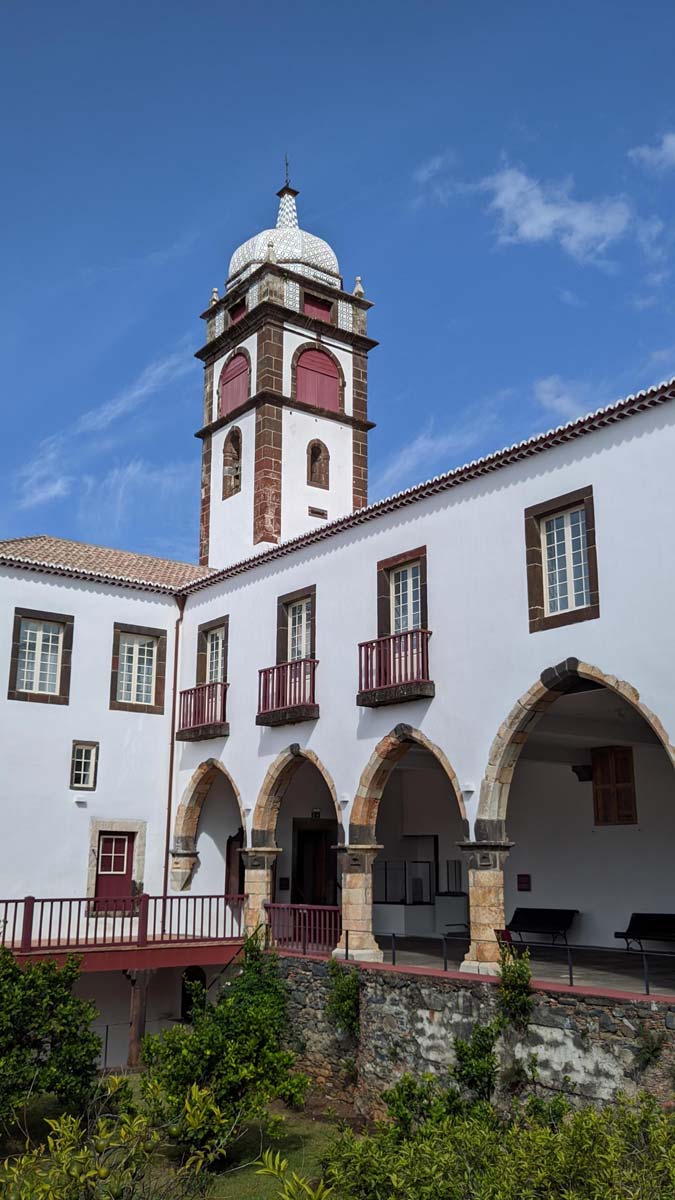
Convento de Santa Clara is one of the oldest buildings in Madeira. It was built between 1489 and 1497, following the authorization granted by Pope Sixtus IV in 1476. D. Manuel (1469-1521), Duke of Beja and future king of Portugal, requested the noblemen, knights, squires, and good men of Madeira to make donations for the construction of the island’s first convent for women. The new building was intended to house noble women and the founder’s daughters.
In 1834, the extinction of religious orders in Portugal meant that all religious buildings and their contents would be transferred to the Portuguese government. As a result, once the last nun, Mother Abbess Maria Amália do Patrocínio, died, the convent and its assets were included in the Public Treasury. Over the next two centuries, the convent shifted hands between public institutions and the Portuguese Government. In the 20th century, especially in the 1940s, the building was refurbished, which included several repairs and restoration works.
You can admire Sant Clara’s varied architectural features, ranging from Late Gothic, Manueline, Renaissance, Mannerist, Baroque, Rococo, and Neoclassical. Such variety derives from several reconstructions over the centuries.
The convent’s irregular plan is composed of several articulated areas such as the church, atrium, choirs, tower, cloister, and chapels. Besides the impressive architectural elements, there are also stunning gilded altarpieces, tile panels, sculptures, paintings, and jewelry.
4. Funchal Cathedral
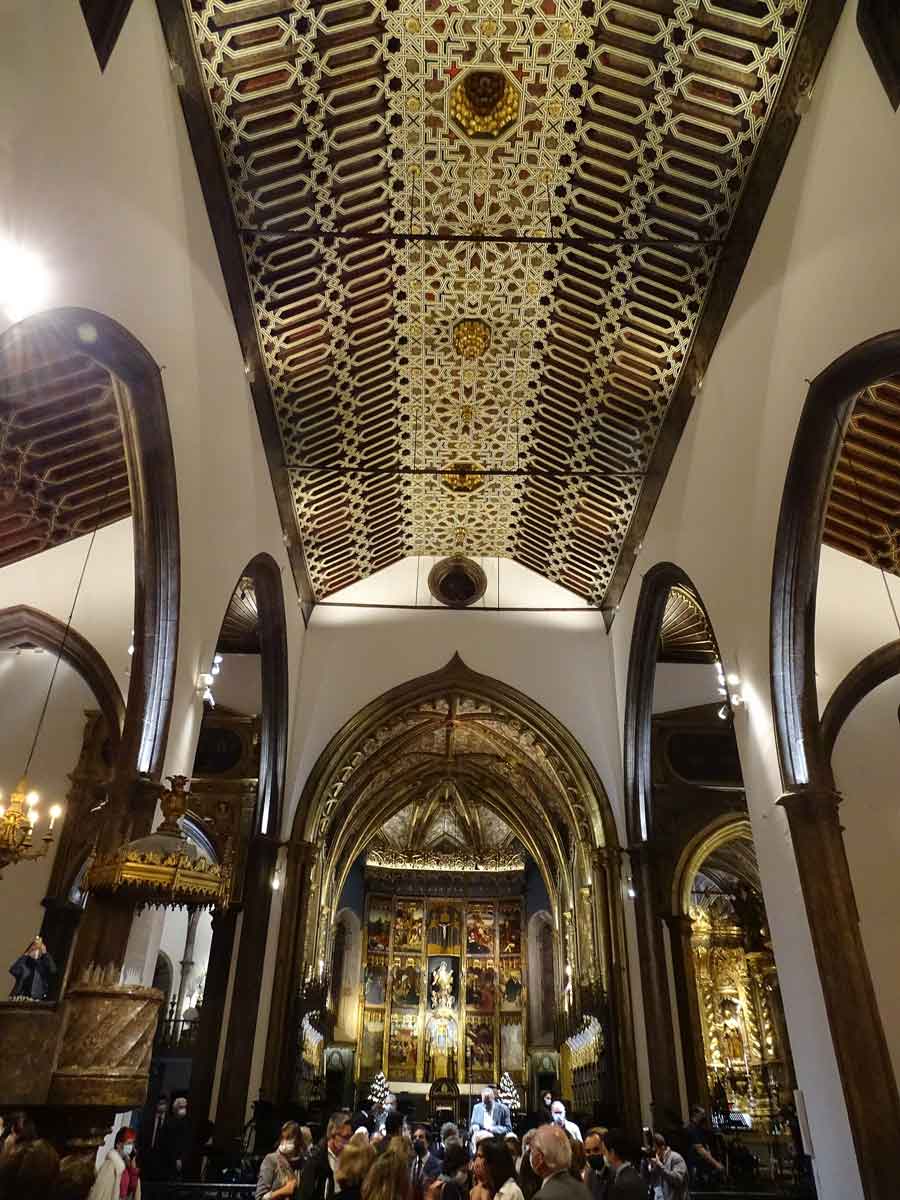
Sé do Funchal has been a National Monument since 1910, and it is one of the few buildings that has remained intact since its original construction.
This cathedral was built between 1493 and 1517 under the rule of King Manuel I when the first church on the island became too small for so many worshipers. The new church was elevated to a cathedral by Pope Leo X, who established the bishopric of Funchal. At the time, Funchal became the largest diocese in the world, covering all territories the Portuguese had discovered.
The cathedral is the best example of Manueline architecture in Madeira. Architect Pêro Anes was the man responsible for the cathedral’s design.
Inside, you can admire a Gothic-style structure with a Latin cross plan. One of the most notable features is the alfarje ceiling, made of local cedar wood in Mudejar style, with gilding and ivory incrustations. At Sé do Funchal, you will also find 16th-century altarpieces and 18th-century tile panels. The chancel’s chair shows images of saints, prophets, and apostles in 16th-century attire and depicts the daily life of the population on Madeira Island.
5. Colégio Church
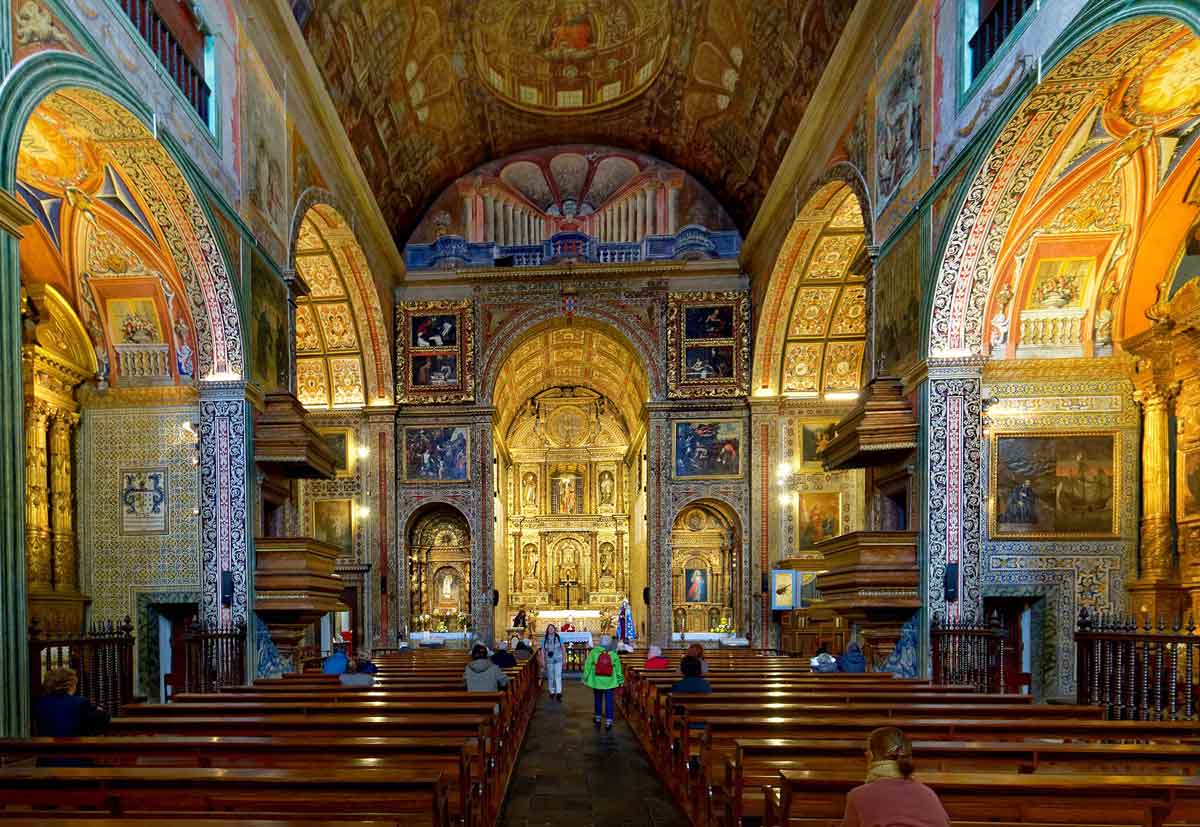
Igreja do Colégio, formally known as Igreja de São João Evangelista, is a Mannerist-style church built between 1629 by the Jesuits on the island.
After its completion, construction works extended until the 18th century due to its exuberant decorations. As a result, you will find several Baroque features instead of the expected Mannerist elements.
After the Jesuits‘ expulsion in 1760, the church remained closed until 1846. That was when the civil governor José Silvestre Ribeiro ordered restoration works and reopened the building for worship.
While visiting this iconic landmark, you will find a longitudinal plan, three chapels, and a gilded woodwork interior, which is considered one of the most valuable in Portugal. Inside, check out the 11,000 virgins’ chapel with its painted ceiling and tile panels.
Until the end of the 19th century, this was the largest building complex on Madeira Island. Today, Igreja do Colégio is part of Universidade da Madeira and Universidade Católica.
6. São Tiago Fort
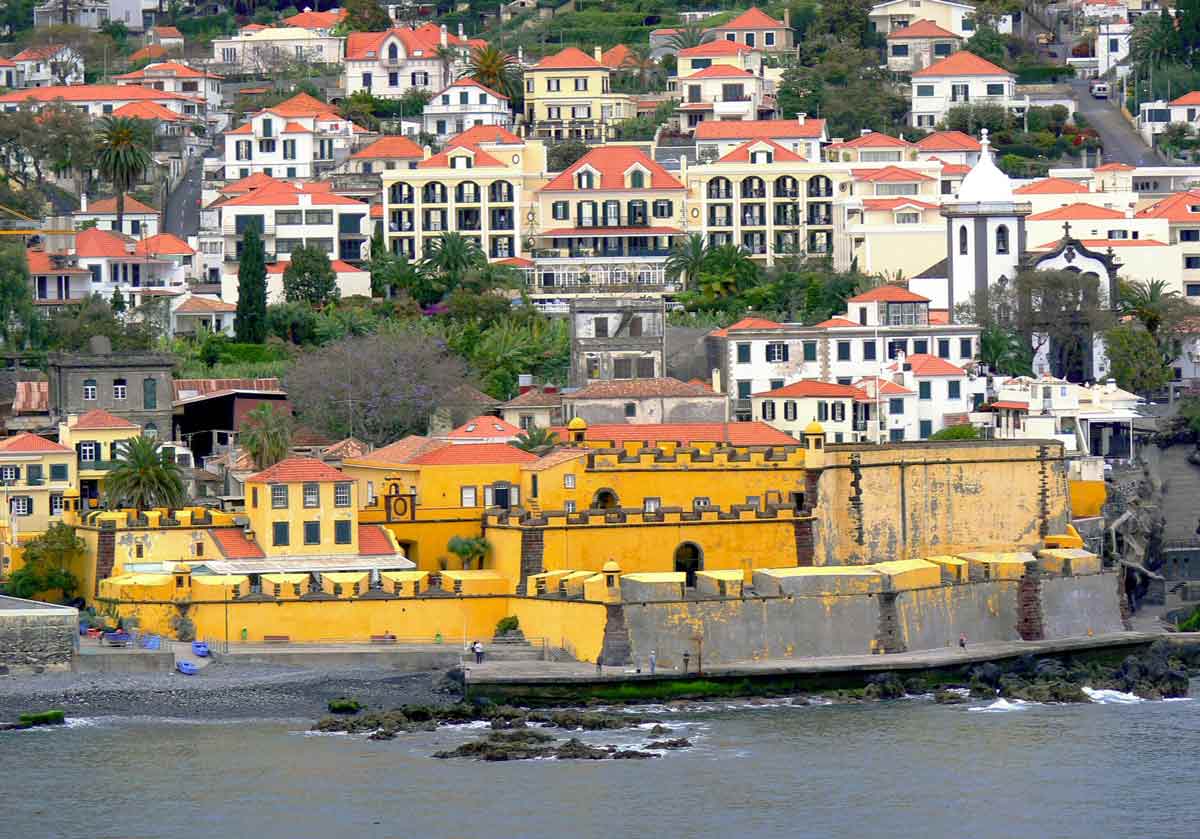
Due to its strategic location as a safe harbor, Funchal was often raided by pirates and corsairs in the 16th century. As a result, several fortresses were built in the city and all around Madeira Island.
Built in the 17th century, Fortaleza de São Tiago is one of these fortresses. Its location was chosen to defend the city’s coastline.
Over the centuries, this landmark was refurbished several times and served several purposes. It housed the British military during the Peninsular War and the Portuguese Military Police. In 1803, it served as a refuge to the population affected by the alluvium. Later, between 1992 and 2015, it was home to Madeira’s Museum of Contemporary Art.
While visiting the fortress, you will notice its irregular star-shaped plan with three cylindrical batteries facing the ocean and keeps with semi-spherical roofs.
7. Baltazar Dias Municipal Theater
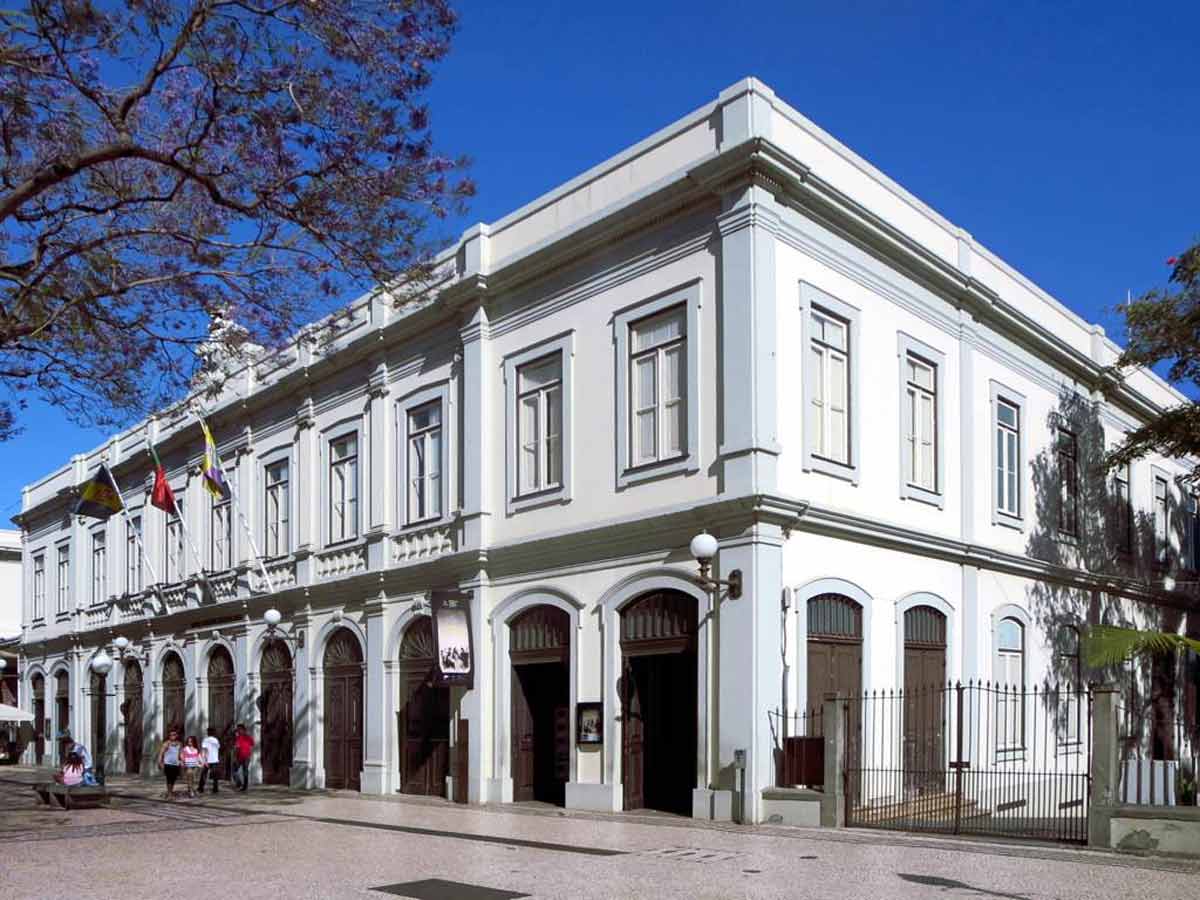
Teatro Municipal Baltazar Dias is an exceptional building that houses Funchal’s main theater room.
Following the demolition of the city’s original theater, Funchal’s population rallied to demand the construction of a new cultural center. Almost 50 years later, the City Council fulfilled the people’s request. Tomás Augusto Soler was the architect behind the elegant design, inspired by Teatro de São Carlos in Lisbon.
Master builder Manuel Francisco Pereira was hired at the same time as the Italian architect and set designer Luigi Manini. Together, they completed this exquisite building in 1887. However, the Theater was only inaugurated the following year.
Although the theater has had many names over the centuries, the name Teatro Municipal Baltazar Dias is a tribute to a blind playwright and poet born on Madeira Island.
Once inside the performance hall, take some time to admire its Italian-styled décor and the painted ceiling.
8. The Shrine of Nossa Senhora da Paz
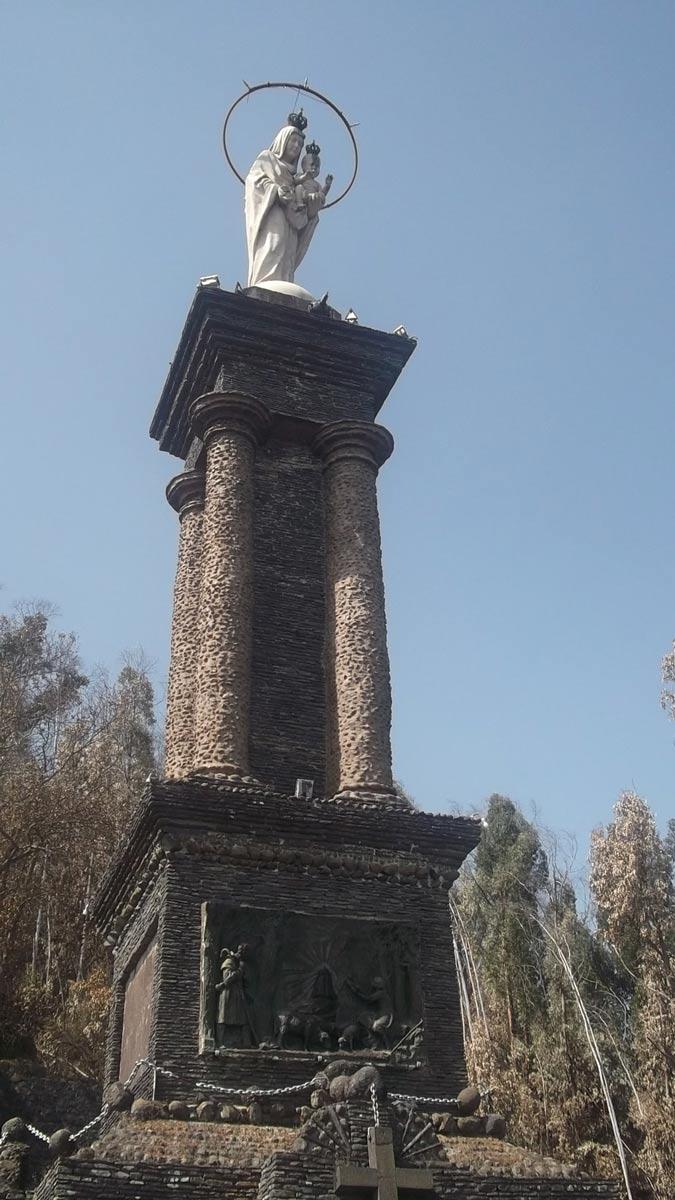
Santuário de Nossa Senhora da Paz is the largest monument on Madeira Island.
Madeira was bombed twice by German submarines during the First World War. The population prayed to Our Lady of Monte for peace, which resulted in a vow made by the parish priest, Father José Marques: he promised to build a memorial to thank God and Our Lady if peace ever arrived.
Fortunately, the war ended the following year. As promised, in 1923, the first stone was laid, and the monument was completed and inaugurated in 1927.
At 850 meters (2,788 feet), this shrine shows a five-and-a-half-meter-tall (18-foot) statue of Mary with Child, placed on a 20-meter-tall (65-foot) pedestal with bronze reliefs and four Roman columns.
At the base, you can admire a bronze bas-relief depicting the Virgin’s apparitions to the shepherds. Around the base is a rosary made with chains from ships torpedoed in the port of Funchal during the Great War and stones from the Santo António stream. Close to the shrine is the Nossa Senhora da Paz chapel, inaugurated in 1928.
9. Lavradores Market
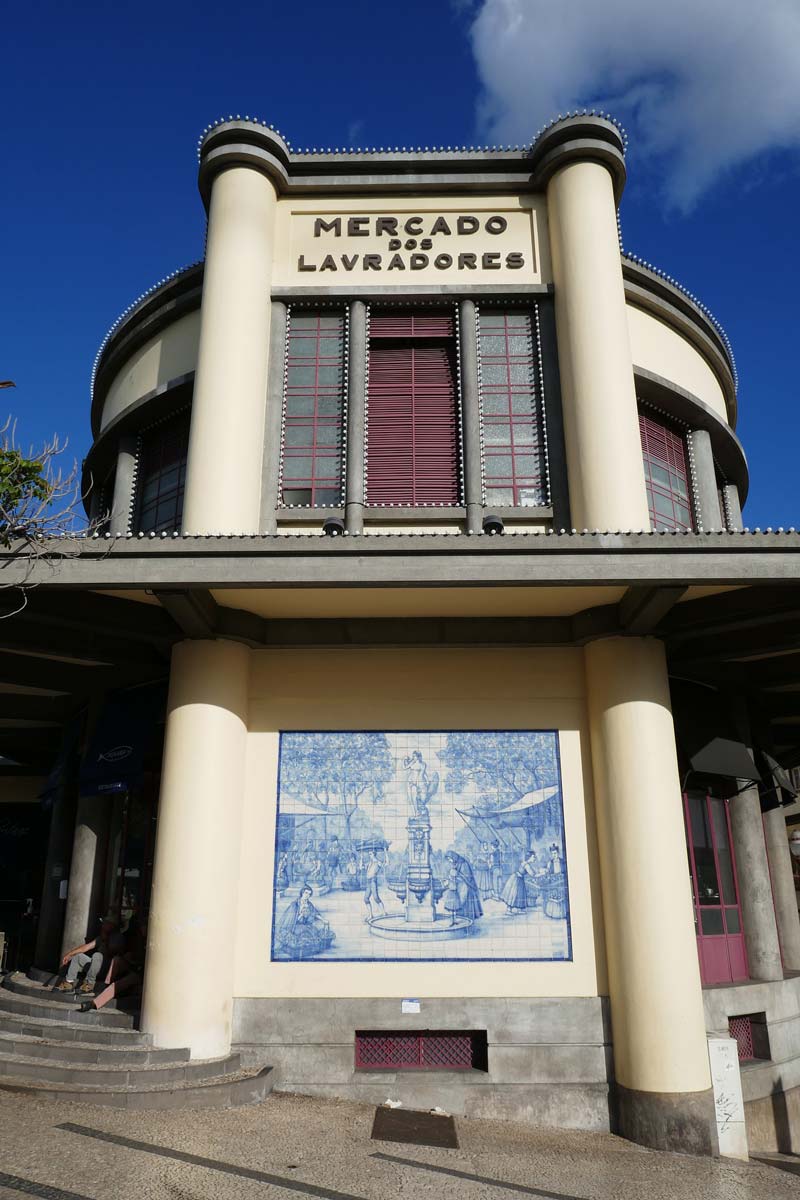
Locals and visitors like to explore the Mercado dos Lavradores looking for the island’s freshest produce. Yet, few people notice the unique architectural features of this historical building.
Mercado dos Lavradores, built in 1940, is one of the best examples of the architecture of Estado Novo, a dictatorial regime established in Portugal between 1933 and the Carnation Revolution in 1975. Here, you will also find elements of Art Déco from the 1930s and Modernism.
The Mercado dos Lavradores project was intended to serve as Funchal’s main supplier. The main entrance is decorated with several tile panels depicting local daily life. These were painted by João Rodrigues and produced at Fábrica de Loiça de Sacavém, a historical Portuguese factory founded in 1850.
10. Madeira Ethnographic Museum
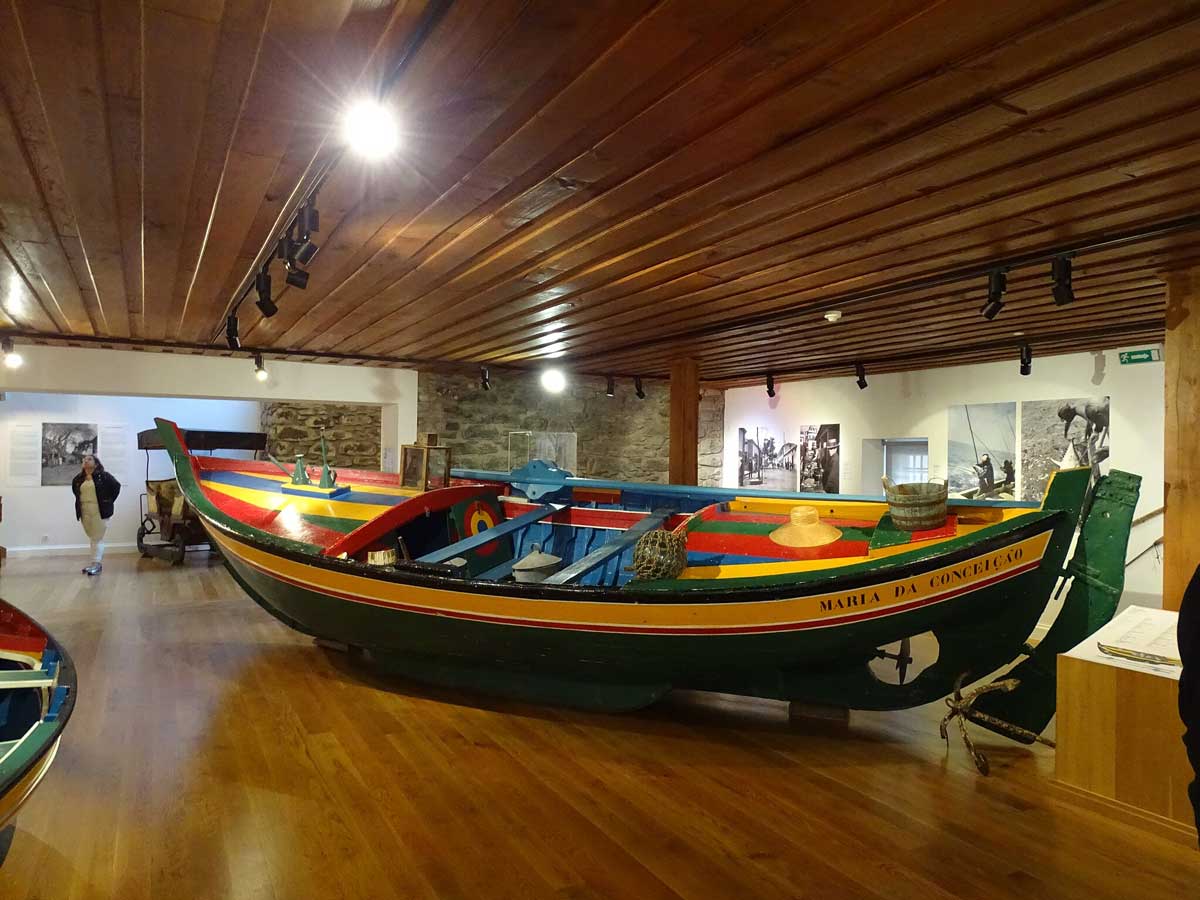
You can learn more about the island’s culture and traditions at Madeira’s Ethnographic Museum. The museum is installed in a 17th-century manor house. The property had several owners until it was finally converted into an industrial unit in 1853. A few years later, in 1862, an animal-drawn sugar cane mill and a still for distilling alcohol were built there.
In the 20th century, Madeira’s Regional Government decided to install an ethnographic museum designed by the architect João Francisco Caires. The museum was inaugurated in 1996.
While visiting the museum, you will find a permanent exhibition of artifacts related to production activities, transport, local homes, and local trade.