Summary
- Mimamsa philosophy interprets early Vedas to define ritual duties (dharma), not to describe ultimate reality.
- The connection between words and their meanings is considered eternal and inherent, not based on human convention.
- Vedic language prescribes action and creates duties rather than simply describing the world as it is.
- Mimamsa’s ideas on language surprisingly resonate with the modern Western philosopher Ludwig Wittgenstein.
The humble quest of Mīmāṃsā thinkers consisted in seeking the right interpretation of the early Vedas, rather than the true description of reality or salvation. This means they did not waste much time on quarreling with peers who adhered to other schools of Indian philosophy, or darśanas. Mīmāṃsā became famous for its philosophy of language, in which a word’s meaning is inherent, while the connection between words and objects is eternal. This is a direct parallel to contemporary semantic realism in the Western philosophy of language. Moreover, to determine the proper way to perform Vedic rituals, prompted Mīmāṃsā thinkers to establish a codifiable set of actions prescribed as duties that may resonate with some of the pinnacles of Western ethics.
The Invention of Mīmāṃsā: When, Where, Who?
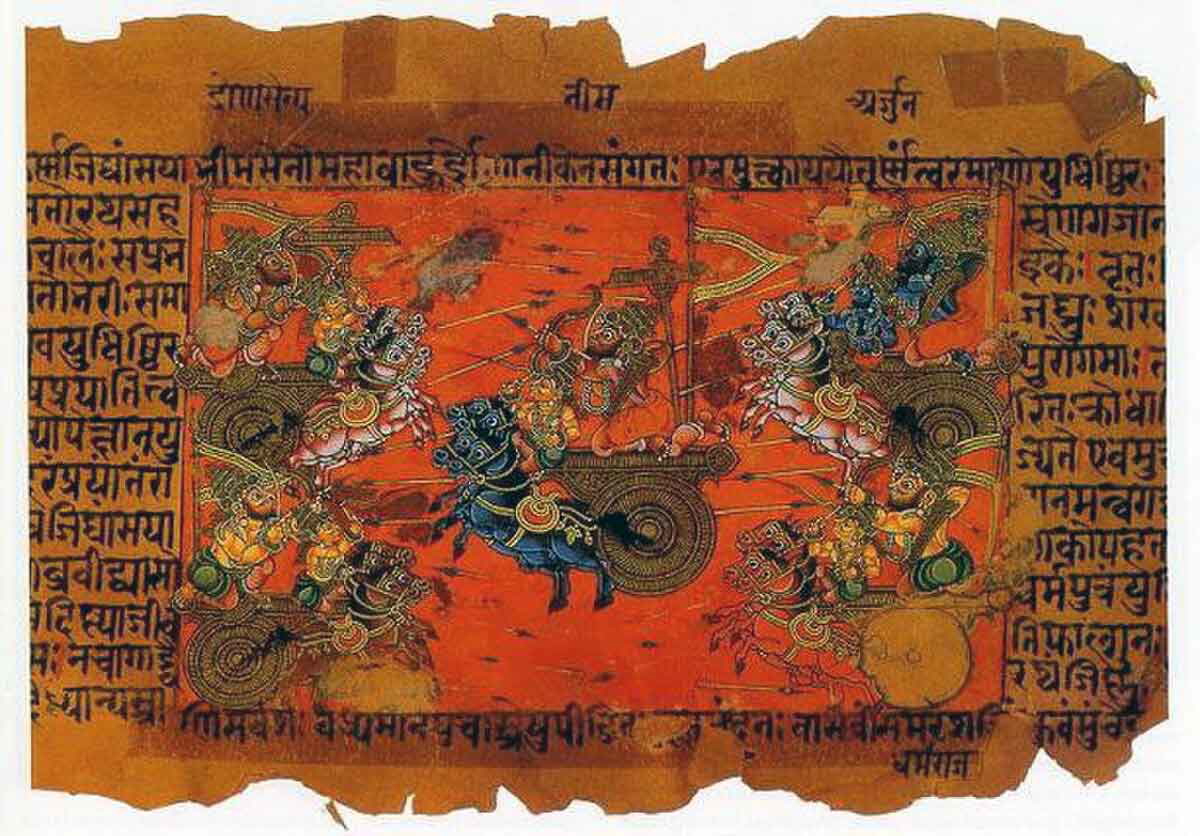
Mīmāṃsā literally means “investigation” or “reflection.” It emerged in the centuries after the Vedic hymns had been codified and ritualized (c. 1500–500 BC). While another classical Indian darśana, namely, Vedānta, turned to the Upaniṣads, which had been considered as the last Vedas, or the culmination of the Vedas, Mīmāṃsā focused on the Saṃhitās and Brāhmaṇas. This means that Mīmāṃsā lacks the metaphysical grandeur of its philosophical rival. Saṃhitās are the core mantra portion of the Vedas, consisting of hymns, chants, and prayers directly addressed to various deities for ritual use. Brāhmaṇas are subsequent prose texts that provide detailed ritual instructions, theological explanations, and mythological justifications for the ceremonies found in the Saṃhitās. Clearly, Mīmāṃsā thinkers sought to root their authority in the interpretation of ritual performance and the rules governing sacred language.
All six darśanas were considered to have originated in the founding texts of one of the famous sages. In this case, Jaimini (c. 3rd–2nd century BC) is believed to be the author of the Mīmāṃsā Sūtra. Later commentators vastly expanded the system’s philosophical scope. Śabara (c. 5th century AD) produced the earliest surviving commentary (Śabarabhāṣya), which became the basis for all subsequent discussion.
In the 7th century, two important figures, Kumārila Bhaṭṭa and Prabhākara Miśra, developed their distinct sub-schools of Mīmāṃsā. Kumārila’s version of Mīmāṃsā emphasized a robust realism about language and pioneered theories of sentence meaning (śābdabodha) and epistemology, including detailed accounts of inference and testimony. Prabhākara, by contrast, advanced the school famous for its doctrine of “intrinsic validity” (svataḥ prāmāṇya) of knowledge and its subtle semantic theory, which holds that grasping word-meaning is inseparable from grasping sentence-meaning. Together, these thinkers transformed Mīmāṃsā from a specialized hermeneutics of ritual into one of the most sophisticated classical Indian philosophies of language, meaning, and knowledge.
The Central Concepts of Mīmāṃsā

The central goal of Mīmāṃsā is to investigate and define dharma (duty, righteousness). In this context, dharma is not a mystical or universal law of cosmic order, but a recipe for a particular action. One does not grasp dharma through metaphysical speculation but by being an earthly creature who simply reads and interprets Vedic injunctions. For example, the command “one should perform the new moon sacrifice” establishes a duty independent of human authorship and stemming from the infallible Vedic tradition grounded in the timeless, unauthored (apauruṣeya) Vedas.
Such commands or prescriptions do not describe reality but bind the agent to a course of action, something simply ought to be done. The performance of such action, when done correctly, produces an unseen potency known as apūrva, which inevitably brings about the promised result, whether worldly benefit or otherworldly reward. Importantly, the efficacy of ritual does not depend on divine intervention. Gods, according to classical Mīmāṃsā, are merely names within the ritual apparatus. What matters is the faithful execution of Vedic injunctions themselves.
You may be worried that much is at stake here for Mīmāṃsā thinkers: relying too much on the infallibility of the Vedas places much epistemic pressure on one’s philosophical system. However, to defend its reliance on Vedic testimony, they articulated a striking epistemological position: the intrinsic validity of knowledge (svataḥ prāmāṇya). According to this view, all bits of knowledge are presumed valid the moment they arise in our minds and need not be externally certified right away. Knowledge remains valid unless and until it is subsequently defeated by evidence of error, such as a visual illusion or a fallacy in reasoning. This position shifts the burden of proof from the knower to the skeptic and treats Vedic statements as self-authenticating unless positively contradicted.
Linguistic Meaning in Mīmāṃsā
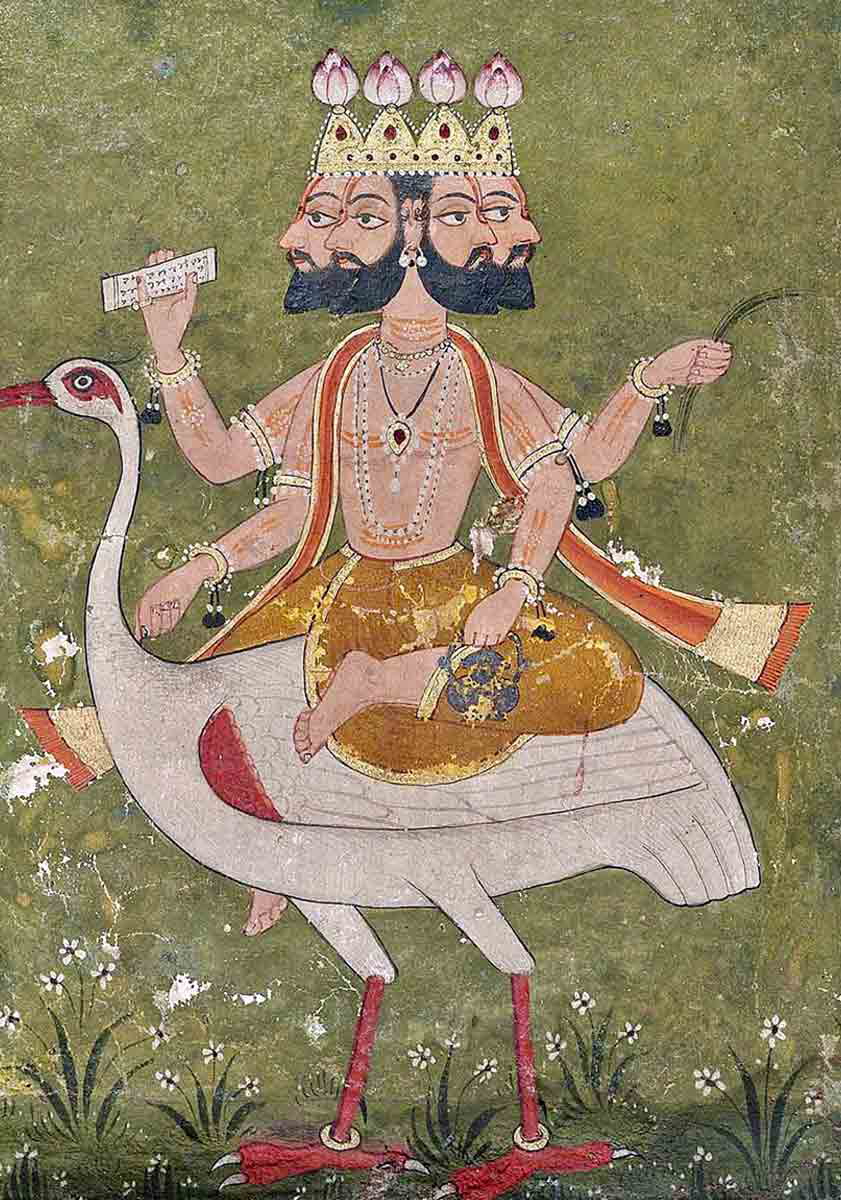
If Mīmāṃsā is remembered as a philosophy of ritual in the histories of Eastern and/or global philosophy, it is worth noting here that it equally developed a respectable philosophy of language. Since the Vedas themselves are authoritative not as descriptions but as kinds of speech-acts that generate duties, understanding language became inseparable from understanding dharma.
At the foundation of Mīmāṃsā lies the conviction that the relationship between words (śabda) and their meanings (artha) is eternal, fixed, and not subject to human convention. Unlike some modern theories that treat language as a form of social contract, Mīmāṃsā held that words inherently reveal their referents. To put it differently, a word is not a mere sound that arbitrarily comes to signify but carries meaning by its very nature. This underwrites the school’s broader thesis that the Veda is authorless (apauruṣeya). If words are intrinsically meaningful and the Veda is eternal sound, then Vedic injunctions are timeless truths, not human inventions.
This view led to intense debates with rival schools, particularly with the Nyāya school, which treated word meaning as mediated by convention. Mīmāṃsā thinkers argued that the connection between word and meaning is eternal and direct. In this way, they carved out a semantic realism: language is not contingent, but part of the fabric of reality itself.
Mīmāṃsā also made sophisticated contributions to sentence theory (śābdabodha). How does the meaning of a sentence emerge from its words? Kumārila Bhaṭṭa claimed that each word conveys its individual meaning first, and only afterward are these meanings syntactically connected to yield sentence meaning.
His contemporary Prabhākara Miśra disagreed, advancing anvitābhidhānavāda, the doctrine that words never present isolated meanings at all but always function within a sentence-context. For him, hearing a word in a sentence is already to grasp it as syntactically connected to others. Remarkably, this debate anticipates disputes in analytic philosophy of language between atomistic and holistic theories of meaning, such as Frege’s.
Mīmāṃsā and Wittgenstein: A Surprising Compatibility
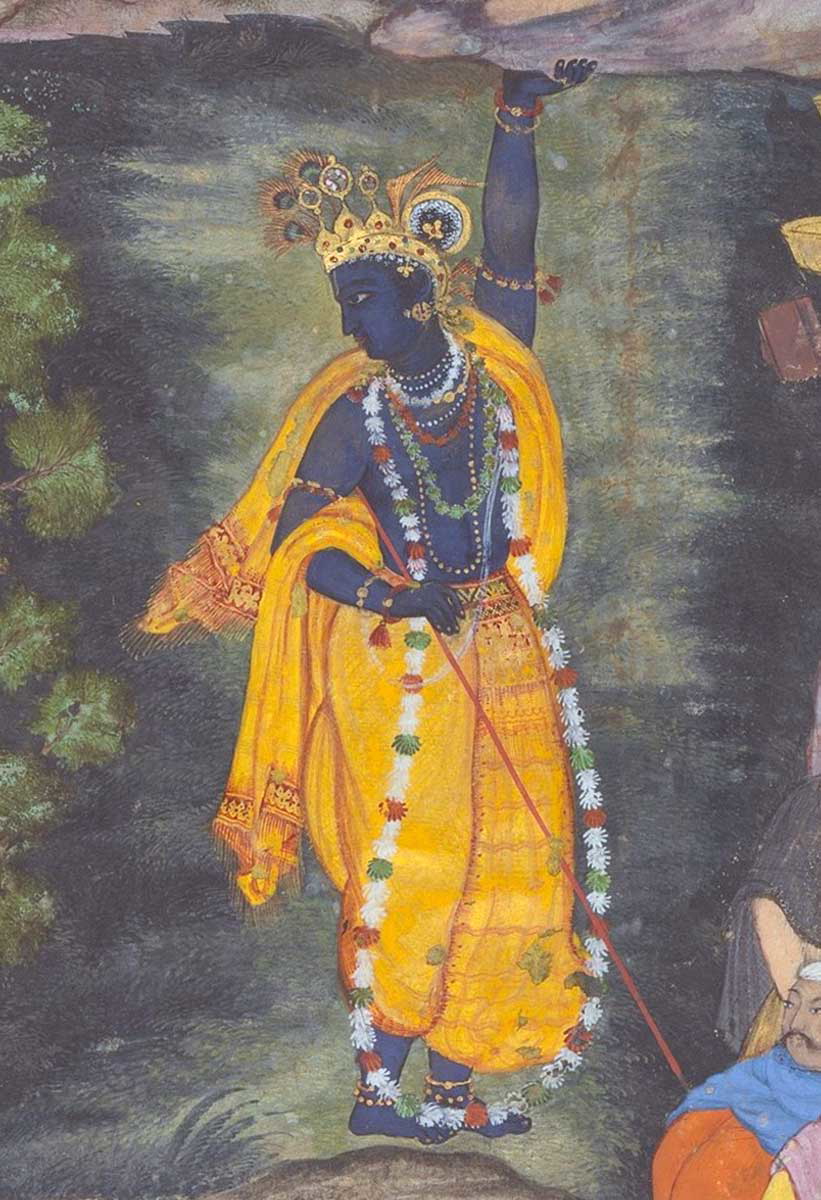
At first glance, the austere ritualism of Mīmāṃsā and the ordinary-language philosophy of Ludwig Wittgenstein seem worlds apart. One emerged in ancient India, defending the eternal authority of the Vedas, while the other, in twentieth-century Europe, was probing how meaning arises from our everyday practices. Yet when placed side by side, intriguing resonances emerge.
Both Mīmāṃsā and Wittgenstein resist the temptation to reduce language to a mirror of reality. For Mīmāṃsā, the Veda’s sentences do not primarily describe the world but prescribe duties. This means, recall, that language functions as a guide to action that shapes communal life rather than a neutral report. Similarly, Wittgenstein emphasized that meaning is use: words are embedded in “language-games” that direct human activity.
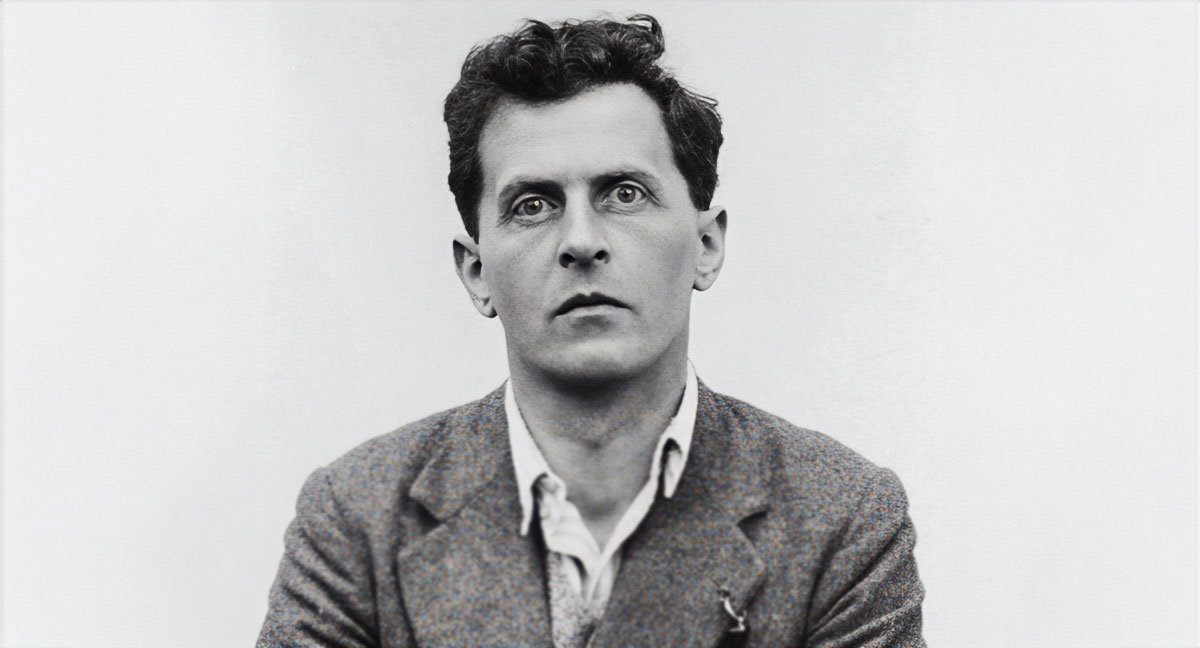
Moreover, both Mīmāṃsā and Wittgenstein grapple with the problem of rule-following. Wittgenstein asked: how can we be said to follow a rule rather than merely act in accord with it? Mīmāṃsā provided a strikingly parallel answer: rules bind the agent precisely through their linguistic form. The authority of injunctions does not derive from psychological states or divine will but from the intrinsic normativity of language itself.
Finally, both reject the idea that meaning depends on private acts of intention. For Mīmāṃsā, words are eternally linked to their meanings, independent of speakers’ whims. For Wittgenstein, private languages are impossible because meaning requires shared criteria of use. In both, language is irreducibly public, normative, and action-guiding. That a premodern Indian ritualist and a Viennese philosopher should converge on such insights testifies to the universality of the philosophical puzzles posed by language.