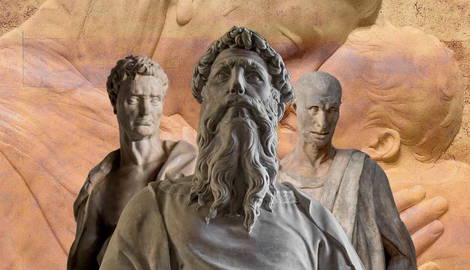
The famous sculptor Donatello was one of the great artists who forged the visual aesthetic of the Italian Renaissance. Donatello’s innovation lay in re-introducing the tradition of Roman Antiquity to his age and making it truly relevant. By the accounts of his contemporaries, Donatello was a kind-hearted and easygoing person, a gifted and passionate artist who, unfortunately, was not very skilled in managing his workshop as a businessman. Read on to learn more about nine sculptures by Donatello.
1. “David” by Donatello: A Revolution in Sculpture
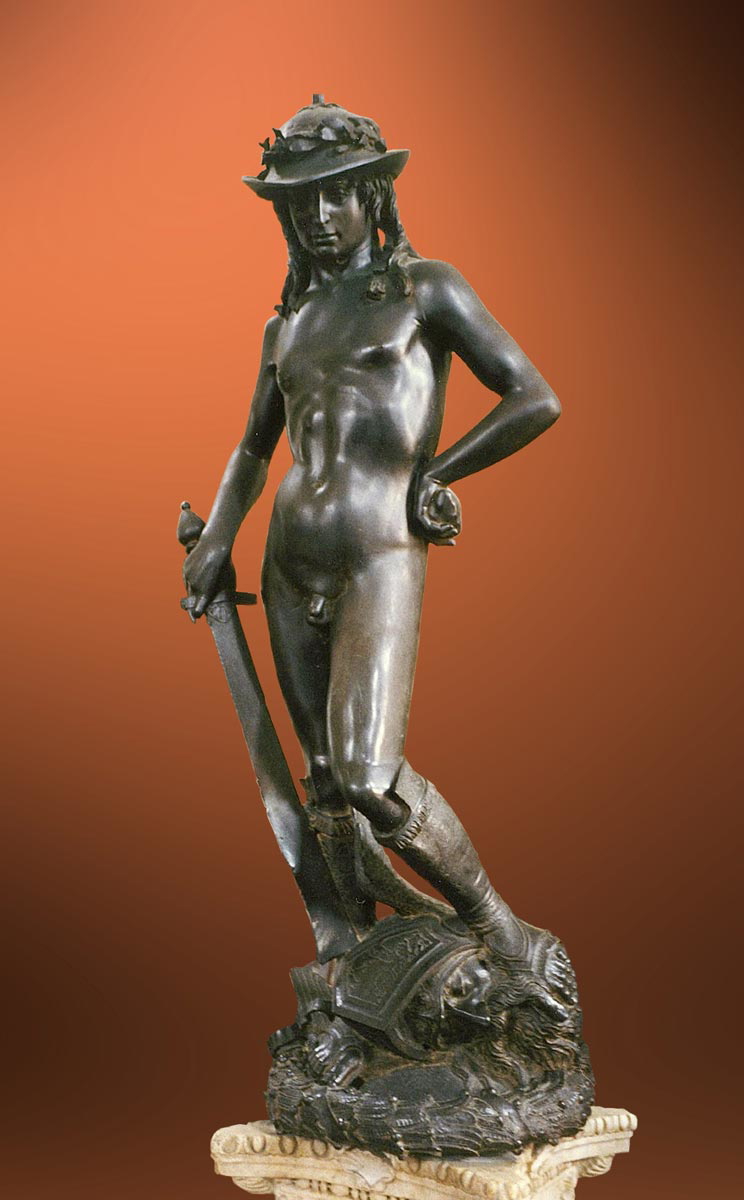
Donatello was known for taking too many commissions and failing to finish them on time. Thankfully, he had time to complete his most famous and perhaps most influential work: a sculpture of young David with his foot over the giant Goliath’s severed head.
The most challenging step in understanding Donatello from the perspective of a 21st-century art admirer is to fully grasp the degree of innovation and originality in his works at the time of their creation. Today, we perceive the Antiquity in Renaissance art as a norm that is too obvious to even be discussed in detail. However, at the time of Donatello, the art of Ancient Rome was only beginning to be rediscovered.
2. Prophet Jeremiah
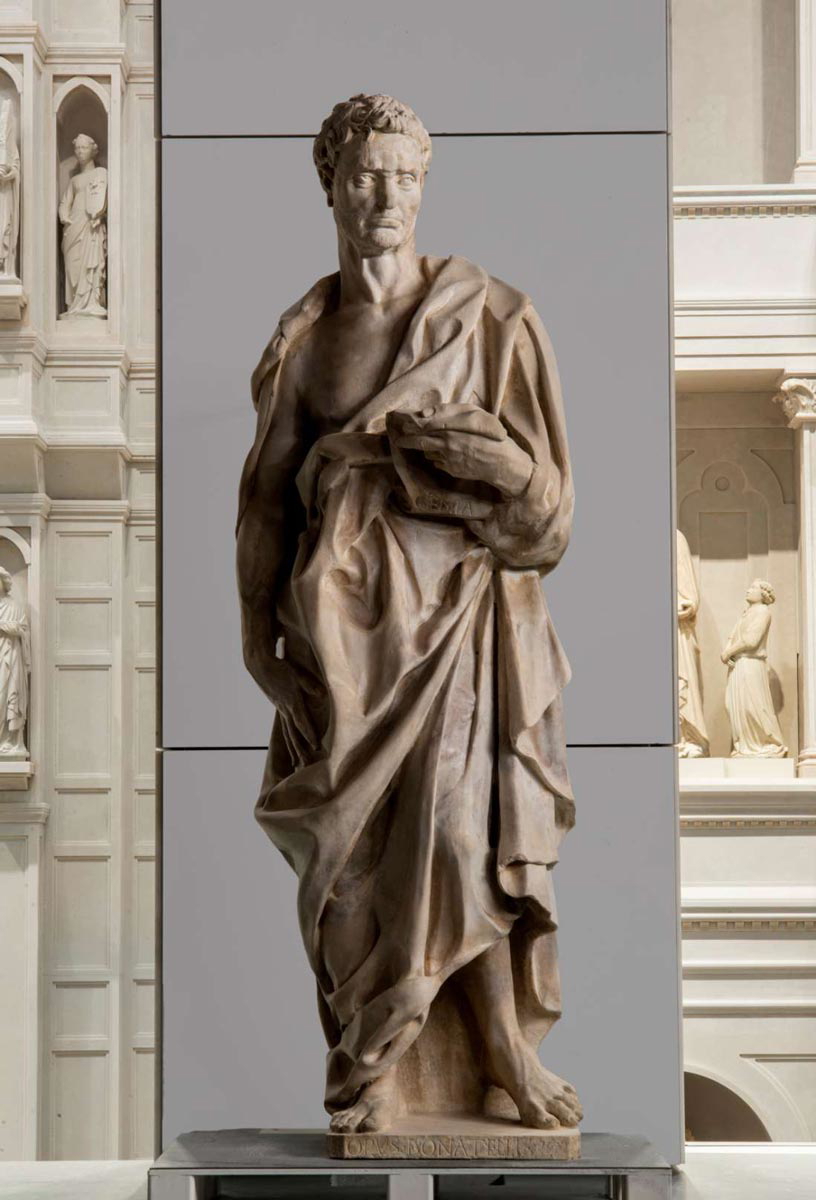
To highlight the innovation of Donatello’s studies, it is worth sharing a story that happened to the young artist in Rome at the start of his career. The famous Roman Forum, which now attracts millions of tourists each year, was used as a field where the locals herded cows. The architectural remains were seen as useless debris that cluttered the space. However, Donatello and his close friend, architect Filippo Brunelleschi, were among the first to appreciate the aesthetics and the unique proportion of Roman art. At night, they went to the Forum and excavated Roman sculptures to study. Allegedly, they were almost killed by a group of locals, who believed the two artists were thieves hiding stolen treasure. The sculpture of Prophet Jeremiah, the biblical character depicted in a realistic manner typical of Ancient sculptures, was a perfect illustration of such an approach, which was revolutionary at the time.
3. Penitent Magdalene
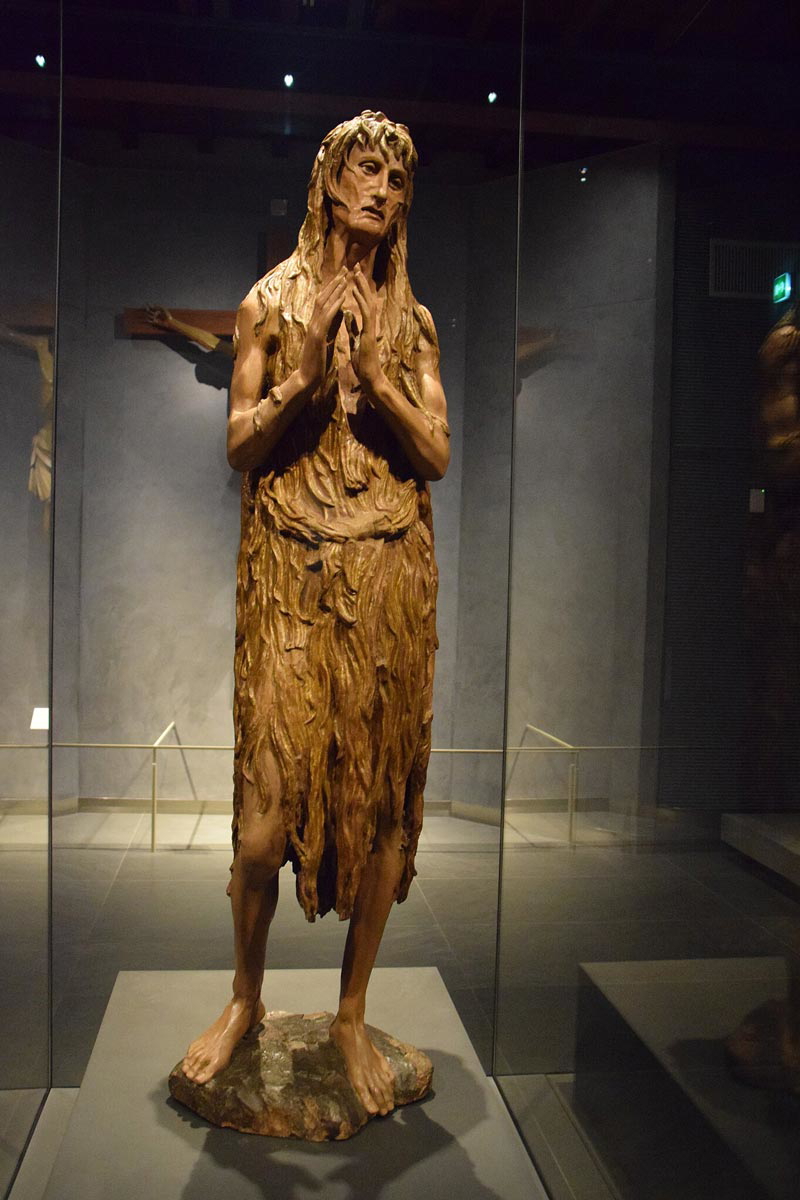
Penitent Magdalene is one of the most celebrated yet strange works by Donatello, which looks surprisingly modern (almost too modern) for its era. The rough lines of the wooden surface and the expressive messiness of the figure look much closer to the early 20th-century German Expressionist sculpture than to the Italian Renaissance. Nonetheless, this work illustrated the progressive thinking of Donatello, who was already surpassing the limits of the artistic norms of his era.
Although it is usually assumed that Mary Magdalene was a repentant prostitute, not a single passage from the Bible or its apocrypha states her occupation directly. The New Testament simply states that Mary was a sick woman whom Jesus healed by exorcizing “seven demons” out of her. Afterwards, she repented for her past life of sin and joined Jesus in his travels, even supporting him financially. Moreover, she was the witness to his crucifixion and the first person to meet Jesus Christ resurrected. According to the story, Magdalene was wandering through the desert, praying to God to forgive her sins. In Western iconographical tradition, artists usually depicted penitent Magdale as a young, often partially undressed, beautiful woman, praying with almost erotic fervor. Donatello, however, chose to show her more realistically, emaciated and dressed in rags.
4. Saint John the Evangelist
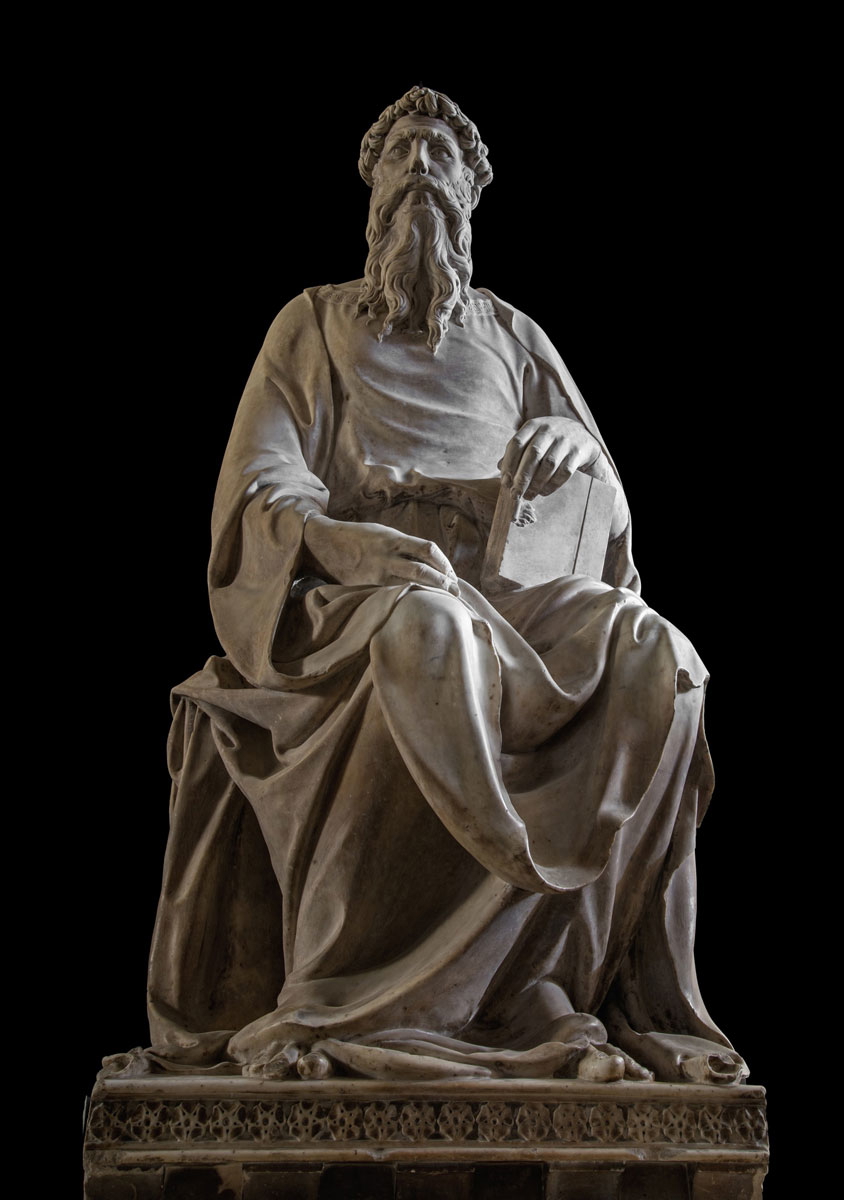
The sculpture of Saint John the Evangelist marked Donatello’s departure from the expressive late Medieval Gothic style towards Neoclassical naturalism, inspired by Roman art. Today, some observers are puzzled by the mismatched proportions of the legs and body of the figure. The reason for this is that Donatello intended for the sculpture to be placed way higher than eye level, with the angle leveling out the proportions.
Usually, in the Western tradition, artists and sculptors depicted John the Evangelist, also known as John the Apostle, as a rather young man. Donatello once again challenged the tradition by showing him as an aged, wise man. John the Evangelist is the only of Jesus’ twelve apostles who lived to an old age and presumably died from natural causes rather than being murdered for his faith.
5. San Rossore Reliquary
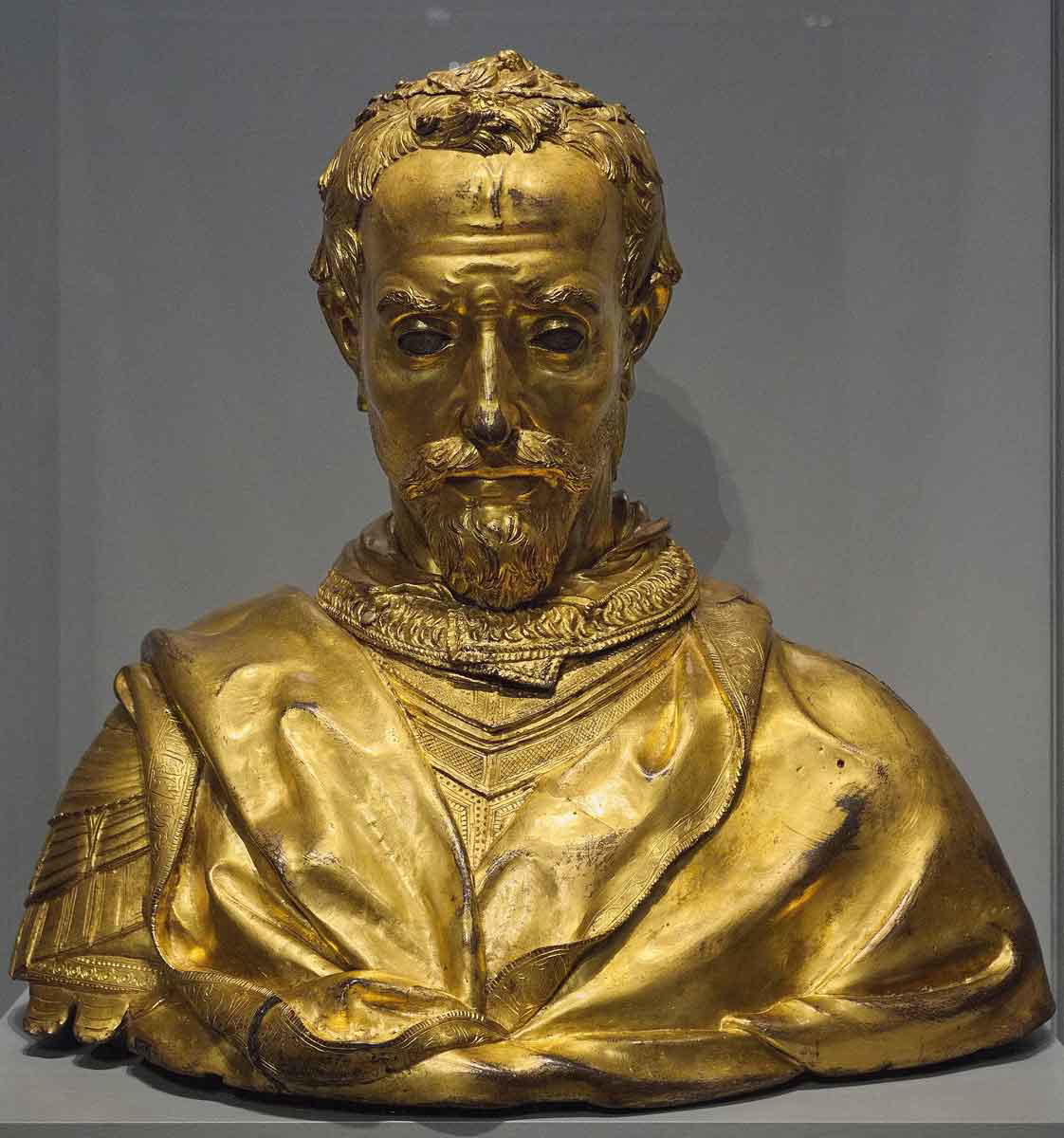
The tradition of reliquaries in Christianity dates back to the earliest centuries of the religion’s existence. It was invented as a way to contain and venerate the relics of saints. One of the most famous examples of an exquisite reliquary was created by Donatello for the skull of Saint Luxorius, who was executed for his faith. Instead of sculpting a generalized male form, Donatello chose to give the gilded bronze a detailed and personalized look. This led some researchers to believe that the sculptor may have included elements of a self-portrait in the work.
6. Door of the Apostles
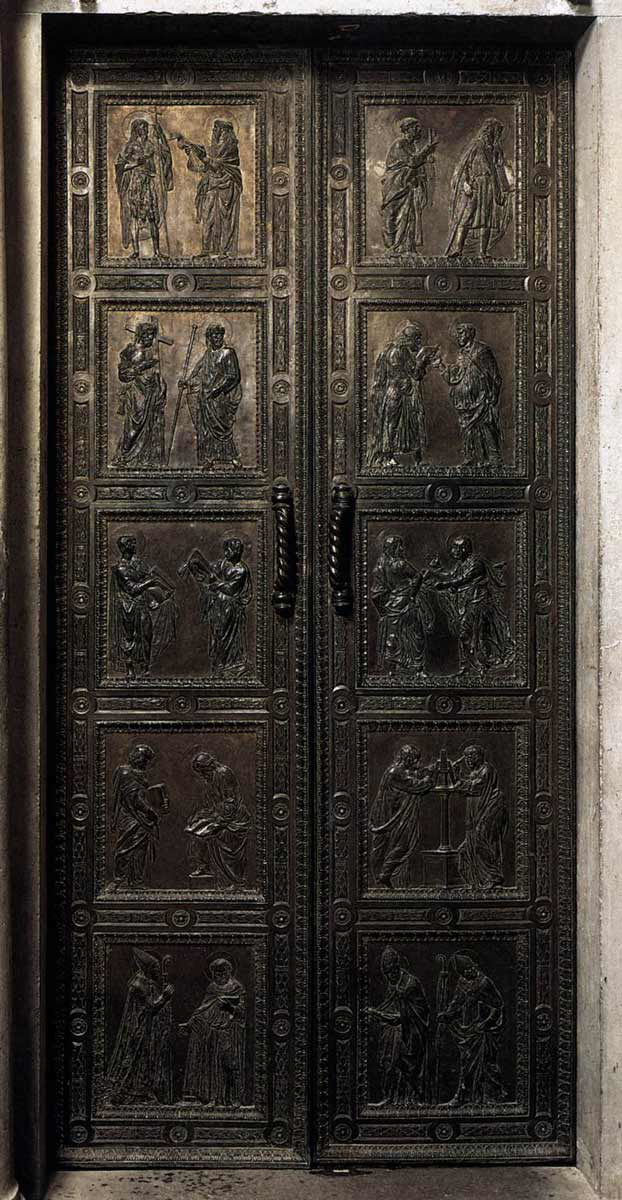
The bronze doors, with twenty panels, depict the lives of the forty Apostles and Doctors of the Church. The work was commissioned by Lorenzo di Medici as a decoration for his parents’ funerary chapel. The subject choice was deliberate, as it connected the long line of the Medici family to the even longer history of the Church and its most important actors.
7. Lo Zuccone
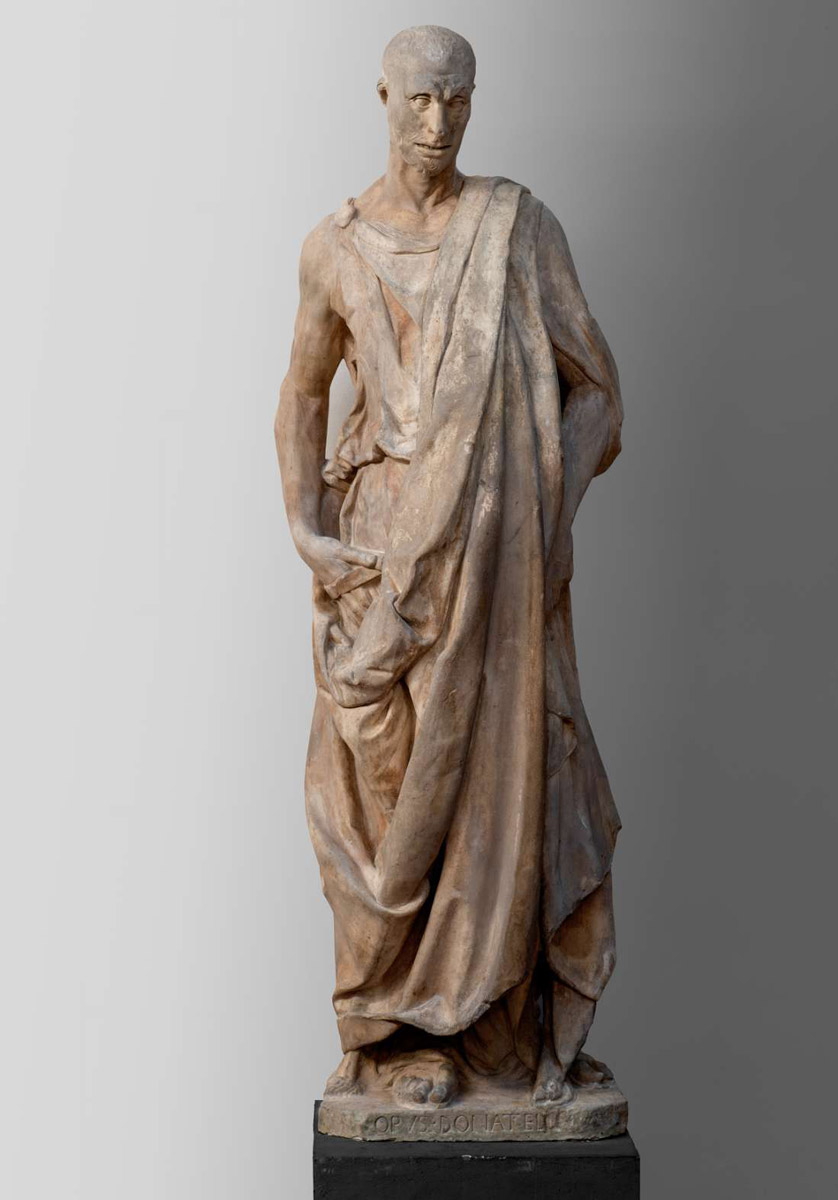
Lo Zuccone (literally translated as “pumpkin,” but metaphorically meaning “bald head”) is a lesser-known sculpture by Donatello, usually believed to depict the Prophet Habakkuk. The prophet was a lesser-known figure from the Old Testament who foresaw the coming of the Messiah and the fall of Jerusalem. In the writing attributed to Habakkuk, the author, despite his obviously strong faith, questioned the deeds of God, asking why He would allow so much suffering and violence in the world. It is said that Lo Zuccone was Donatello’s own favorite sculpture, which he regarded as the most lifelike. Despite the general identification of the work as the portrait of the prophet, Giorgio Vasari claimed it was a portrait of Donatello’s contemporary.
8. Saint George
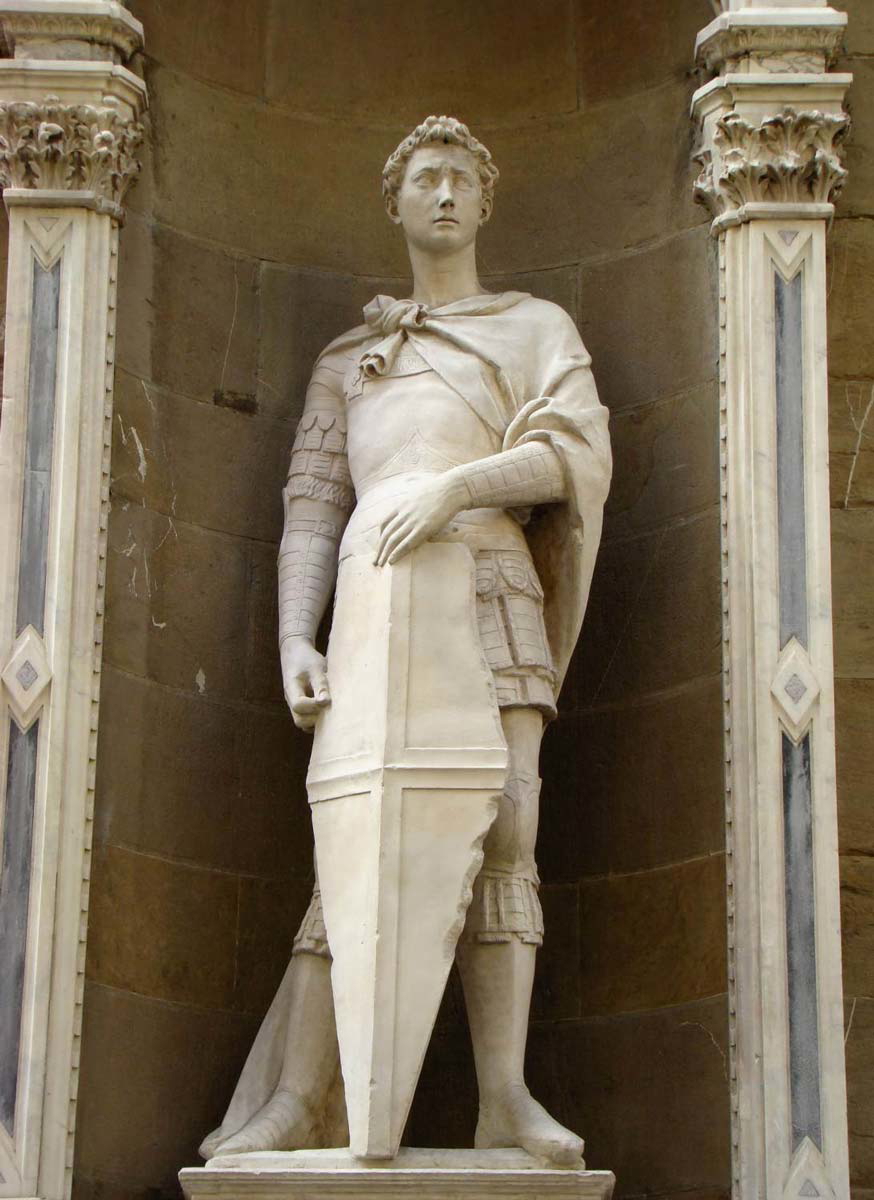
The sculpture of Saint George was one of fourteen sculptures decorating the exterior of the Orsanmichele church in Florence. Three of these statues—Saint George, Saint Mark, and Saint Peter—were carved by Donatello from marble. Another sculpture, made from gilded bronze, depicted Saint Louis of Toulouse, was moved inside the church. The empty niche was sold to the Florentine Court of Merchants to display the works they had commissioned.
Usually, artists showed Saint George in an almost superheroic manner, slaying the dragon with no doubt or fear. Instead, Donatello depicted the saint moments before the attack, determined, yet obviously fighting the terror and anxiety. In the mid-19th century, a stone thrown by a passerby struck the sculpture’s nose, prompting the decision to relocate it to a museum. In 1944, it was stolen and recovered just a year later.
9. Pazzi Madonna
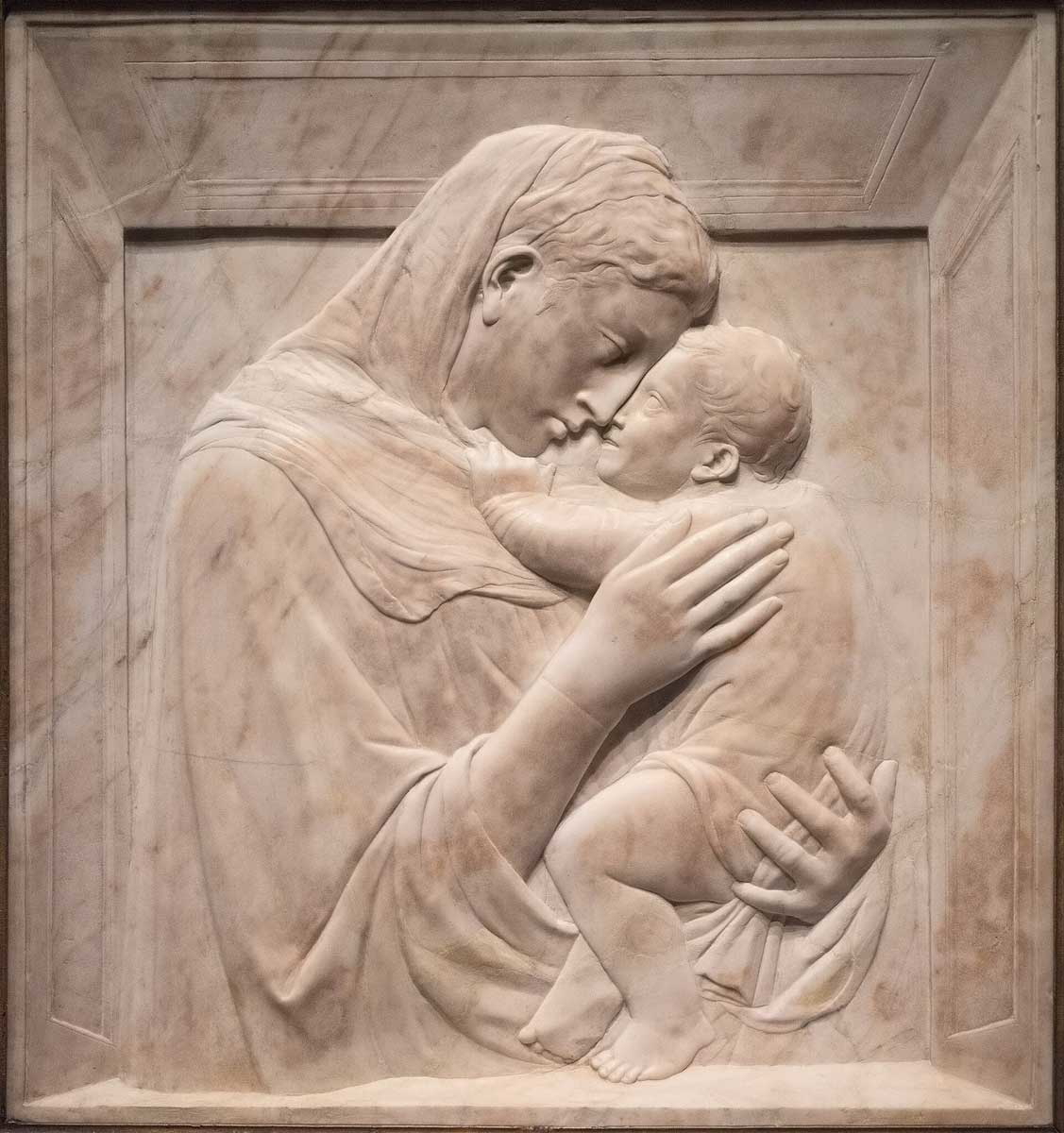
Reliefs are perhaps the most underrated form of sculpture, usually dismissed for their lack of three-dimensionality that is implied by the medium. However, Donatello’s unique artistic vision and skill made his reliefs truly unusual and stunning. The famous Pazzi Madonna was carved unusually low, with only a few millimeters of marble protruding above the surface. Donatello carved the image of the Virgin Mary holding the infant Jesus in her arms in an unusually tender manner. Although the child is smiling at his mother, the tender scene has a sad undertone, as in Madonna’s eyes, there is a tragic hint of her son’s tragic fate.
The Pazzi Madonna relief was created for private devotion and was initially intended for the Palazzo Pazzi, the home of the influential Pazzi family of bankers from Florence. Most likely, the Pazzi Madonna was seized by the Medici family along with other artworks from the Pazzi collection after an unsuccessful Pazzi conspiracy—a failed attempt to overthrow the ruling Medici family. In the 19th century, it was bought by a famous German art collector Wilhelm von Bode, who brought it to Berlin, where it has resided ever since.
10. Madonna of the Clouds
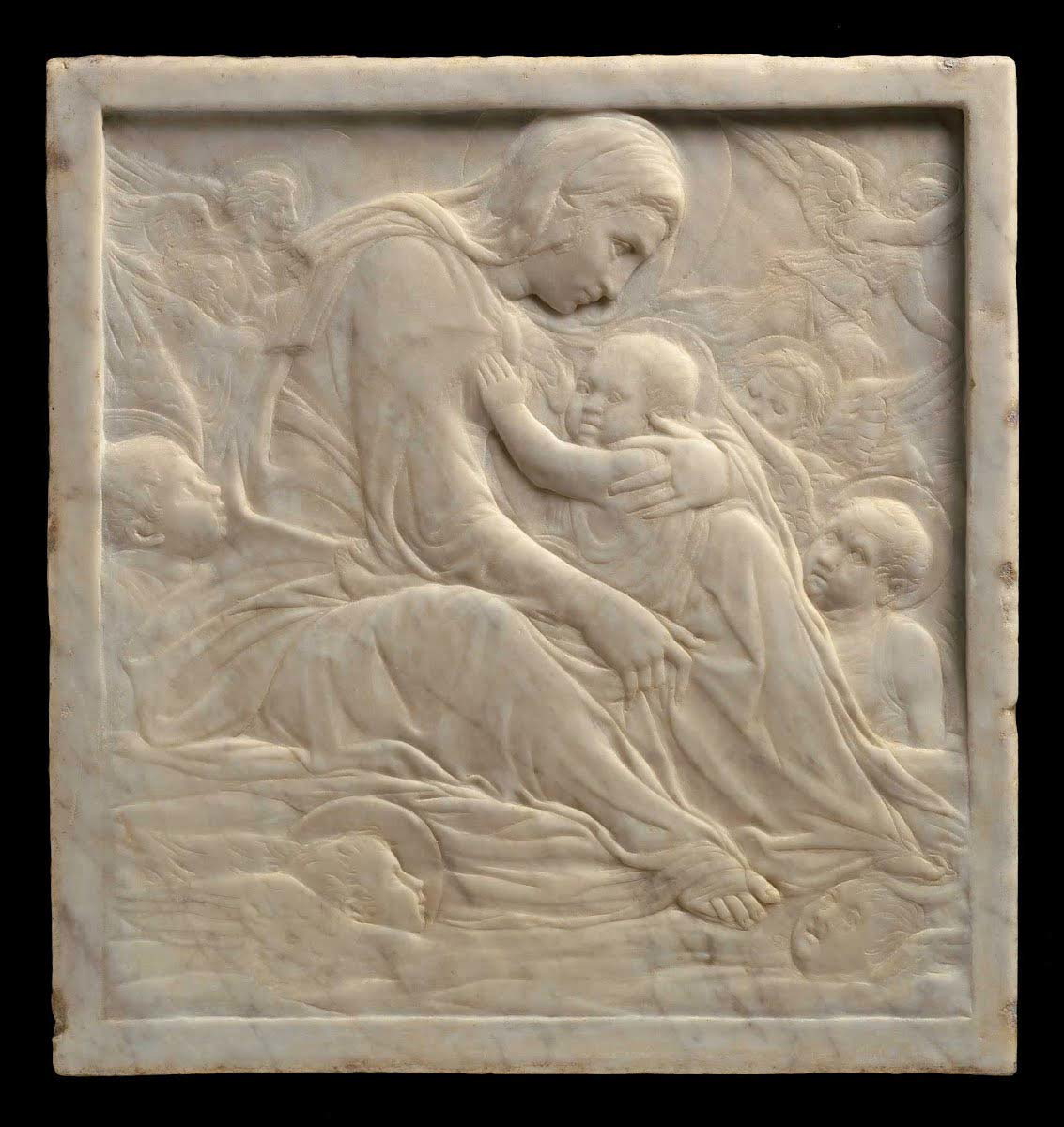
Another low relief by Donatello was Madonna of the Clouds, a similarly tender and tragic image of the Virgin Mary as the Queen of Heaven. She is already accepted into Heaven, yet her face still expresses sorrow over the loss of her child, whom she holds close to her chest. The emotional image was supposed to evoke sadness in viewers, particularly in mothers and young children, who had only recently been introduced to the story.
11. Santa Croce Crucifix: The Informal Contest Between Donatello and Filippo Brunelleschi
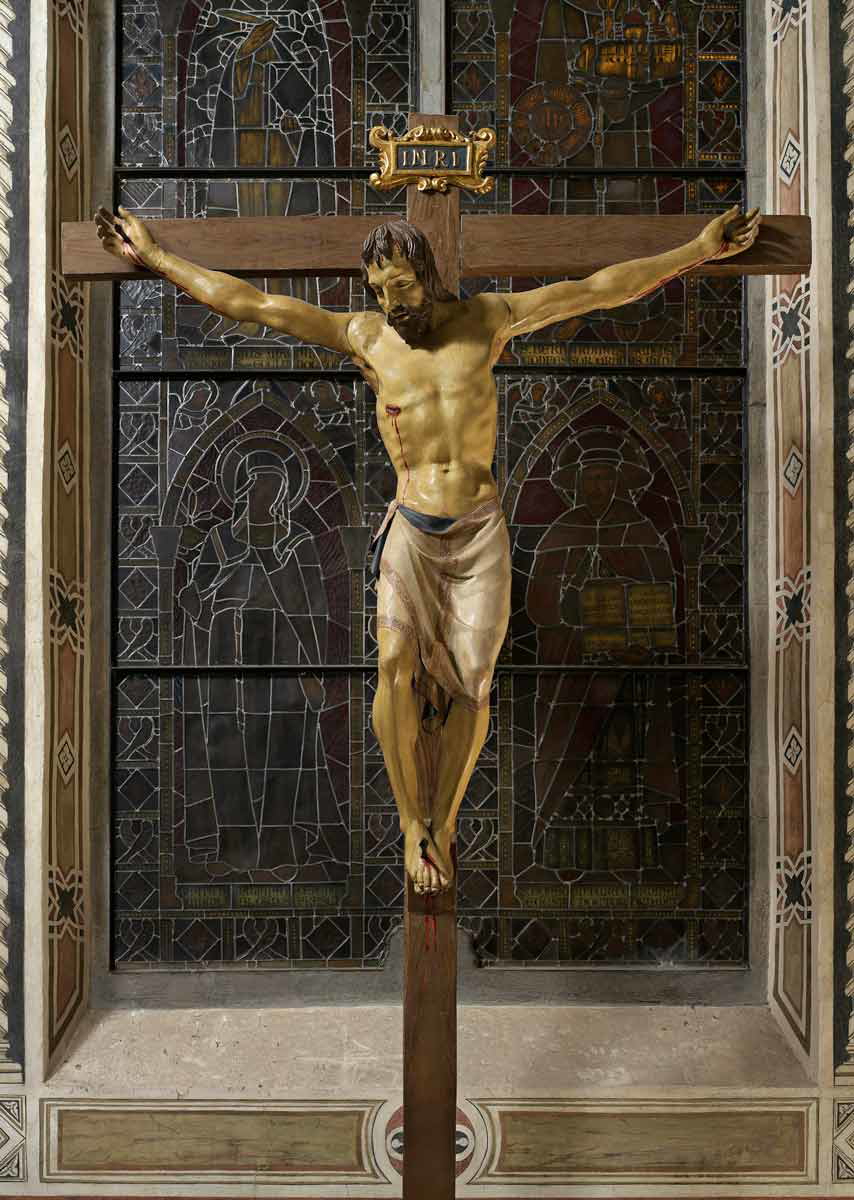
As a young sculptor still working in the studio of his teacher Lorenzo Ghiberti, Donatello began taking independent commissions in his early twenties. At that time, he carved one of his famous works: the crucifix for the Basilica di Santa Croce, Florence. According to Giorgio Vasari, Donatello’s close friend Filippo Brunelleschi was unimpressed by the crucifix, believing the muscles of Donatello’s Christ were too bulky, as if he were a farmer or a workman. In response, Brunelleschi carved his own crucifix, with a more slender and idealized body form. Allegedly, at the first sight of the work, Donatello was so astonished that he dropped a bag of chicken eggs he was carrying.