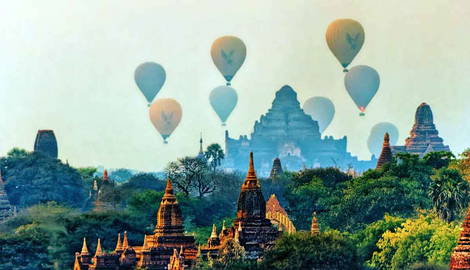
Myanmar, formerly known as Burma, is in the northwest part of Southeast Asia and shares borders with Laos, Thailand, China, Bangladesh, and India. Myanmar’s earliest civilizations developed around the 9th century, with the Burmese language and Theravada Buddhism becoming mainstream around the 1050s. Tourism infrastructure in the country is rather undeveloped, but buses and flights are available and many people speak English. When visiting temples or religious sites, always remember to dress conservatively. Knees and shoulders must be covered, regardless of the heat!
1. Bagan
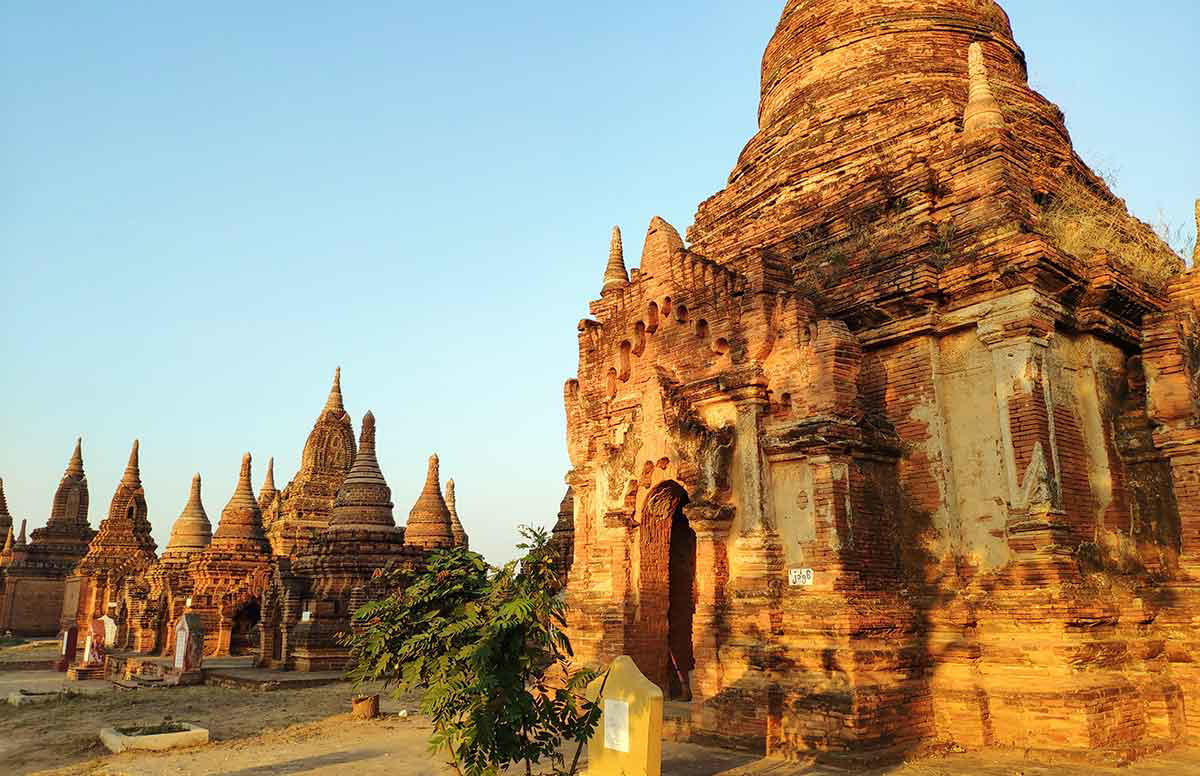
Bagan is a UNESCO World Heritage Site in Myanmar’s Mandalay region. The city was the capital of the Pagan Kingdom between the 9th and 13th centuries. The Pagan Kingdom, at its height between the 11th and 13th centuries, was the first kingdom to unify the regions that now constitute the country of Myanmar. At that time, the Bagan plains had over 10,000 temples, monasteries, and pagodas covering around 40 square miles. It was the political, cultural, and economic center of the empire, with students and monks traveling there from Sri Lanka, India, and present-day Cambodia.
Most of Bagan’s largest structures were built between 1150 and 1200 in an area known as “Old Bagan.” From the 13th century, construction moved east, as the city was becoming densely packed. This period was marked by the construction of a large number of smaller monasteries. Throughout this time in history, Bagan offered lucrative employment opportunities, whether in masonry, brickmaking, carpentry, ceramics, woodcarving, or silver and bronze working. The Pagan Empire lasted until 1287 when it collapsed for reasons that remain unknown.
People lived in Bagan until the 15th century, and though its main temples remained pilgrimage destinations, most of the structures fell into disrepair. Additionally, Bagan is located in an active earthquake zone—there were over 400 earthquakes in the area between 1904 and 1975 alone, which caused further damage to the temples.
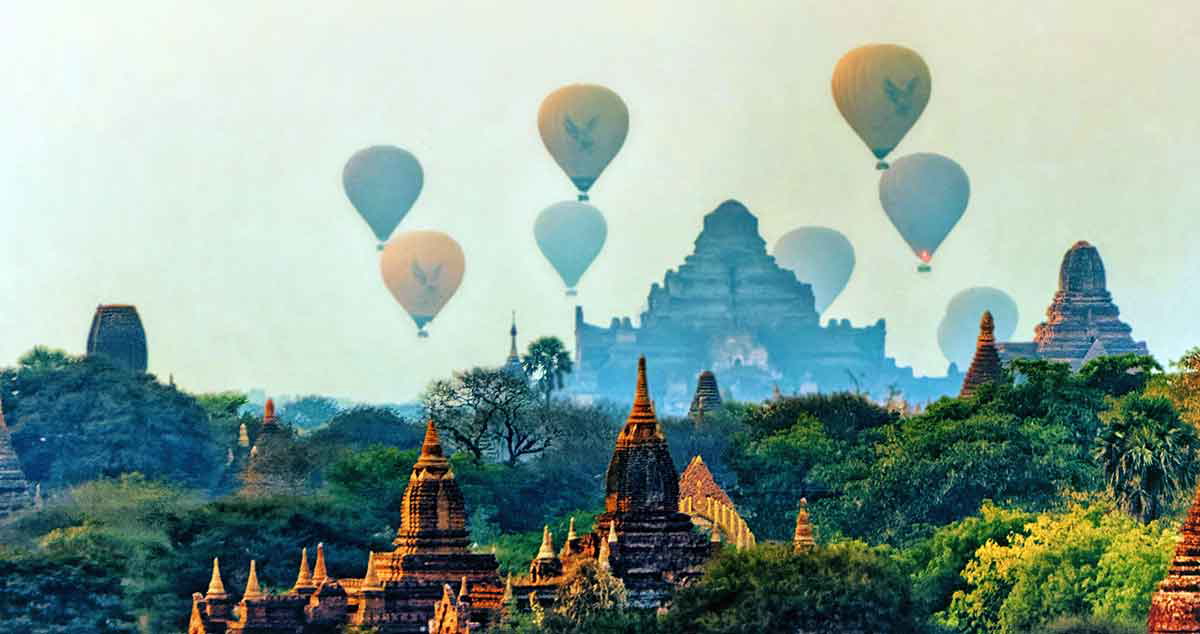
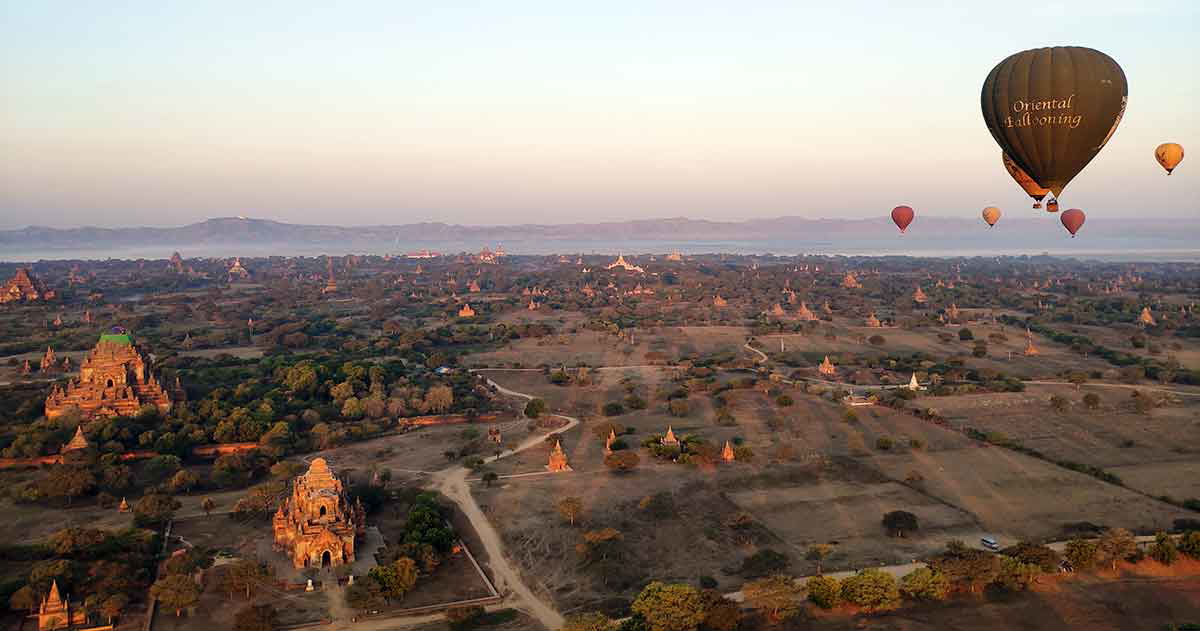
Today, 2,229 temples and pagodas remain, with many having been restored in the 1990s. Visitors can explore them on foot, rent bikes or motorcycles, or take a taxi. To get an idea of the scale of Bagan, it is highly recommended to try out a hot air balloon ride.
2. Yangon
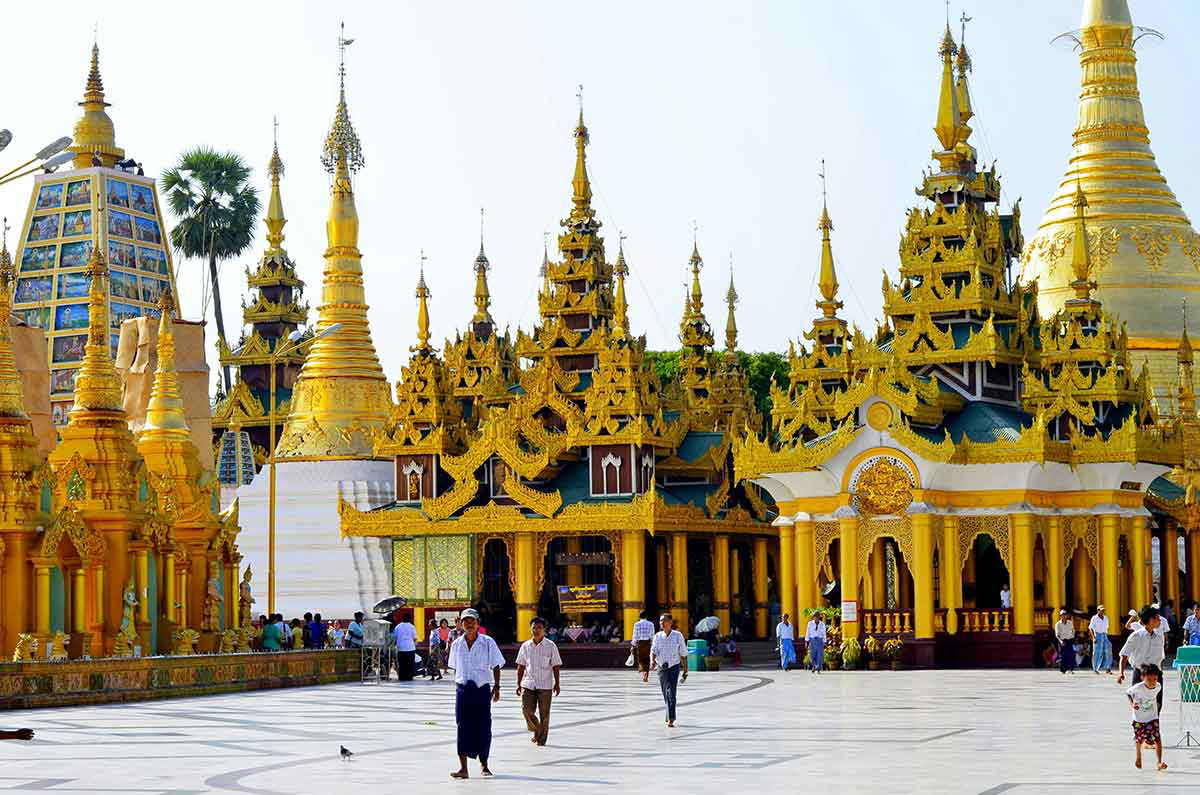
The city of Yangon, previously known as Rangoon, is a must-see for any visitor to Myanmar. It is the country’s largest and most populated city and was Myanmar’s capital until 2006 when the military government moved it to Naypyidaw. Yangon is truly unique—it features more colonial-era buildings than anywhere else in Southeast Asia, situated in the city center.
Yangon and Lower Burma were captured by the British in the Second Anglo-Burmese War of 1852. The remainder of the country was captured in 1885. The British built the city up and made Yangon the capital of British-ruled Burma. The city came to be known by the British as the “garden city of the East” due to its large parks and lakes. After World War I, Yangon became the center of a movement for Burmese independence, and there were several large strikes against British rule. The city came under Japanese occupation in World War II and was heavily damaged before Myanmar finally regained its independence in 1948.
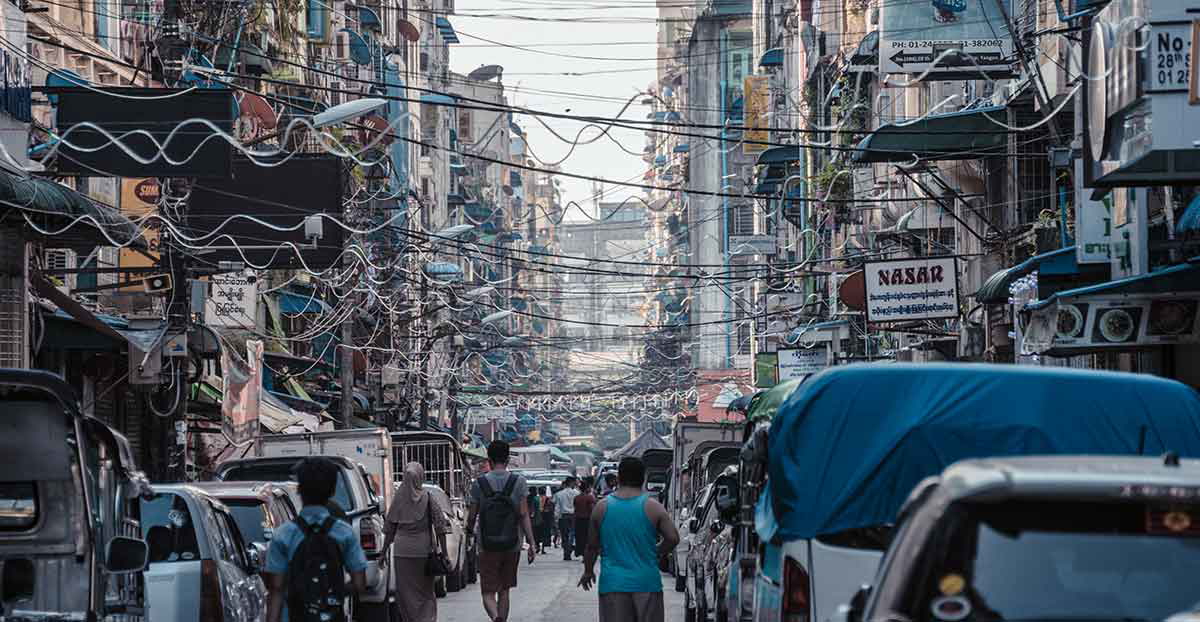
In 1989, Myanmar’s then-military government changed the city’s name to “Yangon.” Today it covers roughly 230 square miles. After many historical colonial buildings were demolished to make space for modern structures, the government placed 200 buildings on the Yangon City Heritage list in 1996.
Today, visitors can enjoy the Shwedagon Pagoda, Myanmar’s most sacred pagoda. It is said that every Burmese Buddhist must visit it at least once in their lives. Other attractions include the Sule Pagoda and its surroundings, the Chaukhtatgyi Buddha Temple, the Bogyoke Aung San Market, Kandawgyi Park, Chinatown, and the Muslim Quarters.
3. Inle Lake
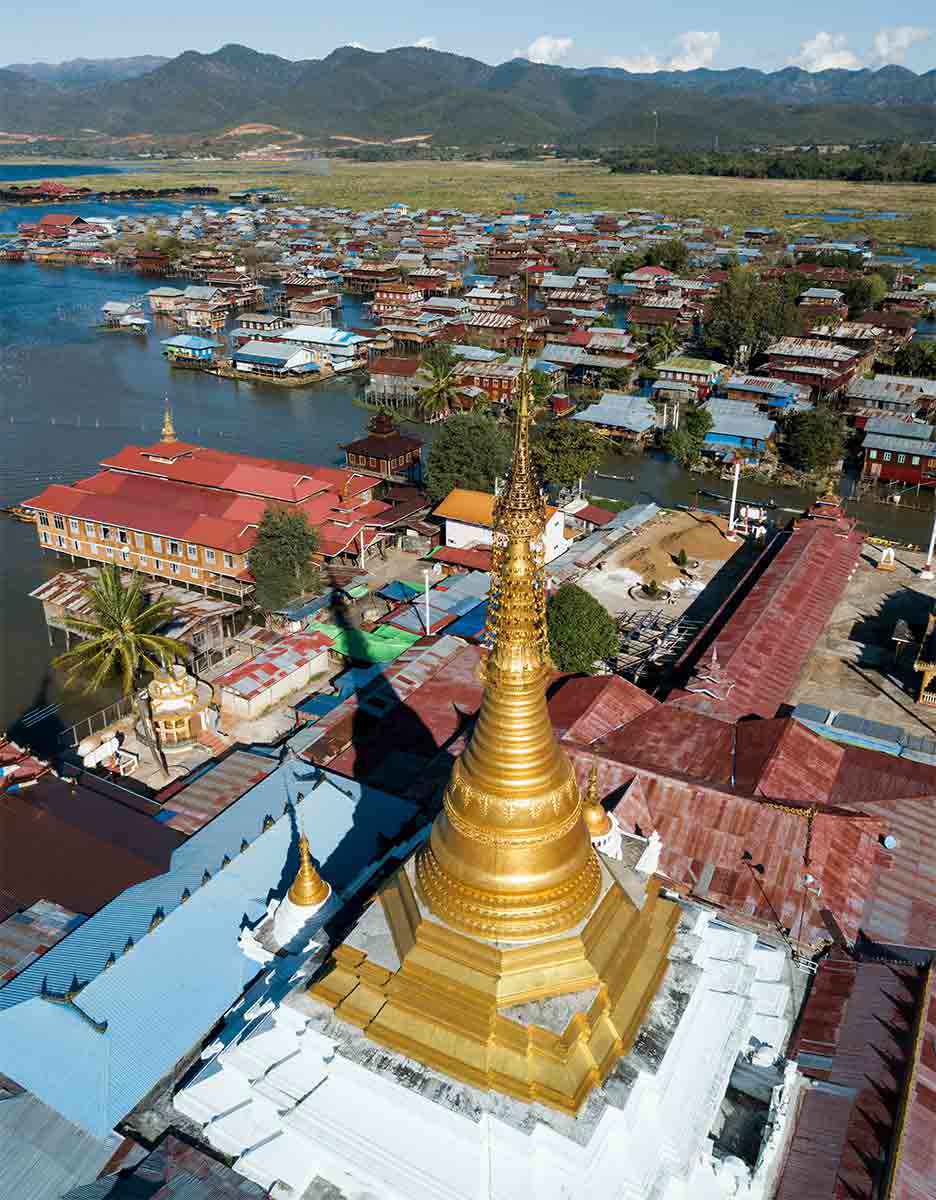
Inle Lake is a shallow freshwater lake in Myanmar’s Shan Hills with a surface area of nearly 50 square miles. It is the country’s second biggest lake and there are four cities and many small villages along its shores. The people who live around the lake are primarily from the Intha ethnic group, but people of Shan, Taungyu, Pa-O, and other ethnicities also call the lake home. Most of the lake’s residents live in wooden houses constructed on stilts over the water and use small boats to get around.
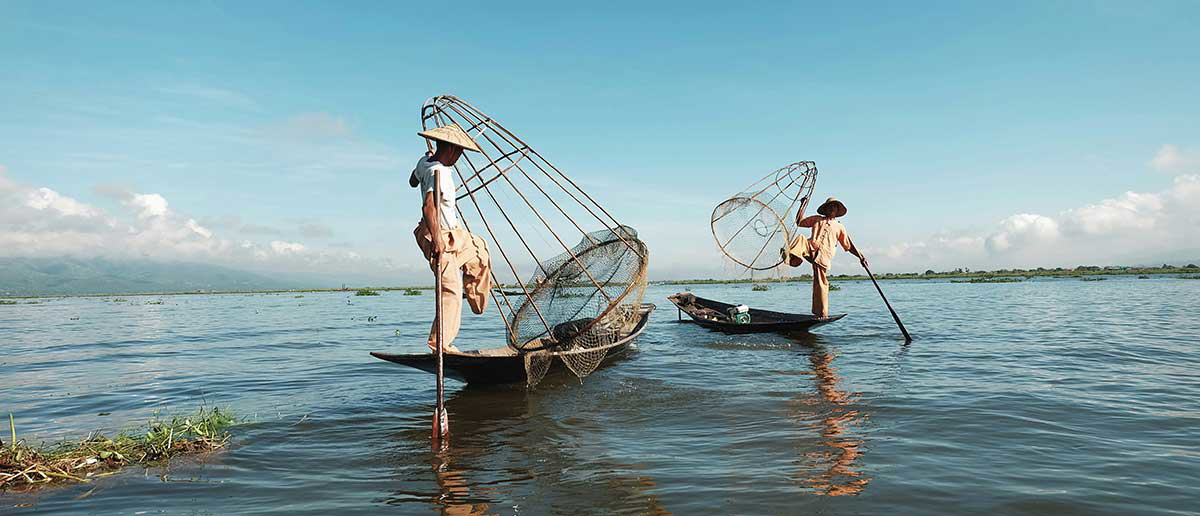
Fishermen on the lake use a distinctive rowing technique—they stand on one leg while wrapping their other leg around an oar. This technique is used because of the number of plants floating on the lake, which are not visible when seated in the boat. In addition to fishing, the lake has an extensive network of floating gardens where vegetables and fruits are grown. Inle Lake was added to the United Nations World Network of Biosphere Reserves in 2015.
Inle Lake is a major tourist attraction nowadays, with a growing number of hotels and tour operators opening up in the area. Visitors are most often taken around the lake in a small boat with a motor, stopping at workshops, markets, and temples along the way. There are silversmiths, cotton weavers, silk workshops, blacksmiths, and cheroot cigar makers, among others.
Other interesting destinations include the Phaung Daw Oo Pagoda with its gold leaf-covered Buddha statues and the Jumping Cat Monastery. The Jumping Cat Monastery got its name thanks to a former head monk who trained local cats to jump through hoops. The monastery is still home to many cats, but you are more likely to find them napping than jumping. The gorgeous lake scenery can also be viewed by hot air balloon.
4. Kyaiktiyo Pagoda
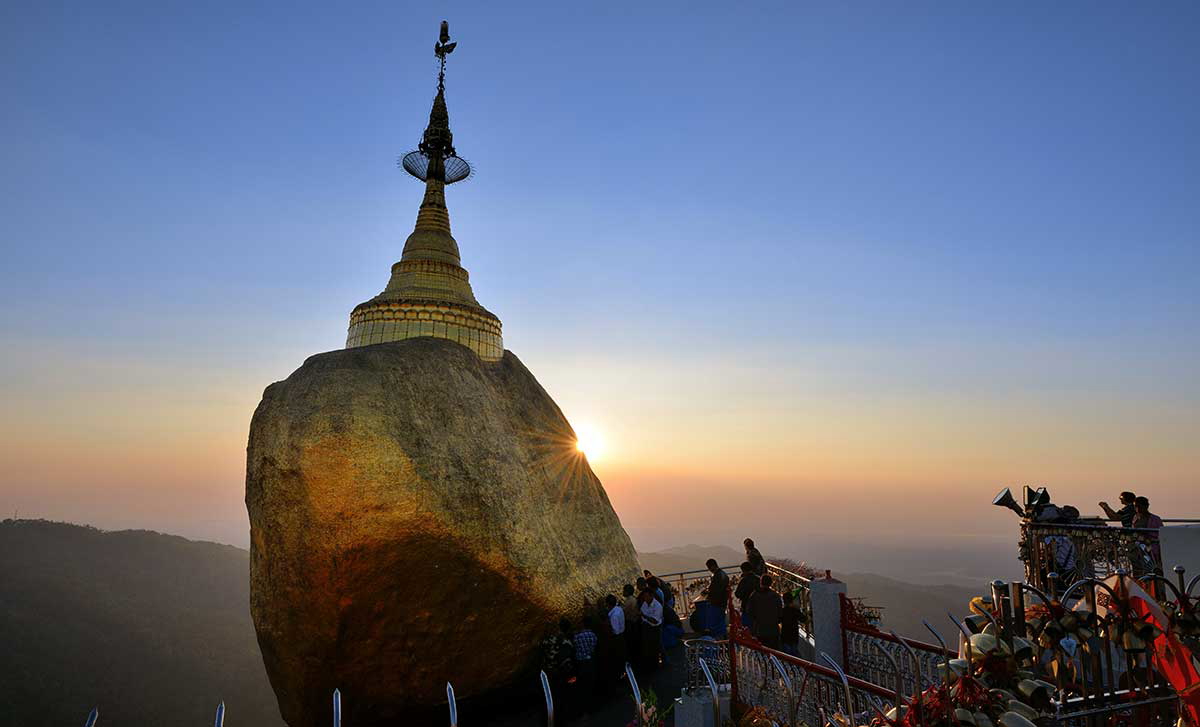
This pagoda in Myanmar’s Mon State is guaranteed to be like nothing you’ve seen before. Known as the “Golden Rock,” this site at the top of Mount Kyaiktiyo features a small pagoda built on top of a granite boulder. The boulder has been covered by gold leaf and is perched precariously on the edge of a cliff. The Golden Rock is an important pilgrimage site for Myanmar’s Buddhists.
The rock and its pagoda date back to around 574 BCE. There are, of course, legends around this rock and pagoda. One legend is that the Buddha gave a strand of his hair to a hermit called Taik Tha, who gave the strand to the king with the wish that the hair be enshrined in a boulder shaped like his own head. The king, who had supernatural powers, found the rock at the bottom of the sea with the help of his mother, a serpent princess. He found a place for the rock and built a pagoda on it where the strand of hair was placed. It is said that this strand of hair is what keeps the rock from falling. The boat that was used to transport the rock, situated around 980 feet away, is also worshiped by visitors.
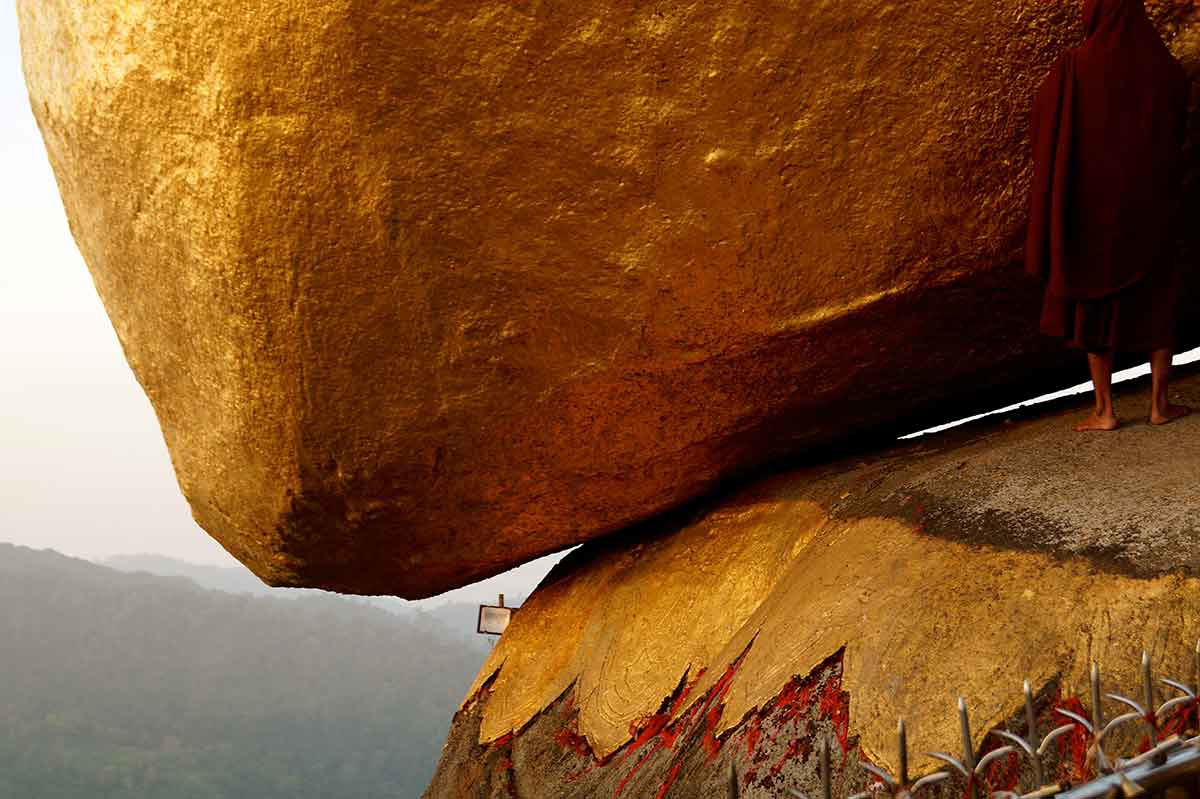
In addition to being a pilgrimage site, Kyaiktiyo Pagoda is also becoming a popular stop for tourists. Unfortunately, women are not allowed to cross the bridge to the pagoda, as they are forbidden from touching the rock. However, female visitors can still enjoy views of the rock and pagoda.
The pagoda is about five hours from Yangon. Upon arriving, you can climb or hitch a ride to the top of the mountain.
5. Bago
Bago, formerly known as Hanthawaddy, is 57 miles north-east of Yangon. Between 1212 and 1266, Bago was a small town, and from the 1290s, it was part of the Kingdom of Martaban. The town grew in importance during the 14th century, and between 1396 and 1538 it was the capital of the kingdom. Bago was looted and burned during the Burmese-Siamese War (1594-1605) and then rebuilt by King Bodawpaya (1782-1819). It was then annexed by the British in 1852 and later damaged by two earthquakes and a tsunami in 1930.
Though Bago is not on the itinerary of most visitors, it has many truly impressive sights. The Shwethalyaung Buddha is the world’s second-largest reclining Buddha statue, measuring 180 feet in length and 52 feet in height. The Buddha is believed to have been built in 994 CE, but it was lost after Bago was pillaged in 1757. In 1880, a British railway engineer rediscovered the Buddha in the jungle. The statue underwent restoration in 1881 and today, it is displayed in a large (and rather unattractive) shed.
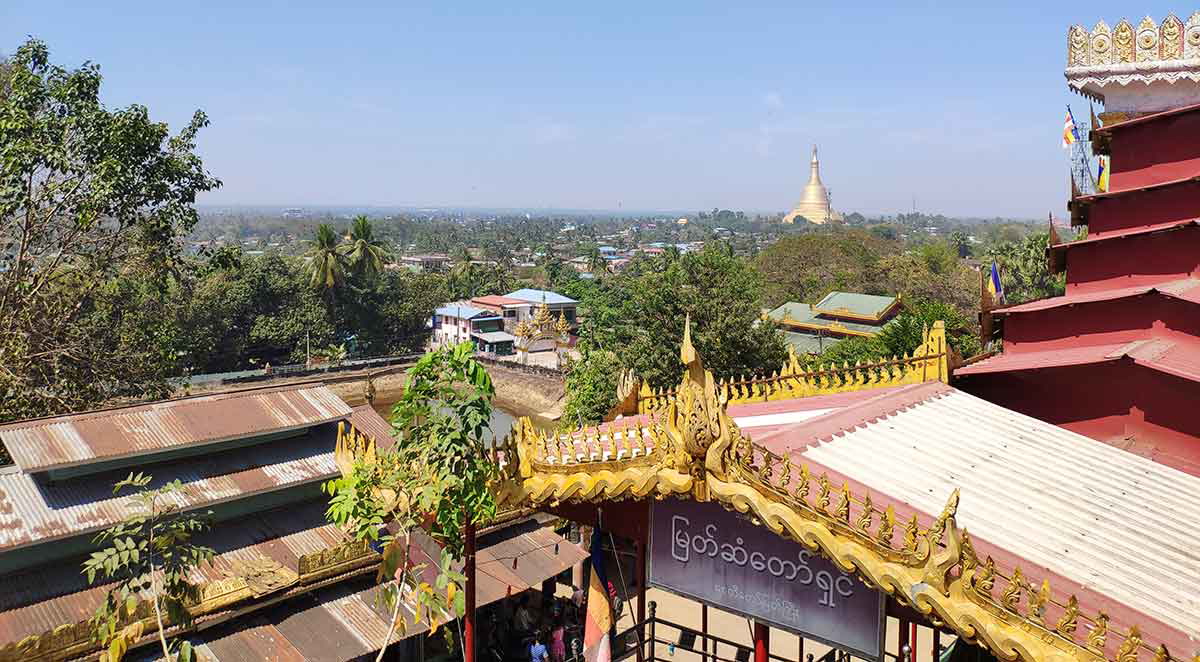
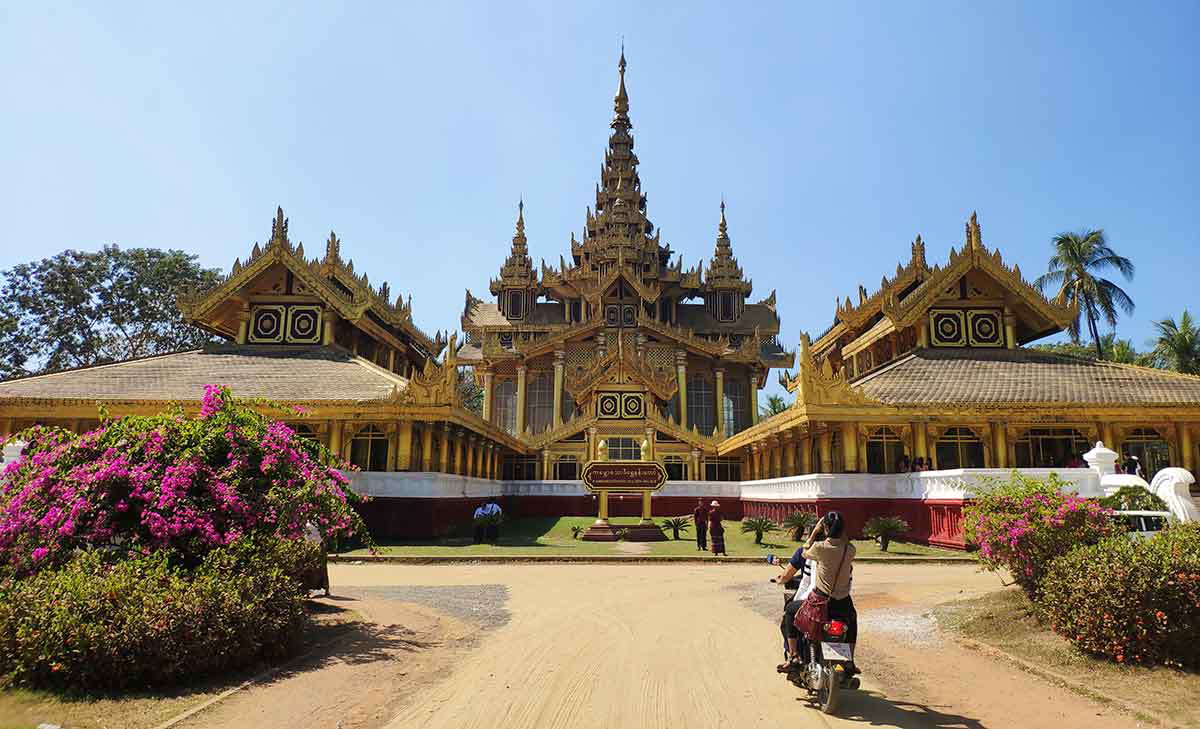
The Shwemawdaw Pagoda, Myanmar’s tallest pagoda (375 feet tall), dates back to at least the late 14th century. The gold stupa is visible for miles and has a diamond-studded decoration on the top. The Kyaikpun Buddha, another pagoda, features the Four Seated Buddha shrine, an 84-foot statue of the four Buddhas sitting back to back. The stunning Kanbawzathadi Palace was built in 1556, burnt down in 1599, and reconstructed in 1990 following the original design.
Other interesting stops include the Madazedi Pago and the Snake Temple. The Snake Temple houses a Burmese python believed to be an over-125-year-old reincarnation of either a folk goddess or a revered monk. Visitors can admire the snake and leave it cash offerings.
6. Mandalay
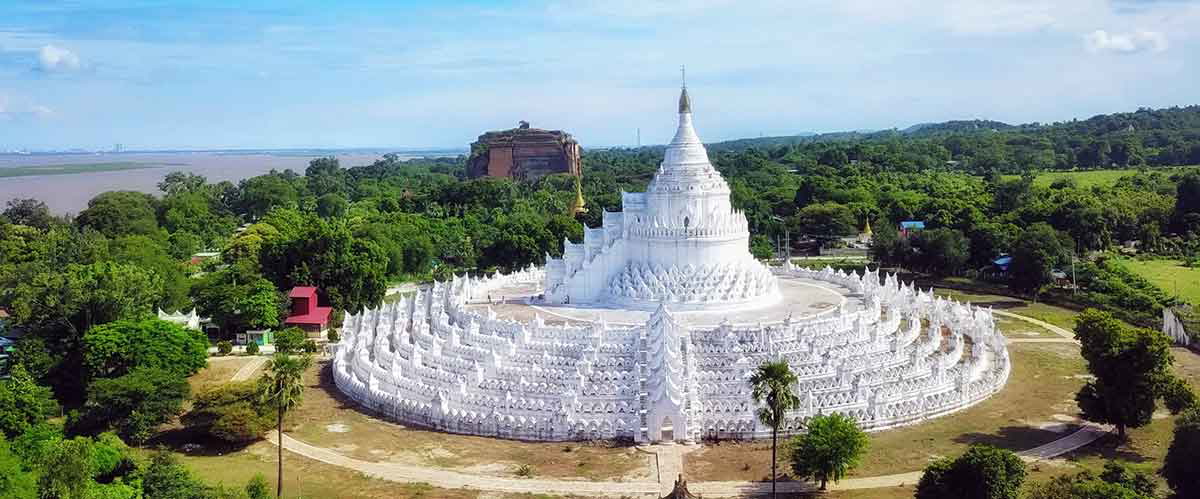
Mandalay, located nearly 400 miles north of Yangon, is Myanmar’s second-largest city. The city is home to over 1.2 million people and was founded in 1857 by King Mindon, who made it the new royal capital. Mandalay was the nation’s capital during the 1885 annexation of Myanmar by the British Empire. Though Yangon was made the capital of British Burma, Mandalay remained important under British rule, both culturally and commercially. The city was, however, heavily damaged by the British, and then further damaged by shelling during World War II and the Japanese following their 1948 invasion.
Thanks to its important role in history, Mandalay is home to several impressive relics. One is the Mandalay Palace, the last palace of the last Burmese monarchy, built between 1857 and 1859. The palace is surrounded by a wall and a moat and all buildings inside are one storey tall. The importance of the buildings inside the palace compound is indicated by the number of spires on the top. The palace compound was largely destroyed during WWII, and reconstruction took place in the 1990s.
Mandalay Hill is a particularly beautiful spot to explore in the city. The hill is 790 feet tall and features numerous pagodas and monasteries. It is an important pilgrimage site for Buddhists in the country and a hike to the top offers stunning views of Mandalay.
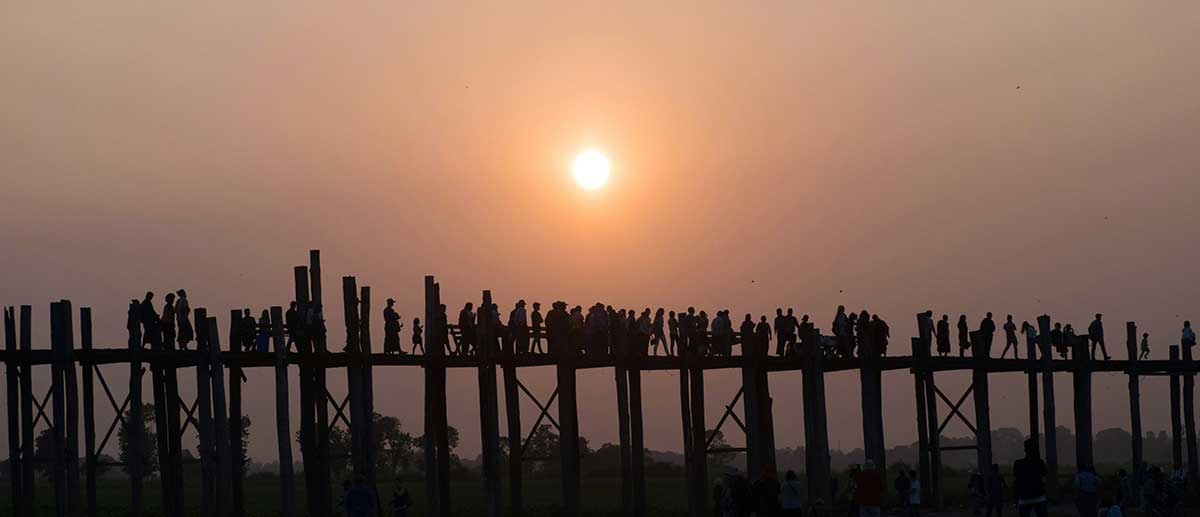
Just outside of Mandalay is another famous site, the U Bein Bridge. This 0.75-mile bridge, built in 1850, is likely the longest and oldest teak bridge in the world. Other things to see in Mandalay include the Mingyun Pagoda, the Hsinbyume Pagoda, the Kuthodaw Pagoda, the Sandamuni Pagoda, the Shwenandaw Monastery, and the Zay Cho Market.
7. Mount Popa and the Taung Kalat Monastery
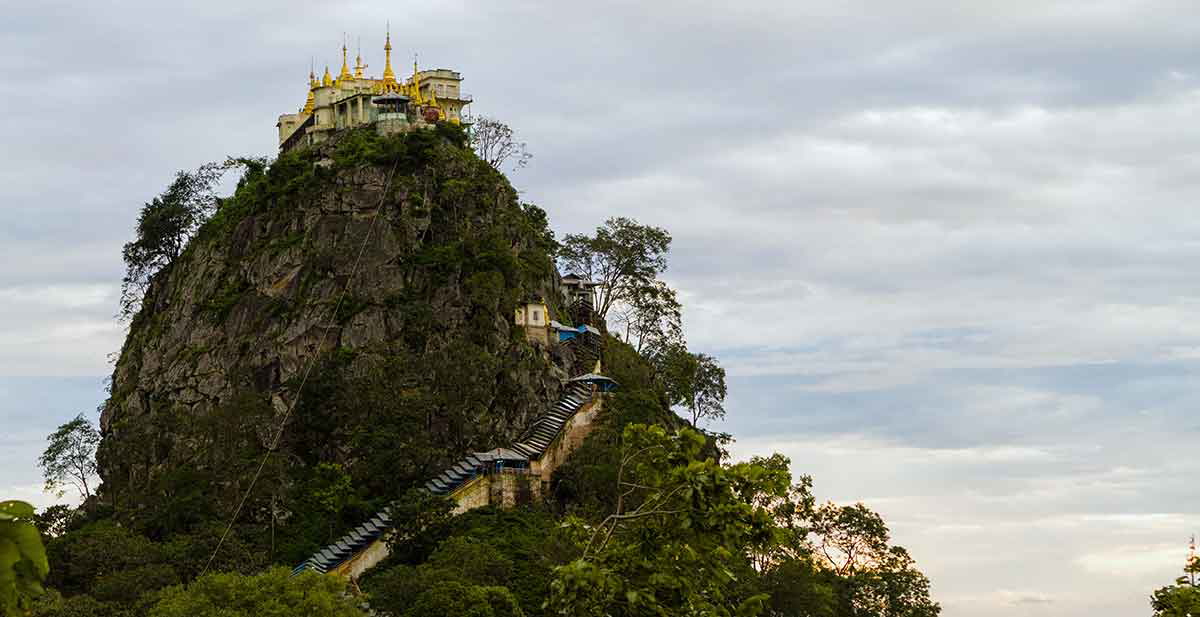
Around 31 miles southeast of Bagan is Mount Popa, an intriguing pilgrimage site with many nat temples. Nats are spirits that have long been worshiped in Myanmar.
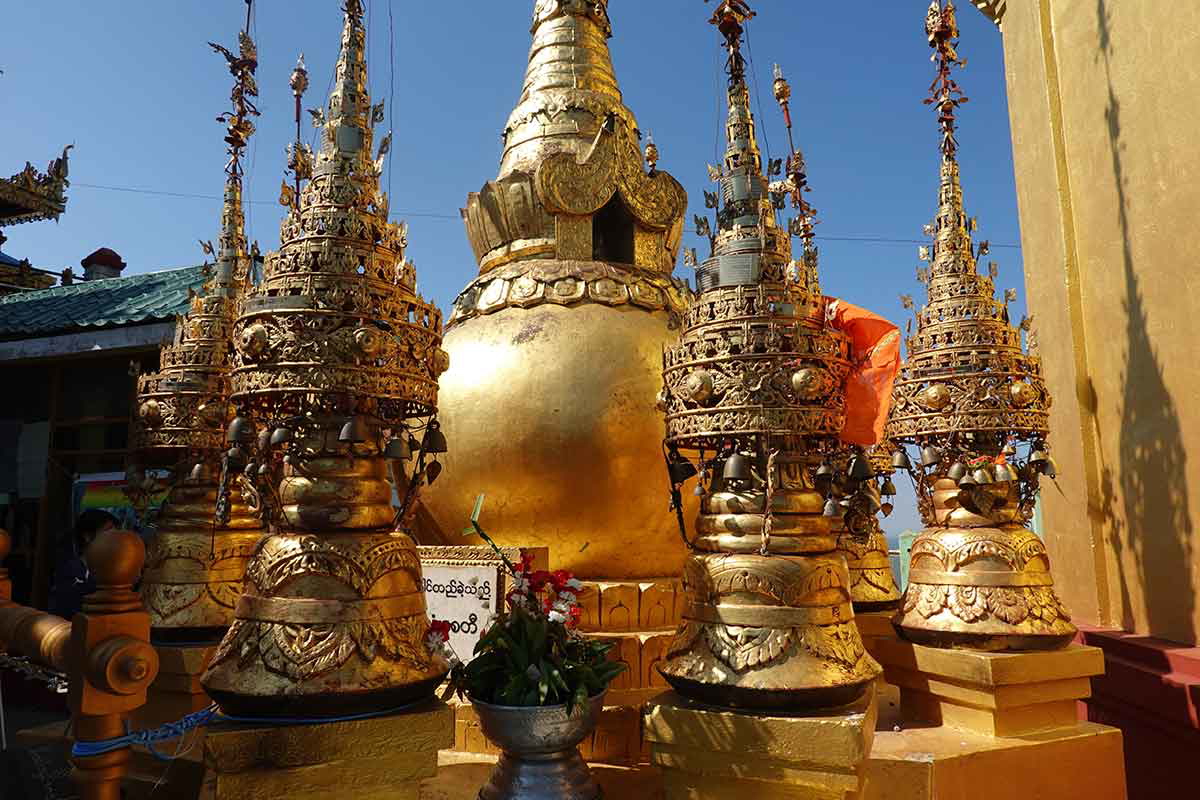
Mount Popa is, in fact, a 4,981-foot dormant volcano, and in addition to the nat temples, there is a Buddhist monastery at the top called Taung Kalat. Many devout Burmese make the pilgrimage to Mount Popa every year, and there are superstitions about how one must dress and behave on the mountain. For instance, it is believed that visitors should not bring meat (particularly pork) or dress in black, red, or green.
Visiting Mount Popa and the Taung Kalat Monastery is an interesting experience for visitors. To reach the top, one must climb 777 steps barefoot, amongst the many Macaque monkeys that live on the mountain. The monkeys are very accustomed to people and will seek treats from visitors. Though you are most likely to see Macaques, the mountain is also home to the world’s largest population of Popa Langur monkeys, which are critically endangered.
After reaching the top of the mountain and the Taung Kalat Monastery, visitors are rewarded with panoramic views of the surrounding town and countryside.
8. Goteik Viaduct
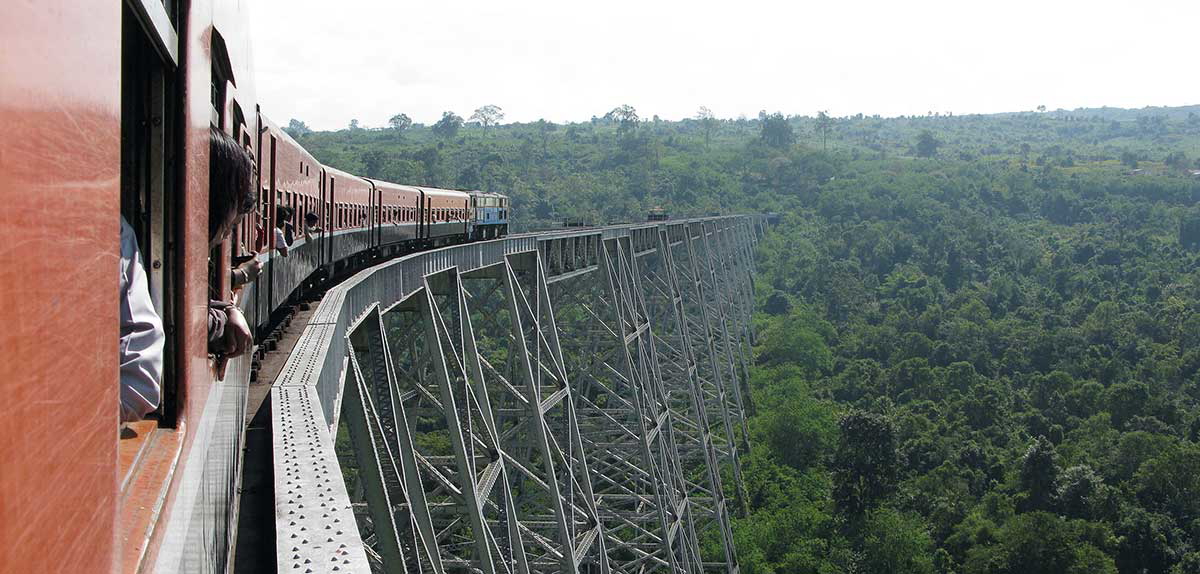
The Goteik Viaduct is a railway trestle in Shan State, between the towns of Nawnghkio and Gokhteik. It connects the Pyin Oo Lwin, a former colonial hill station of British Burma, and Lashio, a large town in northern Shan State. When the Goteik Viaduct was opened in 1900, it was the second-longest railway bridge in the world and the largest railway trestle. The pieces used to build the viaduct were actually produced in Pennsylvania, in the United States, and then shipped to Myanmar. This was part of the British Empire’s work to construct a railway line in Myanmar and expand its influence.
The Goteik Viaduct is around 2,260 feet in length and 335 feet tall. Visitors wishing to ride the pass over the viaduct can board the local train. It is recommended to buy a second-class ticket, as the windows in the first-class carriage are narrow, making it harder to see.
There are two trains that cross the viaduct, one going in each direction, and you are free to stick your head out the window to enjoy the views. The crossing will undoubtedly get your adrenaline pumping and make for a great photo opportunity!